• Home
  • FA
  • LA4008
  • Reweaving the Sacred Waters through streets of Trimbak

Gurav Shrutika Shashikant Shubhada

LA4008

Reweaving the Sacred Waters through streets of Trimbak

Trimbakeshwar, a sacred town at the origin of the Godavari River, is shaped by the intersection of ritual practices, seasonal pilgrimage, and fragile hydrological systems. However, rapid urbanization, street hardening, and increasing pilgrimage pressure have disrupted natural drainage patterns, leading to flooding, pollution, and fragmented ecological edges. This project reimagines the town’s streets as water-sensitive infrastructures that reweave the relationship between water, ritual, and everyday life. Instead of treating streets as mere conduits of movement, they are designed as hydrological spines that collect, slow, filter, and recharge water through permeable paving, and productive planting edges. These systems extend into the riverfront through a series of ritual interception kunds, which mediate the entry of ritual offerings such as ashes and organic materials allowing for settling and ecological filtration before reaching the river. The landscape integrates productive ritual planting, cultivating species offered to Lord Shiva, thereby supporting local livelihoods while reinforcing the town’s sacred identity. Public plazas and street nodes act as flux–pause spaces, accommodating both everyday use and peak pilgrimage events, including the Kumbh Mela. By reconnecting streets, kunds, and ecological edges, the project proposes a resilient urban framework where water is not hidden but celebrated transforming Trimbakeshwar into a living sacred landscape that sustains both its cultural practices and environmental systems.

View Additional Work
Report Content

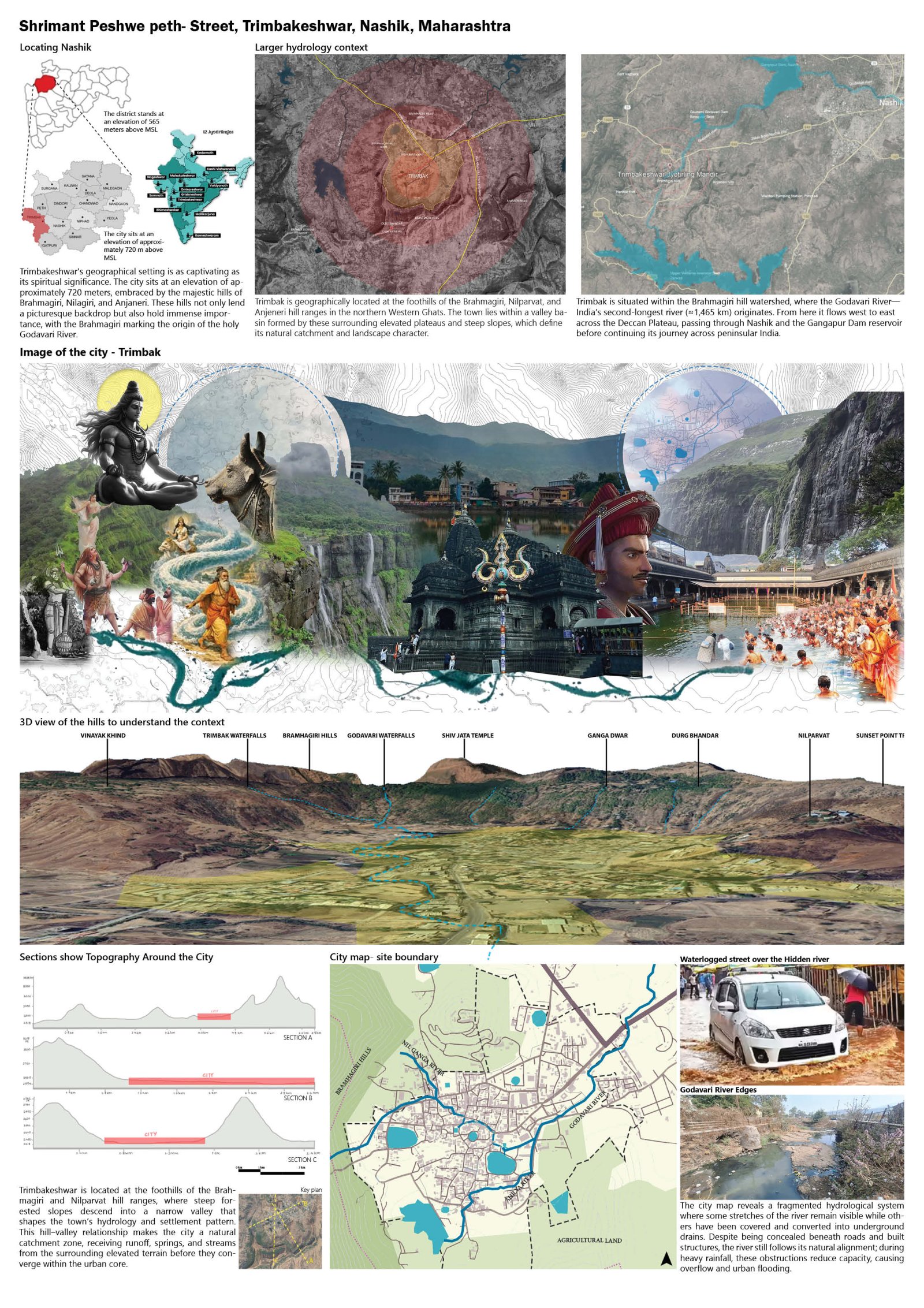
Geographical Context and Regional Hydrology Focuses on locating Nashik/Trimbak and the relationship between the city's topography and the origin of the Godavari River.

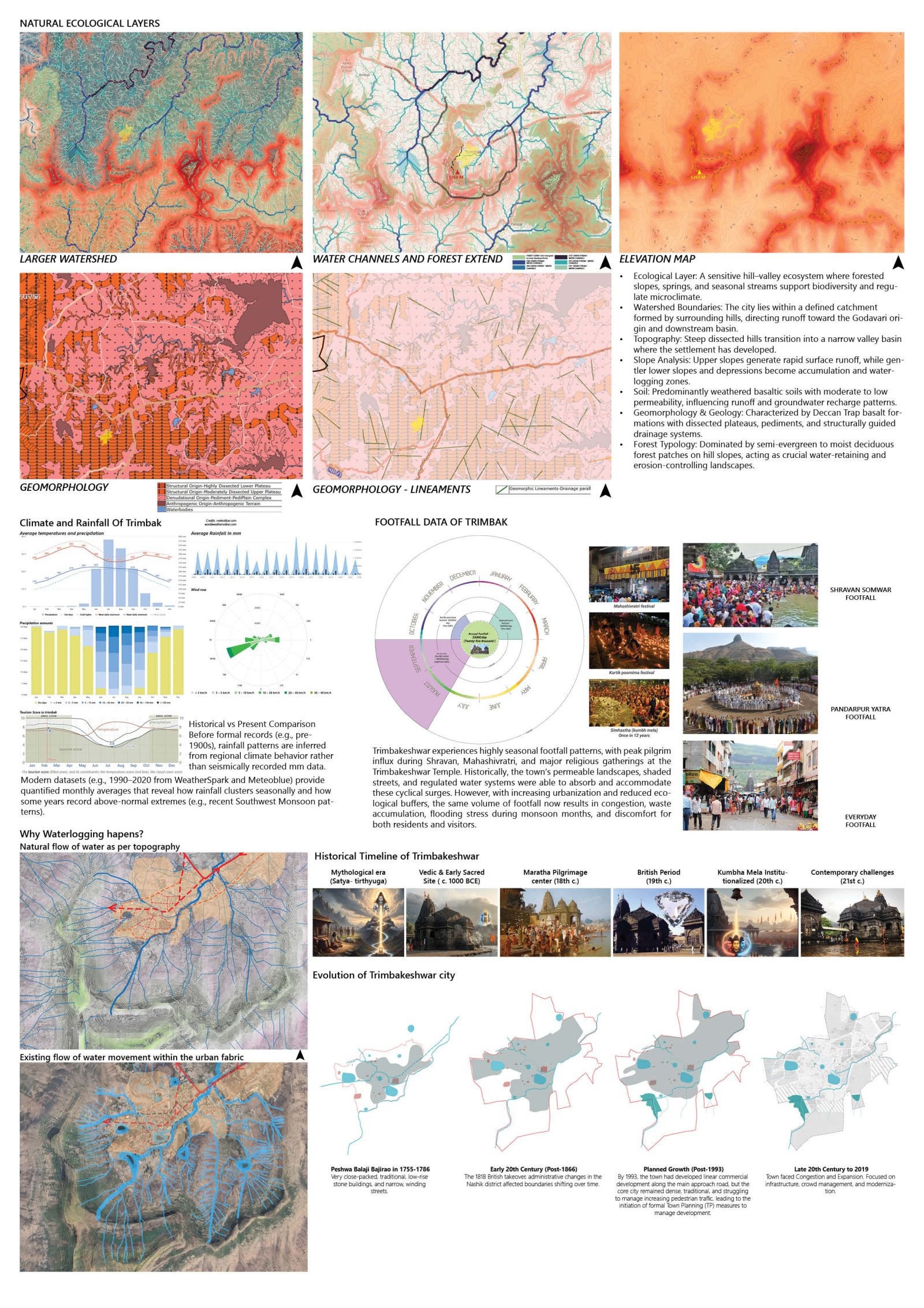
Natural Ecological Layers and Historical Timeline Details the geomorphology, soil, and forest typology alongside the urban evolution and seasonal footfall data of the city.

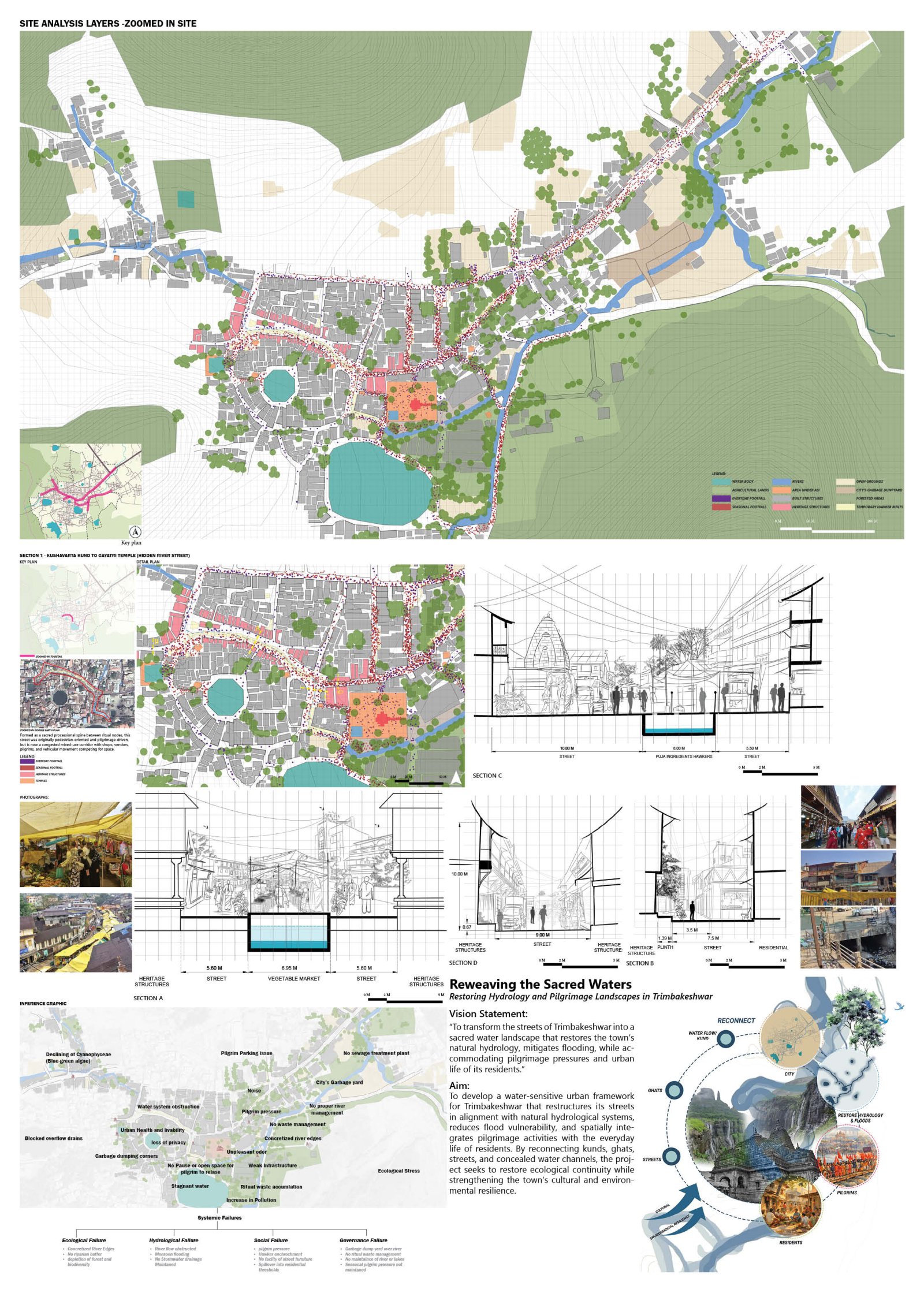
Site Analysis, Vision, and Systemic Failures Identifies fragmented hydrological systems and urban stress while establishing the project's vision for reweaving sacred waters.

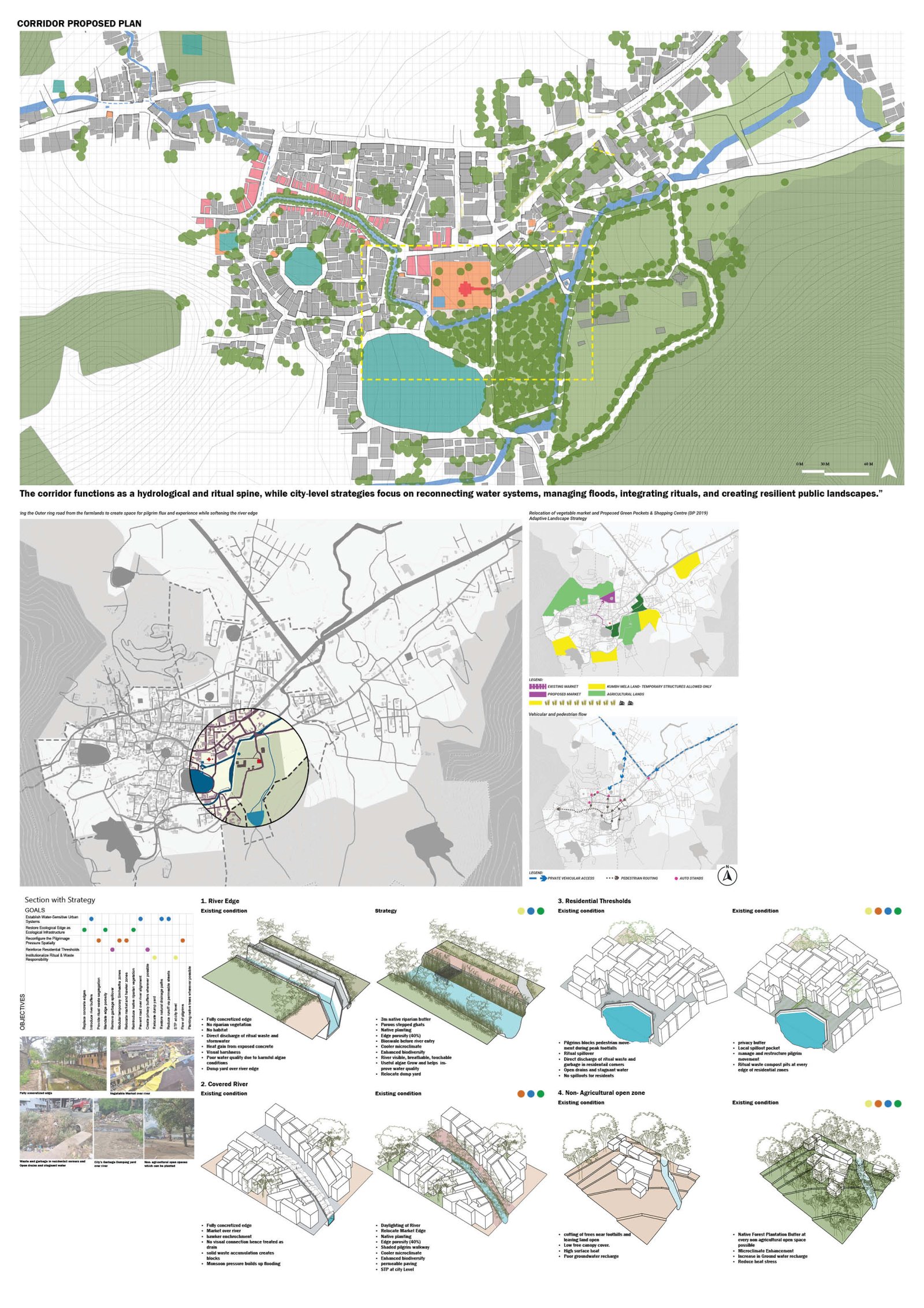
Proposed Urban Corridor and Strategic Objectives Outlines city-level strategies for reconnecting water systems and provides specific interventions for river edges and residential thresholds.

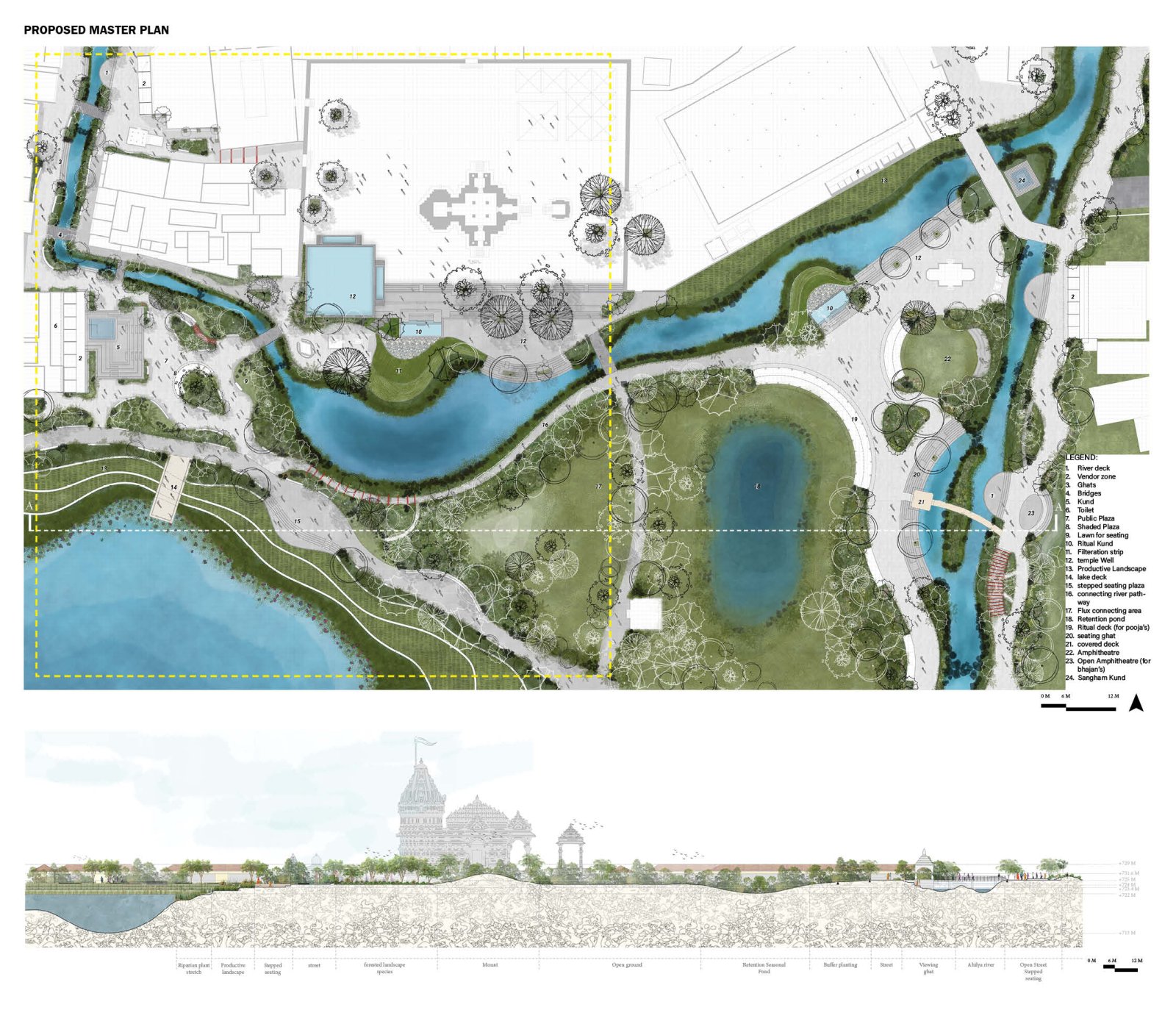
Master Plan Layout and Longitudinal Site Section Presents the comprehensive proposed master plan and a detailed site section showing the integration of the temple with the new landscape.

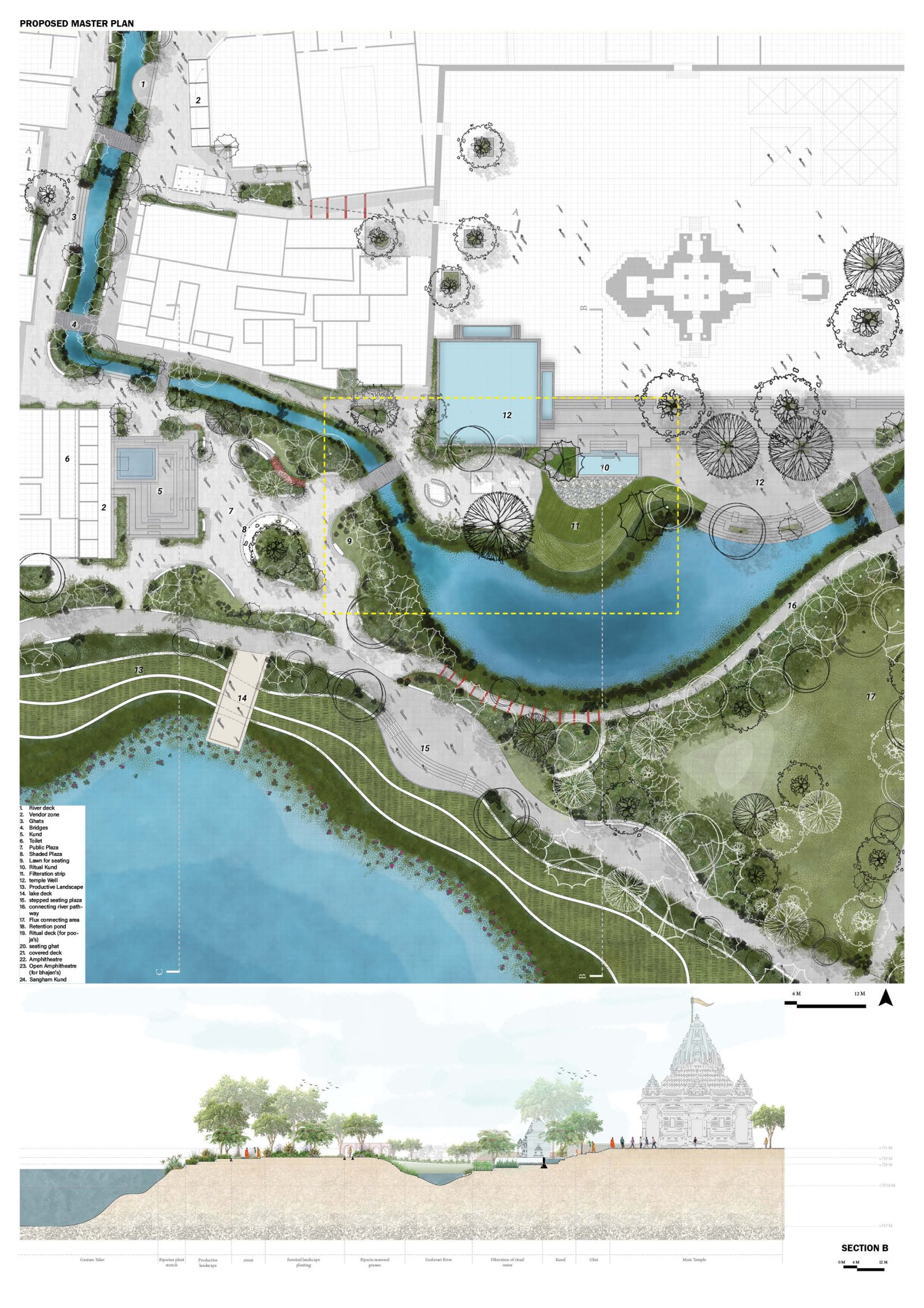
Detailed Master Plan and Sacred Precinct Integration A zoomed-in view of the master plan highlighting key nodes like the temple well, ritual kunds, and productive landscapes.

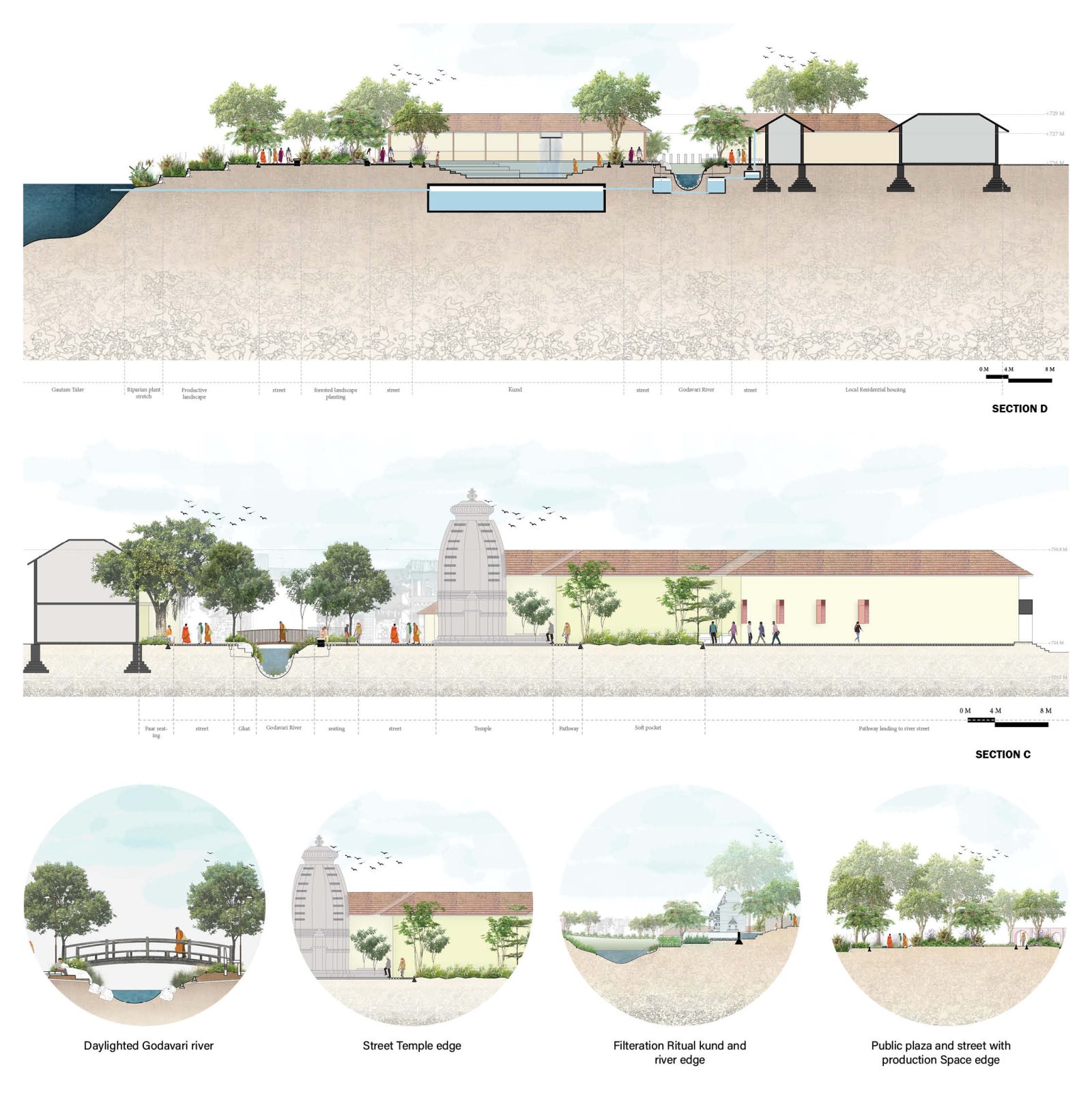
Transverse Sections and Daylighted Water Channels Technical sections illustrating the daylighting of the Godavari River and the redesign of temple edges and public plazas.

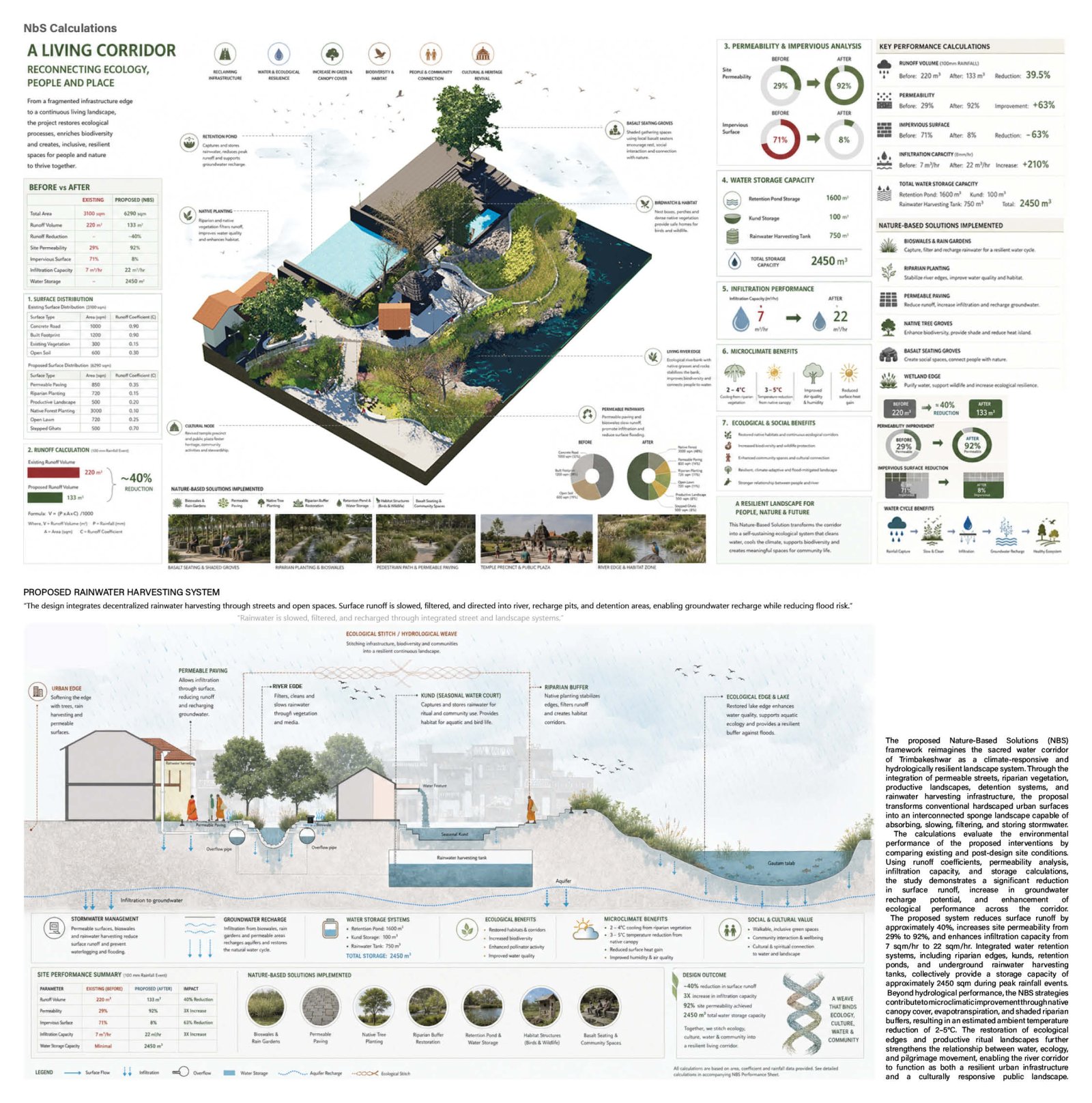
Nature-Based Solutions (NBS) and Performance Summary Quantifies environmental benefits such as increased permeability, reduced runoff, and micro-climate temperature reduction.

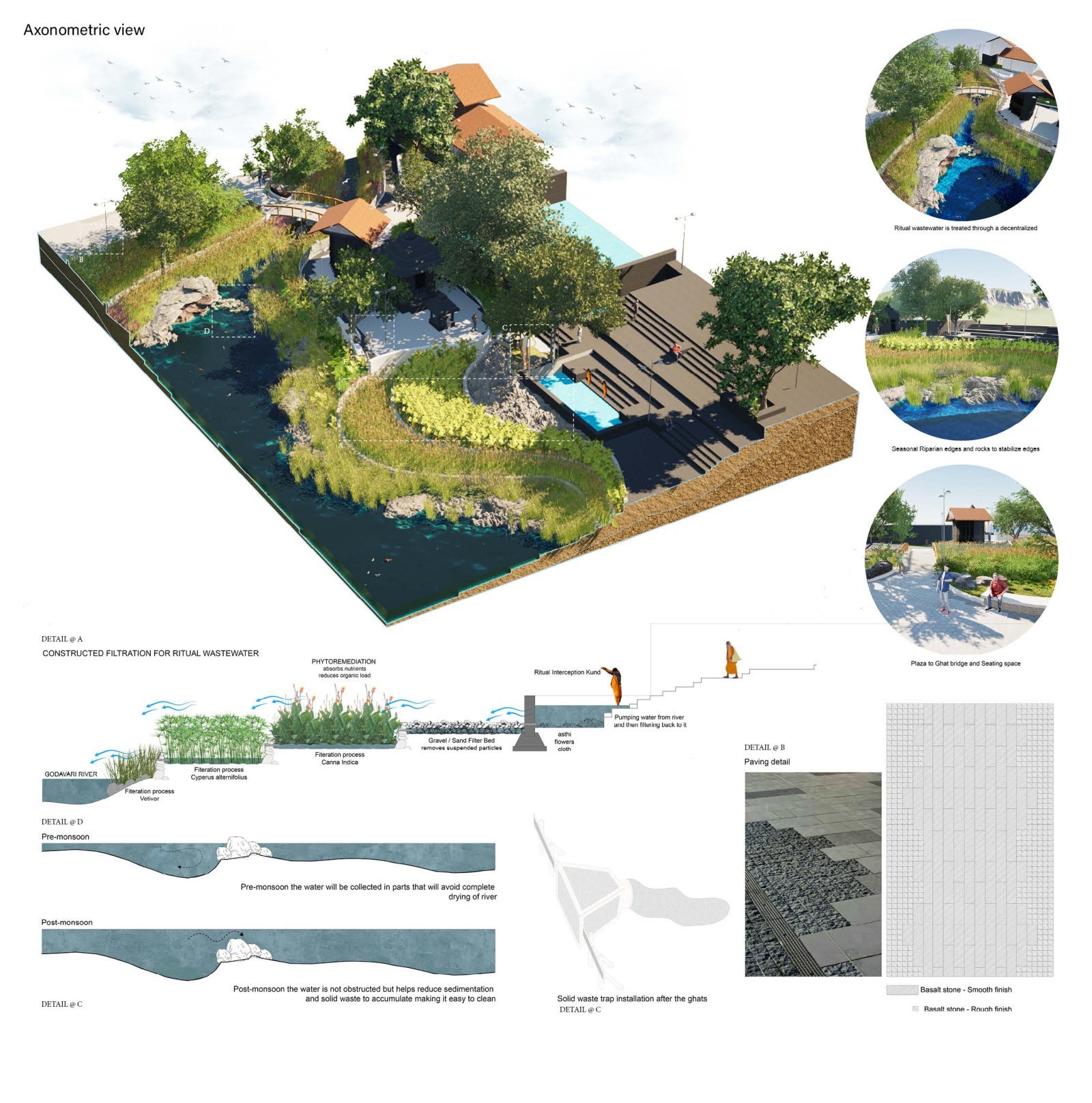
Filtration Tectonics and Ritual Wastewater Detail Explores the technical materiality and phytoremediation processes used for treating wastewater through constructed filtration beds.

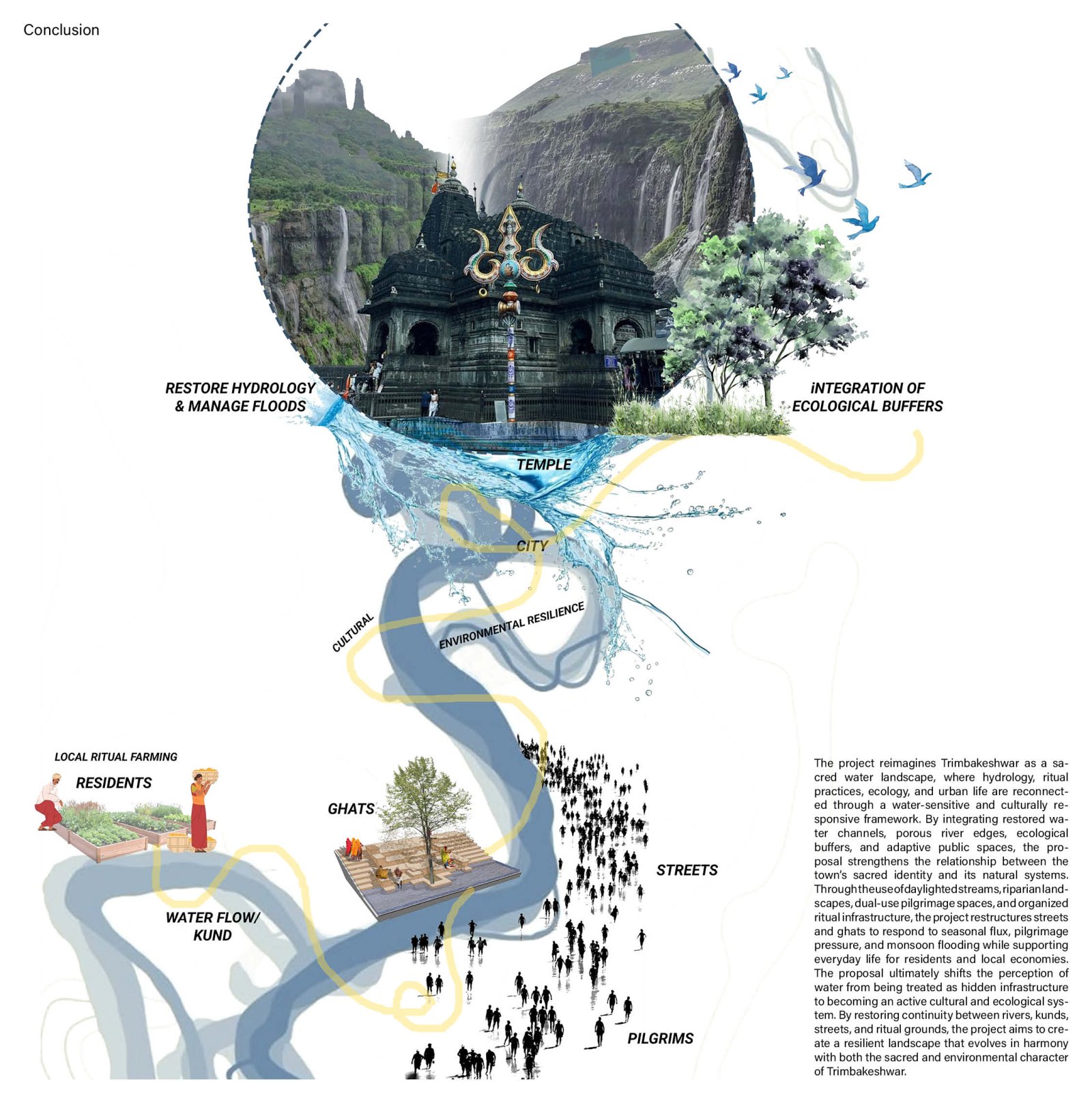
Project Conclusion and Holistic Resilience Framework Summarizes the reimagining of Trimbakeshwar as a sacred water landscape that balances cultural identity with environmental resilience.