Your browser is out-of-date!
For a richer surfing experience on our website, please update your browser. Update my browser now!
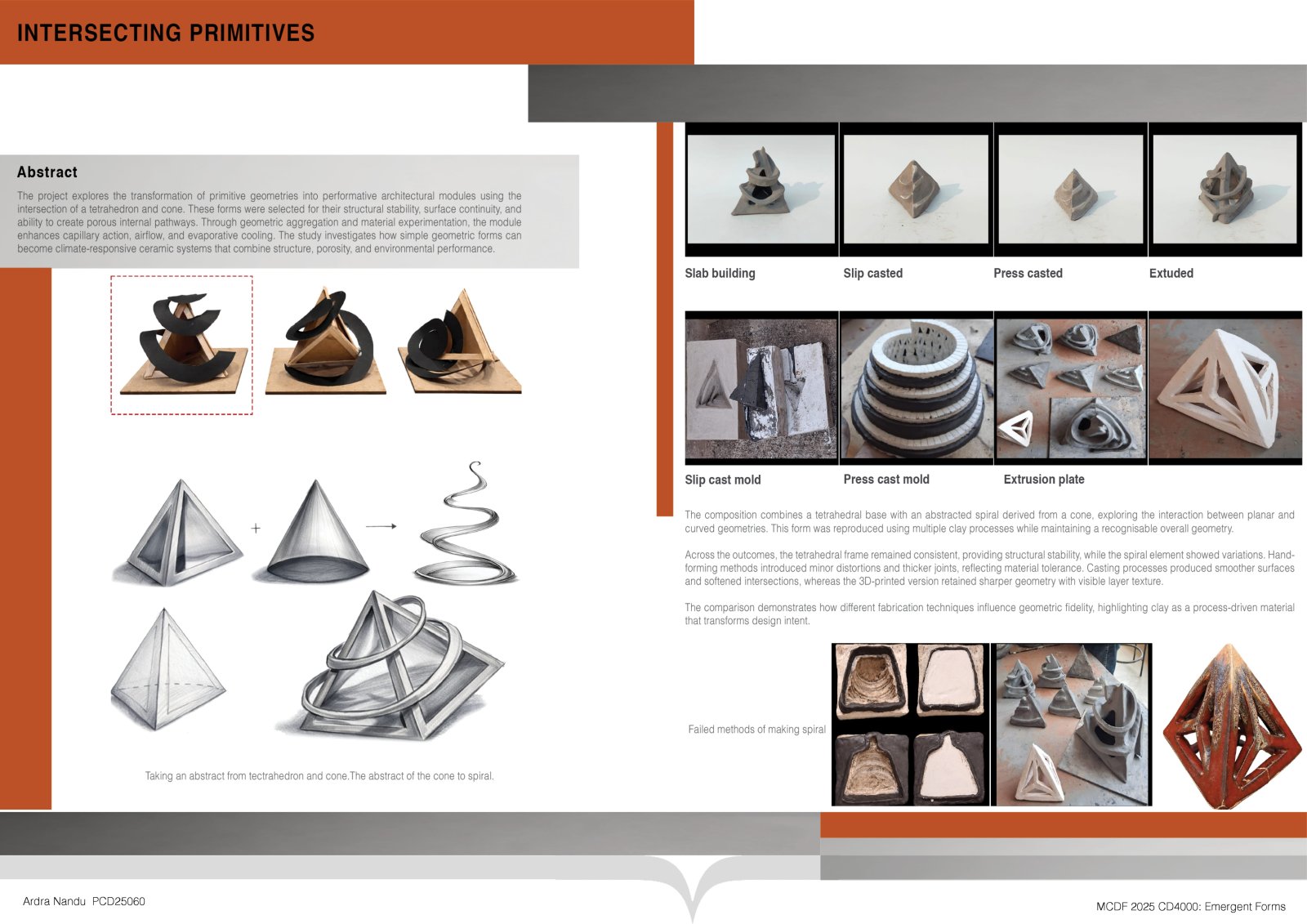
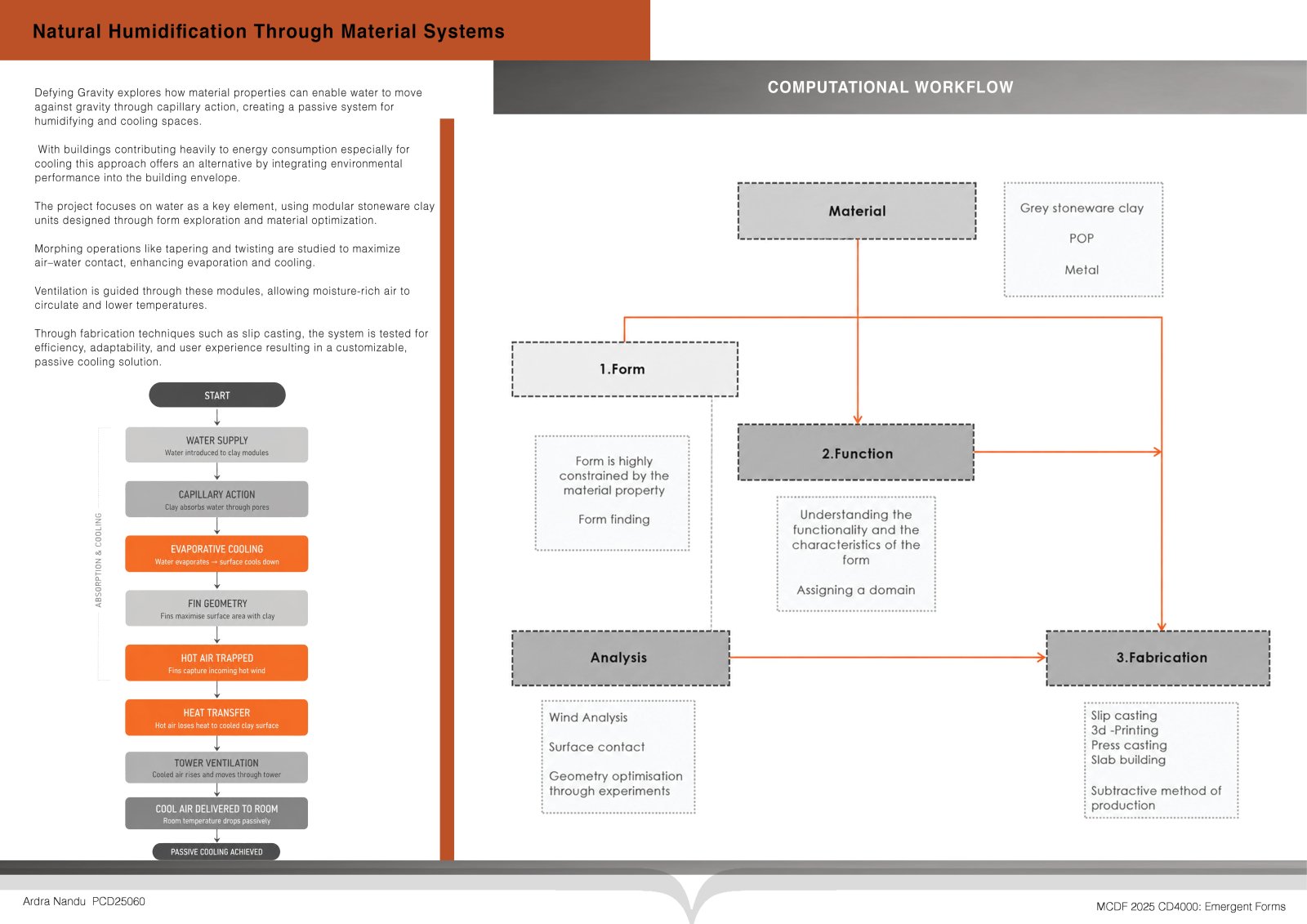
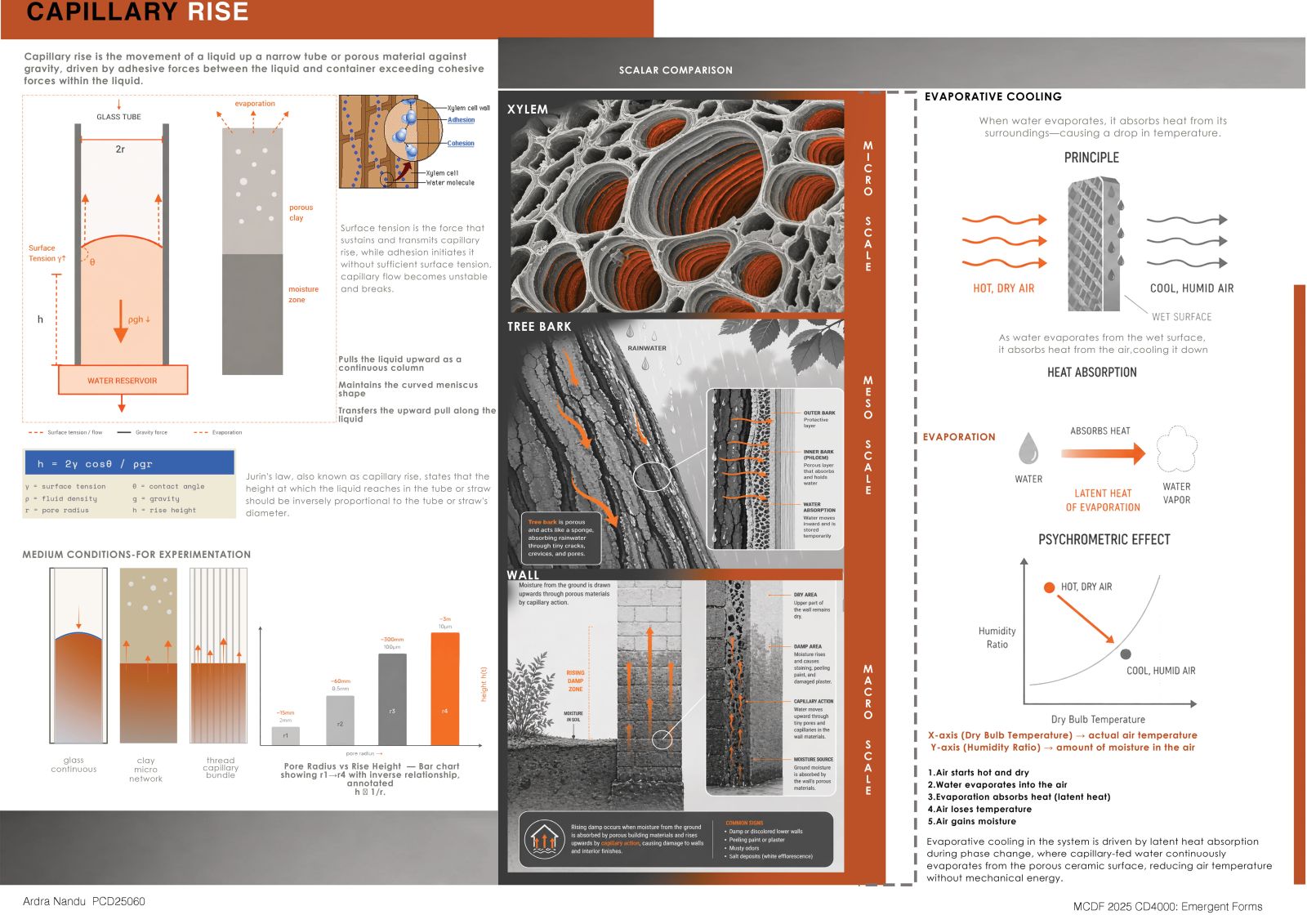
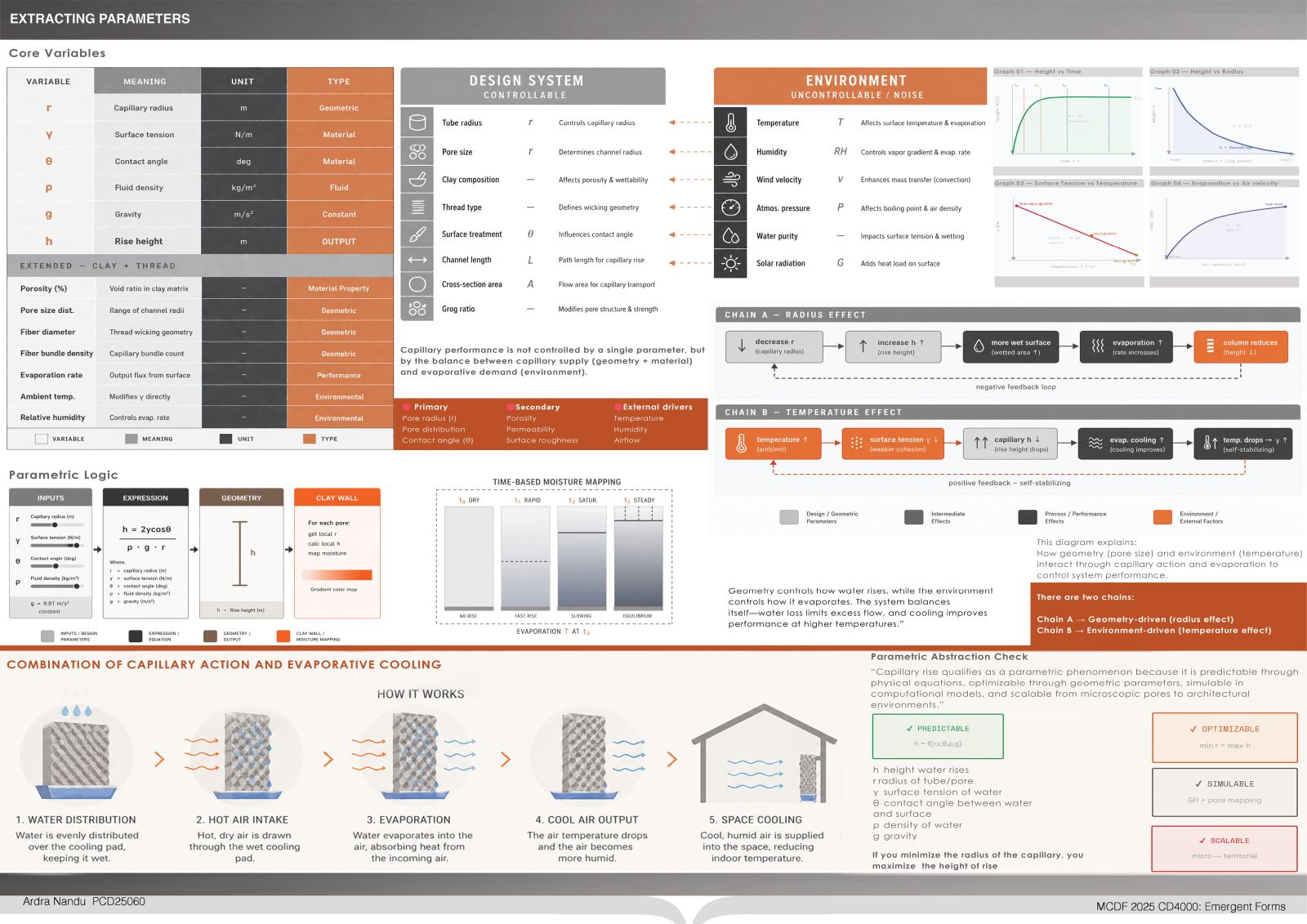
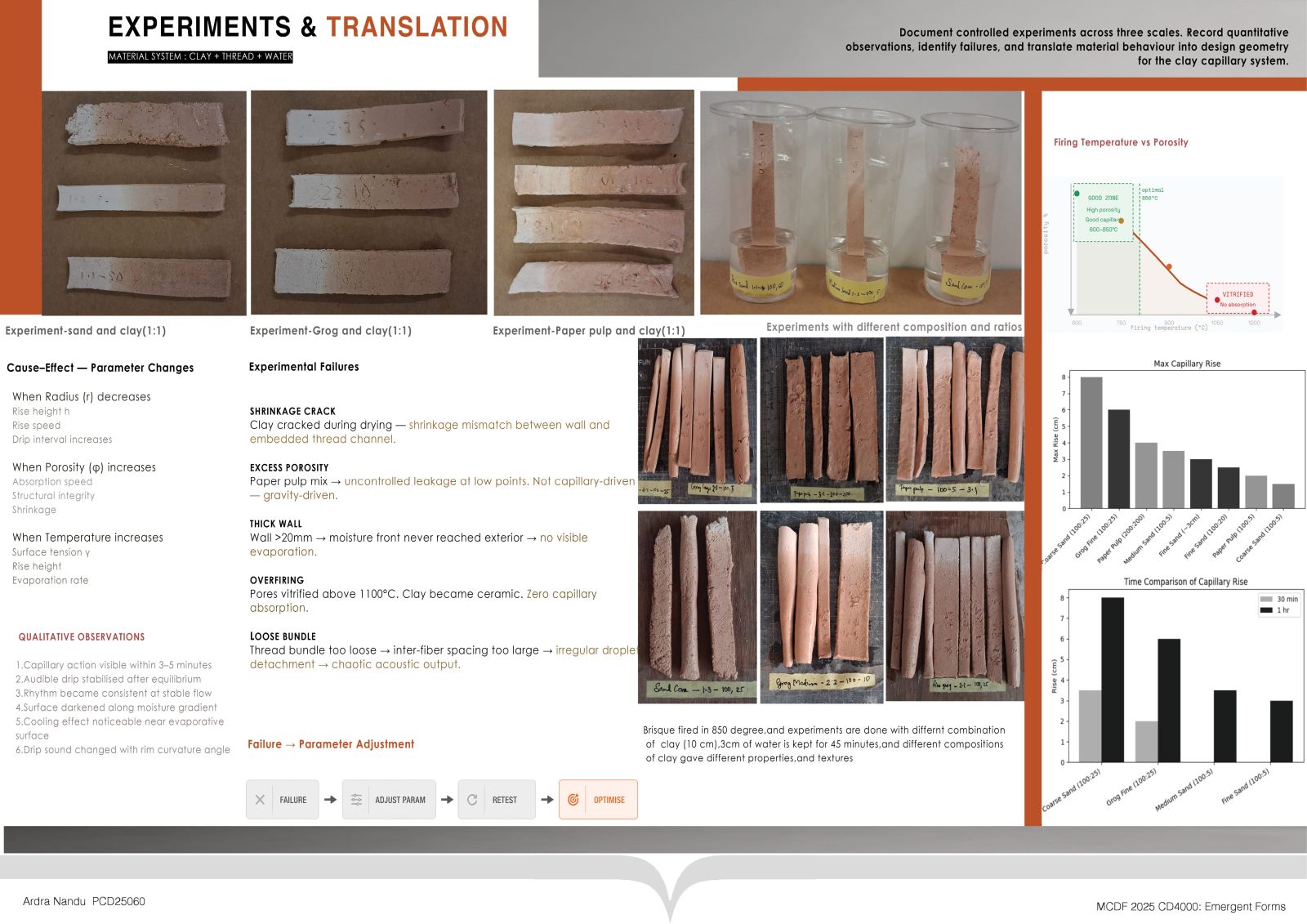
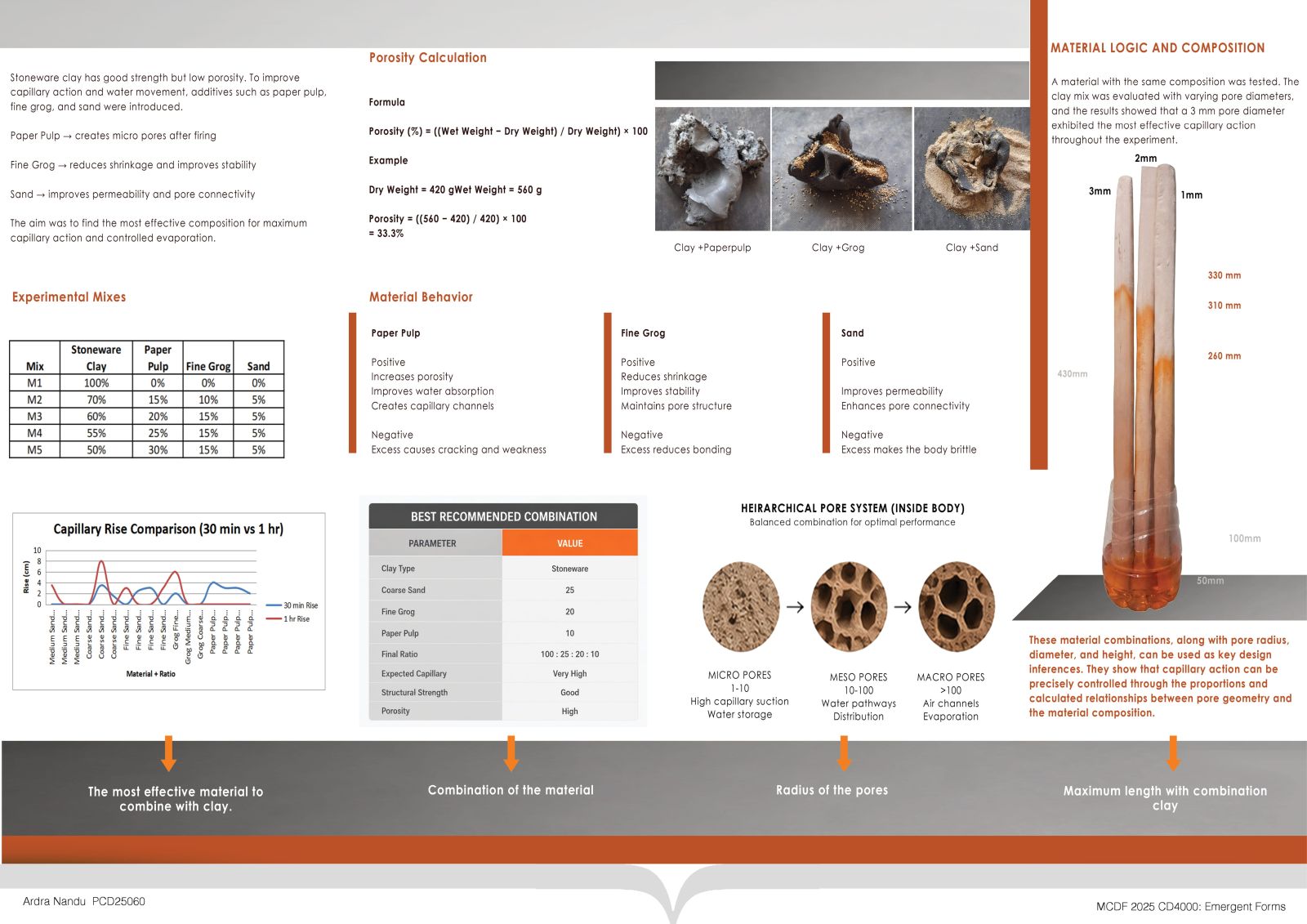
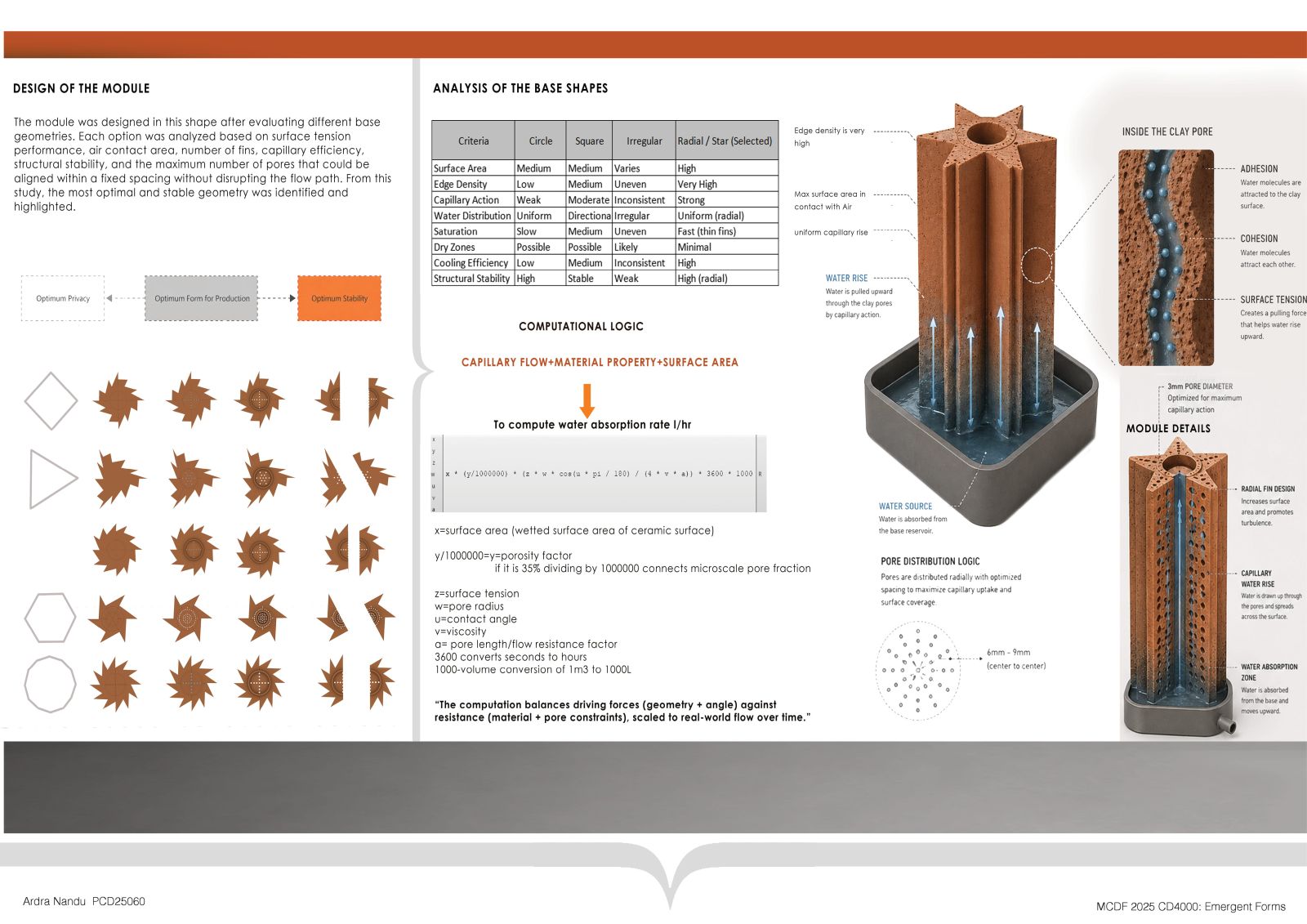
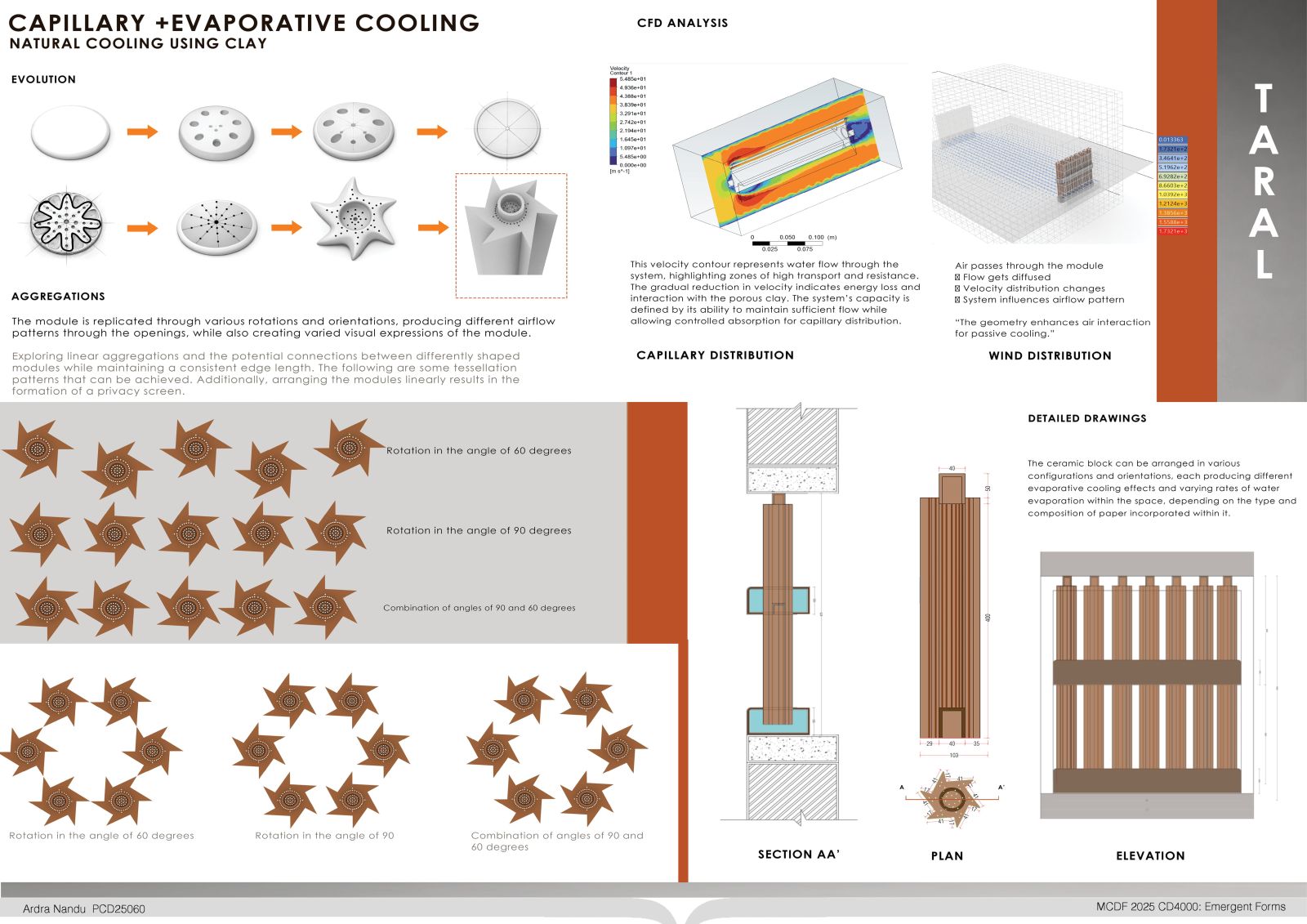
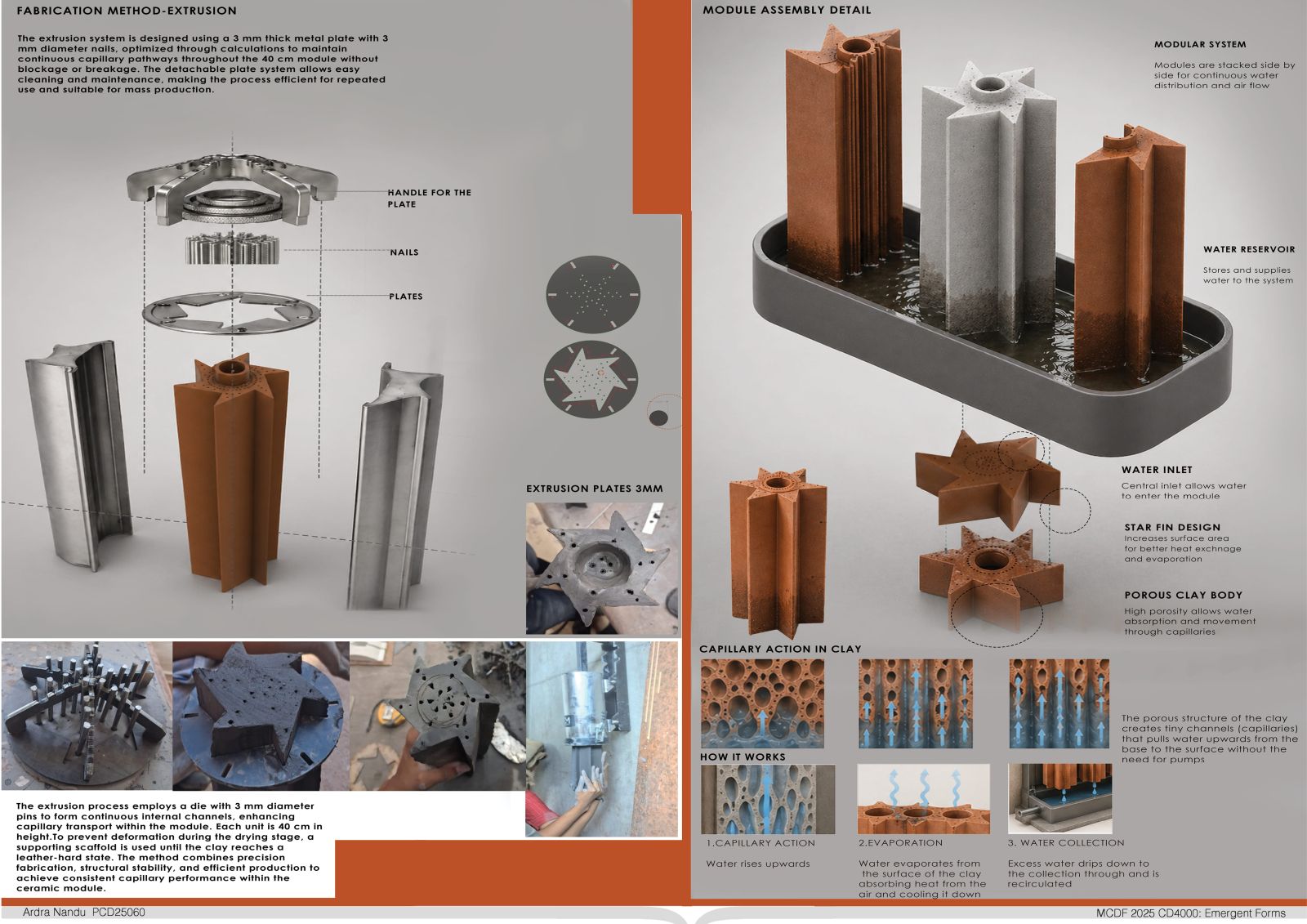
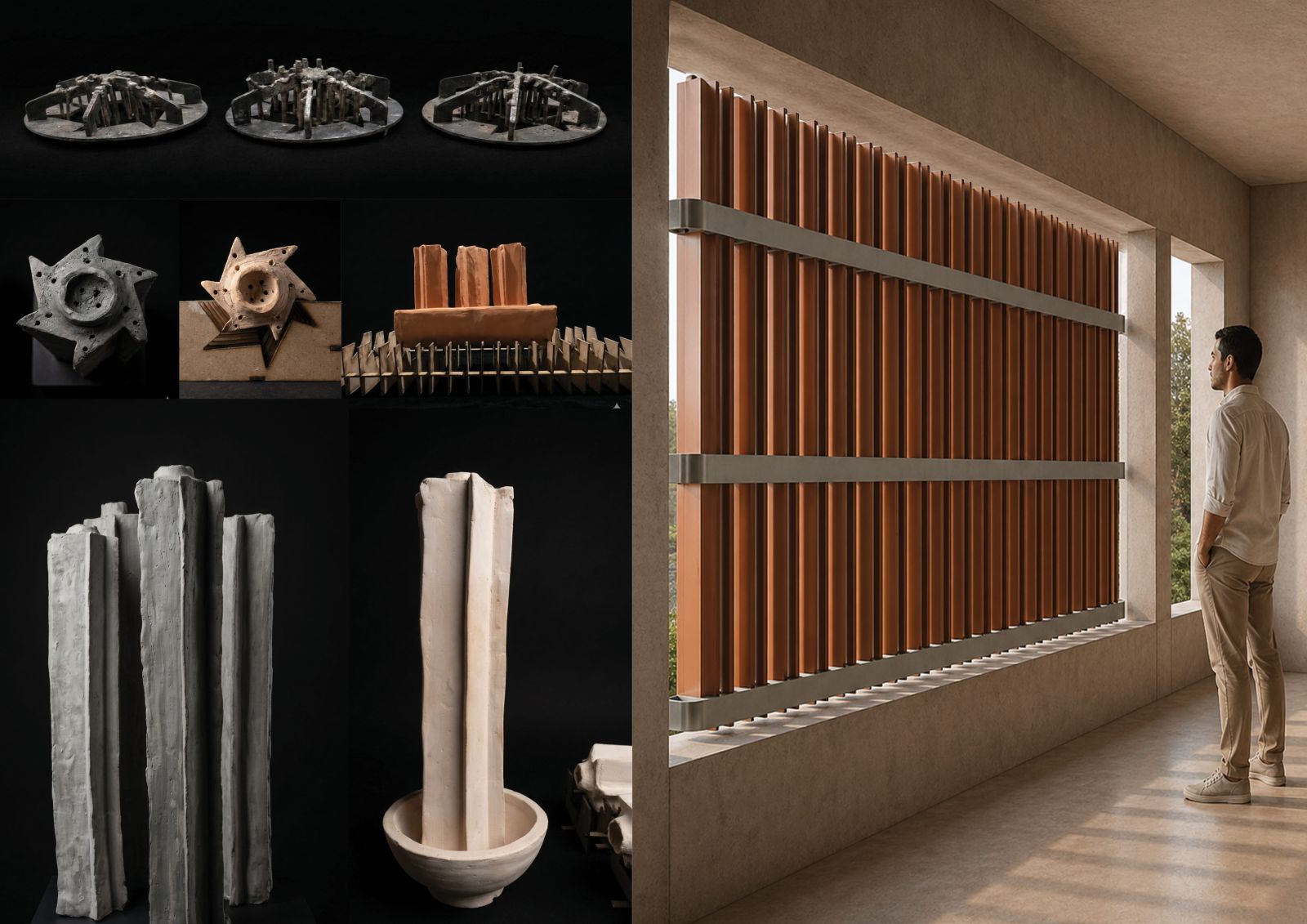
Taral is a material-driven exploration of passive evaporative cooling inspired by natural phenomena found in plants, soil, and porous surfaces where water moves against gravity through capillary action. The project investigates how this naturally occurring process can be translated into an architectural system that reduces dependence on energy-intensive mechanical cooling. Using water as the primary medium, the research demonstrates how capillary movement and evaporation can work together to create localized cooling and humidification within built environments. The project focuses on modular stoneware clay units designed to maximize water absorption, retention, and evaporation. Through geometric explorations involving tapering, twisting, and surface optimization, the modules increase air–water contact, enhancing evaporative performance and thermal comfort. Ventilation is guided through these porous structures, allowing moisture-rich air to circulate naturally and lower surrounding temperatures. Material studies involving clay compositions, porosity testing, and fabrication techniques such as slip casting contribute to the development of an adaptable and customizable cooling envelope. By combining natural principles with computational form exploration and material experimentation, Taral proposes a sustainable architectural approach where cooling is achieved passively through the inherent behavior of water, material porosity, and capillary action.