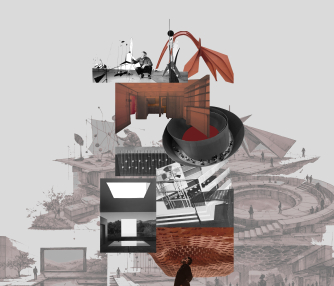
Study of Design Installations as Experience catalysts in Spatial Environment
Design installations are distinct from conventional artworks or art installation, they invite participation. A design installation can be understood as a spatial and sensory construct that transforms the act of viewing into an act of being within. Unlike art installations, design installations immerse the participant physically and emotionally, producing a “situation to enter rather than an object to look at.” The experiential dimension of installation draws from phenomenological theories of space, where the body is central to the act of perception.
This research argues that design installation as not object-based display but rather experiential practice, that actively engages human perception, senses, and movement.
It investigates the potential of installation to reshape spatial environments, where installation design becomes an act of evoking feeling not merely arranging form but rather using it as a tool to create an experience. The study will aim to understand what constitutes a design installation by mapping the historical trajectory of installation that progressively shifted focus from the object to the observer, transforming space into a medium of perception. It seeks to analyse how installations shape cognitive and sensory responses through spatial, visual, and tactile cues. The study contributes to interior design discourse by framing installation as a spatial practice that prioritizes experience, emphasizing human perception and presence as central to the Installation.