Your browser is out-of-date!
For a richer surfing experience on our website, please update your browser. Update my browser now!
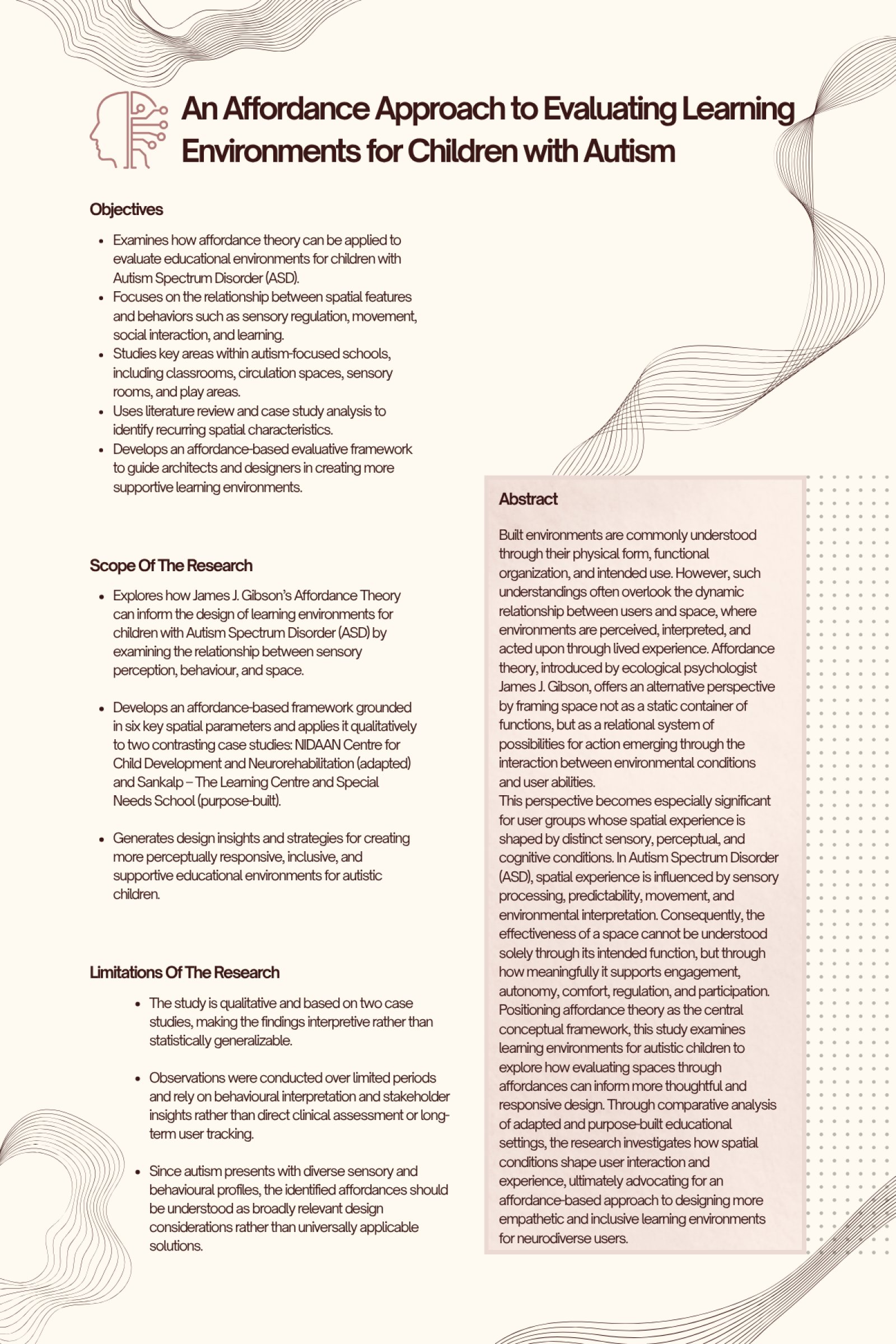
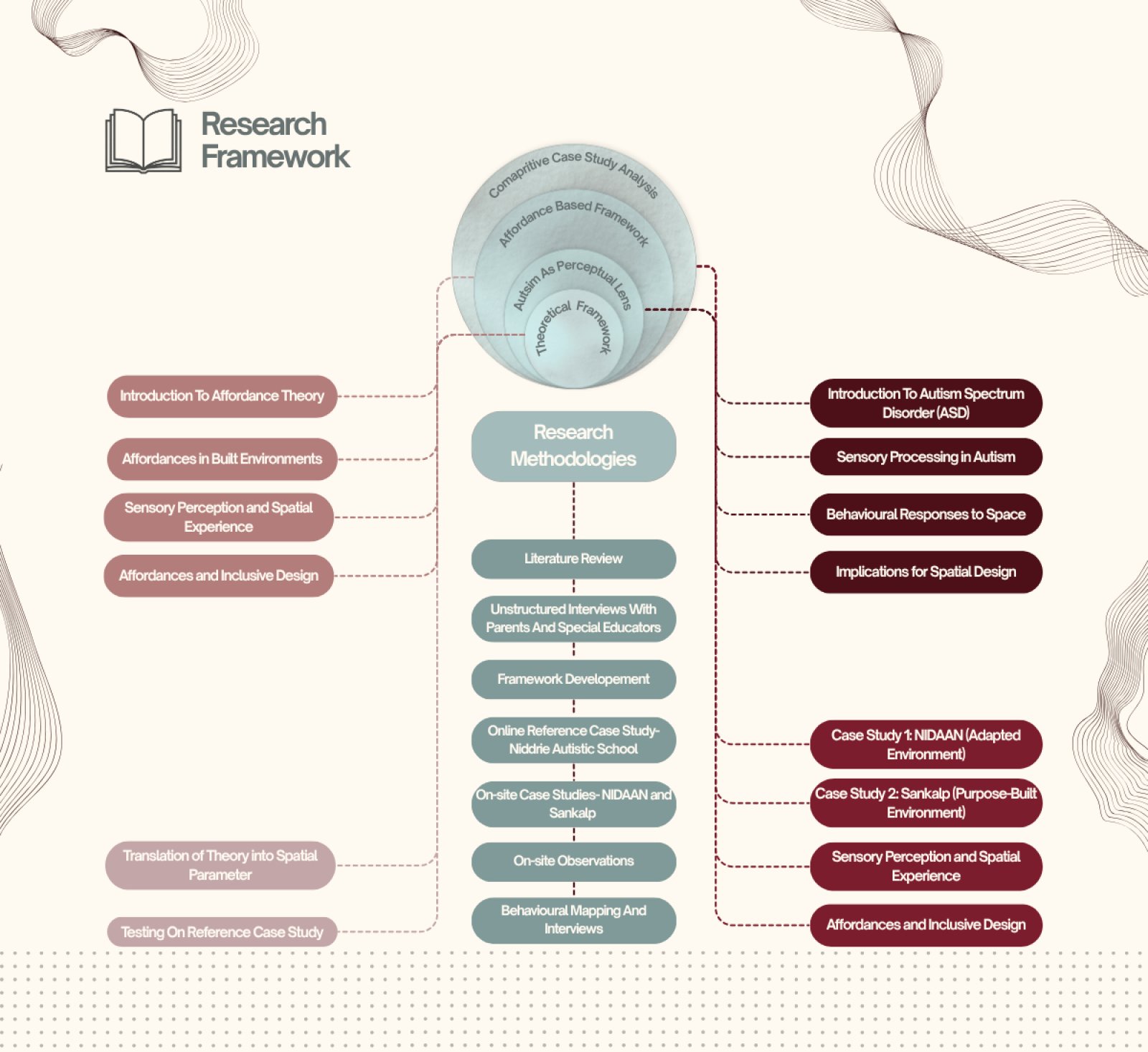
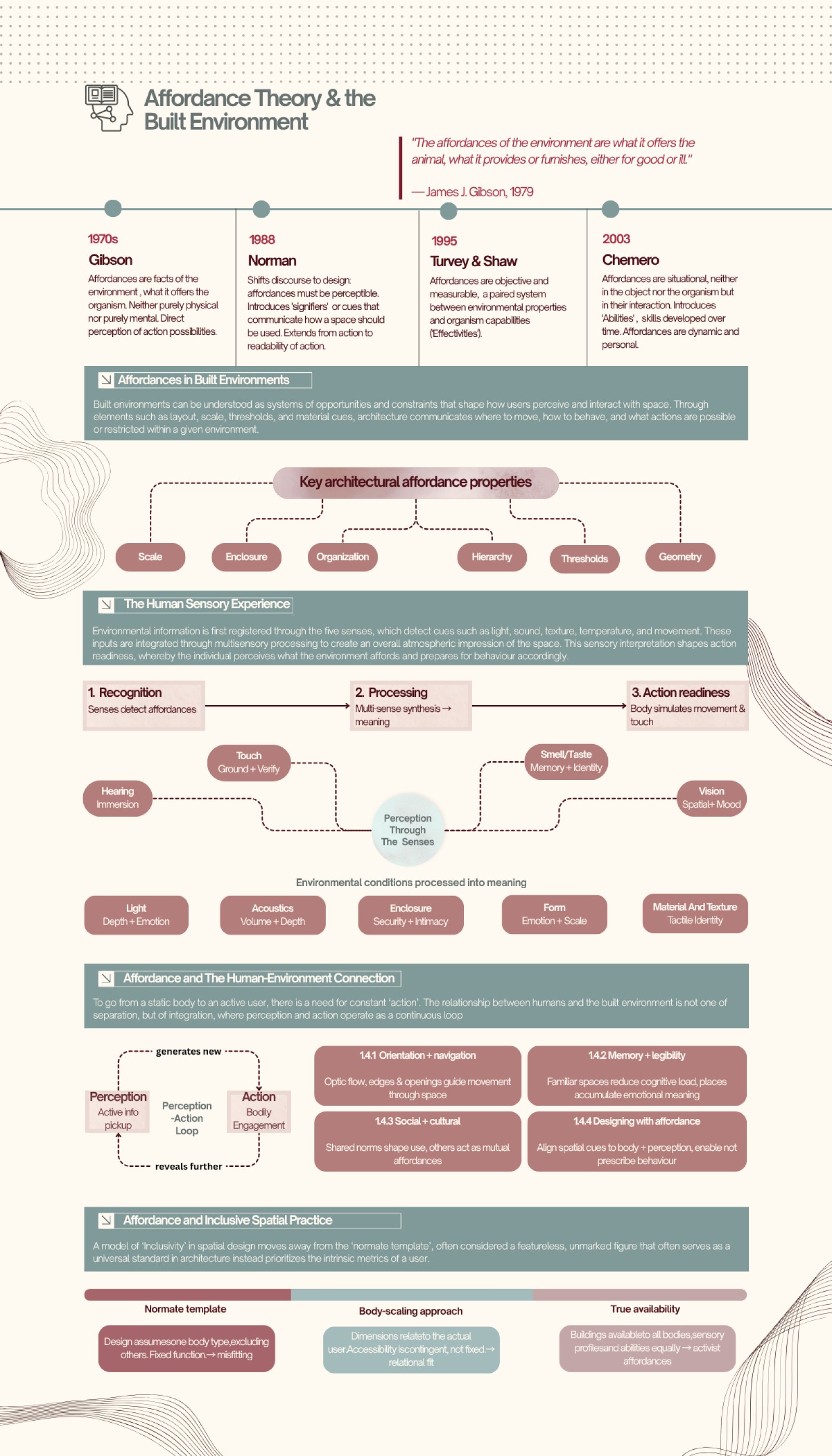
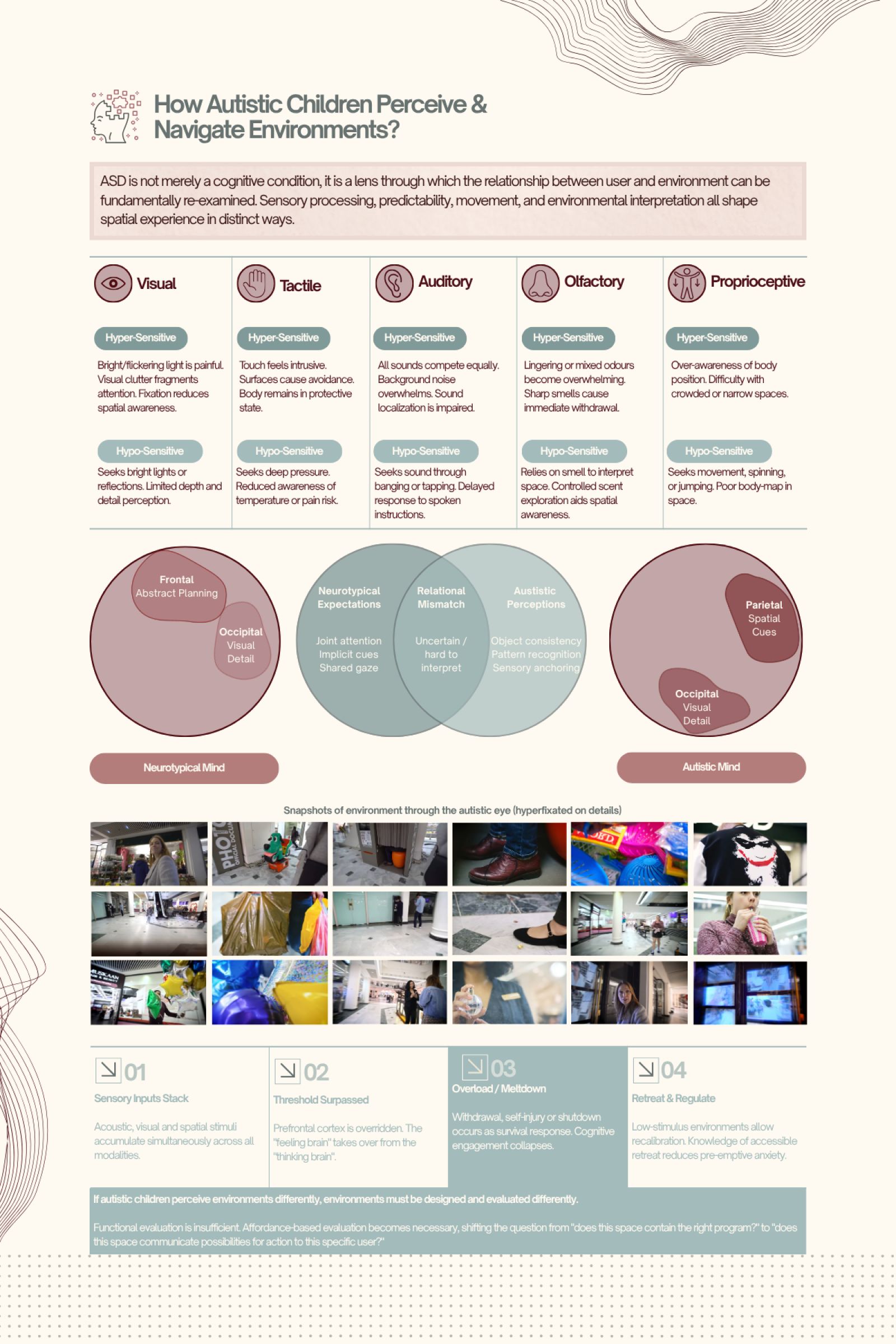
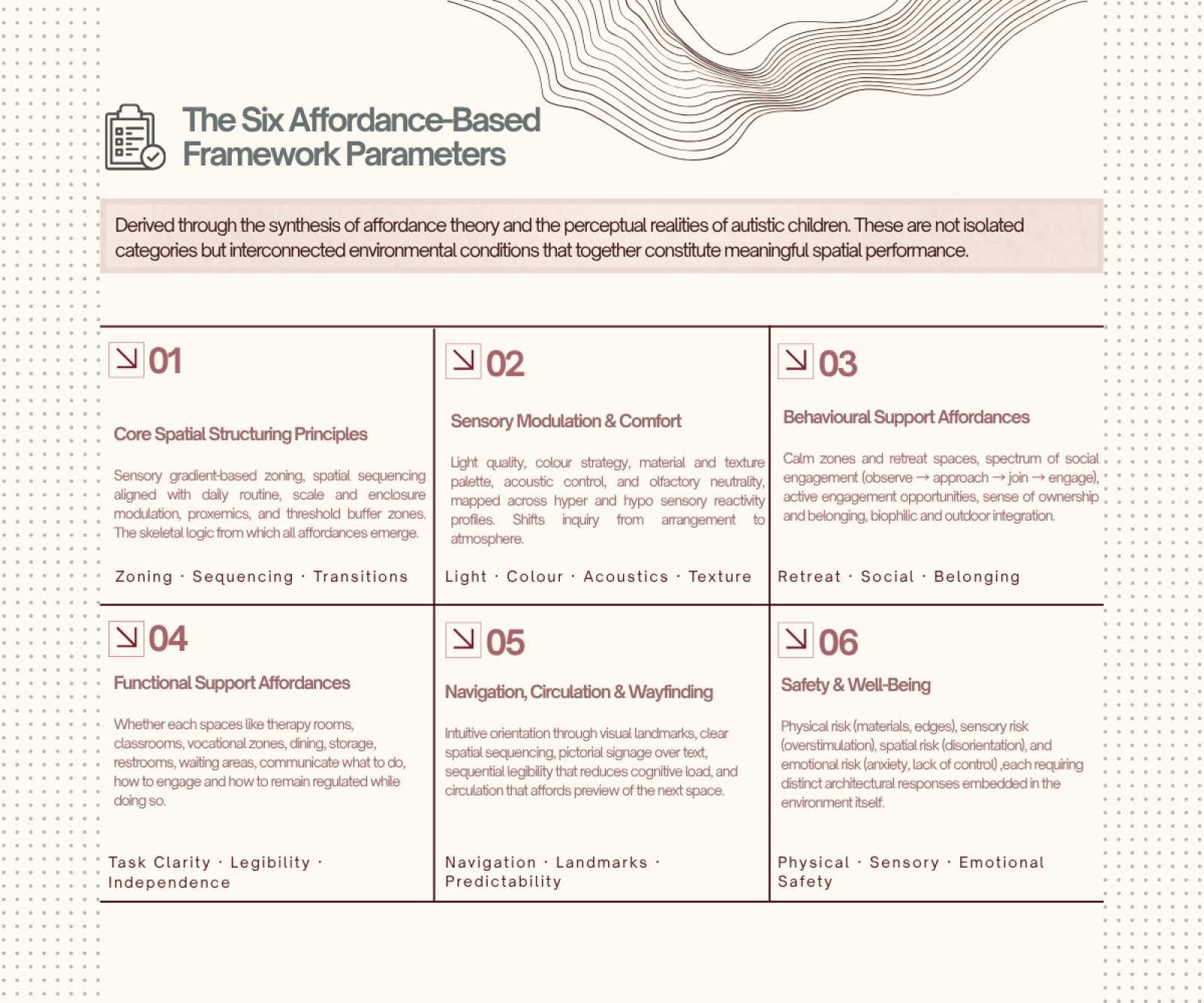
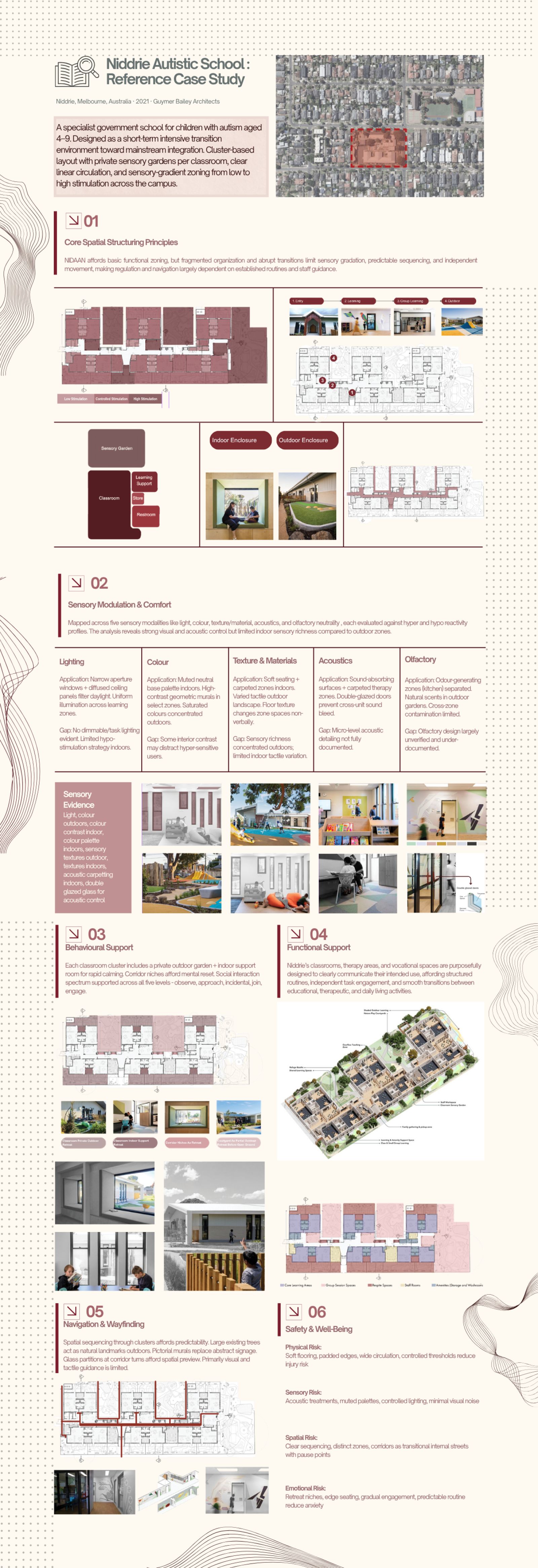
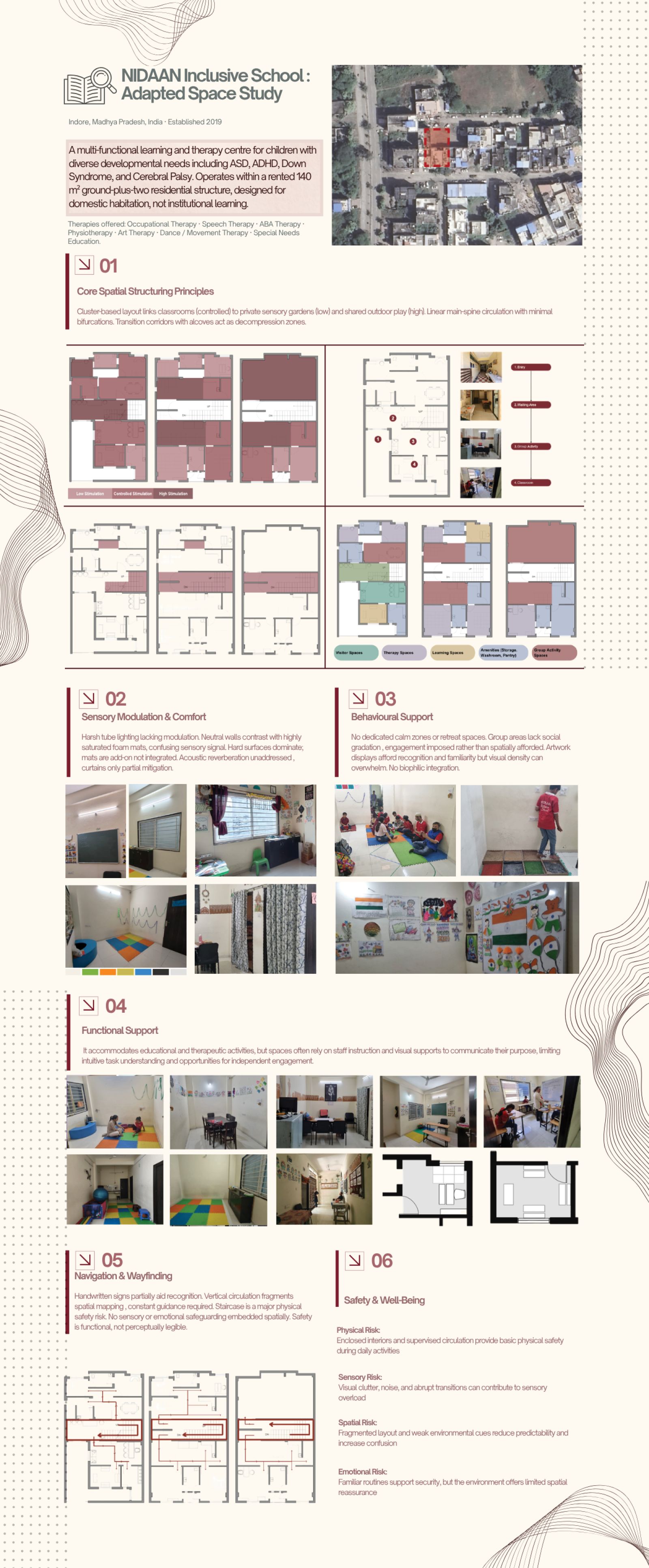
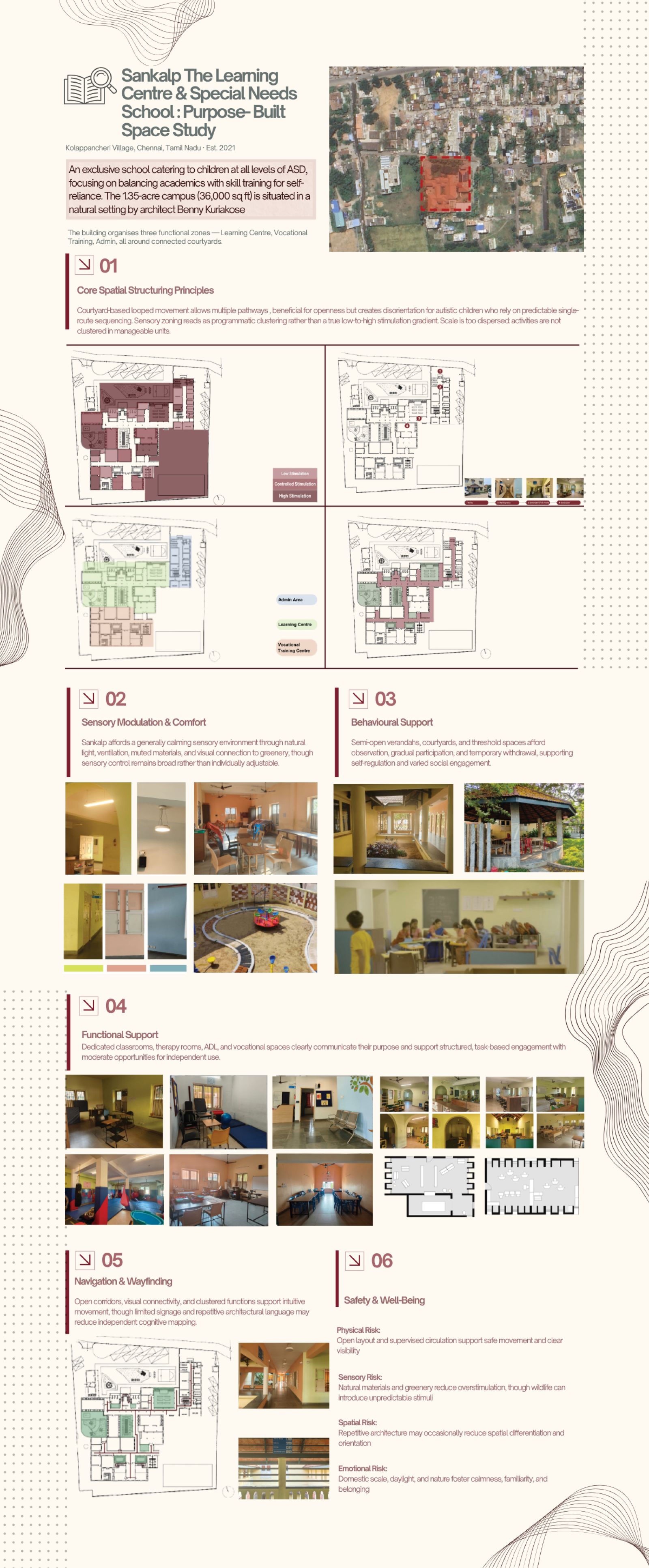
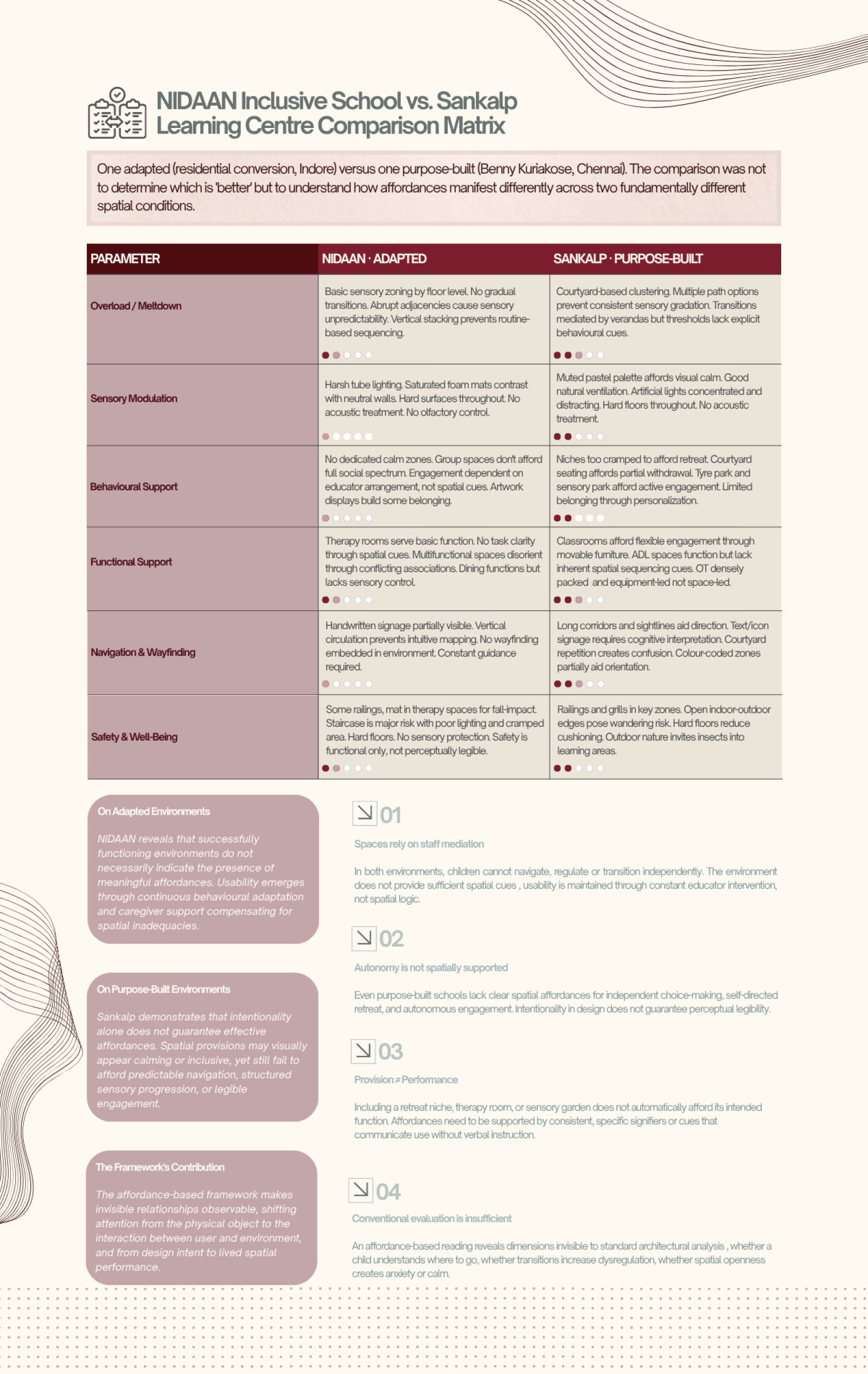
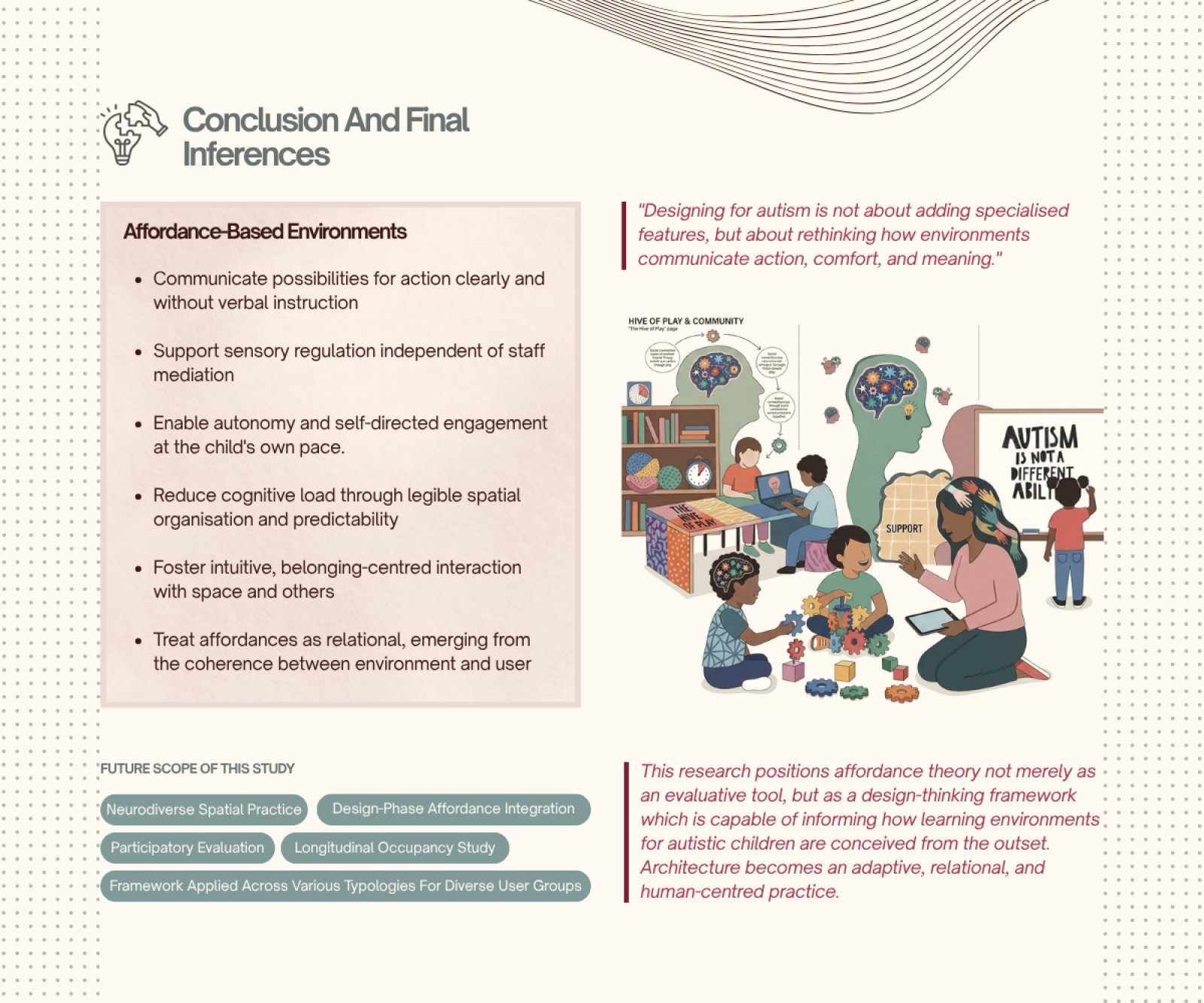
This study explores how Affordance Theory can inform the design and evaluation of learning environments for children with Autism Spectrum Disorder (ASD). By understanding space as a system of possibilities for action shaped through perception, the study examines how sensory processing, behaviour, and cognition influence spatial experience in autism. These insights are translated into an affordance-based framework comprising six spatial parameters, which is applied to compare an adapted and a purpose-built learning environment. The research demonstrates how evaluating environments through affordances can reveal deeper insights for designing more thoughtful, inclusive, and responsive educational spaces for autistic children.
View Additional Work