Shah Anjali Rahul

IR3596

UIR20019

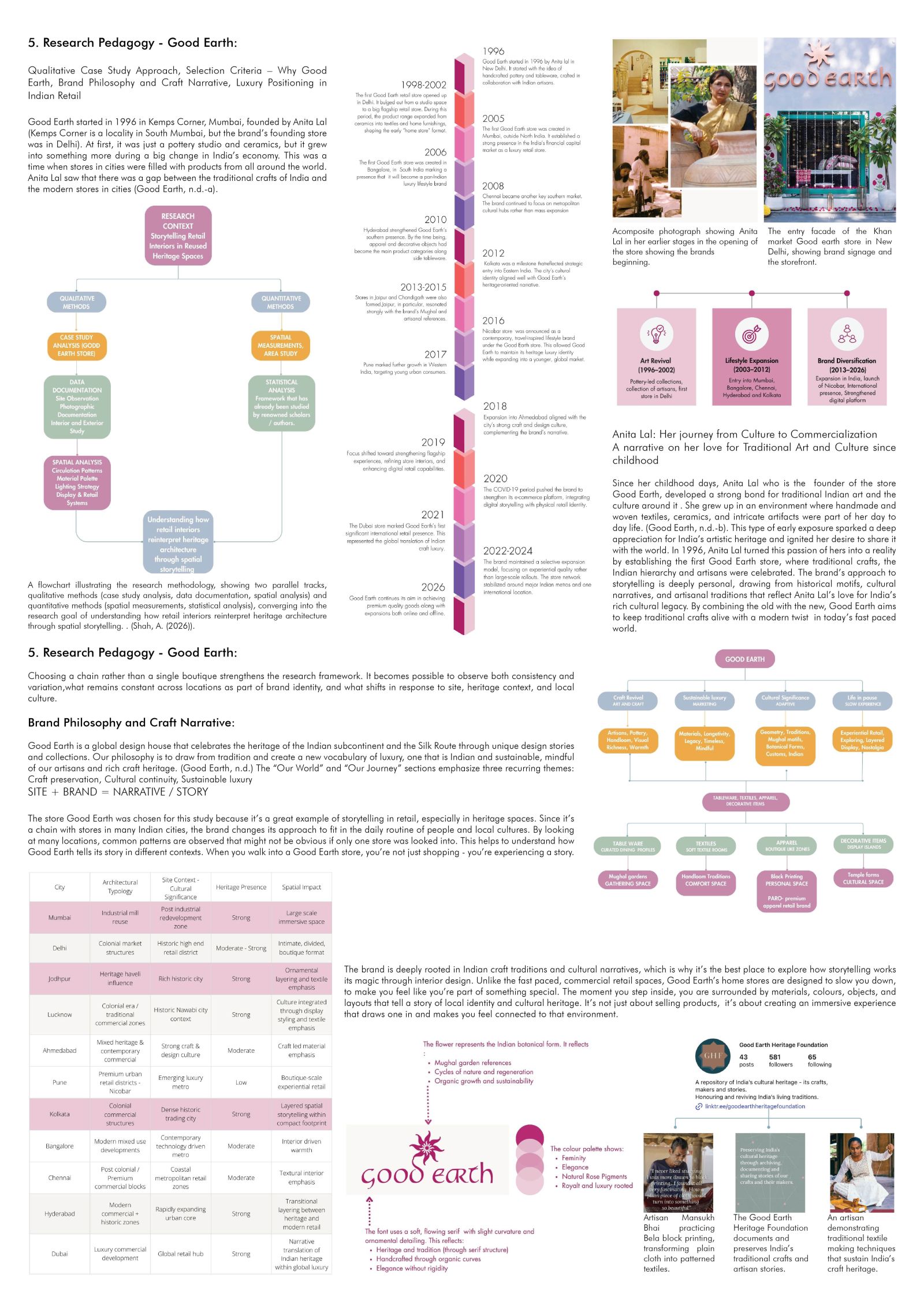
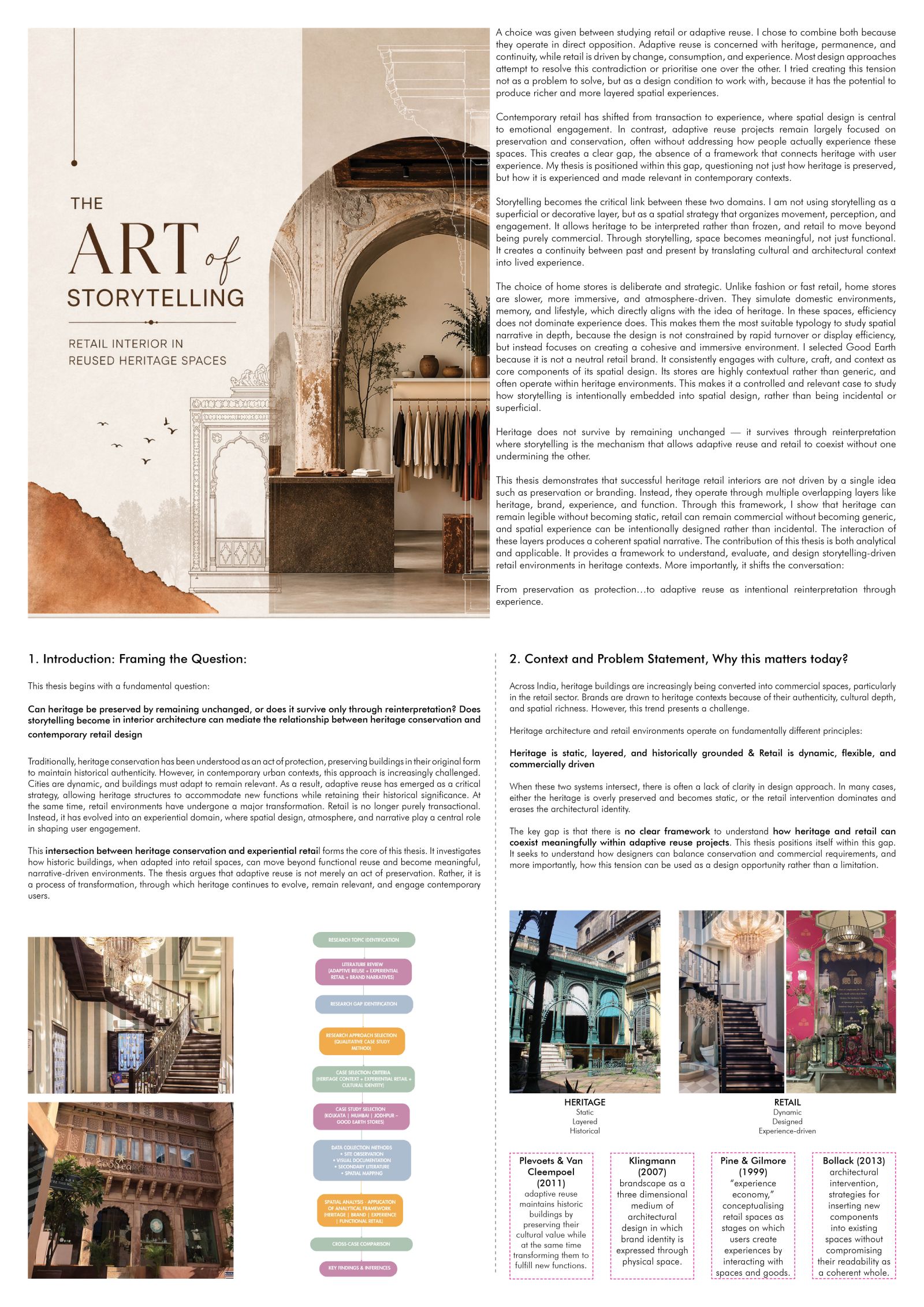
Many cities today contain historic buildings rich with identity, craftsmanship, memory, and cultural significance. Adaptive reuse gives these structures new life instead of allowing them to be demolished. However, a challenge emerges when heritage buildings are transformed into retail spaces. Retail demands flexibility, branding, storage, lighting, and efficiency, while heritage requires sensitivity, preservation, and respect for history. Today, many retail interiors are driven primarily by commercial performance, often resulting in repetitive and standardized spaces. In contrast, storytelling retail focuses on creating meaningful experiences through materials, lighting, spatial sequencing, and atmosphere. Rather than hiding the building’s history, the design integrates it into the narrative of the space. This research explores how interior architecture can balance commercial success with cultural sensitivity through the adaptive reuse of heritage buildings. Using multiple Good Earth home stores as case studies, the thesis examines how brand identity remains consistent while each store responds uniquely to its local culture, architecture, and context. This thesis investigates whether retail interiors can move beyond efficiency to create spaces that feel rooted, immersive, and emotionally connected to their surroundings.
View Additional Work

Report Content

Introduction - Conservation × Commerce × Narrative

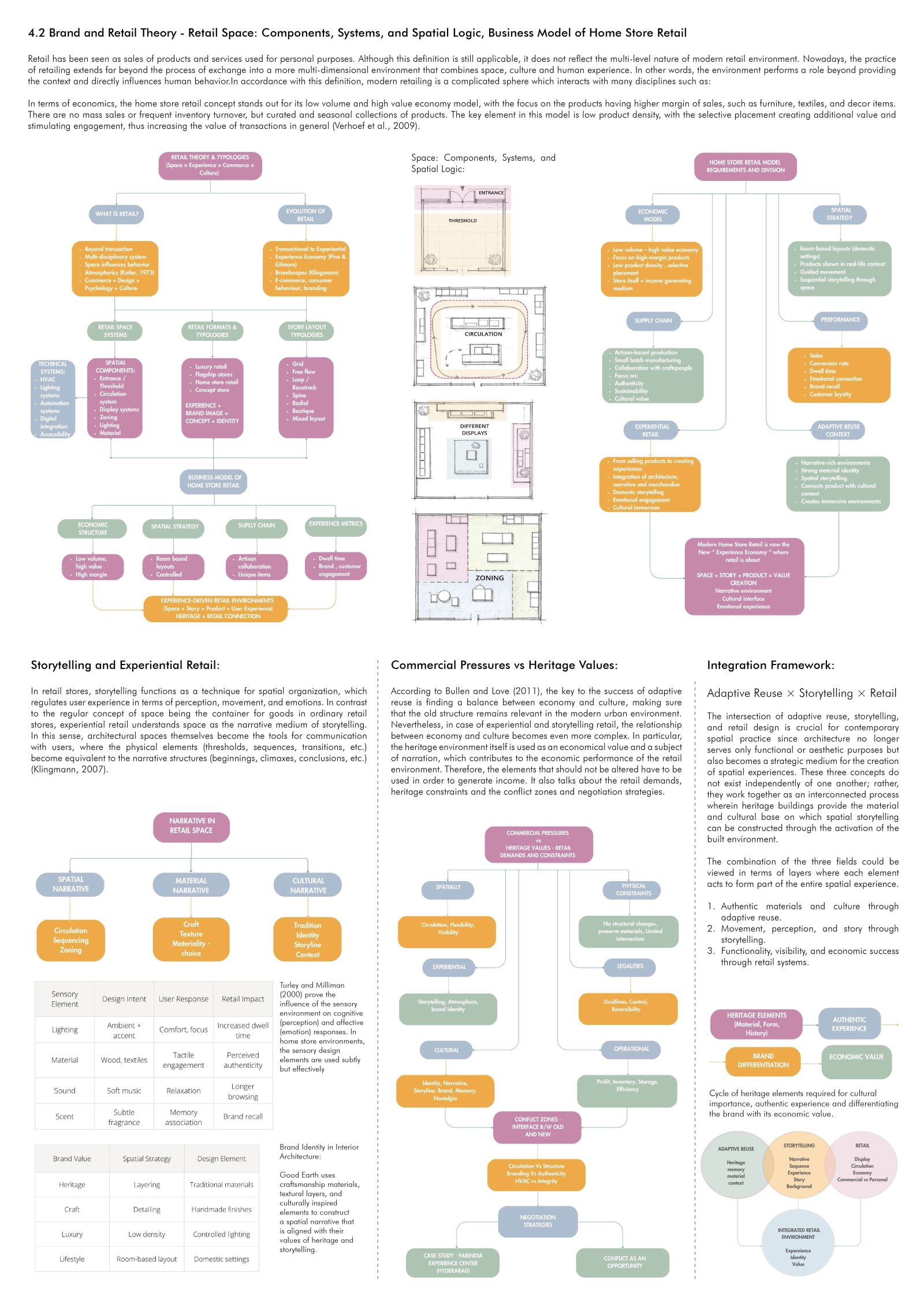
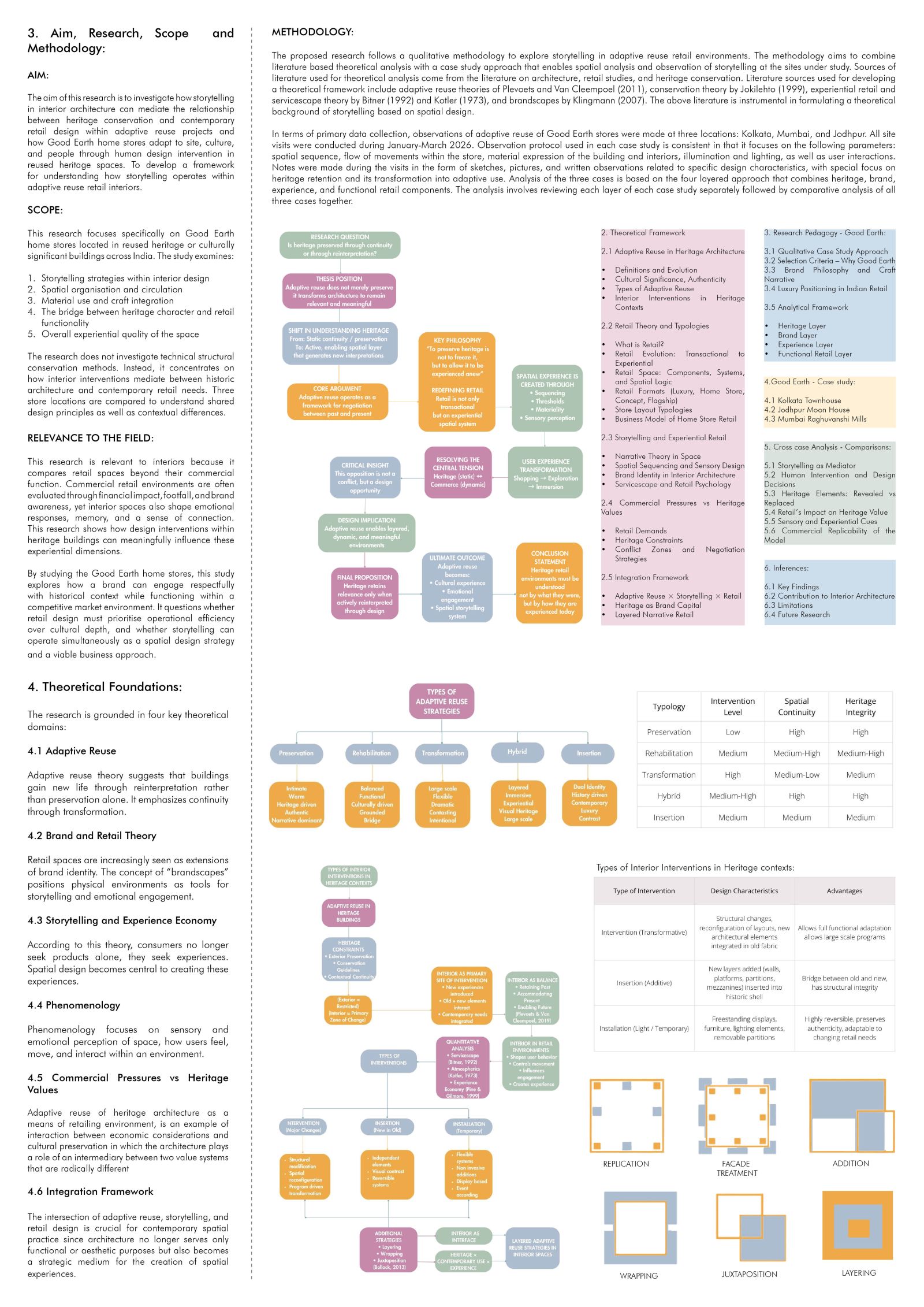
Theoretical Framework - a base for identifying and understanding the value of adaptive reuse in architectural practice and how heritage buildings can be responsibly re-used.

Retail Evolution: From Transactional to Experiential: In retail stores, storytelling functions as a technique for spatial organization, which regulates user experience in terms of perception, movement, and emotions.

Good Earth is a global design house that celebrates the heritage of the Indian subcontinent and the Silk Route through unique design stories and collections. Our philosophy is to draw from tradition and create a new vocabulary of luxury, one that is Indian and sustainable, mindful of our artisans and rich craft heritage.

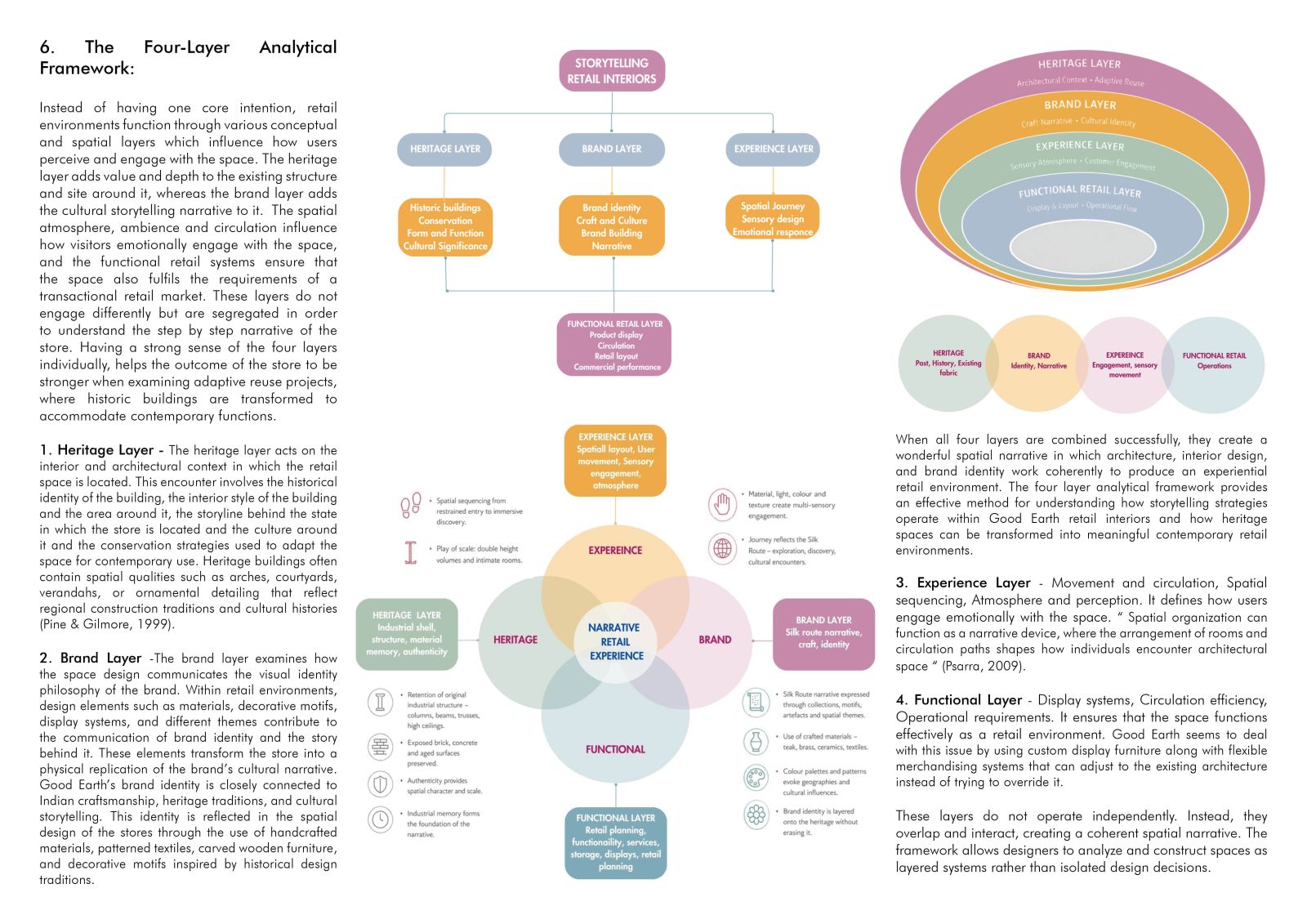
Retail interiors that are made within heritage buildings overlap many considerations like historical context, brand identity, visitor experience, and the practical requirements of retail operation.

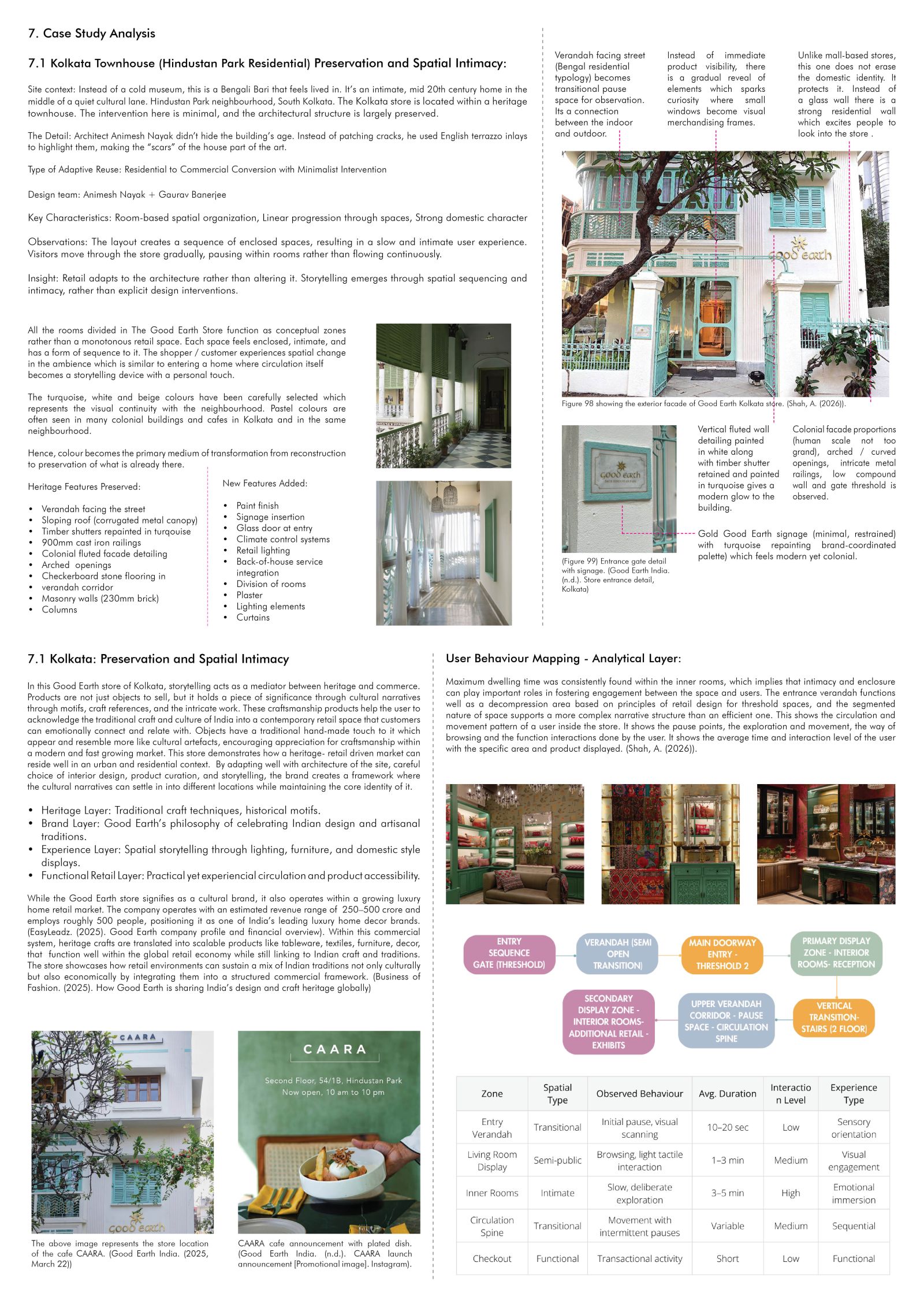
Kolkata Townhouse (Hindustan Park Residential): residential based area with high end culture and historic importance.

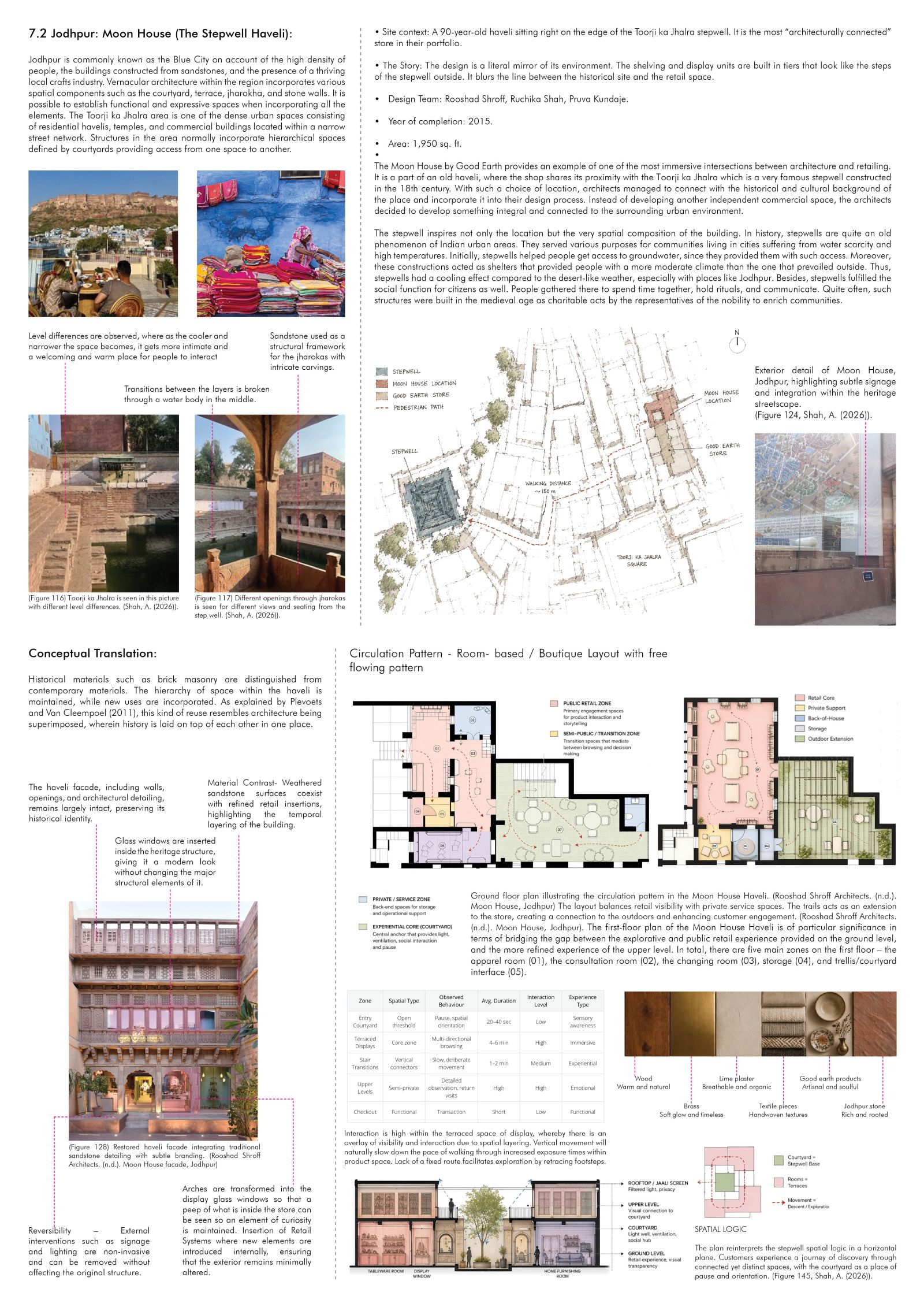
Jodhpur: Moon House (The Stepwell Haveli):The Moon House by Good Earth provides an example of one of the most immersive intersections between architecture and retailing.

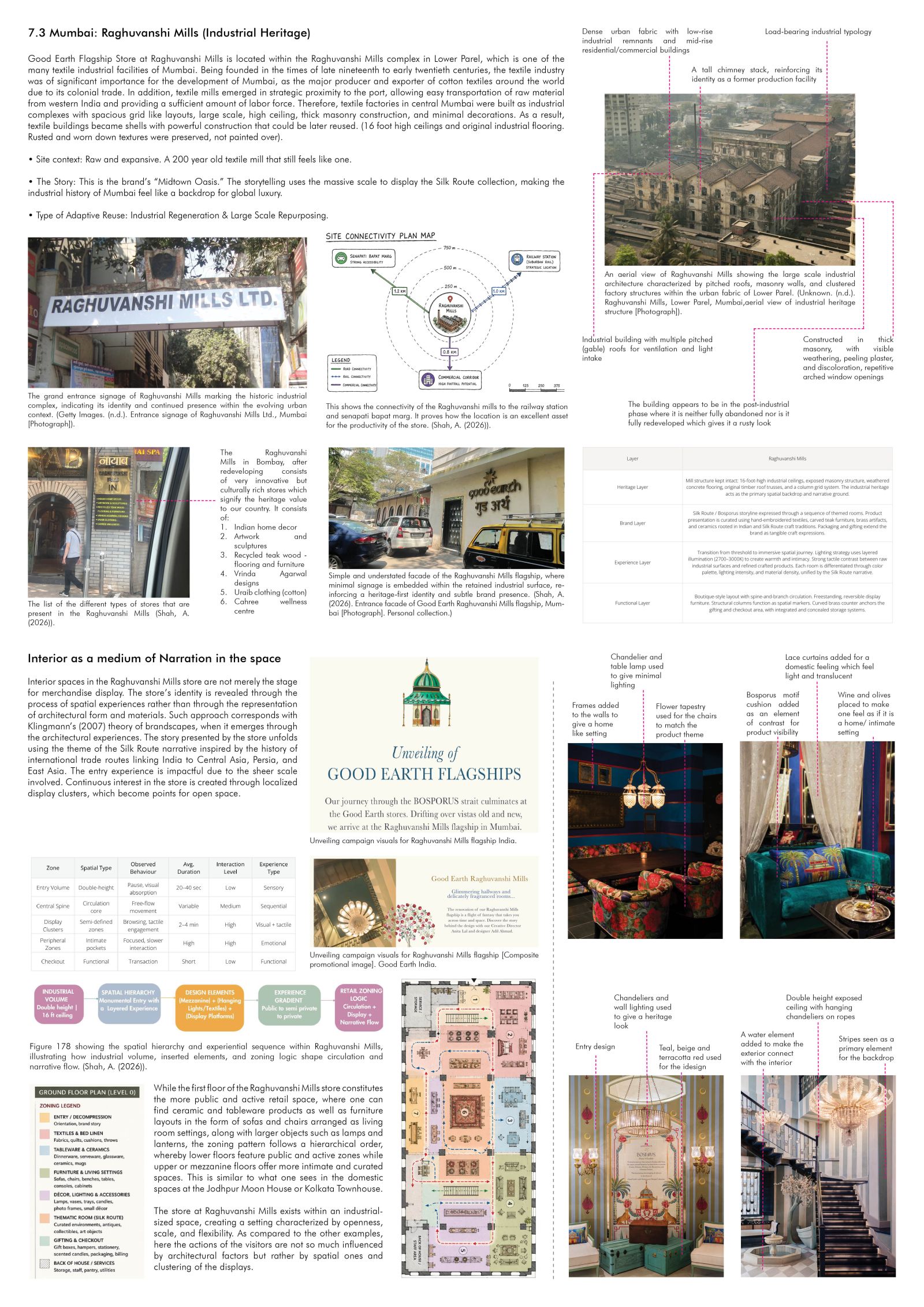
Mumbai: Raghuvanshi Mills (Industrial Heritage): Good Earth Flagship Store at Raghuvanshi Mills is located within the Raghuvanshi Mills complex in Lower Parel, which is one of the many textile industrial facilities of Mumbai.

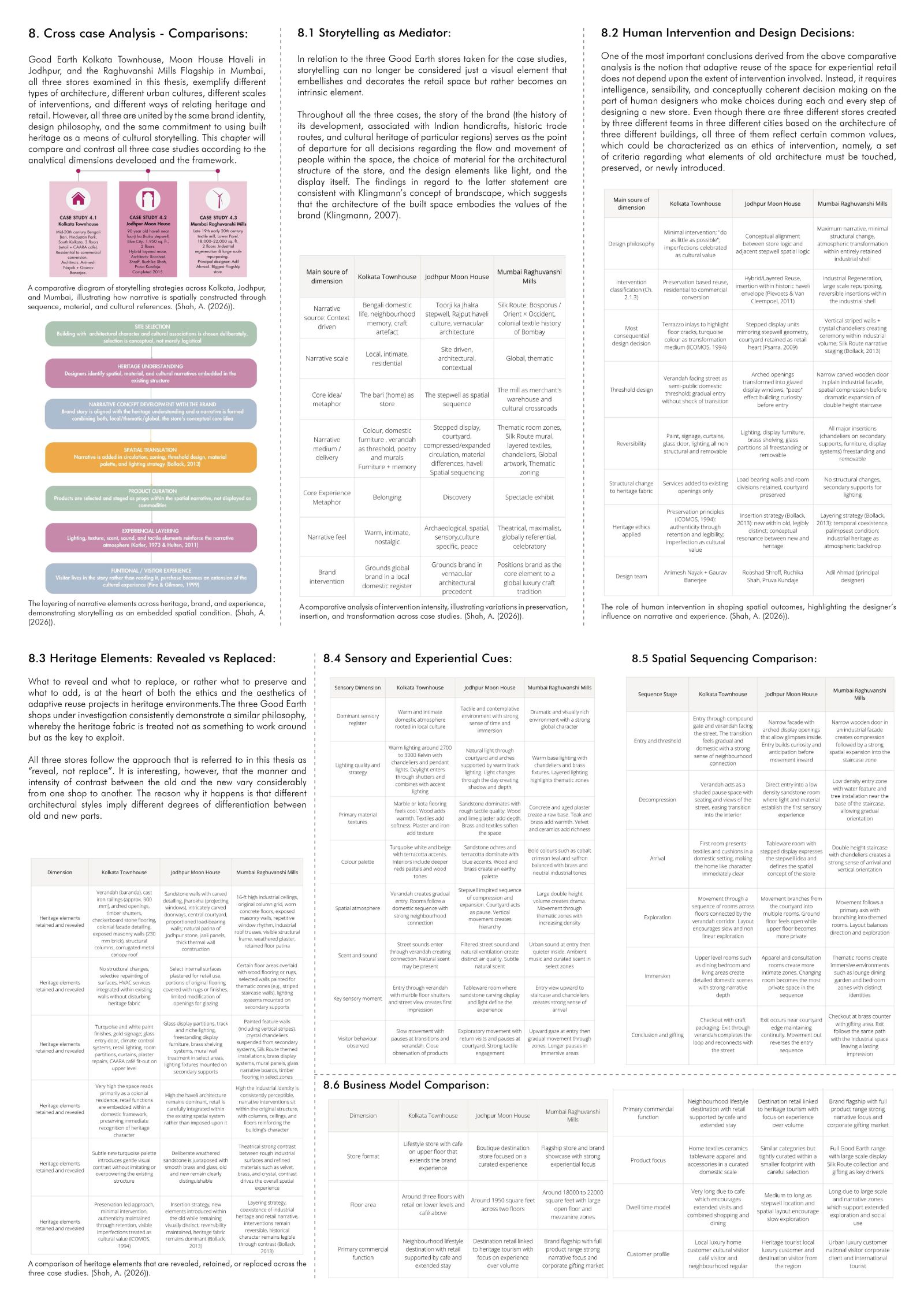
Comparison between three are united by the same brand identity, design philosophy, and the same commitment to using built heritage as a means of cultural storytelling.

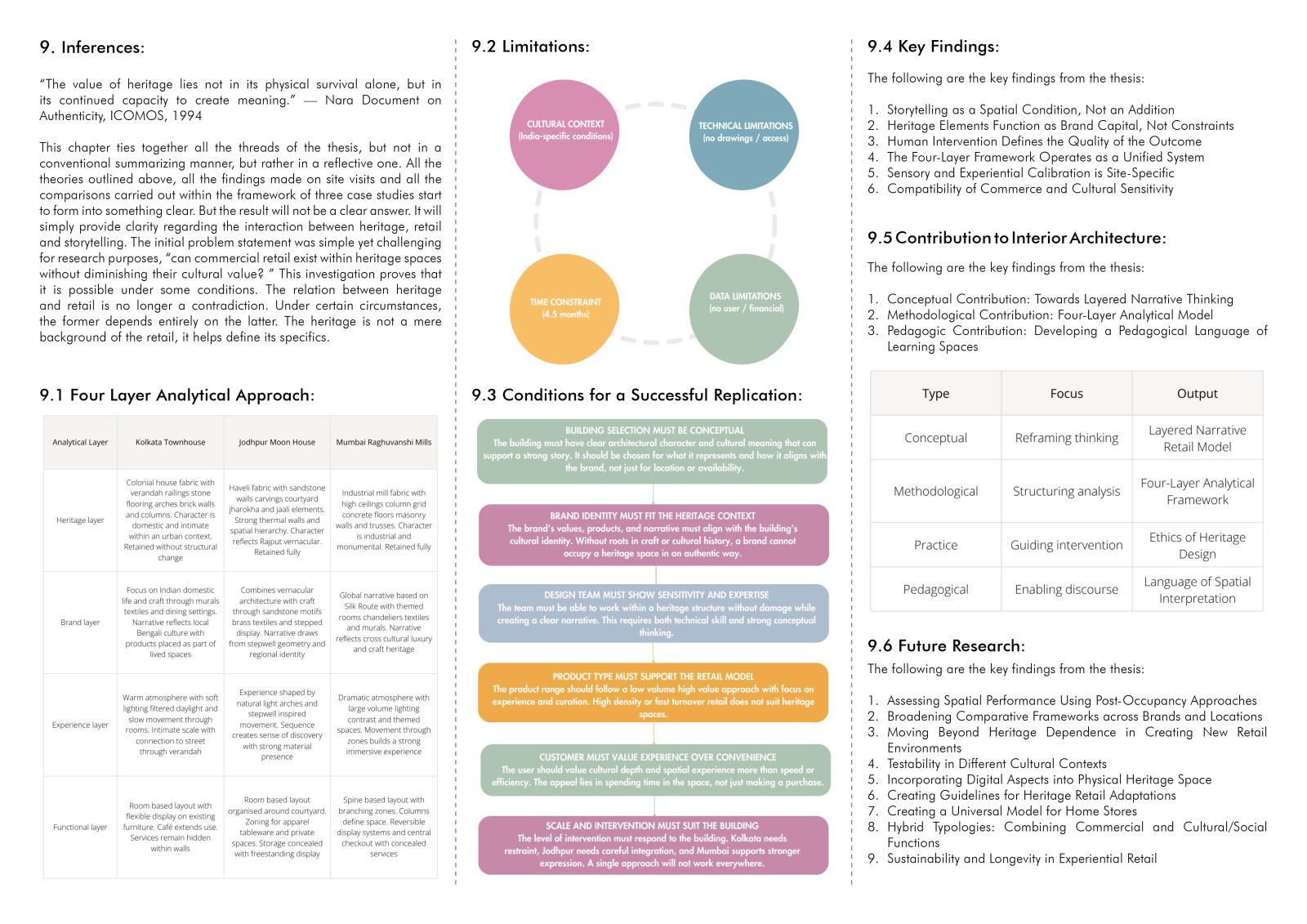
This ties together all the threads of the thesis, but not in a conventional summarizing manner, but rather in a reflective one.