Your browser is out-of-date!
For a richer surfing experience on our website, please update your browser. Update my browser now!
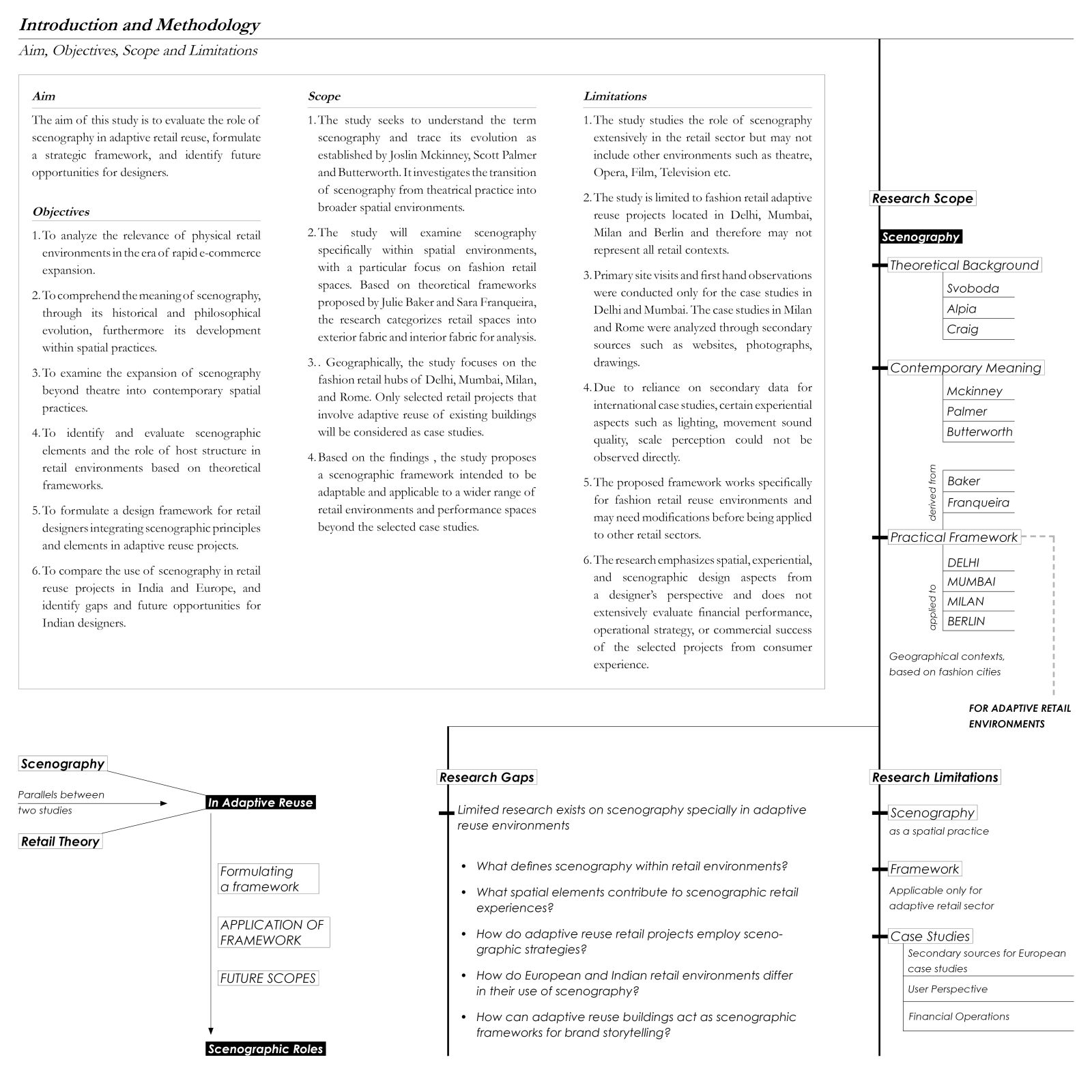
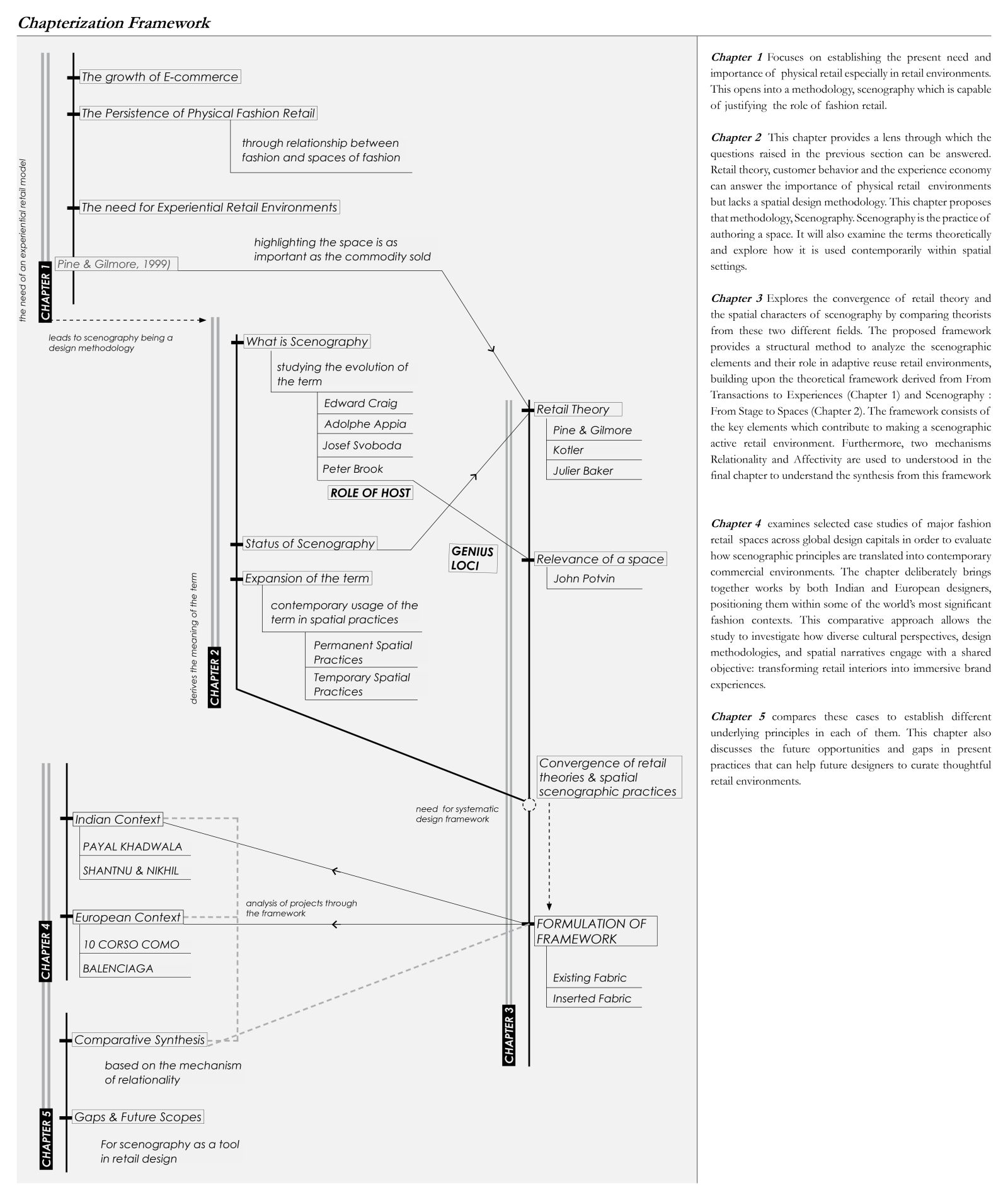
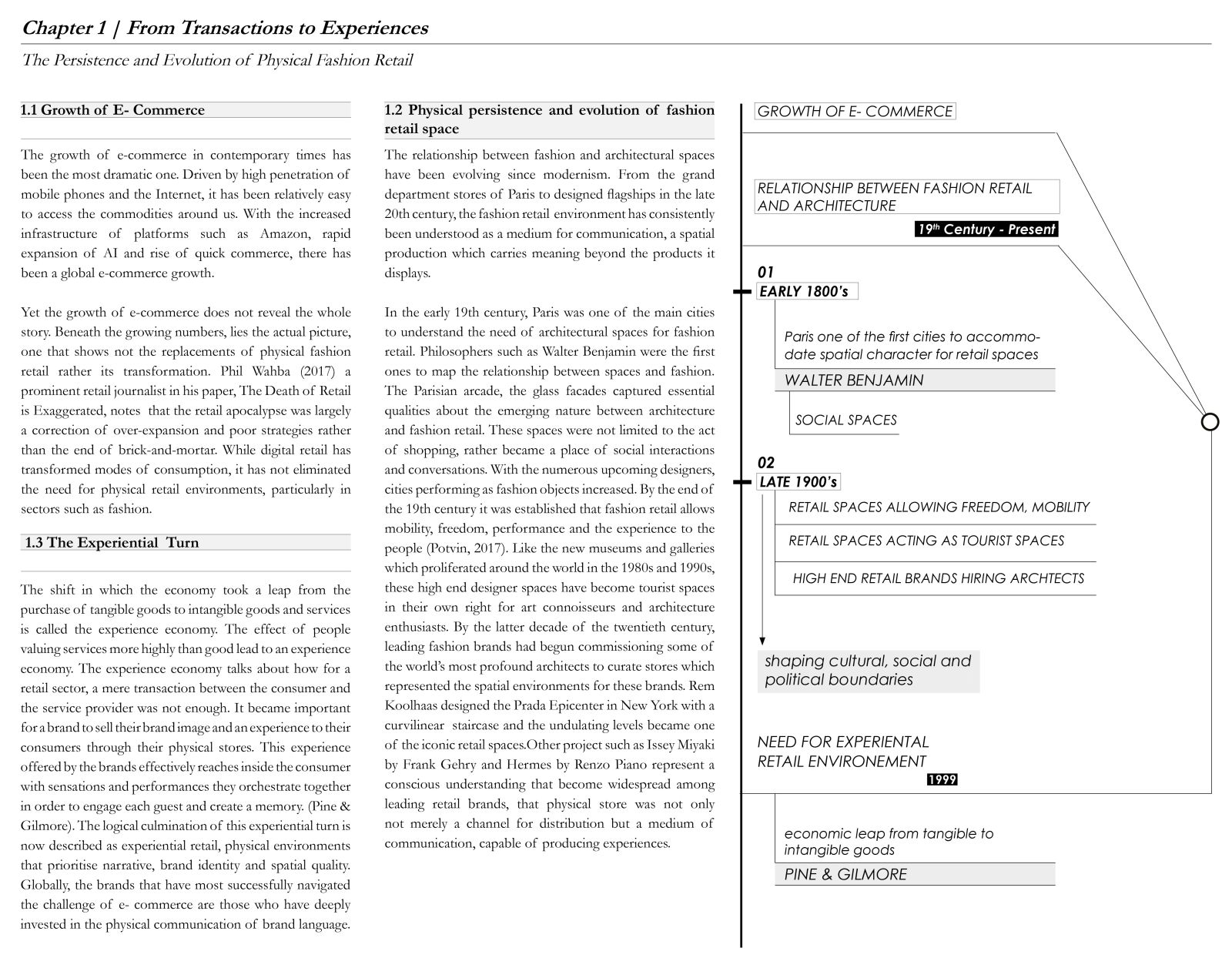
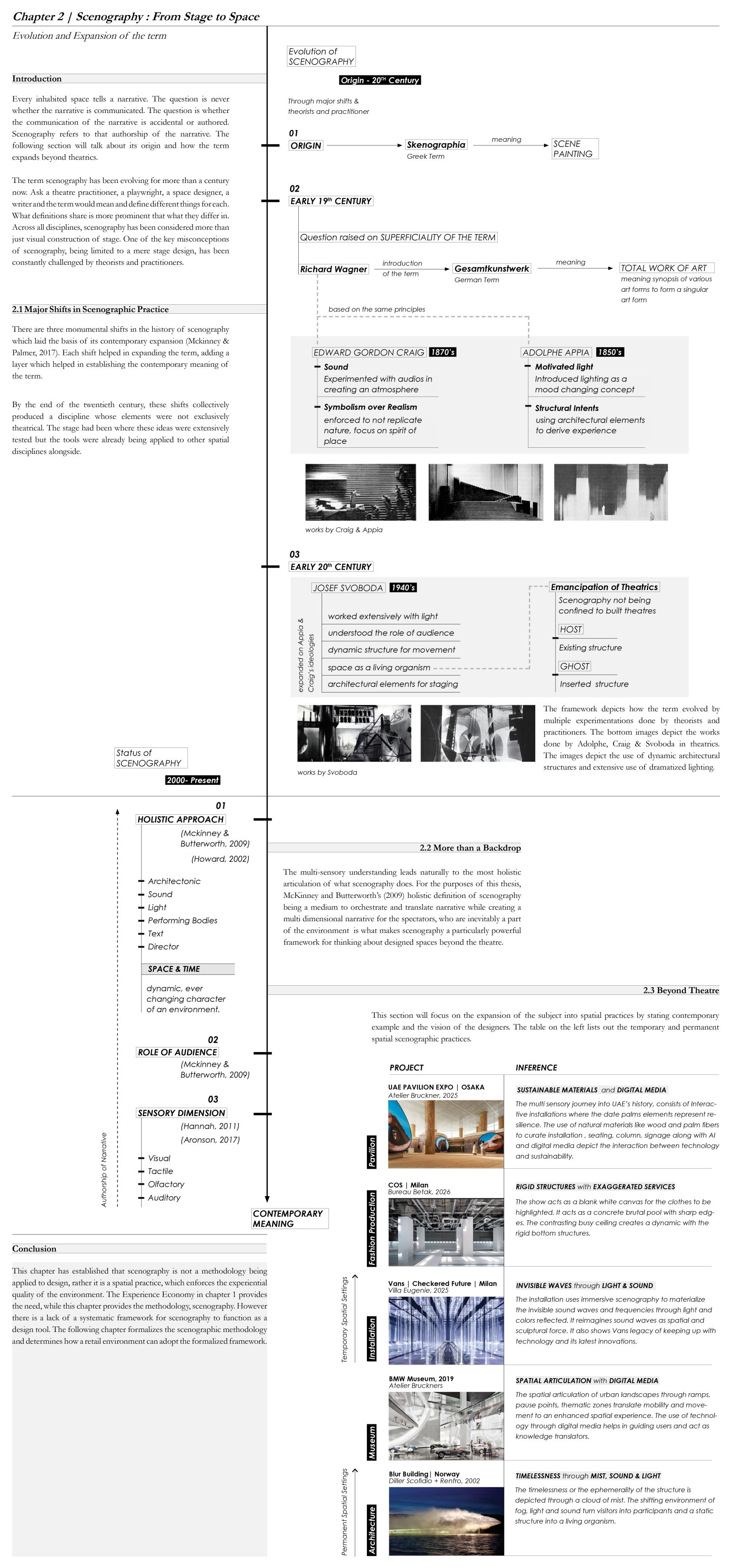
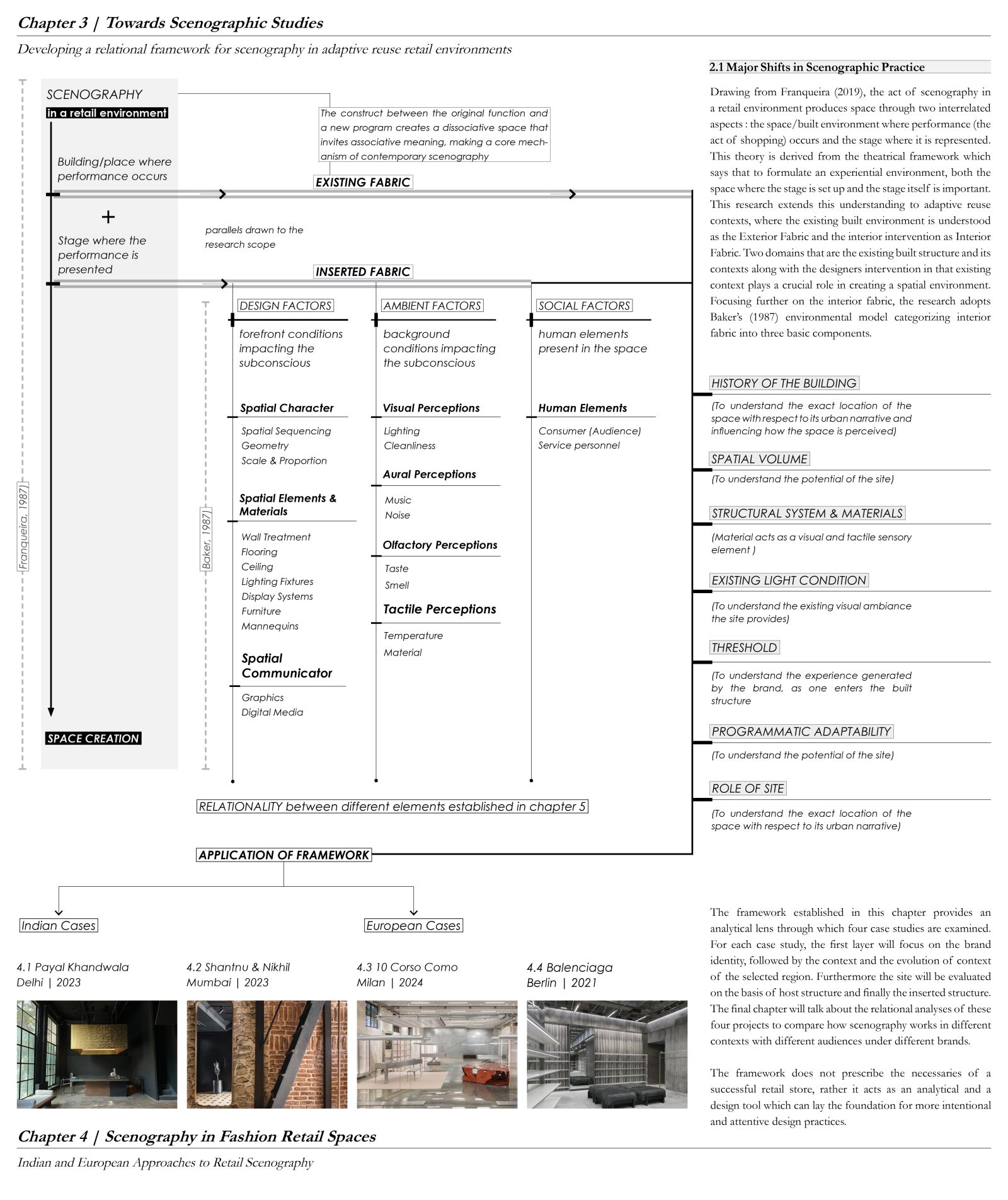
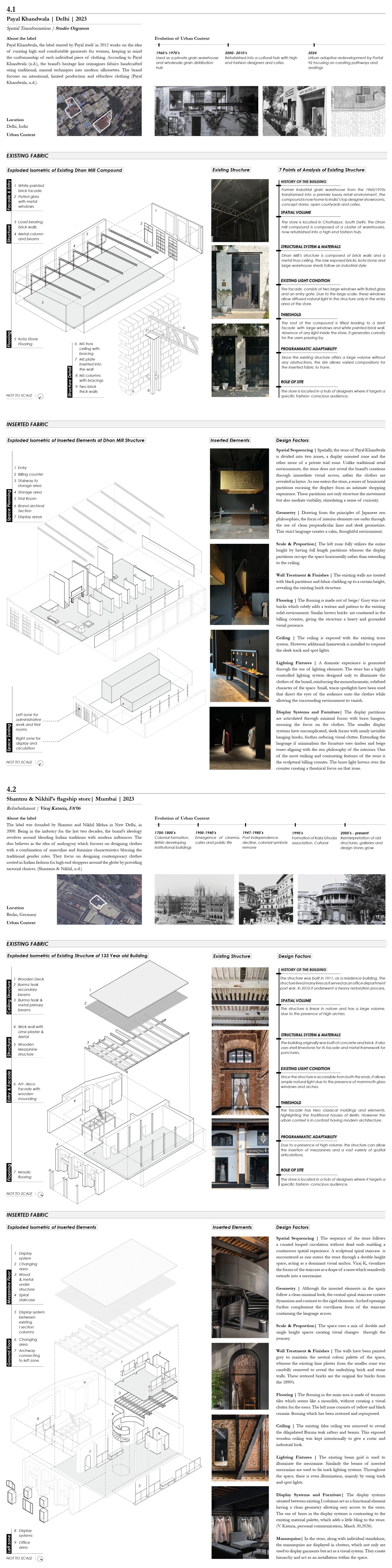
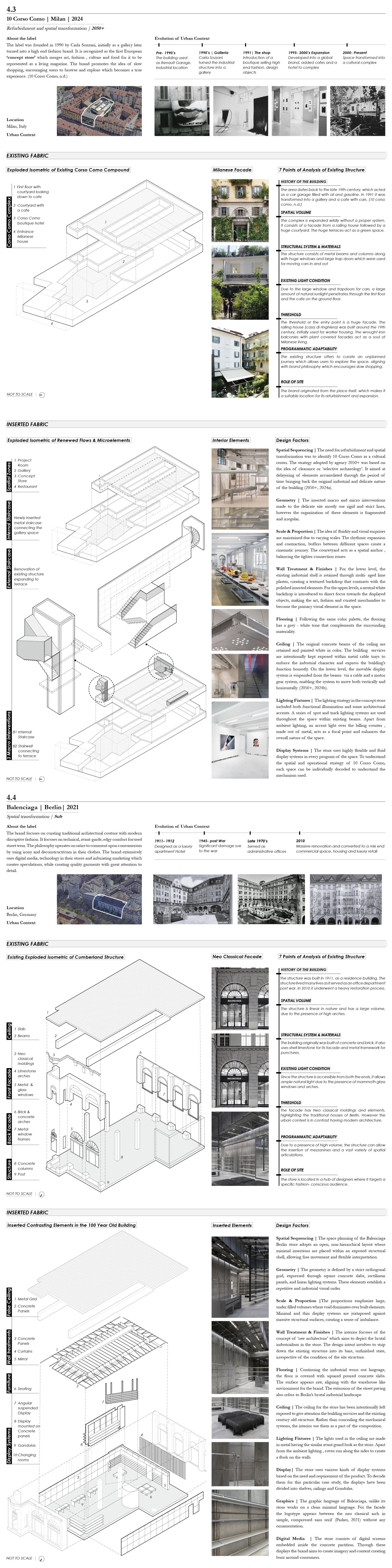
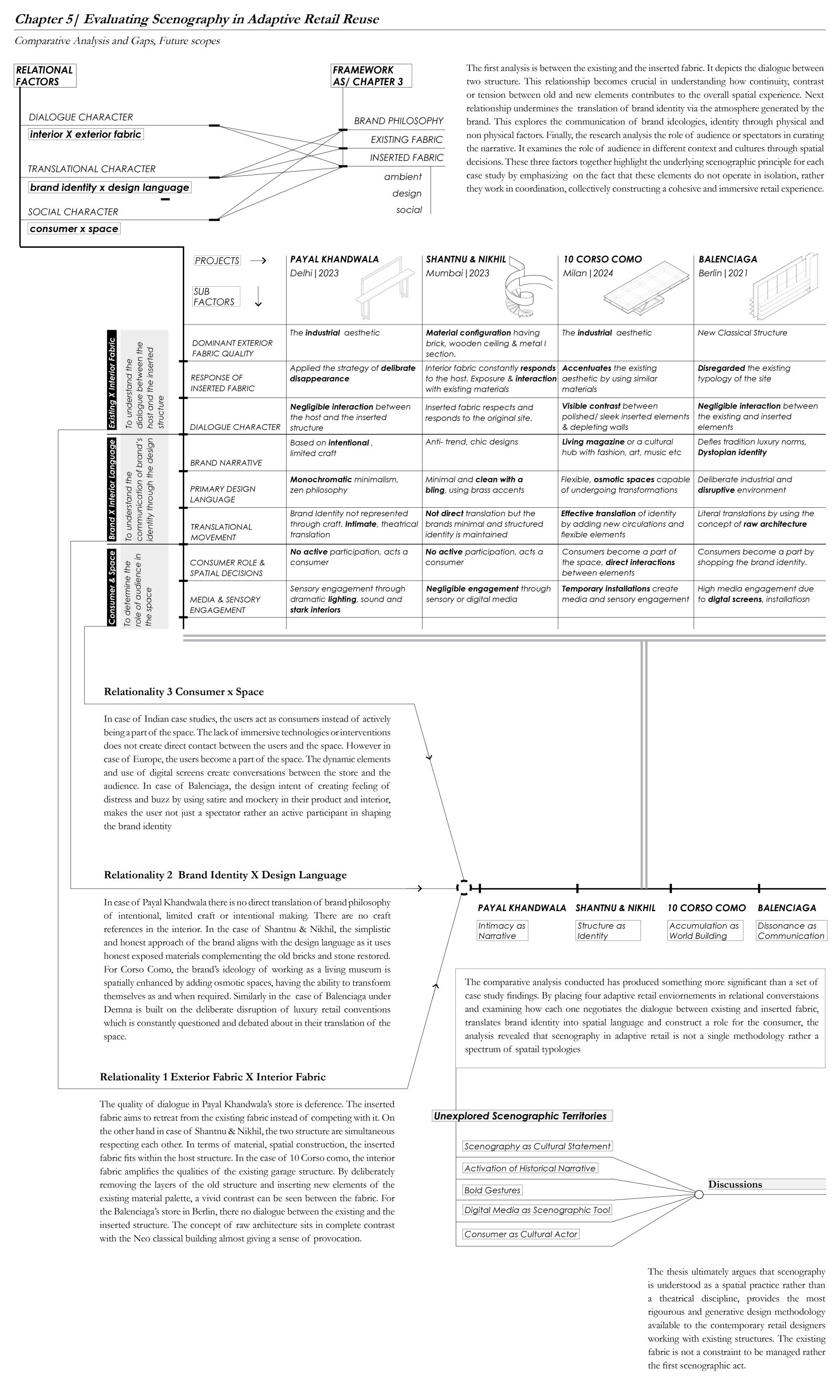
The rapid growth of e-commerce has constantly challenged the relevance of physical fashion retail spaces, forcing them to offer something no digital platform can recreate, a spatial narrative driven sensory space. This thesis argues that scenography, understood not as a theatrical discipline but as a spatial practice concerned with the intentional composition of environment for human experience, provides the design methodology that contemporary retail demands. This thesis proposes adaptive reuse environments represent the most scenographically rich environment for this inquiry. Drawing from the models of scenographers and the concept of genius loci, the thesis argues that the existing structure is not a container, rather an active environment carrying history , materiality and spatial character that the inserted fabric must correspond to. Furthermore, a two layered framework is used to create an analytical tool to decode scenography in retail spaces . Derived from Franqueira’s Baker’s model, the spatial construction is broken down into two parts, the existing fabric and the inserted fabric, comprising design, social and ambient factors. This framework is applied to four case studies, Payal Khandwala in Delhi, Shantnu Nikhil in Mumbai, 10 Corso Como in Milan and Balenciaga in Berlin, revealing four different underlying scenographic principles. The comparative analysis identifies four different scenographic tools and identifies significant gaps and future strategies which can be applied particularly to Indian adaptive retail context through which designers can expand their range.
View Additional Work