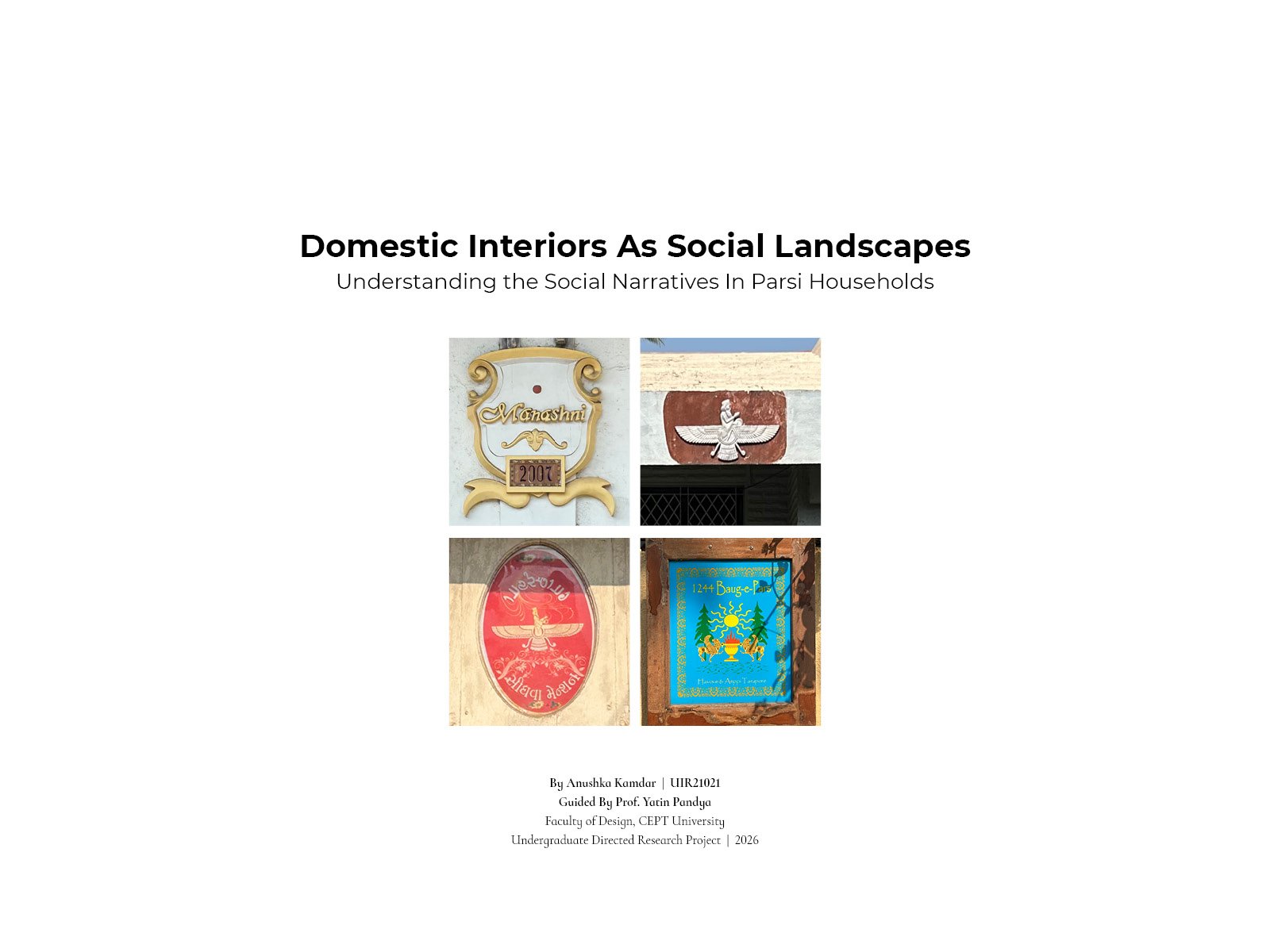
Your browser is out-of-date!
For a richer surfing experience on our website, please update your browser. Update my browser now!
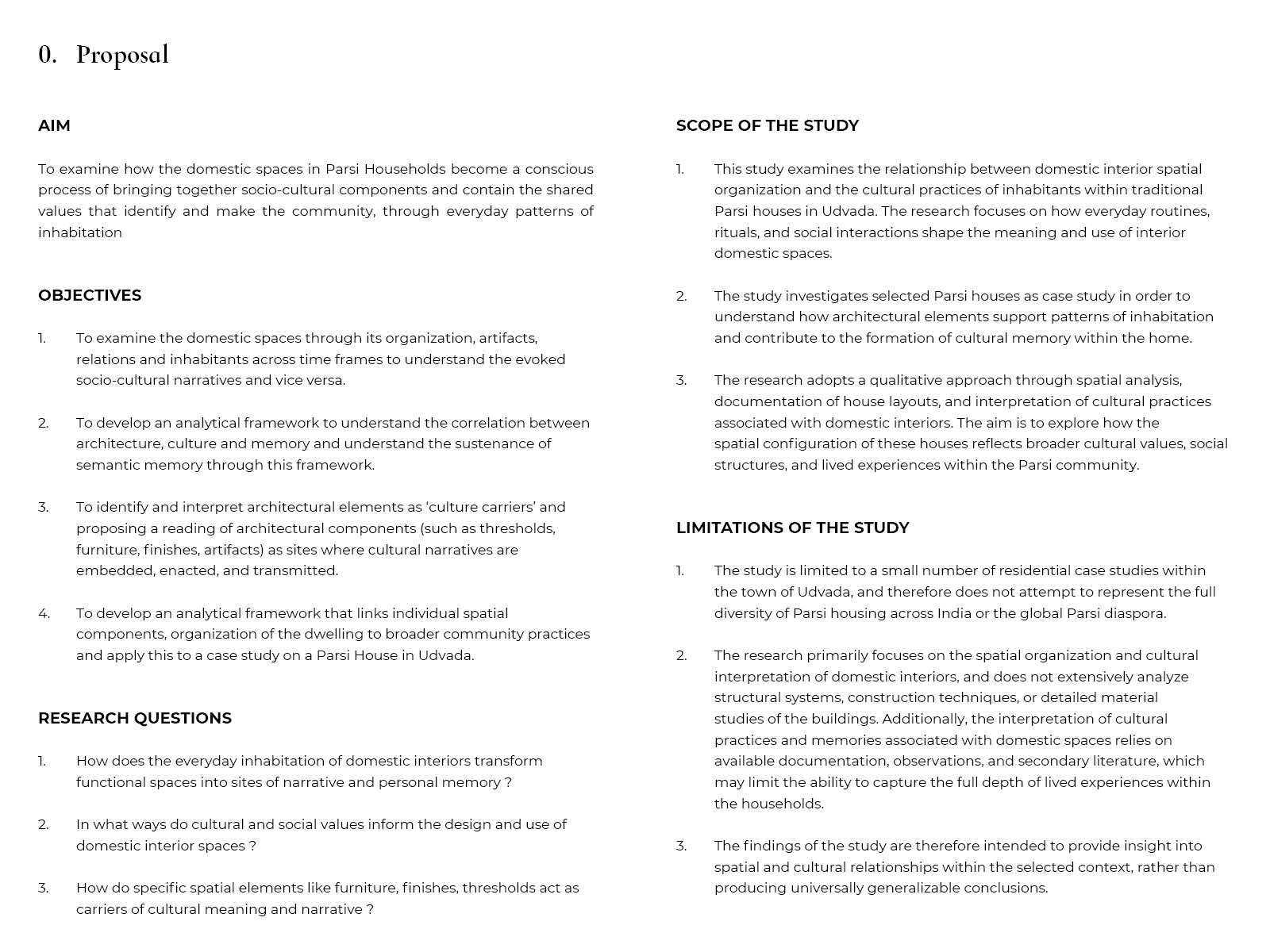
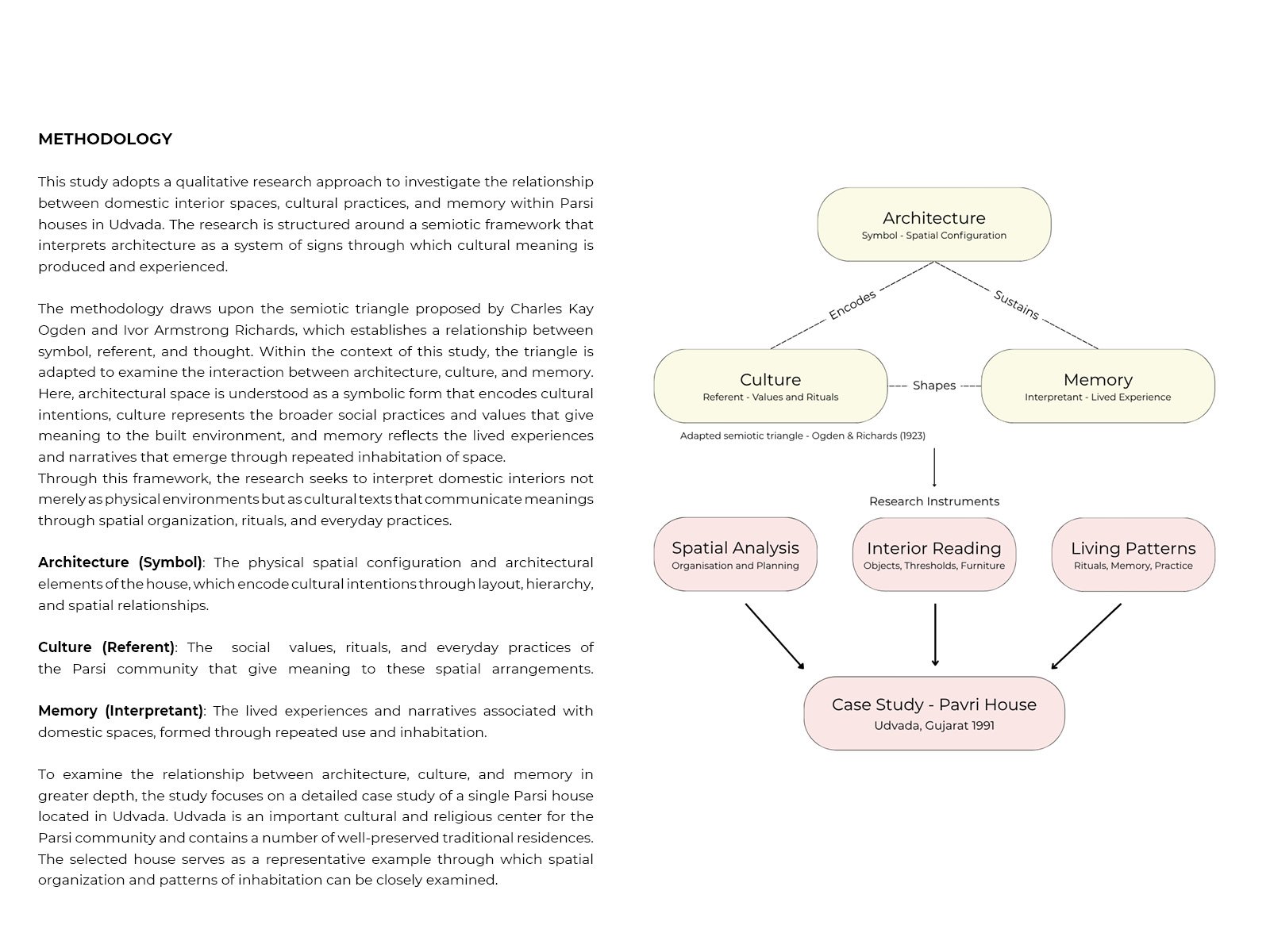
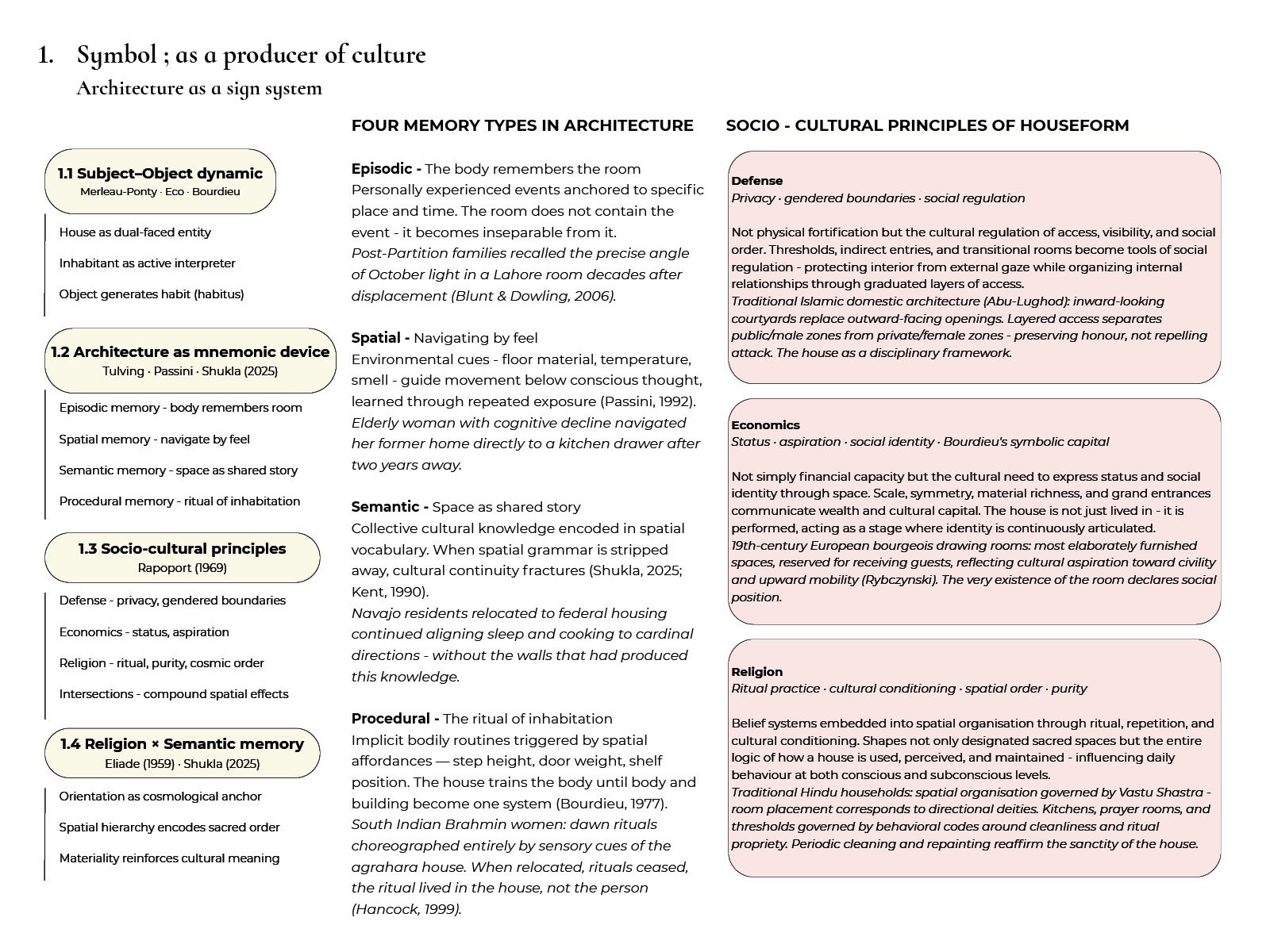
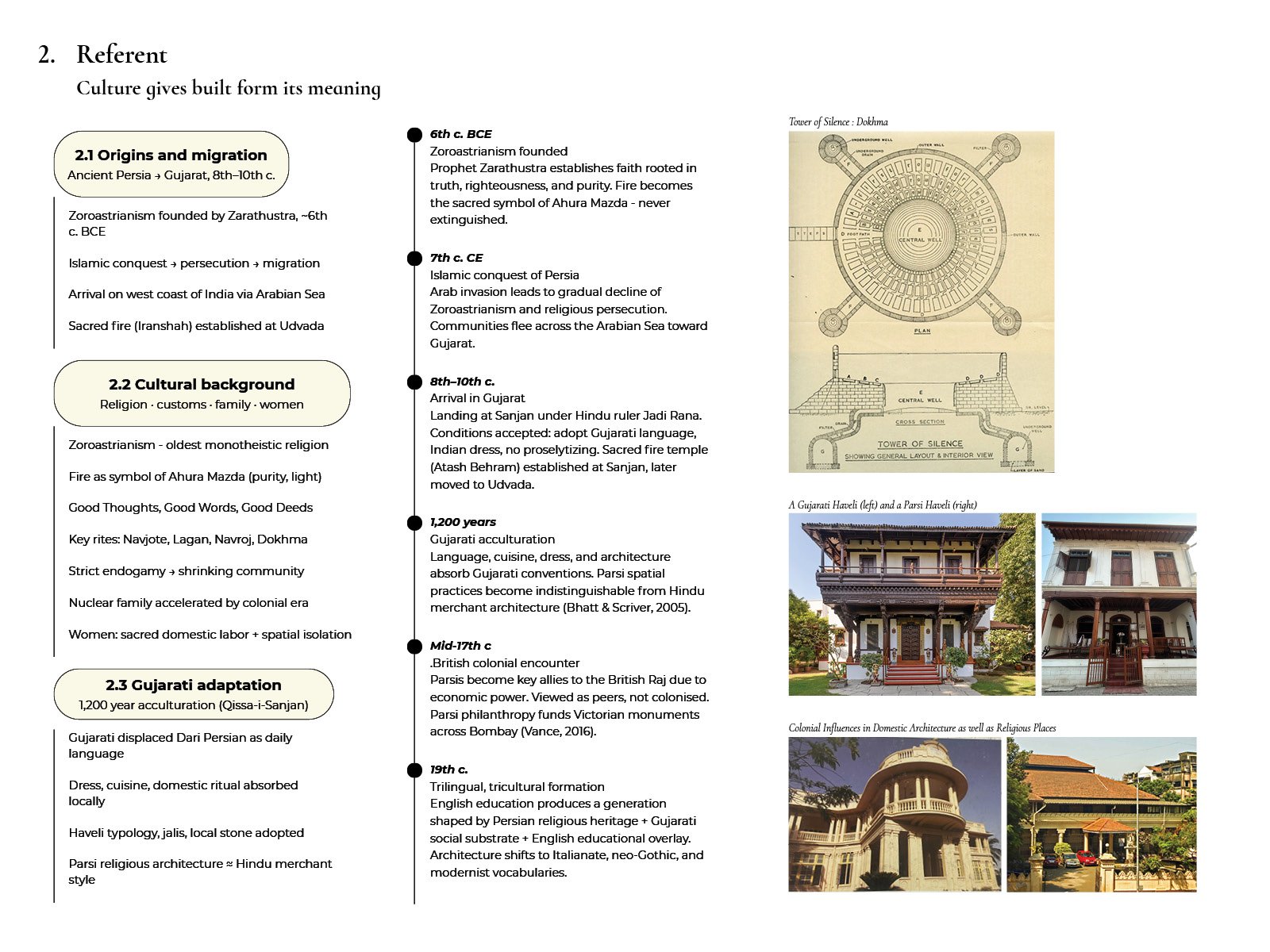
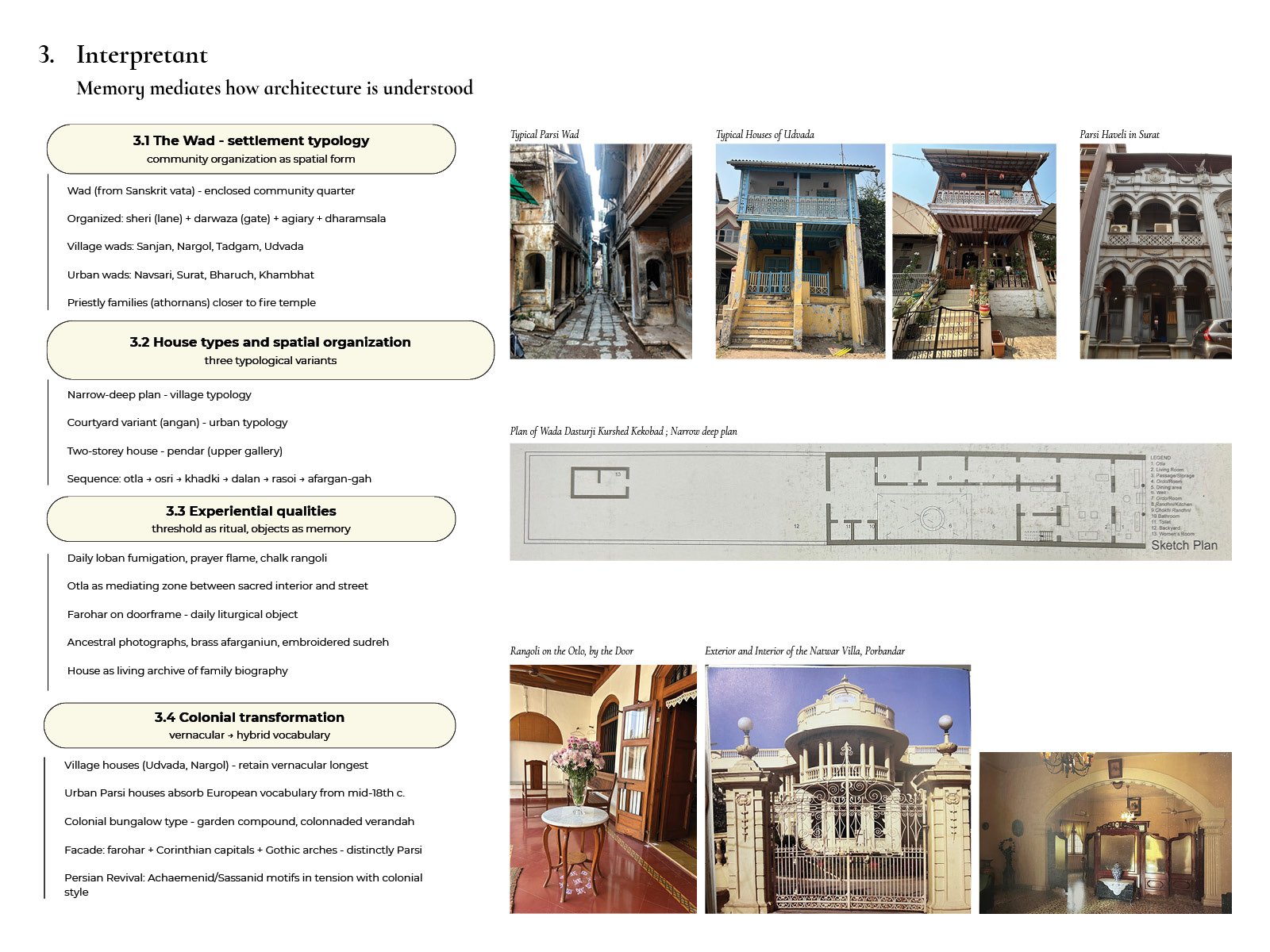
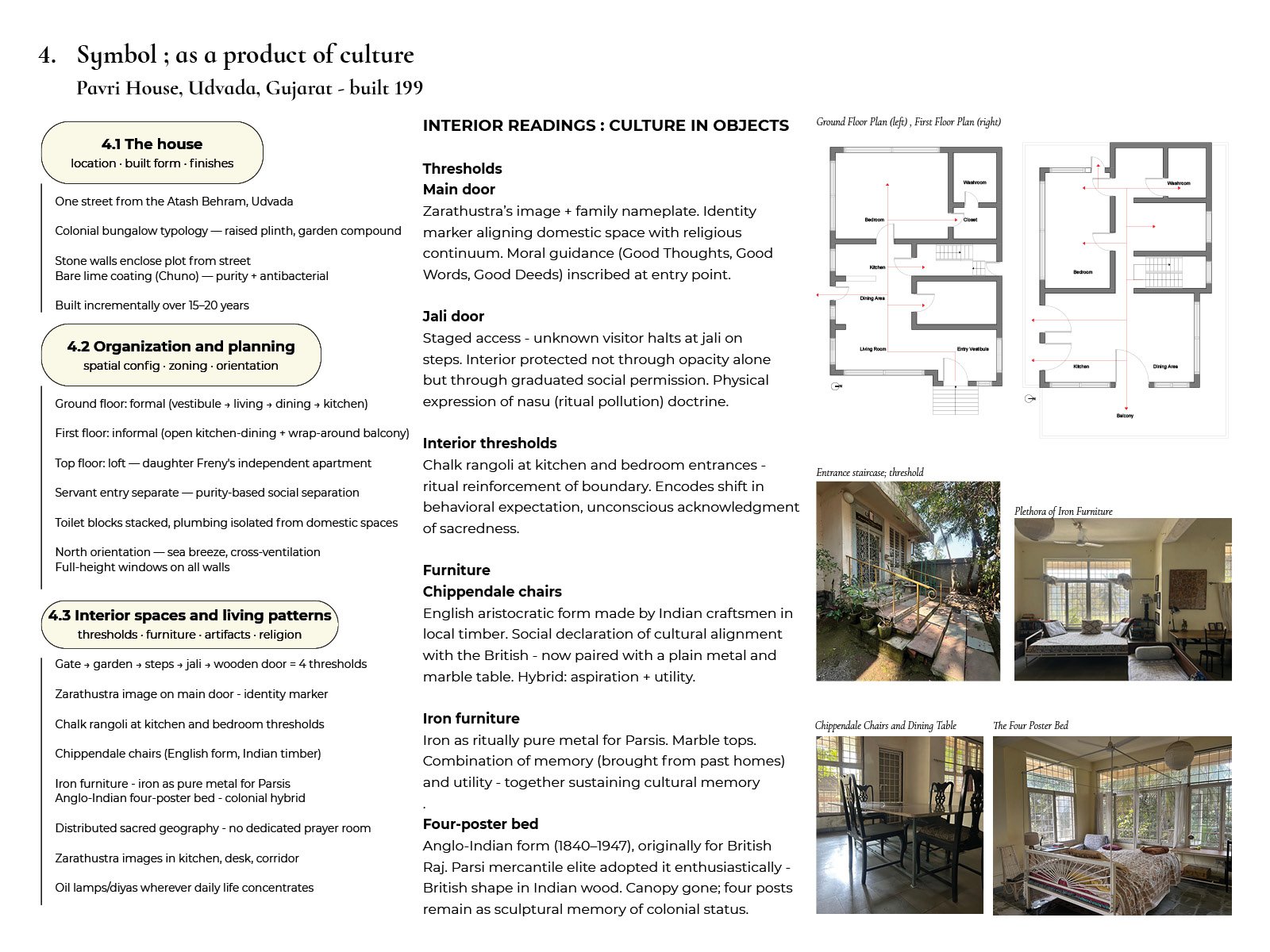
This thesis investigates domestic interiors as active social landscapes, where cultural values, everyday practices, and lived experiences intersect to produce meaning. Focusing on traditional Parsi households in Udvada, the study examines how domestic spaces extend beyond functional requirements to become sites of cultural expression and memory-making. Through a qualitative methodology combining literature review, spatial analysis, and a detailed case study of a traditional Parsi residence, the study explores how spatial configurations such as thresholds, verandahs, kitchens, and prayer spaces - mediate everyday life and encode cultural meanings. Particular attention is given to how religious practices, notions of purity, gender roles, and community structures influence the organization and use of domestic interiors.