Vedika Chakraborty

BD2008

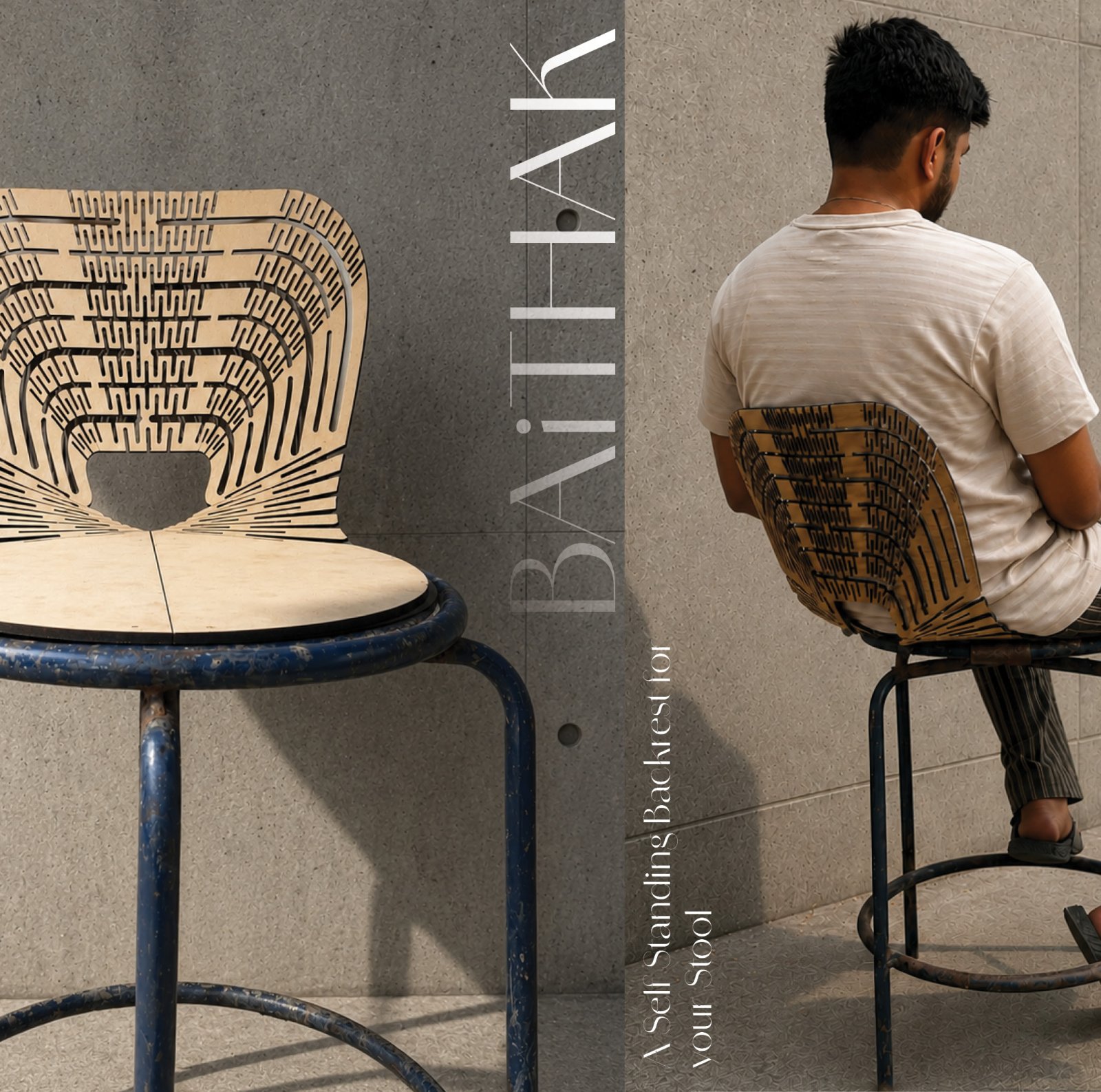
BAiTHAK

The project focuses on designing a lightweight backrest that becomes an additional element to the existing stool. Utilising kirigami techniques, cuts and patterns in sheet materials create flexibility and curvature. The relationship between pattern density, cut direction, and spacing is key to this process. Digital computation plays a crucial role in generating and testing kirigami patterns, allowing for controlled material bending and stretching. This project expands knowledge beyond form-making to include systems, material behaviour, body ergonomics, and computational thinking, showcasing the synergy between digital tools and physical experimentation in creating adaptable designs.
Report Content

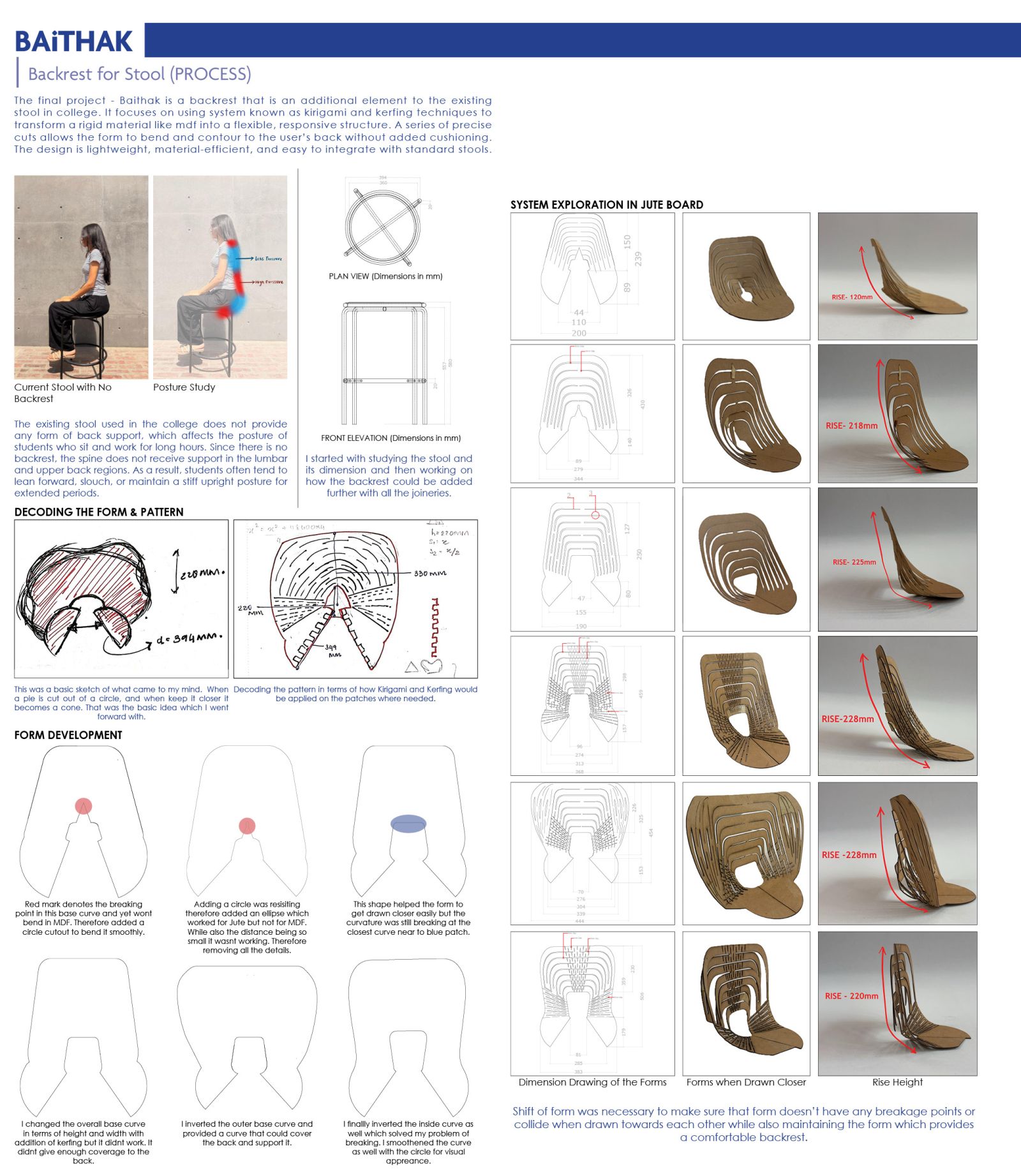
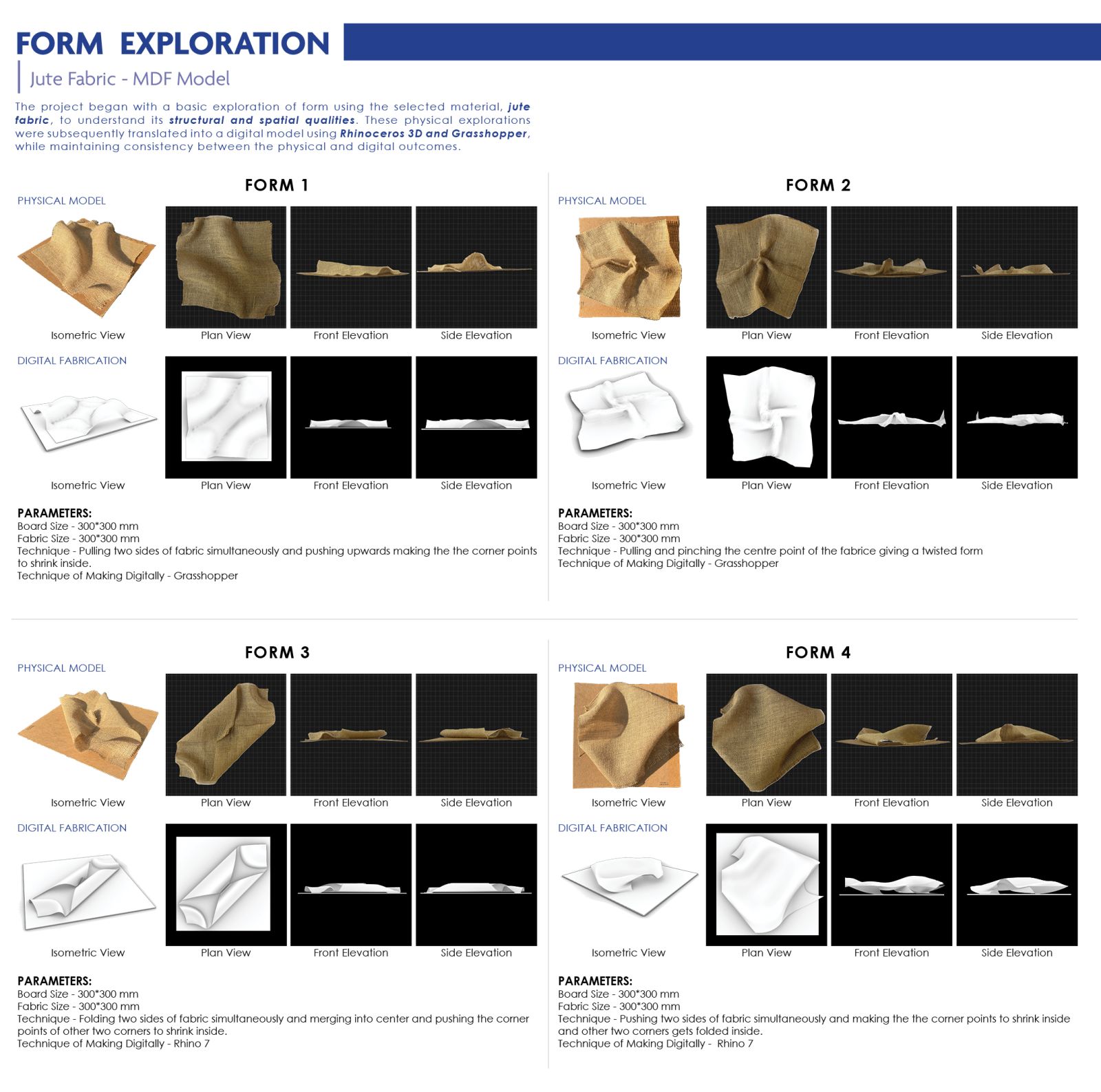
The project began with physical form explorations using jute fabric to study how simple manipulations like pulling, folding, and pinching could create different spatial forms. These explorations were then translated digitally using Rhinoceros 3D and Grasshopper to understand form behavior, maintain consistency, and refine the structures computationally.

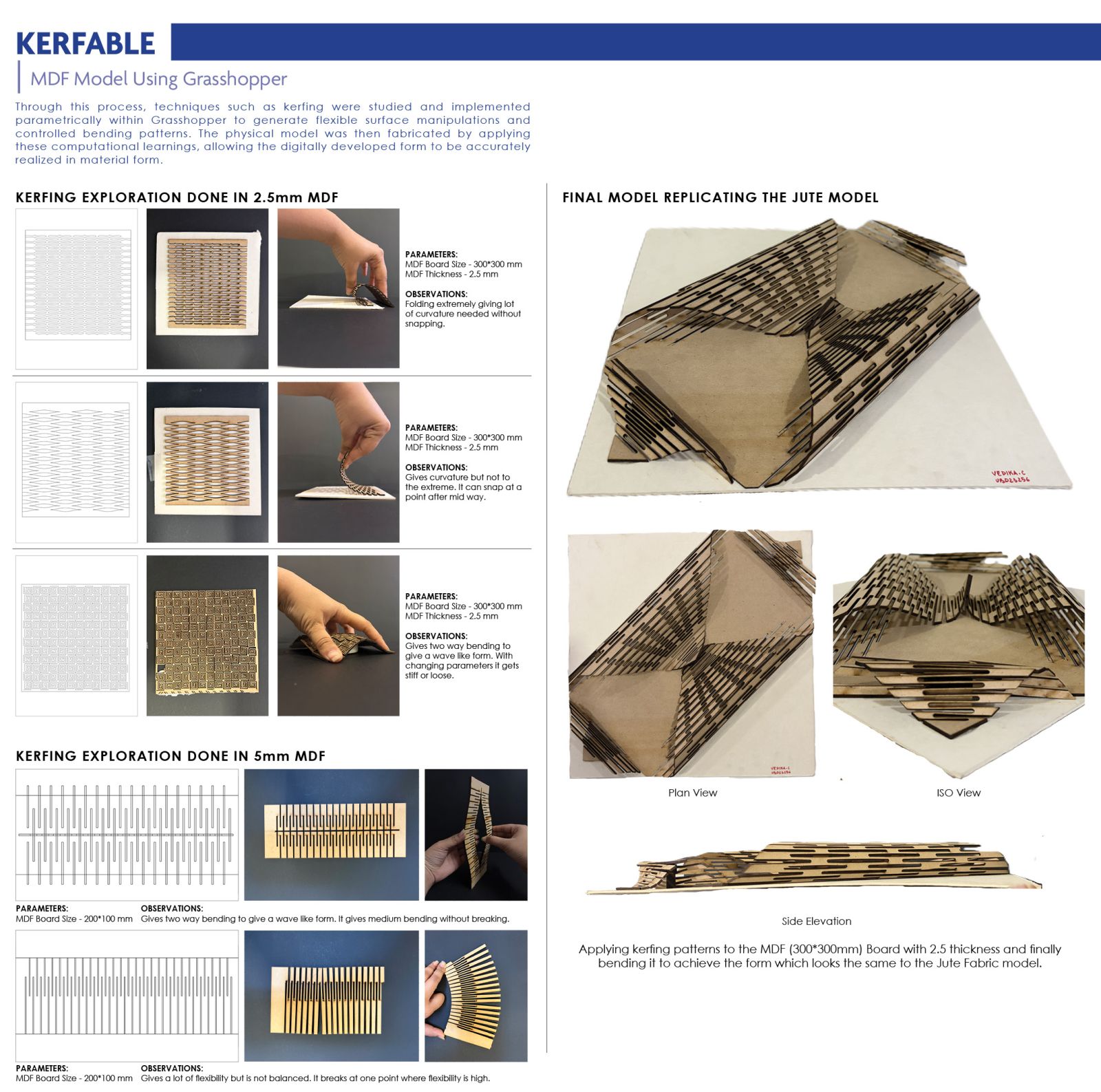
The project explored different kerfing patterns in MDF to study flexibility, bending behavior, and structural response through parametric design in Grasshopper. These computational explorations helped in translating the earlier jute fabric forms into a fabricated MDF model that achieved similar curvature and surface qualities.

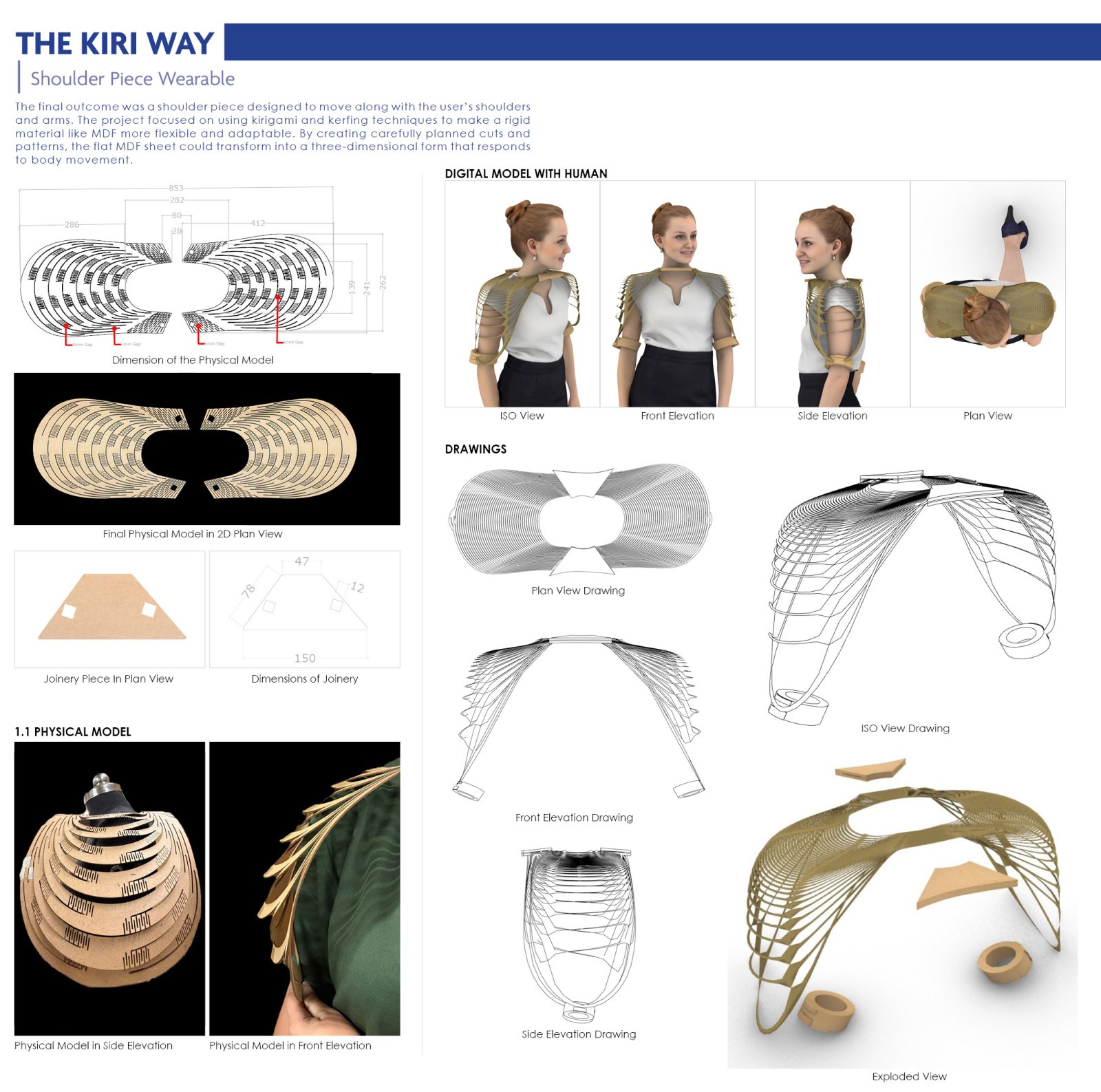
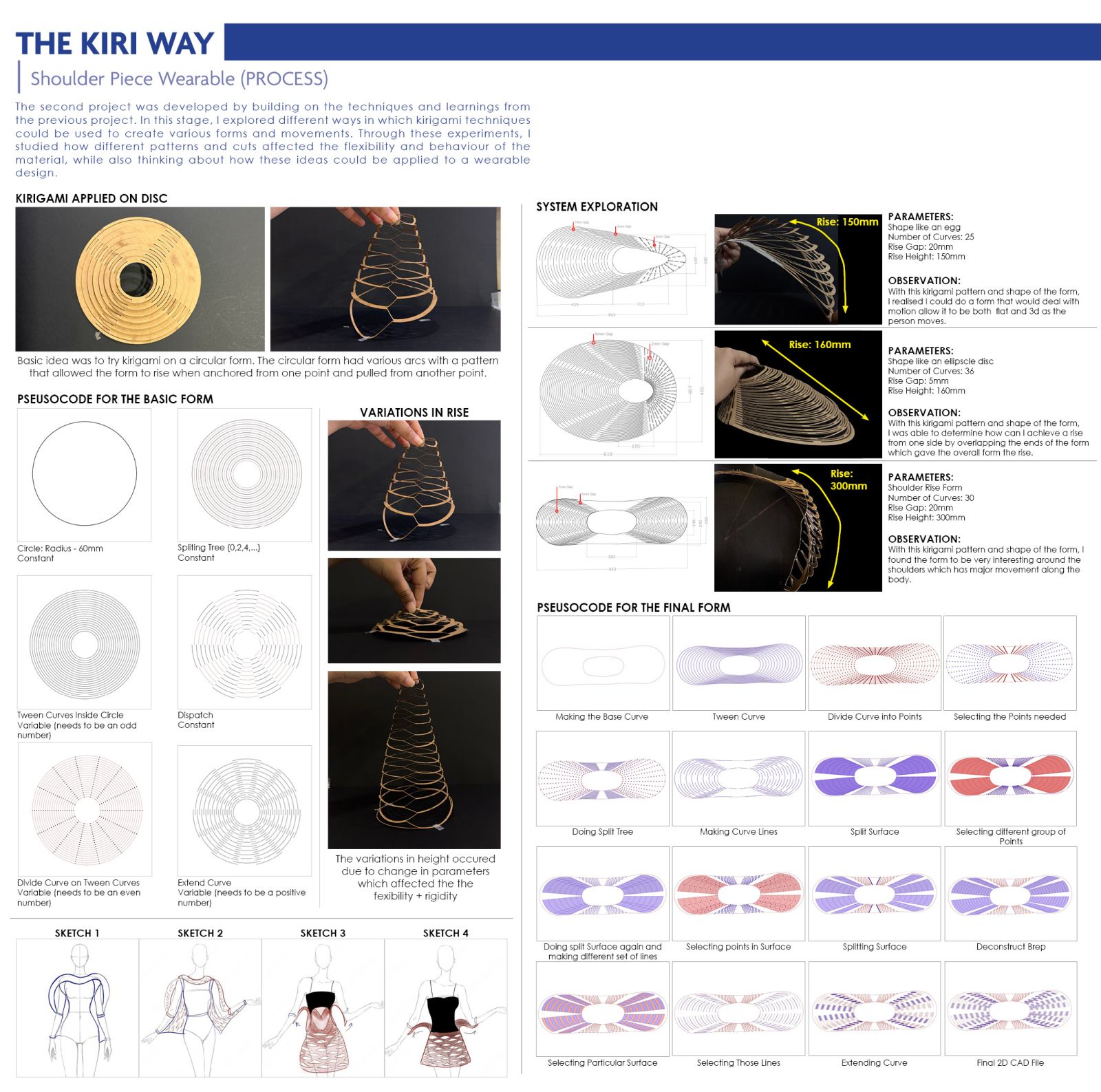
This project explored how kirigami techniques could create flexible and adaptive wearable forms through different cutting patterns and parametric variations. Using Grasshopper, the system was digitally developed and refined to study movement, rise, flexibility, and body interaction, leading to the design of a responsive shoulder-piece wearable.

The final outcome was a shoulder-piece wearable developed using kirigami and kerfing techniques to transform flat MDF sheets into a flexible three-dimensional form. Through digital modeling and fabrication, the design was able to respond to body movement and adapt around the shoulders and arms while maintaining structural stability.

The project developed a lightweight backrest system for the existing college stool using kirigami and kerfing techniques to create flexibility and ergonomic support from rigid MDF sheets. Through iterative form studies, posture analysis, and computational exploration, the design evolved into a responsive structure that contours to the user’s back while remaining easy to integrate with the stool.

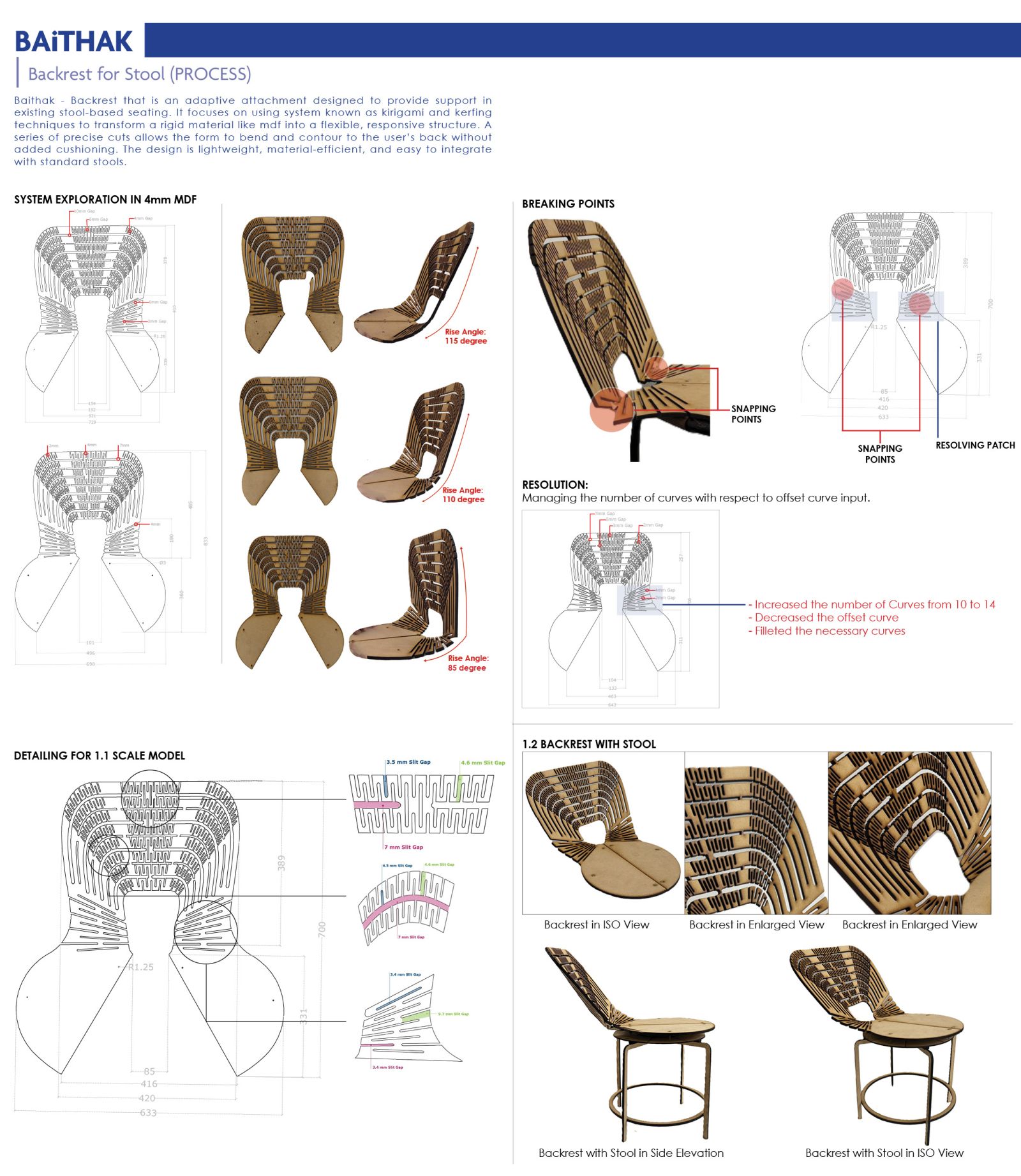
Baithak Backrest System is a lightweight MDF backrest attachment that uses kirigami and kerfing techniques to transform rigid material into a flexible, ergonomic support structure for stools. The process explores curve optimization, slit-gap detailing, and structural stress resolution to achieve different recline angles while preventing snapping at critical bending points.

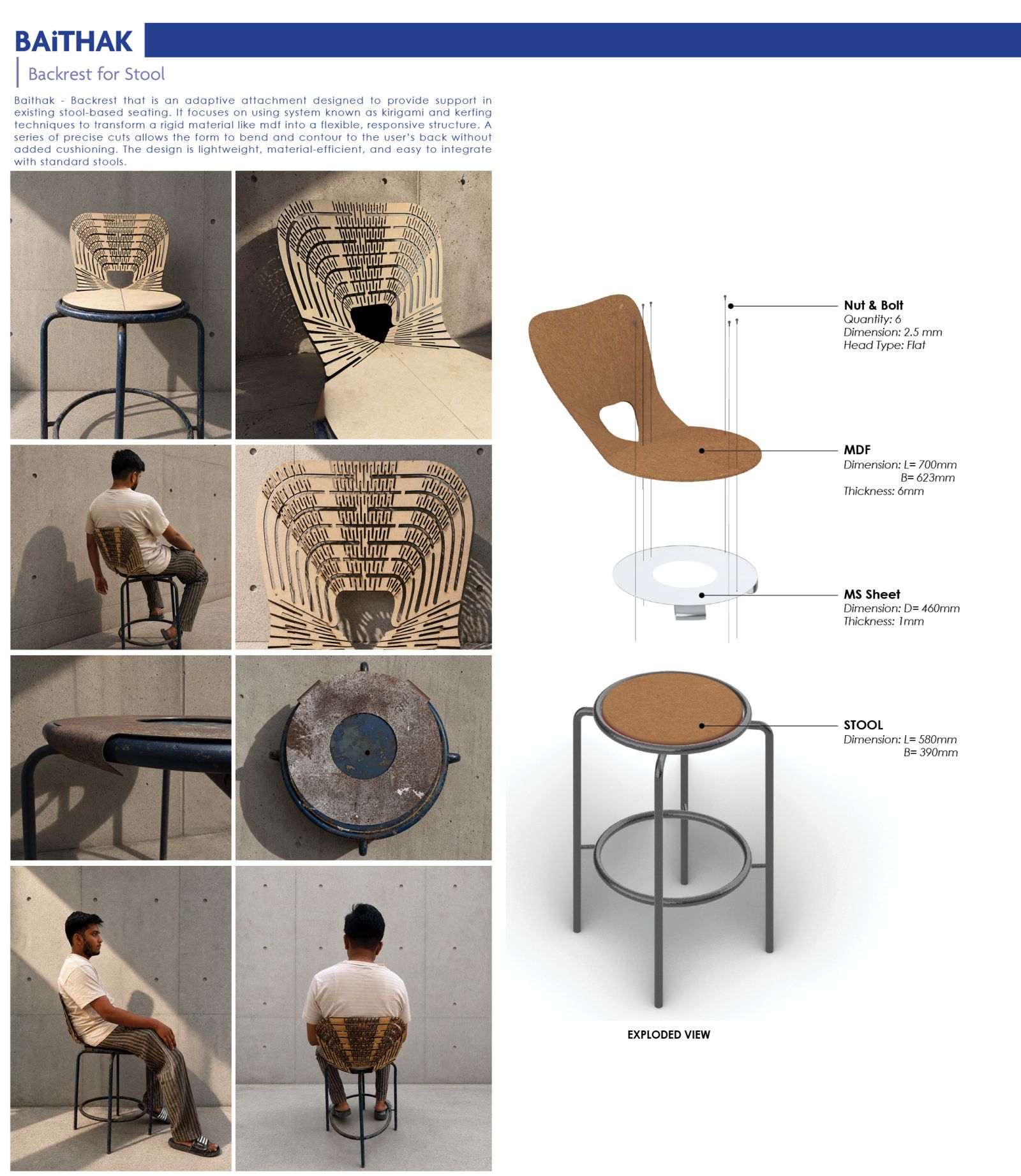
The exploded view shows how easily it can be assembled and thus becomes an easy solution to turn your flat pack sheet into a backrest.

BAiTHAK- One Easy Solution for your Backrest.