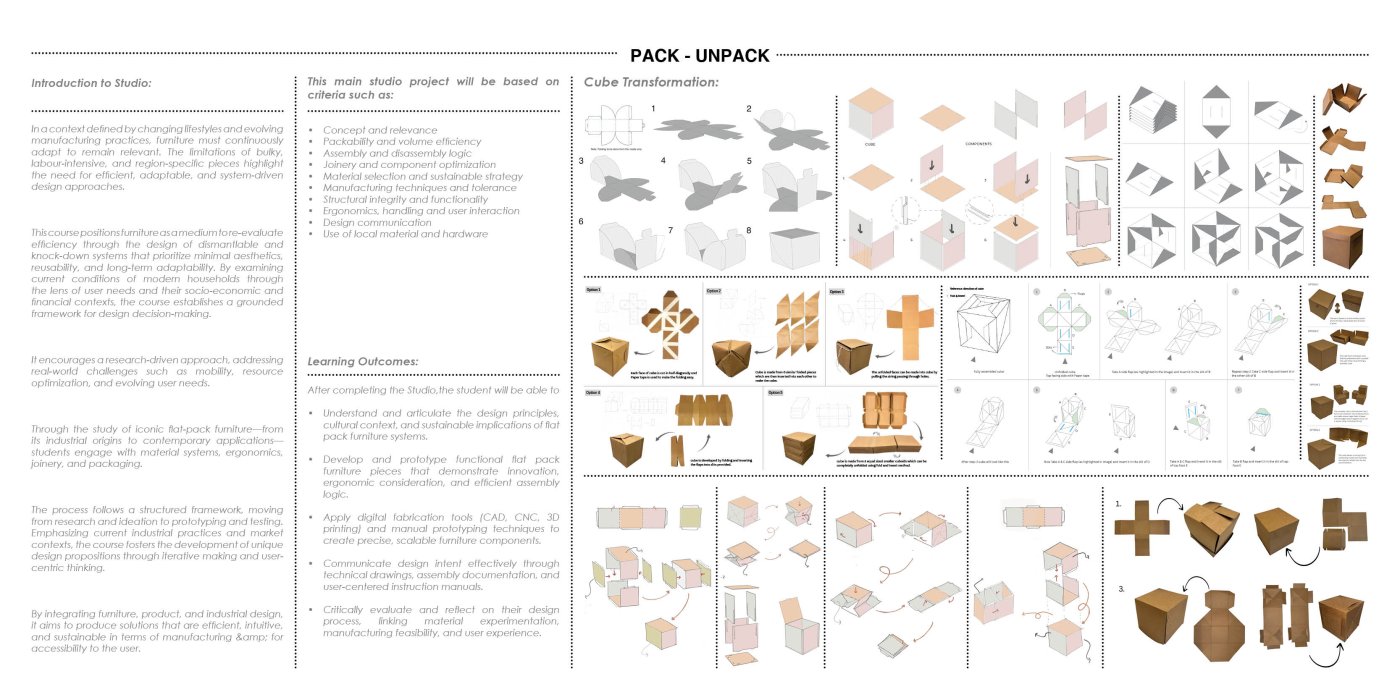
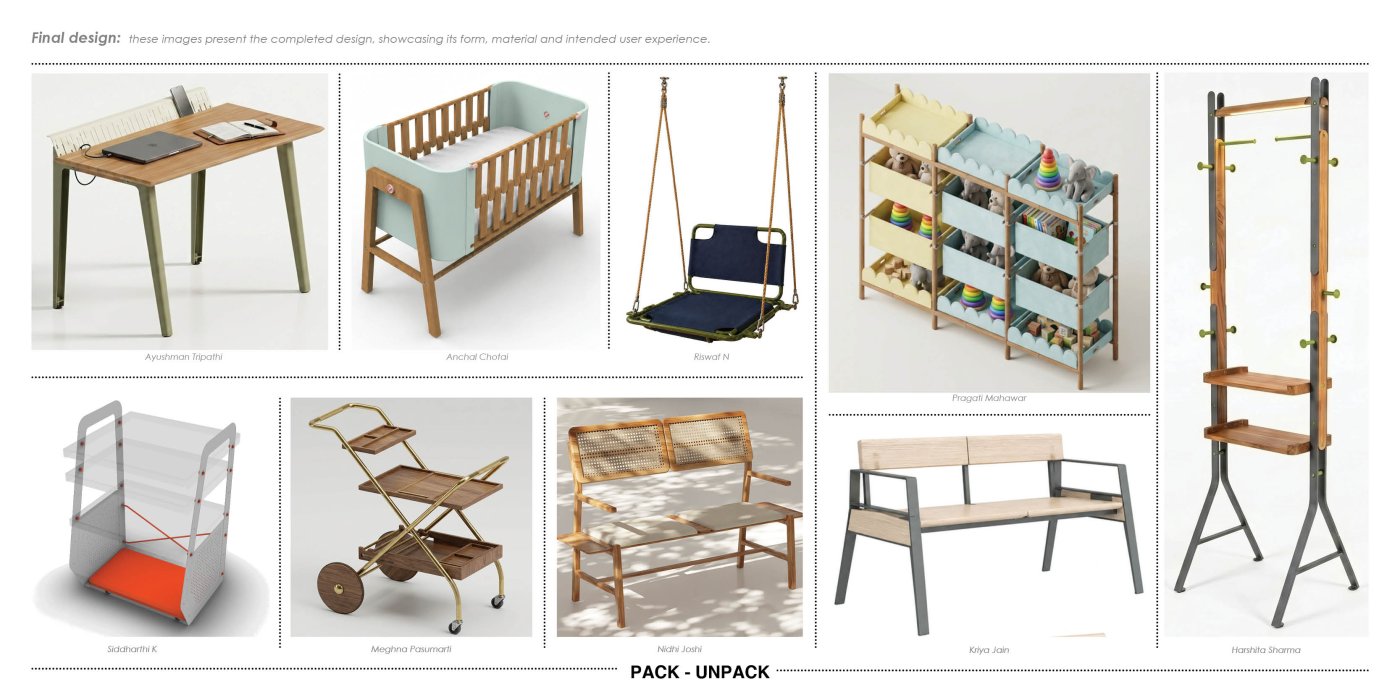
In an era defined by movement, mobility, and compact living, furniture must adapt to changing lifestyles. Too often, bulky and labour-intensive furniture is abandoned during relocation, leading to waste and unsustainable consumption.
This semester addresses these questions through the design of flat pack furniture—systems that embrace sustainability, reusability, and adaptability for a transient future.
Students will explore the history and cultural significance of flat pack design, from its industrial origins to its role in contemporary living. Through research and experimentation, they will analyse materials, ergonomics, and joinery to create innovative, functional, and sustainable solutions.
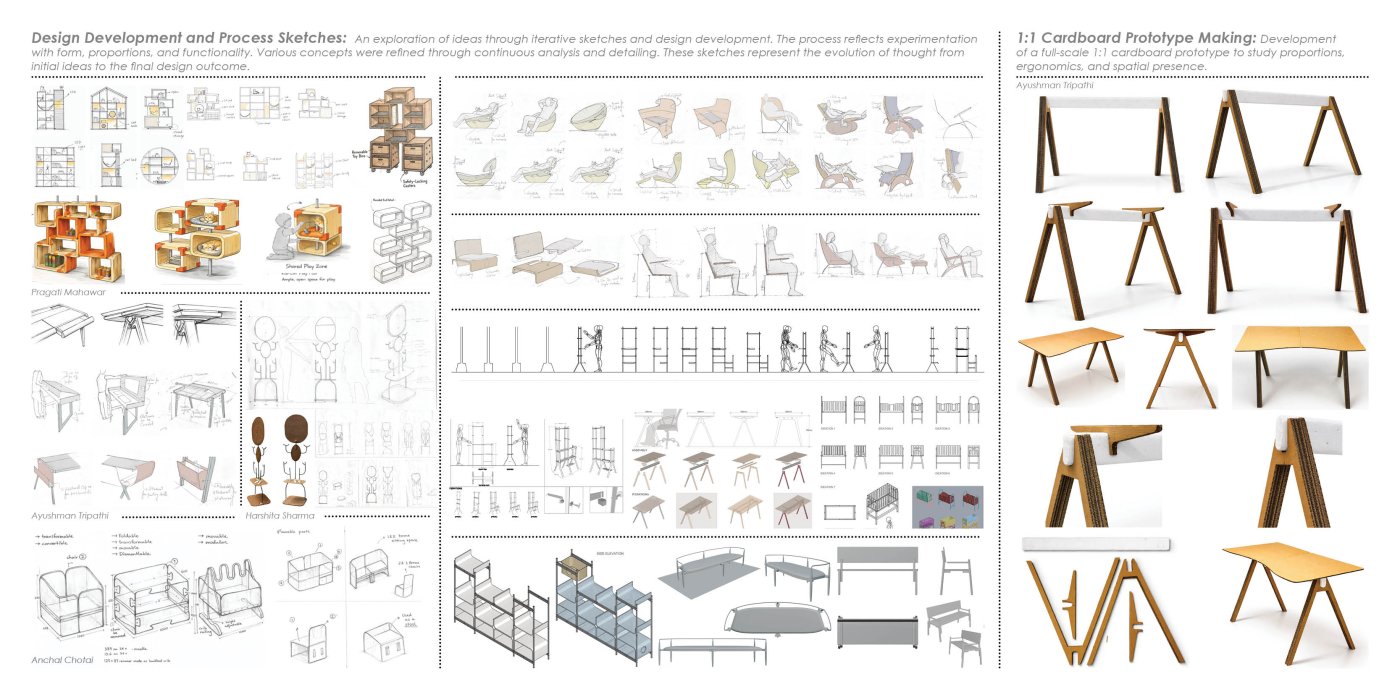
The module emphasizes hands-on prototyping, from scaled mock-ups to refined models, supported by digital tools like CAD, Parametric Design & CNC mainly focusing on labour free & use of available tools.
Key to the project is the development of assembly logic and user-centered design, ensuring that products are accessible, efficient, and intuitive to transport, assemble, and reuse.
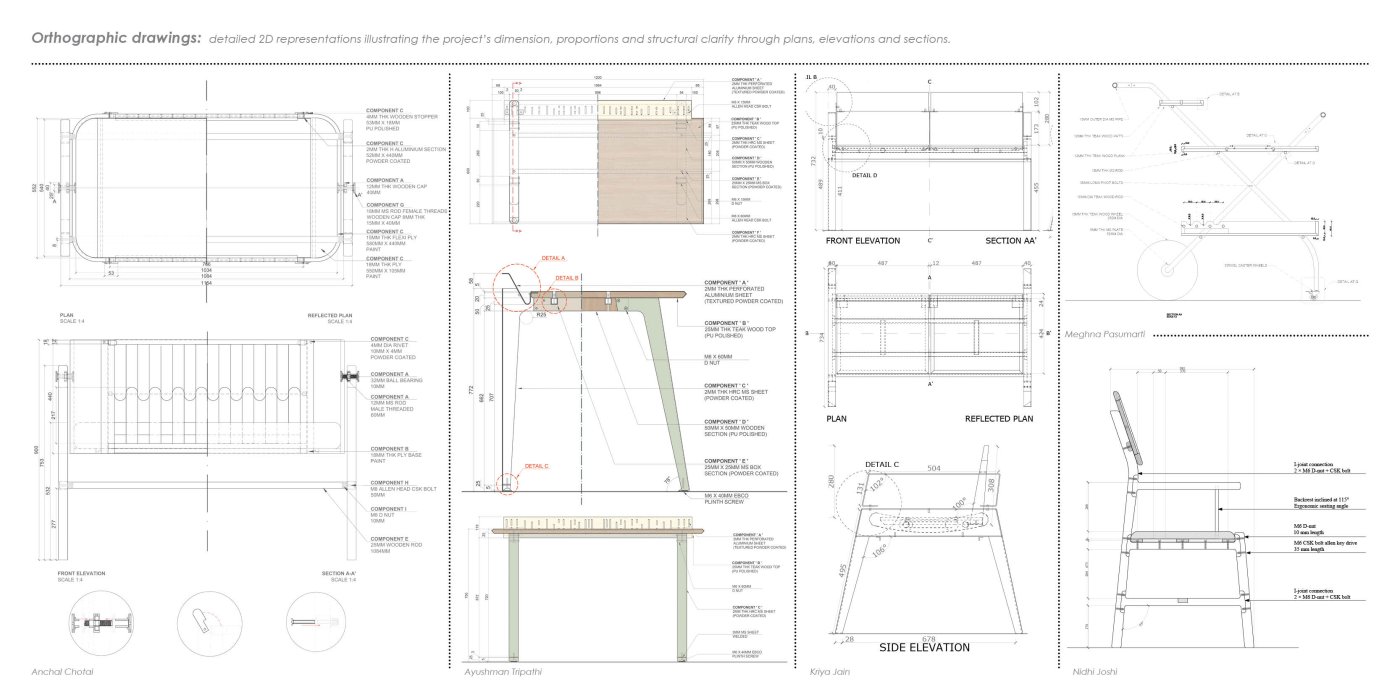
Students will also create supporting documentation, including technical drawings and assembly manuals, to communicate their designs clearly.
By semester’s end, each student will present a resolved flat pack furniture prototype that demonstrates creativity, feasibility, and responsibility—offering a design response to the global challenges of waste, mobility, and sustainable living.
Studio Unit
Week 1-3, Understanding surfaces & forms, flat to Cube in Multiple Ways, Understanding flat pack
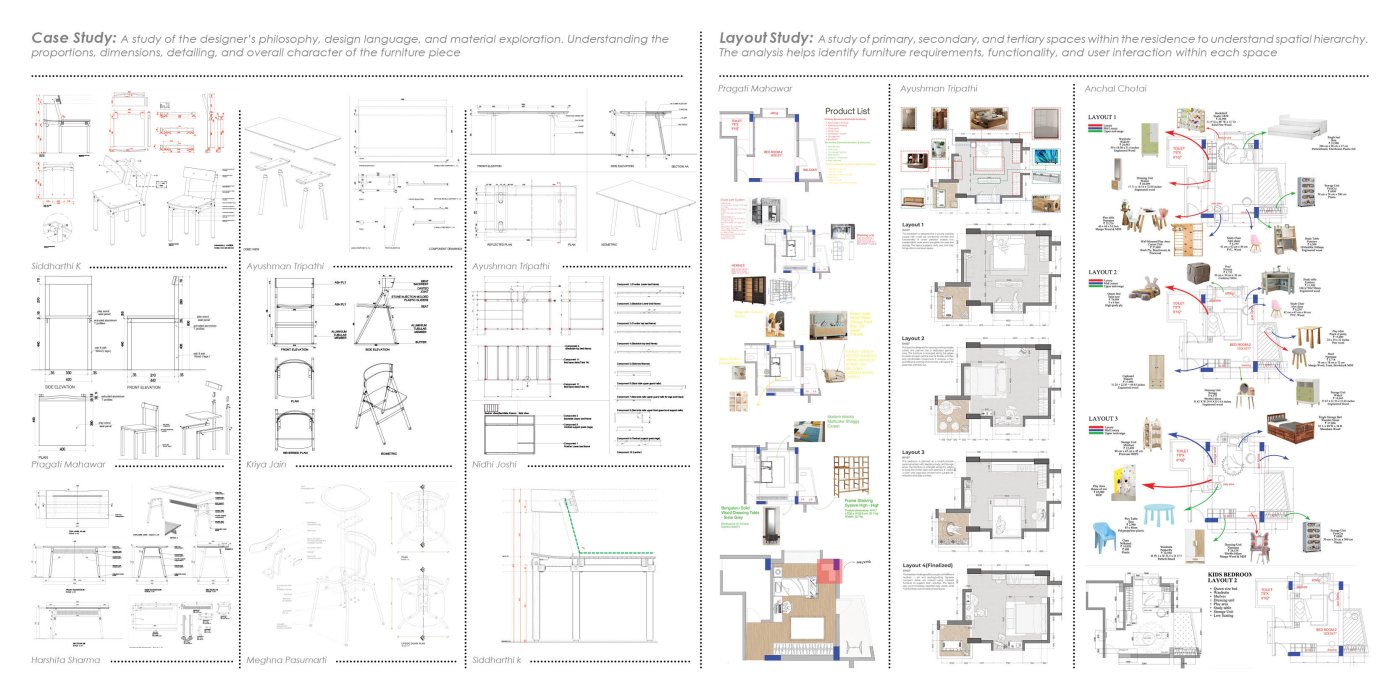
Week 4-8, Iconic Furniture Case online Study, Making model Logic of compact houses & Mind mapping for family requirement.
Week 8-13, Refining project Brief, Study of Joineries, Anthro logic, Material understanding for flatpack, Soft 1:1 Iterations & 1:1 Joinery making