Your browser is out-of-date!
For a richer surfing experience on our website, please update your browser. Update my browser now!
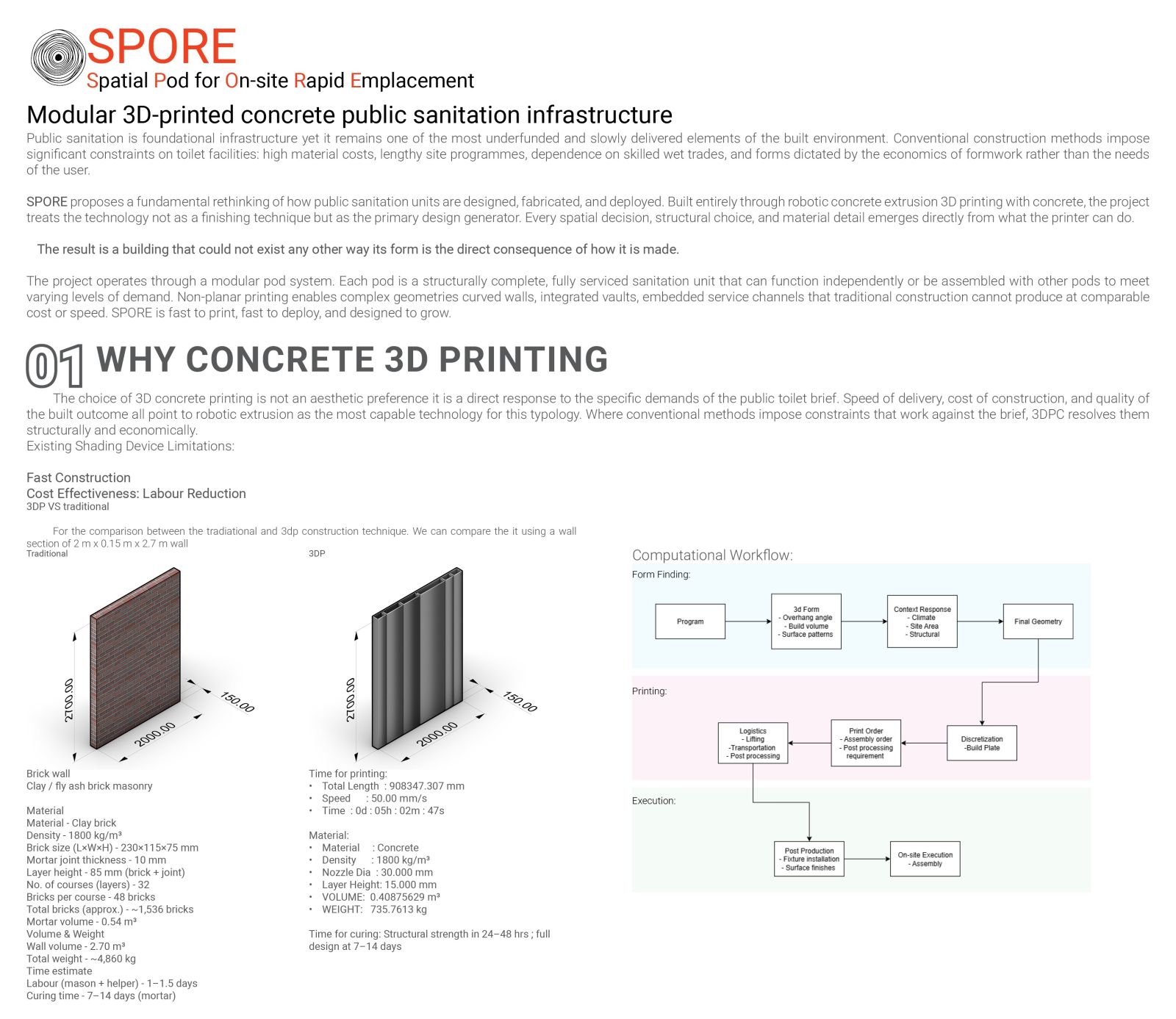
The public toilet is among the most overlooked pieces of urban infrastructure underfunded, slow to build, and costly to maintain. SPORE challenges this condition by rethinking the public sanitation unit from the ground up, using robotic concrete extrusion as both the construction method and the primary design generator.
A building that could not exist any other way its form is the direct consequence of how it is made.
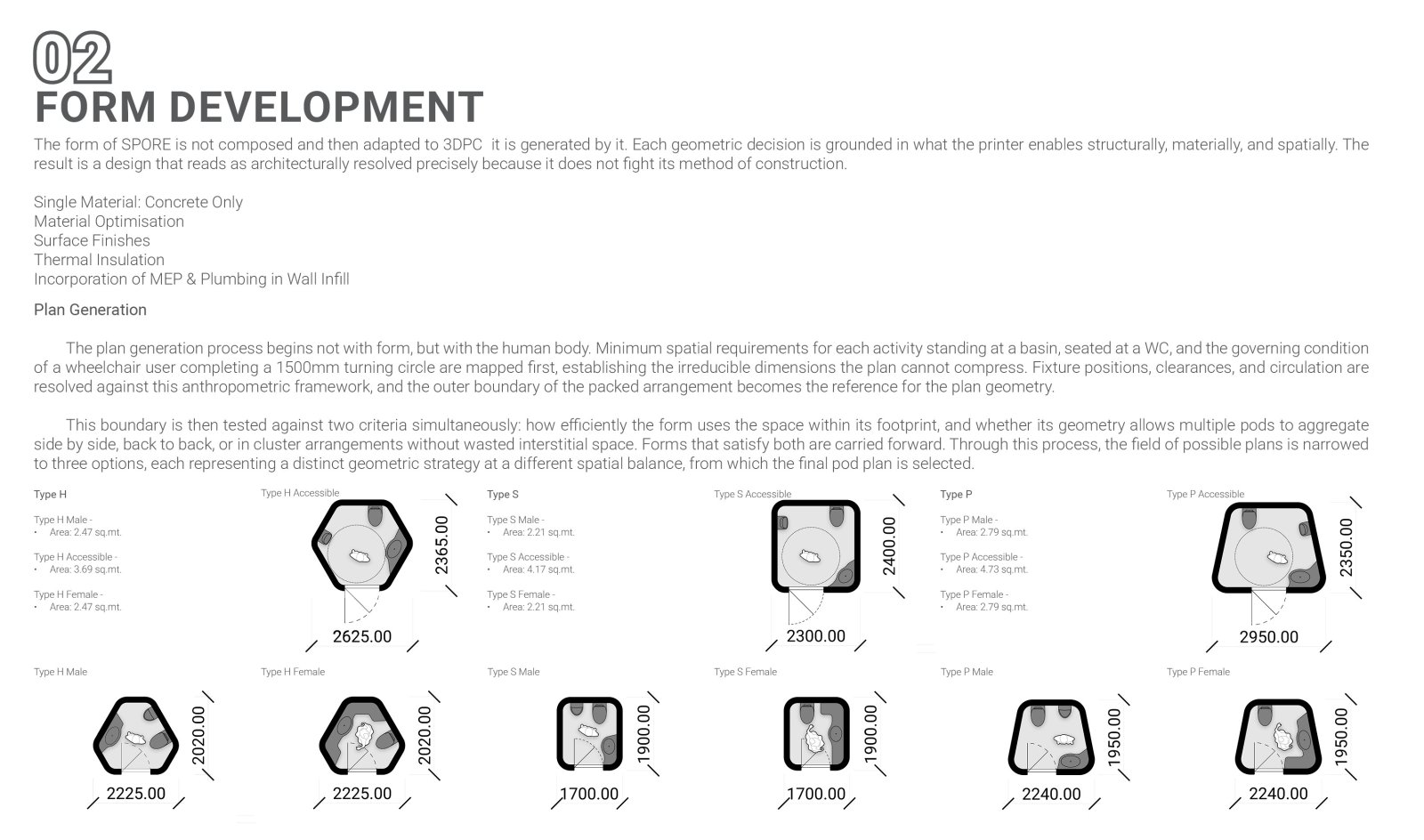
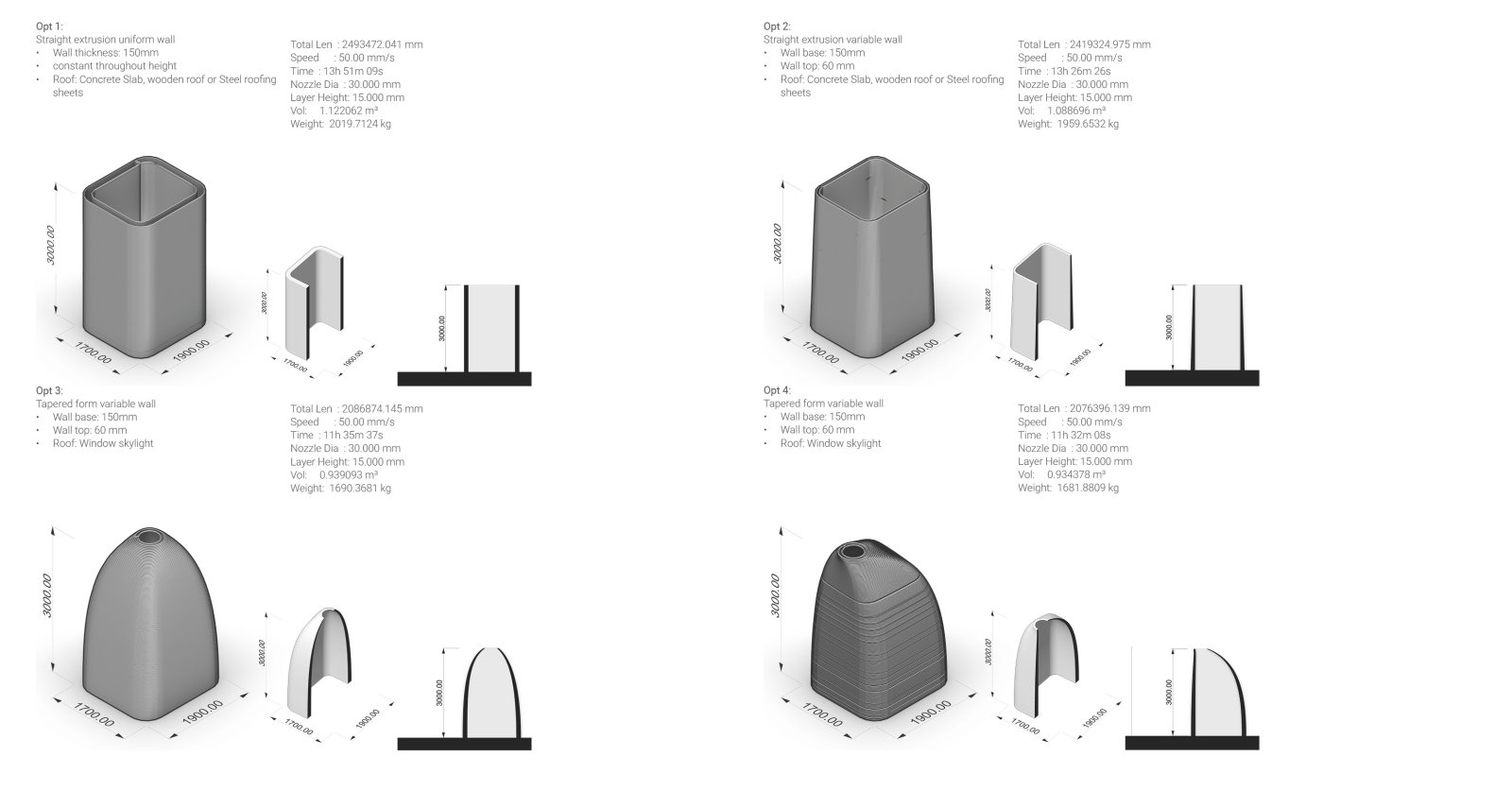
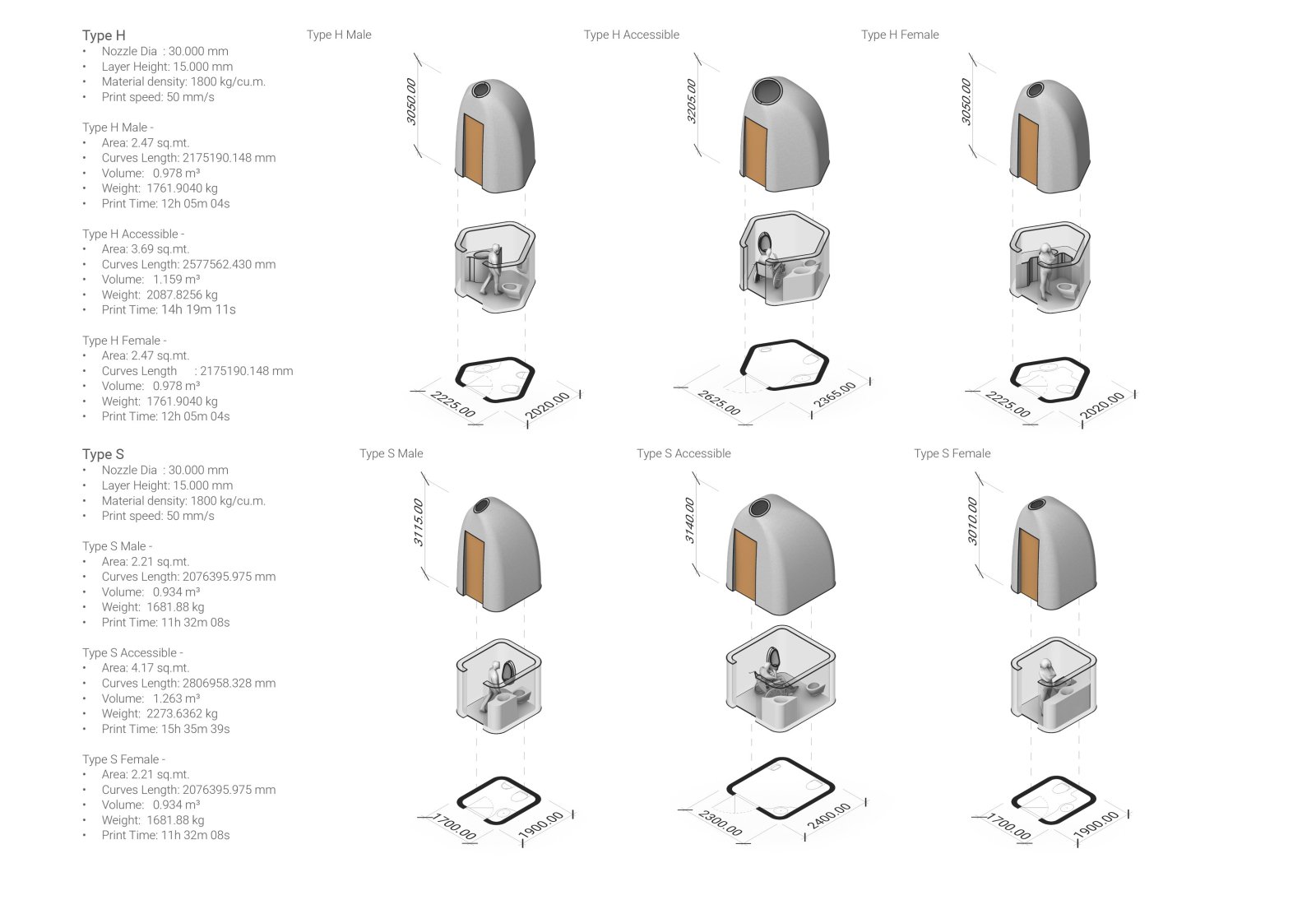
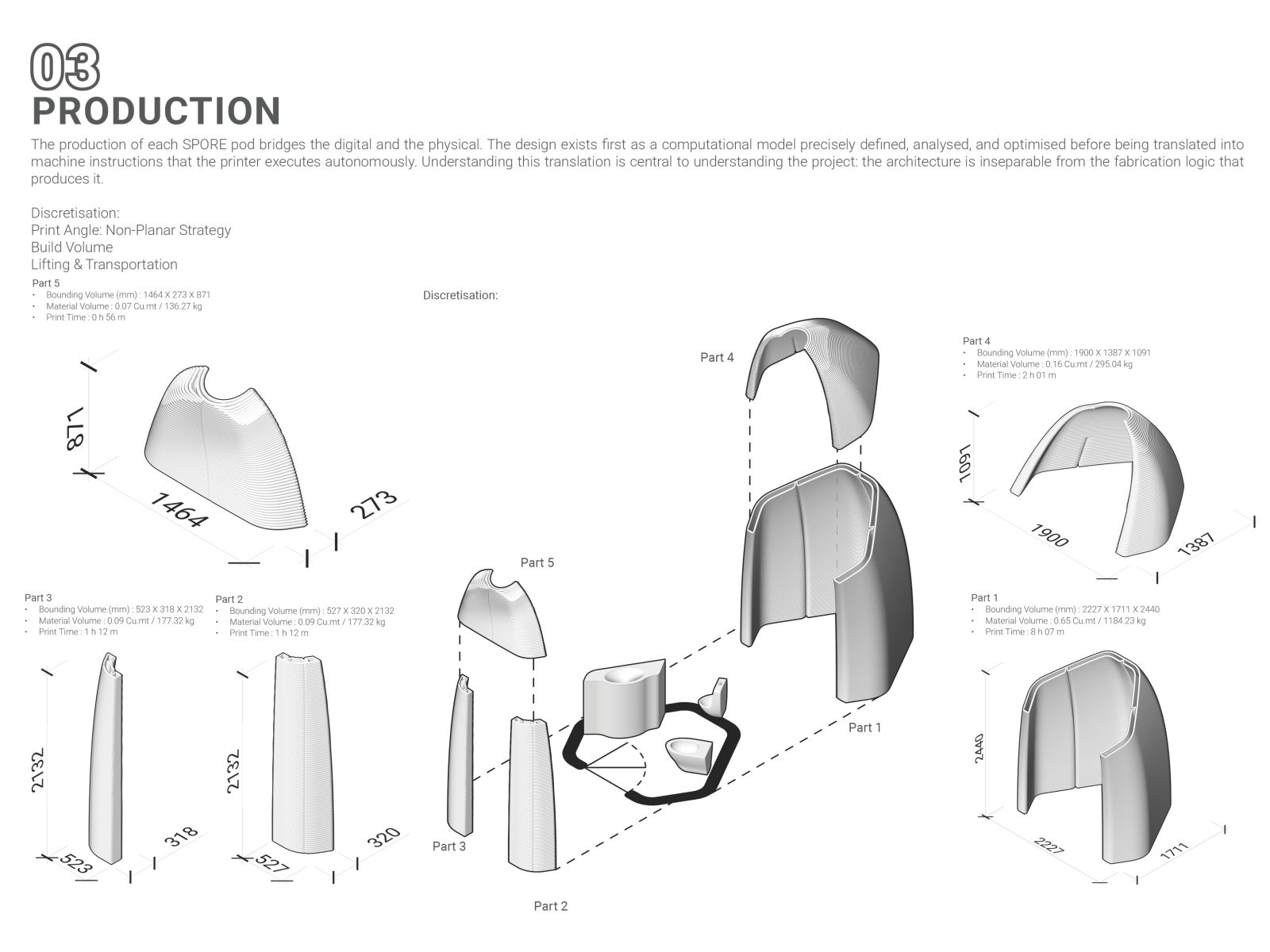
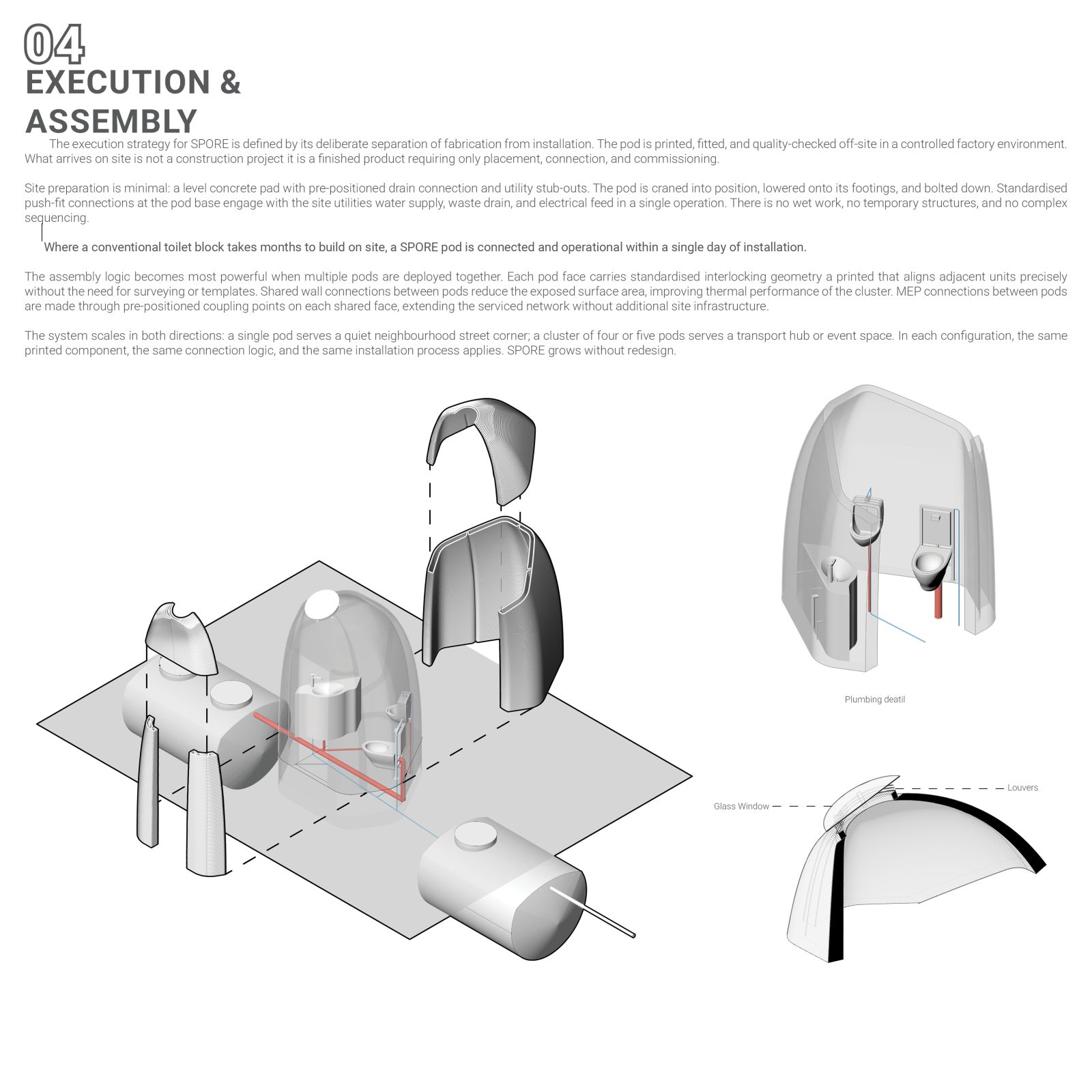
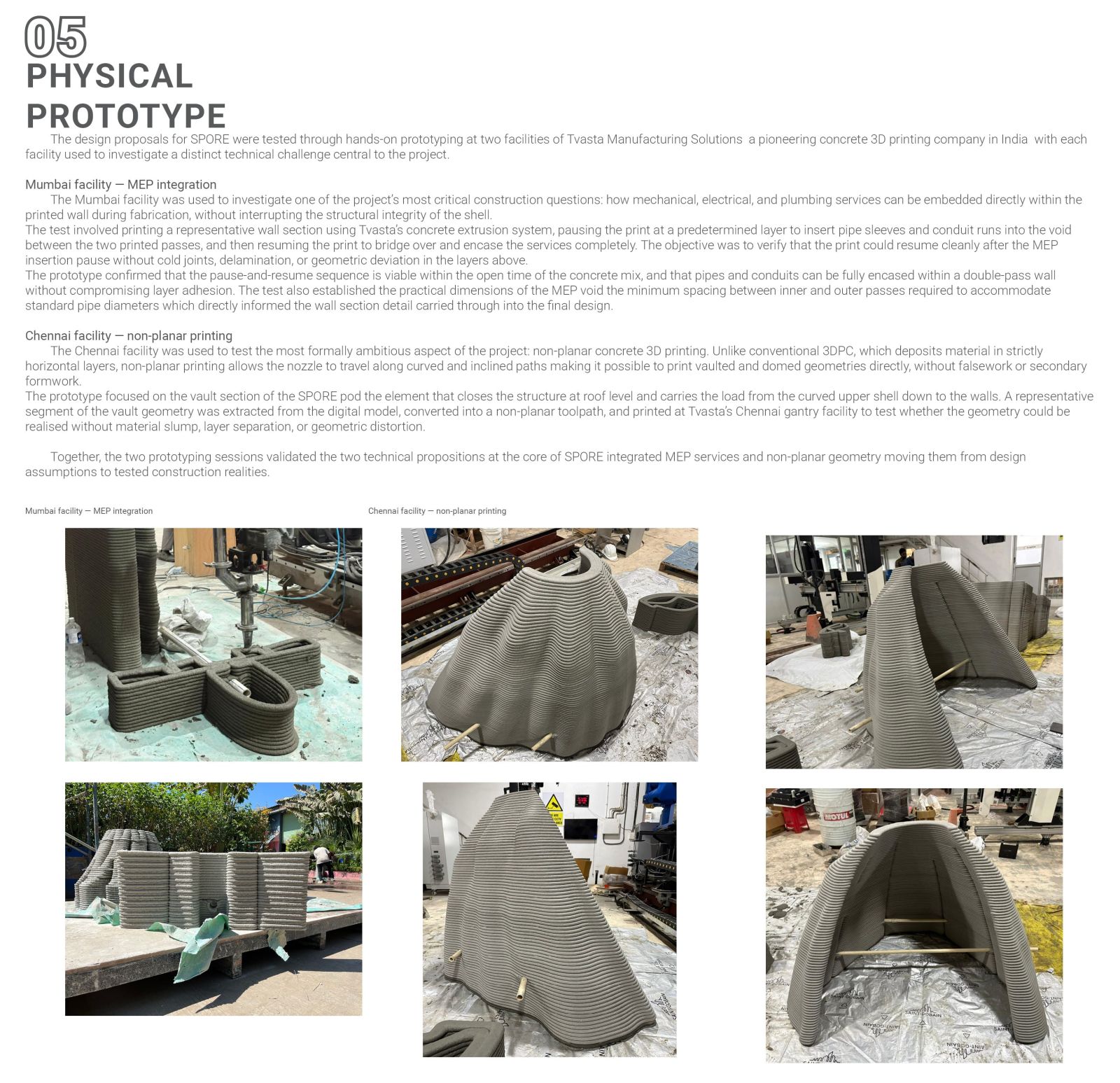
At the core of the project is the printed pod: a compact, structurally self-sufficient sanitation unit whose geometry is derived entirely from the logic of non-planar 3D concrete printing. Unlike conventional construction, which demands flat surfaces, right angles, and expensive formwork, robotic extrusion is indifferent to curvature. SPORE exploits this freedom fully walls curve in section and plan simultaneously, vaults are printed without falsework, and drainage channels, pipe chases, and fixture anchors are integrated directly into the print layers. The result is a form that traditional construction technology cannot economically replicate.
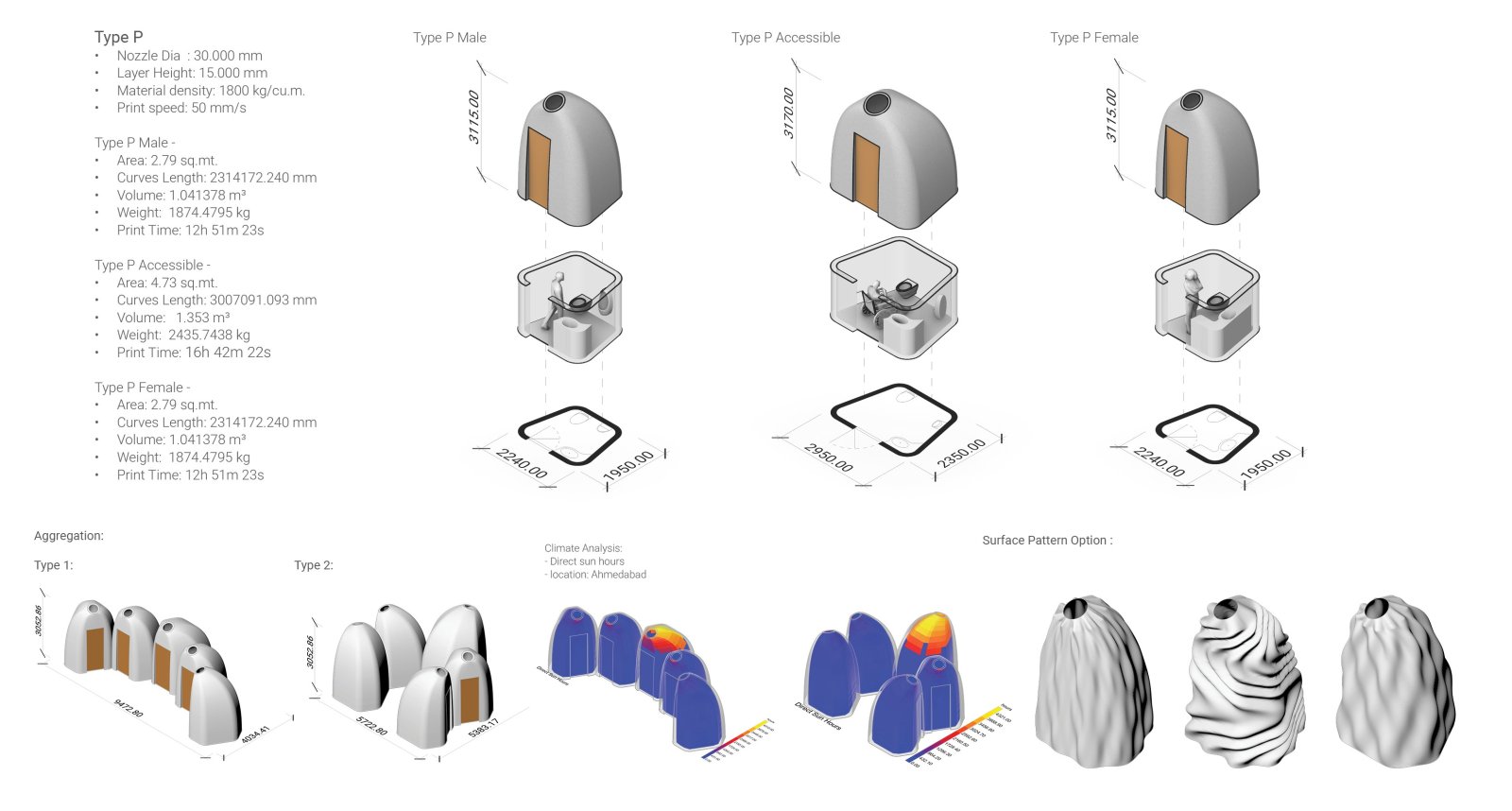
The project operates at two scales simultaneously. Each pod is designed as a complete, deployable unit fully functional as a standalone structure, with integrated MEP services, structural shell, and internal fit-out resolved within the print. At the same time, pods are engineered for assembly: geometry and standardized service connections allow multiple units to cluster expanding capacity for high-footfall locations while using the same single printed component. This modularity is not an afterthought; it is built into the print path from the outset.
Speed is the project’s defining advantage. Where traditional public toilet construction involves formwork, curing cycles, wet trades, and lengthy site programmes, a SPORE pod is printed, fitted, and operational within days. This makes it viable not only as permanent infrastructure but as a rapid-response tool deployable at events, disaster-relief sites, or wherever sanitation is needed quickly and reliably.
Material efficiency is an embedded principle. The non-planar printing strategy allows the structure to follow stress paths precisely, eliminating material where it is not needed. Combined with the absence of formwork waste and the reduction in on-site labour, the printed pod represents a significant reduction in both embodied carbon and construction cost relative to conventionally built equivalents of the same brief.
SPORE is not a toilet that happens to be 3D printed. It is a piece of infrastructure whose every dimension spatial, material, structural, and logistical is made possible by the technology that builds it.