Abhishek Chintaman Sathe

UM4050

PUM24013

This project examines the realities of slum rehabilitation through EWS housing, focusing on Swami Vivekanand Heights 3 in Vadodara. Set against the broader context of slum conditions in India and Gujarat, it explores how relocation reshapes everyday life for affected households. The study aims to understand changes in quality of life, education, and income, while closely examining the role of municipal governance in shaping outcomes. It looks at whether improved housing translates into better living conditions and well-being, how children’s access to education is influenced, and how livelihoods adapt after relocation. It also evaluates the effectiveness of governance systems and service delivery in supporting communities during this transition. By capturing both social and economic dimensions, the project highlights the opportunities and gaps in rehabilitation efforts, emphasizing the need for responsive and inclusive institutional support systems. 

Report Content

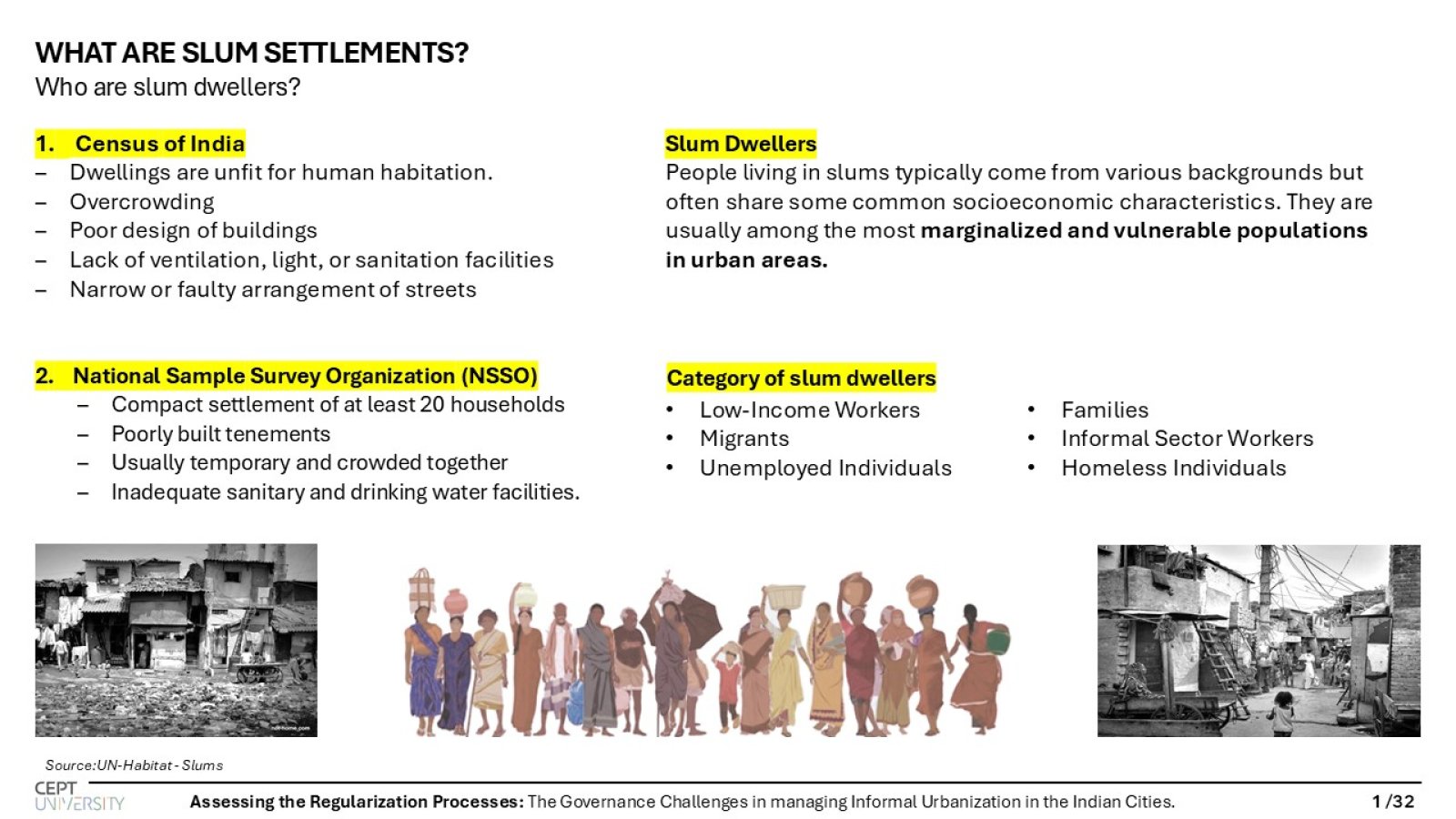
Slums are overcrowded settlements with poorly built housing, inadequate ventilation, and limited access to sanitation and basic services. Often arranged in narrow, unplanned streets, they pose unsafe living conditions. Typically consisting of dense clusters of households, slum populations include low-income workers, migrants, and other economically vulnerable groups in urban areas.

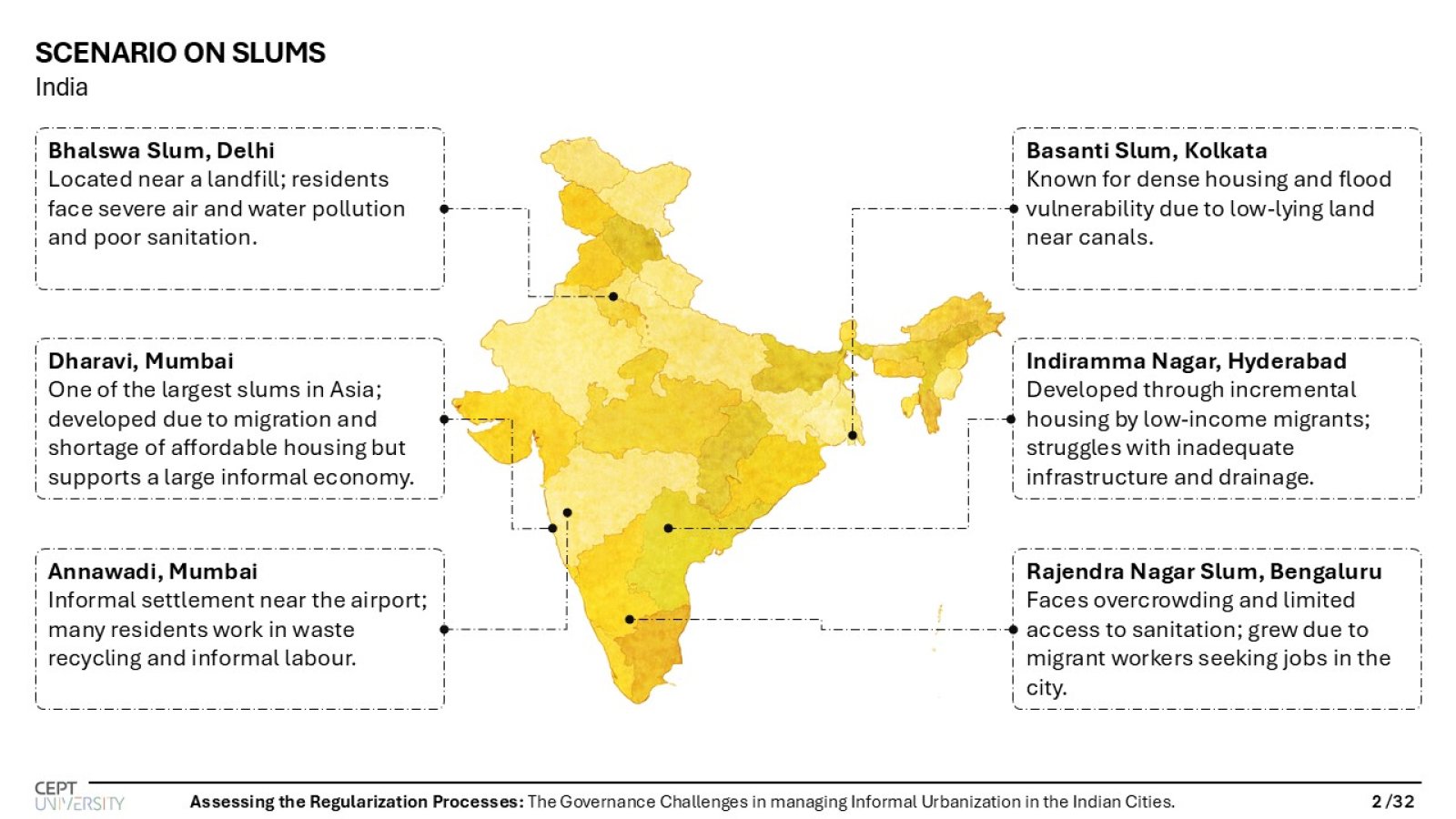
The slide highlights slum conditions across cities in India, showing how location shapes challenges. Delhi’s Bhalaswa faces pollution, Mumbai’s Dharavi reflects housing shortages and informal economies, while Basanti in Kolkata faces flooding. Hyderabad and Bengaluru show overcrowding and infrastructure gaps due to migration.

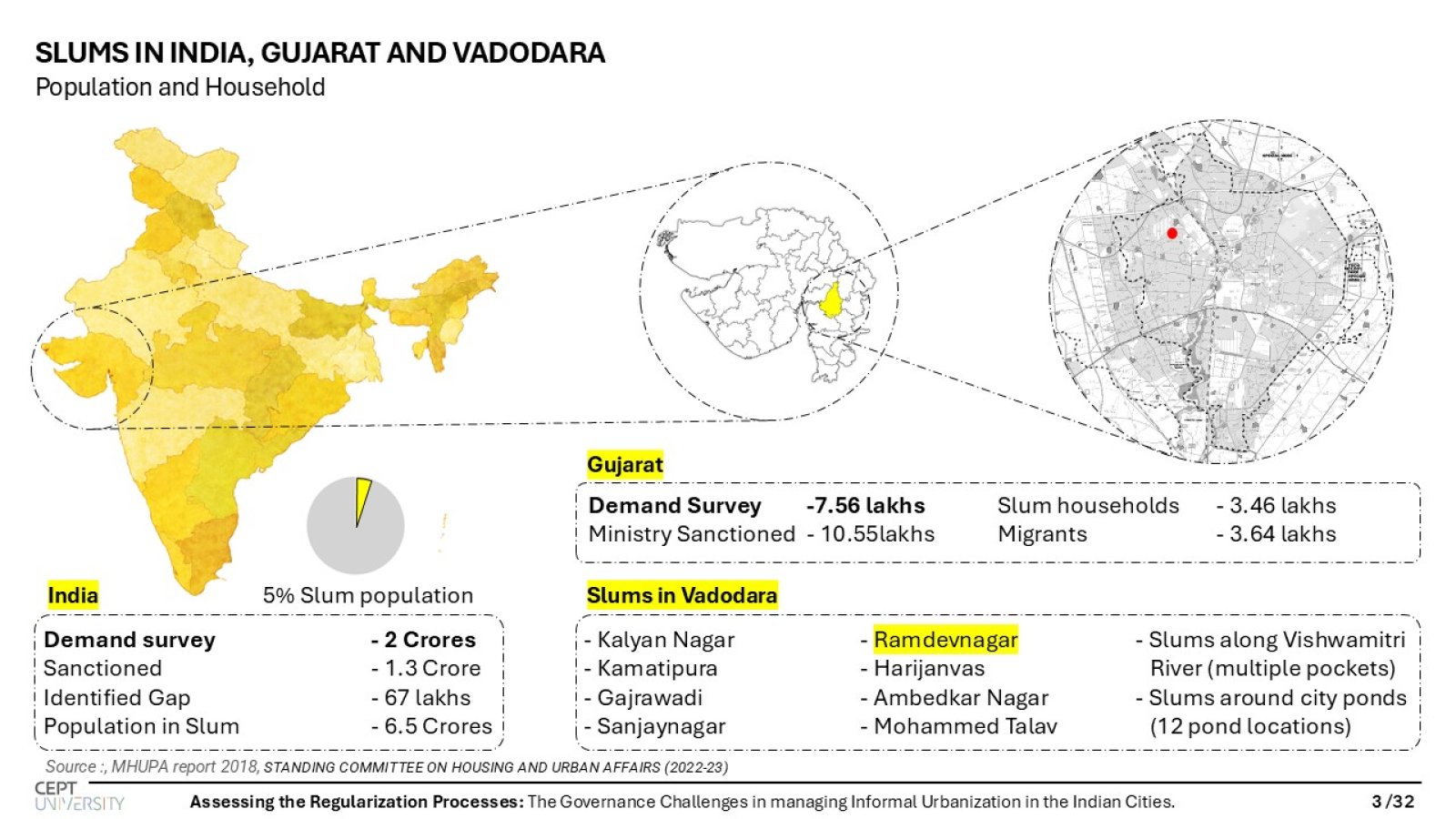
The slide highlights the scale of slums across India, Gujarat, and Vadodara. Slums form about 5% of India’s population, with housing demand exceeding sanctioned units. In Gujarat, sanctioned housing outpaces demand, yet gaps remain. In Vadodara, slums cluster in areas like Kalyan Nagar and Ramdevnagar, often near rivers and ponds.

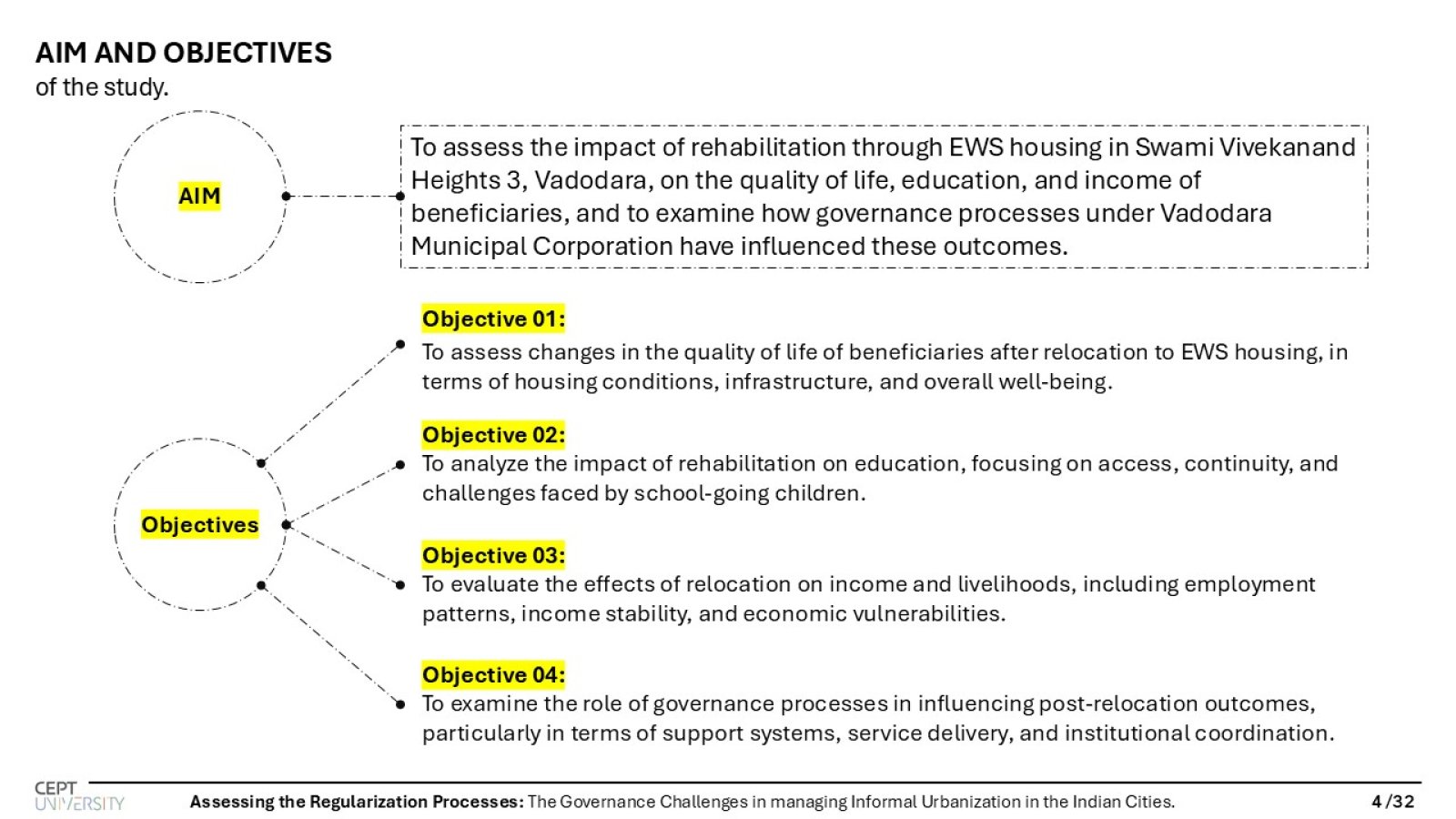
The study focuses on rehabilitation through EWS housing at Swami Vivekanand Heights 3 in Vadodara. It aims to understand how relocation affects quality of life, education, and income, along with the role of municipal governance. The objectives examine improvements in living conditions, children’s educational access, changes in livelihoods, and the effectiveness of governance and service delivery. Overall, the study captures both social and economic impacts, emphasizing the need for strong and responsive institutional support systems.
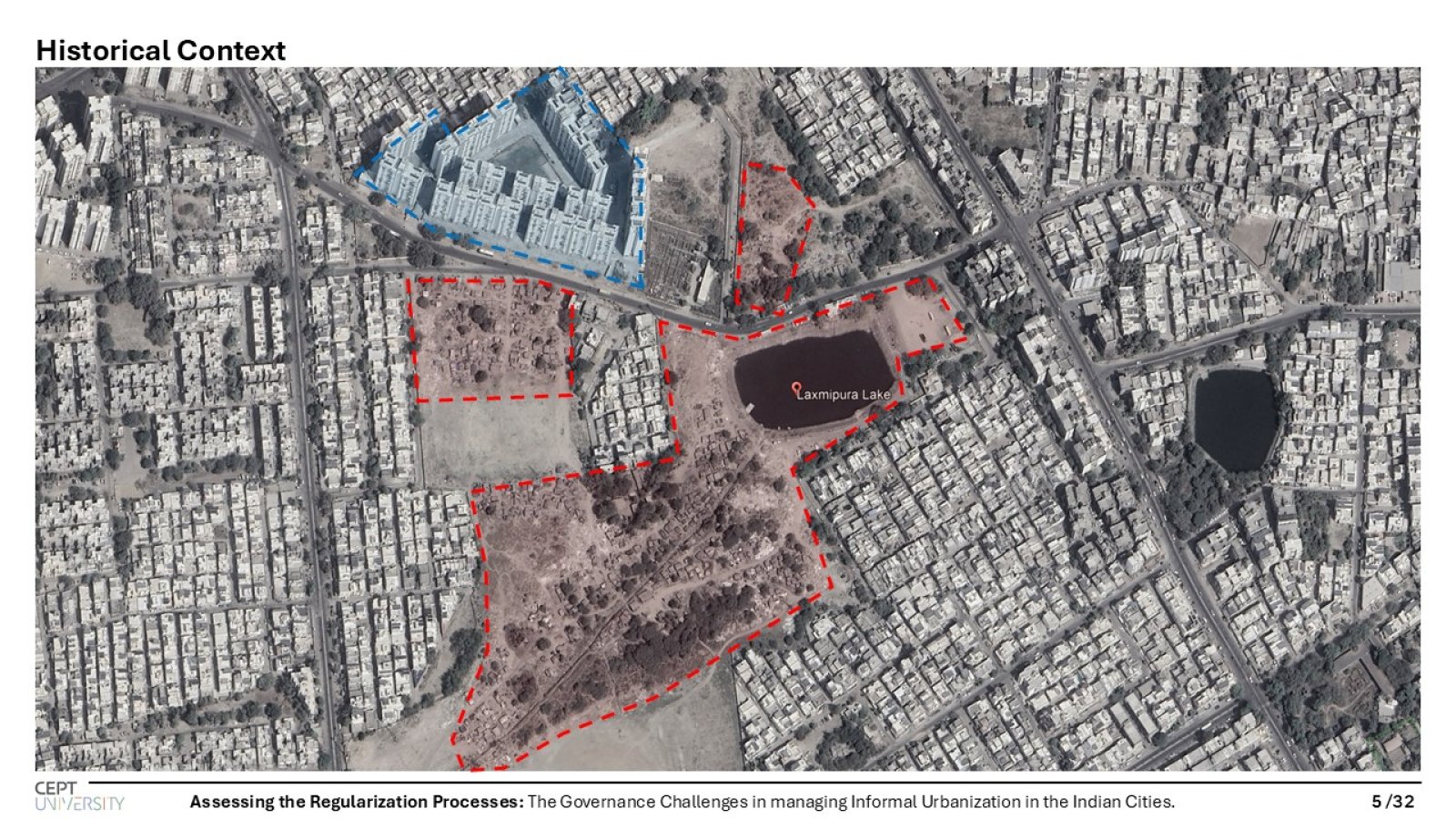
The blue-highlighted zone marks Swami Vivekanand Heights 3, a formal EWS housing development that represents planned rehabilitation. In contrast, the red-dotted areas indicate land that was previously occupied by informal slum settlements, spread across multiple pockets around Laxmipura Lake.

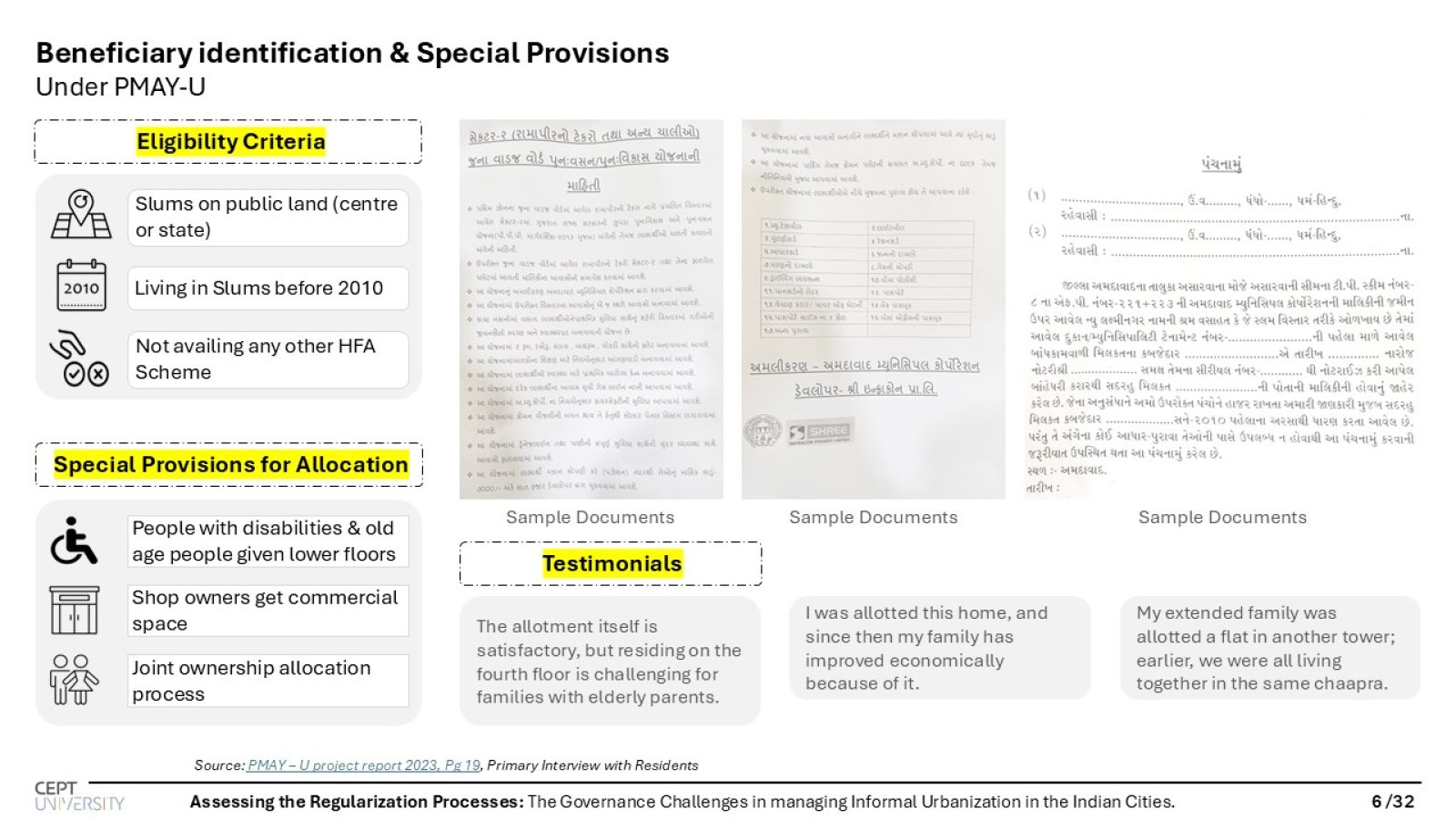
Beneficiary selection under Pradhan Mantri Awas Yojana - Urban prioritizes slum residents, pre-2010 occupants, and those without housing benefits. Inclusive provisions support vulnerable groups and livelihoods. While many report improved conditions, challenges remain, including access to higher floors and separation of extended families after relocation.

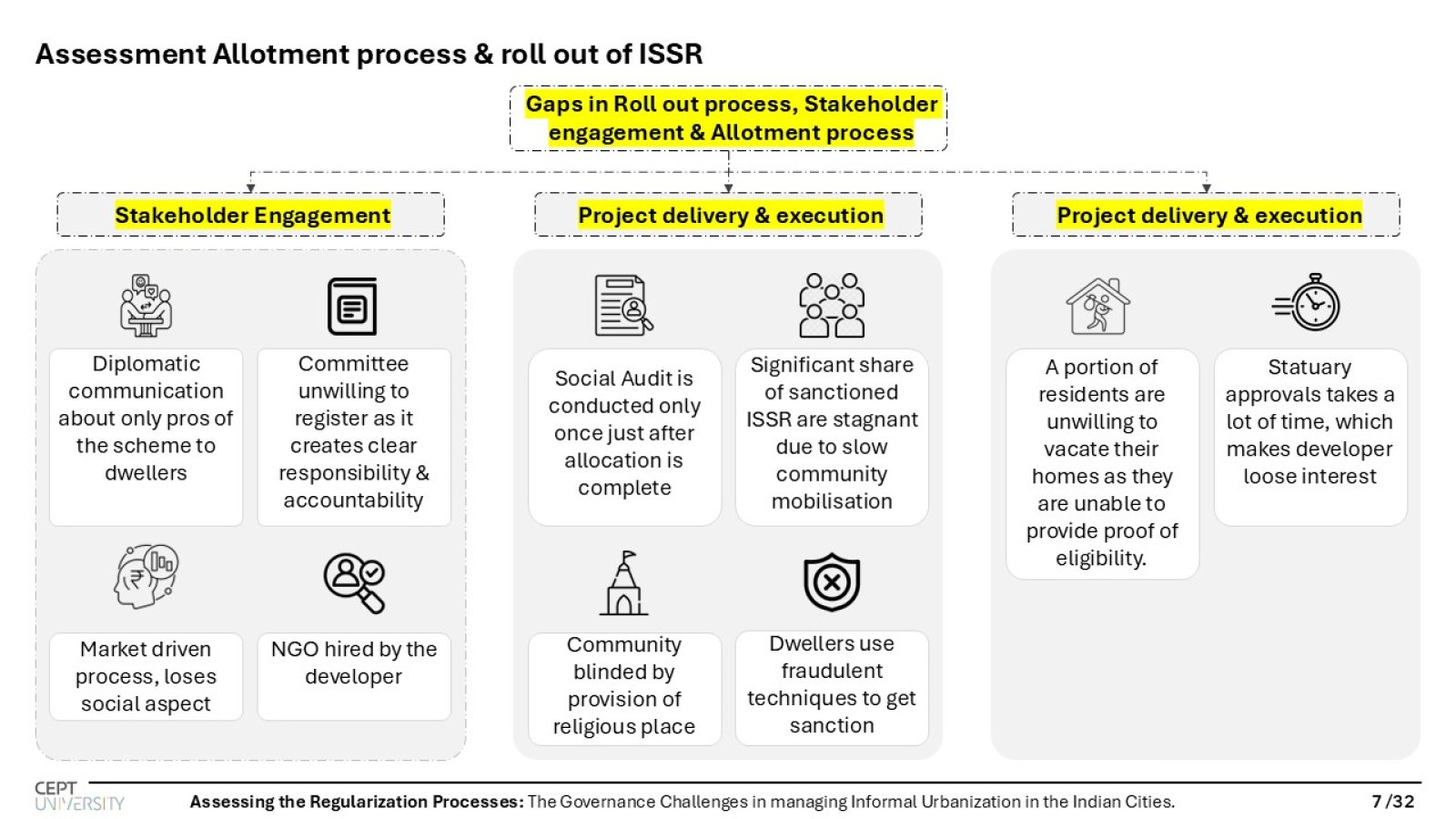
Gaps in In-Situ Slum Rehabilitation span engagement, execution, and delivery. Communication is one-sided, limiting informed consent, and accountability remains weak. Delays arise from slow mobilization and ineffective audits. At delivery, eligibility issues and approval delays reduce participation and discourage developers, affecting timely and inclusive project completion.

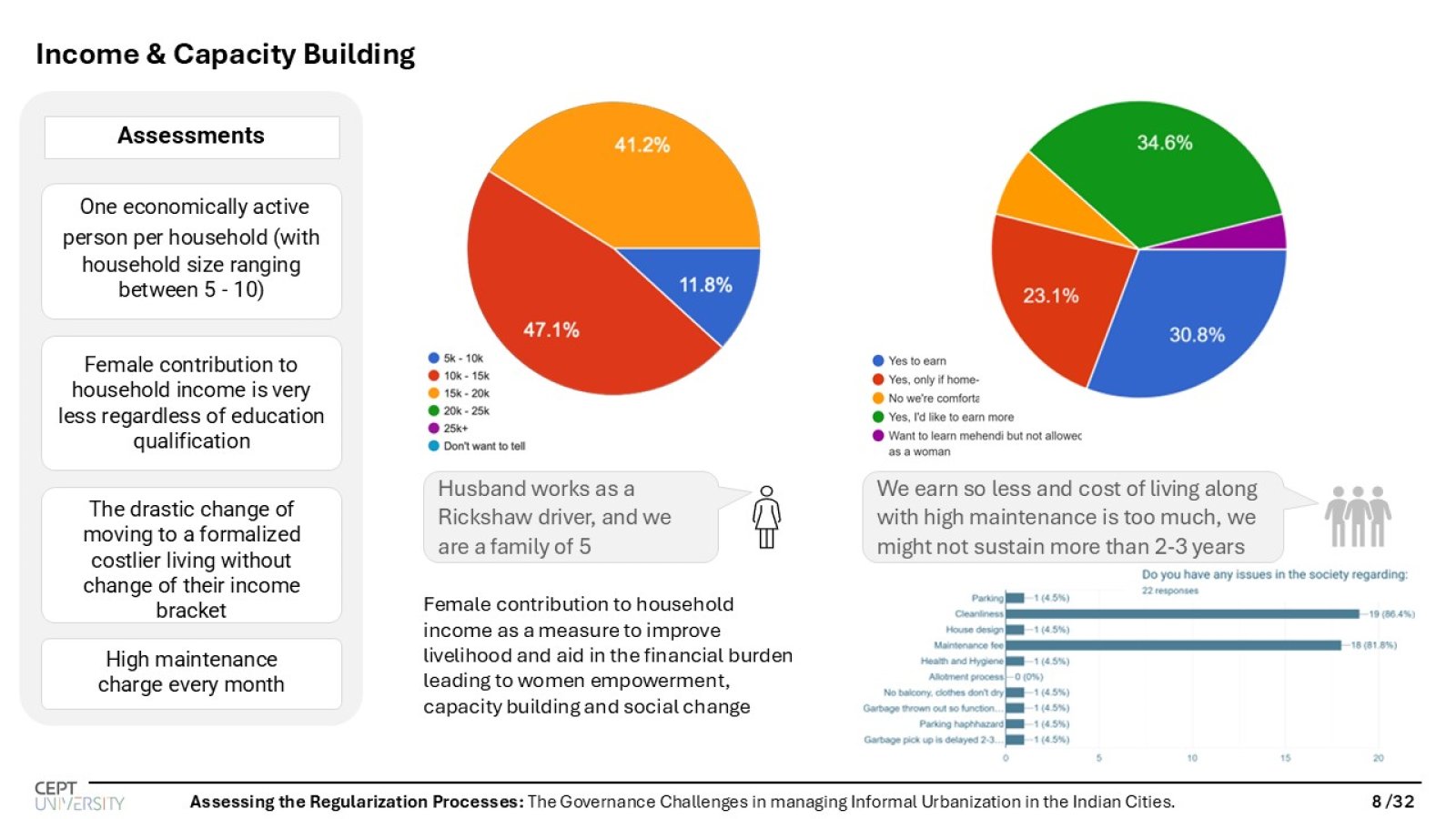
The findings highlight limited income stability among households, with most relying on a single earning member despite larger family sizes. Income levels remain low, while expenses have increased after shifting to formal housing. Female workforce participation is minimal, indicating untapped earning potential. Although residents are willing to work more, barriers persist. Rising maintenance costs without income growth raise concerns about long-term financial sustainability.

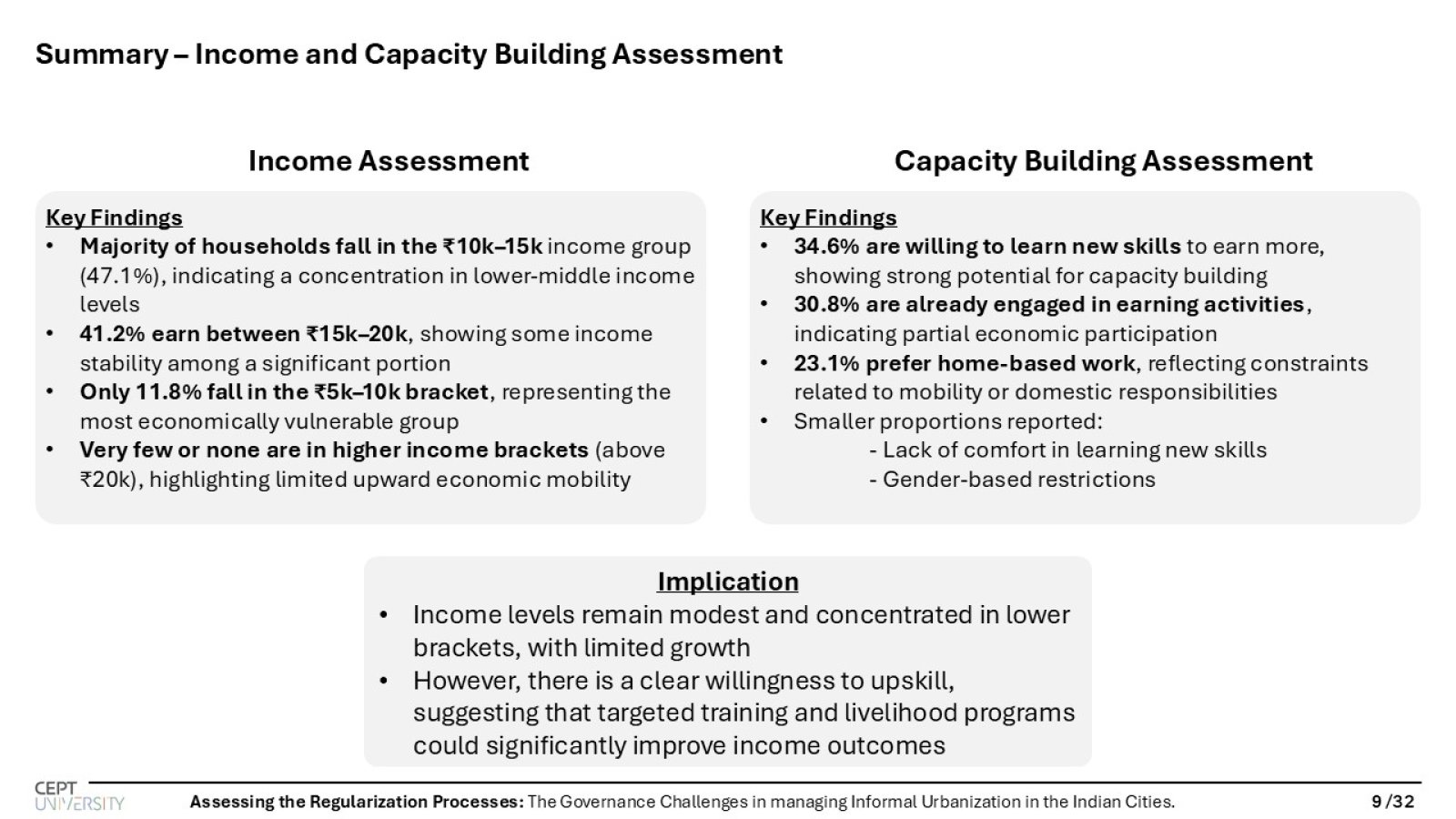
Income levels remain modest and concentrated in lower brackets, with limited upward mobility. However, there is a clear willingness among residents to learn and improve earning potential. While some engage in small home-based activities, others prefer flexible options due to daily constraints, indicating both existing challenges and opportunities for livelihood enhancement.

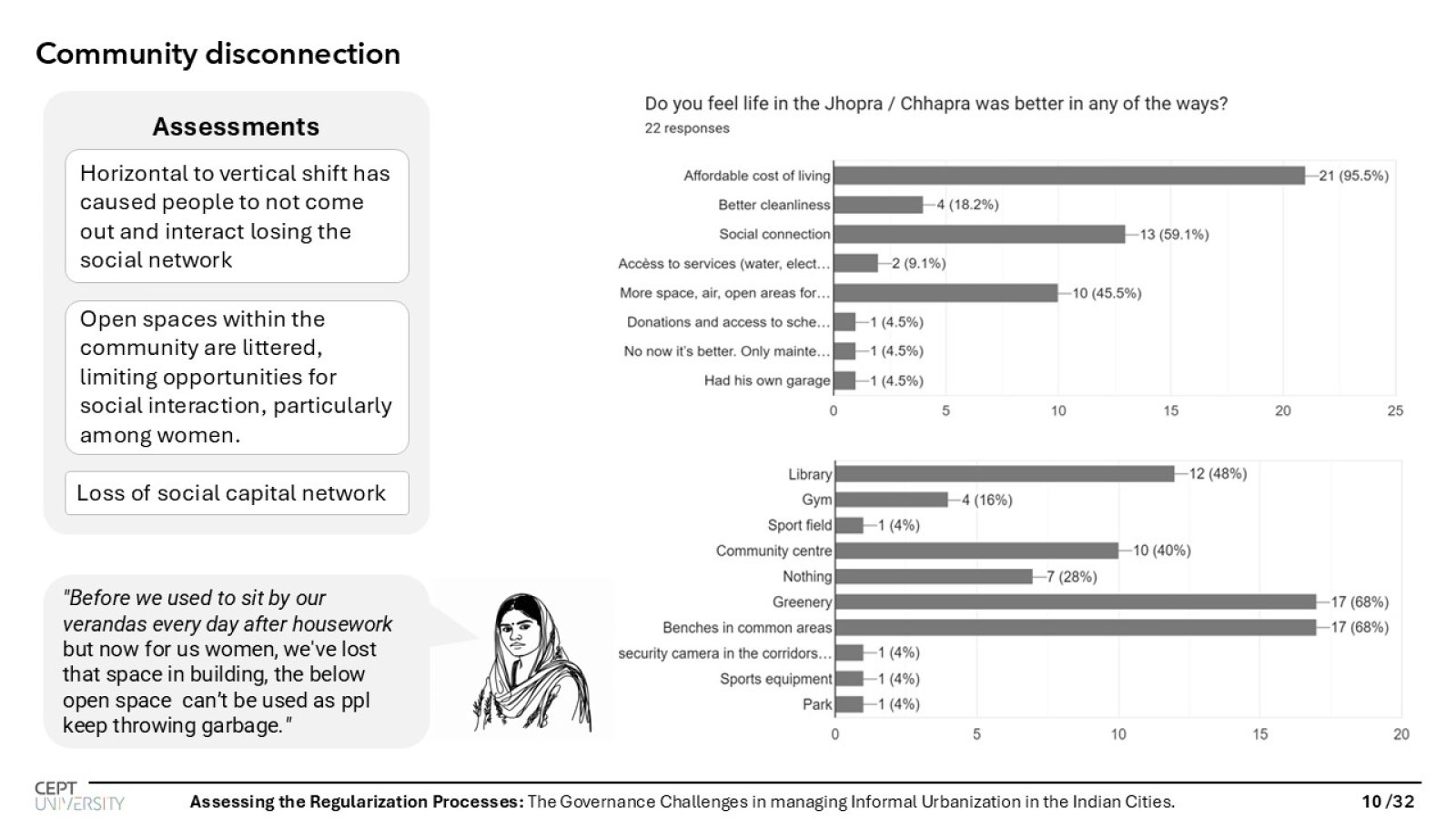
Community life has weakened after relocation, with reduced interaction and a loss of everyday social connections. Poorly maintained shared spaces limit their use, particularly affecting women’s ability to gather and engage outdoors. Residents express a need for better common spaces and basic amenities, which could help rebuild social bonds and strengthen community belonging.