Thakkar Maher Rajnikant

UM4050

PUM24466

This Directed Research Project examines air quality governance in Indian cities through the case of Ahmedabad, integrating citizen exposure, IoT-based monitoring, and institutional analysis. Using a mixed-method approach comprising surveys (n=200), stakeholder interviews, and real-time AirOwl sensor monitoring across 30 locations, the study identifies significant gaps between emission-focused policies and actual exposure experienced by citizens. Findings reveal strong spatial variation in PM2.5 and PM10 levels, high dependence on private transport, and limited public engagement with AQI monitoring. The project proposes a data-driven prioritisation framework to support smarter and more responsive urban air quality interventions.
Report Content

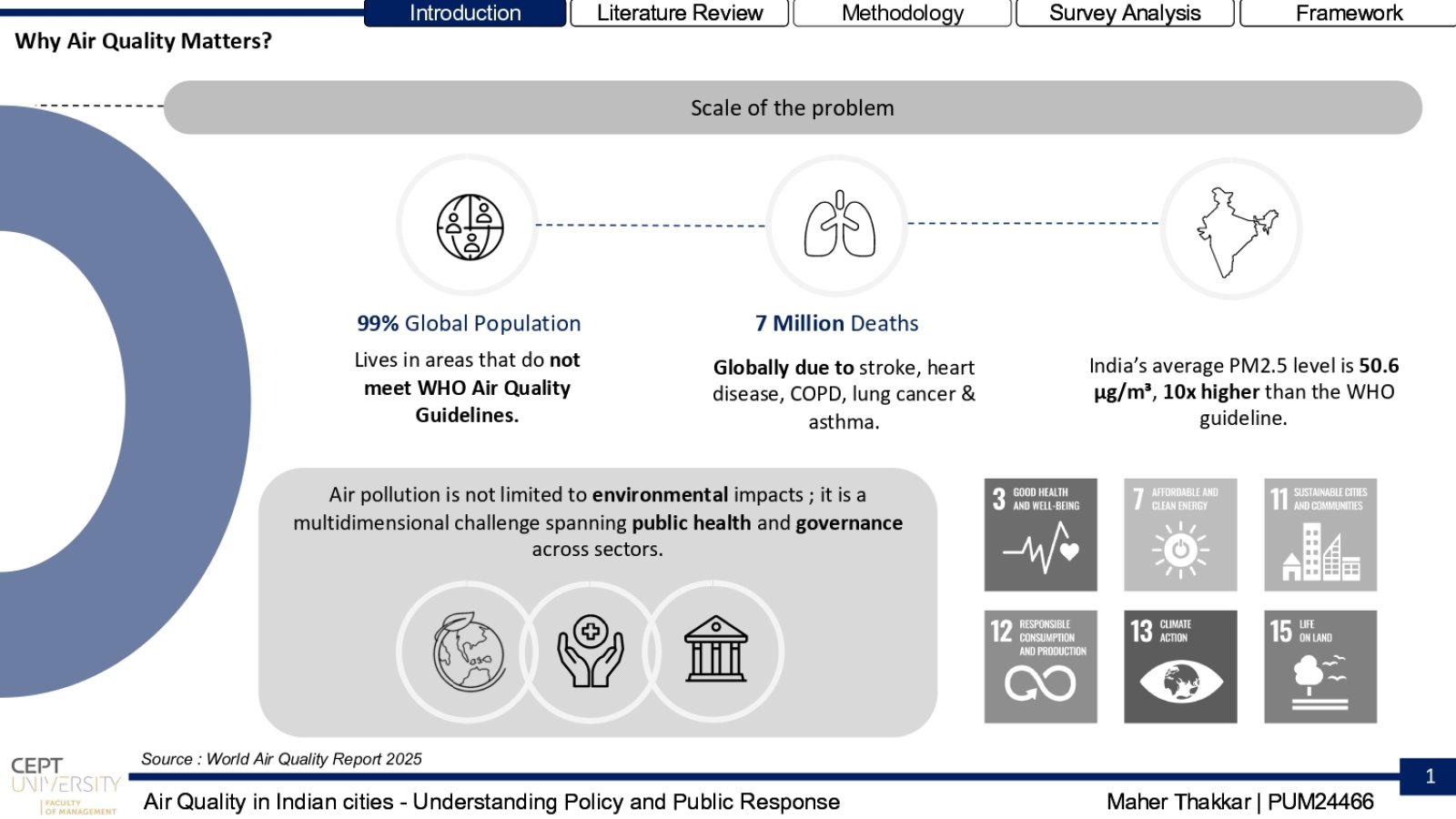
Global and national scale of the air pollution crisis highlighting public health, environmental, and governance impacts.

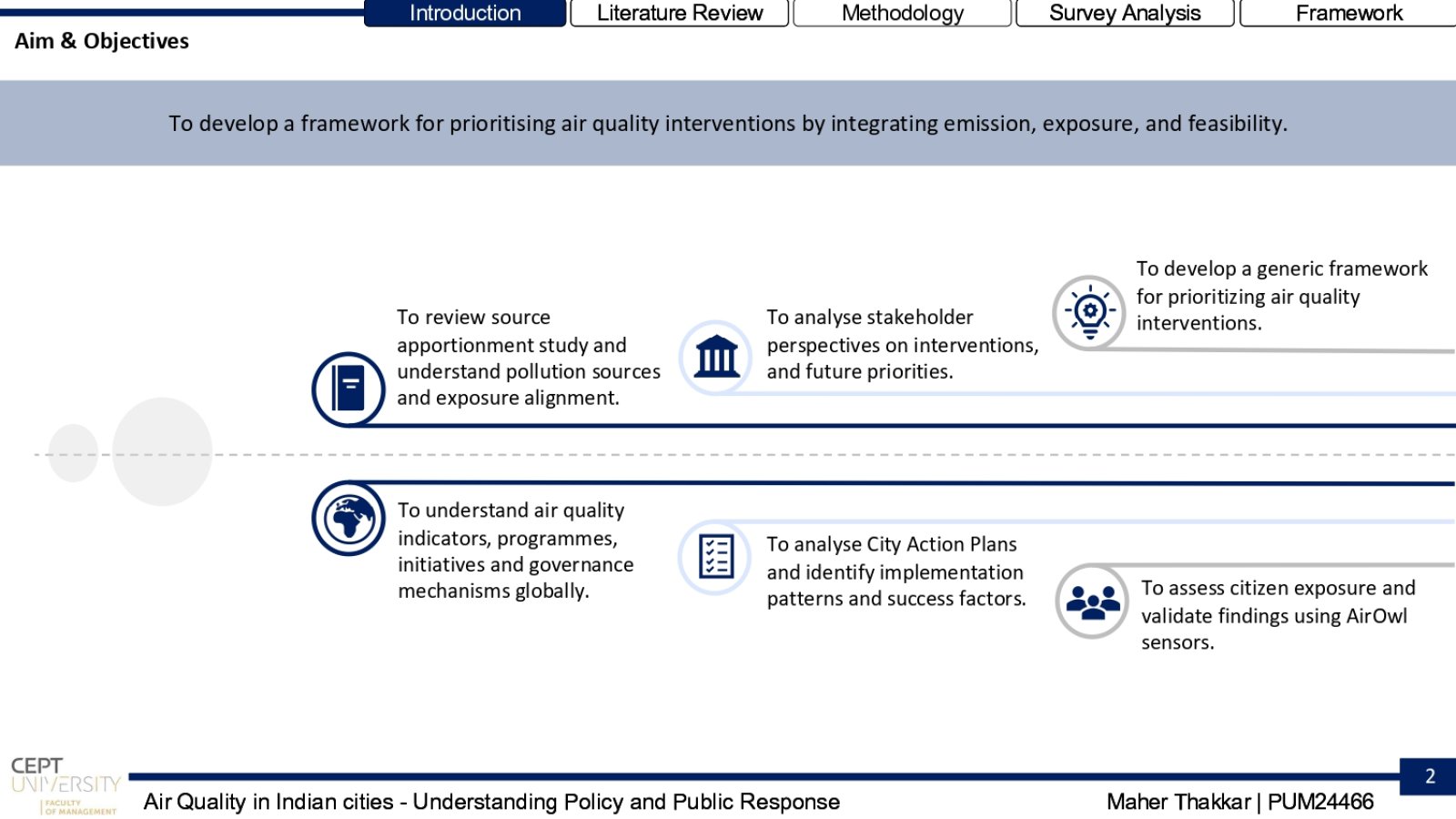
Research objectives guiding the study on air quality governance, citizen exposure, and intervention prioritisation.

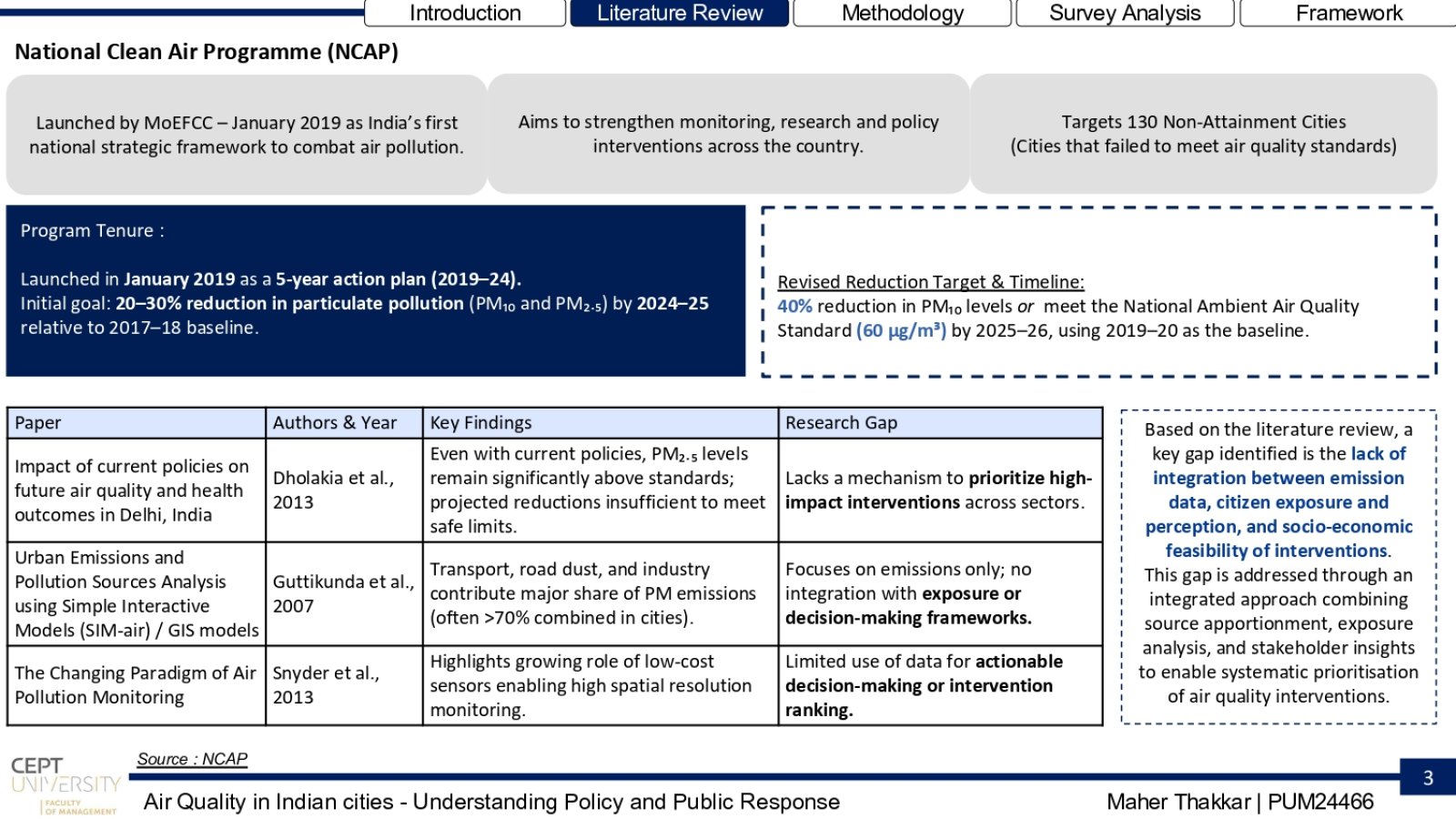
Overview of NCAP targets, literature review findings, and identified research gaps in current air quality governance approaches.

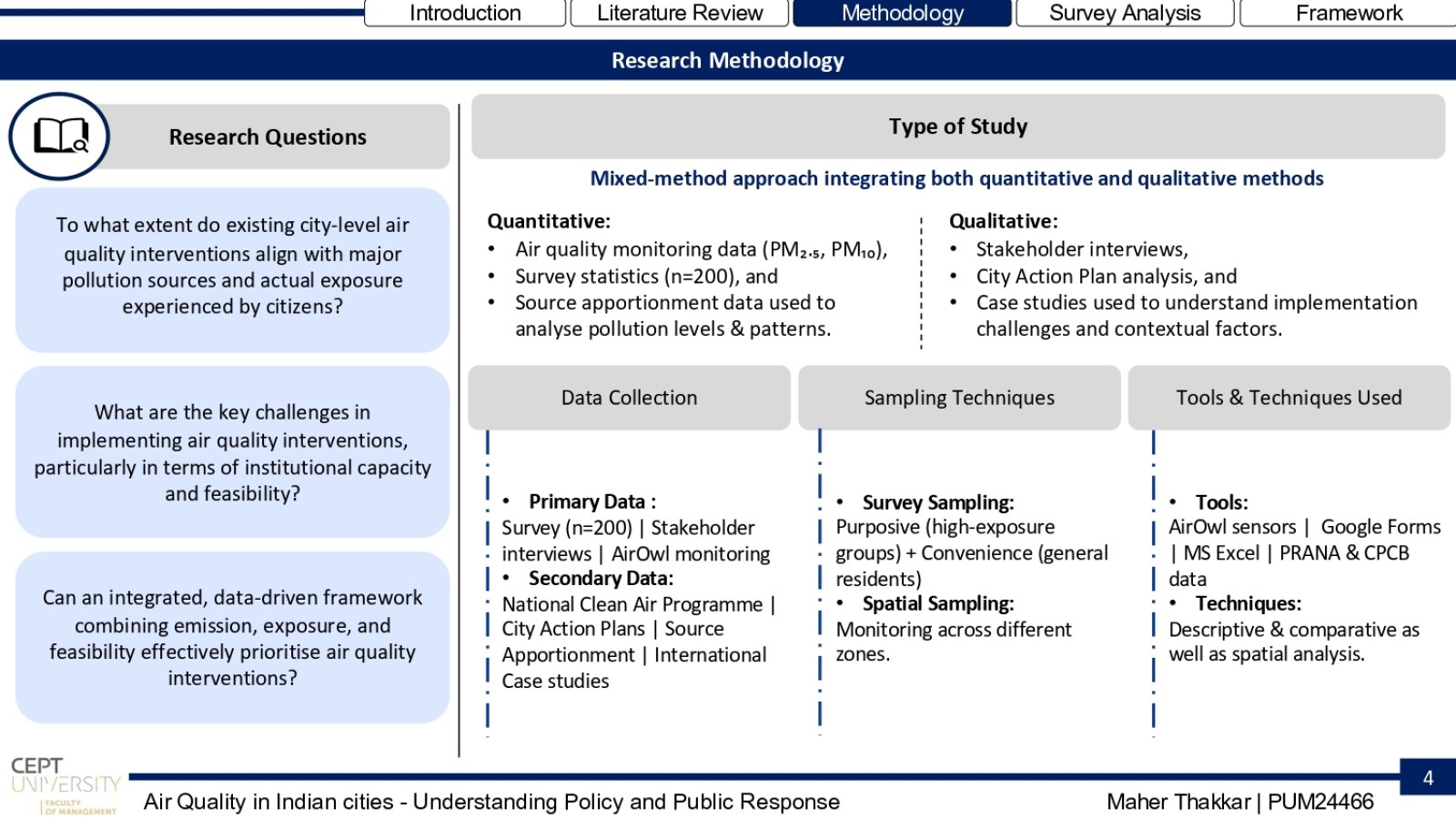
Mixed-method research design integrating surveys, stakeholder interviews, and IoT-based air quality monitoring.

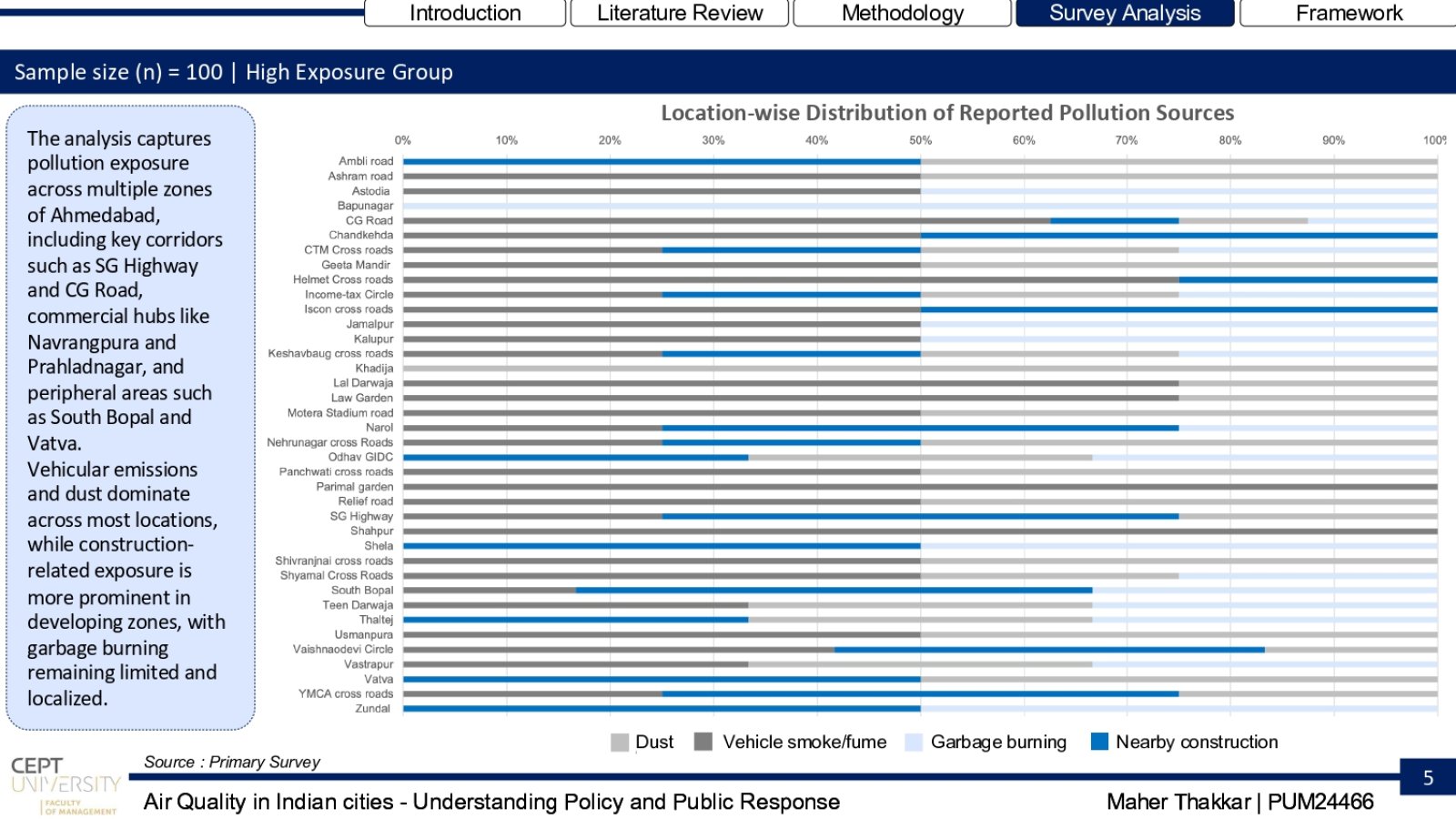
Spatial distribution of dominant pollution sources reported by high-exposure respondents across Ahmedabad.

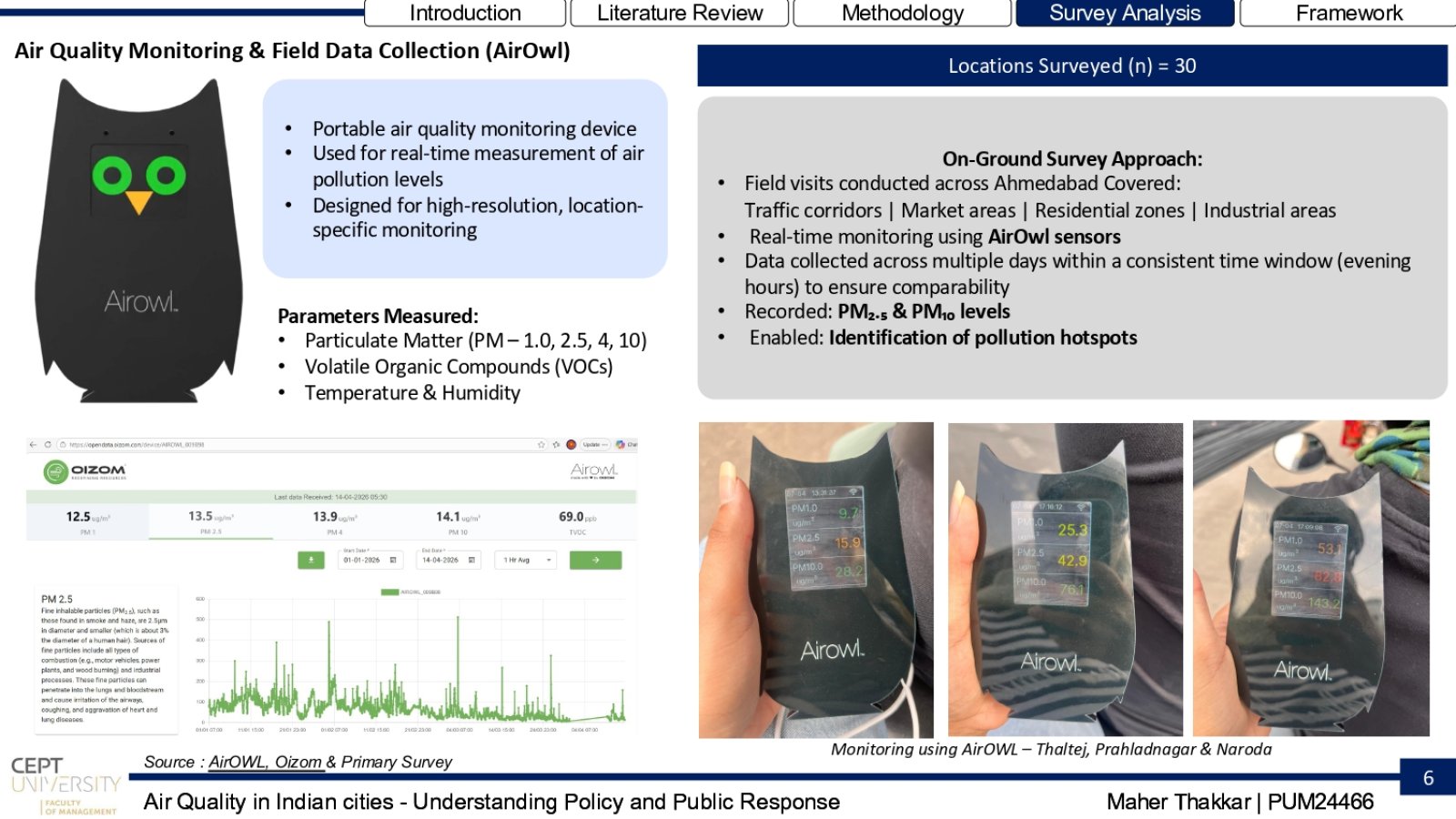
Real-time air quality monitoring using AirOwl IoT sensors across traffic, residential, commercial, and industrial zones in Ahmedabad.

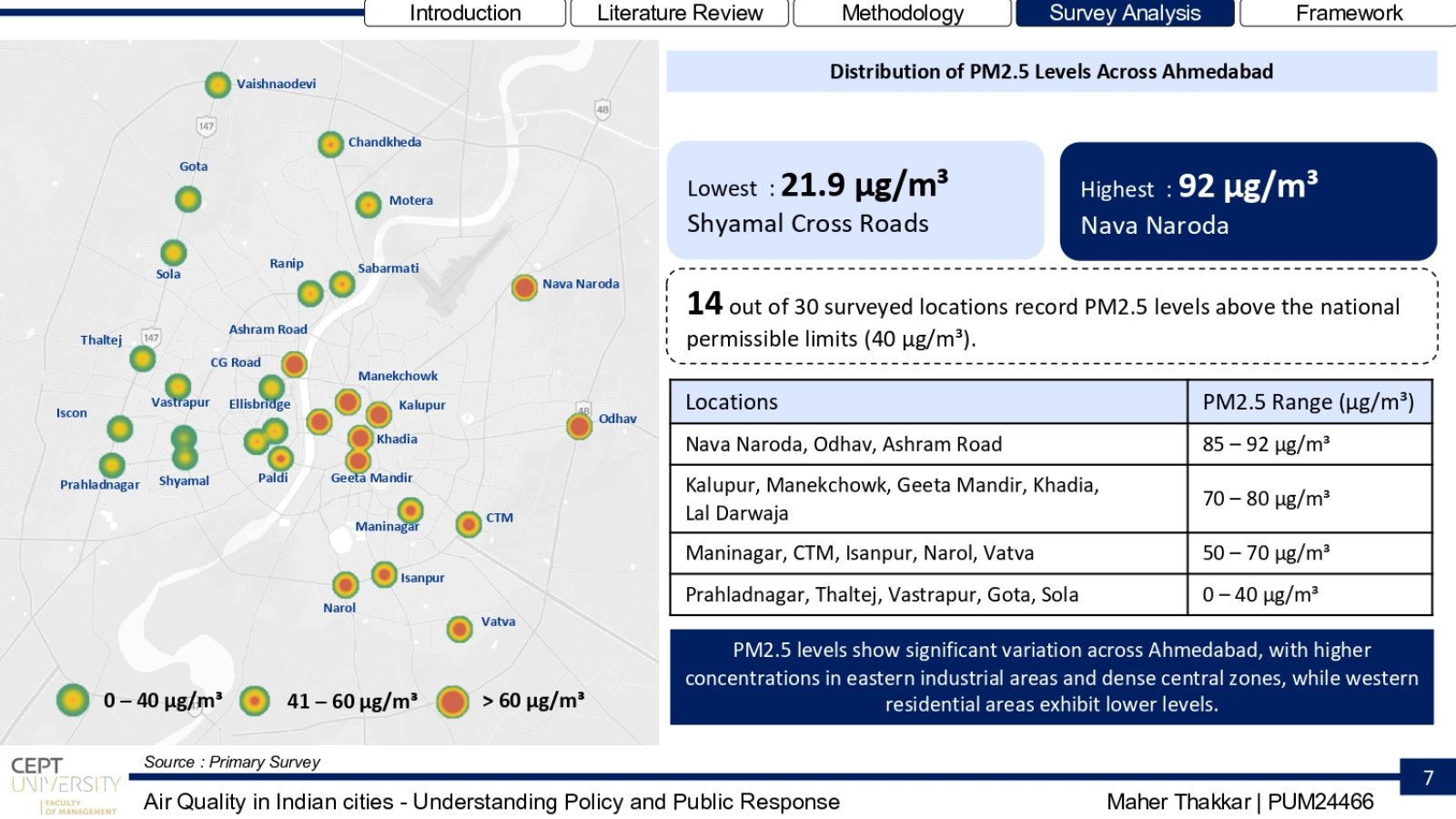
Spatial variation of PM?.? concentrations across surveyed locations in Ahmedabad monitored using AirOwl sensors.

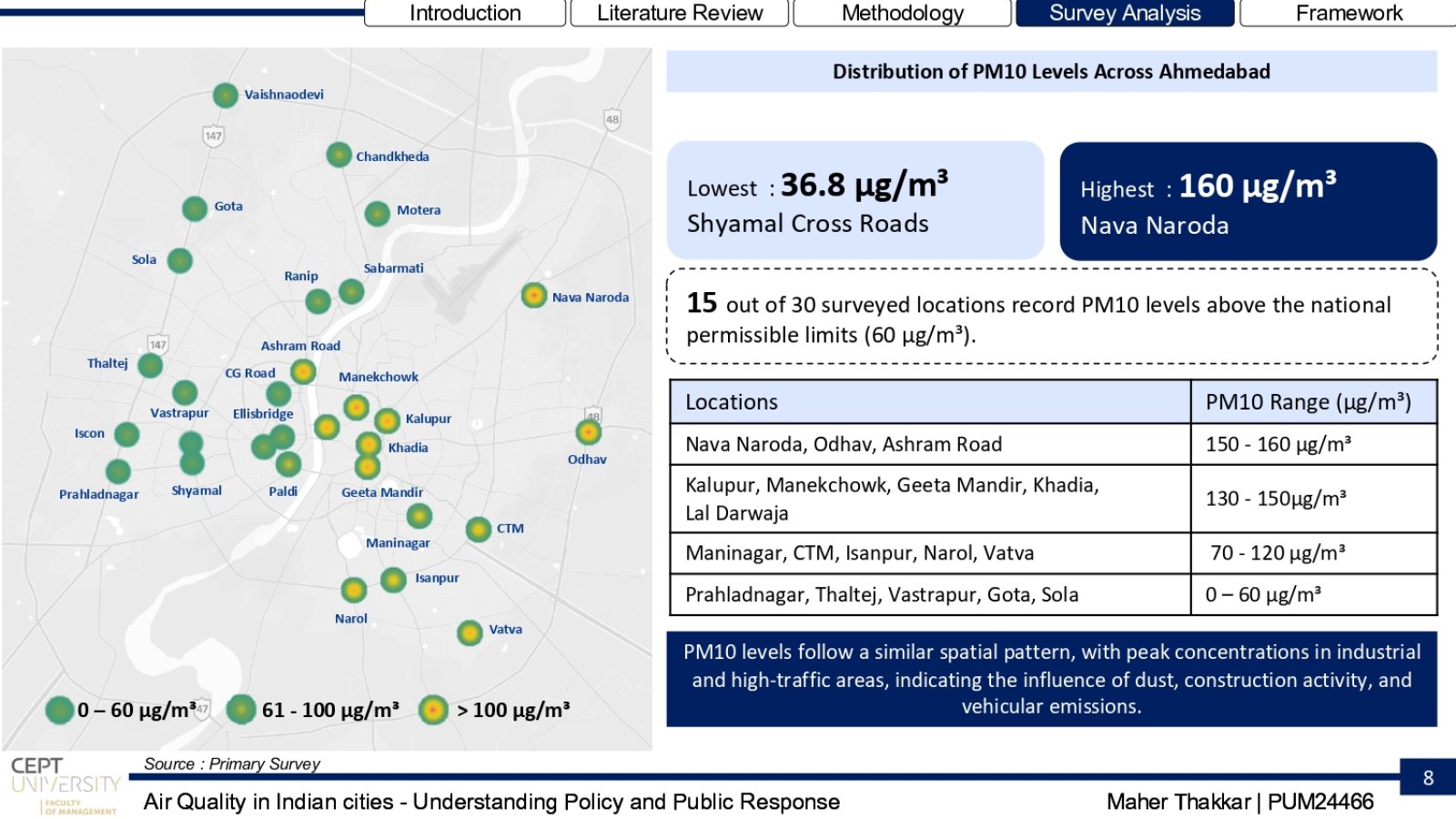
Spatial distribution of PM?? concentrations highlighting industrial and high-traffic pollution hotspots in Ahmedabad.

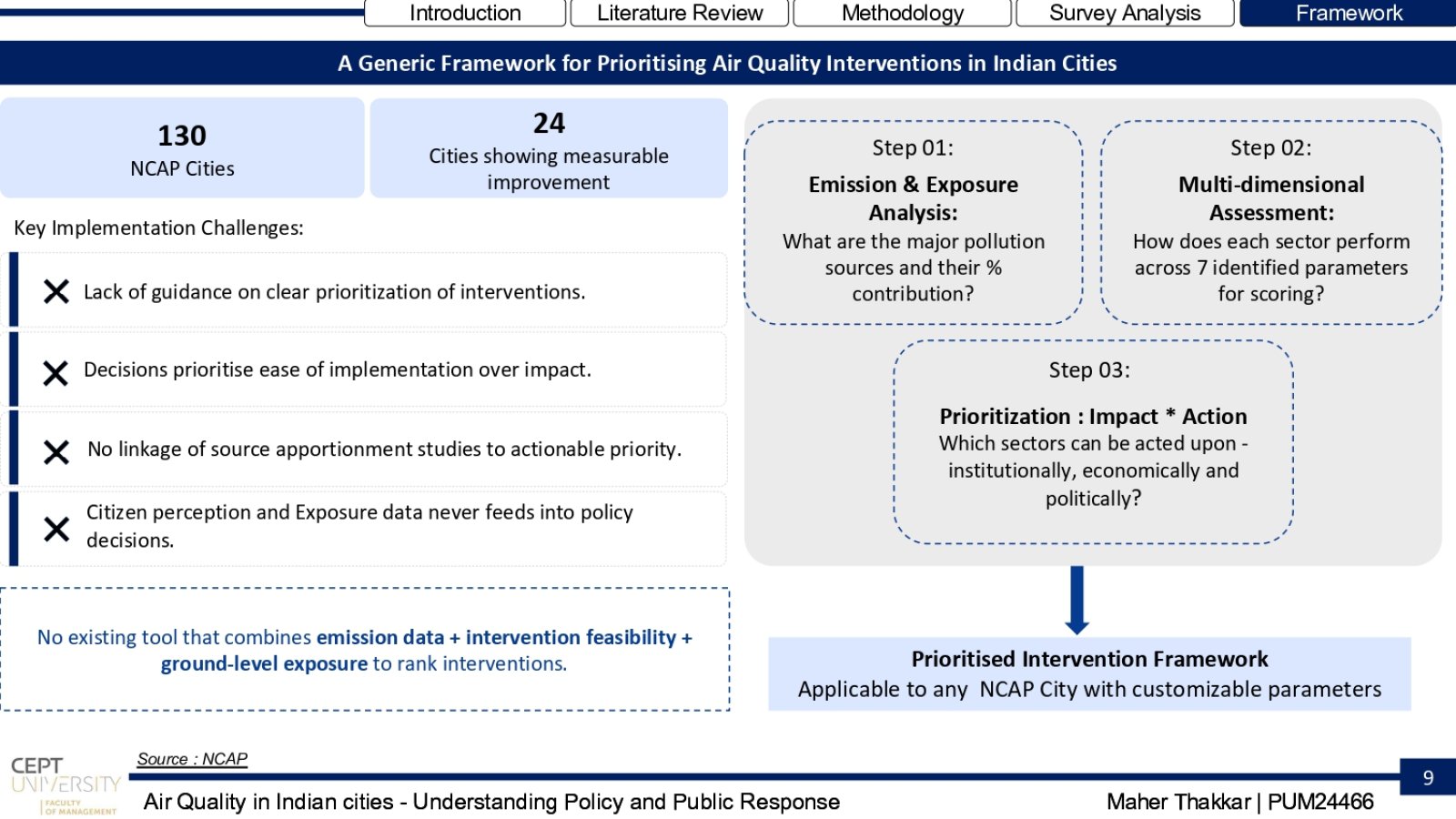
Proposed intervention prioritisation framework integrating emissions, exposure, and implementation feasibility.

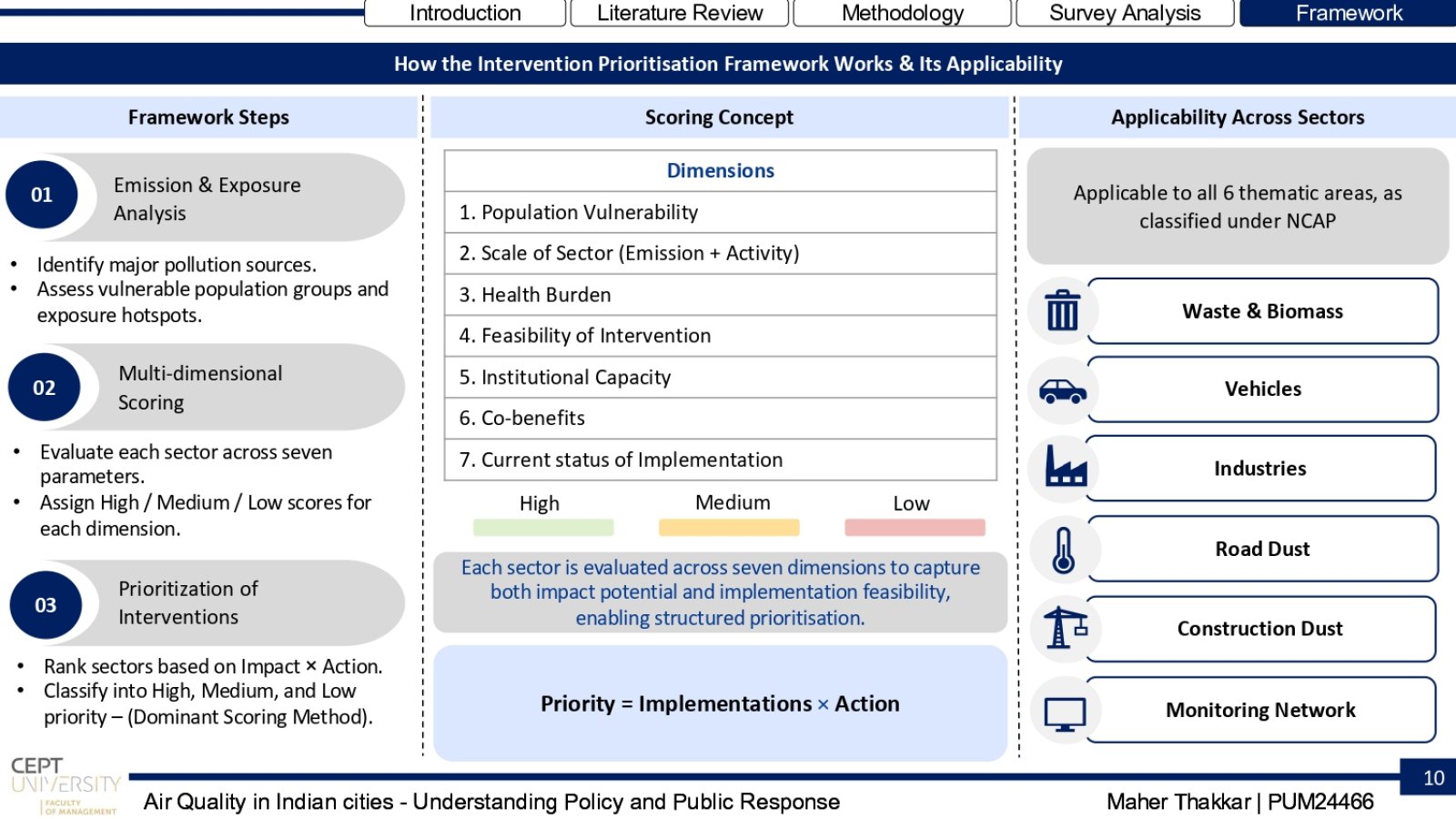
Multi-dimensional scoring framework for prioritising air quality interventions across NCAP sectors.