Sarkar Kshitij Ashok Shubhrali

UM4050

PUM24184

This project examines the determinants of success and failure in Public–Private Partnership (PPP) transportation projects in India through a multi-sector analysis of roads, railways, airports, ports, and urban transport systems. The study explores how financial viability, risk allocation, governance structures, institutional coordination, and operational efficiency influence PPP project performance. Using literature review, case study analysis, and comparative assessment of successful and underperforming projects, the research develops a multi-dimensional framework for evaluating PPP outcomes. The study highlights the importance of balanced risk sharing, transparent procurement, strong regulatory mechanisms, and effective project management in achieving sustainable infrastructure development and improving future PPP implementation in India.

Report Content

This presentation explores Public–Private Partnership (PPP) projects in India’s transportation sector through a multi-sector analysis. The study focuses on understanding the determinants of success and failure in PPP infrastructure projects across roads, railways, airports, ports, and urban transport.

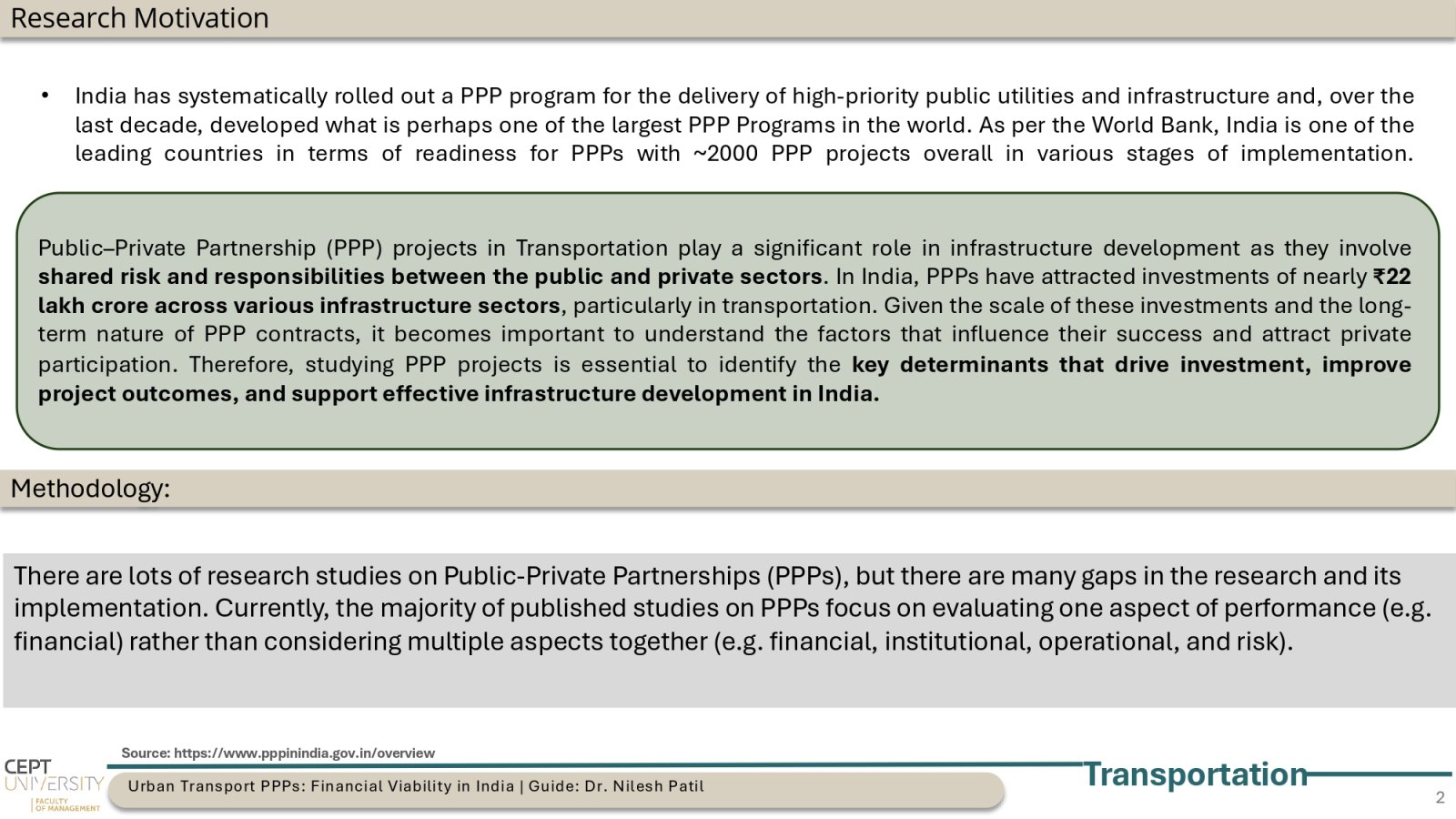
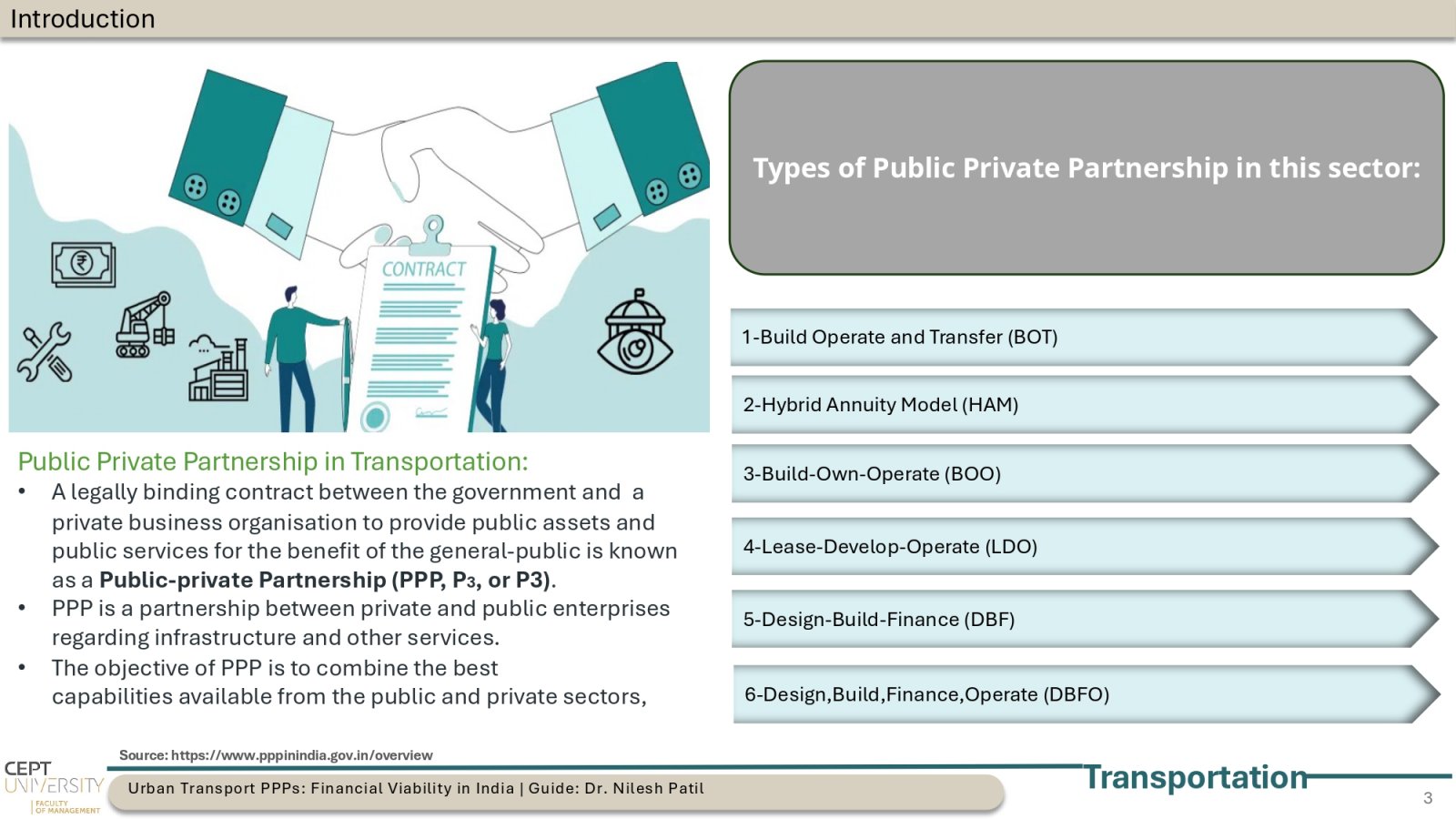
This shows the growing importance of PPPs in India’s infrastructure development and the need to evaluate their performance. It explains how PPPs enable shared responsibilities between public and private sectors while addressing investment and infrastructure gaps.

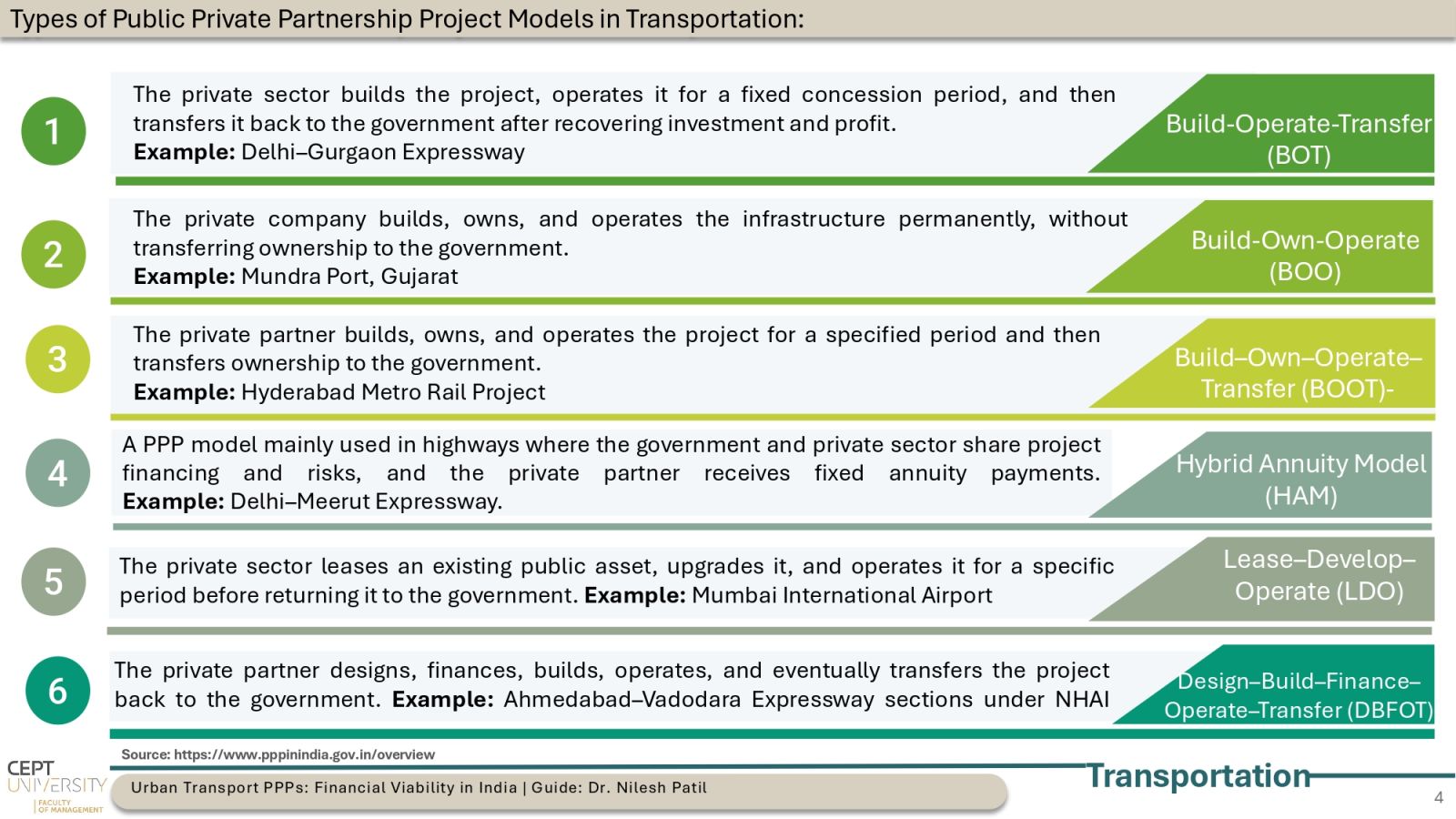
Different PPP models are used in transportation infrastructure, including BOT, BOOT, BOO, HAM, LDO, and DBFOT. Each model demonstrates varying levels of private participation, ownership, financing, and operational responsibilities.

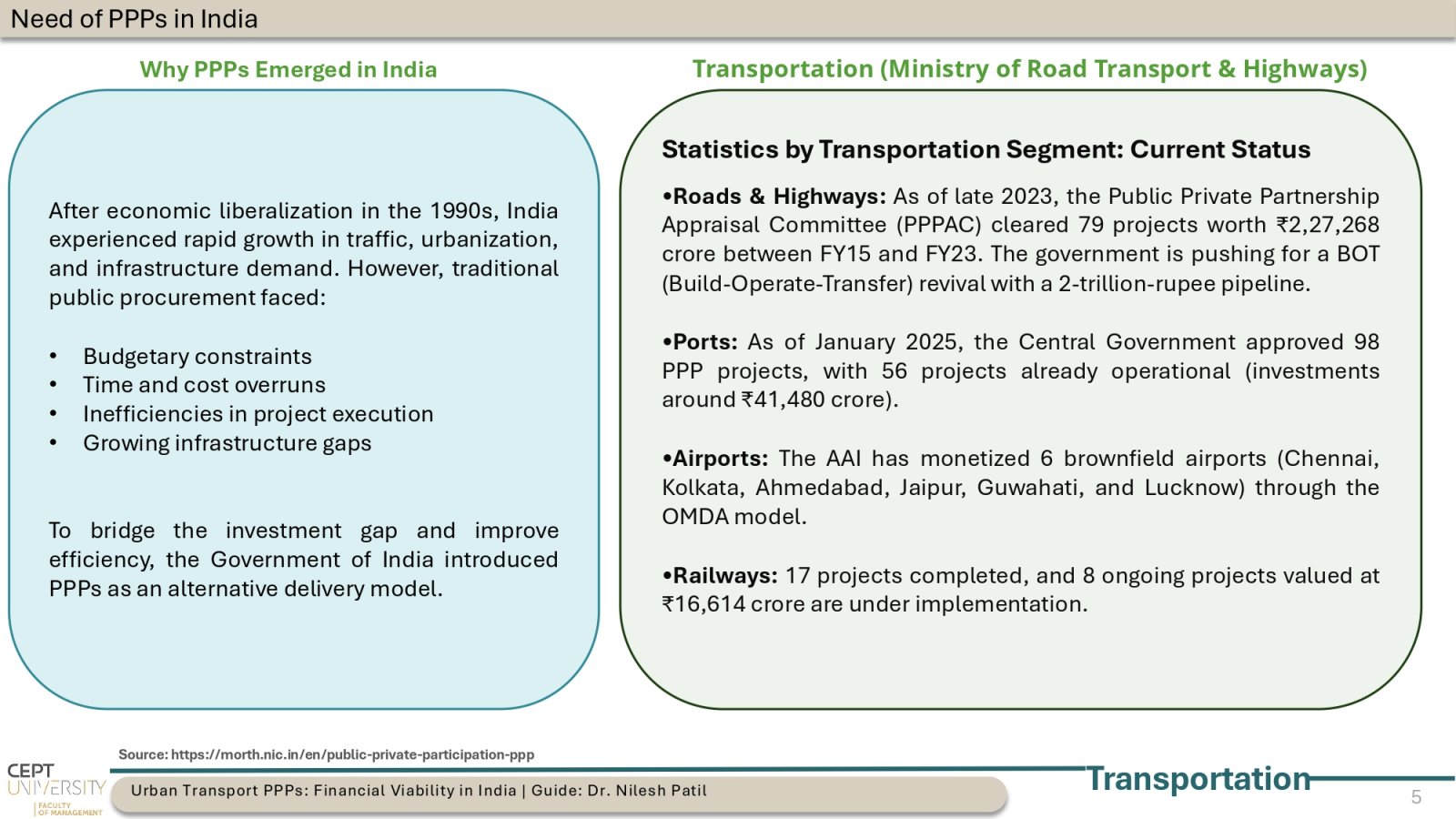
Why PPPs emerged in India after economic liberalization, particularly due to budgetary constraints, project delays, and increasing infrastructure demand. It also presents the current status of PPP projects across roads, ports, airports, and railways.

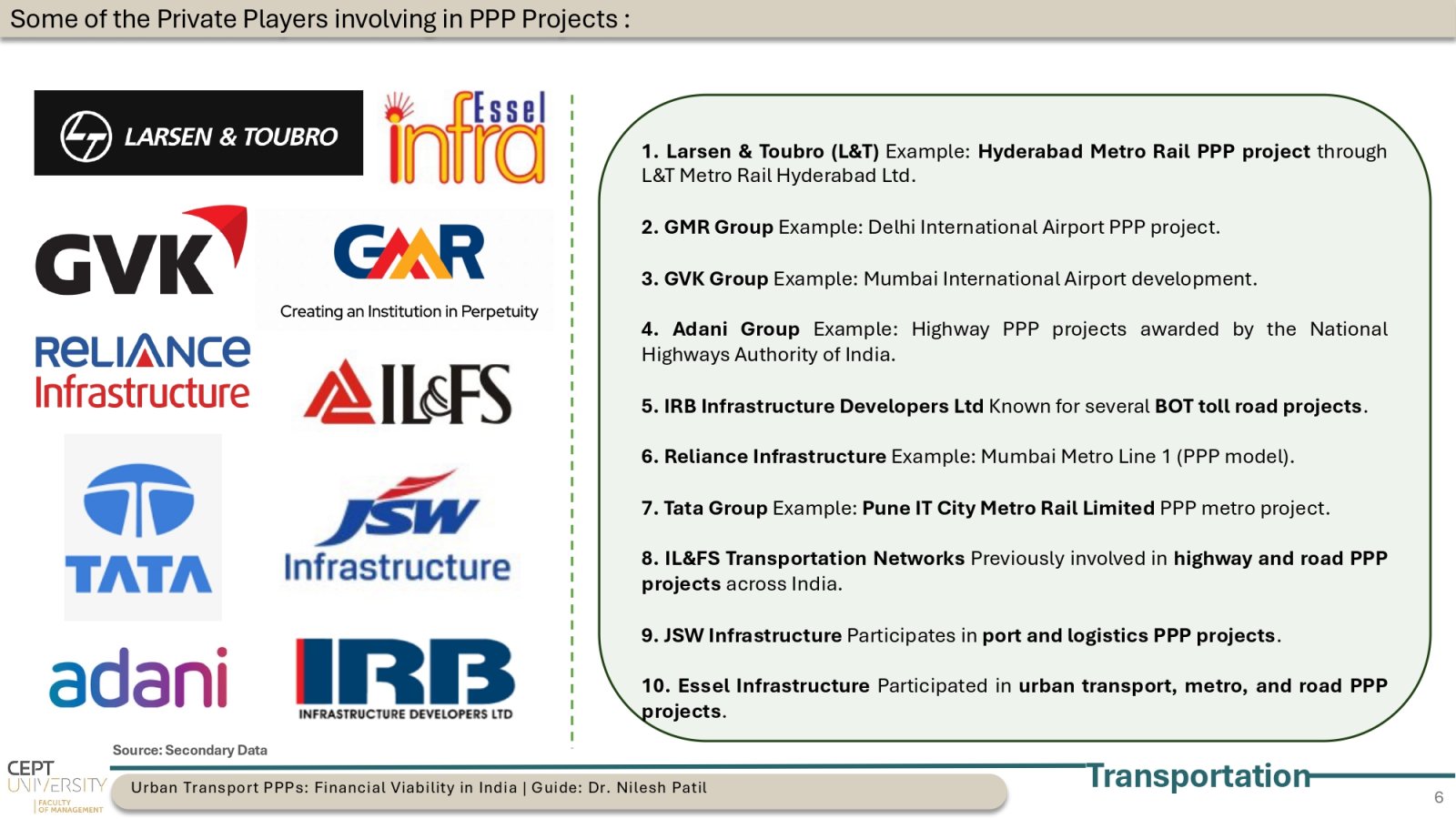
Major private companies participating in India’s transportation PPP projects, including L&T, GMR, Adani, IRB, Reliance Infrastructure, and Tata Group. These firms have contributed significantly to highways, airports, metro systems, and logistics infrastructure.

Sector-wise statistics and the present status of transportation PPP projects in India. It highlights investment trends, approved projects, and government initiatives promoting private sector participation.

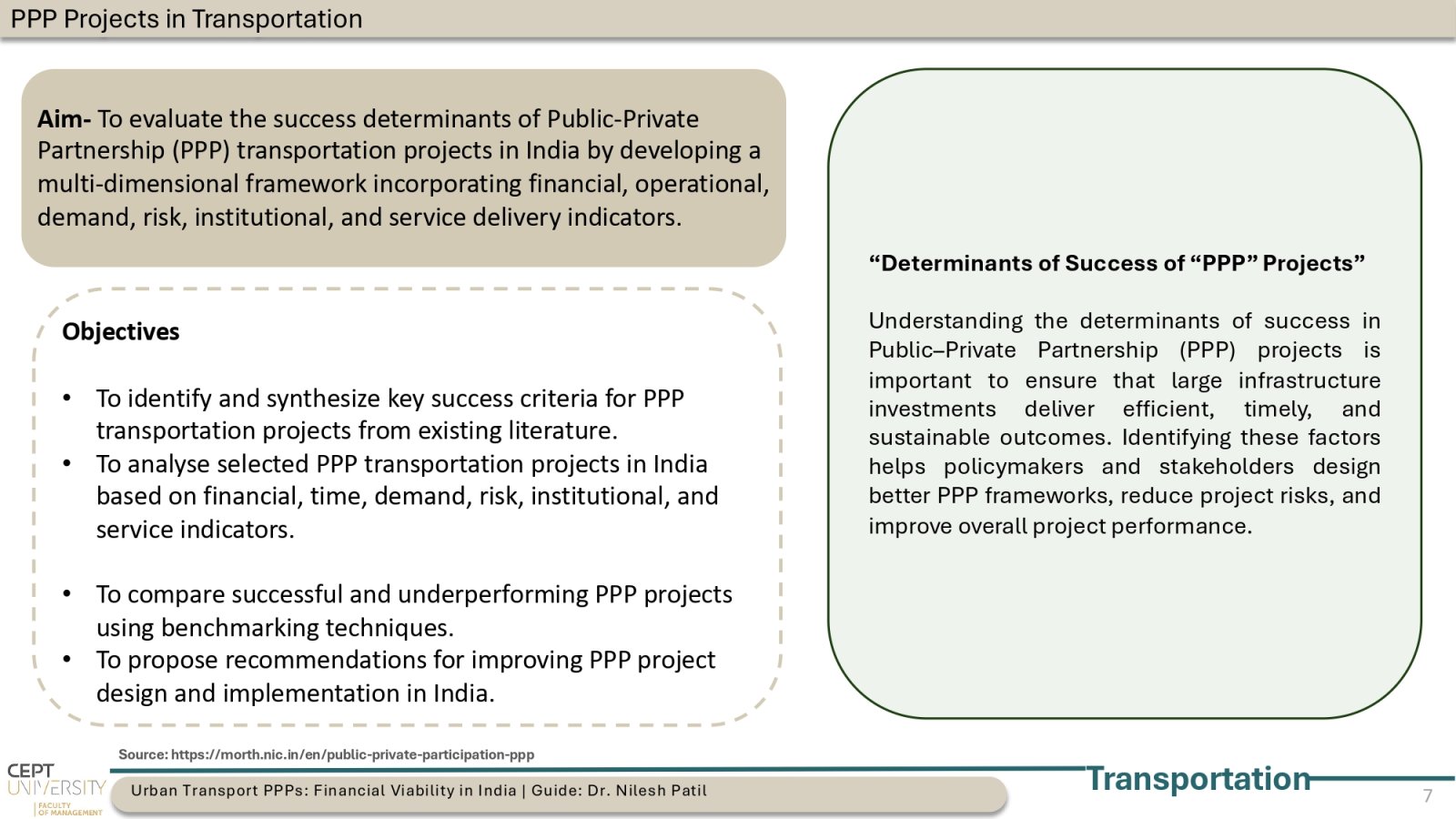
Outlines the research aim of evaluating the determinants of success in transportation PPP projects using financial, operational, institutional, and risk indicators. It also defines the study objectives related to benchmarking, comparative analysis, and policy recommendations.

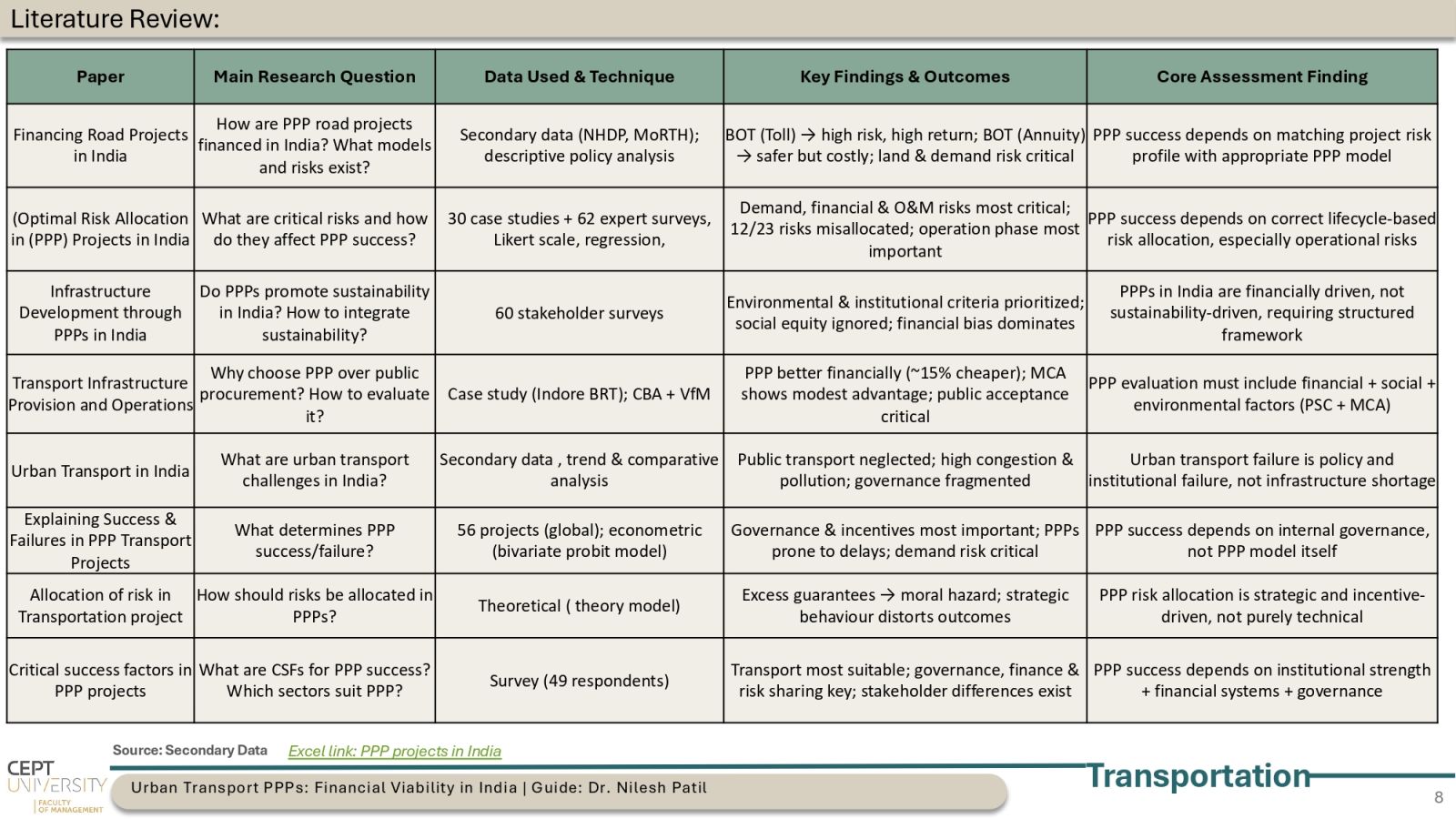
The literature review summarises major research studies related to PPP financing, governance, sustainability, and risk allocation. It highlights that successful PPP projects depend on balanced risk sharing, institutional strength, financial viability, and efficient governance mechanisms.

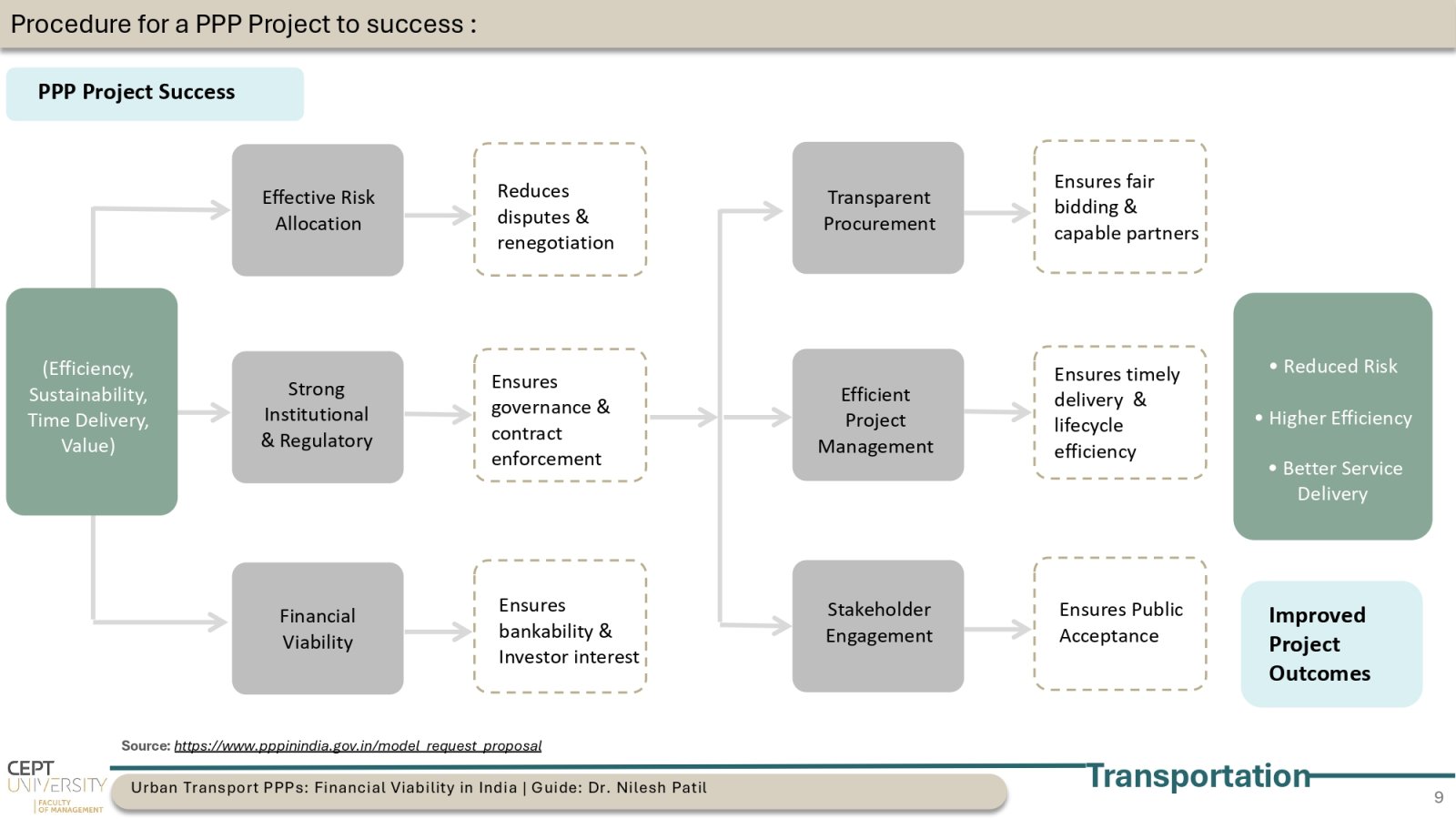
The key factors influencing PPP project success, including effective risk allocation, transparent procurement, financial viability, stakeholder engagement, and efficient project management. The framework demonstrates how these factors contribute to better project outcomes and service delivery.

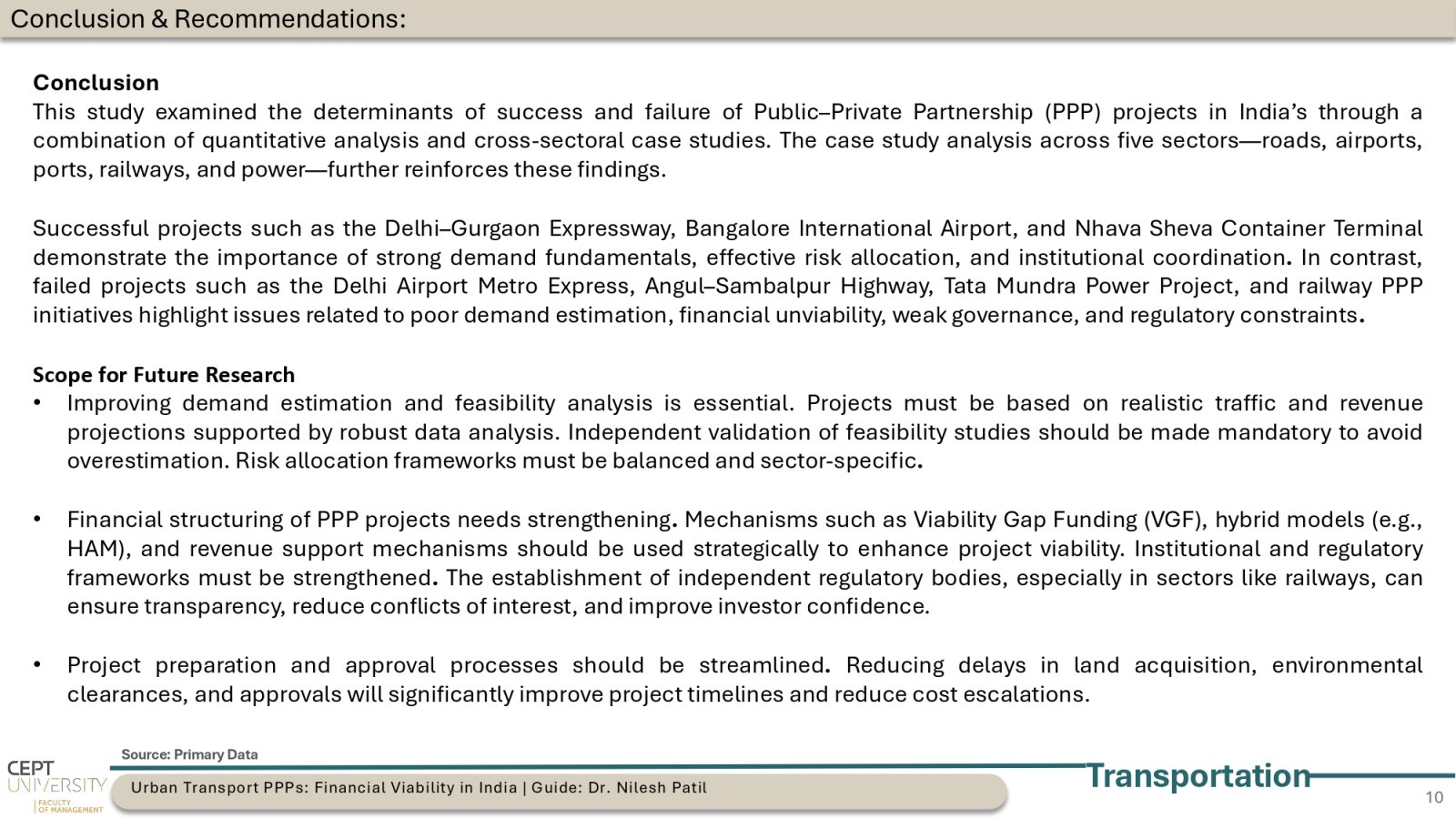
Summarises the findings from successful and failed PPP case studies across multiple sectors. It concludes that demand estimation, institutional coordination, financial structuring, and governance are critical for improving the performance and sustainability of PPP projects in India.