Sandra Mary Antony

UM4050

PUM24479

This research examines what makes urban infrastructure projects financially viable for commercial funding in India, particularly under the 2025 Urban Challenge Fund (UCF) mandate requiring 50% private financing. Most Urban Local Bodies (ULBs) struggle with poor credit ratings and weak financial capacity. Using a systematic literature review and regression analysis of 30 World Bank-funded Indian projects, the study identifies key bankability drivers such as economic returns (EIRR), user charge mechanisms, and governance quality. Findings offer actionable guidance for policymakers and ULBs seeking to attract commercial investment under the UCF framework.
Report Content

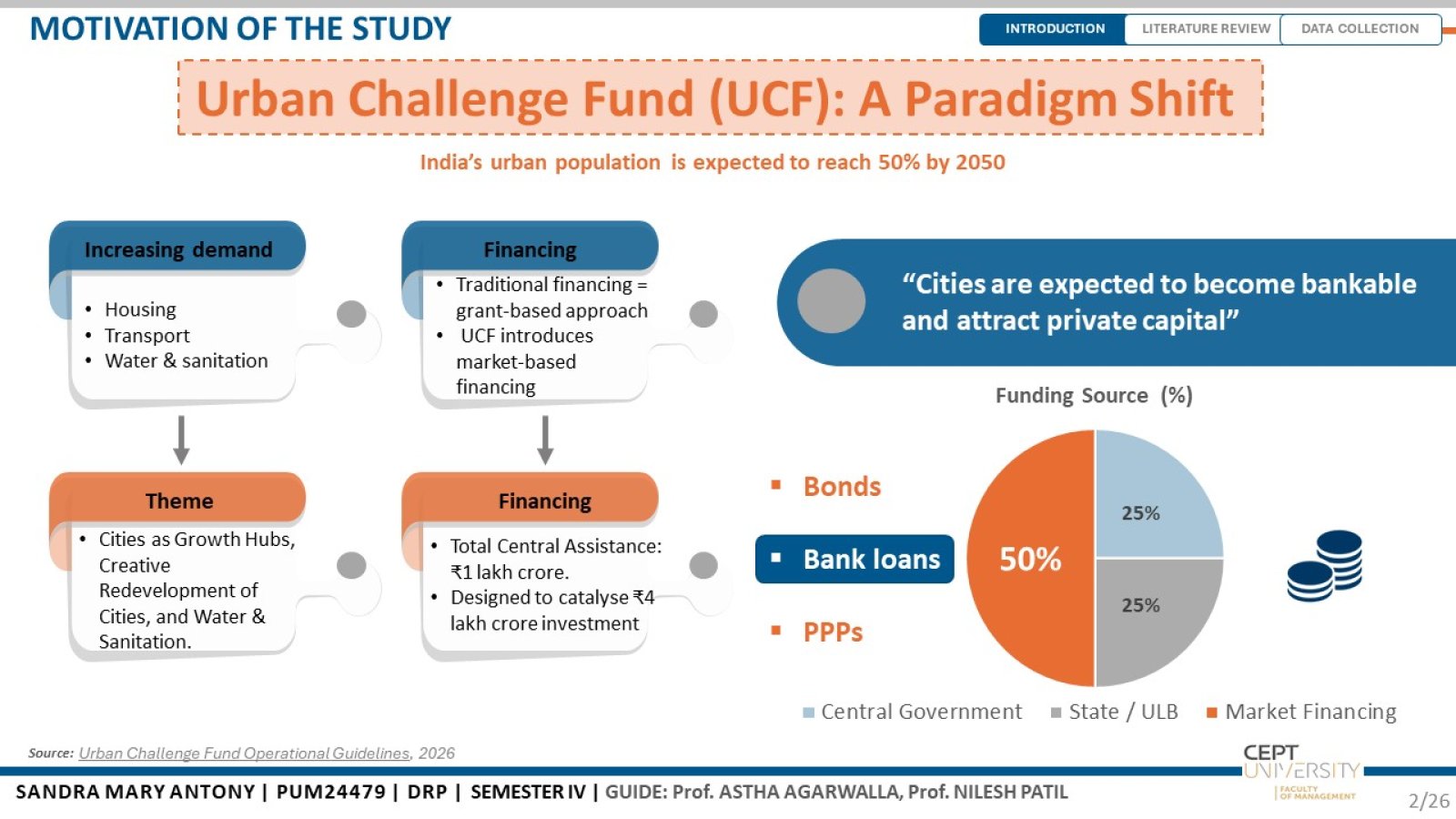
India's UCF mandates 50% commercial financing for urban projects, shifting away from grants. Cities must now attract private capital through bonds, loans, and PPPs.

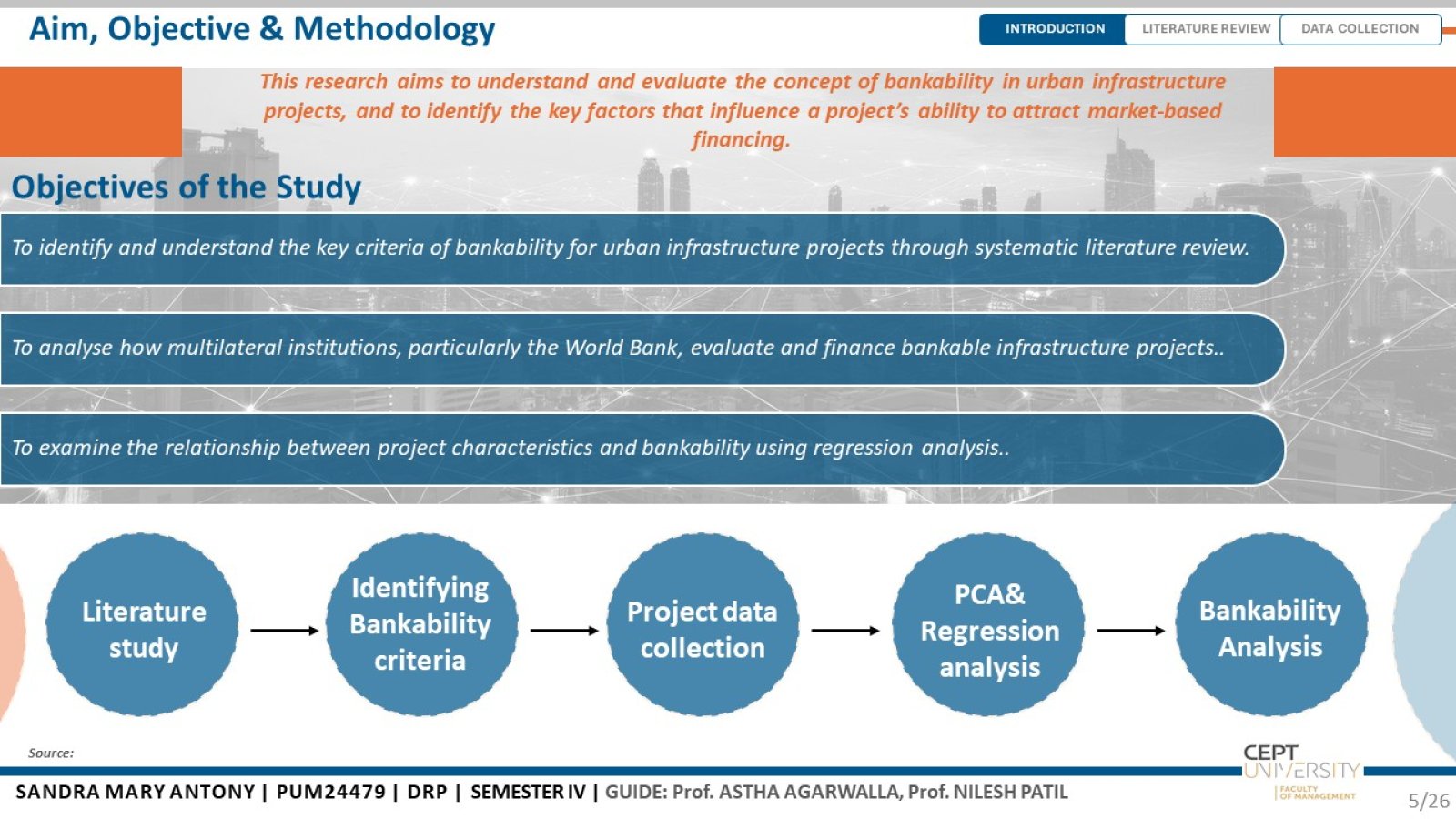
The study identifies key factors that make urban infrastructure projects bankable for market financing. It follows a five-step process from literature review to regression analysis.

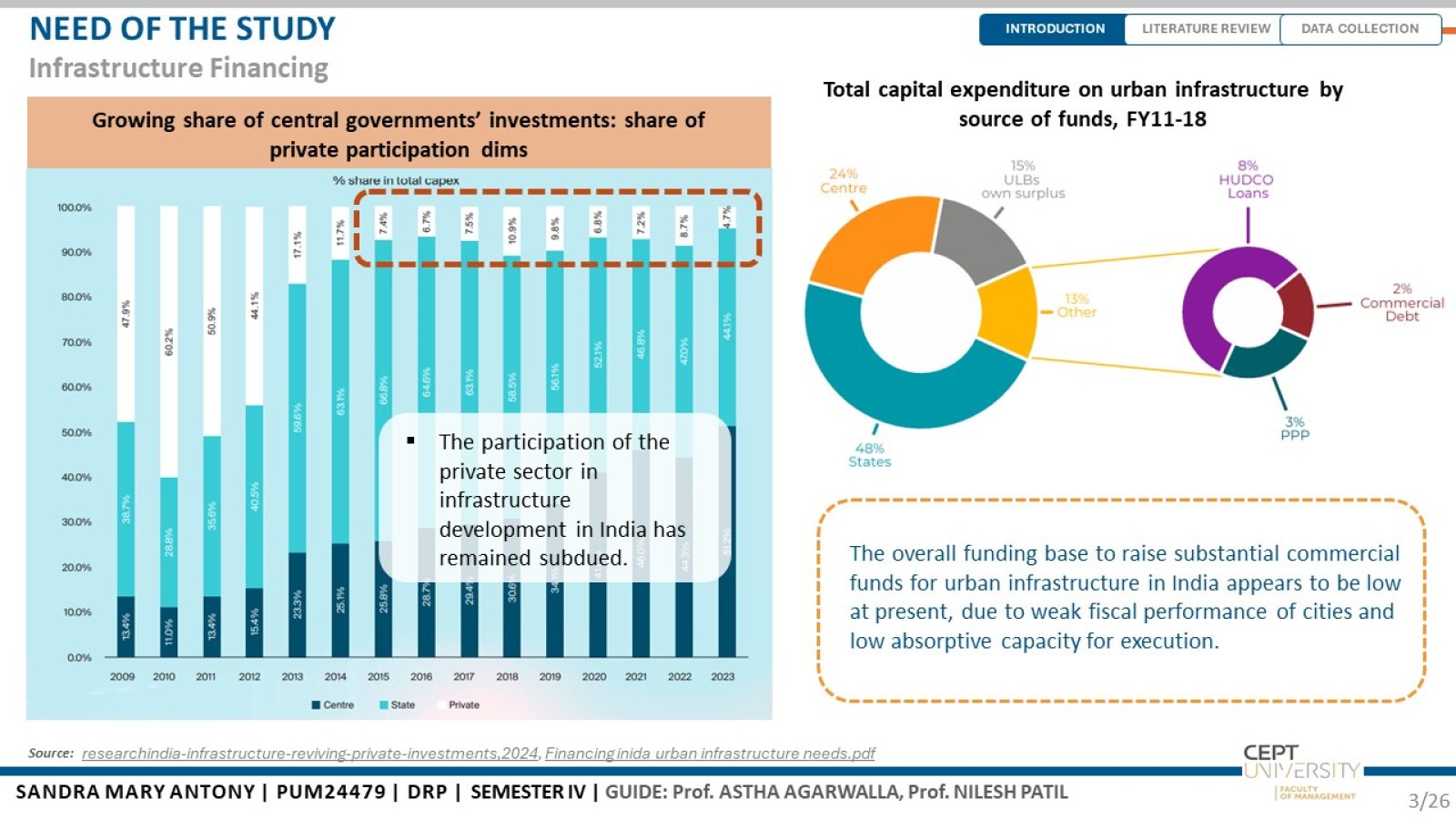
Private participation in India's urban infrastructure financing has remained persistently low. Weak ULB finances make raising commercial capital a critical challenge.

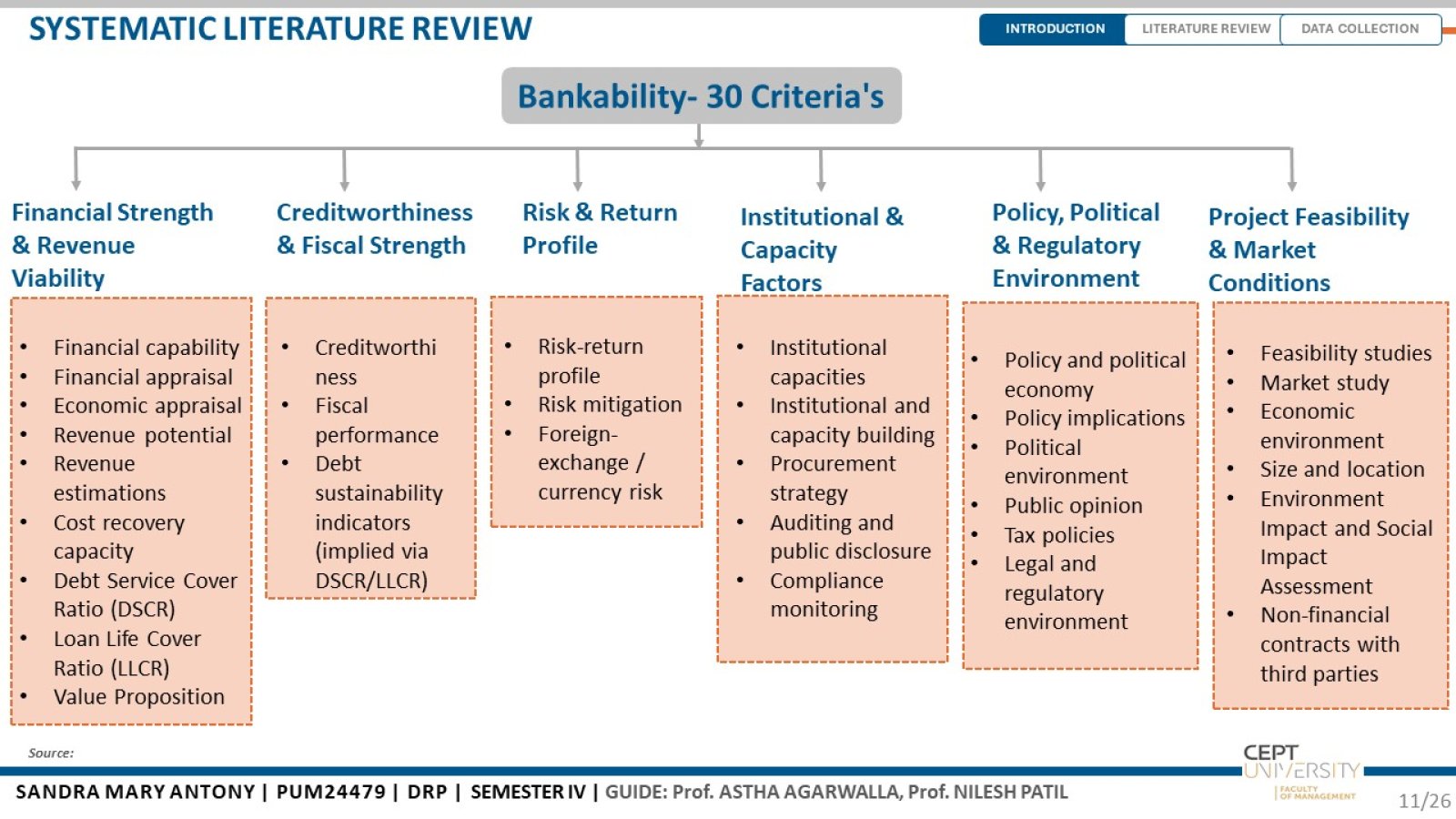
30 bankability criteria were identified across six themes including financial strength, risk, and institutional capacity. These form the framework for evaluating urban project bankability.

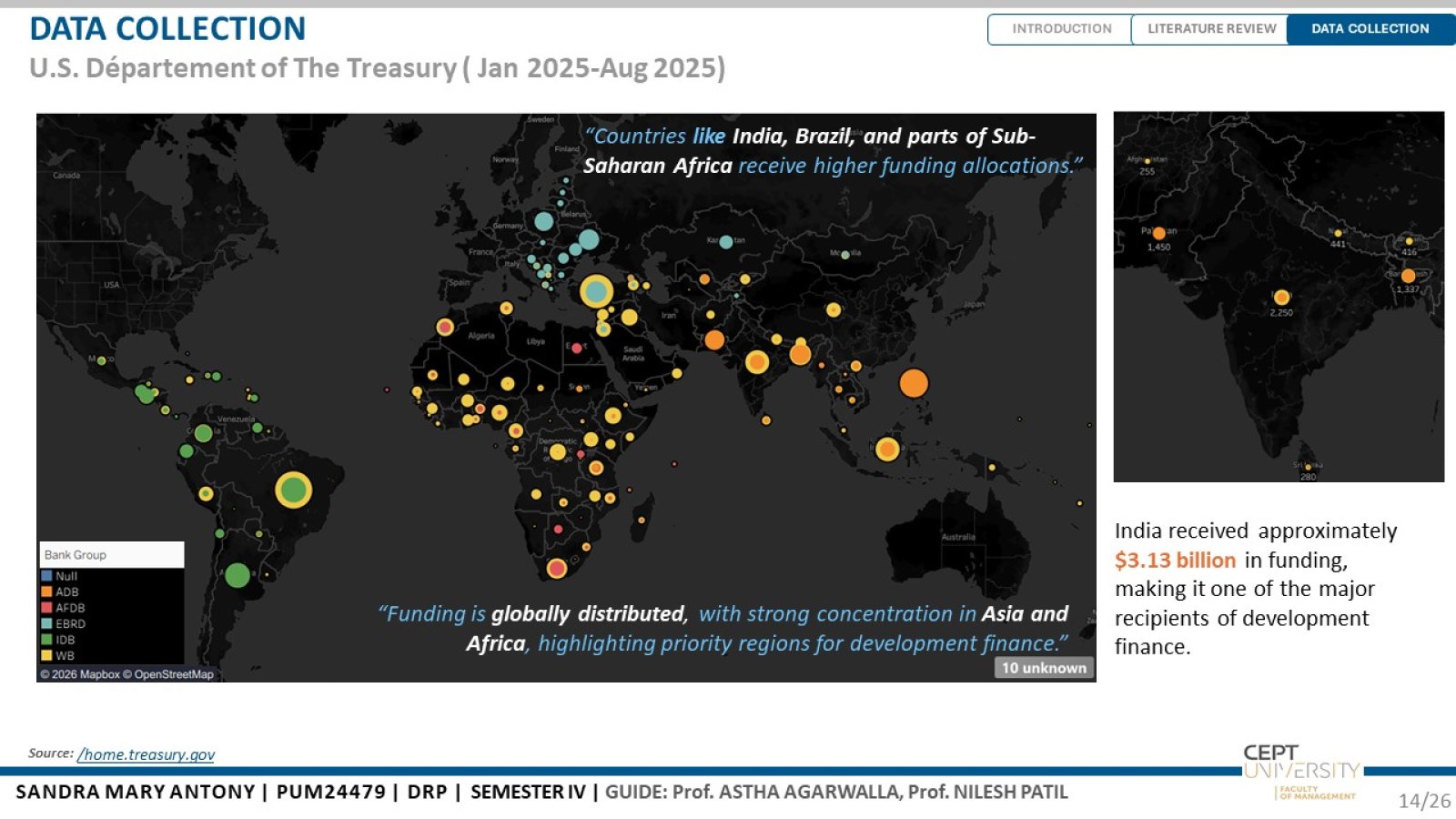
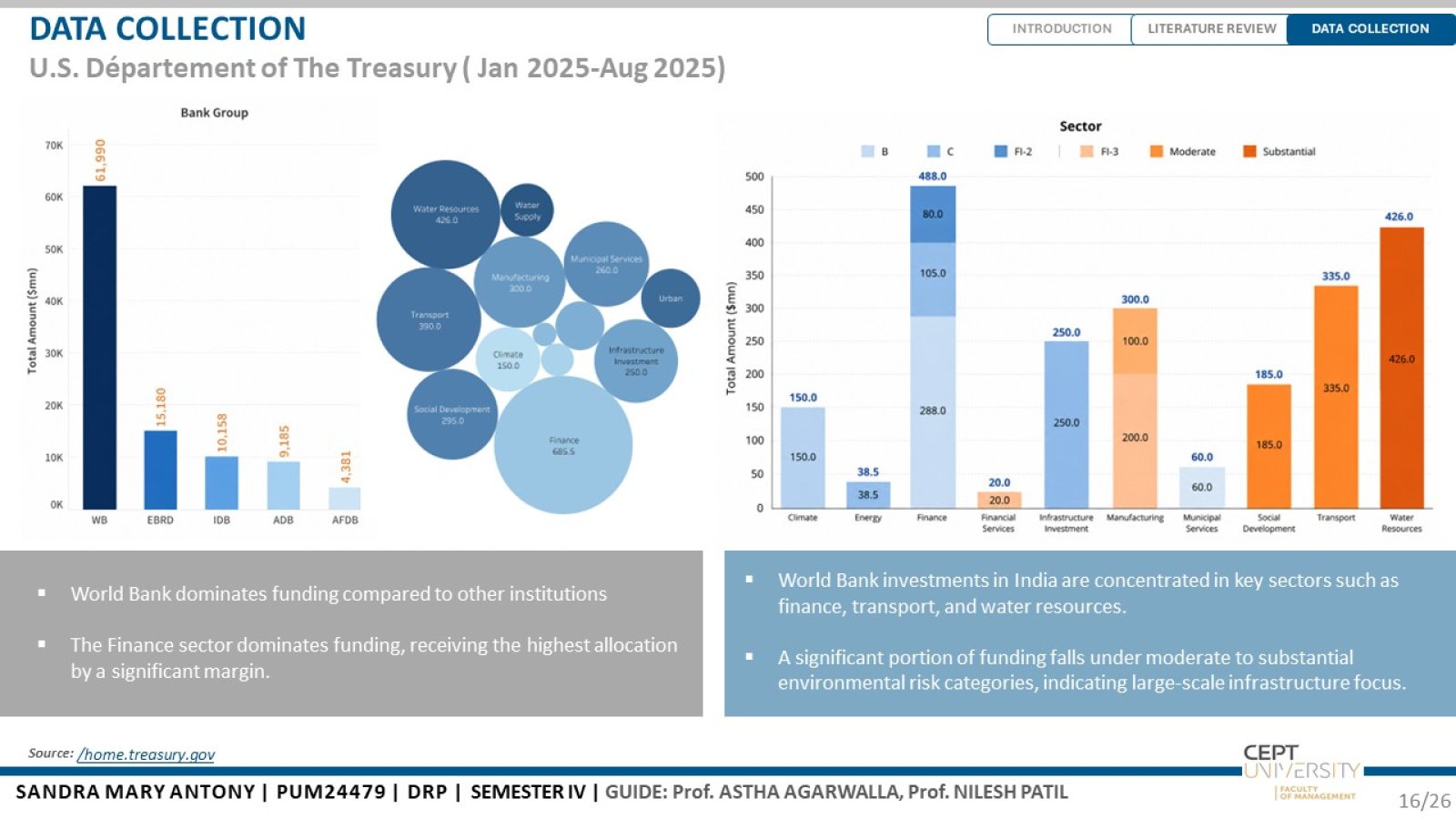
Development finance is concentrated in Asia and Africa, with India receiving $3.13 billion. The World Bank dominates as the largest funding institution globally.

World Bank investments in India focus on finance, transport, and water resources. Most funded projects carry moderate-to-substantial environmental risk, reflecting large infrastructure scale.

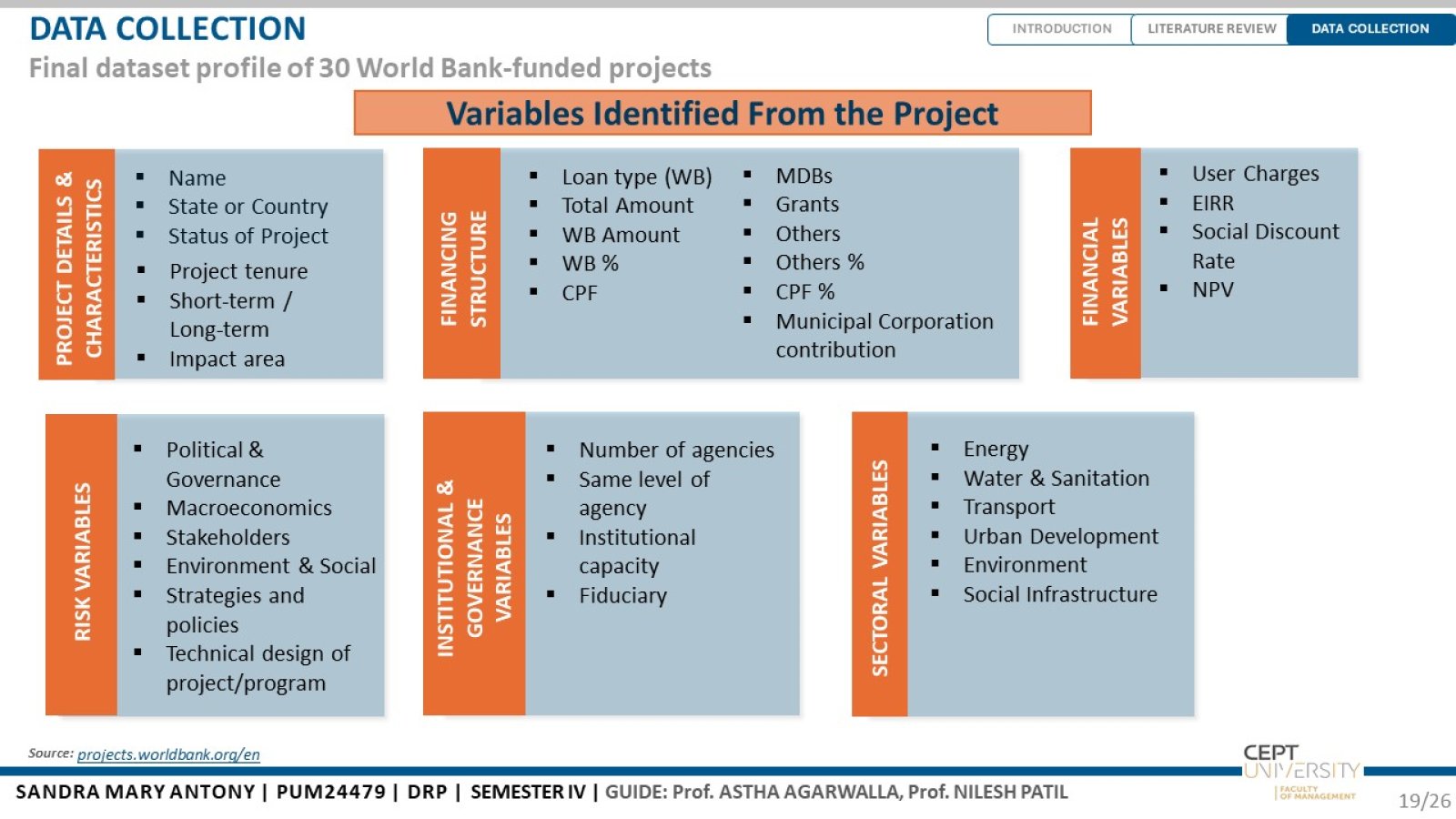
The dataset of 30 projects captures variables across project details, financing, financials, risk, governance, and sector. These collectively serve as proxies for bankability.

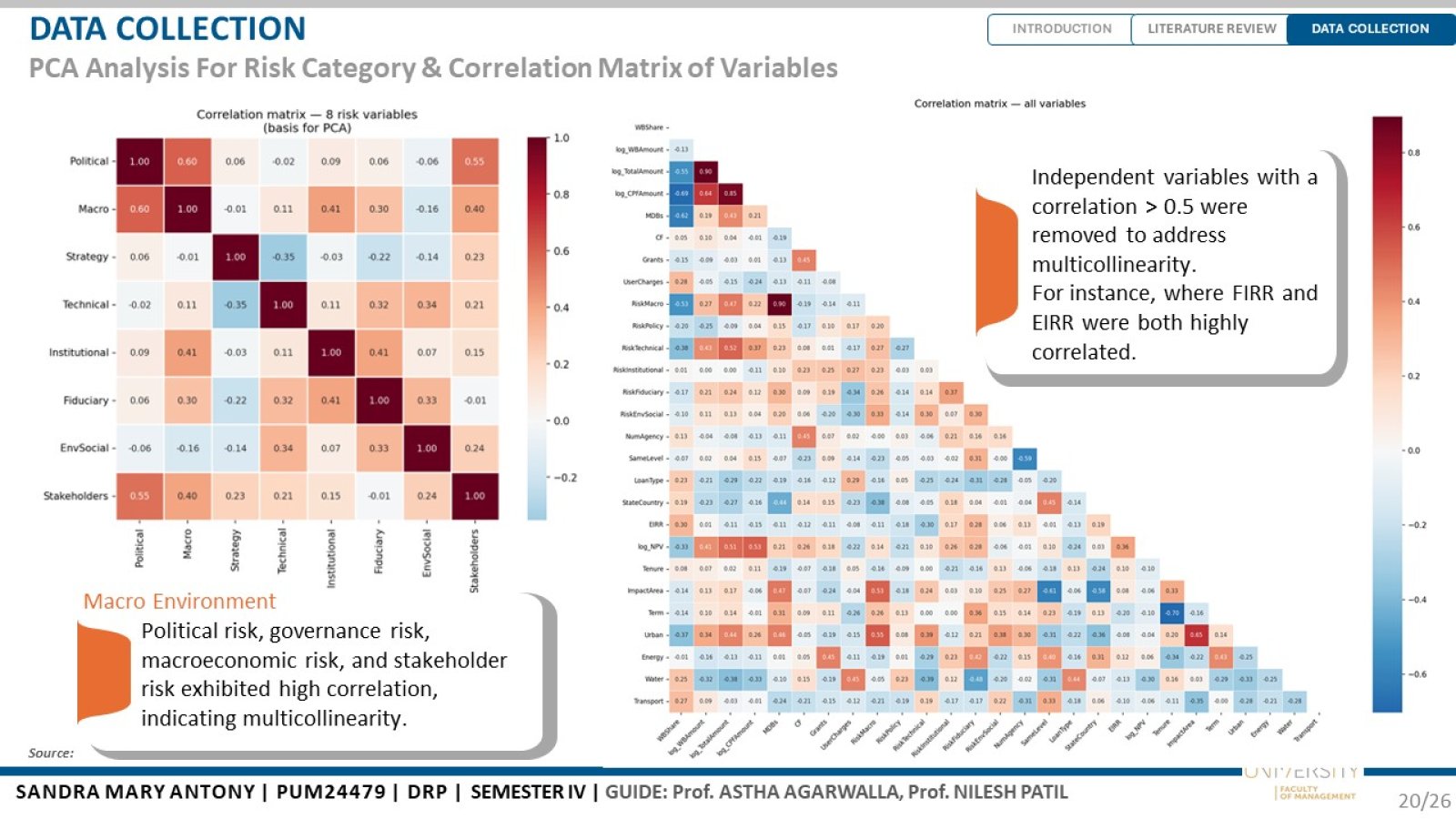
Highly correlated risk variables were consolidated using PCA to address multicollinearity. Political, macro, governance, and stakeholder risks merged into one Macroenvironment component.

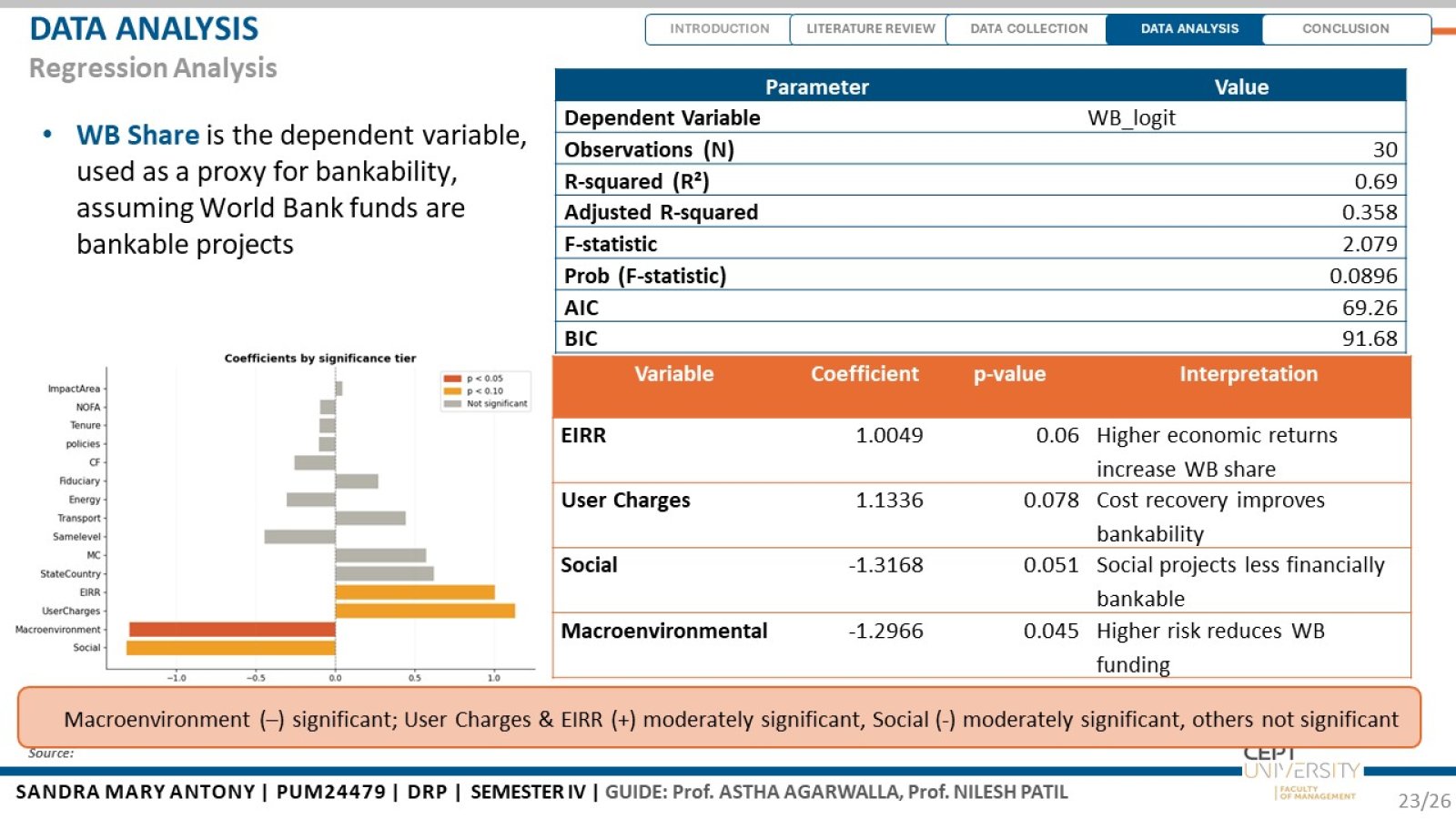
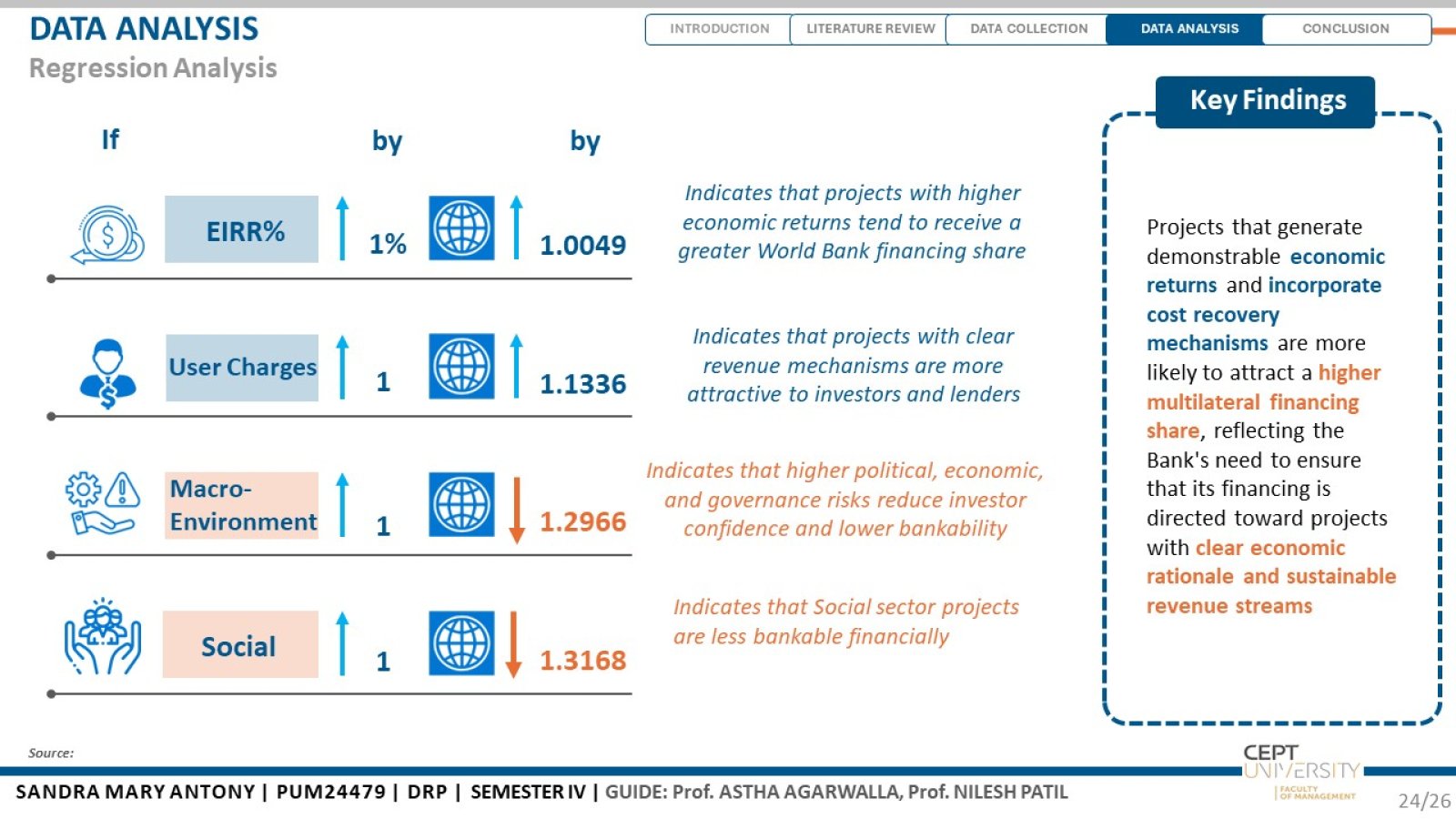
EIRR and User Charges positively predict bankability; Macroenvironmental risk and social sector classification reduce it. The model explains 69% of variation in World Bank financing share.

Projects with strong economic returns and cost-recovery mechanisms attract higher multilateral financing. High governance risk and social-sector type significantly lower bankability.