Prachi Madaan

UM4050

PUM24262

This directed research project examines the intention-action gap in sustainable consumption among Generation Z in India. While this digitally native generation demonstrates strong environmental awareness and expresses a genuine commitment to sustainability principles, their actual adoption of circular economy behaviours remains inconsistent. The study investigates why heightened consciousness fails to translate into meaningful action, exploring the cognitive, social, and structural barriers that prevent behavioural conversion. Through integrated theoretical frameworks, the Theory of Planned Behaviour, Value-Belief-Norm, and SHIFT, the research reveals that systemic friction, convenience barriers, and social dynamics fundamentally influence whether intentions materialise into sustainable practices, highlighting that awareness alone cannot bridge this critical behavioural disconnect.
Report Content

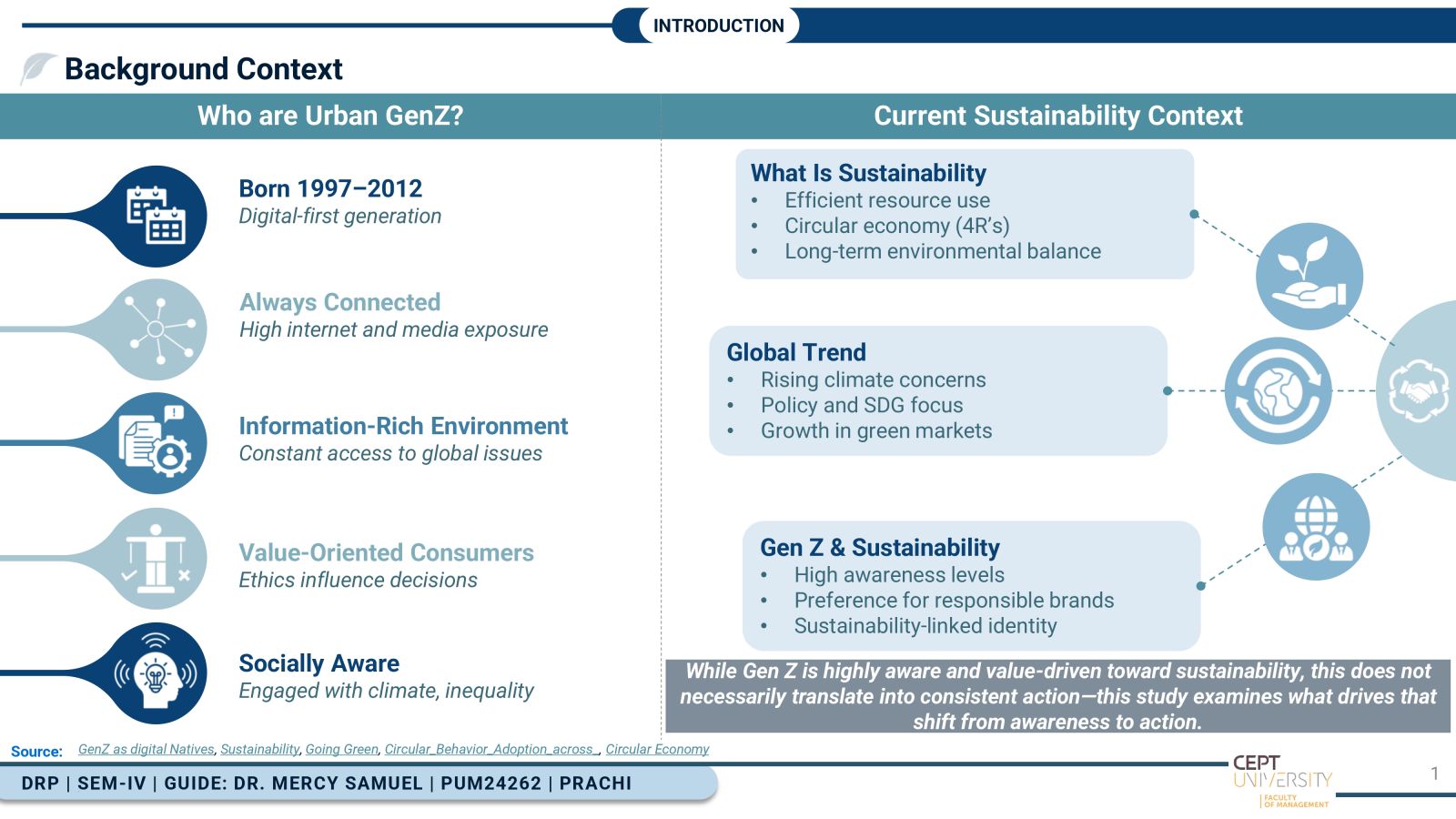
Background context: Urban Gen Z as digital natives and value-oriented consumers in the sustainability landscape

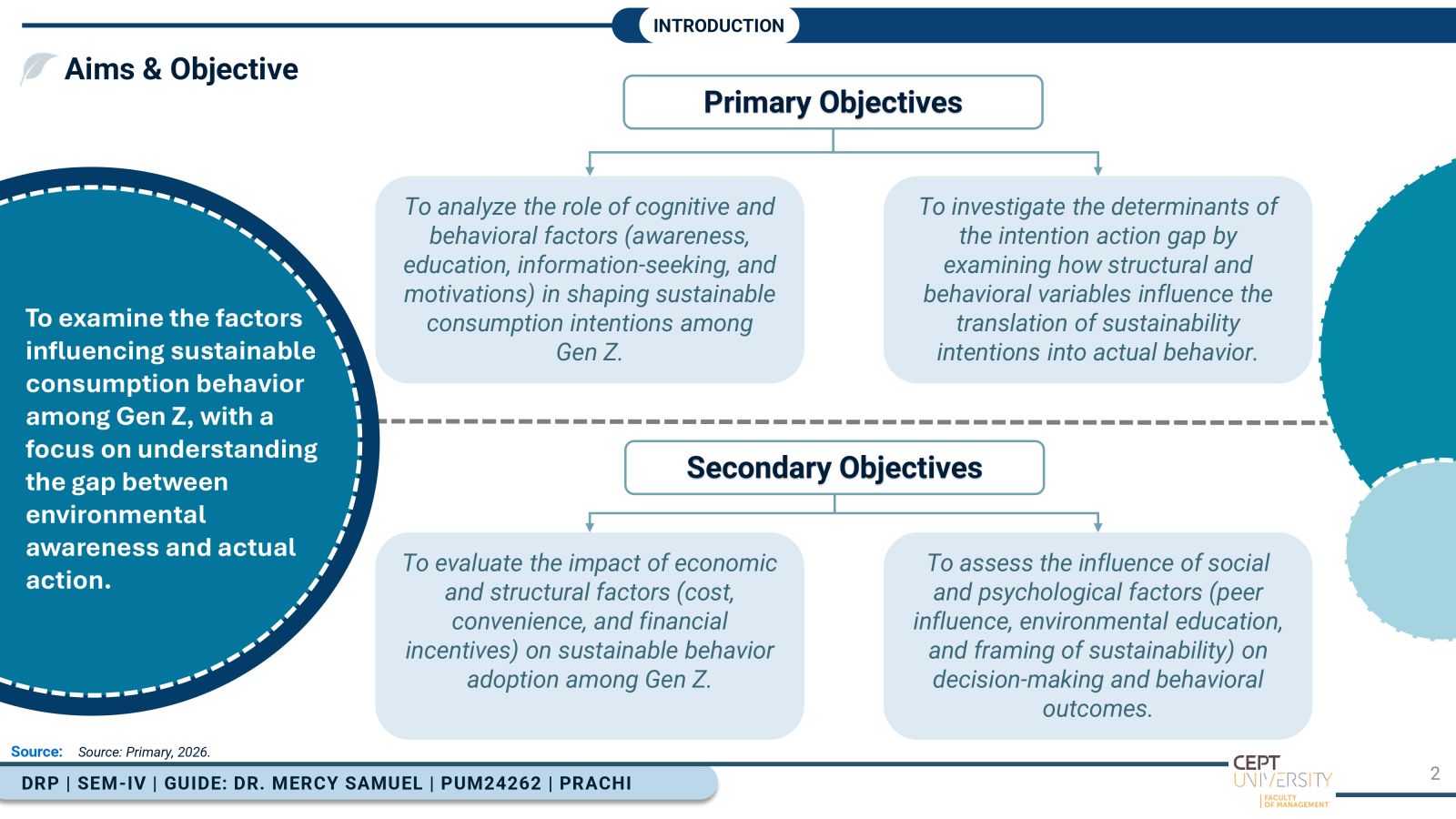
Research aims and objectives: examining factors influencing sustainable consumption behavior and the intention-action gap

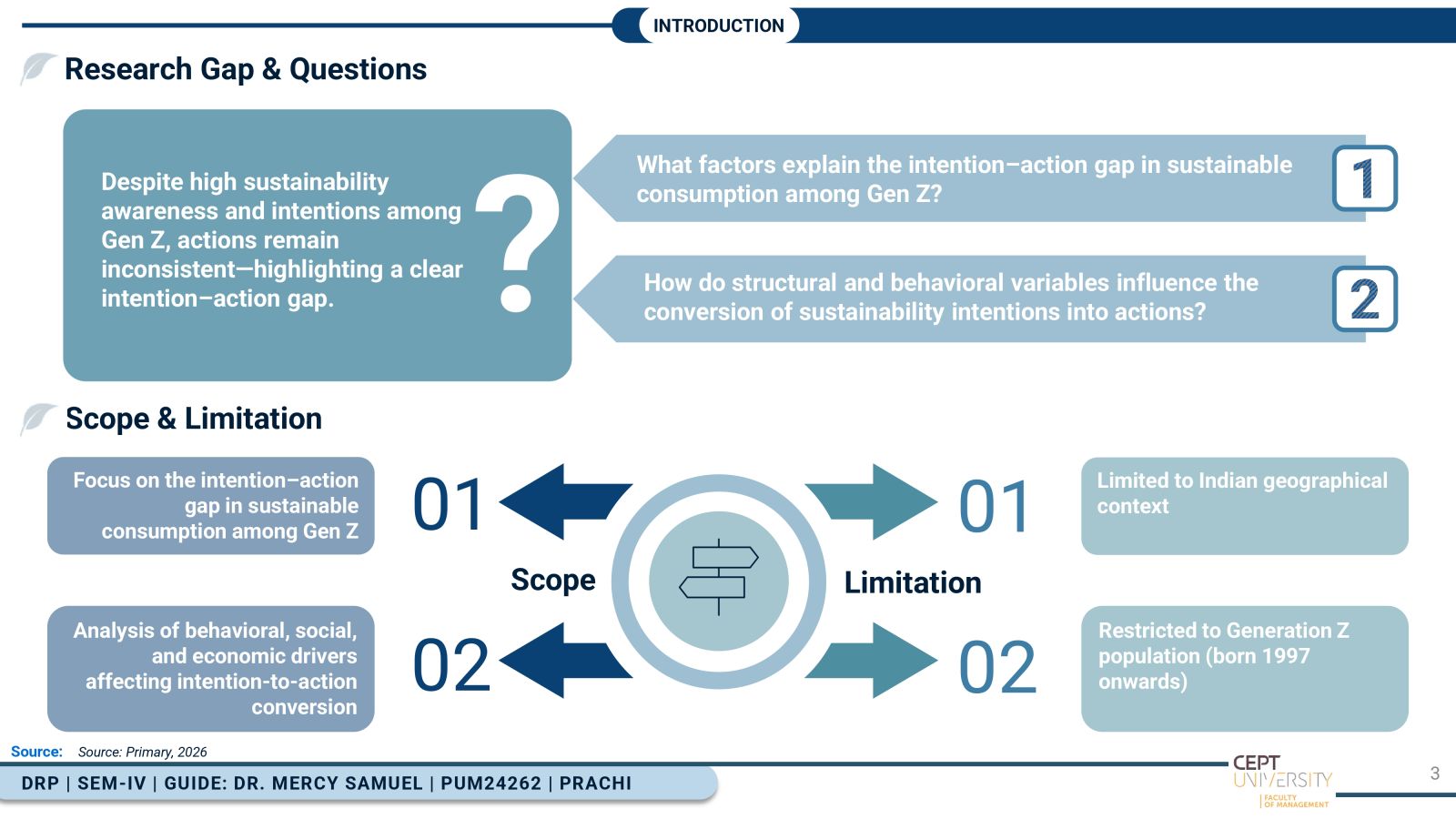
Research gap and questions: investigating the intention-action gap in sustainable consumption among Indian Gen Z

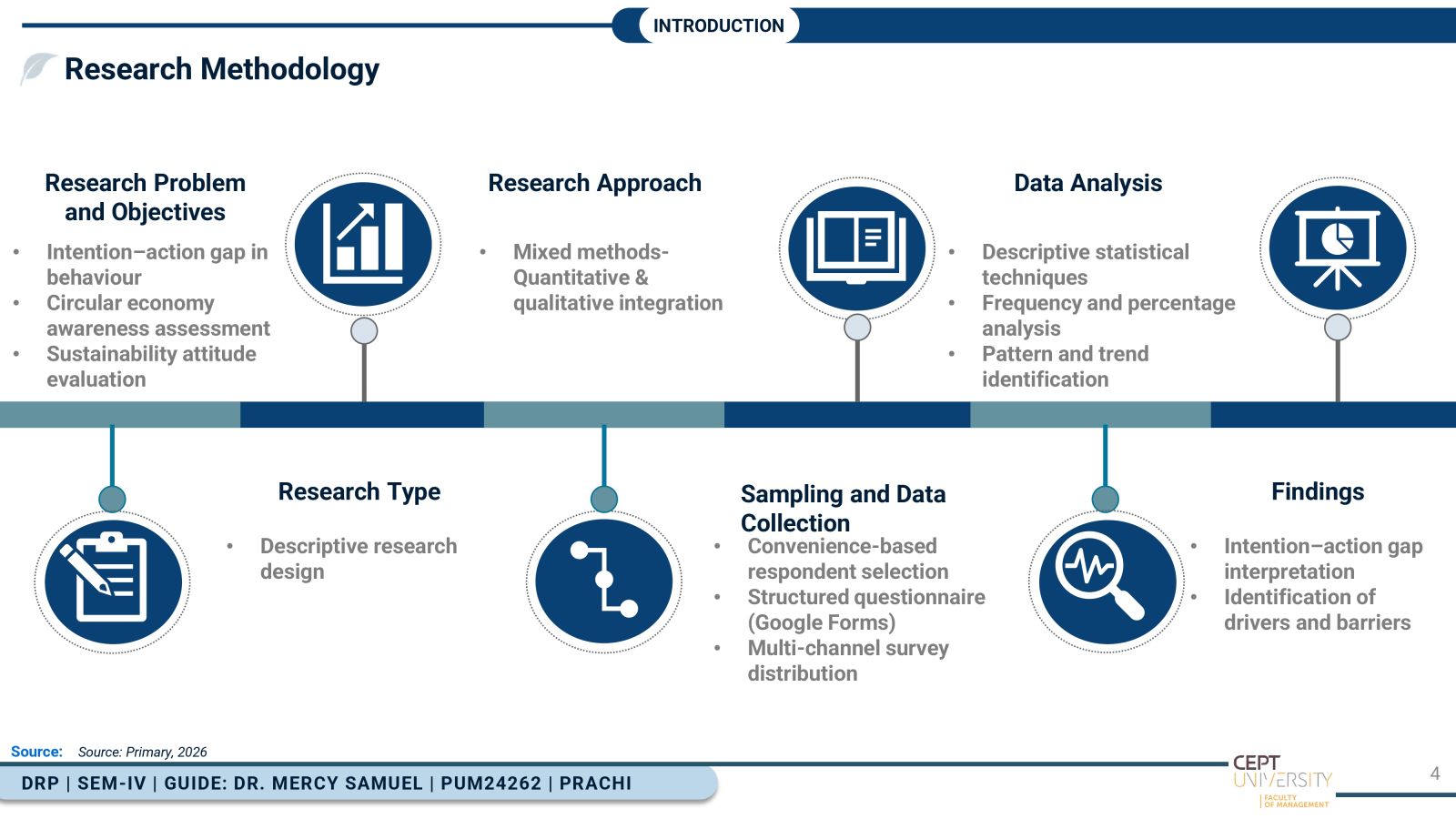
Research methodology: mixed-methods approach for circular economy awareness assessment and behavioral gap analysis

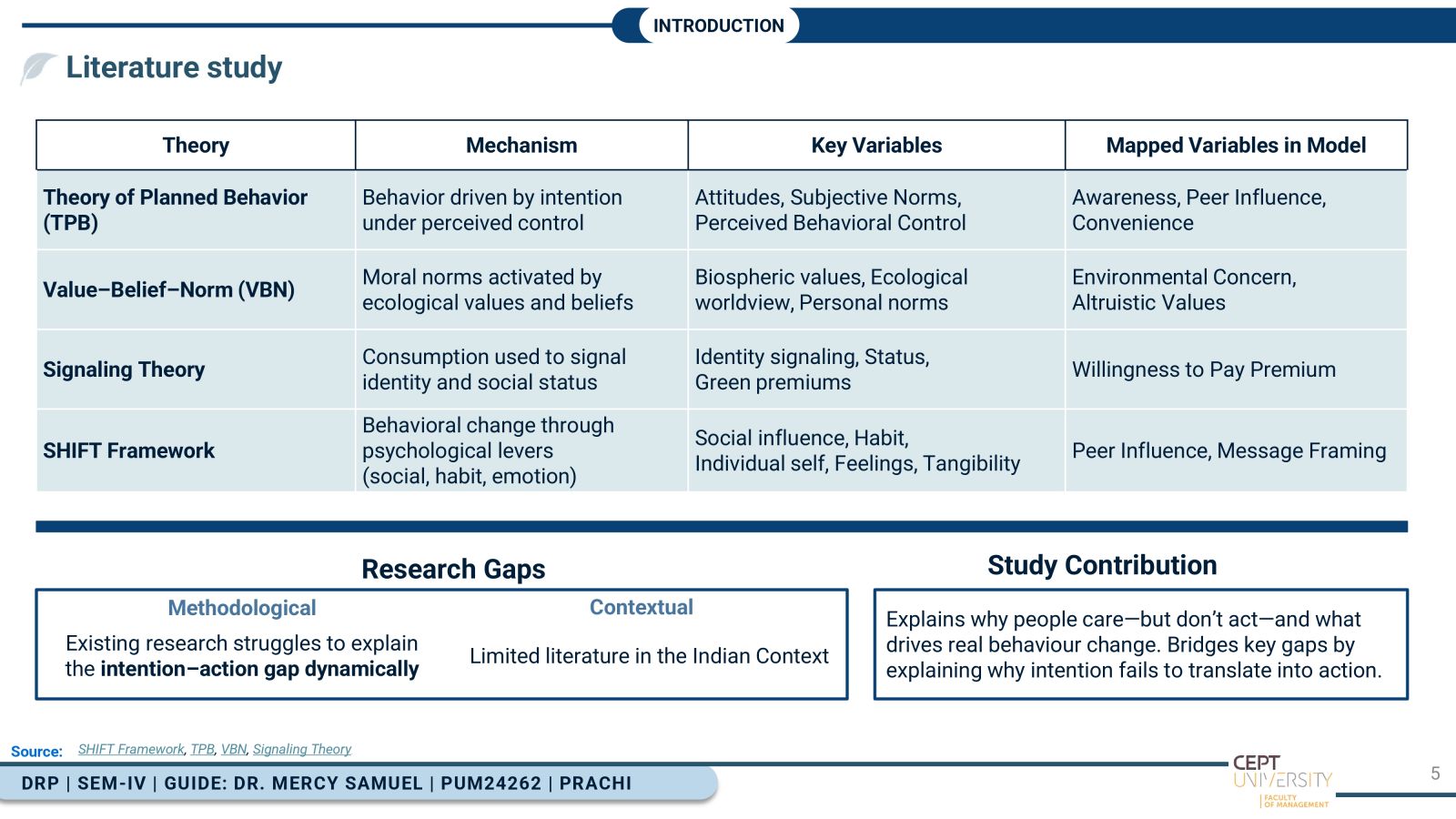
Theoretical foundations: integrating TPB, VBN, SHIFT Framework, and Signaling Theory to explain behavioral mechanisms

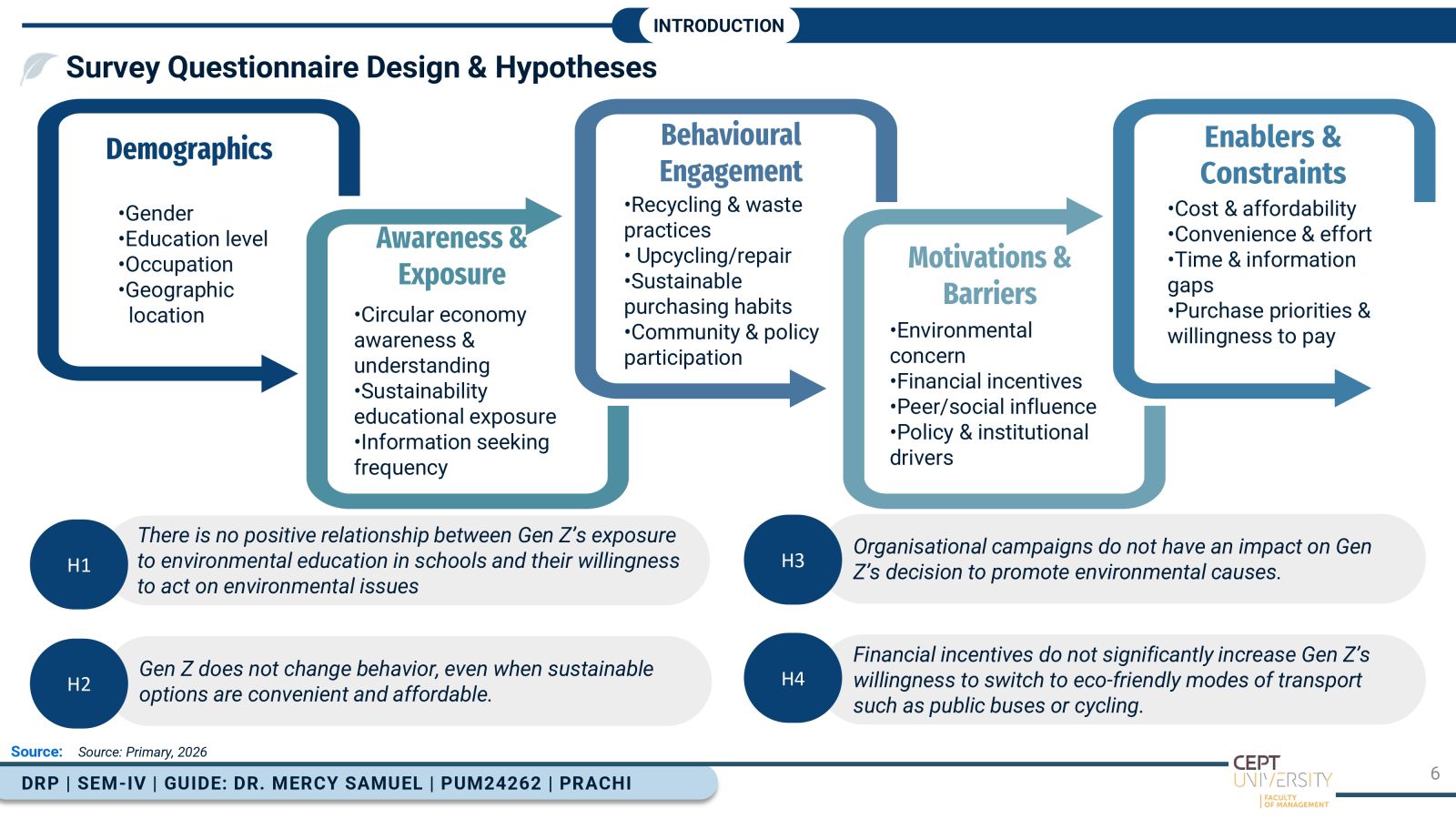
Survey questionnaire design and hypotheses: operationalizing awareness, enablers, constraints, and motivations

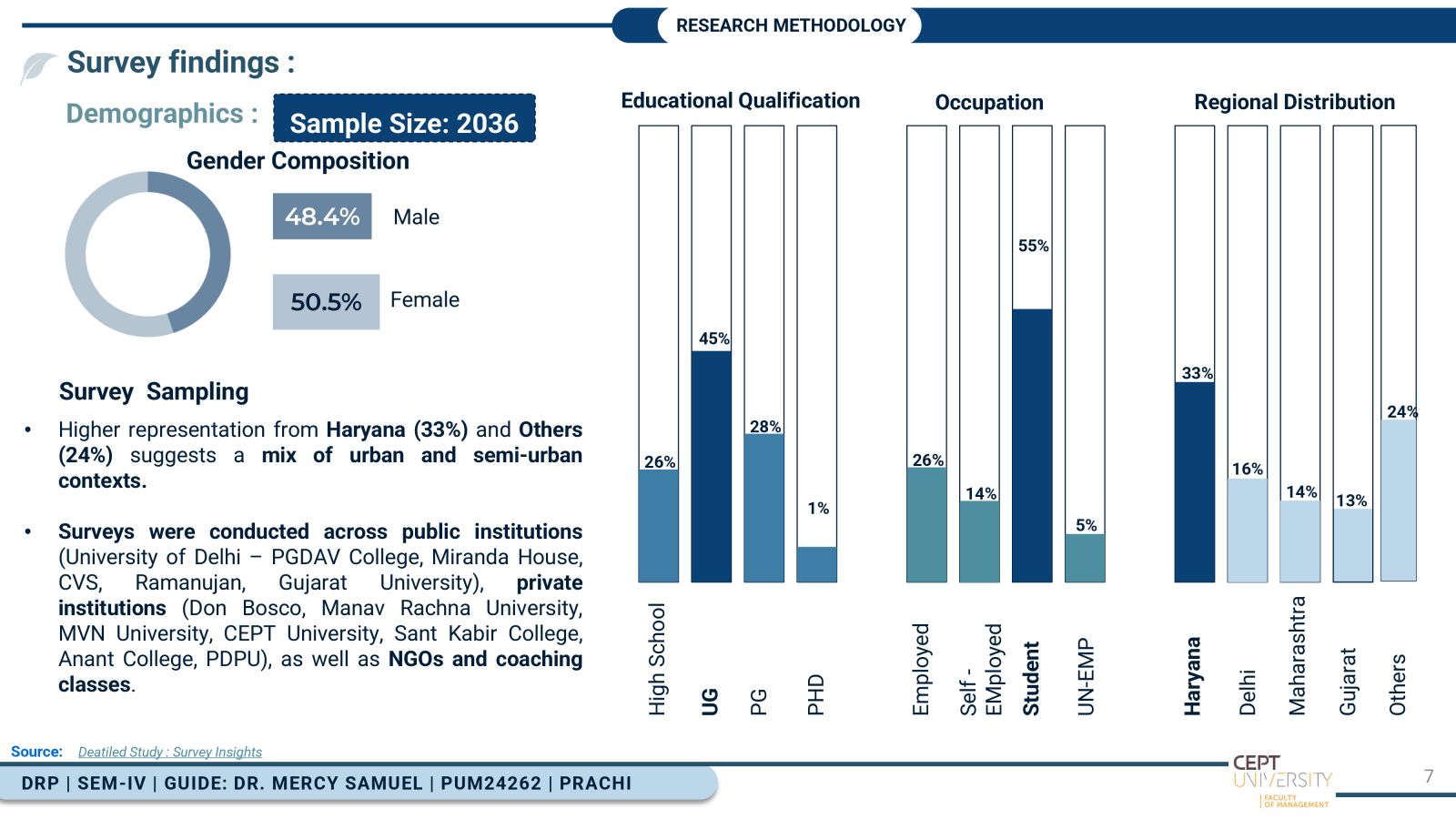
Survey insights: demographic composition and sampling across educational institutions and geographic regions

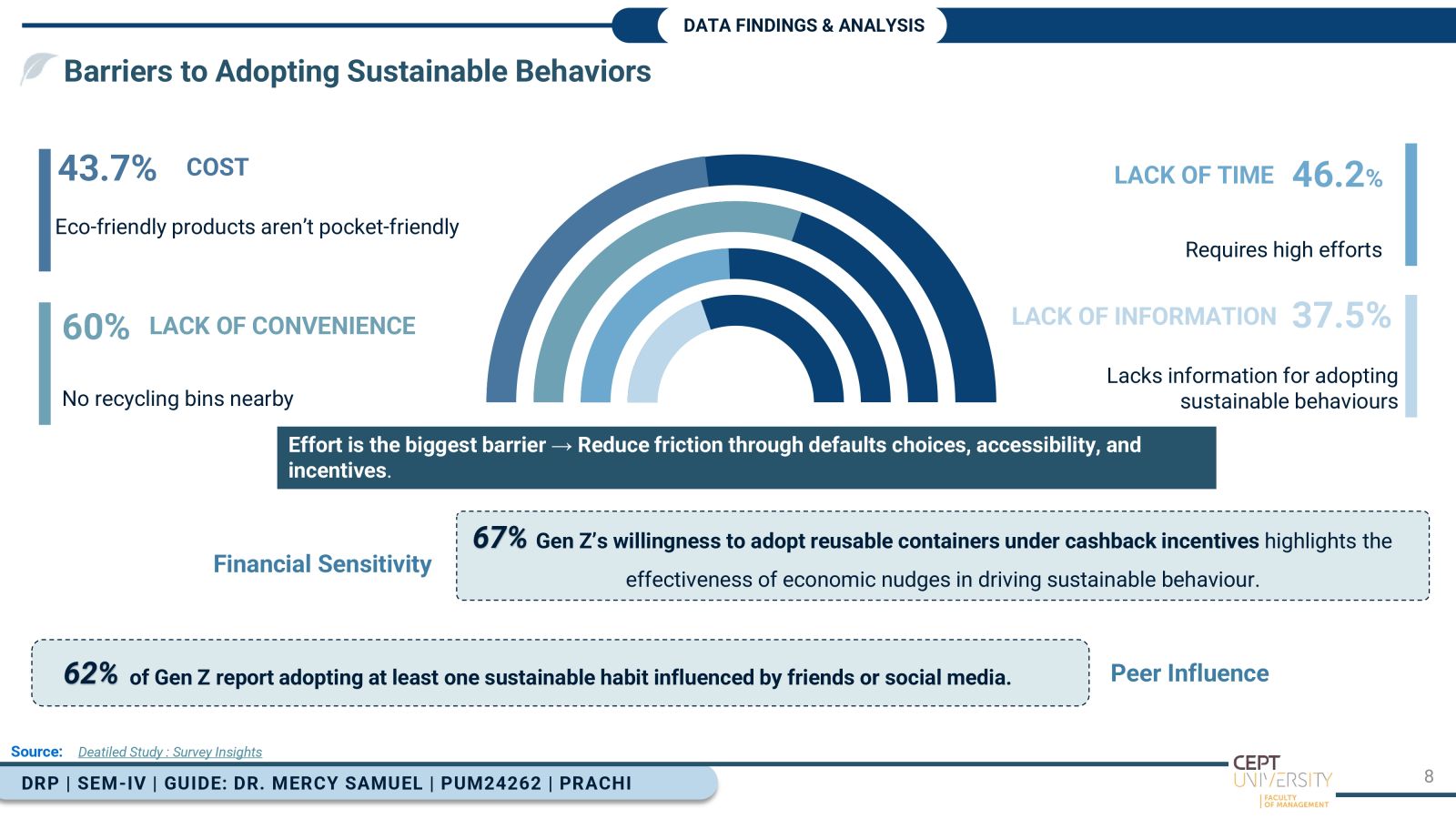
Barriers to adopting sustainable behaviors: cost, convenience, time, and information gaps as primary constraints

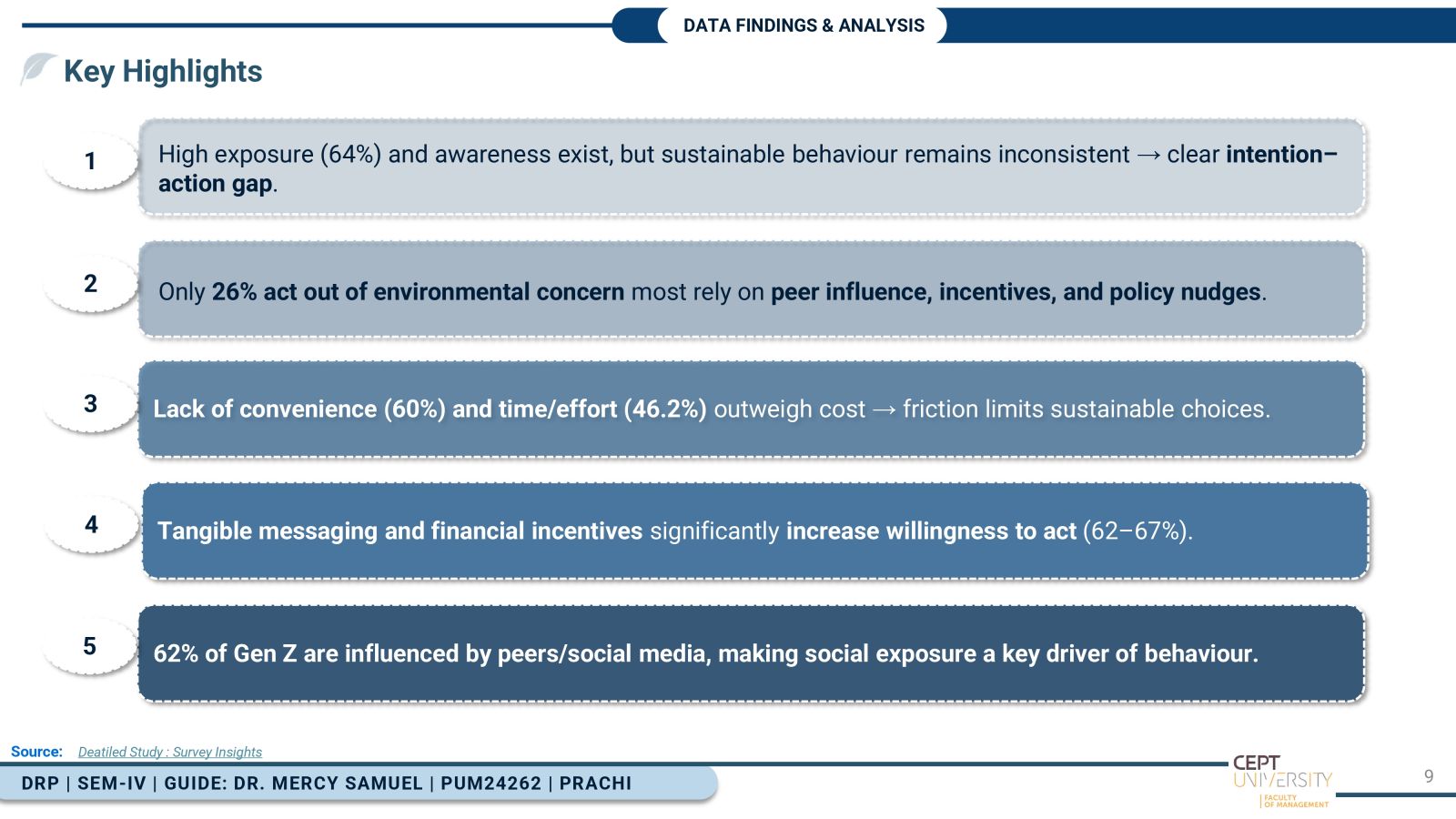
Key highlights: empirical evidence of the intention-action gap and drivers of behavioral conversion

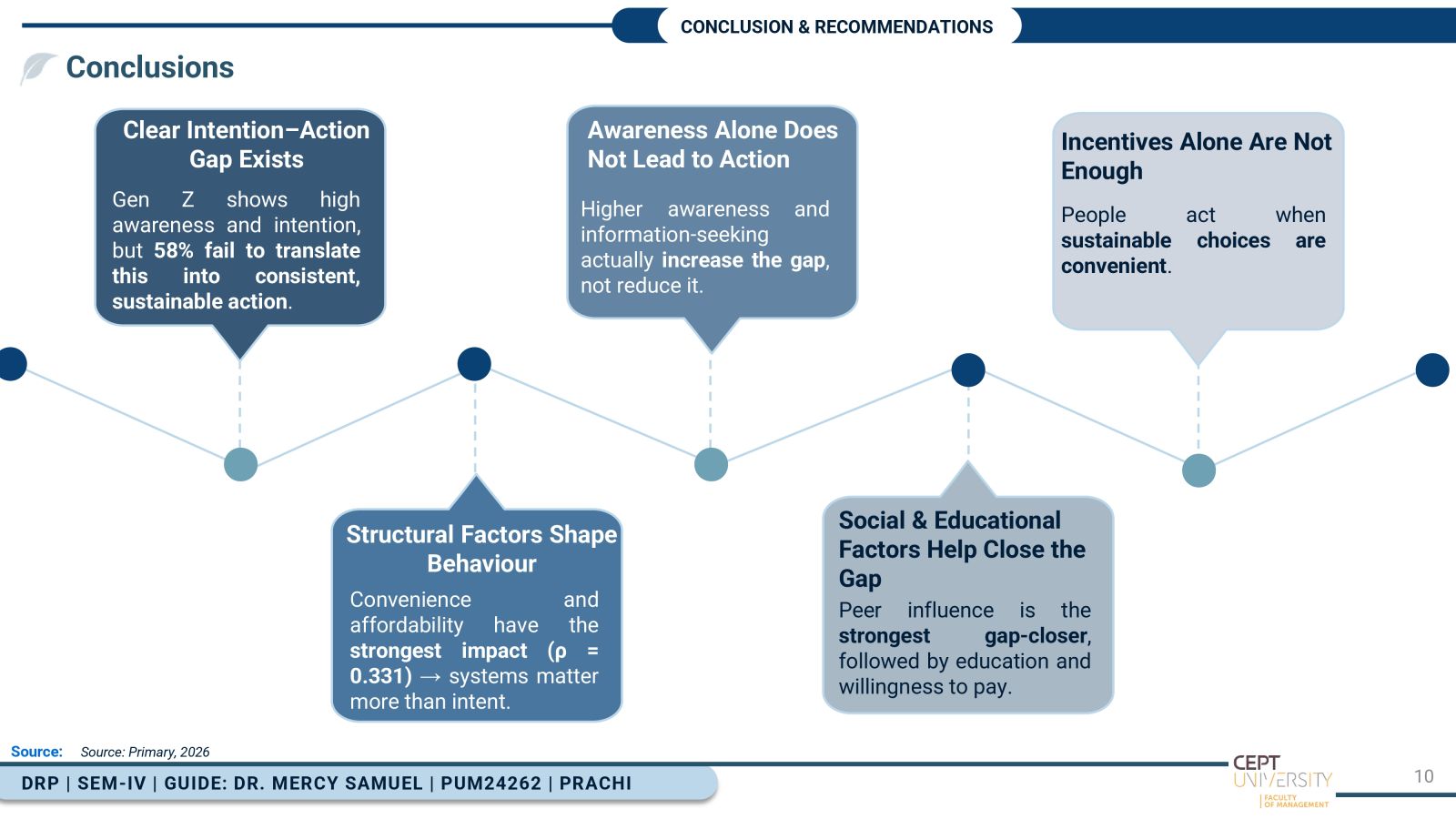
Conclusions: structural factors, peer influence, and educational exposure as determinants of behavioral actualization