Subbulakshmi M

UM4050

PUM24391

This study examines urban governance through the lens of functional devolution, highlighting the gap between policy intent and institutional practice. Although decentralization frameworks advocate greater authority for Urban Local Bodies, planning powers continue to remain concentrated within state controlled and parastatal institutions. The study identifies institutional fragmentation and overlapping mandates as major barriers to effective governance, planning, and service delivery. Using the OOMF framework for comparative analysis, the research evaluates how functions are organized, operated, managed, and financed across governance systems. The study ultimately argues for structural reforms that strengthen devolution, improve metropolitan coordination, and establish clearer institutional accountability within urban governance.
Report Content

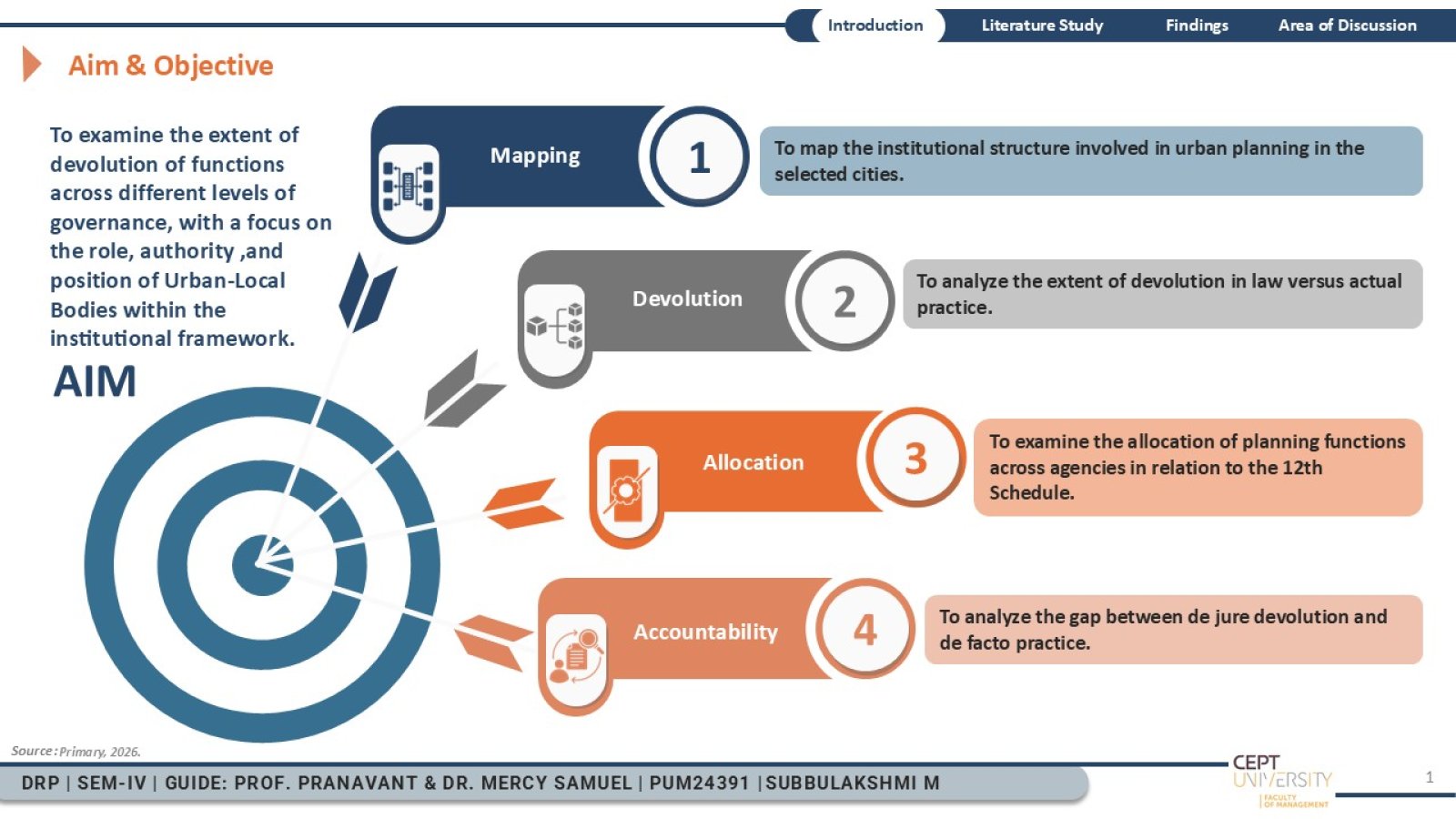
Aim & Objective: Examines functional devolution in urban planning across governance levels, focusing on the role of ULBs and their position within the institutional framework.

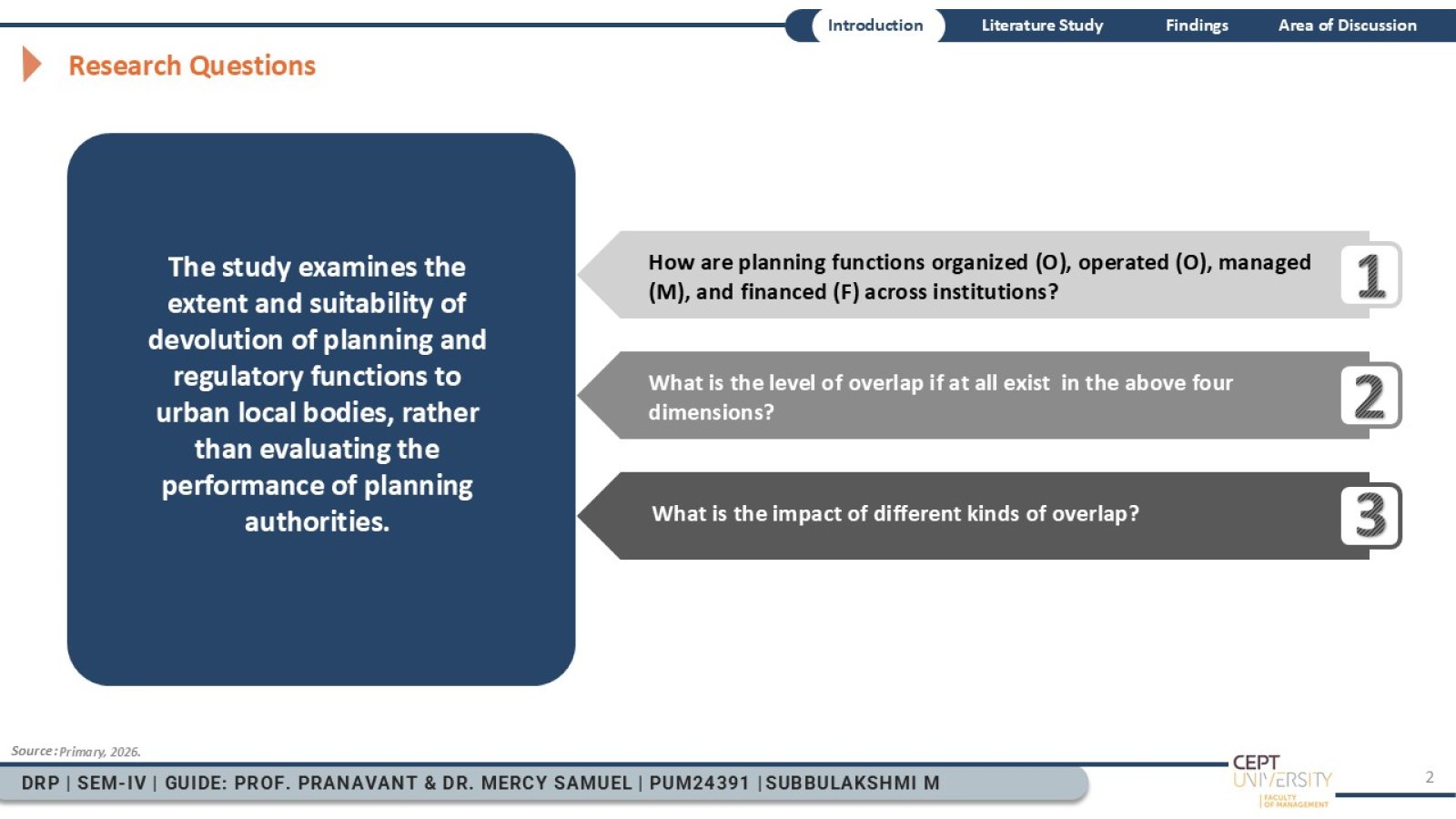
Research Questions: Examines how planning functions are distributed, where overlaps exist, and their implications for governance outcomes.

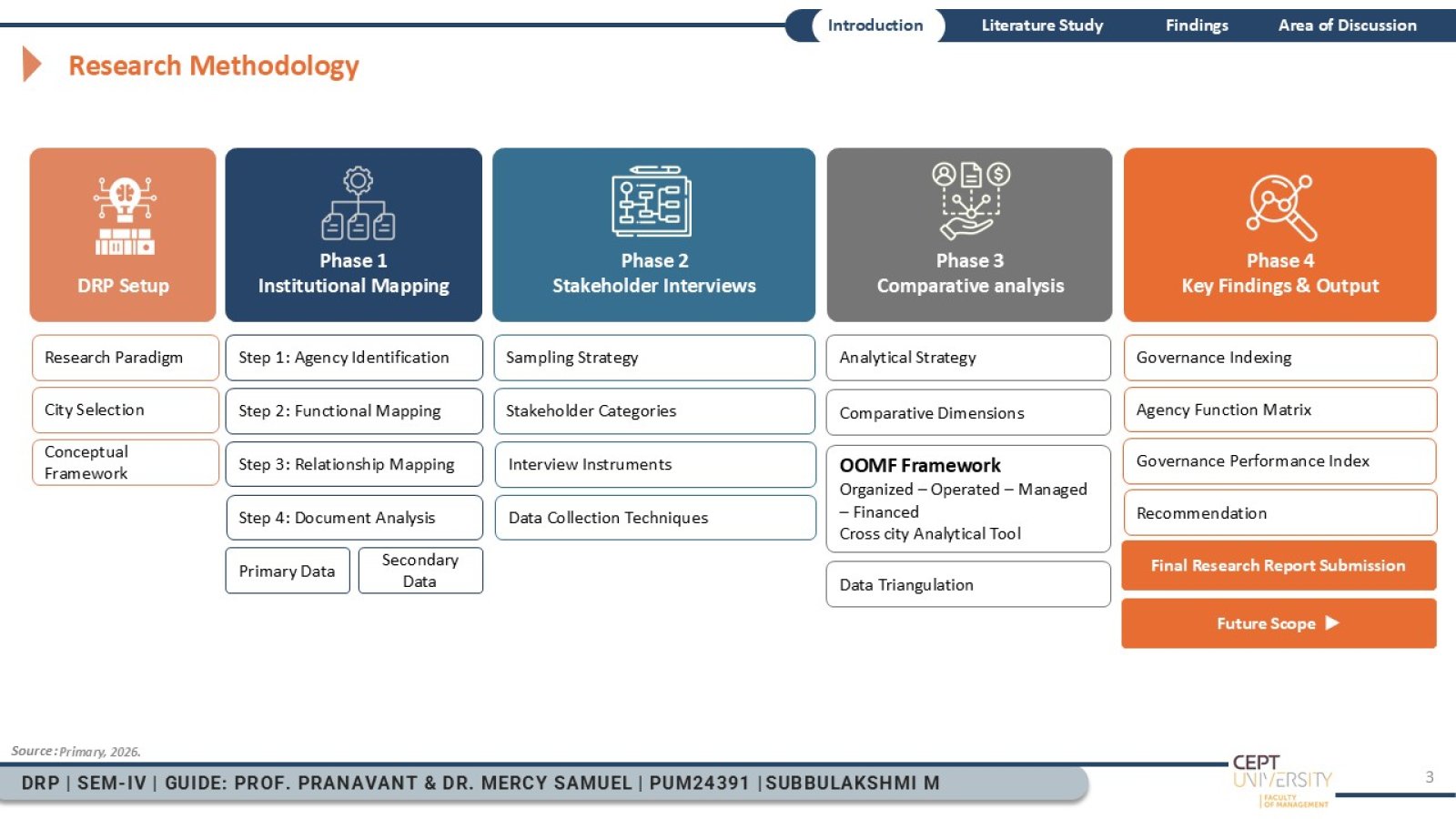
Research Methodology: Uses a phased OOMF based framework combining institutional mapping, stakeholder consultations, and comparative analysis.

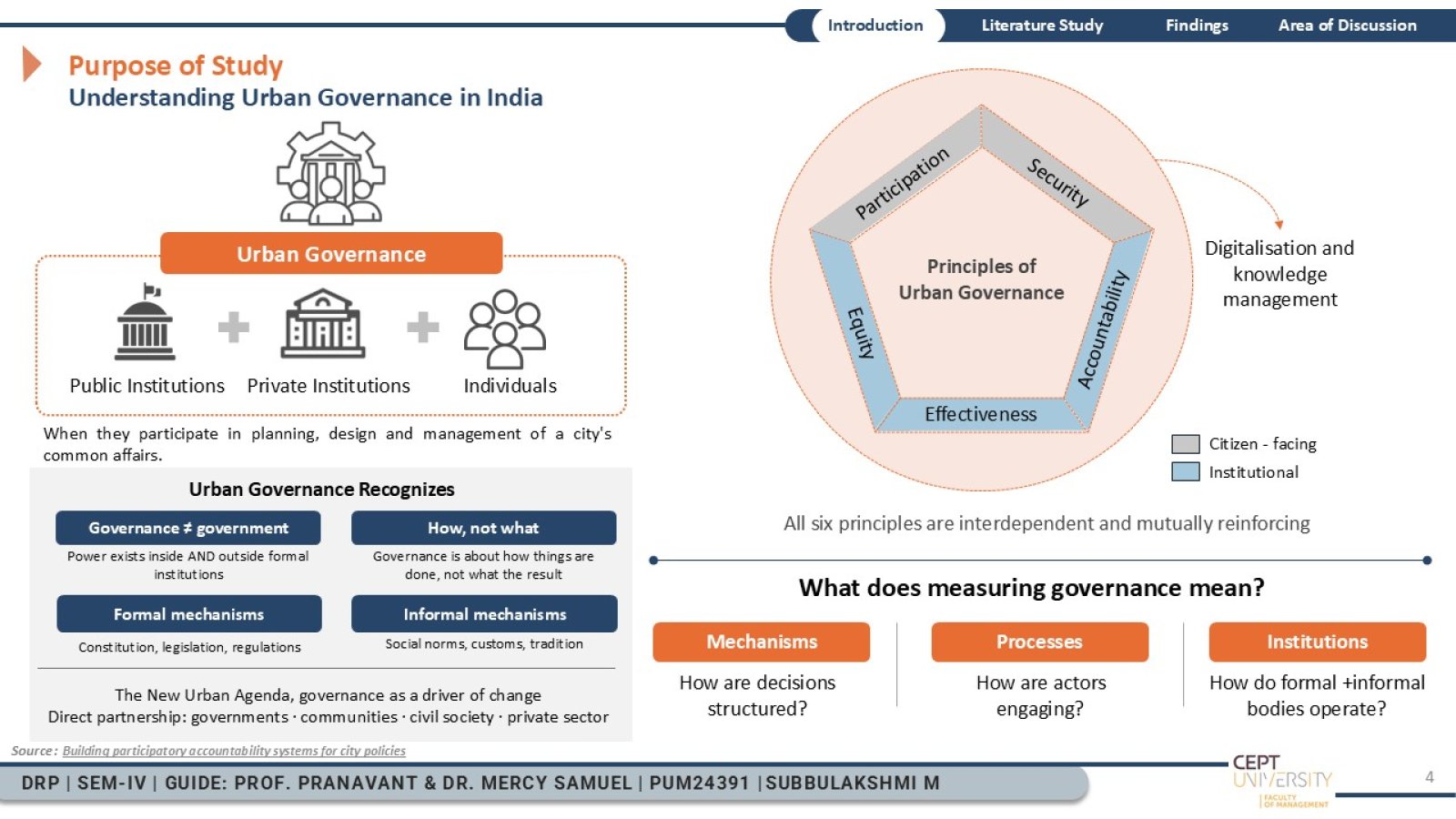
Purpose of Study: Understands urban governance as the interaction of institutions, processes, and mechanisms shaping decision making outcomes.

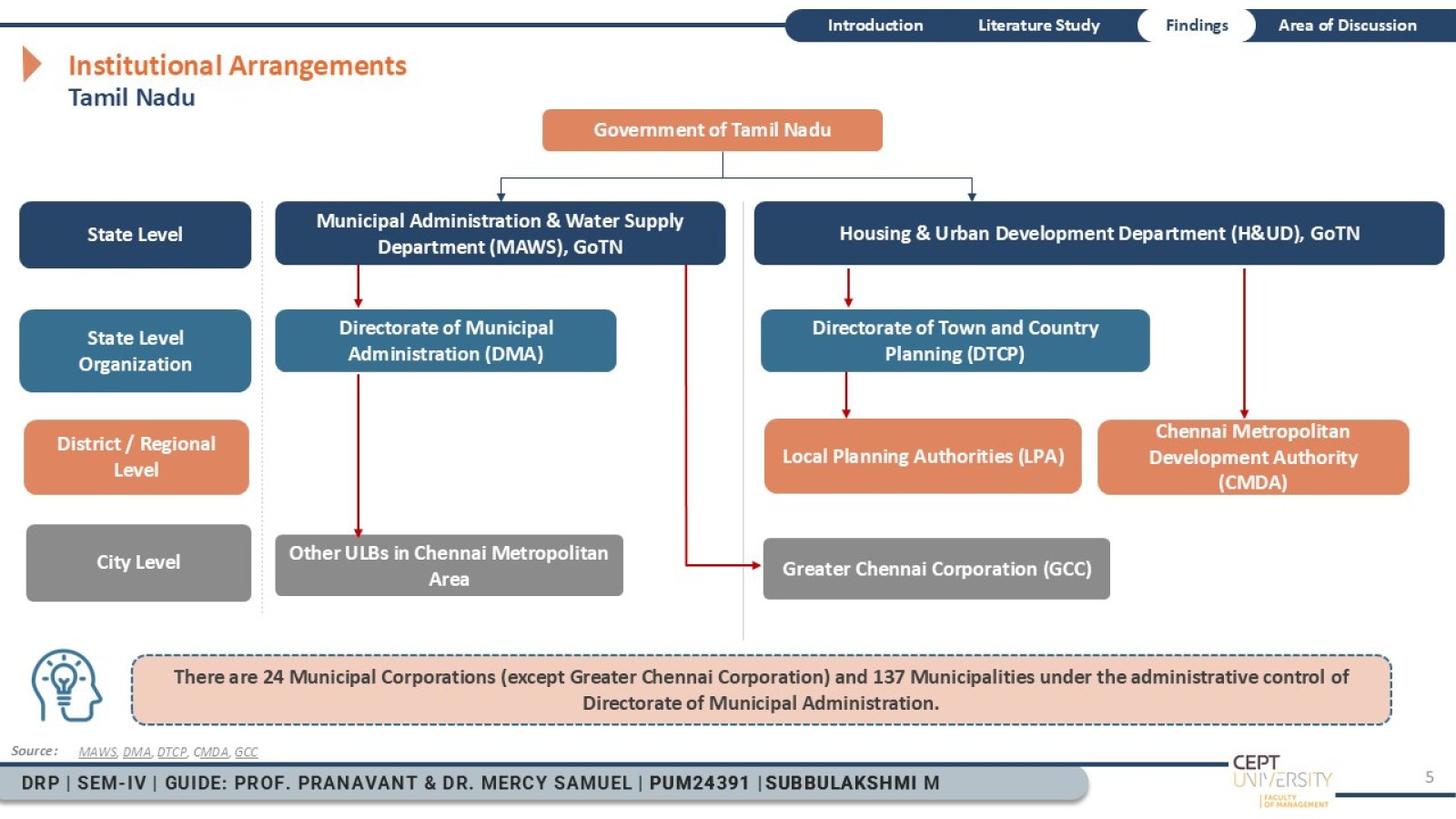
Institutional Mapping (Tamil Nadu): Highlights a multi layered governance structure shaped largely by state led and parastatal agencies.

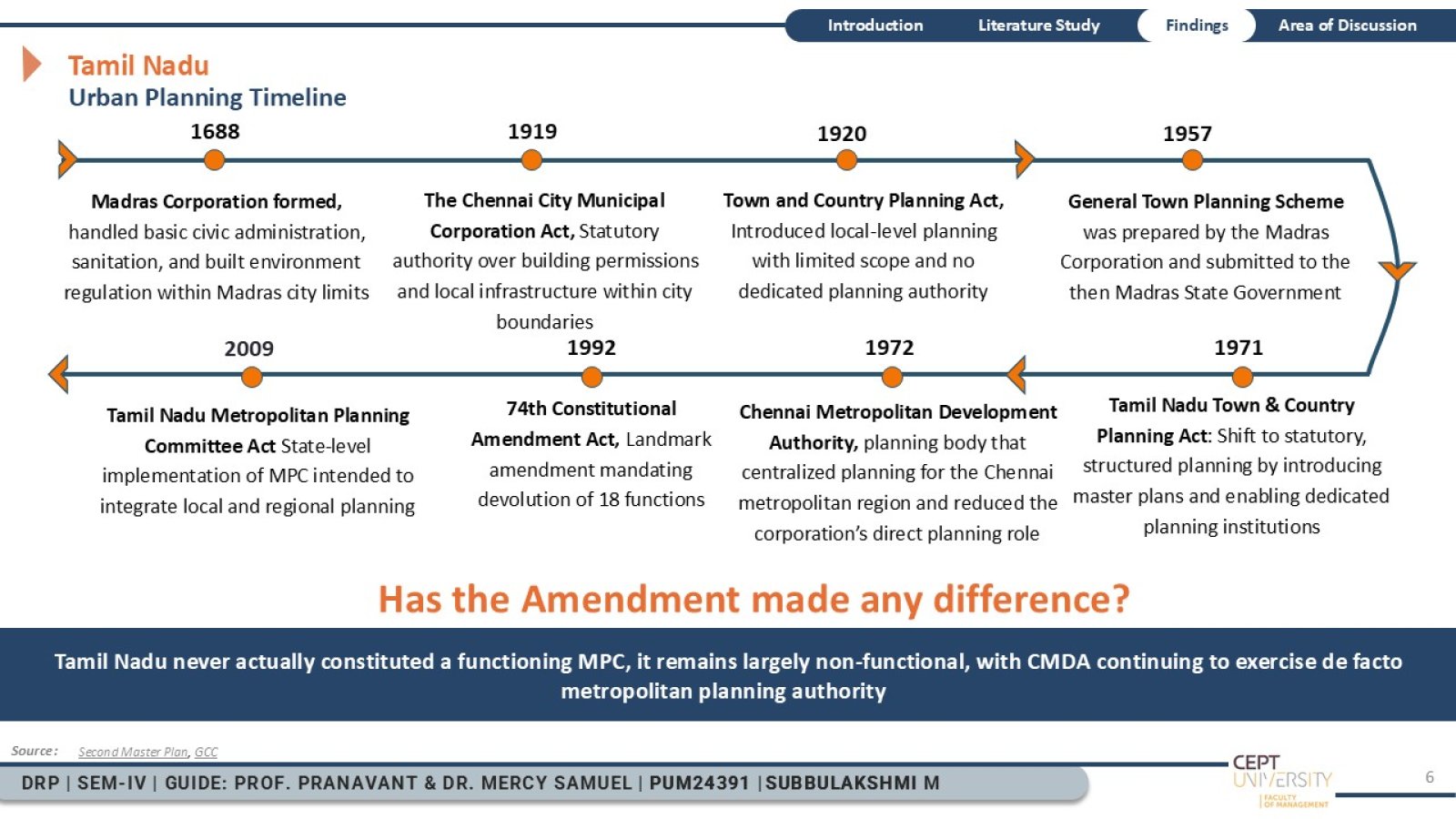
Timeline: Shows the evolution of urban planning in Tamil Nadu, highlighting the shift from corporation led planning to centralized planning authorities.

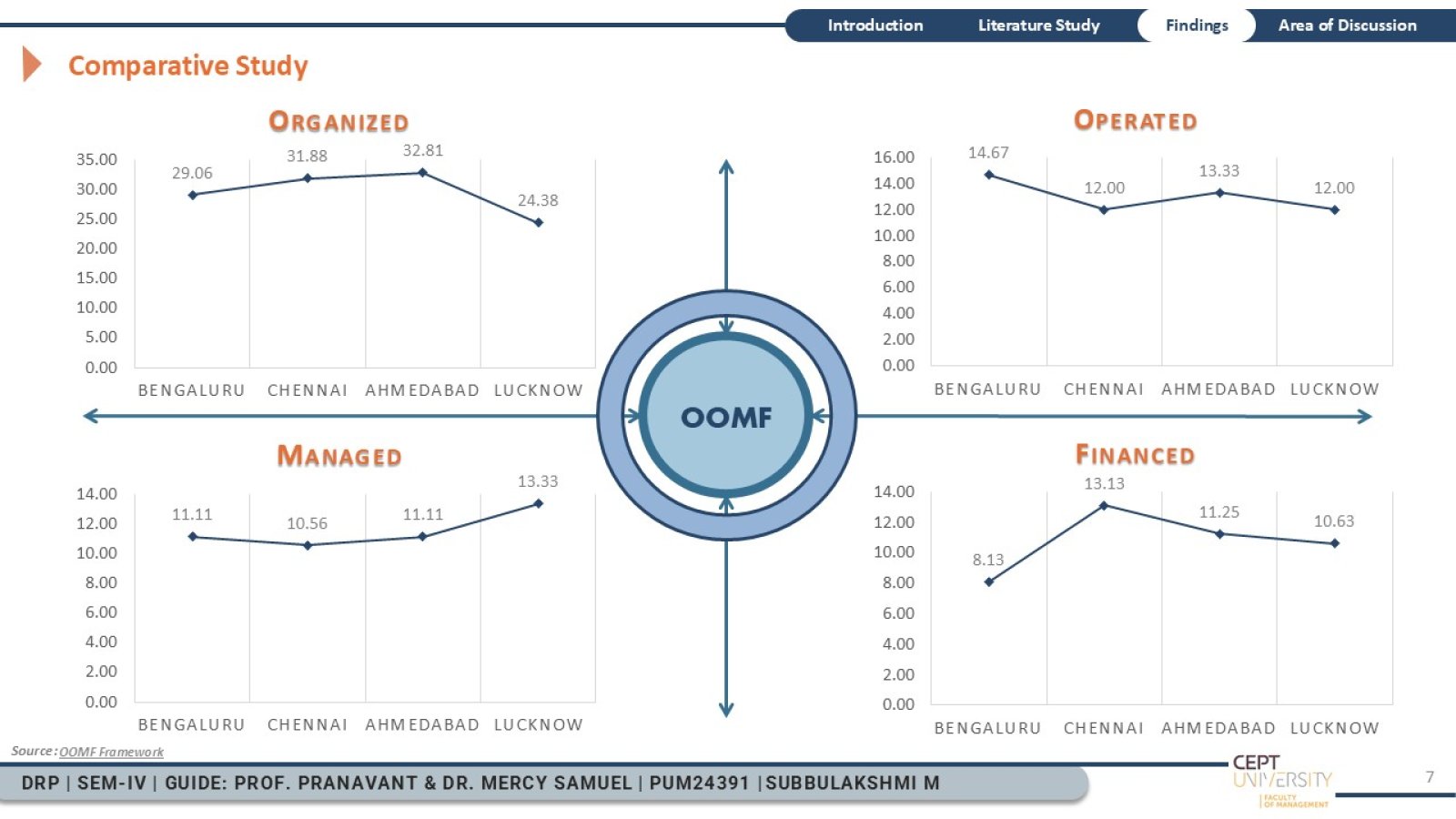
Comparative Study (OOMF): Highlights variations in organization, operation, management, and financing across different cities.

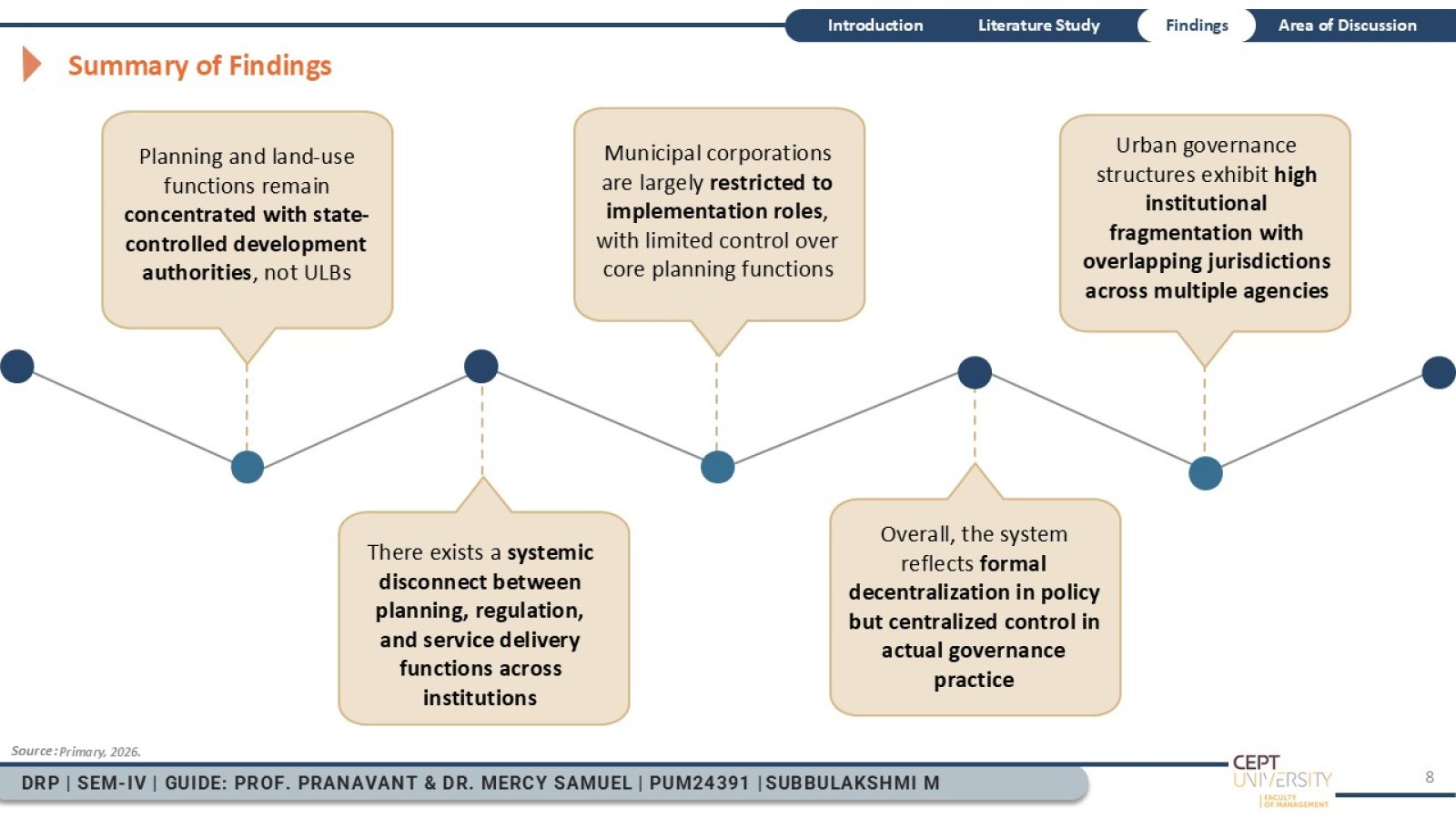
Summary of Findings: Highlights centralization, fragmentation, and disconnect between planning, regulation, and service delivery.

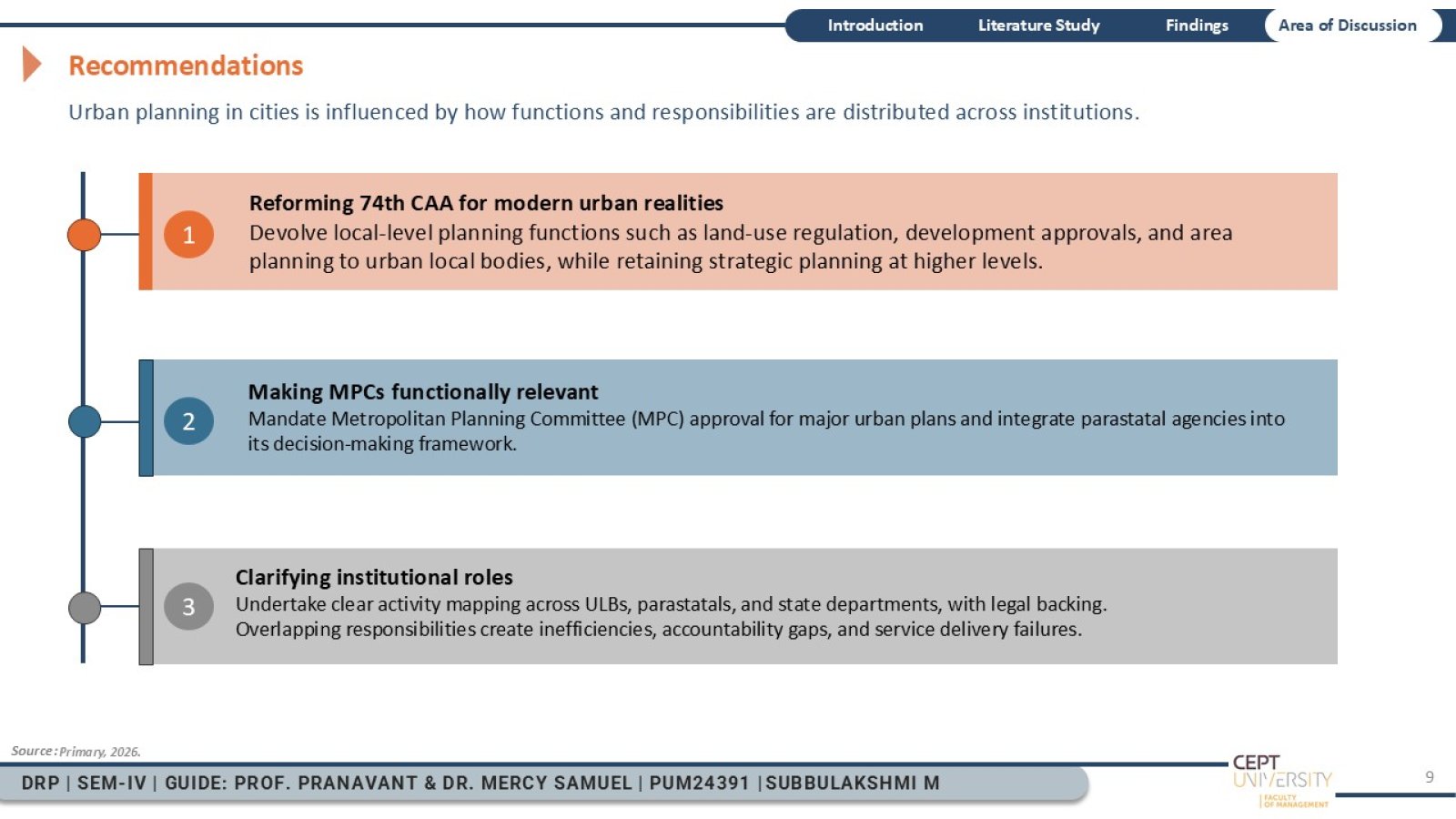
Recommendations: Emphasizes devolution, stronger MPCs, and clearer institutional roles for more effective urban governance.

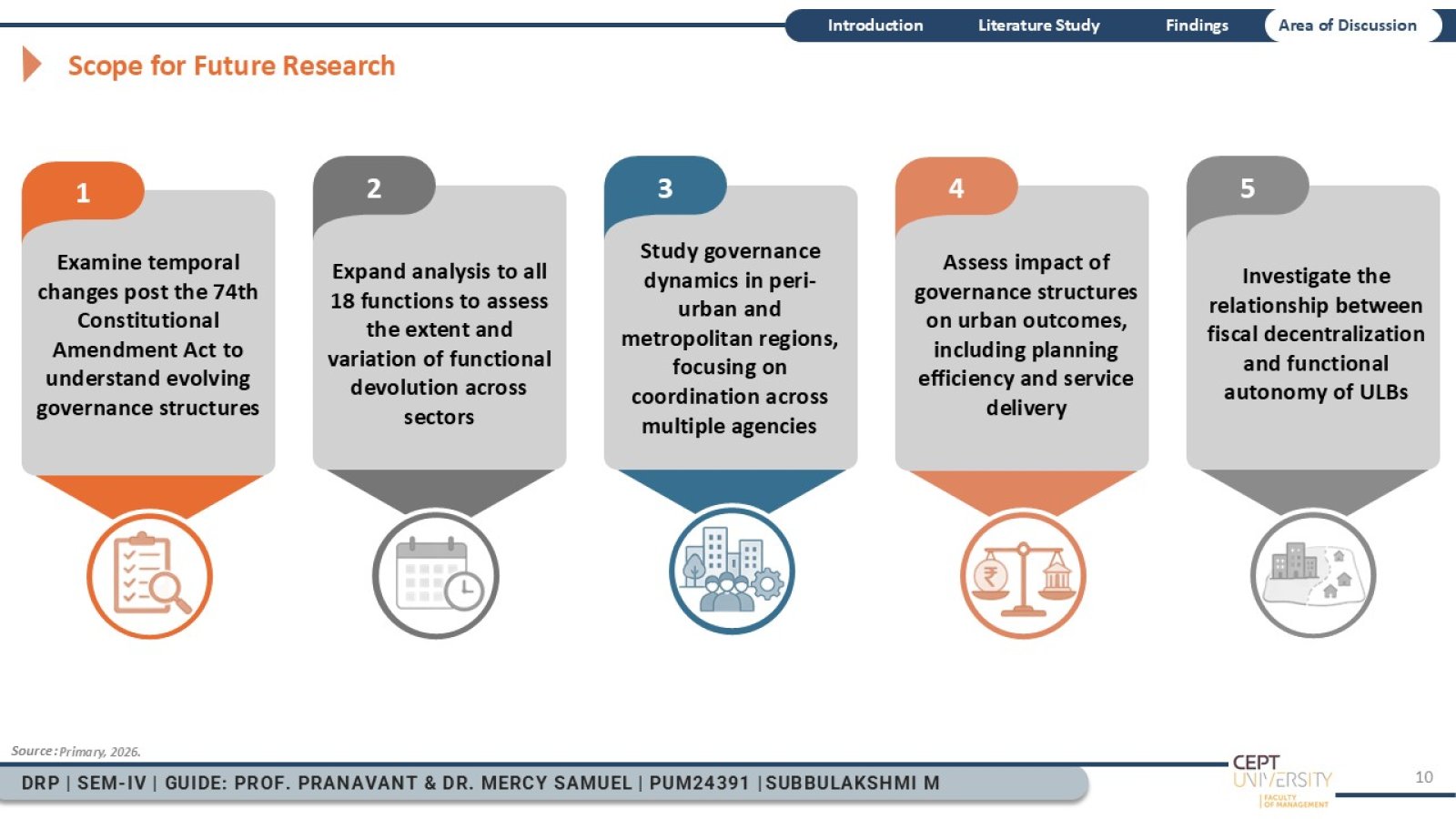
Scope for Future Research: Suggests expanding analysis on governance dynamics, urban outcomes, and fiscal functional relationships.