Vishal Kumar

UM4050

PUM24452

This study analyzes urban governance through the perspective of functional devolution, focusing on the disconnect between policy intent and actual institutional practice. While decentralization policies emphasize empowering Urban Local Bodies (ULBs), in reality, planning authority largely remains centralized within state-controlled and parastatal agencies. The study highlights institutional fragmentation and overlapping responsibilities as key challenges that hinder effective governance, planning, and service delivery. Using the OOMF framework, the research undertakes a comparative assessment of how functions are organized, operated, managed, and financed within existing governance structures. It concludes by advocating for structural reforms that promote genuine devolution of powers, enhance metropolitan-level coordination, and establish clearer lines of accountability to improve overall urban governance.
Report Content

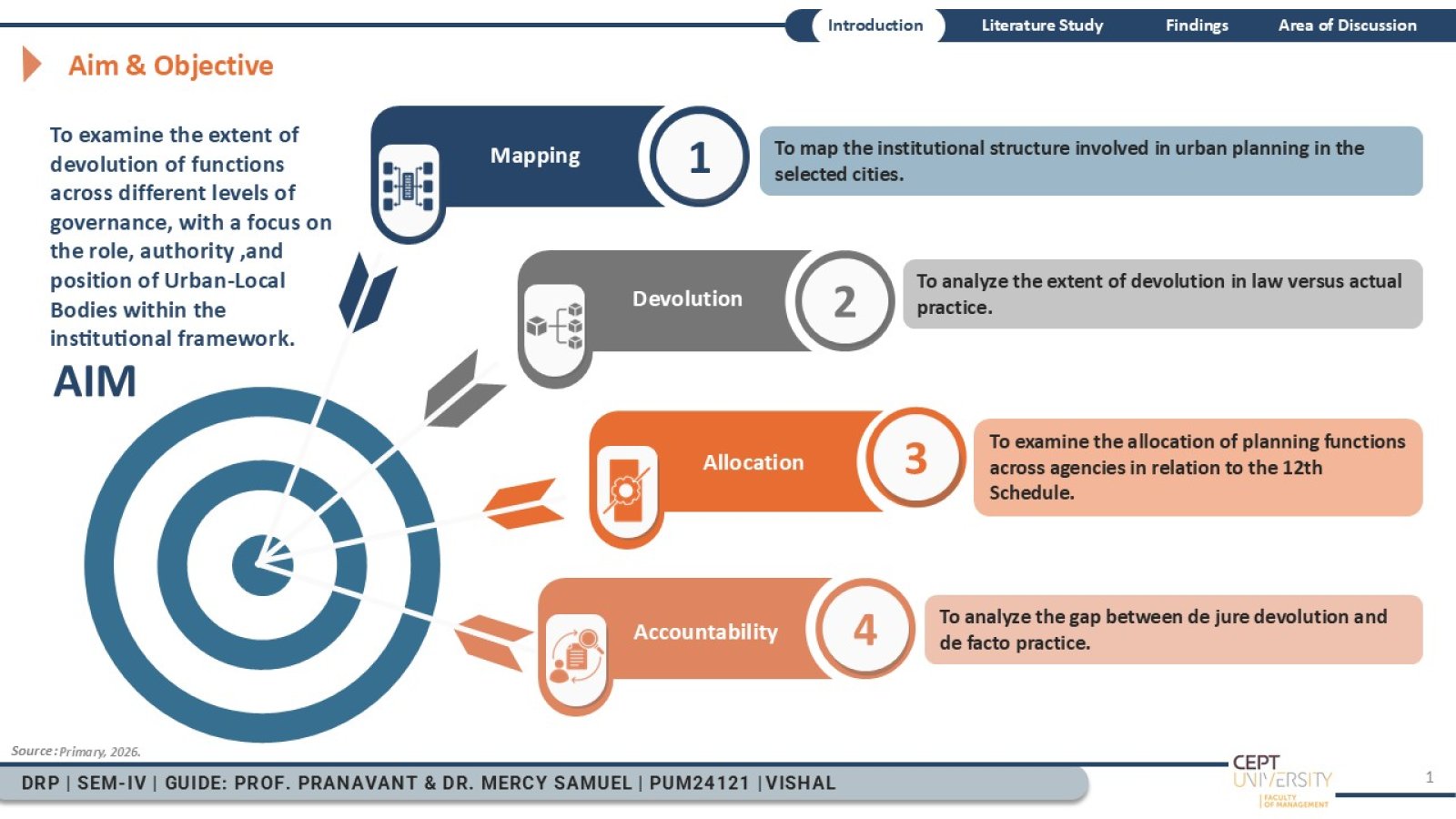
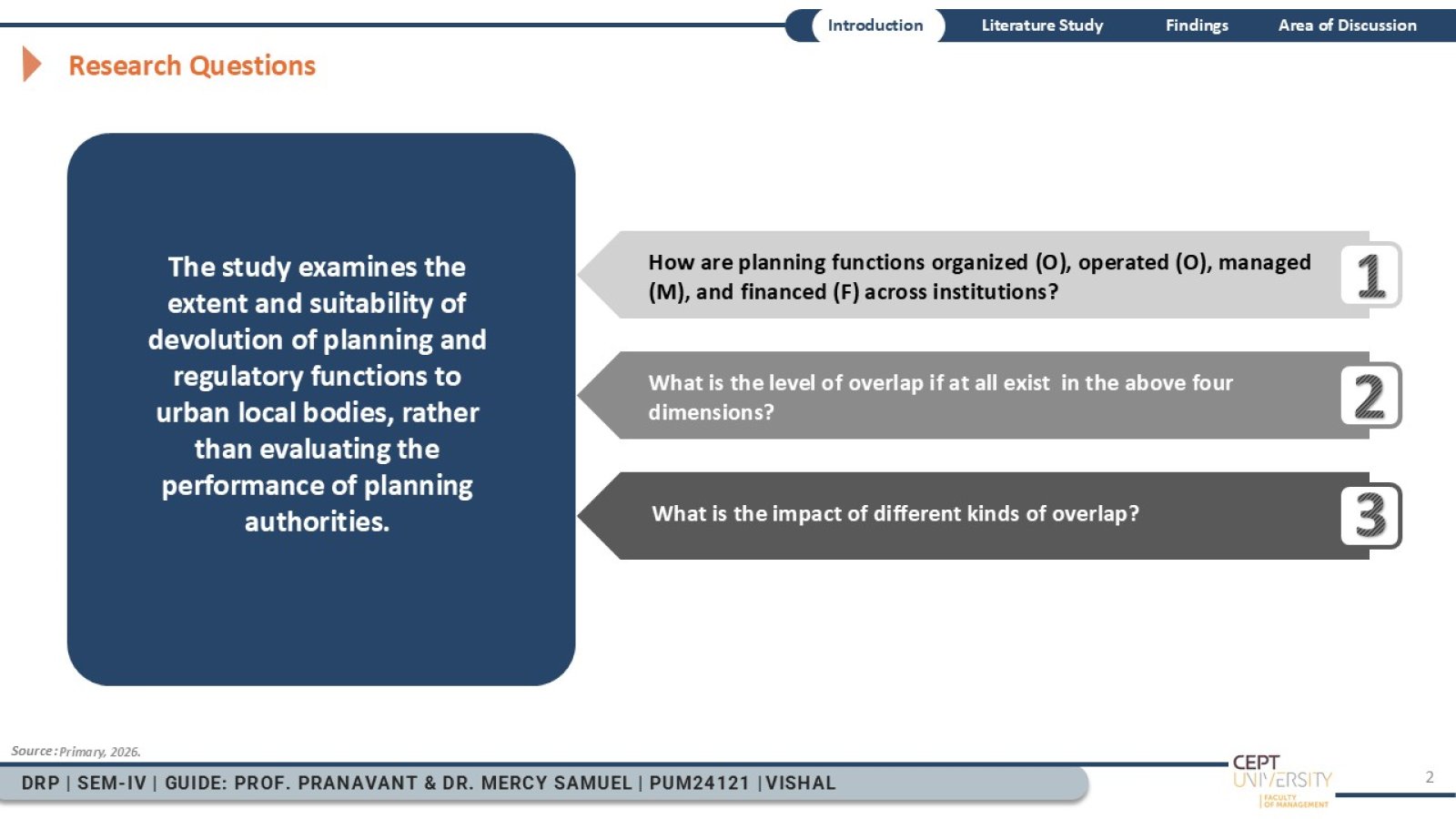
This study examines the extent of functional devolution across different levels of urban governance. It focuses on understanding the role, authority, and position of Urban Local Bodies (ULBs). The analysis is structured around mapping, devolution, allocation, and accountability.

The study investigates how planning functions are organized, operated, managed, and financed across institutions. It also explores the extent of overlaps in these dimensions and their implications. Further, it evaluates how such overlaps impact governance efficiency and outcomes.

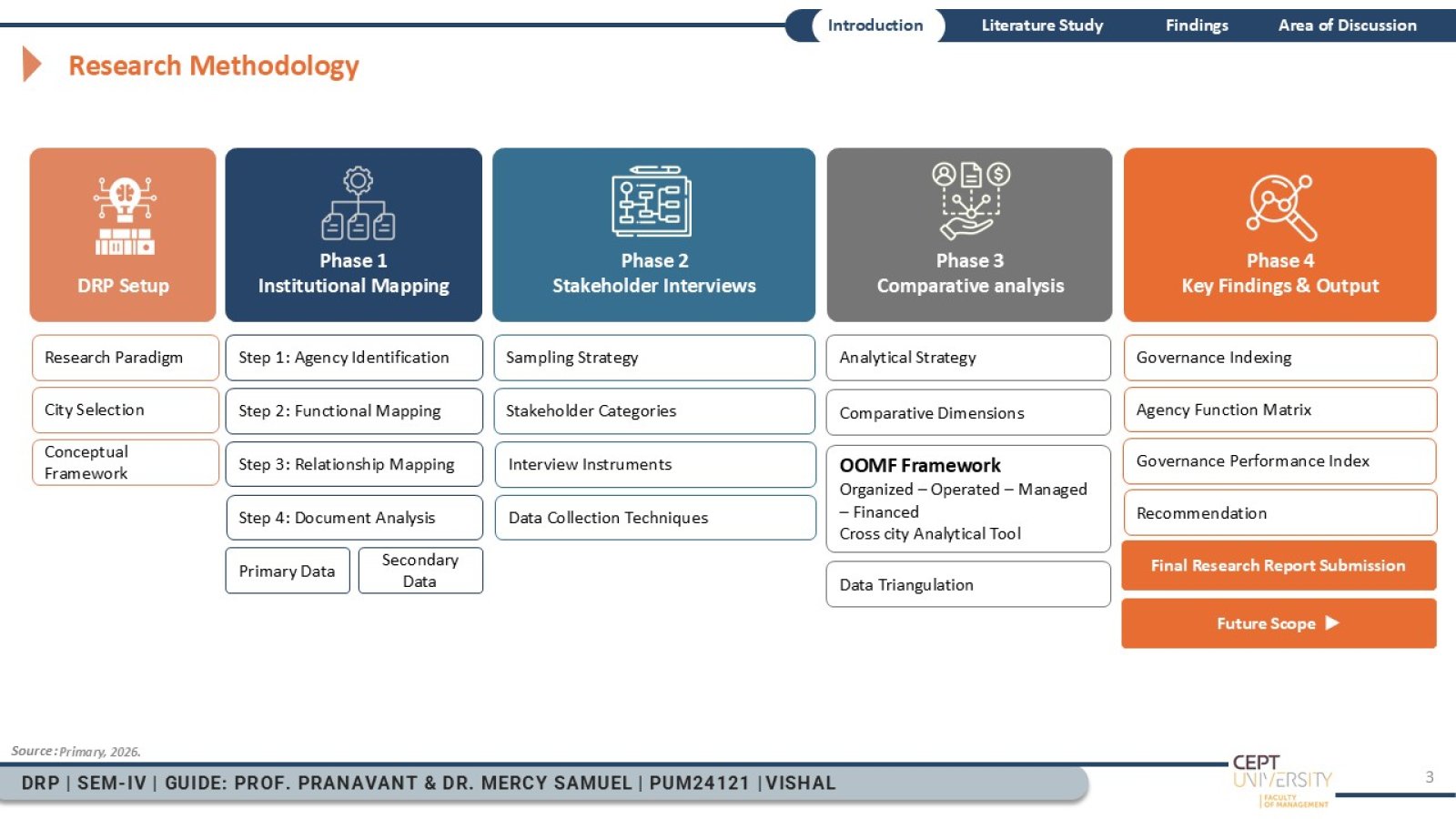
The study follows a structured approach starting with institutional mapping and stakeholder interviews. It uses the OOMF framework for comparative analysis across cities. Data triangulation ensures reliability by combining primary and secondary sources.

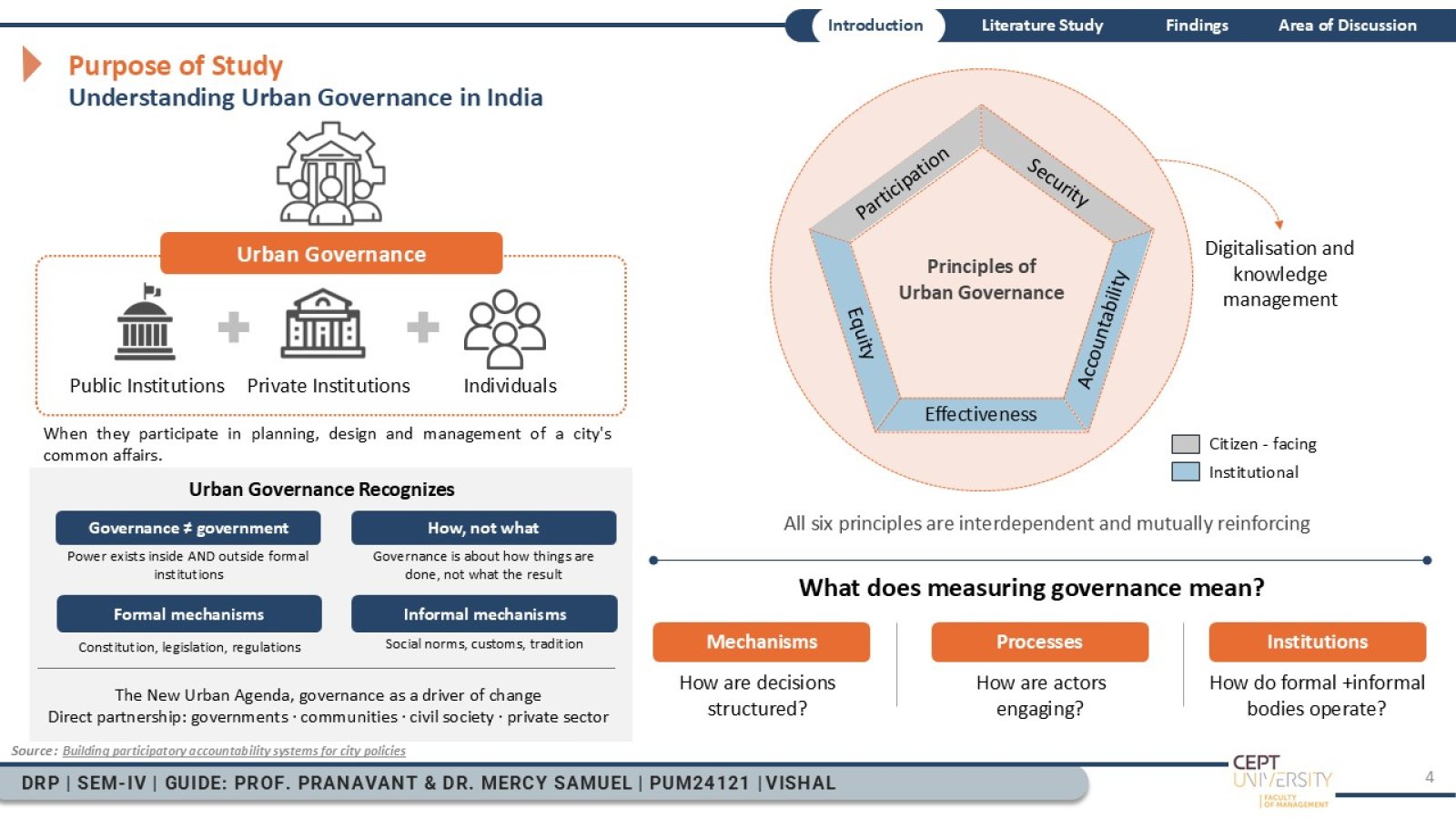
The study aims to understand urban governance as a system involving institutions, processes, and stakeholders. It highlights key governance principles such as accountability, participation, and effectiveness. The focus is on how decisions are made and how institutions function in practice.

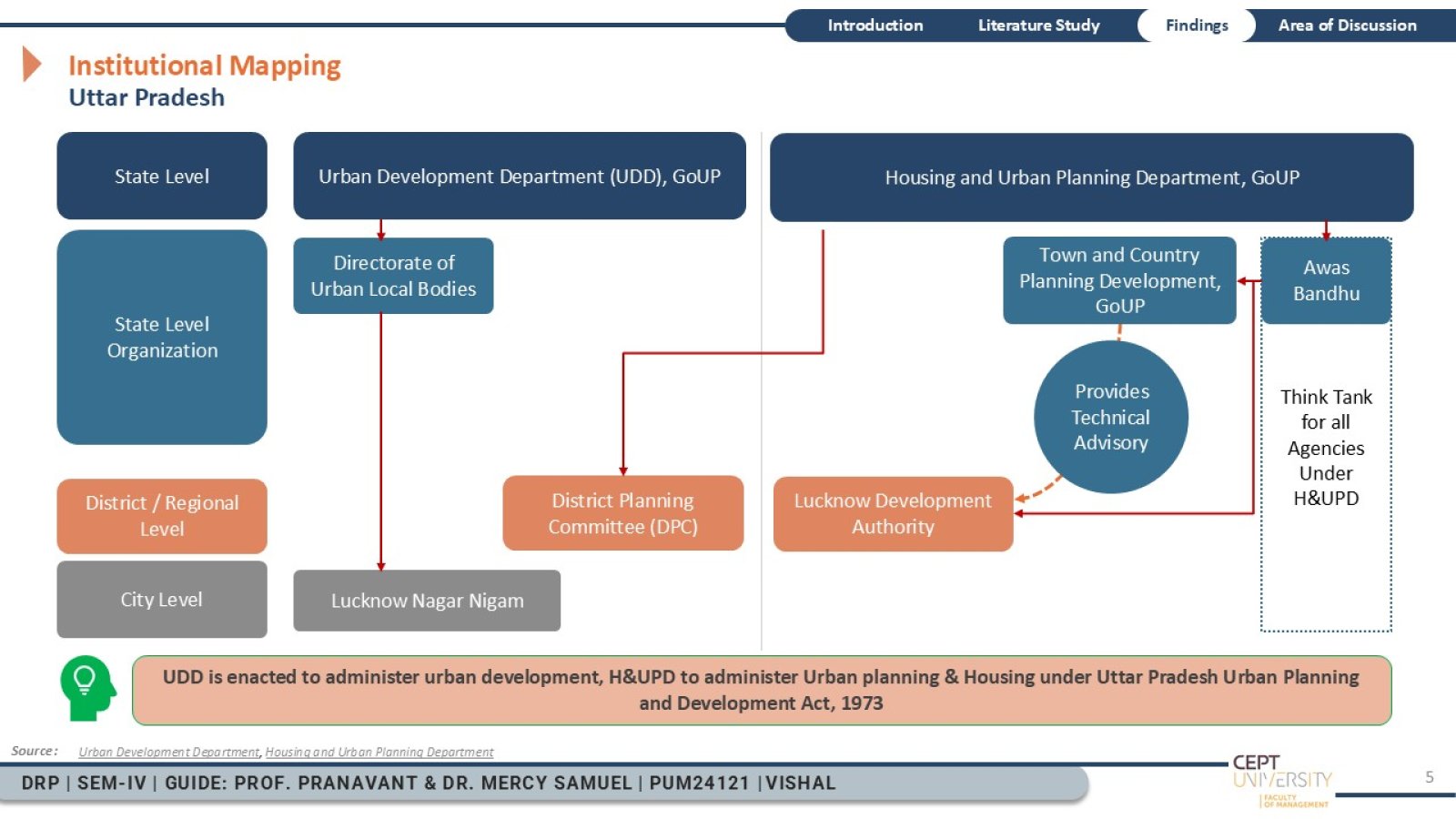
Urban governance in Uttar Pradesh is characterized by multiple institutions at state, regional, and city levels. Planning powers are largely concentrated with development authorities rather than ULBs. This creates a layered structure with overlapping roles and limited decentralization.

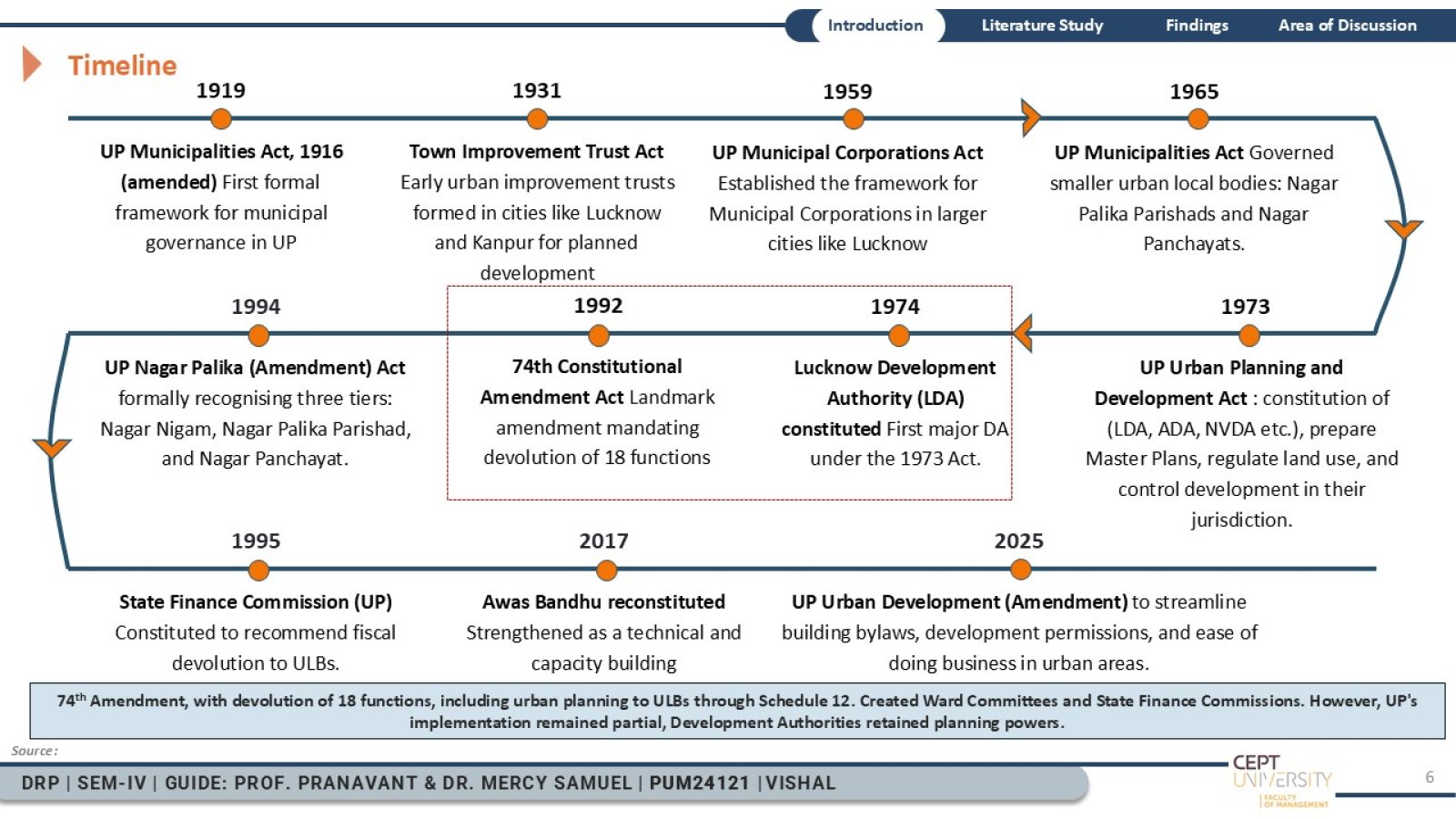
The timeline traces the evolution of urban governance frameworks in Uttar Pradesh. While the 74th Constitutional Amendment mandated decentralization, implementation remains partial. Development authorities continue to retain key planning functions despite reforms.

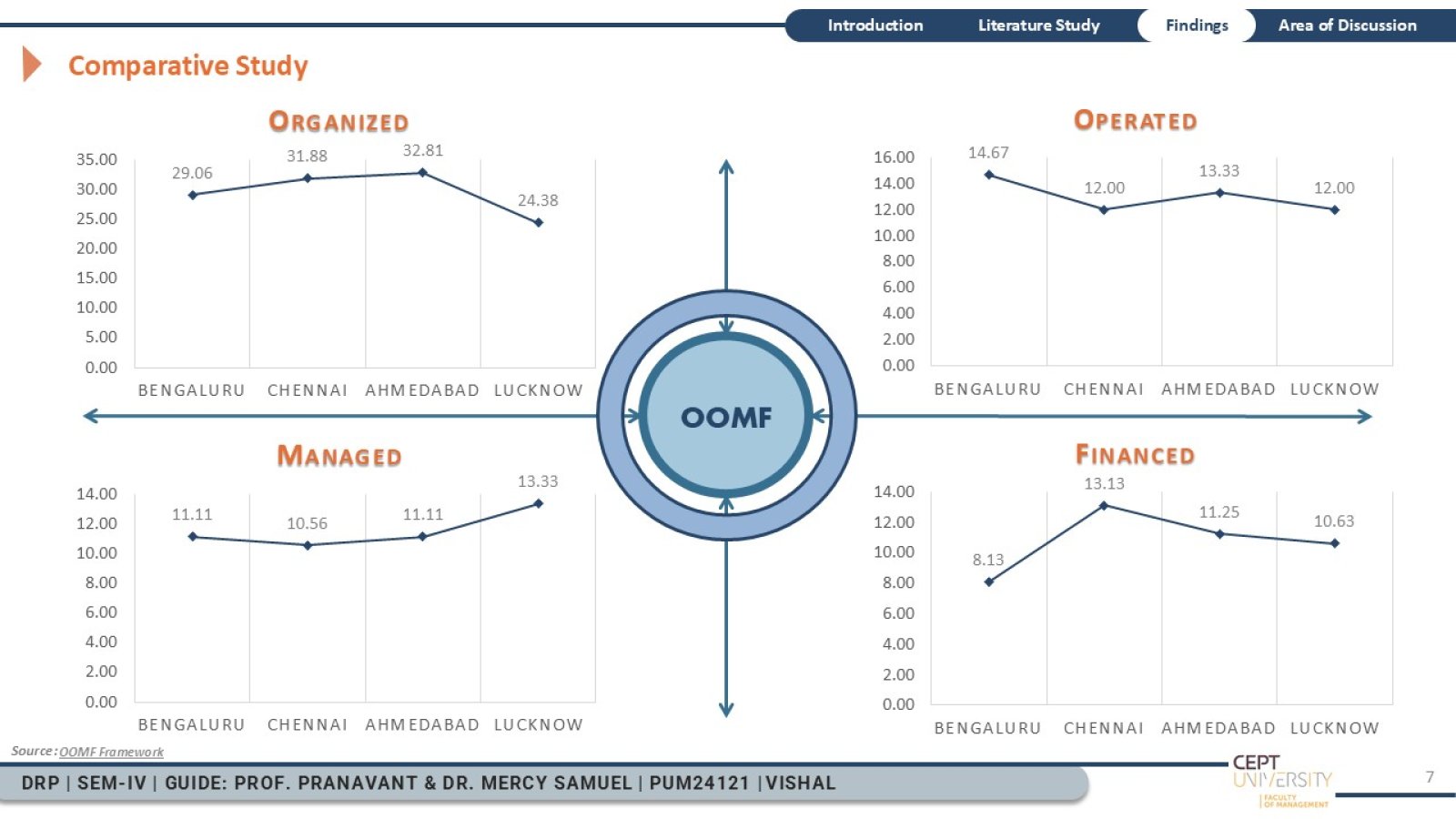
The analysis compares cities across four dimensions: Organized, Operated, Managed, and Financed. It highlights variations in how functions are distributed across institutions. The results show uneven devolution and persistent institutional overlaps.

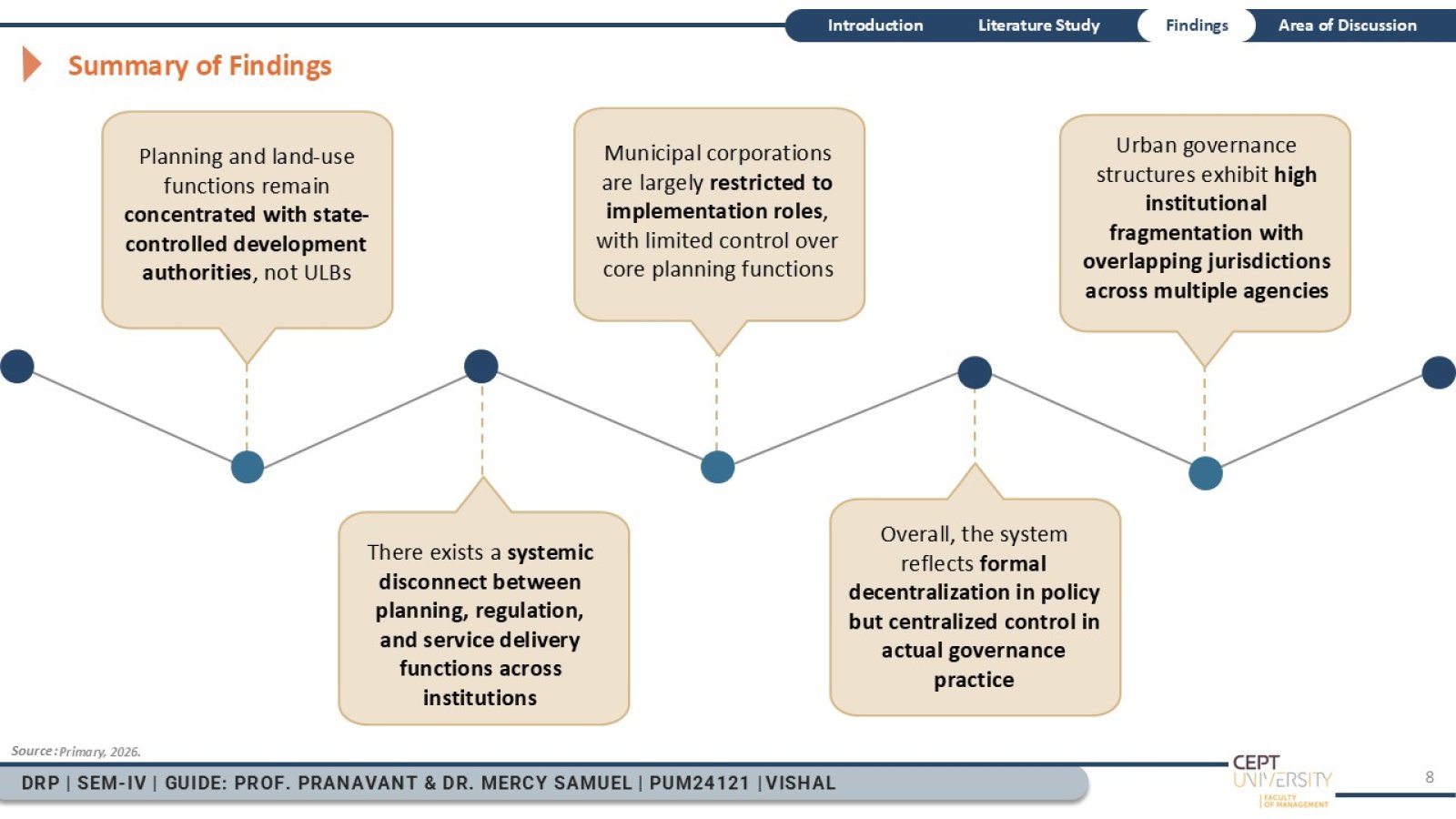
Planning functions remain centralized with state-controlled development authorities. Municipal bodies are largely limited to implementation roles. Overall, governance shows fragmentation, overlaps, and a gap between policy and practice.

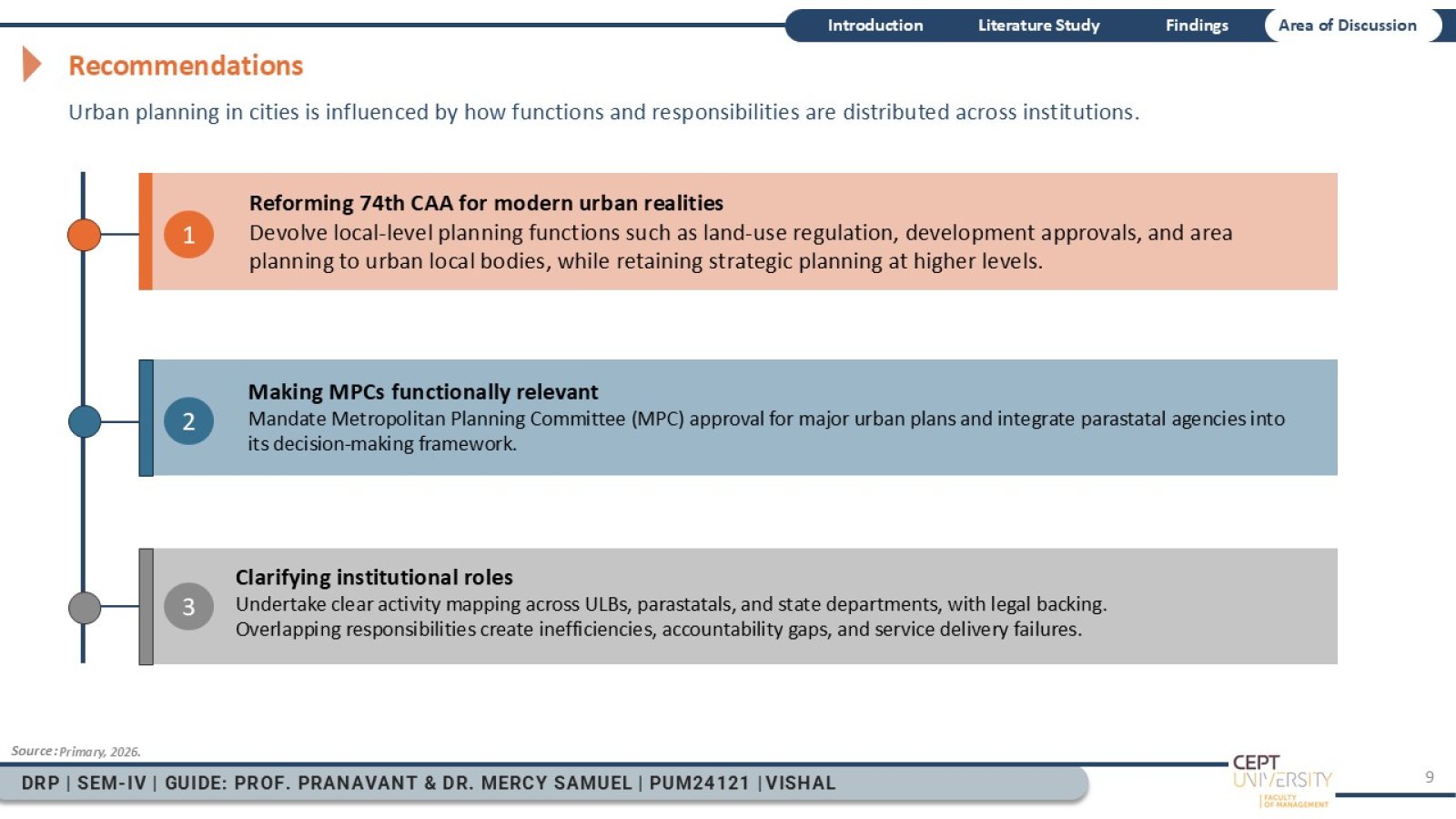
The study recommends strengthening devolution by empowering ULBs with planning functions. It emphasizes making Metropolitan Planning Committees more functional. Clear role definition across institutions is essential to reduce overlaps and improve accountability.

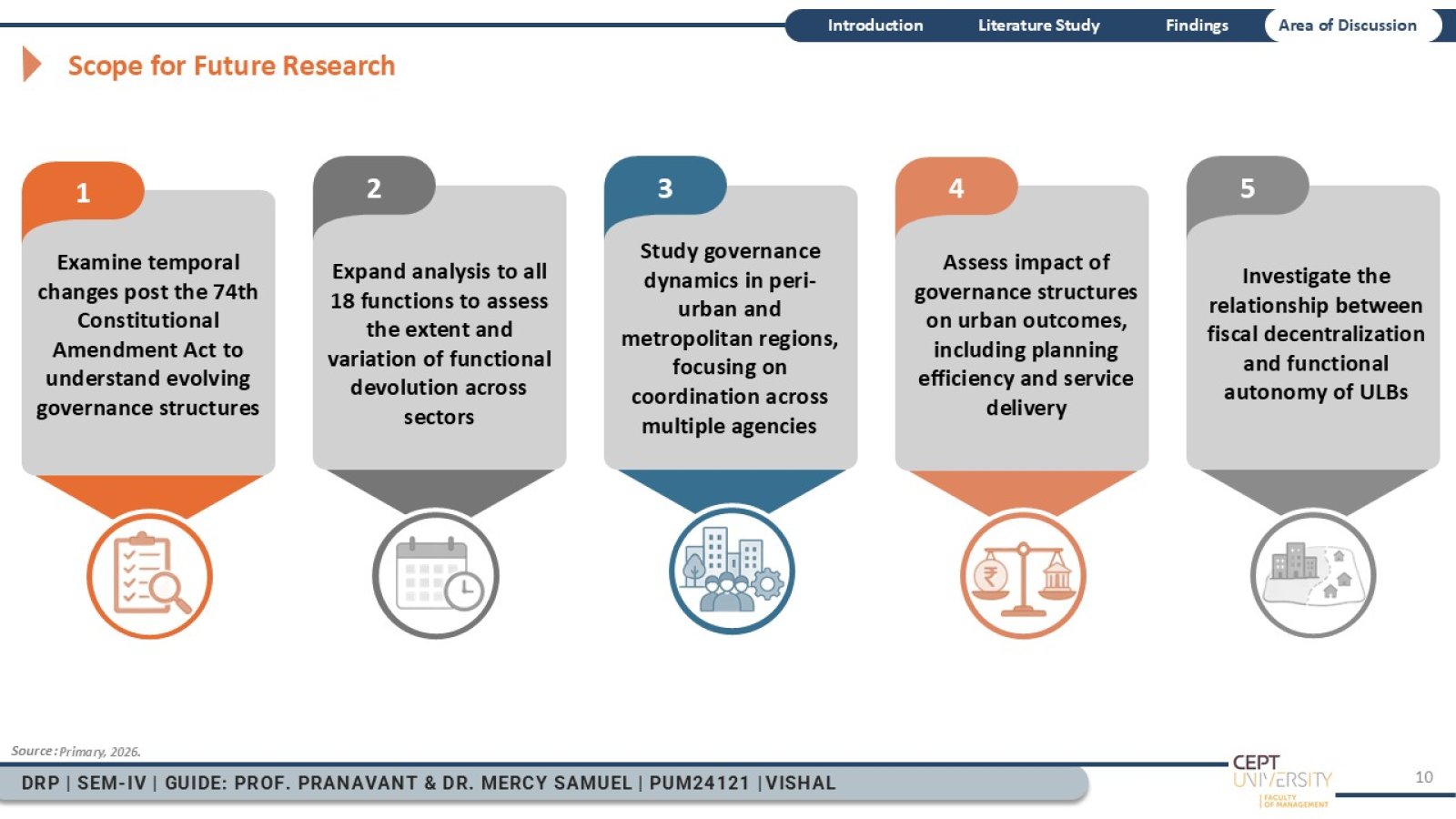
Future research can explore sector-wise devolution across all 18 functions. There is scope to study governance dynamics in metropolitan regions and peri-urban areas. Further work can also assess the link between fiscal decentralization and functional autonomy.