Savani Dhruvi Babubhai

UM4050

PUM24498

This study examines urban governance through the lens of functional devolution, with particular emphasis on the relationship between policy frameworks and institutional practices. While decentralization frameworks encourage greater authority and autonomy for Urban Local Bodies (ULBs), planning functions and decision-making processes continue to be guided largely by state-controlled institutions and parastatal agencies. The study highlights the presence of multiple institutions and overlapping functional responsibilities that shape governance, planning, and service delivery processes within the urban context. Using the OOMF framework as a basis for comparative analysis, the research evaluates how urban planning functions are organized, operated, managed, and financed across different governance systems. The study further examines the structural and administrative arrangements that influence coordination among institutions and contribute to the functioning of urban governance mechanisms. Ultimately, the research emphasizes the need for structural reforms that support stronger functional devolution, improved metropolitan-level coordination, and clearer institutional accountability within the urban governance framework. (jp)
Report Content

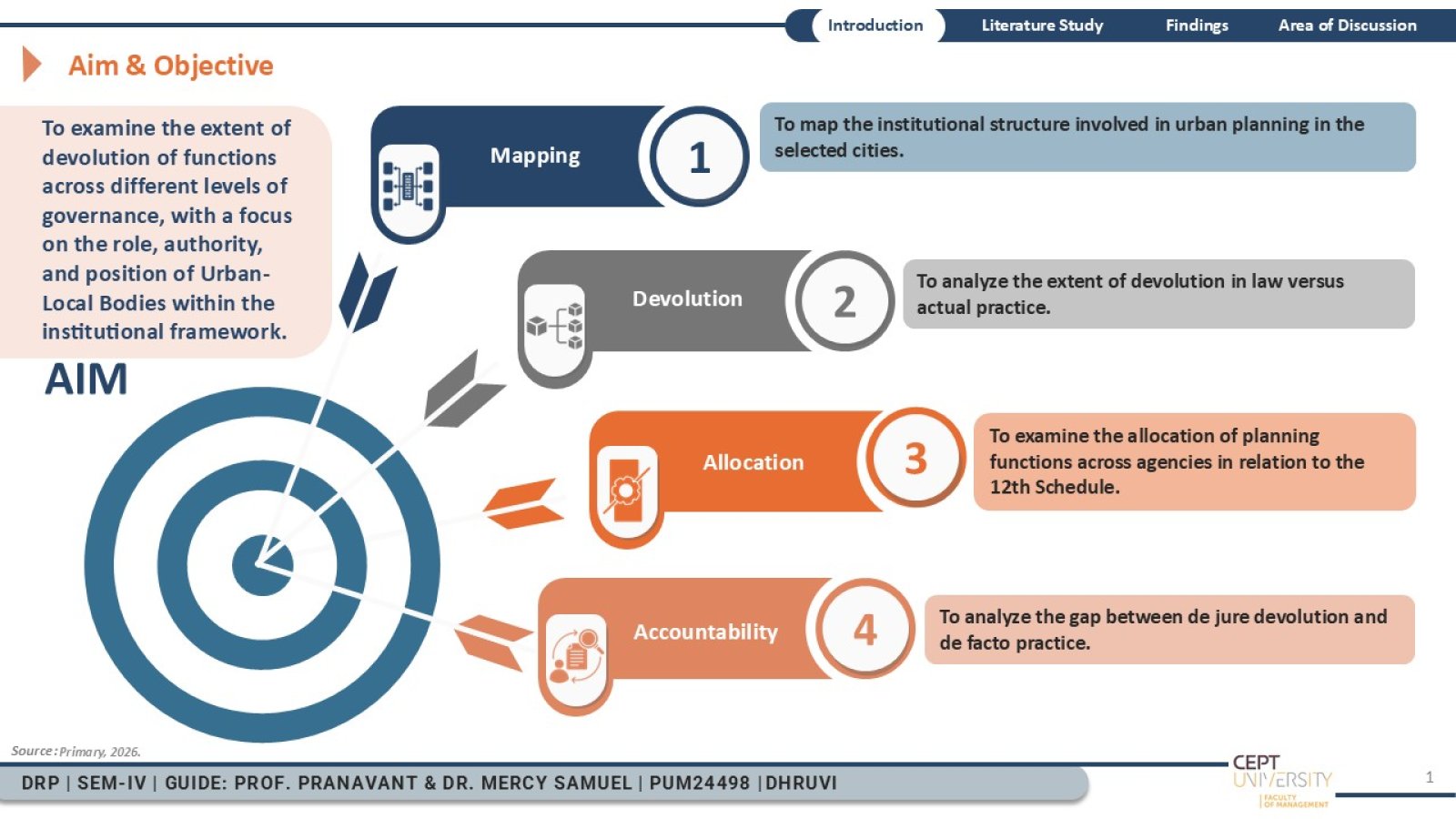
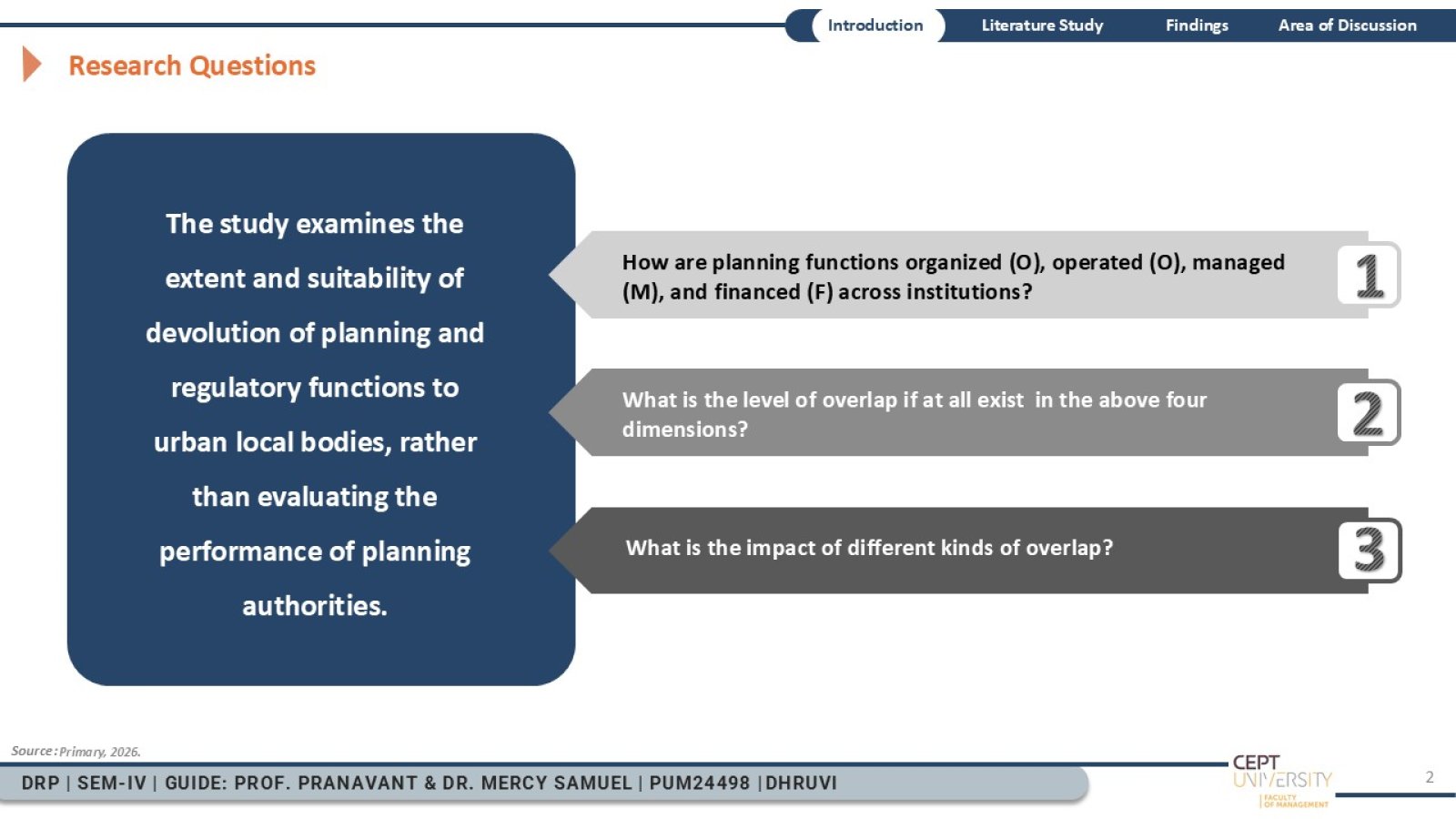
This study examines the functional devolution of urban planning responsibilities across different levels of governance, with a particular focus on the role of Urban Local Bodies (ULBs) and their position within the broader institutional framework.

This research examines how urban planning functions are distributed across different levels of governance, identifies areas of functional overlap, and analyses their implications for governance outcomes.

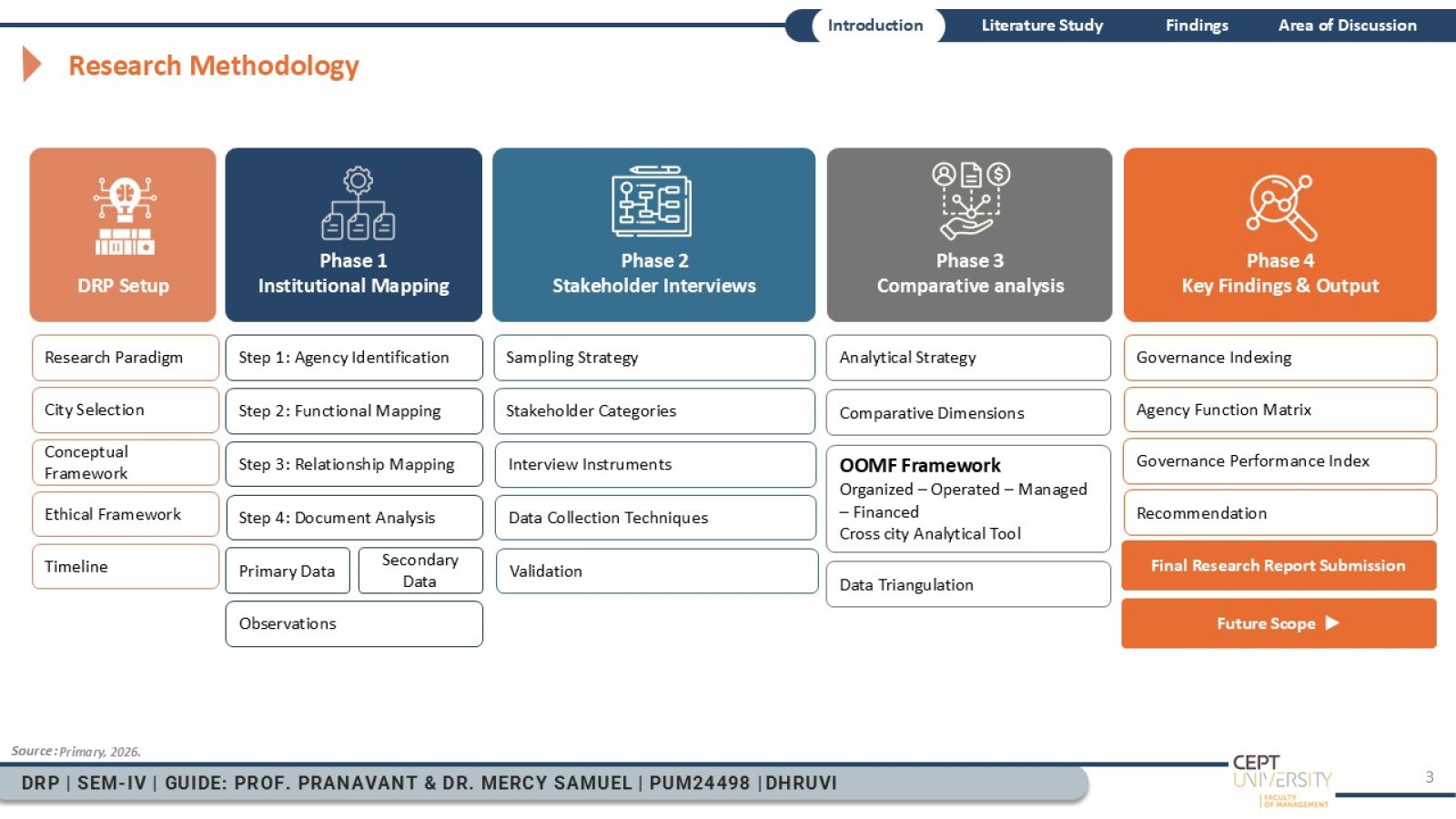
The research adopts a phased OOMF-based framework that combines institutional mapping, stakeholder consultations, and comparative analysis to examine the urban planning governance structure.

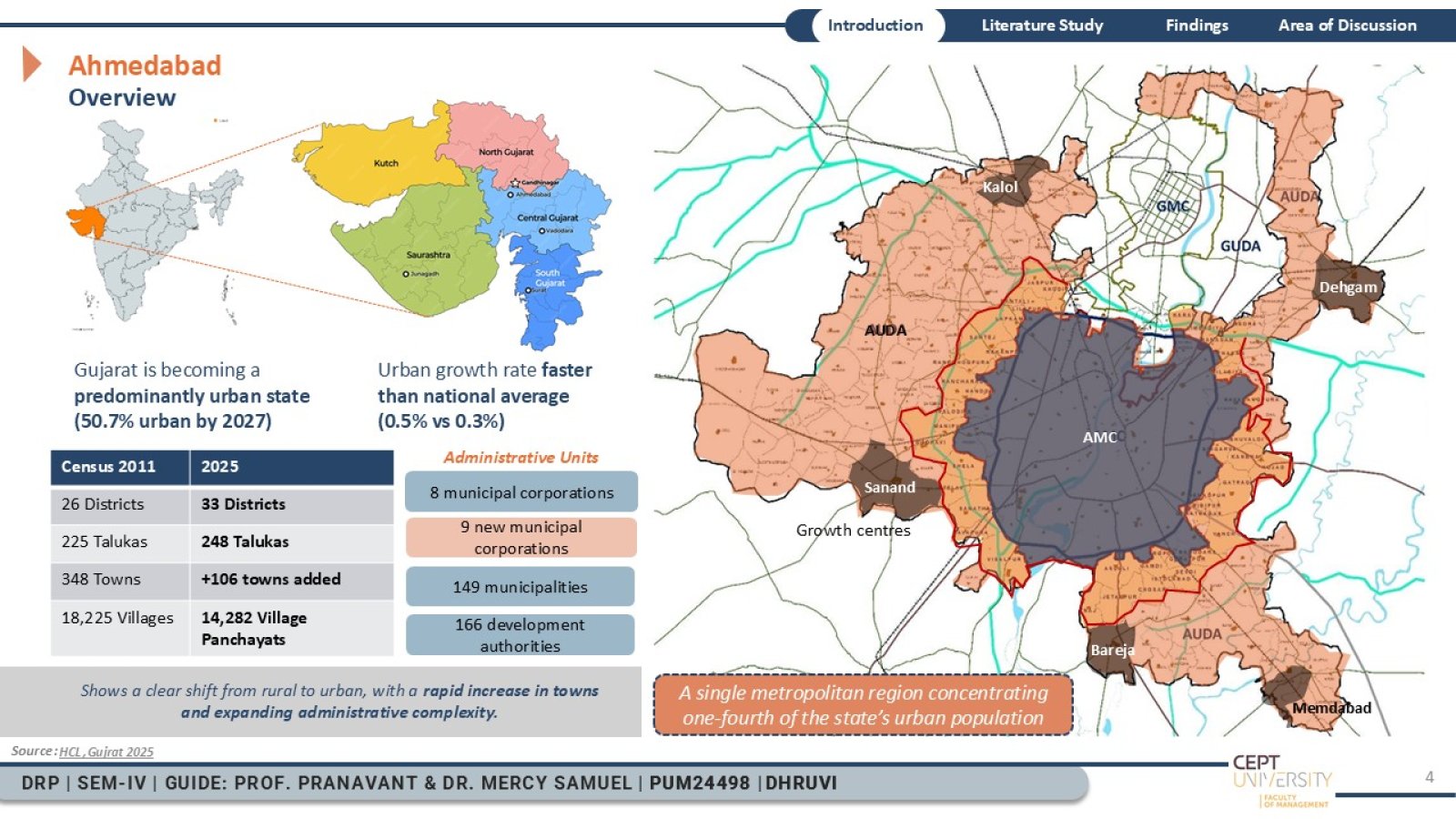
Ahmedabad has been selected as the case study to understand urban planning functions, as it demonstrates a significant transition from a predominantly rural settlement pattern to an increasingly urbanized structure, accompanied by rapid growth in the number of towns and expanding administrative complexity.

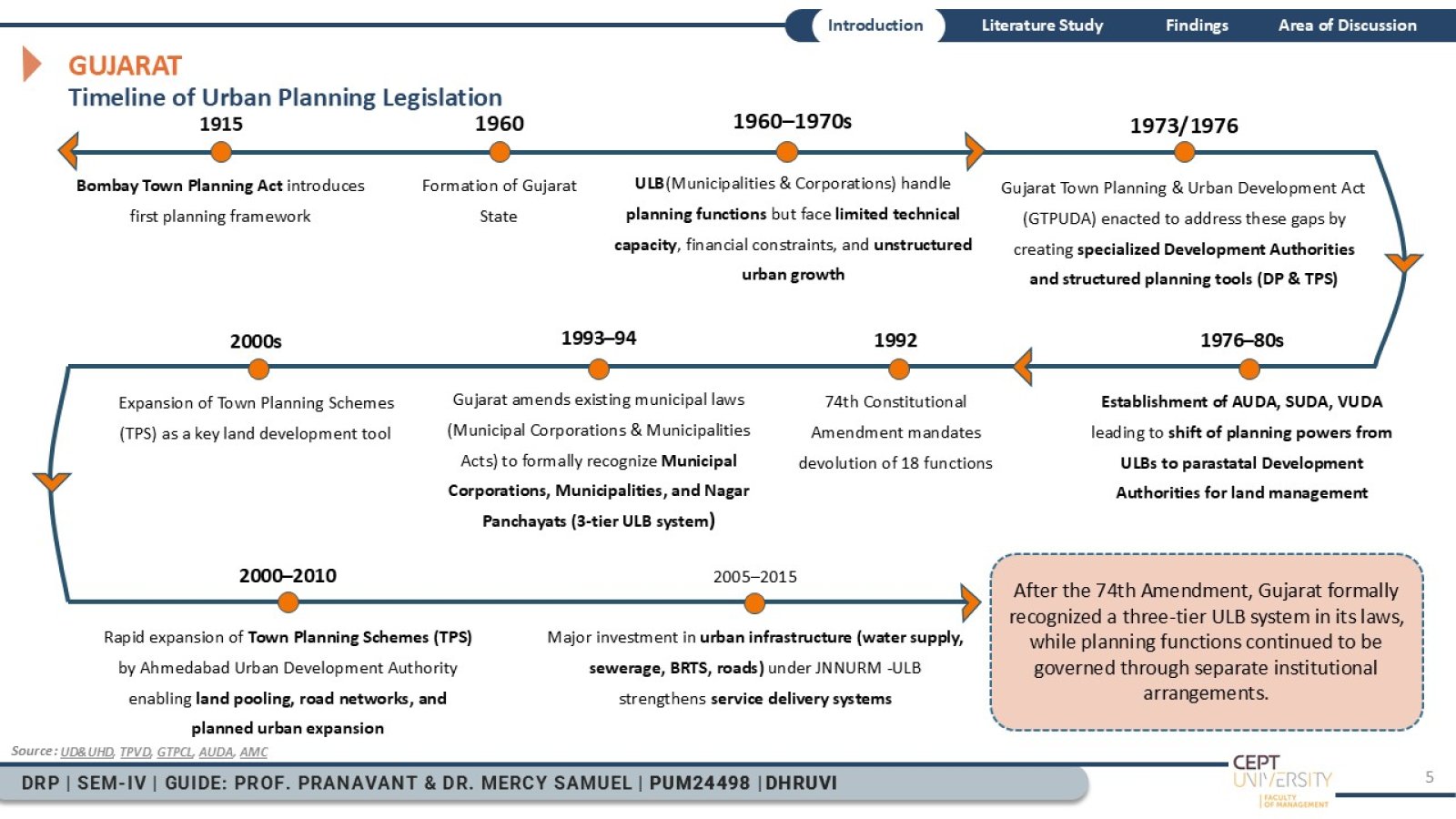
The evolution of urban planning in Gujarat highlights the transition from corporation-led planning approaches to more centralized planning mechanisms, marked by the establishment of development authorities and an increasingly structured institutional framework.

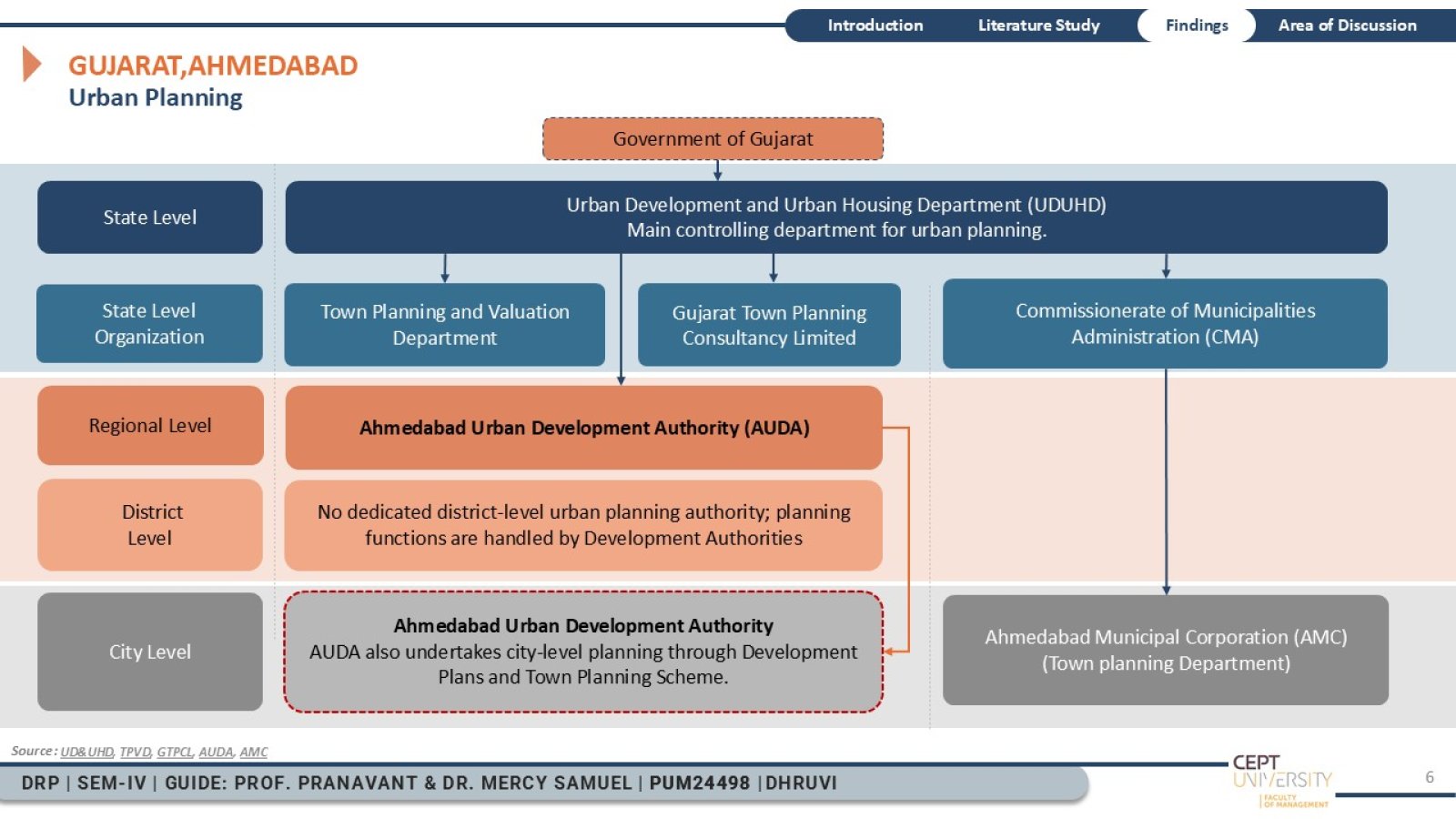
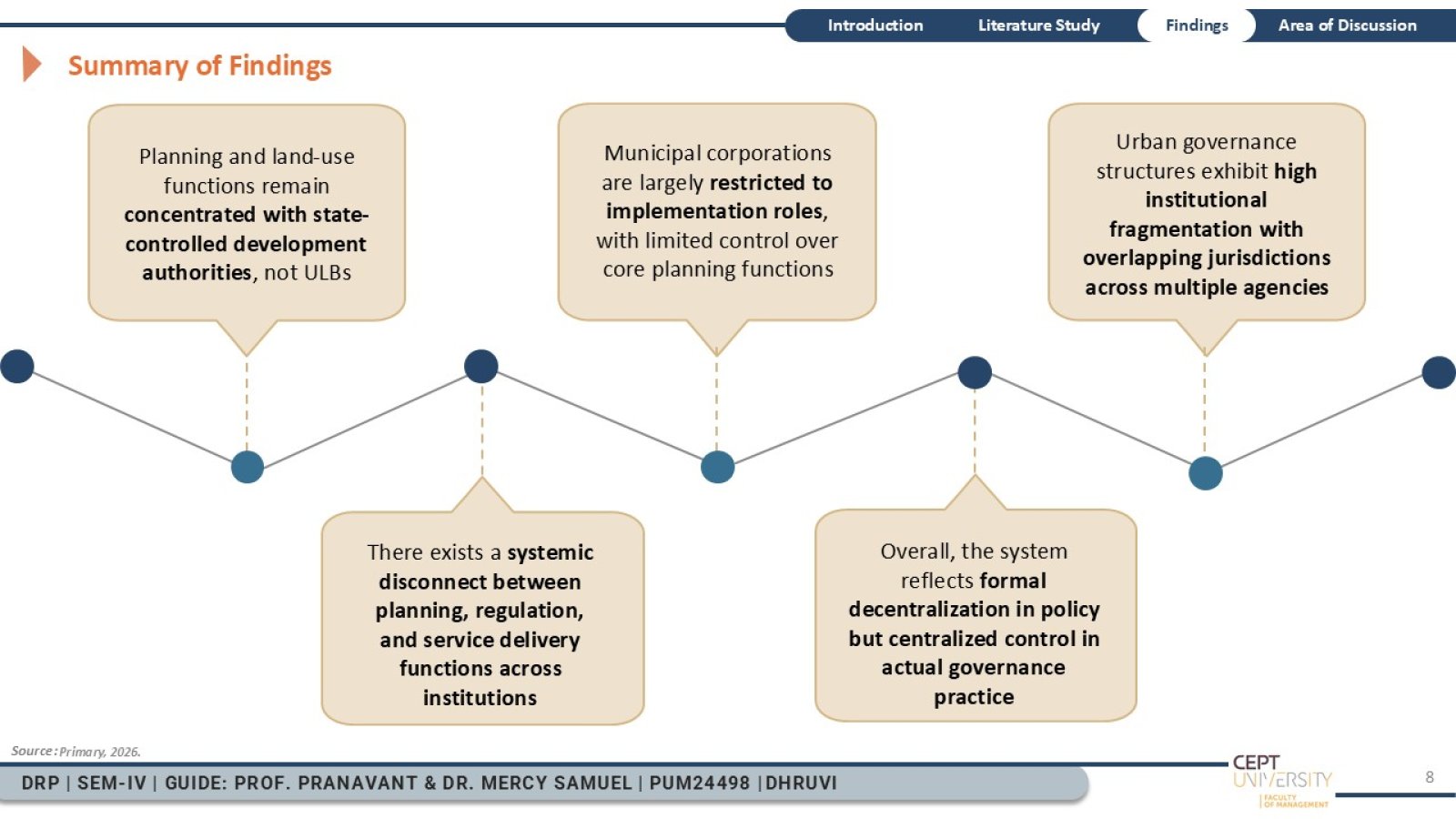
The institutional mapping highlights a multi-layered governance structure that is largely influenced by state-level institutions and parastatal agencies.

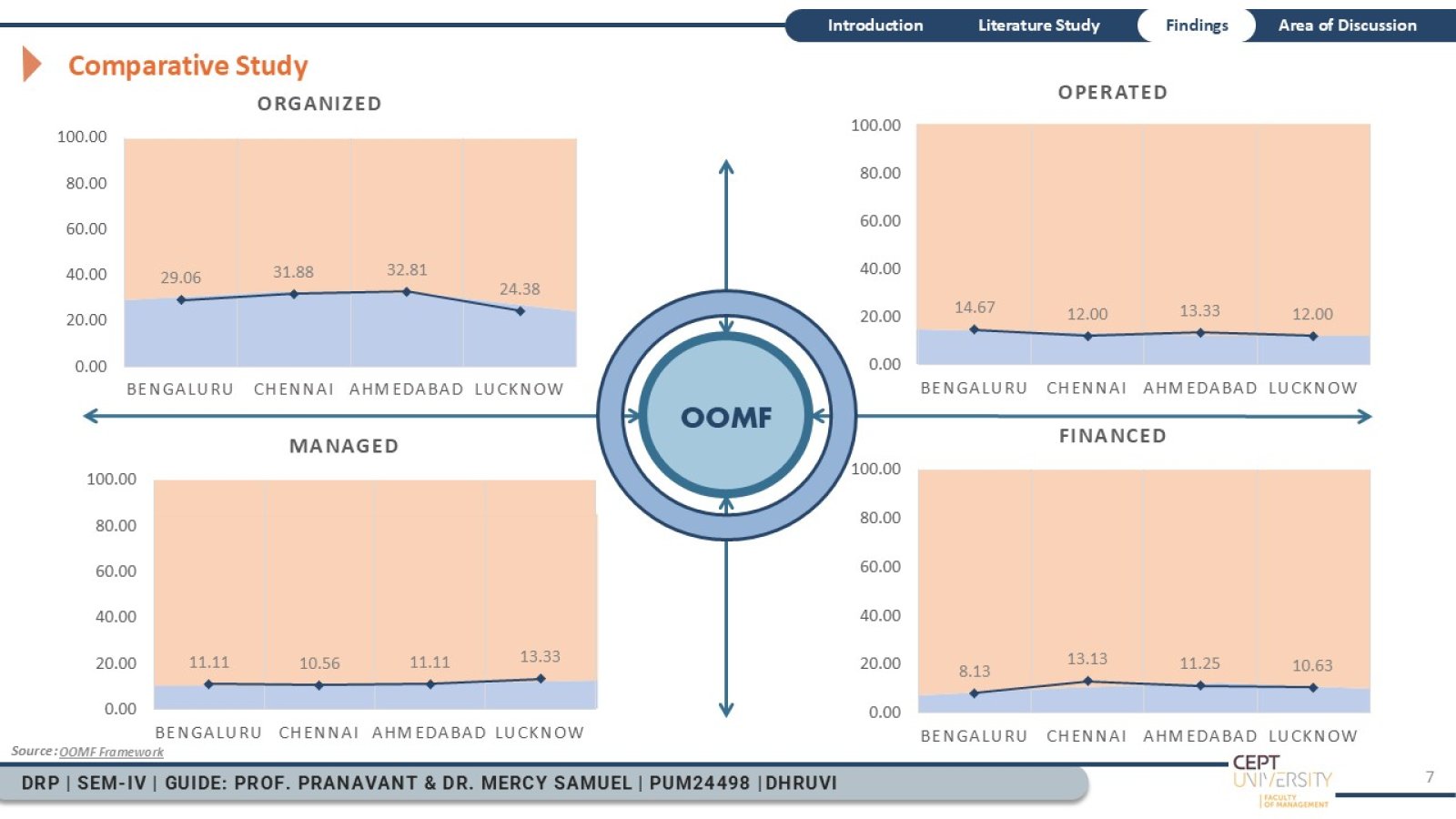
The comparative study based on the OOMF framework highlights variations in organizational structure, operational processes, management systems, and financing mechanisms across different cities.

The findings indicate the presence of centralized decision-making, institutional fragmentation, and a disconnect between planning, regulatory functions, and service delivery mechanisms.

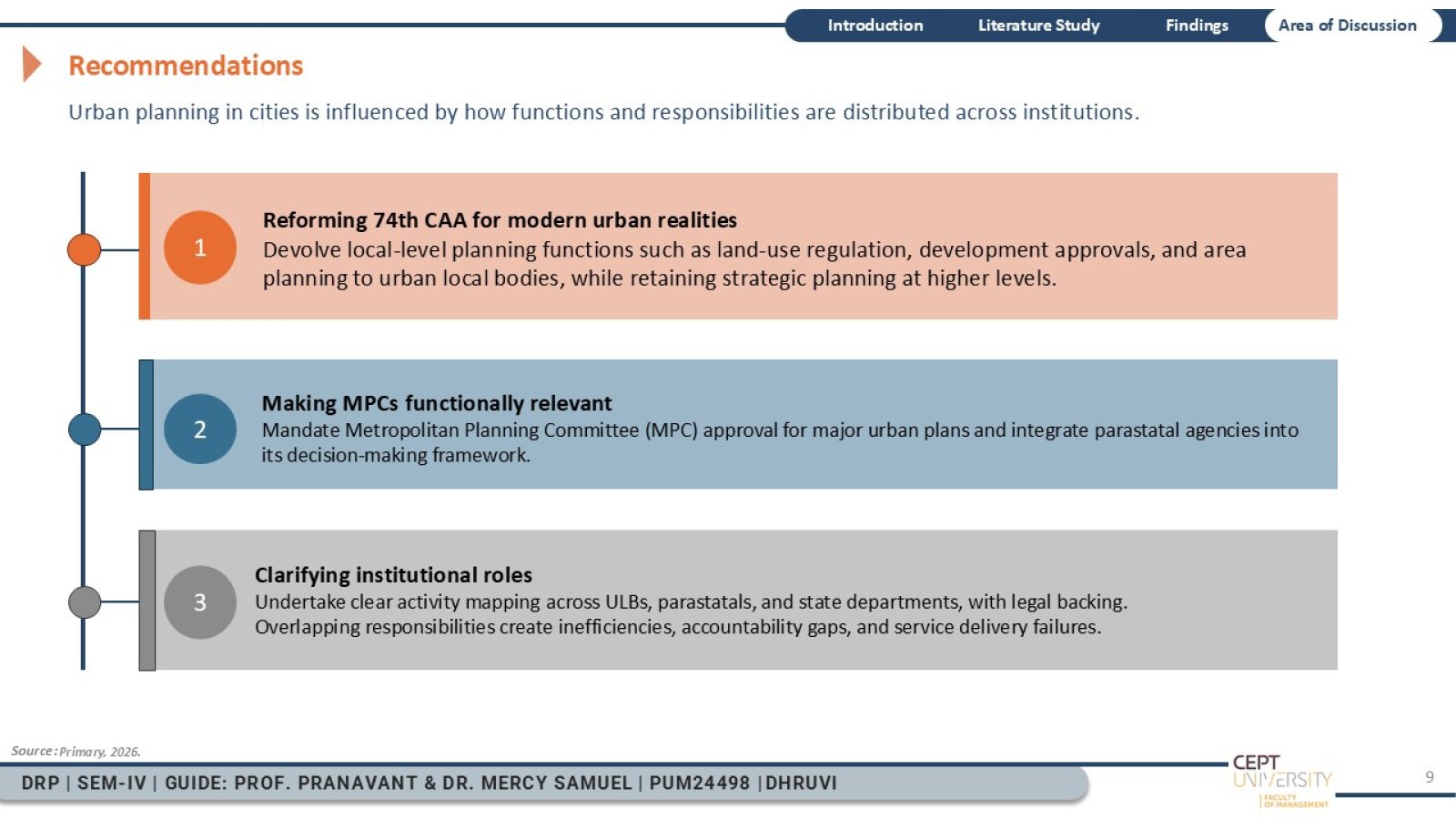
The recommendations emphasize greater functional devolution, strengthening of Metropolitan Planning Committees (MPCs), and clearer institutional roles to support a more effective and coordinated urban governance framework.

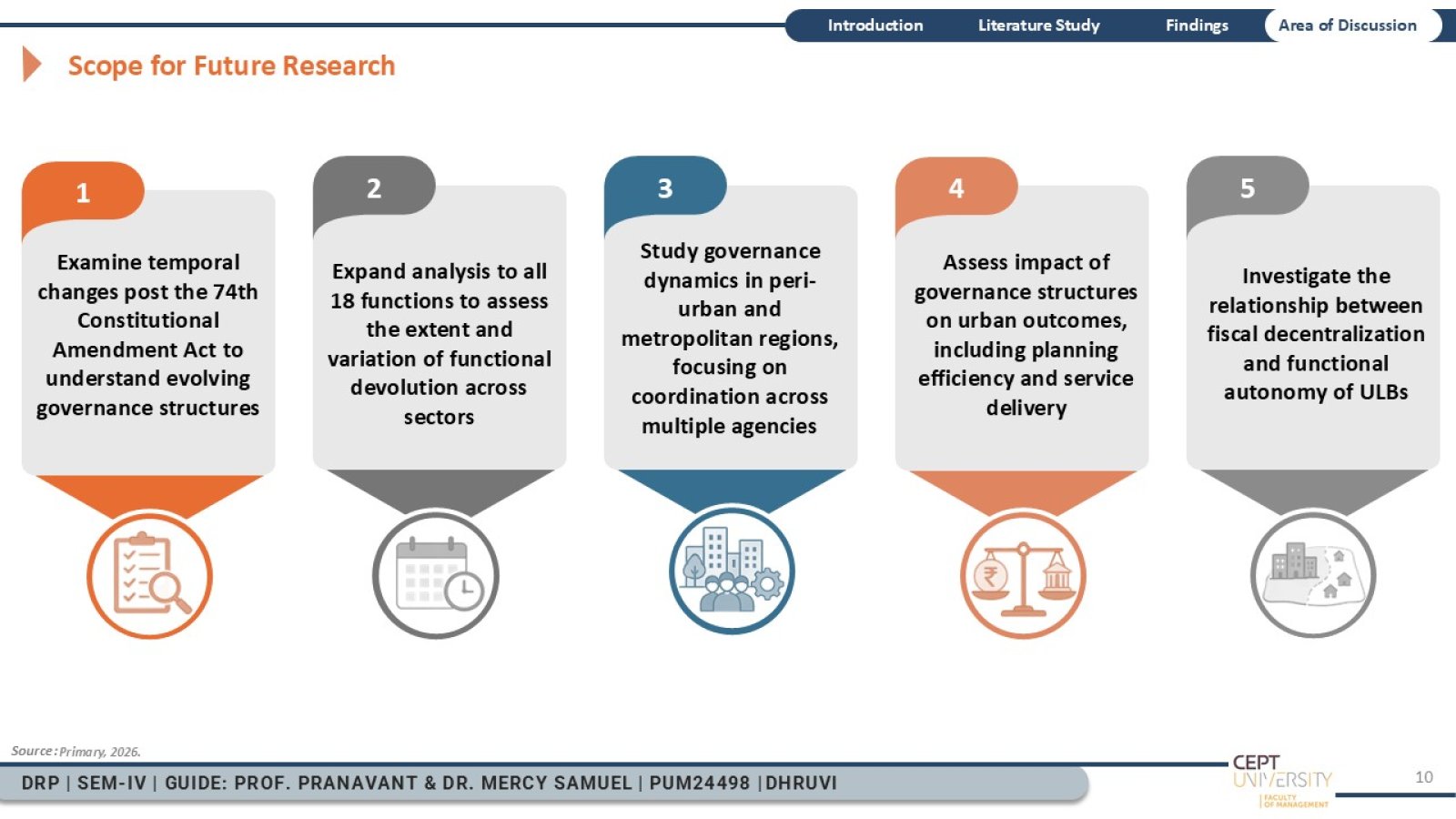
The scope for future research includes expanding the analysis of governance dynamics, urban development outcomes, and the relationship between fiscal and functional responsibilities within urban governance systems.