Your browser is out-of-date!
For a richer surfing experience on our website, please update your browser. Update my browser now!
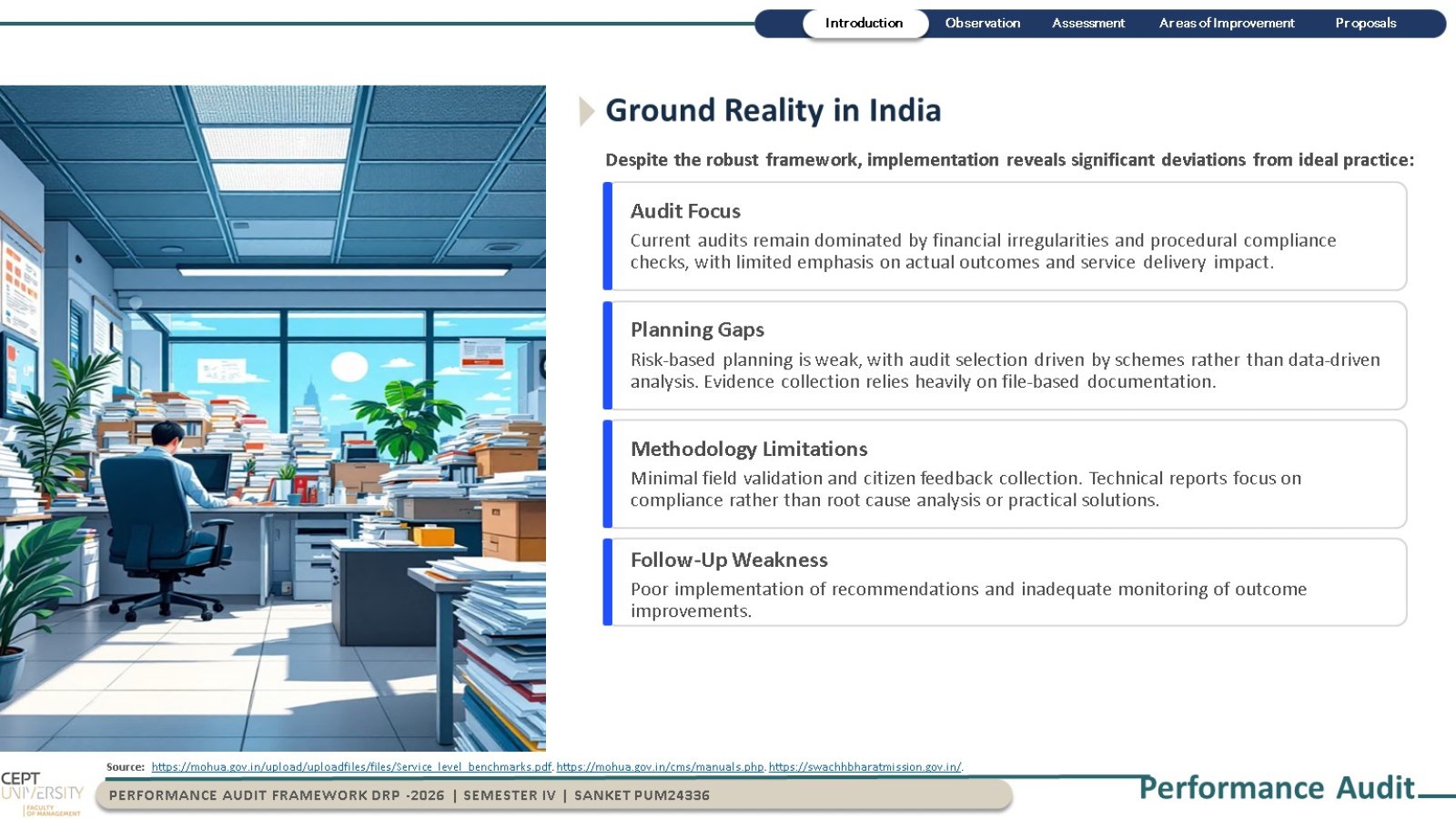
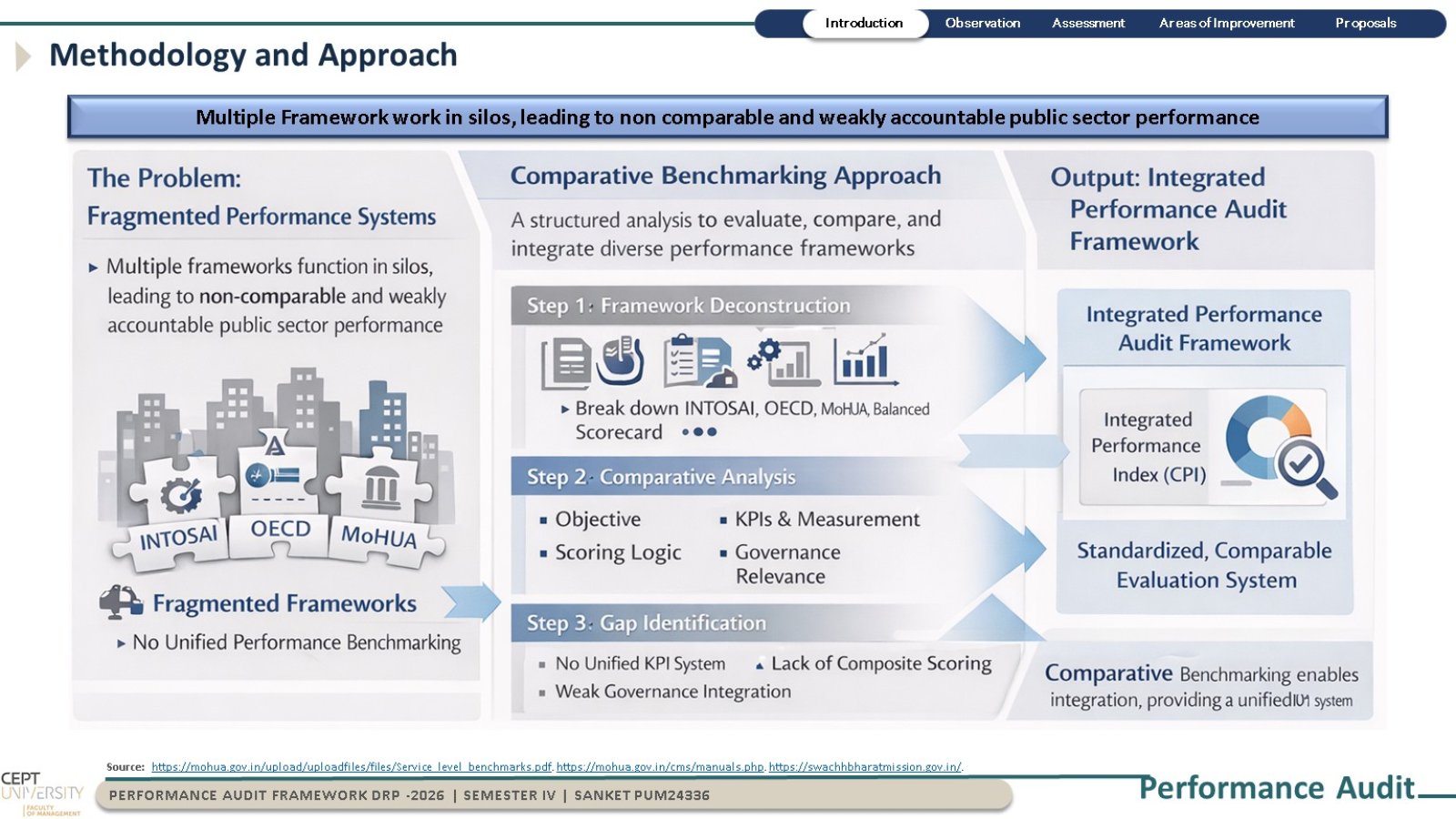
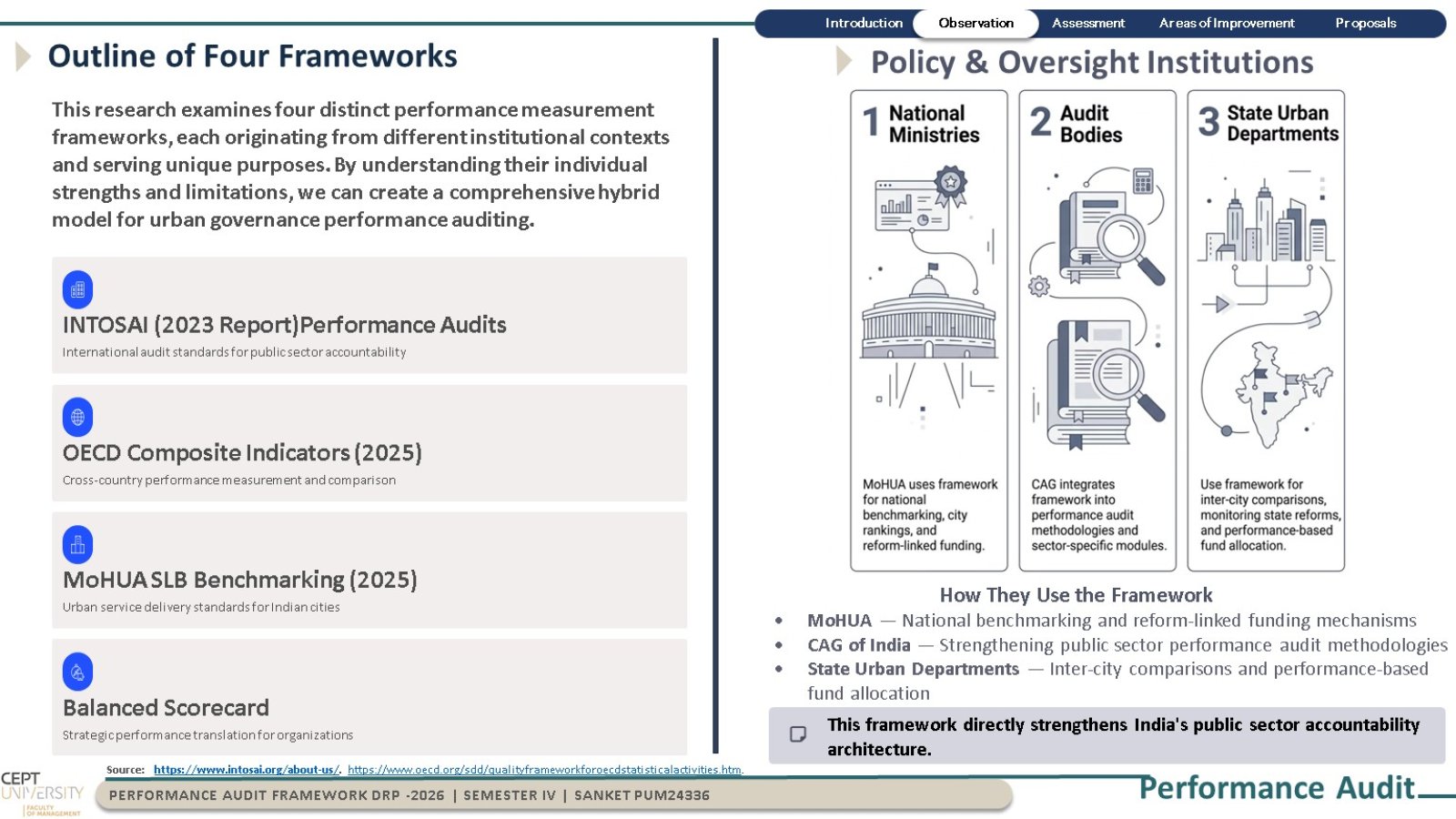
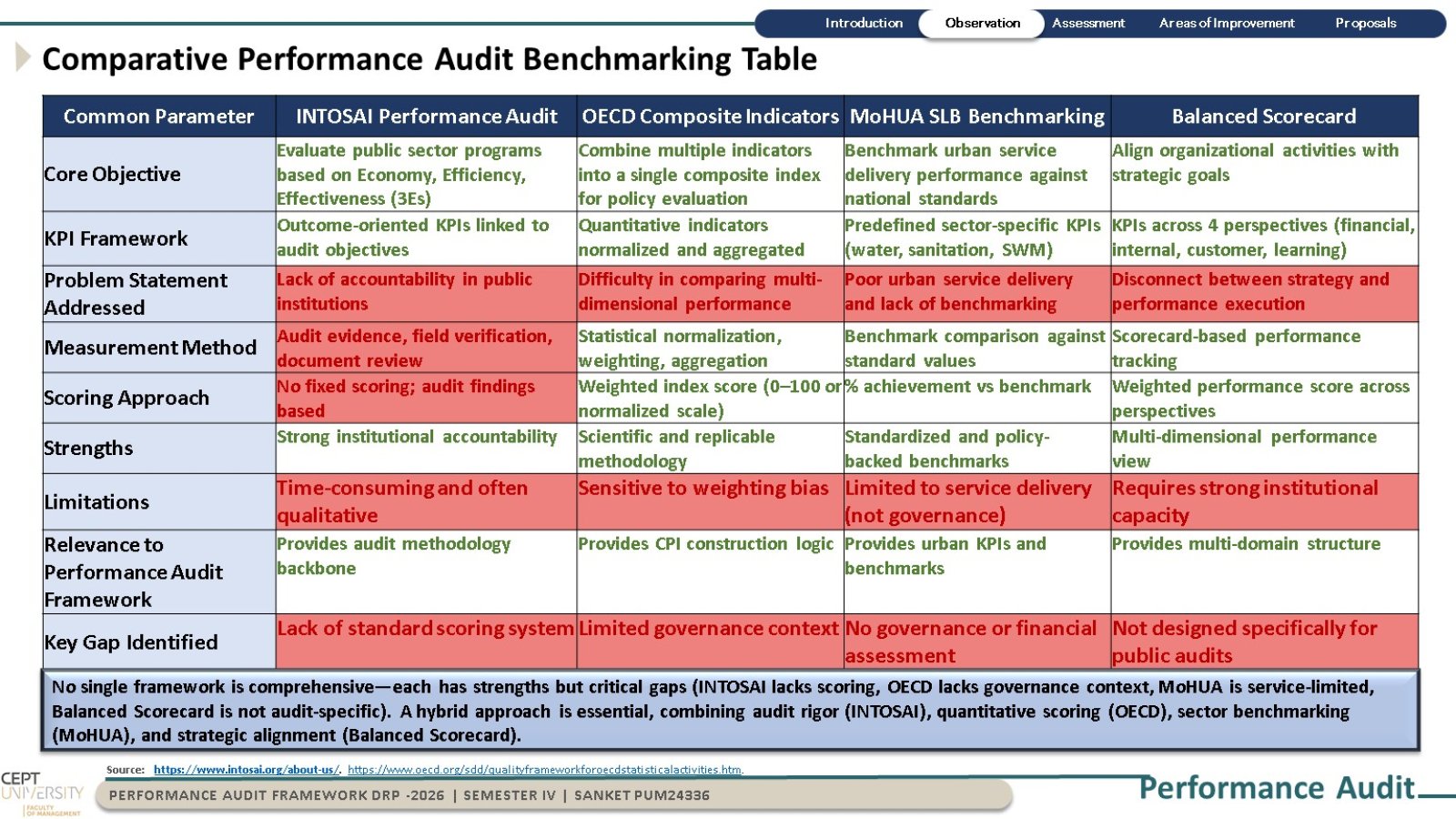
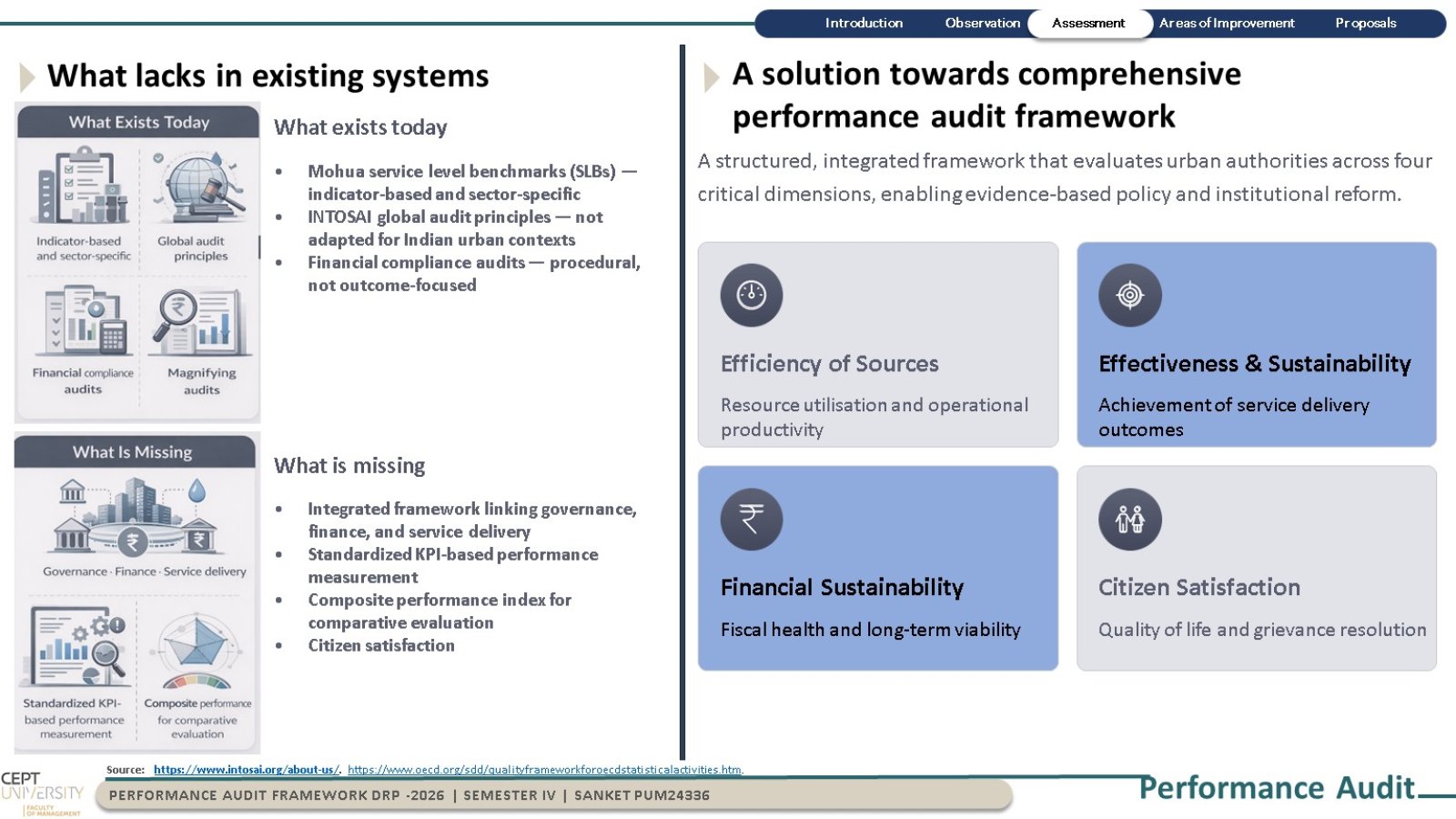
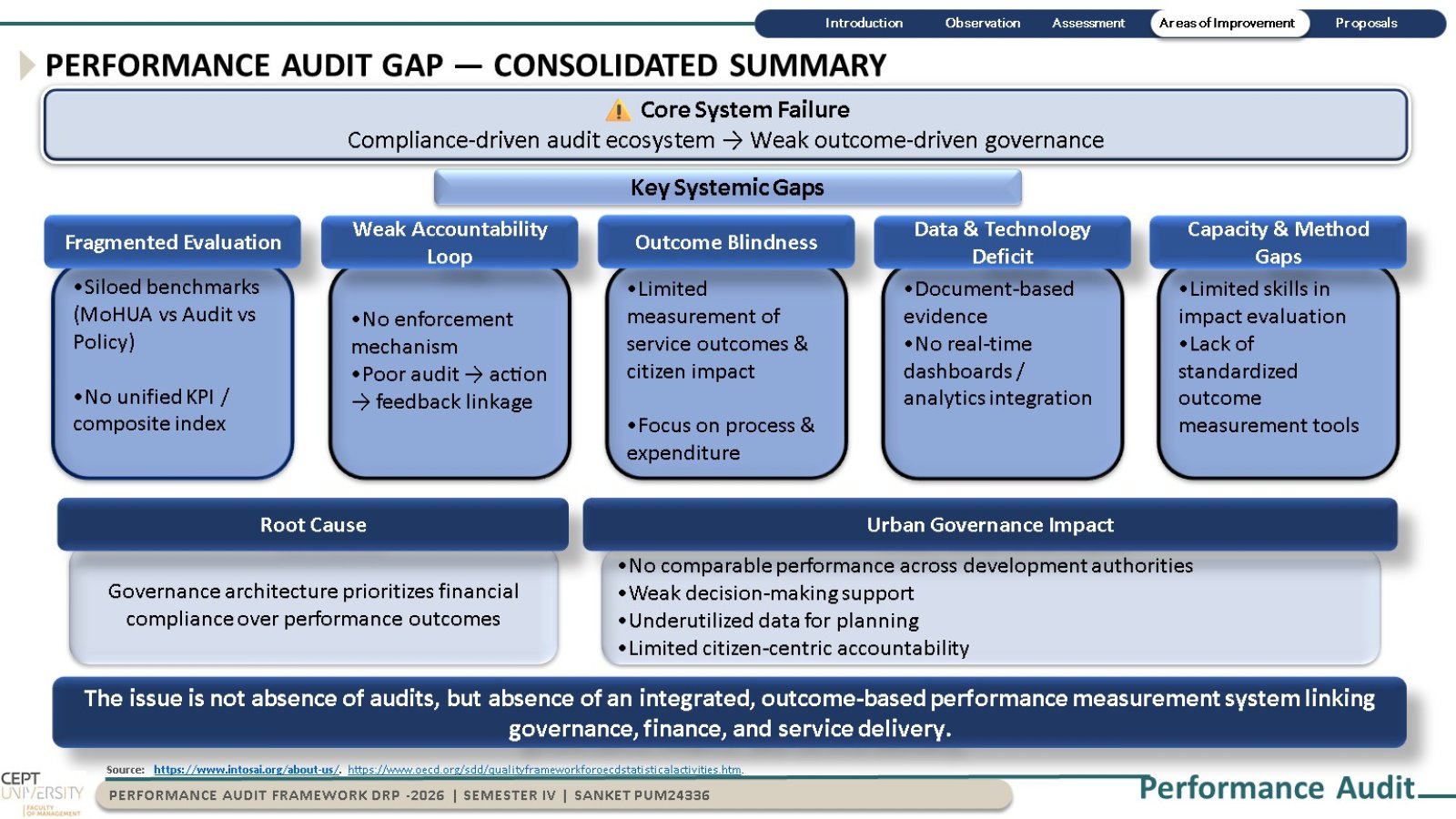
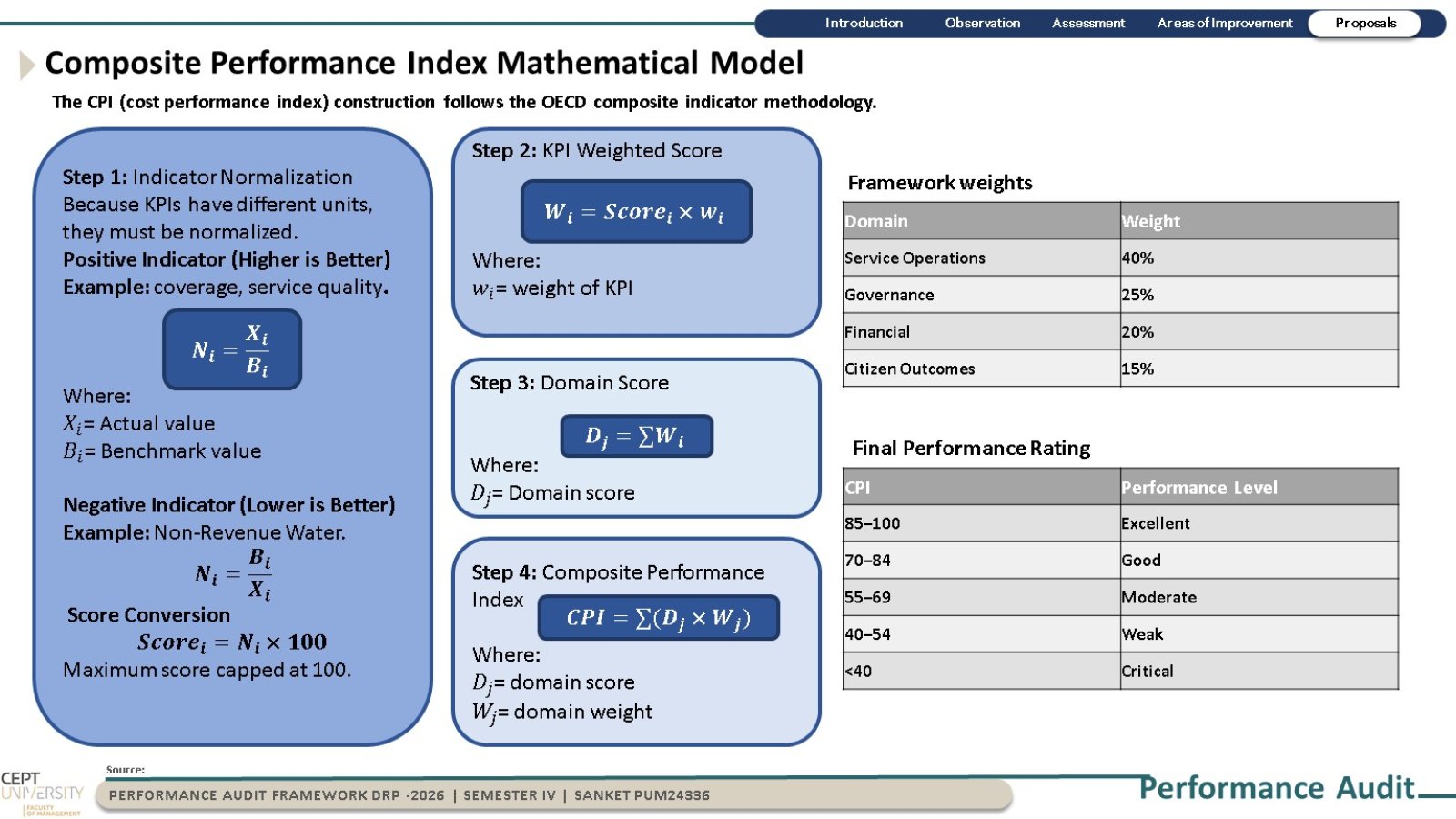
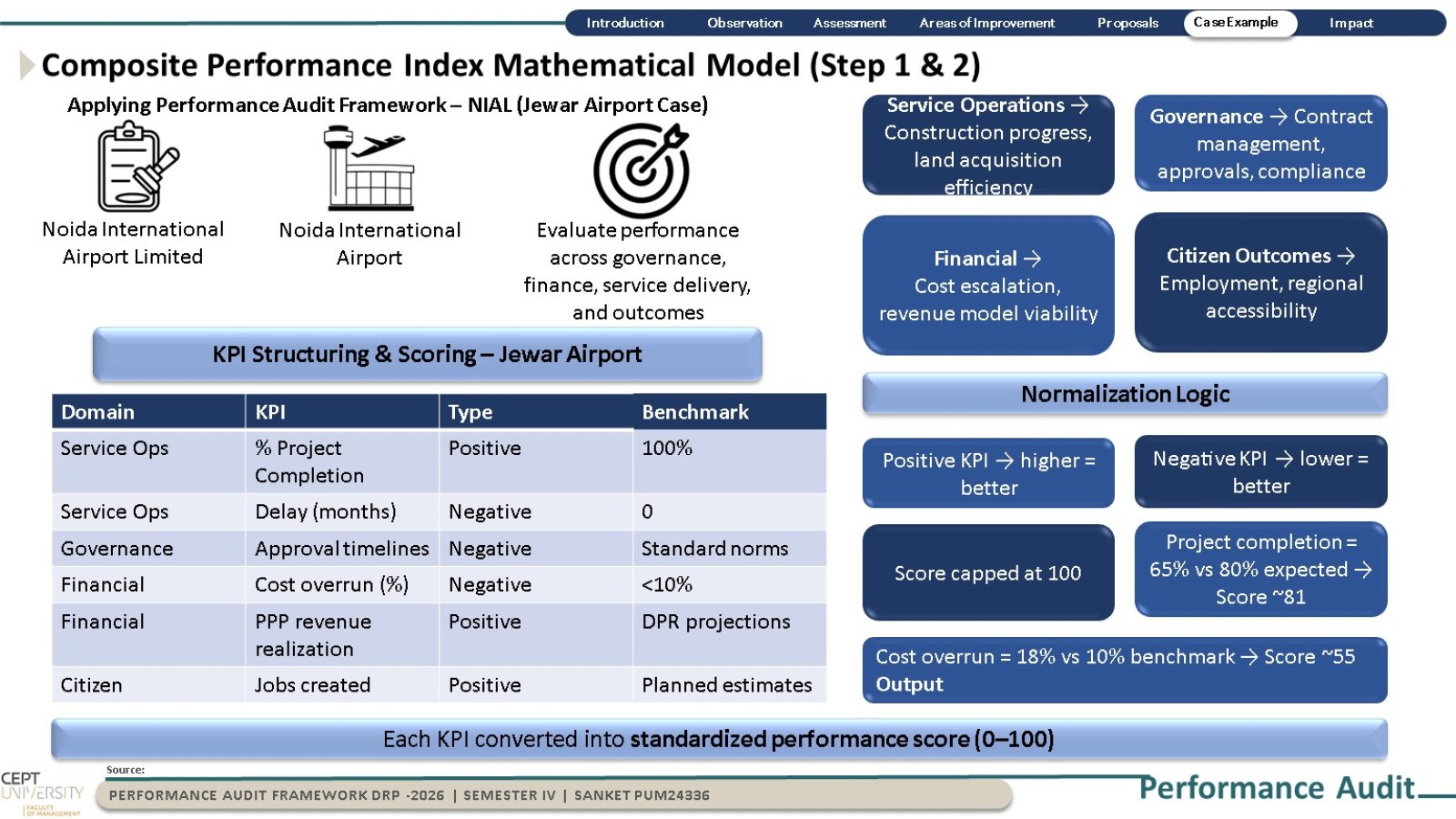
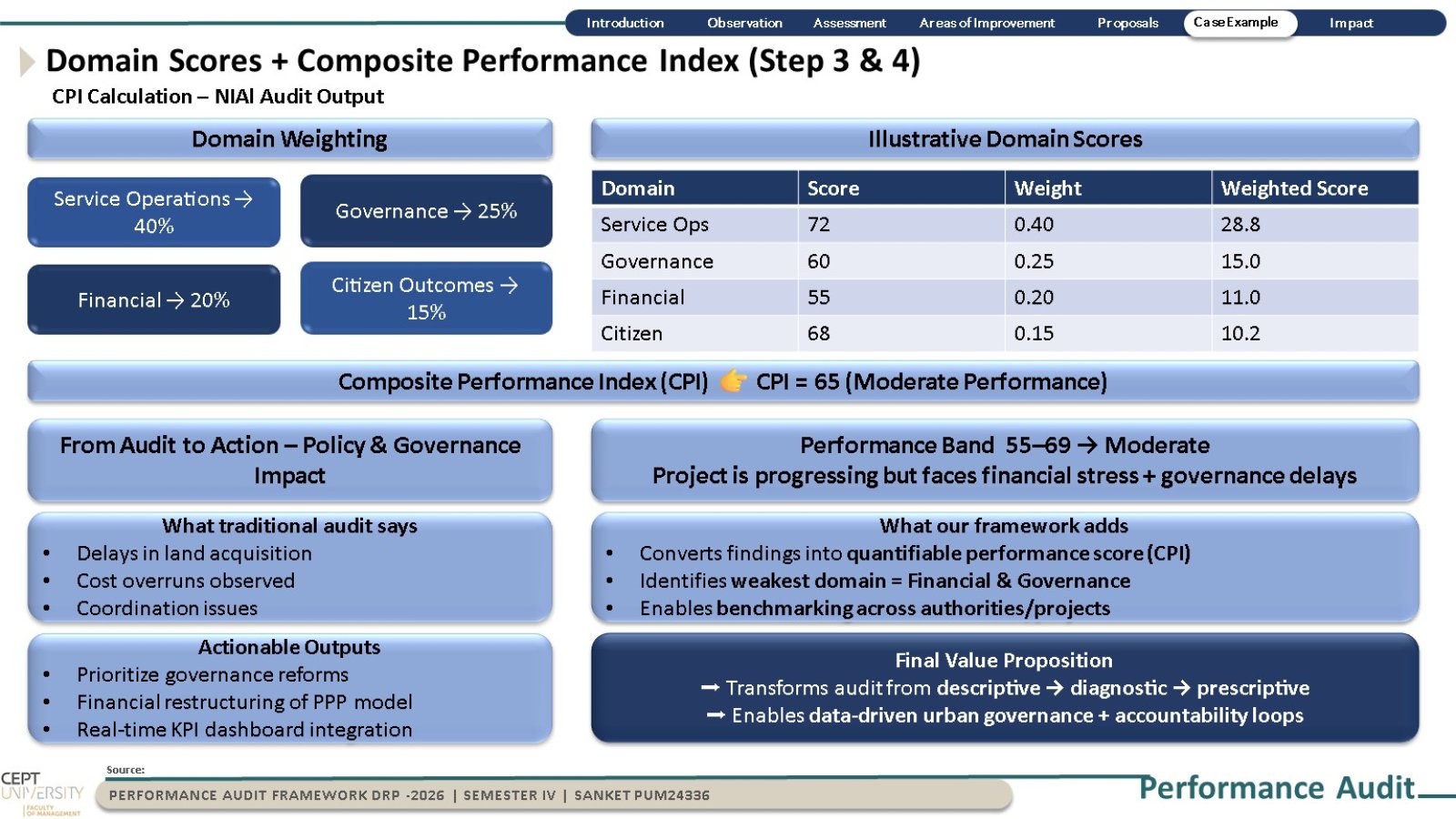
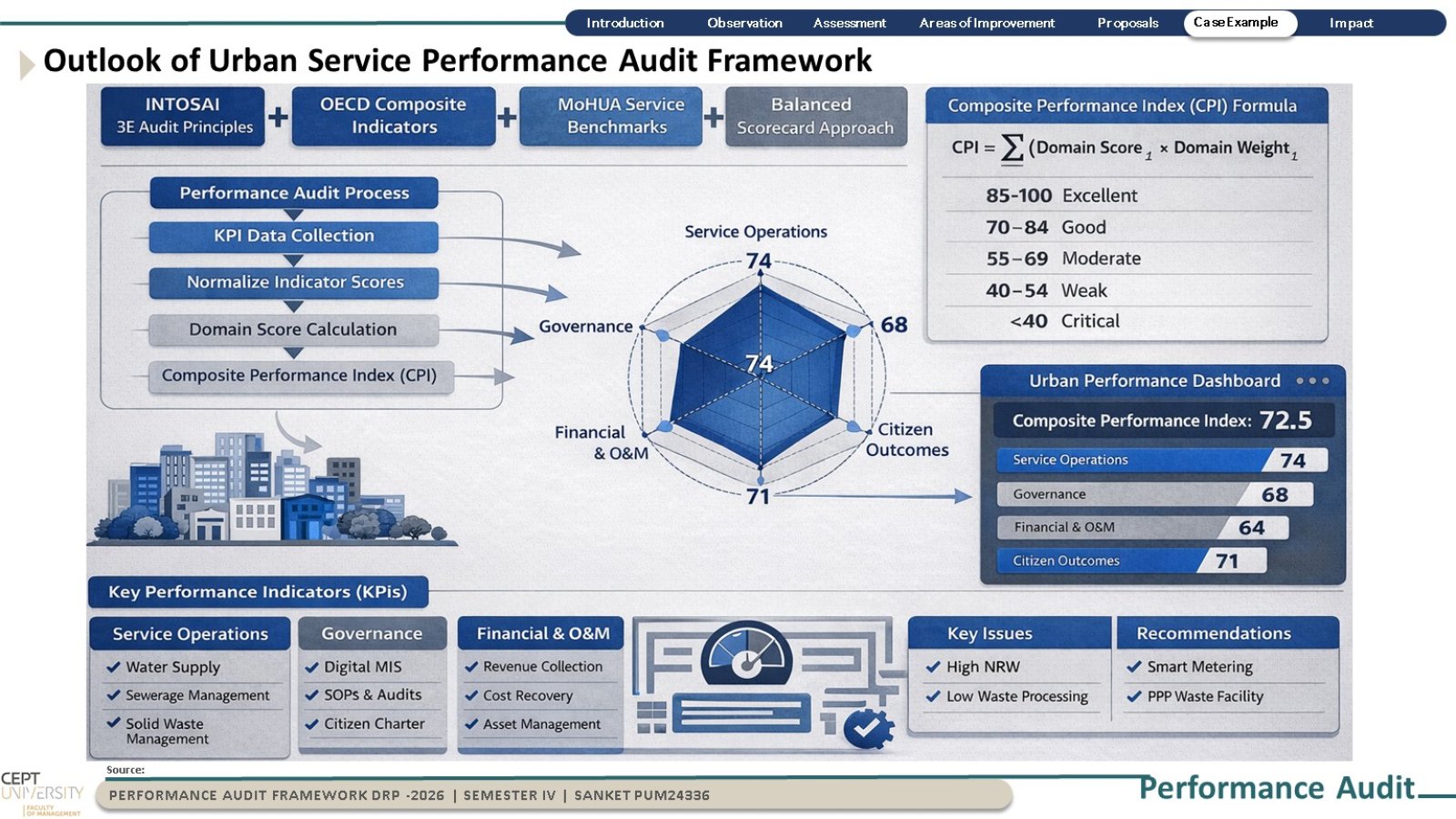
Performance Audit Framework for Development Authorities in India: Comparative Benchmarking and Composite Performance Index (CPI) This Directed Research Project addresses the critical gap in India’s urban governance where development authorities — responsible for integrated planning, implementation, and service delivery — are evaluated primarily through financial compliance and procedural audits. Despite robust national frameworks like MoHUA’s Service Level Benchmarks (SLBs), CAG performance audits, and international standards, current practices suffer from fragmented assessments, weak risk-based planning, limited citizen feedback, poor root-cause analysis, and ineffective follow-up on recommendations. The study systematically benchmarks four key frameworks — INTOSAI Performance Auditing (3Es: Economy, Efficiency, Effectiveness), OECD Composite Indicators, MoHUA SLBs, and the Balanced Scorecard — to identify their strengths and limitations in the Indian urban context. The project proposes an Integrated Performance Audit Framework anchored in a Composite Performance Index (CPI). The CPI, constructed using OECD normalisation and aggregation methods, incorporates MoHUA’s sector-specific benchmarks, INTOSAI’s audit rigour, and Balanced Scorecard’s multi-perspective structure. It evaluates performance across four domains — Service Operations (40%), Governance (25%), Financial Sustainability (20%), and Citizen Outcomes (15%) — generating a standardised, comparable score (rated Excellent to Critical) that combines quantitative metrics with qualitative insights. The framework aims to shift urban audits from compliance-oriented checks to outcome-driven governance intelligence, enabling national benchmarking, performance-linked funding, stronger accountability, and improved urban service delivery for development authorities across India. This research provides a practical, policy-relevant tool to strengthen urban management and governance effectiveness.