Khirabdi Tanya Mohanty

UM4000-2

Street Parking Management and Enforcement

This project investigates the growing street parking challenges in Mehsana following its transition from a municipality to a municipal corporation. Rapid motorization, mixed land-use patterns, and weak enforcement have resulted in spillover parking, footpath encroachment, congestion, and underutilization of off-street facilities. The study identifies parking as a governance and management issue rather than a mere shortage of space. Through surveys, pilot-based interventions, policy review, and case study analysis, the project proposes a structured parking management framework integrating demand-based pricing, enforcement mechanisms, shared parking, behavioral interventions, and institutional coordination to create a sustainable, efficient, and financially viable urban parking system.

View Additional Work
Report Content

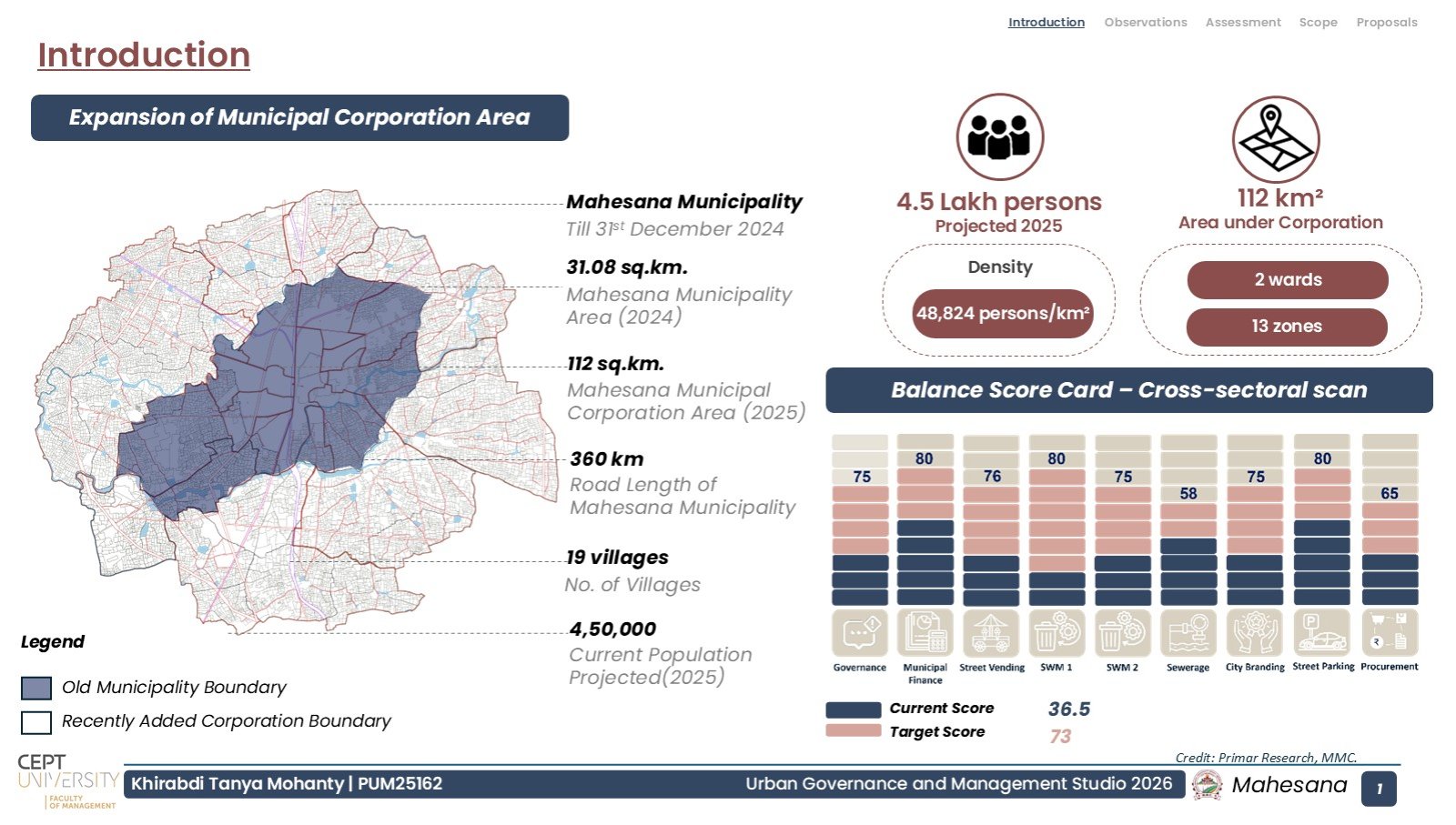
Mehsana’s transition into a Municipal Corporation has intensified parking demand, exposing gaps in street management, enforcement, and mobility planning.

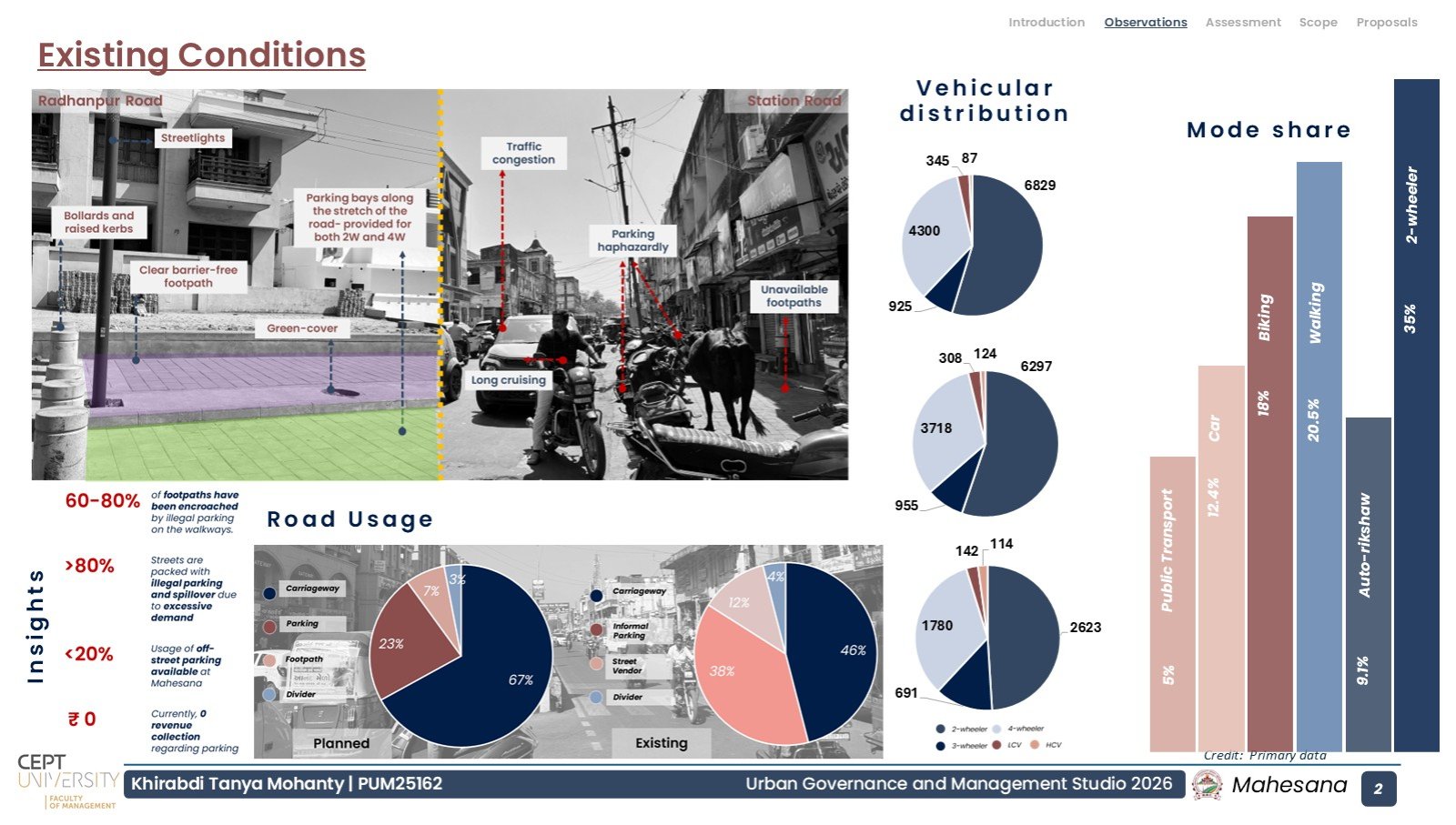
Rapid motorization and increasing dependence on two-wheelers have significantly increased pressure on Mehsana’s street network and parking infrastructure.

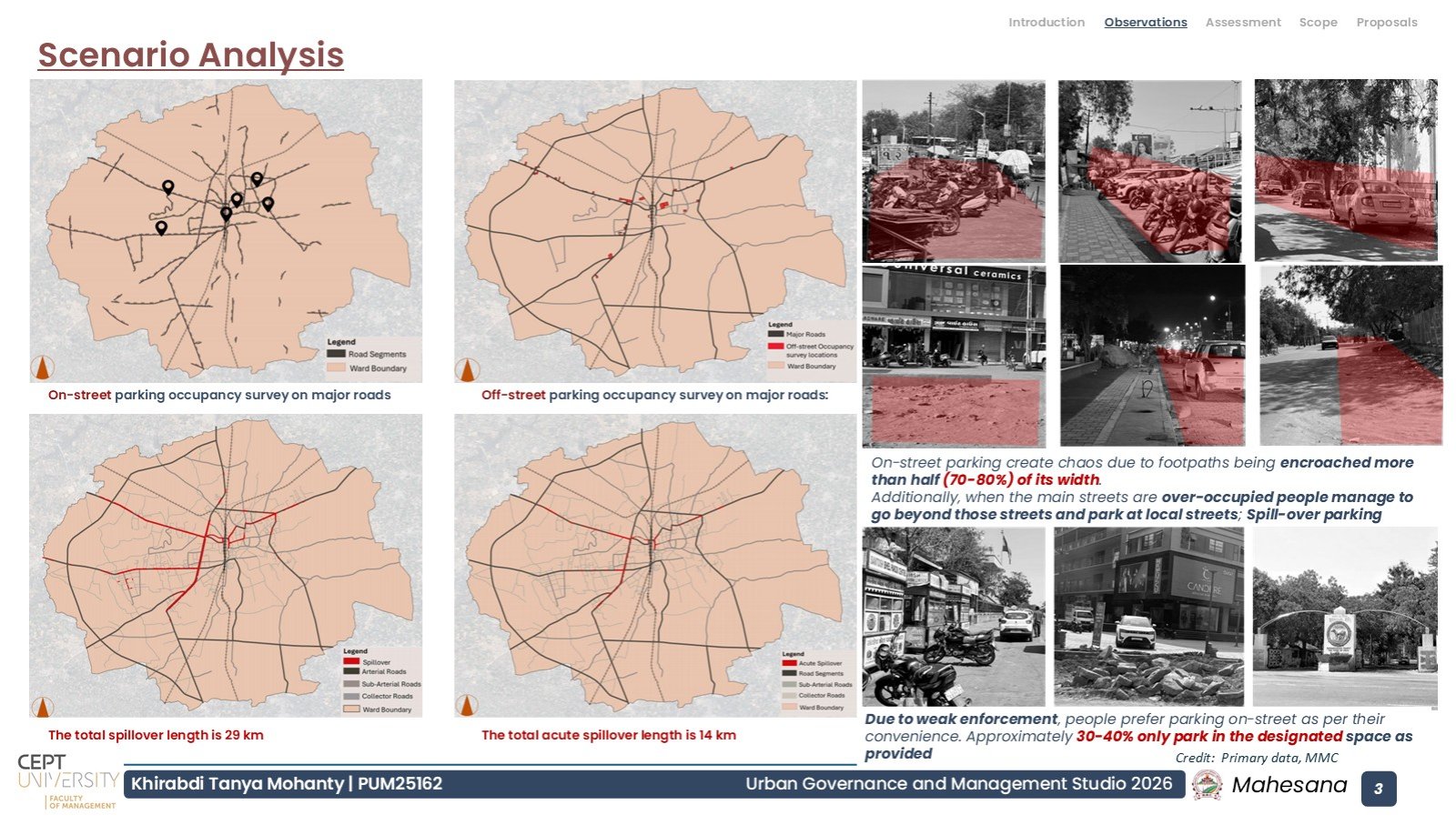
Unregulated on-street parking and spillover into local streets have reduced pedestrian accessibility and compromised street efficiency across key corridors.

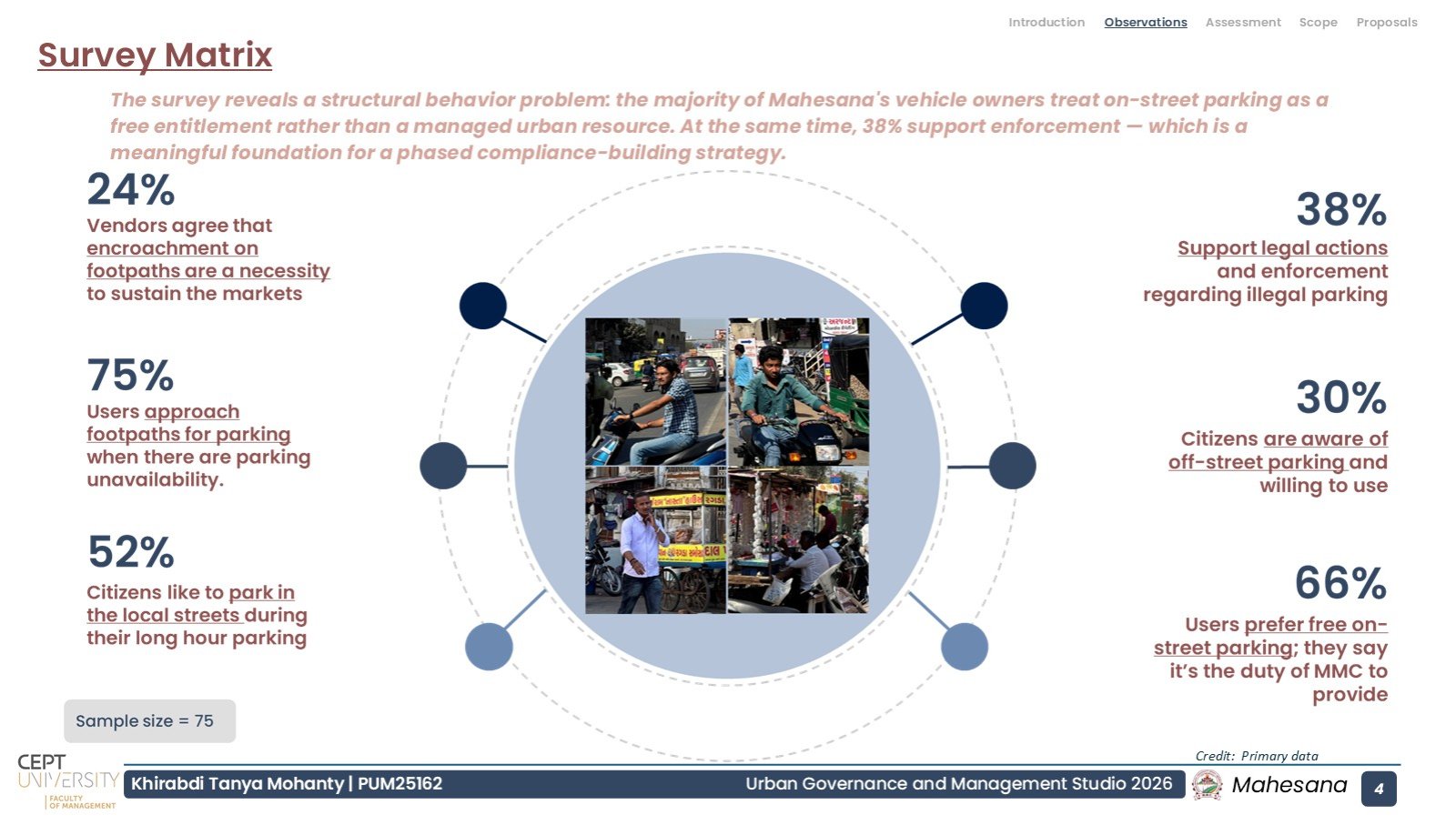
Citizen behavior and user preferences indicate that parking is largely perceived as a free entitlement rather than a managed urban resource.

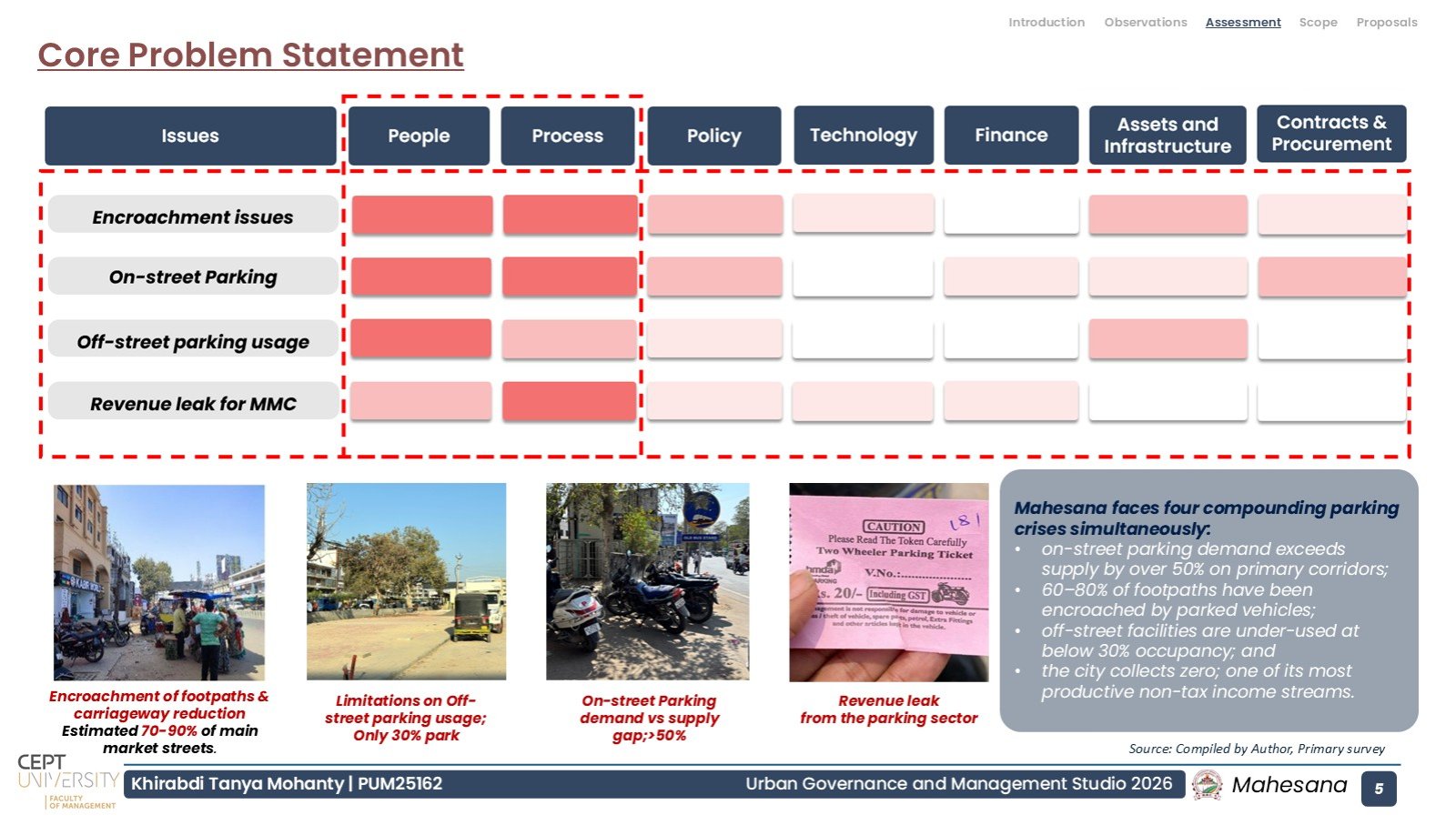
The parking crisis in Mehsana is driven by governance and enforcement failures, resulting in demand–supply imbalance, encroachment, and revenue loss.

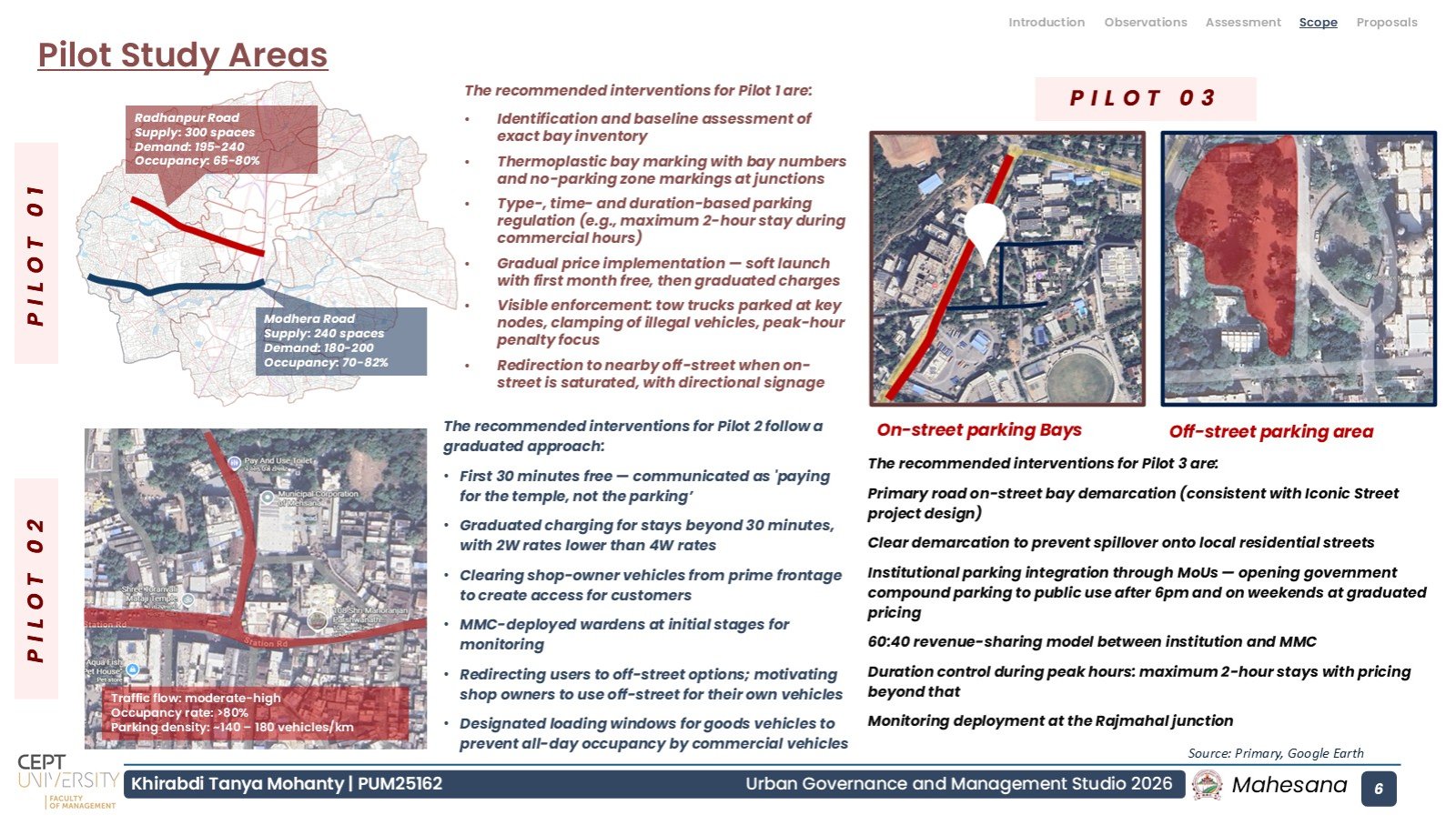
Pilot corridors were selected based on occupancy levels, congestion intensity, spillover patterns, and strategic urban significance.

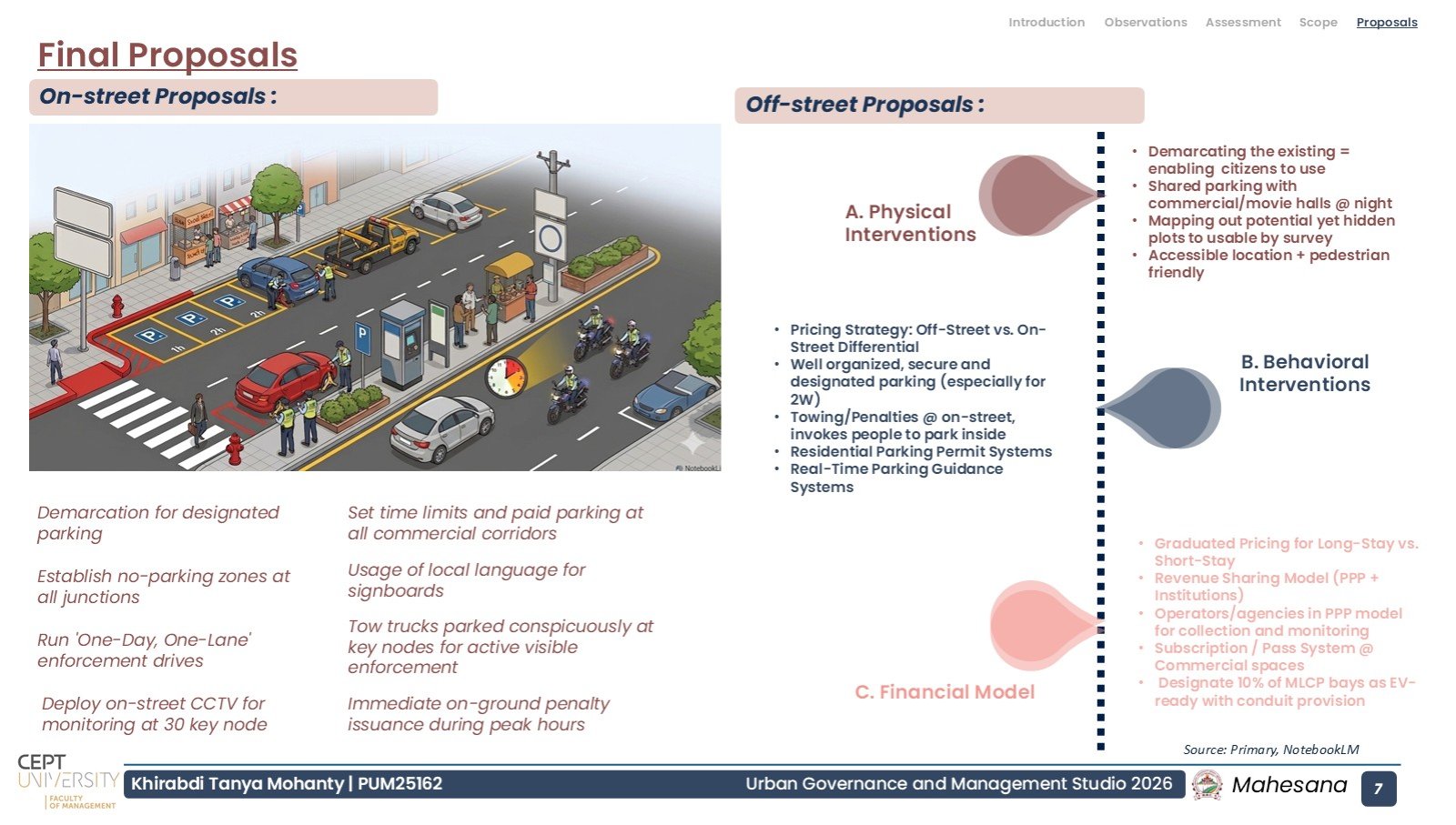
Final proposals: On-street and Off-street

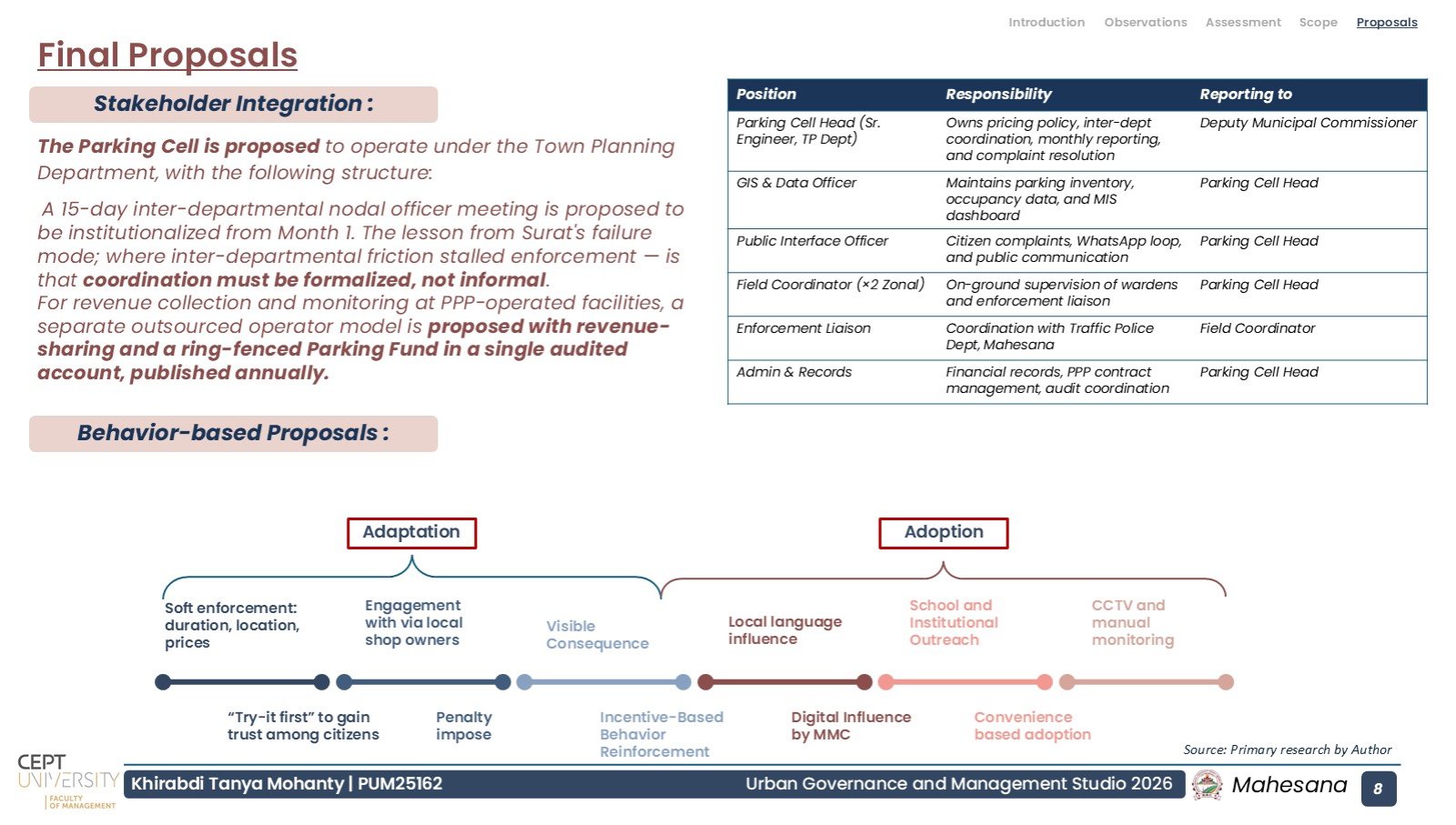
Institutional coordination and a dedicated Parking Management Cell as other two significant action plans

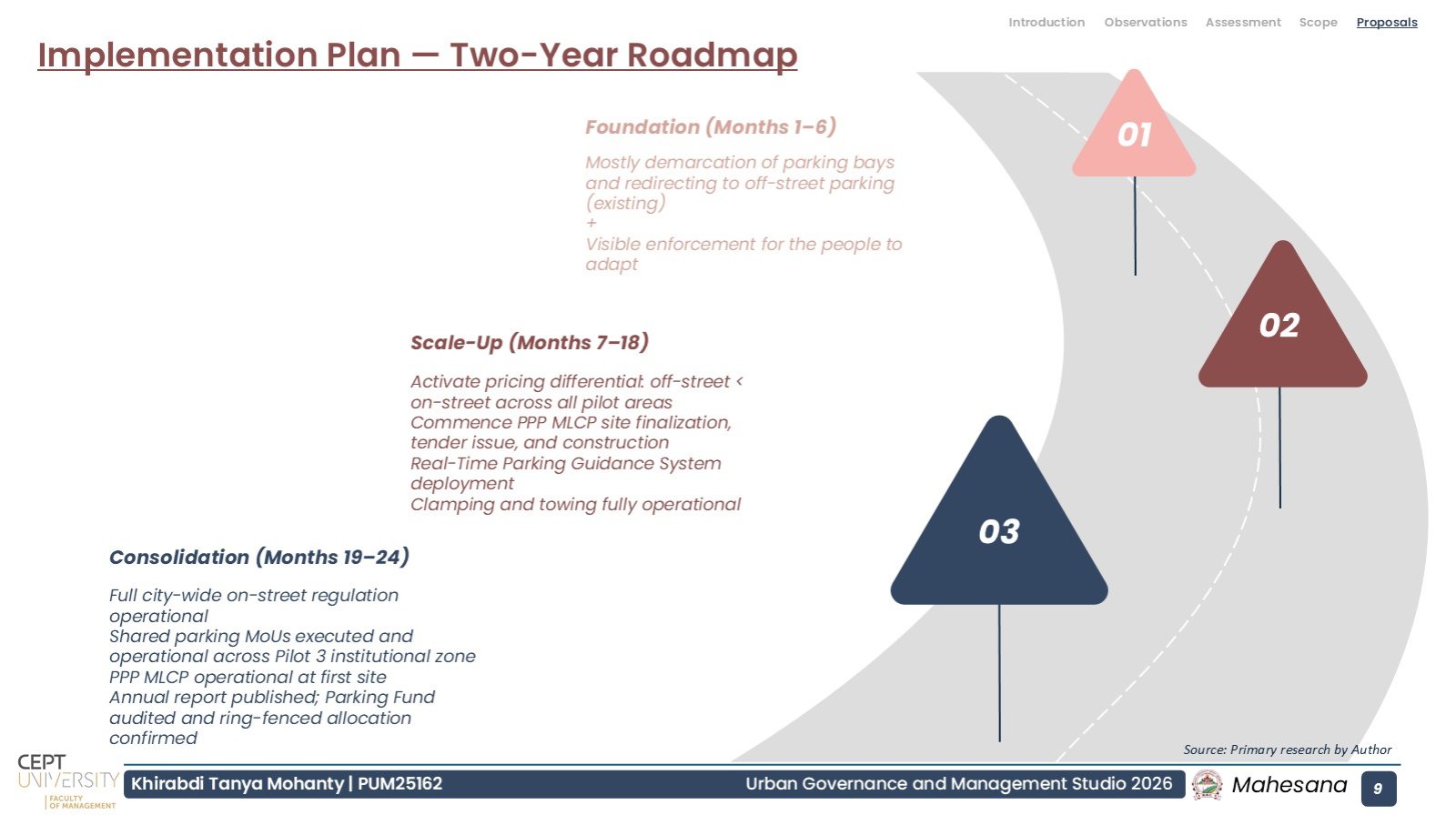
A phased two-year implementation strategy enables gradual transition from informal parking practices to a structured and enforceable system.

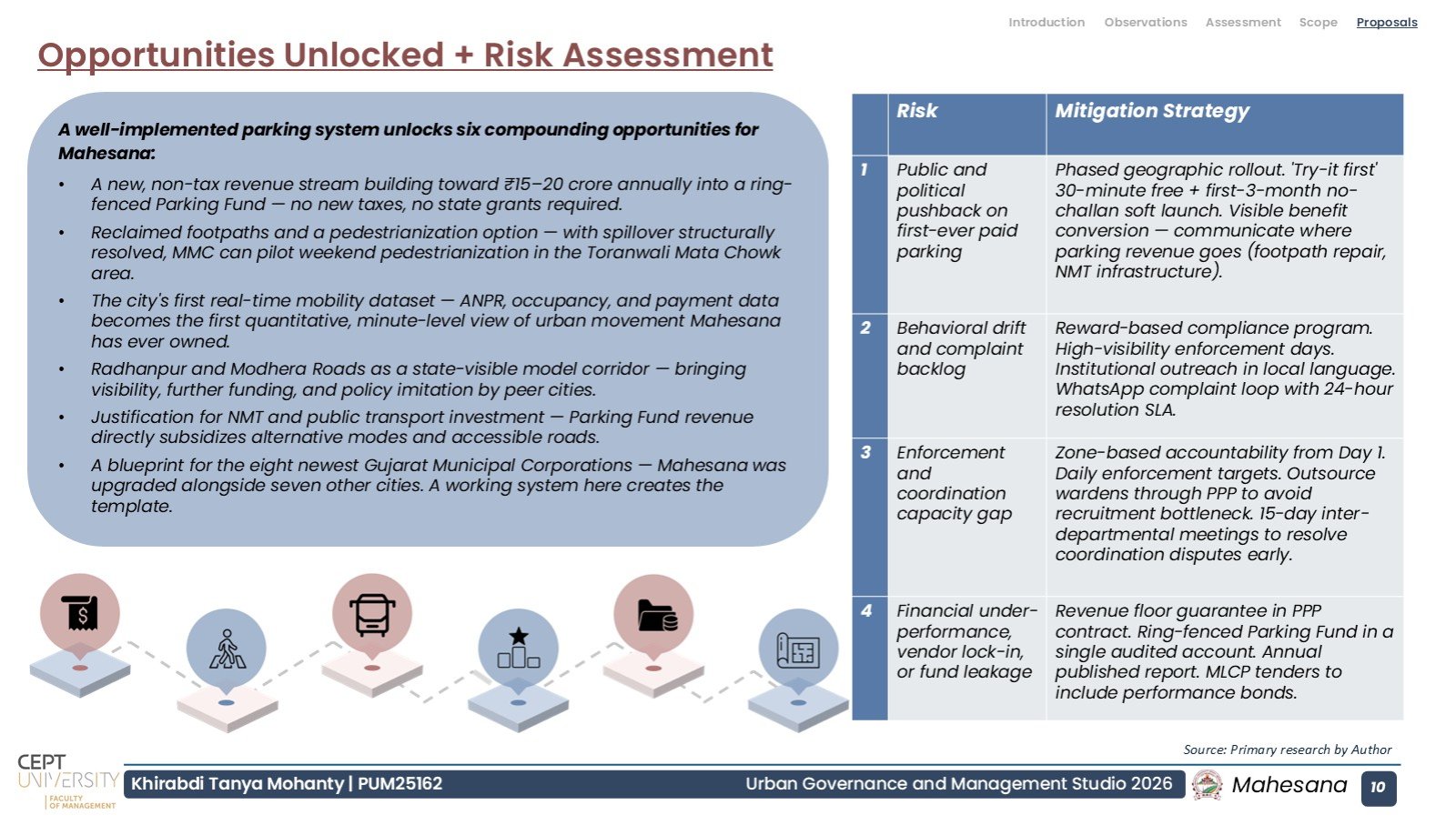
An effectively managed parking system can unlock revenue generation, improved mobility, pedestrian-friendly streets, and long-term urban sustainability