• Home
  • FP
  • UI4005
  • Jal Mandal TPS: Towards a Water Secure Ahmedabad

Jagtap Shreesh Rajendra Madhuri

UI4005

Jal Mandal TPS: Towards a Water Secure Ahmedabad

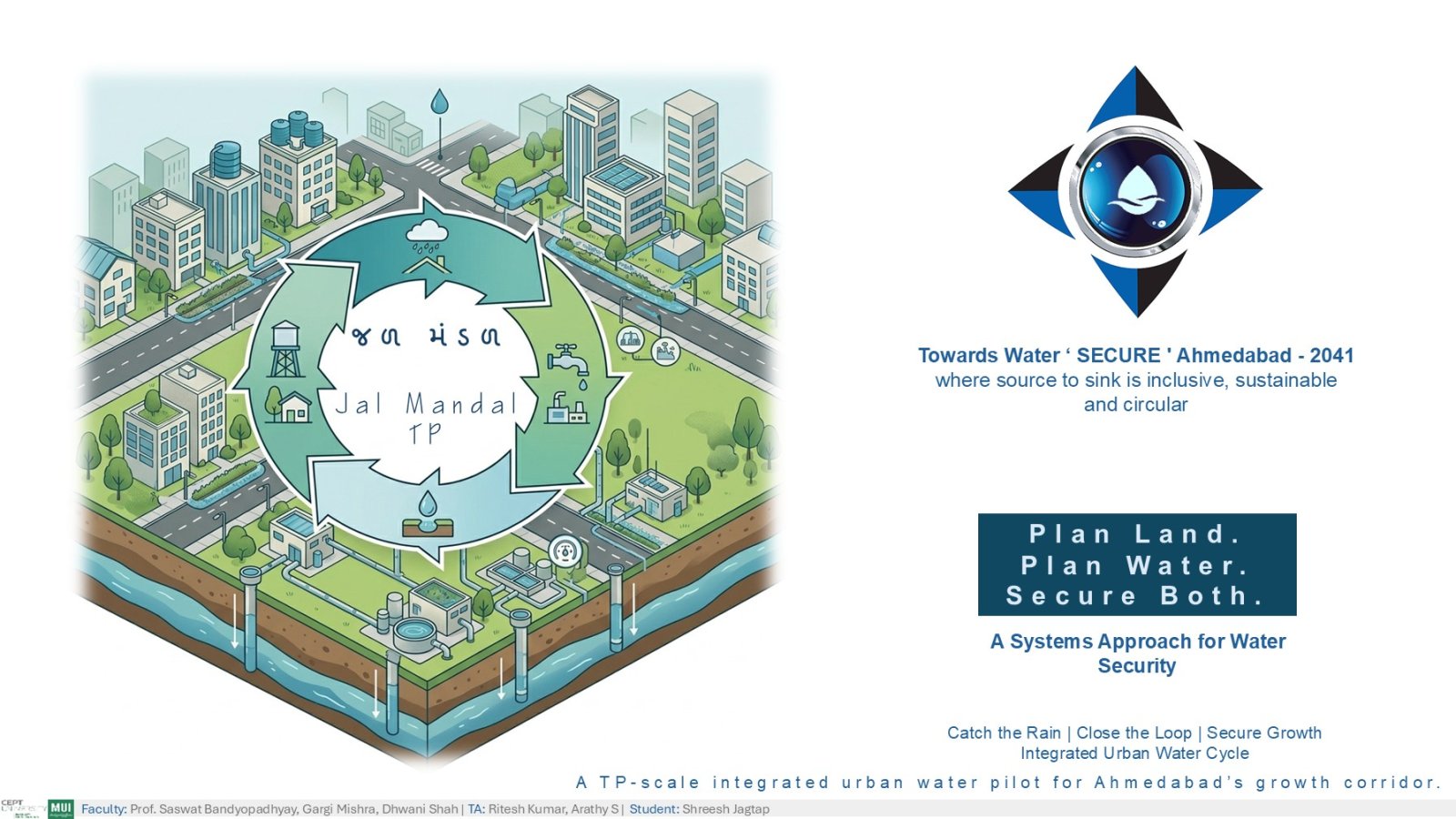
The Jal Mandal TP pilot reimagines Ahmedabad’s urban expansion as a water-secure, circular system by integrating water management directly into town planning. Addressing critical challenges such as single-source dependency, groundwater depletion, and rising demand, the project proposes a three-layer framework, Capture, Circulation, and Storage/Recharge, embedded within TP 405. It transforms roads, open spaces, and buildings into active water infrastructure through rainwater harvesting, decentralized reuse, and aquifer recharge. By aligning policy, design, and governance, and redistributing existing costs rather than adding new ones, the pilot demonstrates a scalable, low-burden model for resilient urban water systems across Ahmedabad’s future growth corridors.

View Additional Work
Report Content

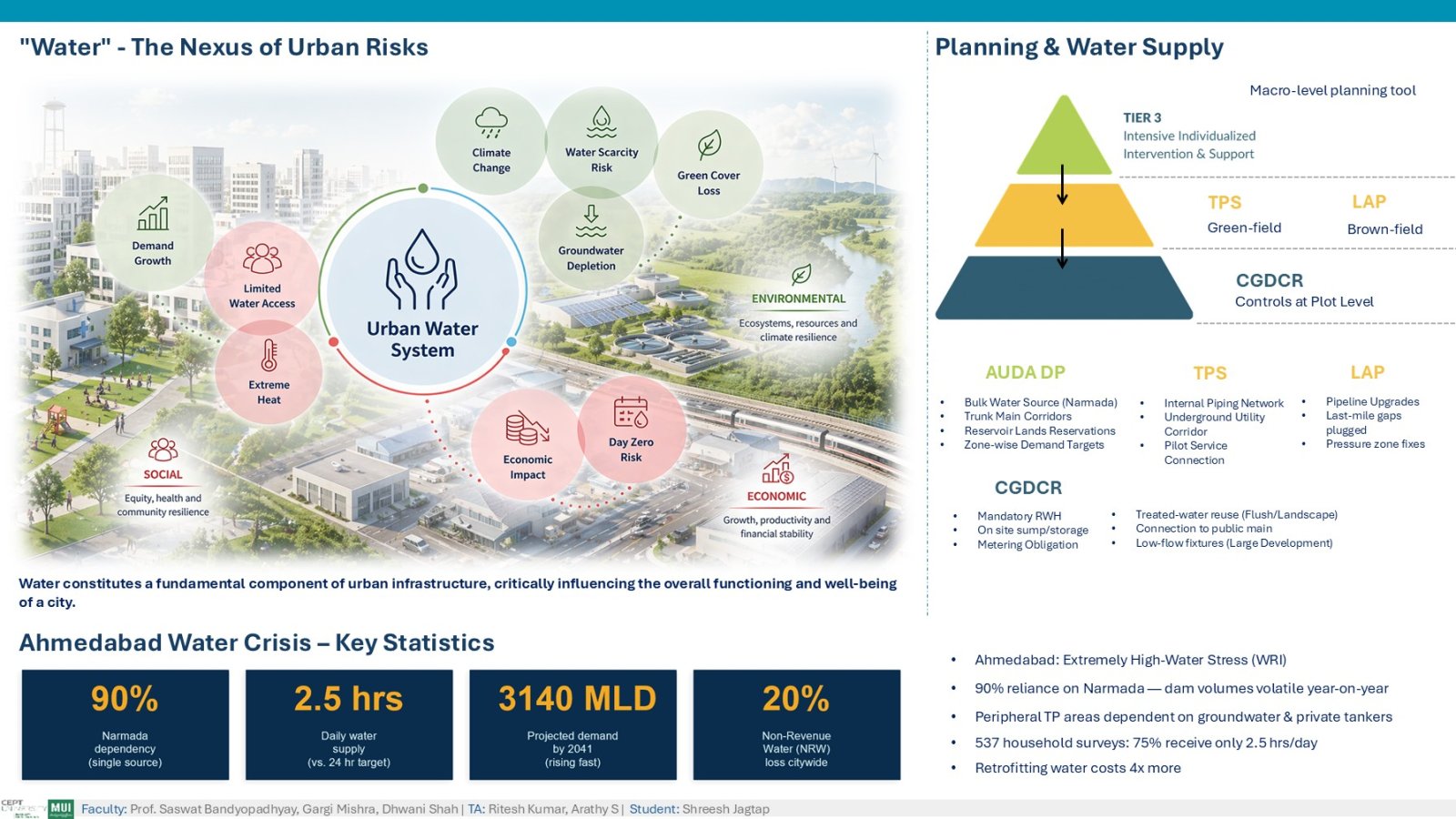
With sectoral goal of Water Secure Ahmedabad 2041 - the pilot aligns with looking at the problems with a 'Systems' lens

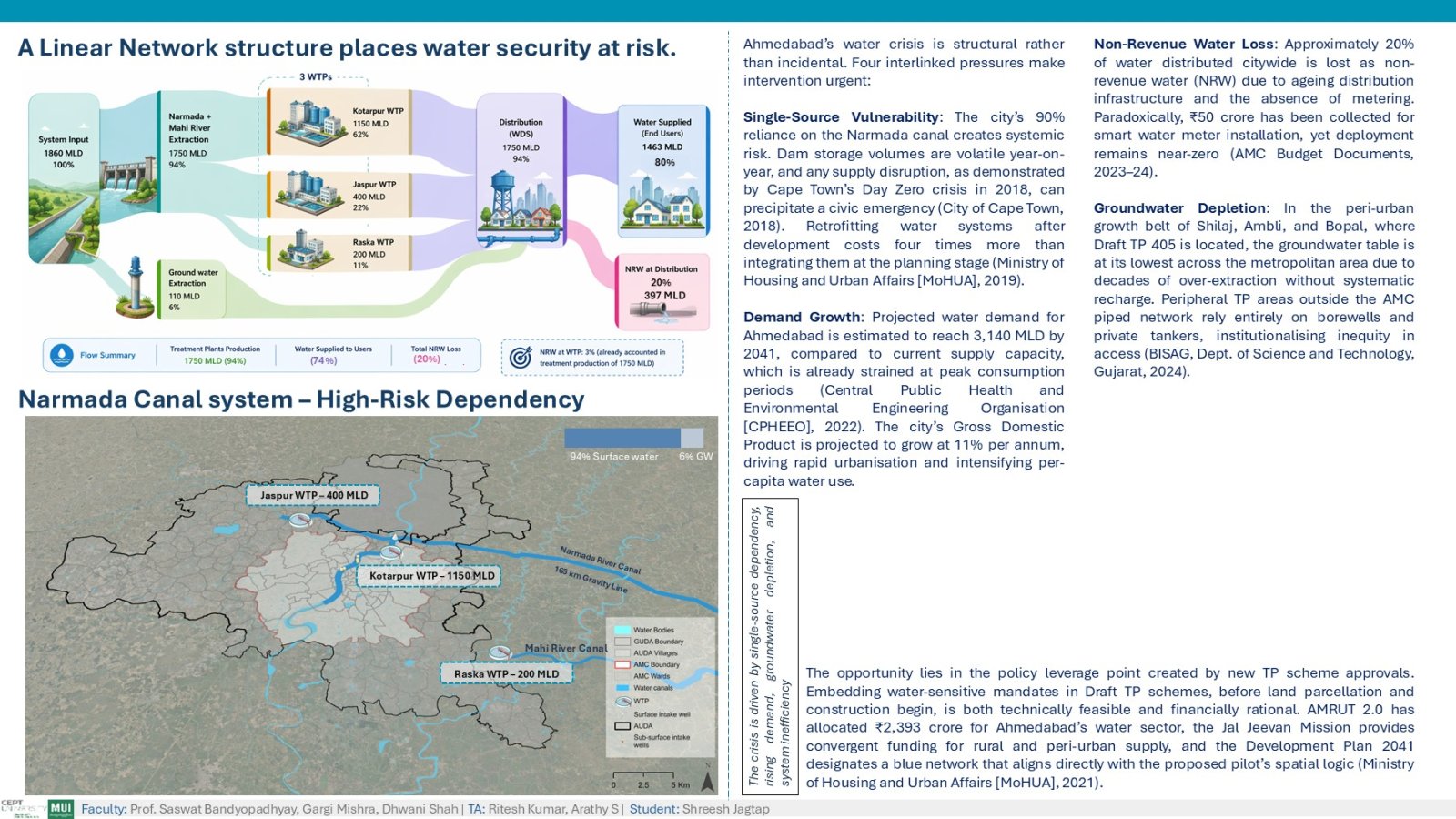
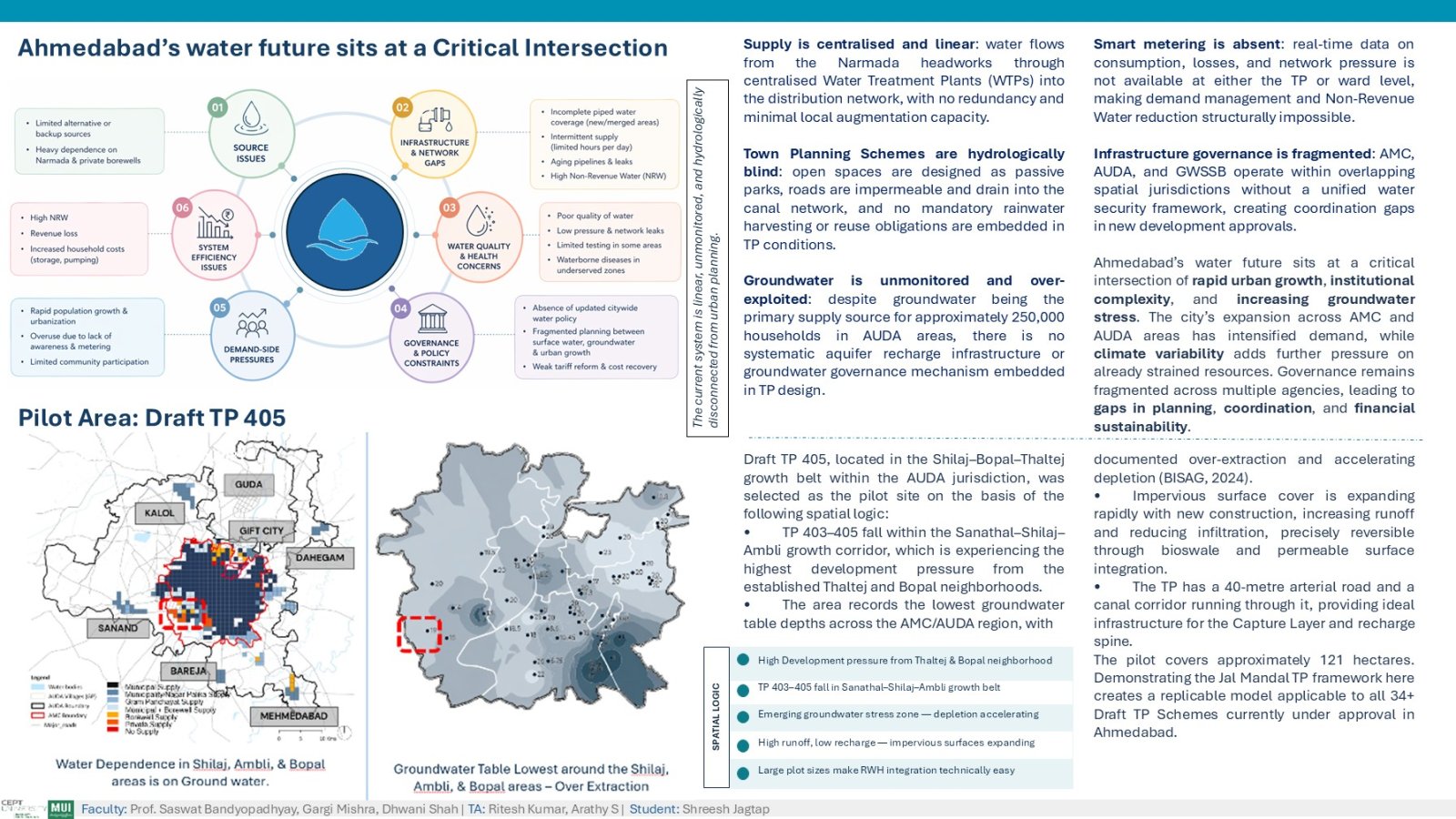
Ahmedabad’s growing dependence on external water sources, groundwater depletion, and fragmented planning systems highlights the urgent need for integrated and water-sensitive urban development strategies.

The city’s centralized and linear water supply structure, heavily dependent on the Narmada Canal system, creates vulnerabilities related to supply disruption, groundwater stress, and rising urban demand.

Ahmedabad’s next phase of growth demands a transition from conventional networks to resilient, decentralised water systems.

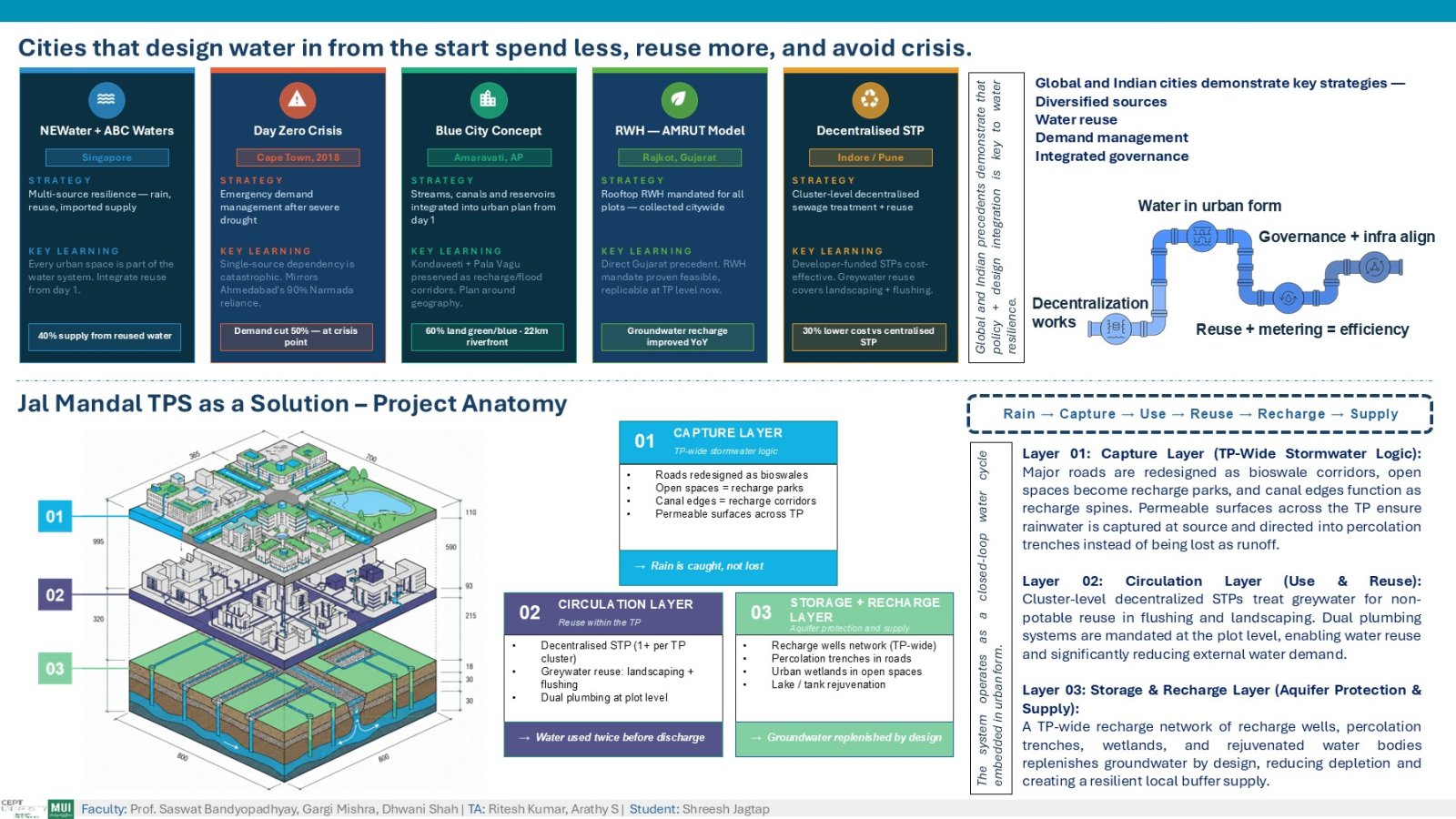
Drawing lessons from global and Indian precedents, the Jal Mandal TPS proposal introduces a three-layered framework of capture, reuse, and recharge to create a decentralized and resilient urban water system.

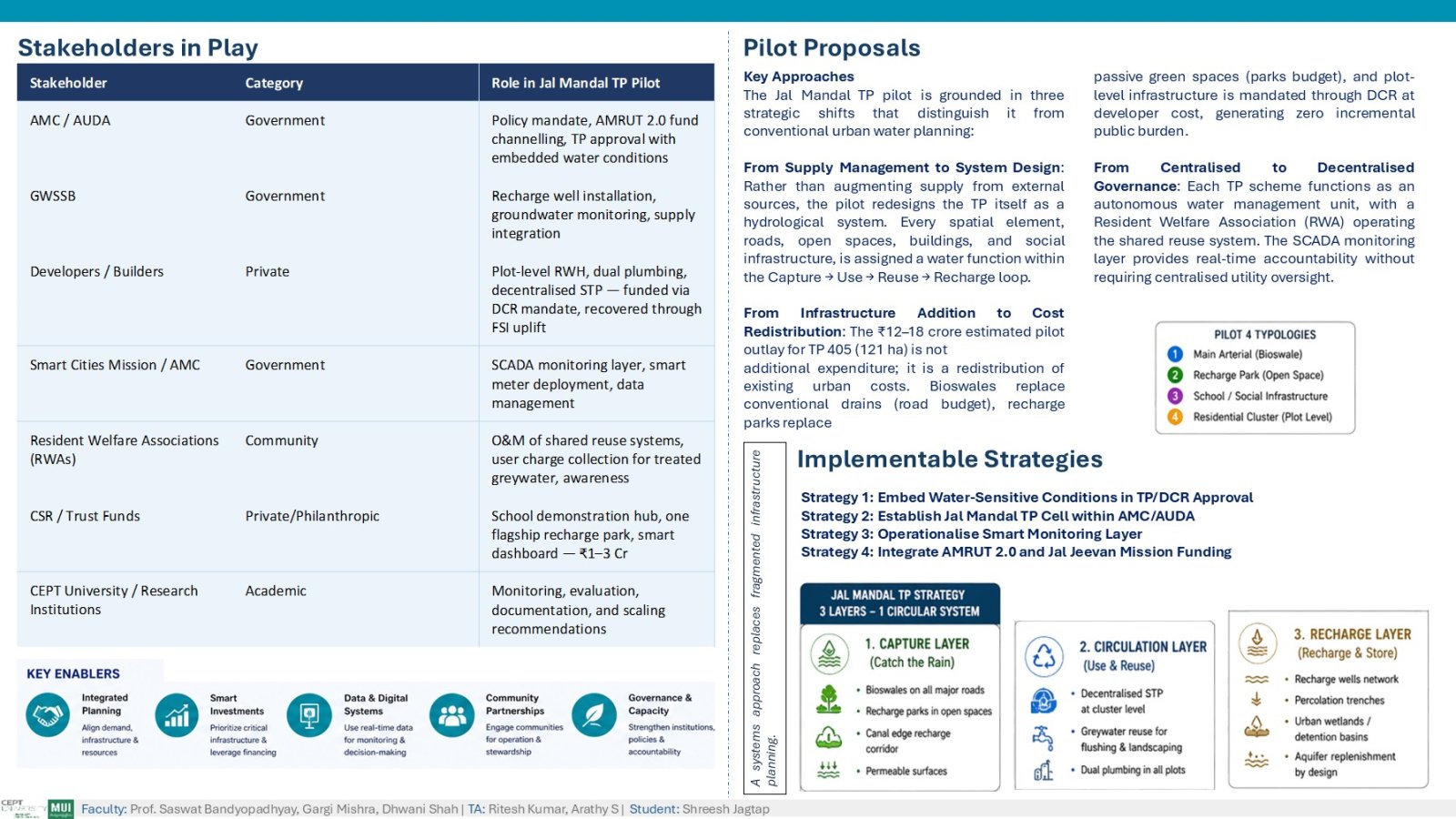
The pilot proposal establishes a collaborative governance framework involving government agencies, developers, communities, and institutions to operationalize decentralized and water-sensitive infrastructure systems.

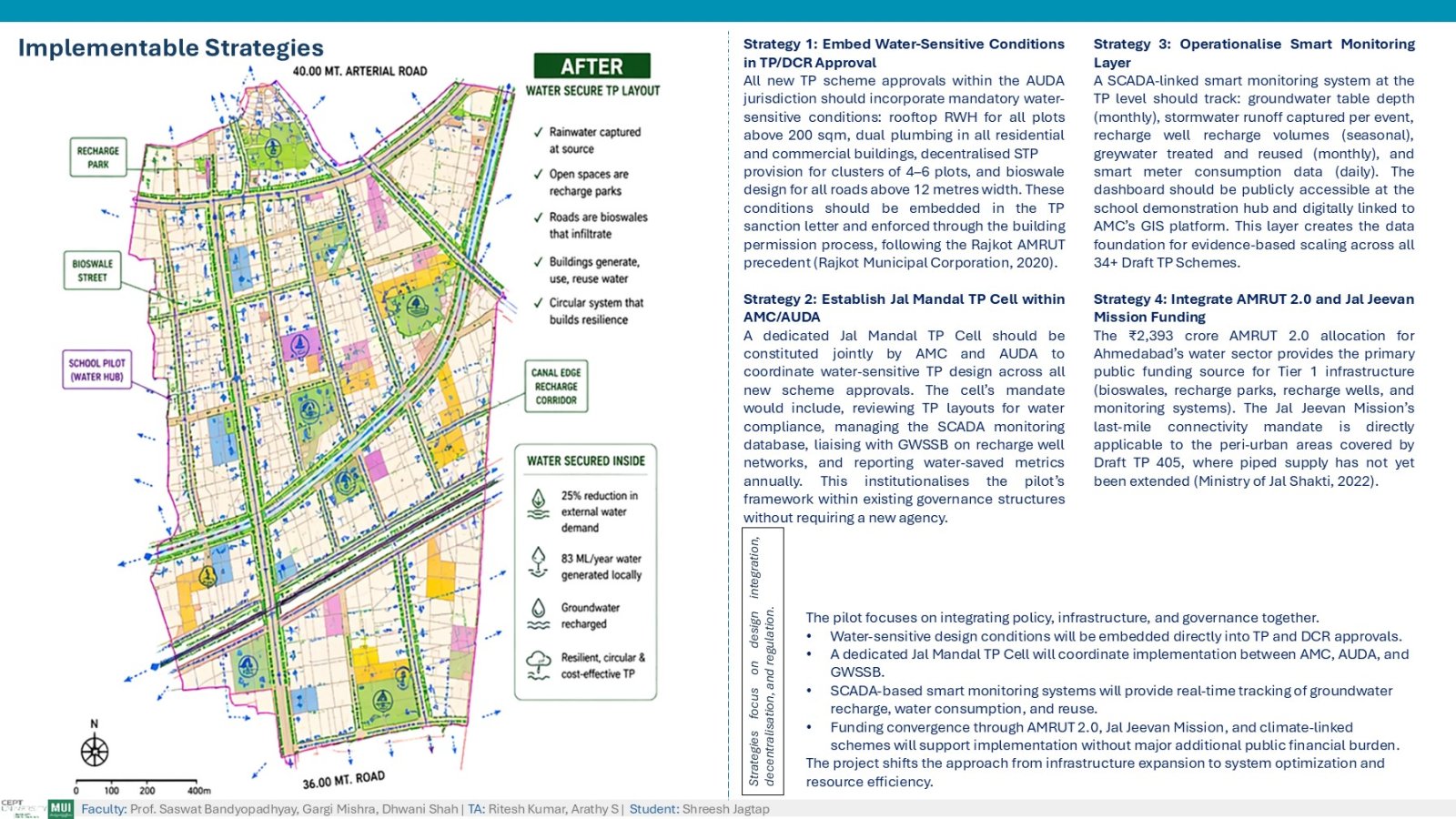
A water-secure TP layout that embeds capture, reuse, and recharge into roads, open spaces, and built form through regulatory and design interventions.

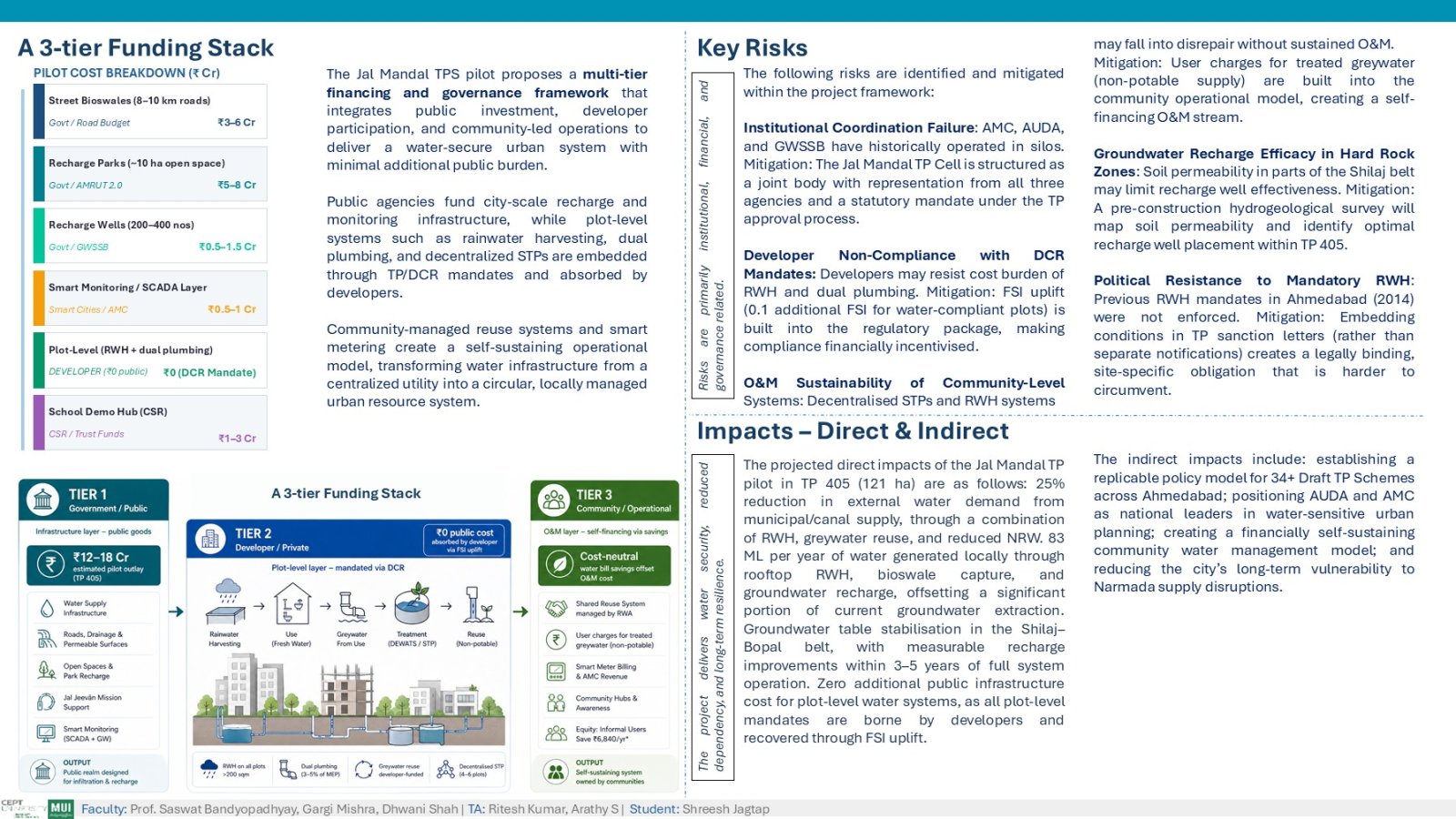
A multi-tier funding model combined with risk mitigation strategies delivers measurable reductions in demand, groundwater recovery, and long-term urban water resilience.

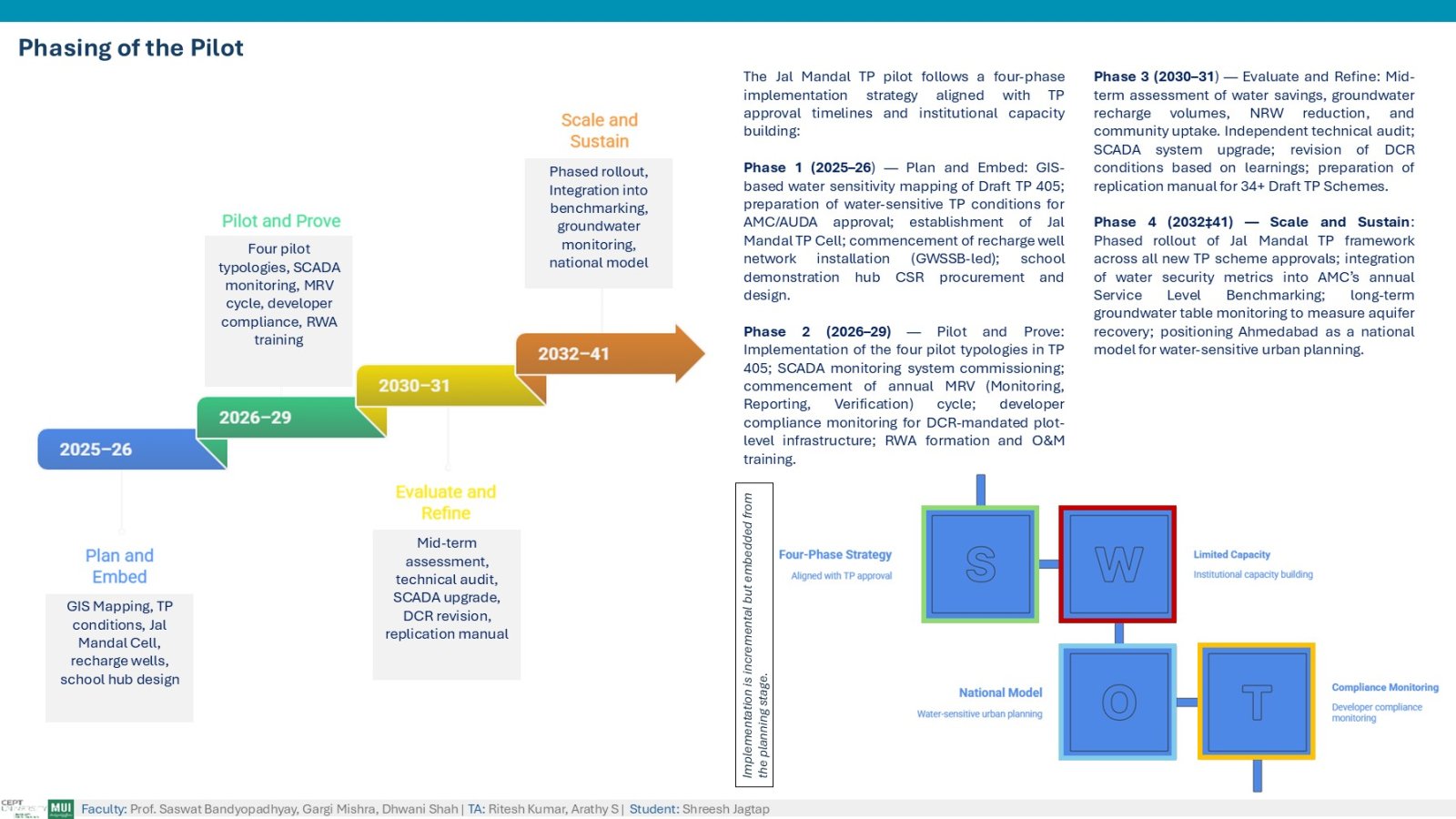
A four-stage roadmap from planning to city-wide scaling, aligning infrastructure rollout with institutional capacity and policy integration.

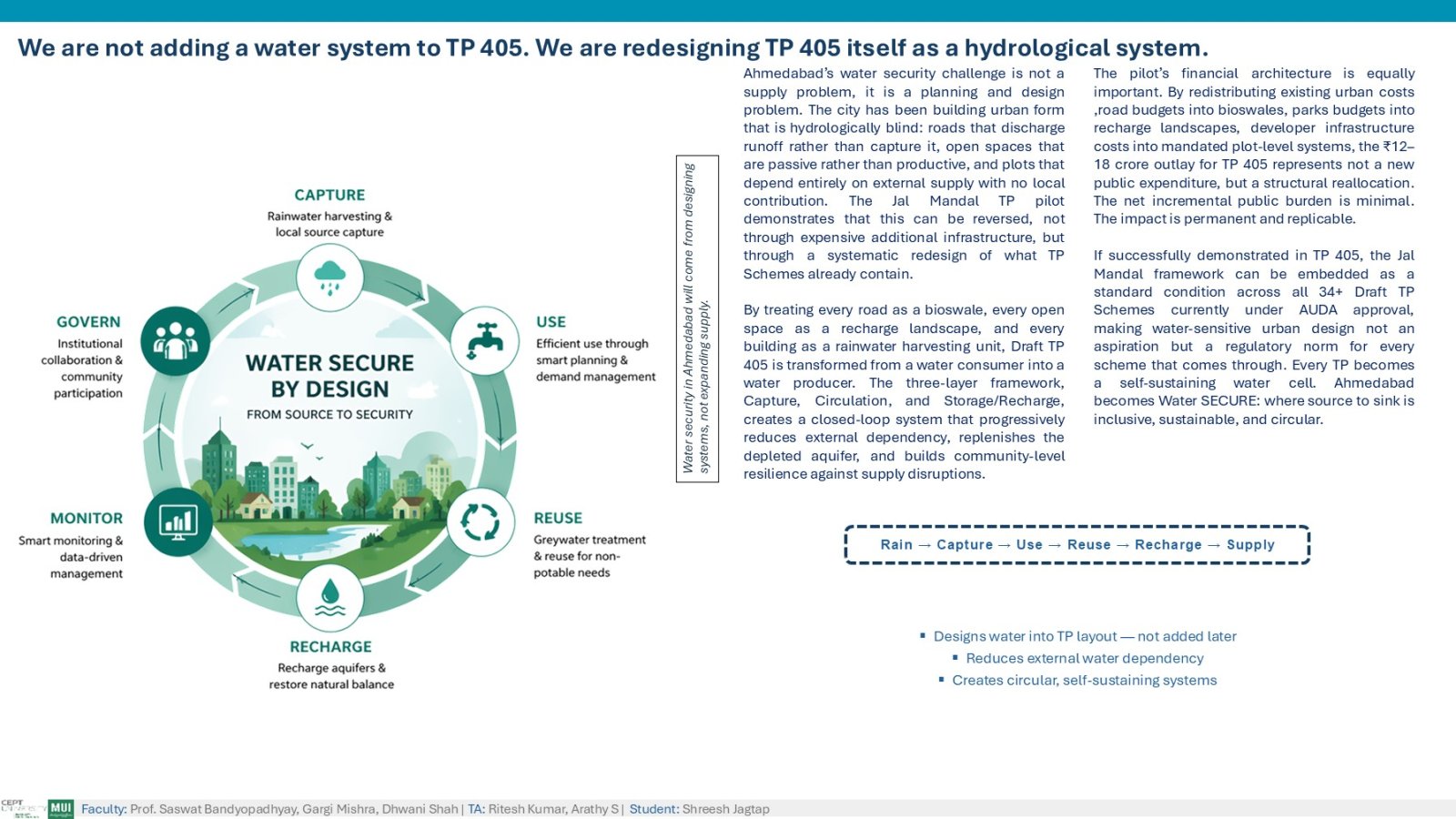
TP 405 is reimagined as a closed-loop hydrological system—capturing, reusing, and recharging water to achieve long-term urban water security.

Project Video