• Home
  • FP
  • UI4005
  • Neighborhood-Based School Access Through Walkability

Satwik Suraj

UI4005

Neighborhood-Based School Access Through Walkability

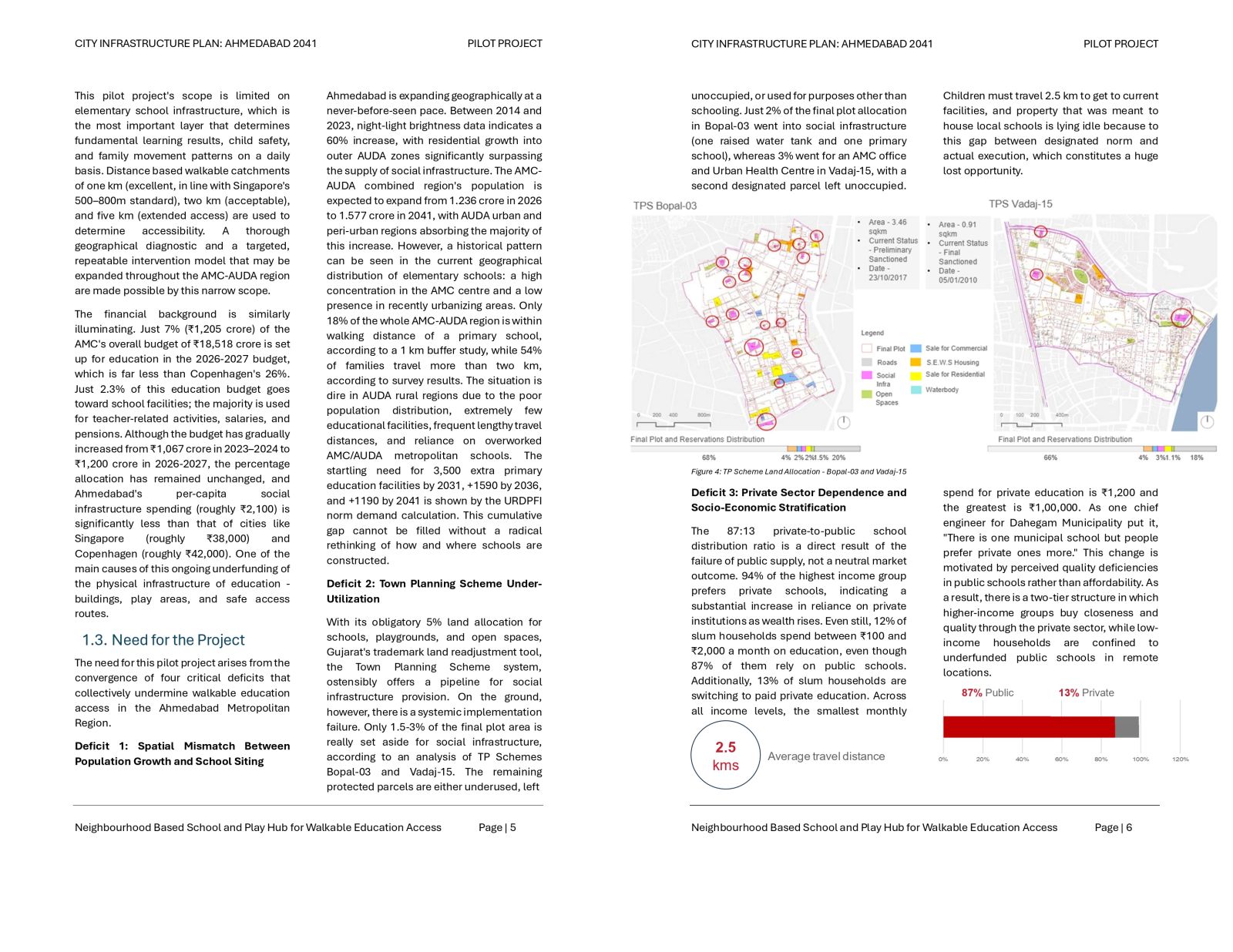
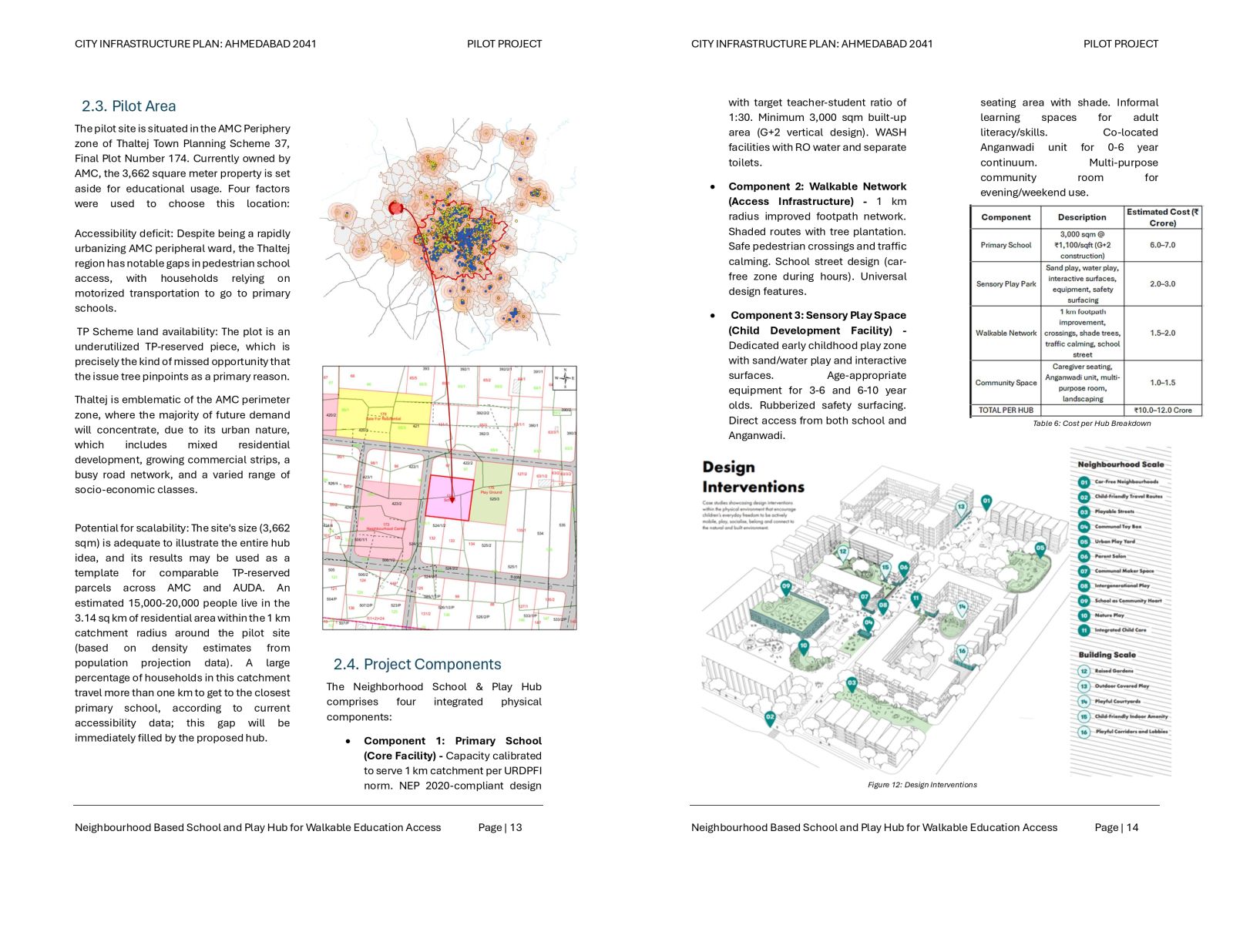
In Ahmedabad's quickly urbanizing periphery, the pilot project suggests a "Neighbourhood-Based School & Play Hub" plan to enhance pedestrian access to elementary education. The concept integrates a primary school, Anganwadi, sensory play area, community amenities, and safe pedestrian infrastructure within a 1 km walkable catchment to address spatial inequity, underused TP-reserved land, dangerous school access, and reliance on private education. The pilot, which is situated at Thaltej TP Scheme 37, intends to cut the average travel distance from 2.5 km to less than 1 km, enhance school accessibility from 18% to over 80%, and develop a scalable, child-centric social infrastructure model for AMC-AUDA.

View Additional Work
Report Content

Designing equitable neighbourhoods through child-centric social infrastructure and walkable education access.

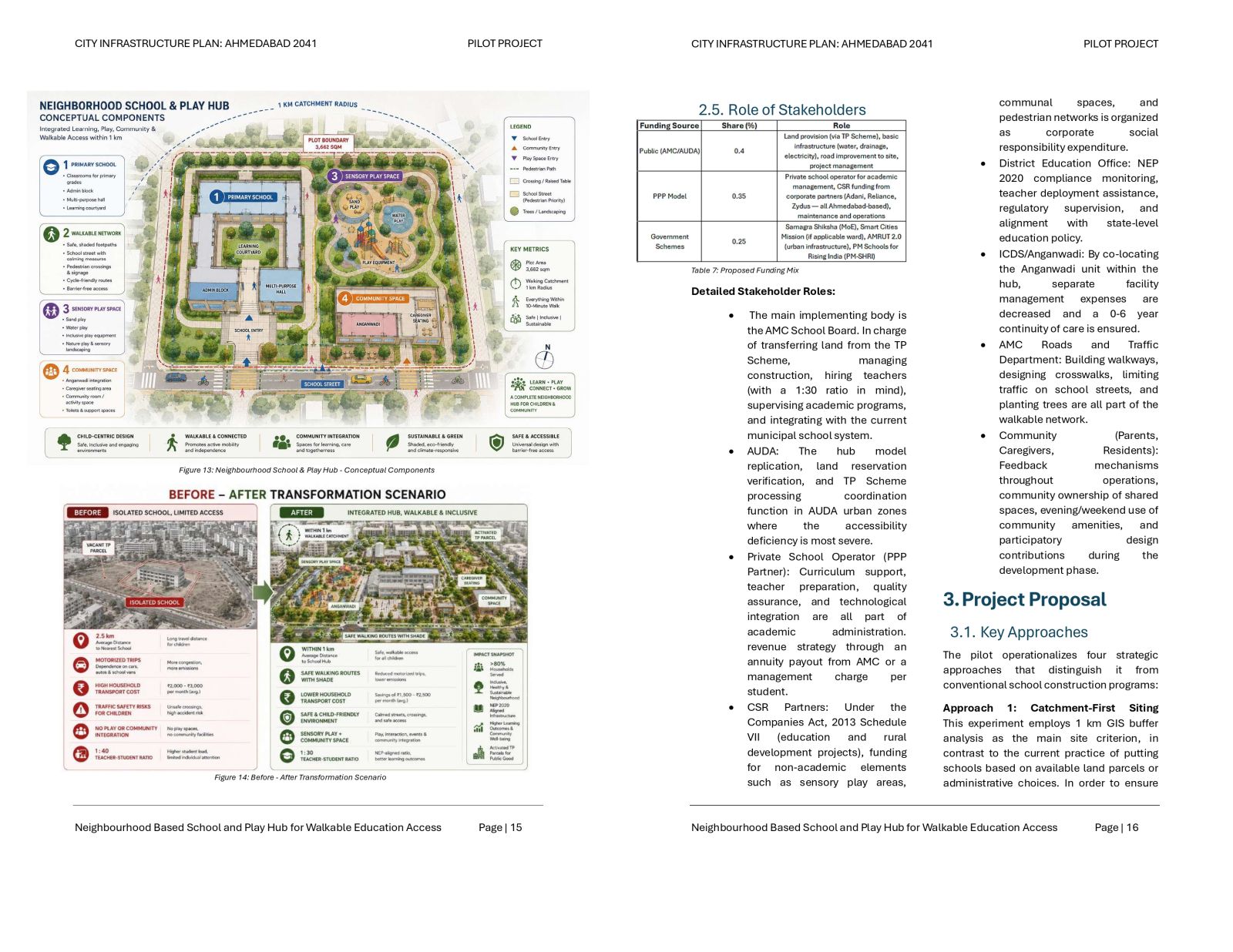
Reimagining educational infrastructure as an integrated ecosystem of learning, play, care, and community

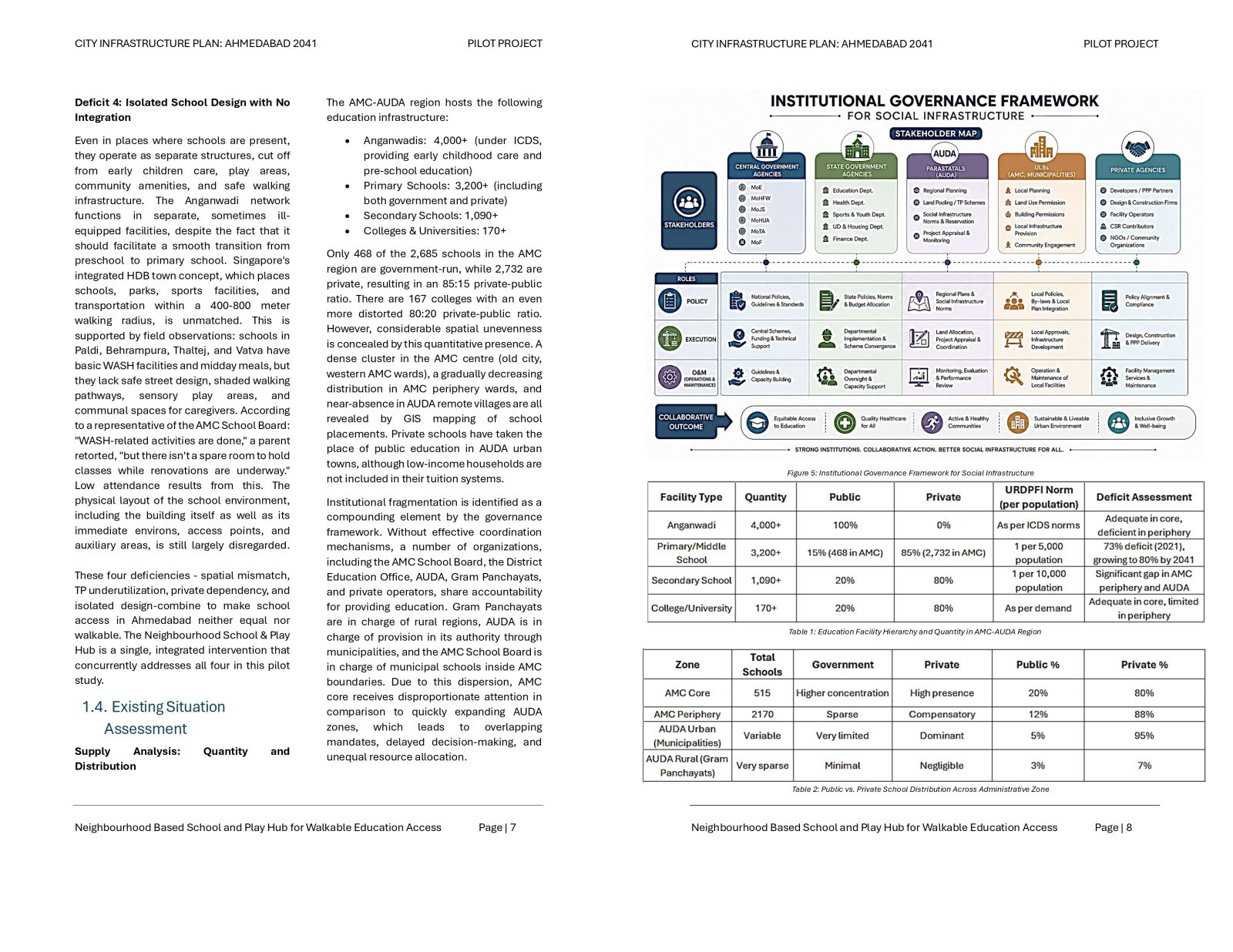
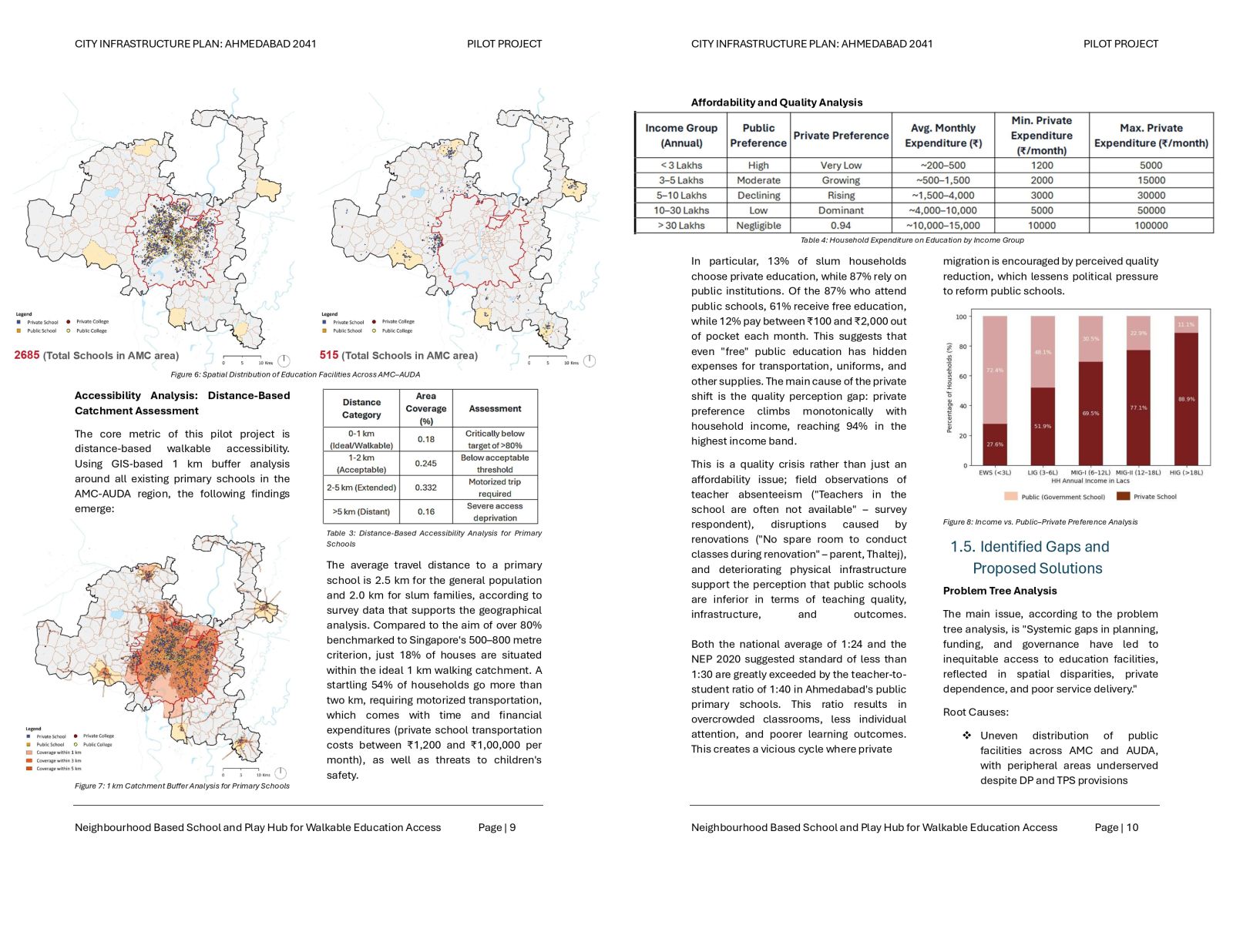
Spatial inequities in Ahmedabad reveal critical gaps in walkable access to primary education

Data-driven catchment analysis identifies underserved communities beyond the 1 km walkability threshold

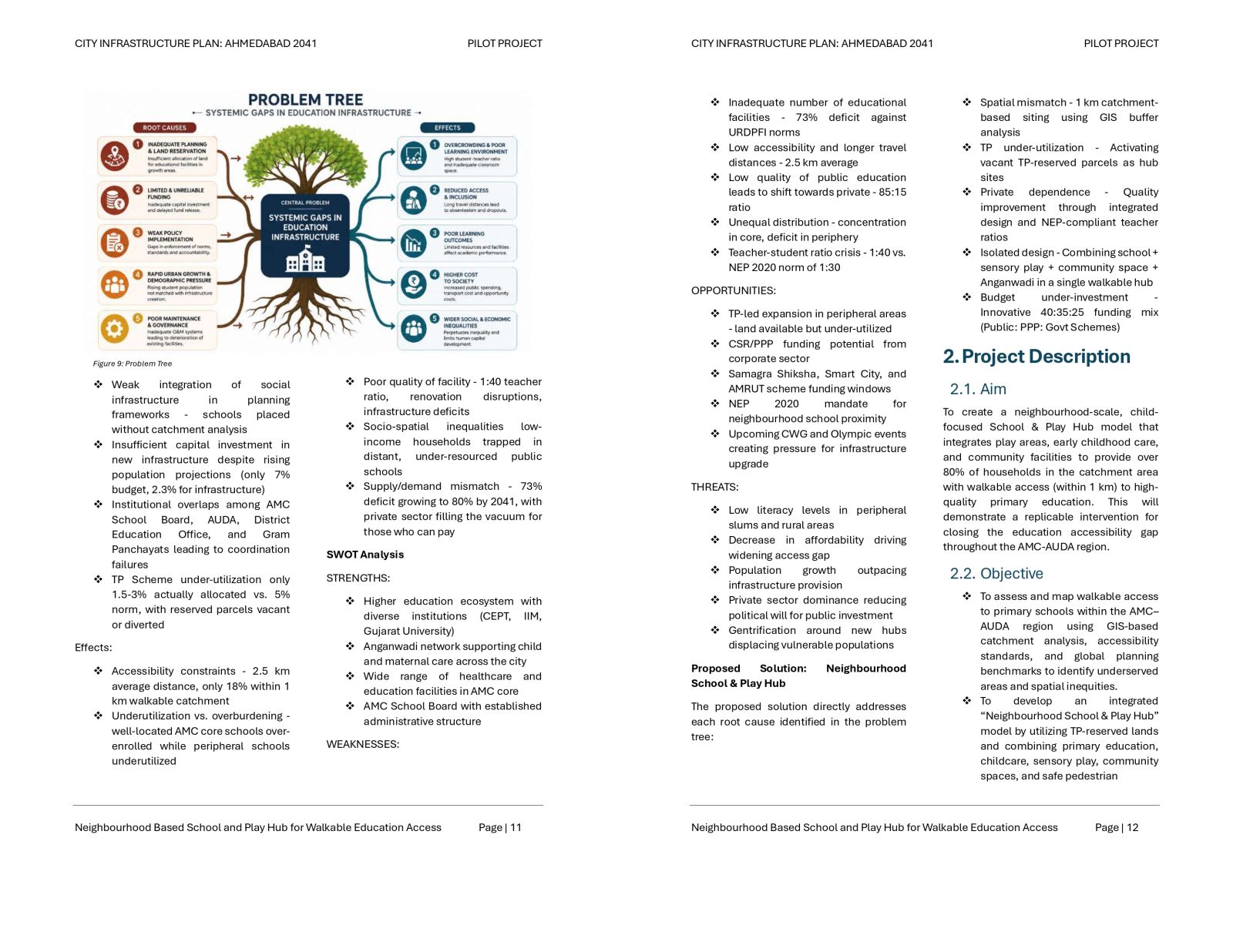
Rapid urban growth and uneven infrastructure distribution continue to deepen educational accessibility disparities

Institutional coordination and policy integration are essential for equitable social infrastructure delivery

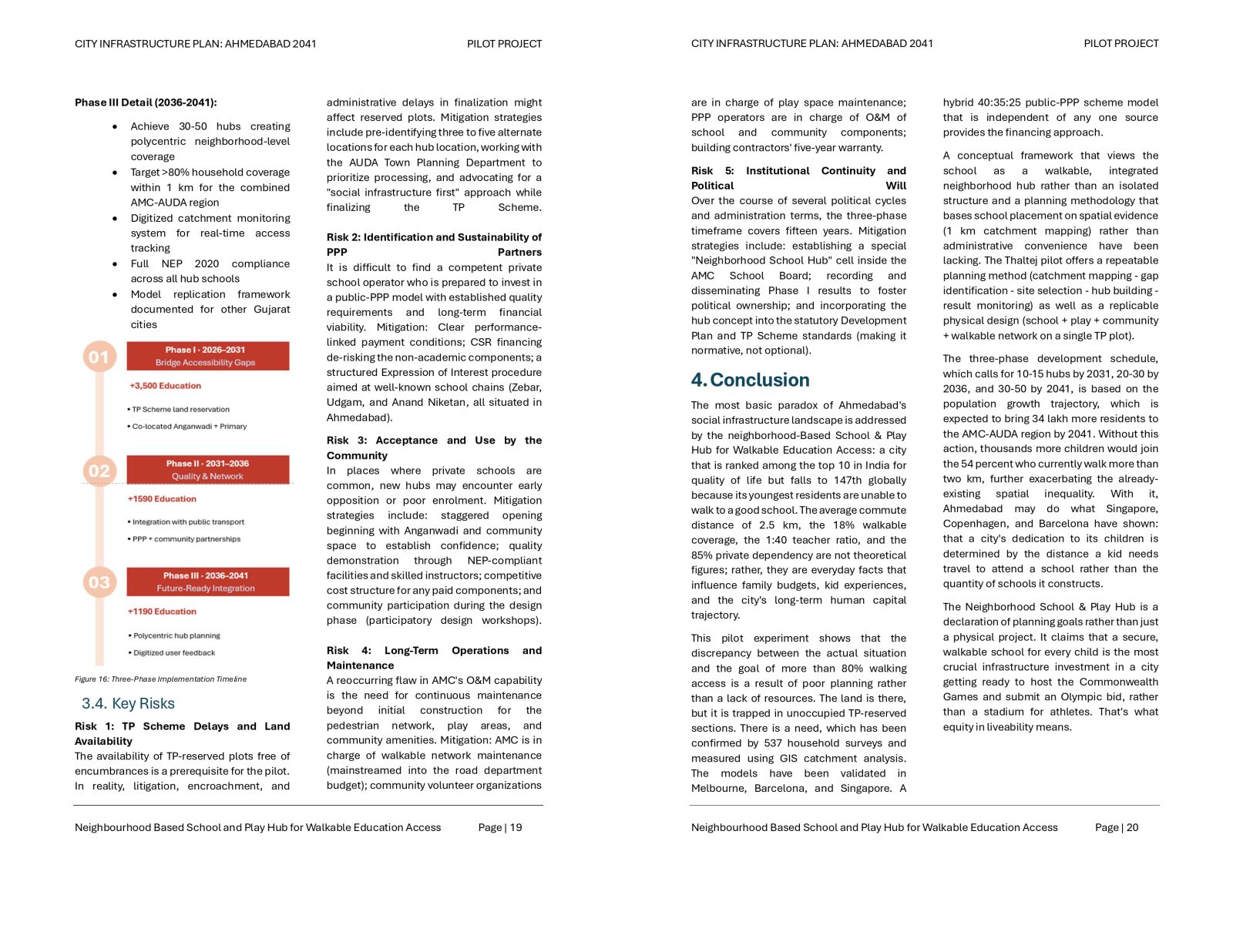
The Neighbourhood School & Play Hub creates a child-friendly public realm within a walkable neighbourhood radius

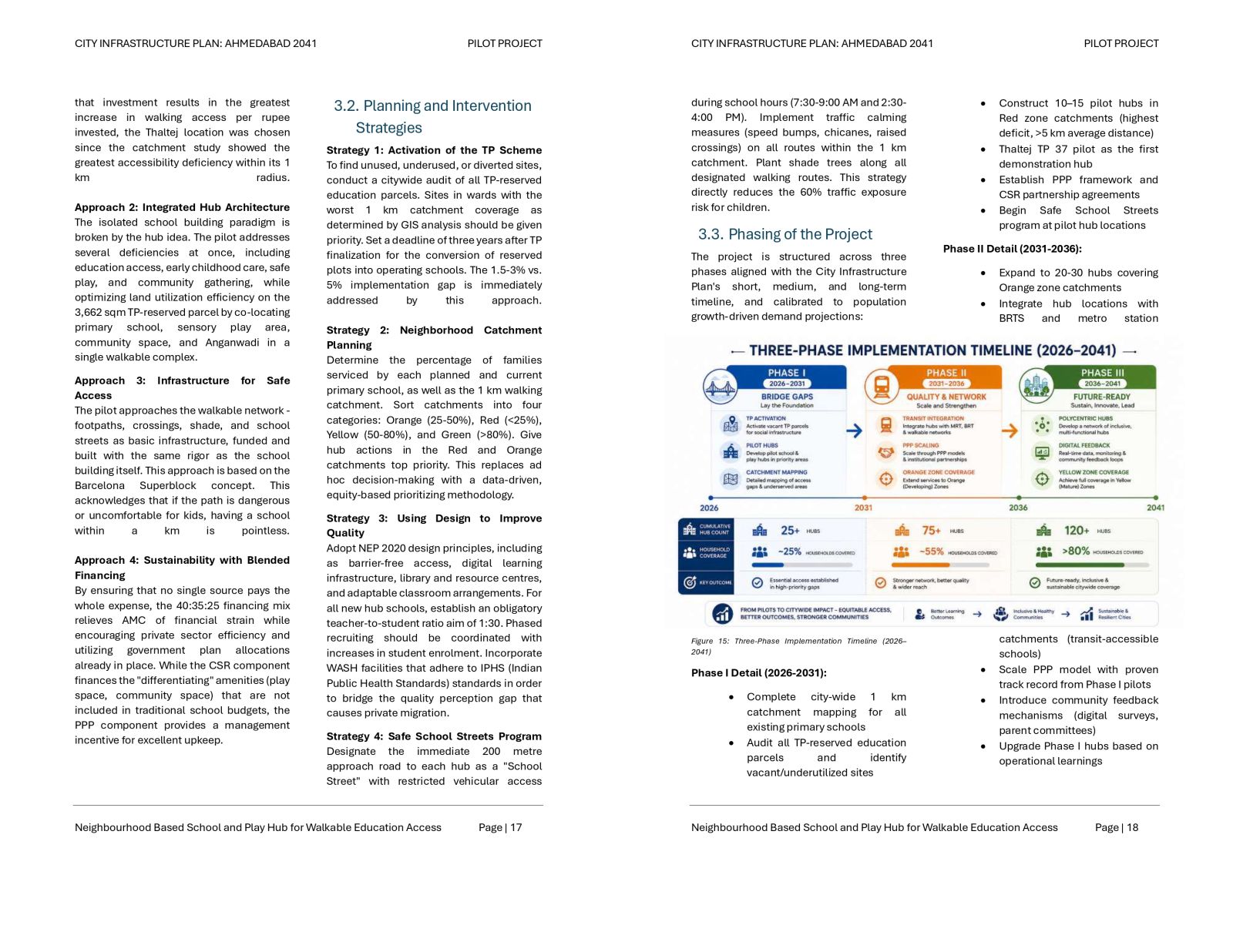
Activating underutilized TP-reserved land to transform accessibility gaps into community opportunities.

An integrated framework combining education, sensory play, childcare, and safe pedestrian infrastructure

From isolated infrastructure to inclusive, connected, and walkable neighbourhood learning environments

Project Video