Your browser is out-of-date!
For a richer surfing experience on our website, please update your browser. Update my browser now!
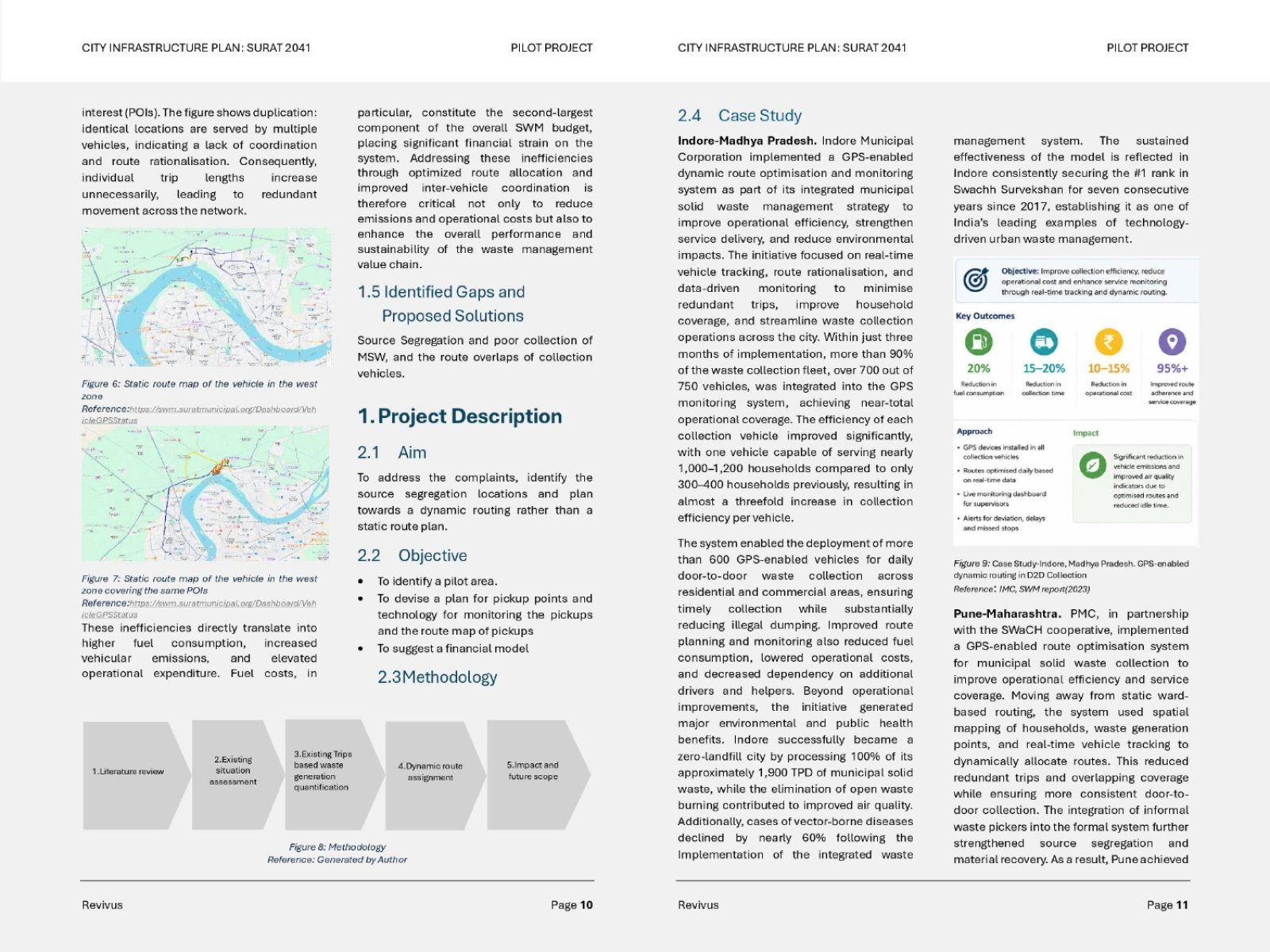
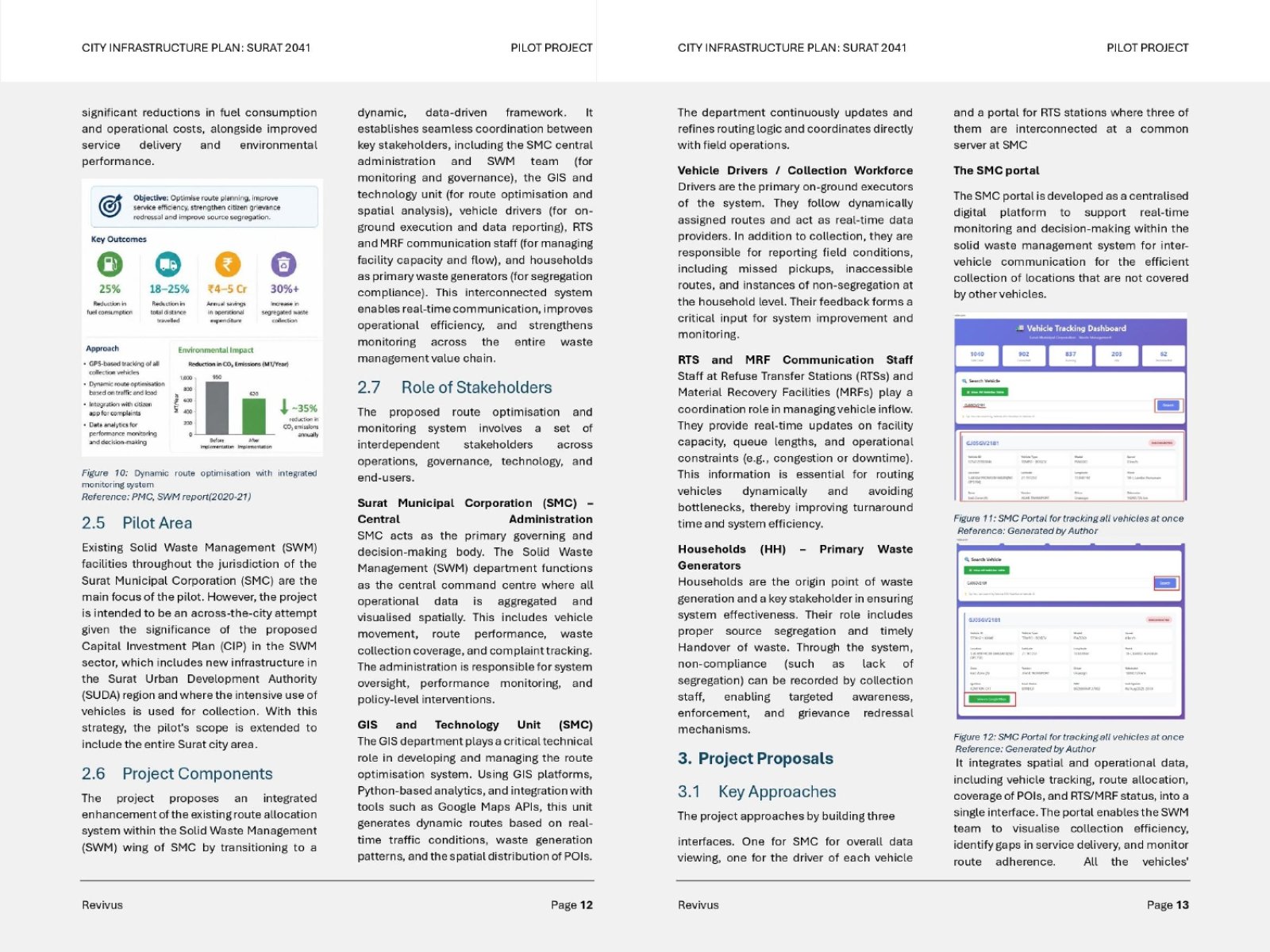
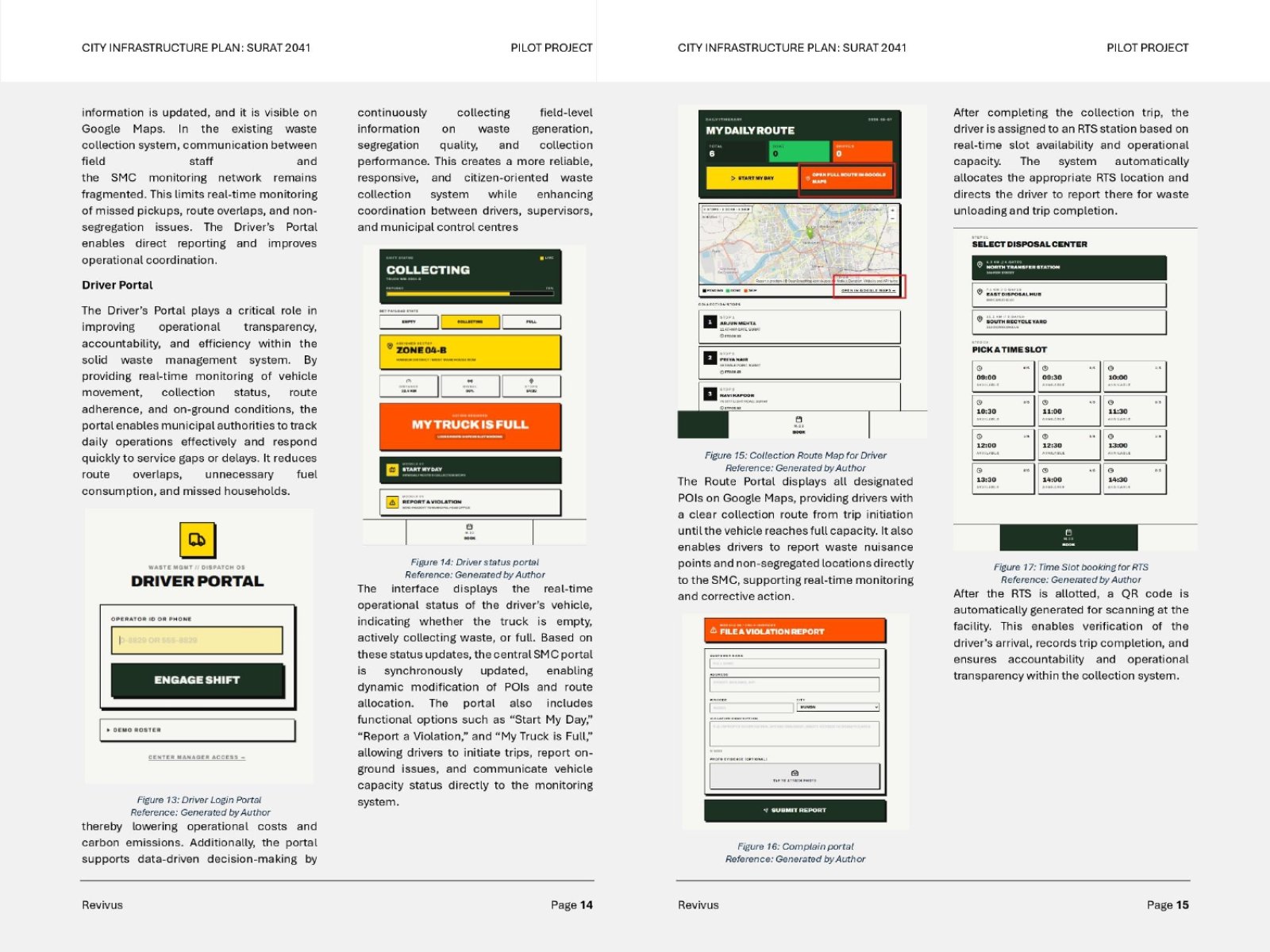
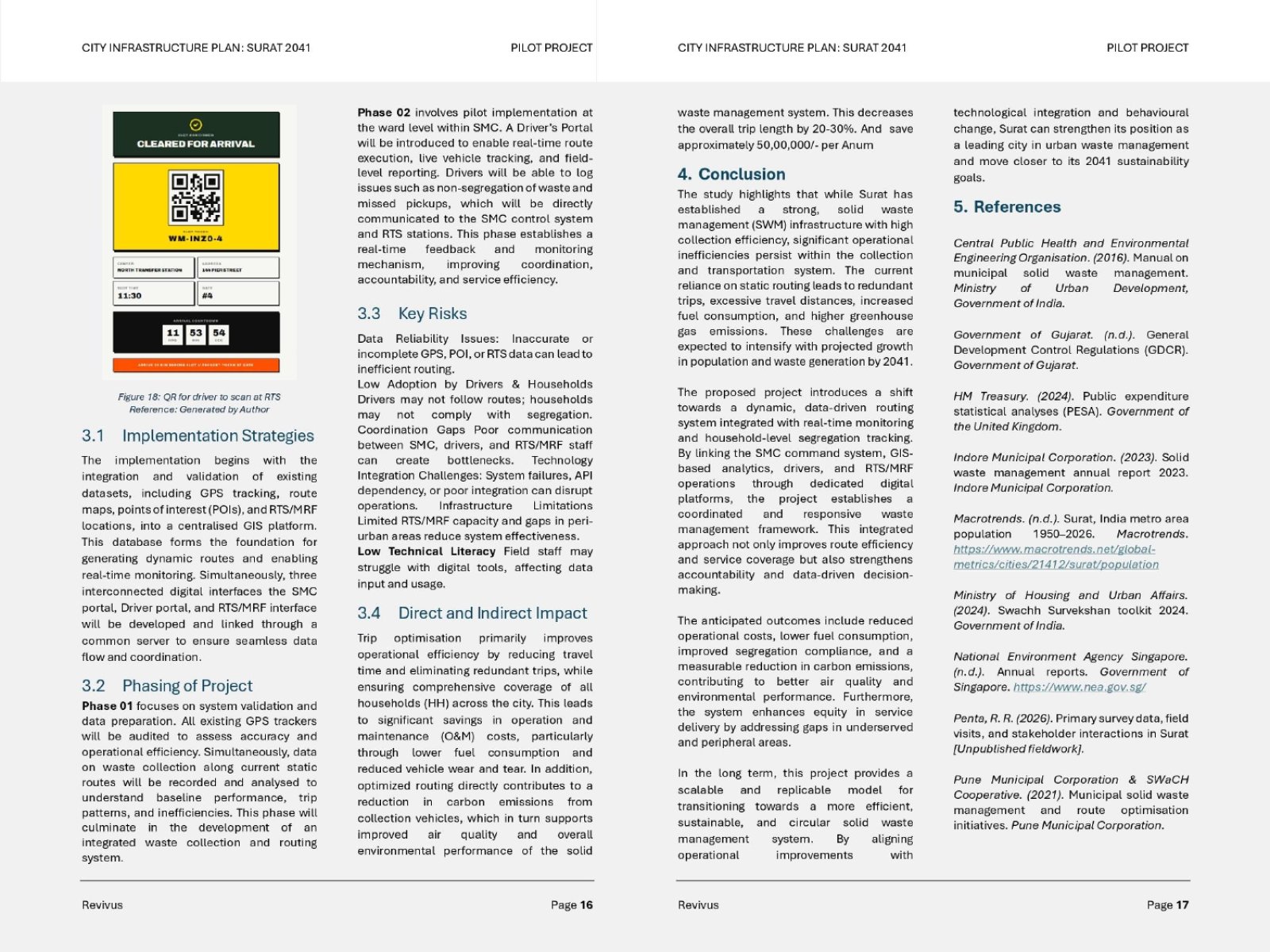
Route optimisation combined with a monitoring tool for household-level (HH) waste segregation presents an integrated approach to improving municipal solid waste management in Surat. The proposal advances from static, predefined routes to dynamic, data-driven routing that responds to real-time conditions, waste-generation patterns, and the spatial distribution of service points (POIs). This ensures complete coverage while eliminating redundant trips, thereby improving operational efficiency. At present, collection vehicles are estimated to emit approximately 5 kg of carbon per day; with optimised routing, emissions can be reduced by nearly 30%, resulting in a daily reduction of about 1.5 kg. This will be further reduced when EV vehicles are adopted for the collection. Beyond routing efficiency, the system includes a field-level monitoring feature that allows collection staff to record household-level segregation compliance. This enables structured reporting of non-segregation issues, creating a feedback loop between collectors, municipal authorities, and residents. Improved source segregation enhances downstream processing efficiency and material recovery, strengthening the overall waste value chain. Simultaneously, reduced fuel consumption and better segregation outcomes contribute to improved carbon performance, supporting carbon rating frameworks and potential eligibility for carbon credits. Additionally, by streamlining vehicle movement and reducing unnecessary haulage, the system alleviates congestion at Refuse Transfer Stations (RTSs), leading to smoother transfer operations and quicker turnaround times. In effect, this integrated method not only optimises routing but also establishes a responsive, data-backed governance mechanism for problem identification, service monitoring, and continuous improvement in Surat’s solid waste management system.
View Additional Work