Your browser is out-of-date!
For a richer surfing experience on our website, please update your browser. Update my browser now!
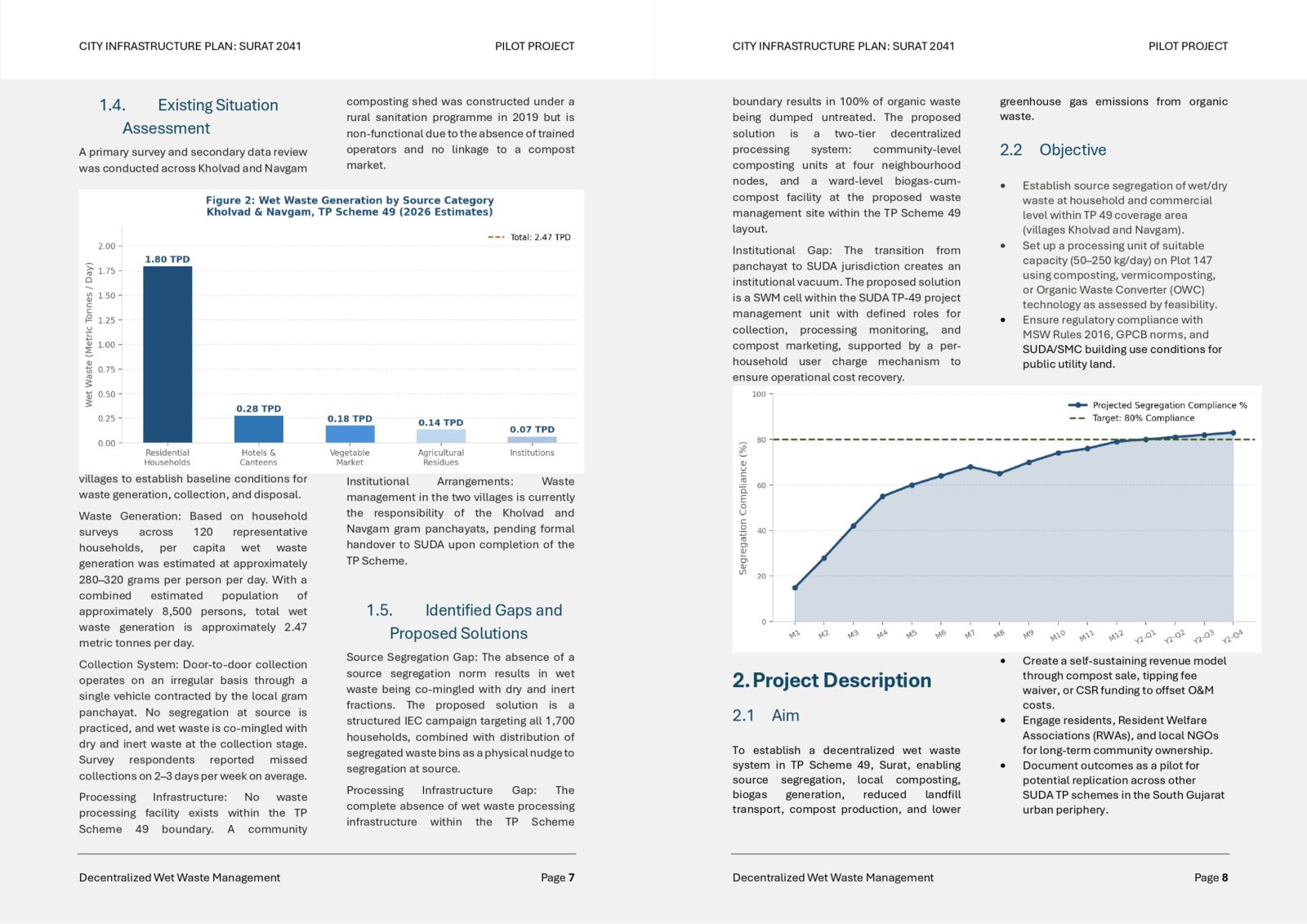
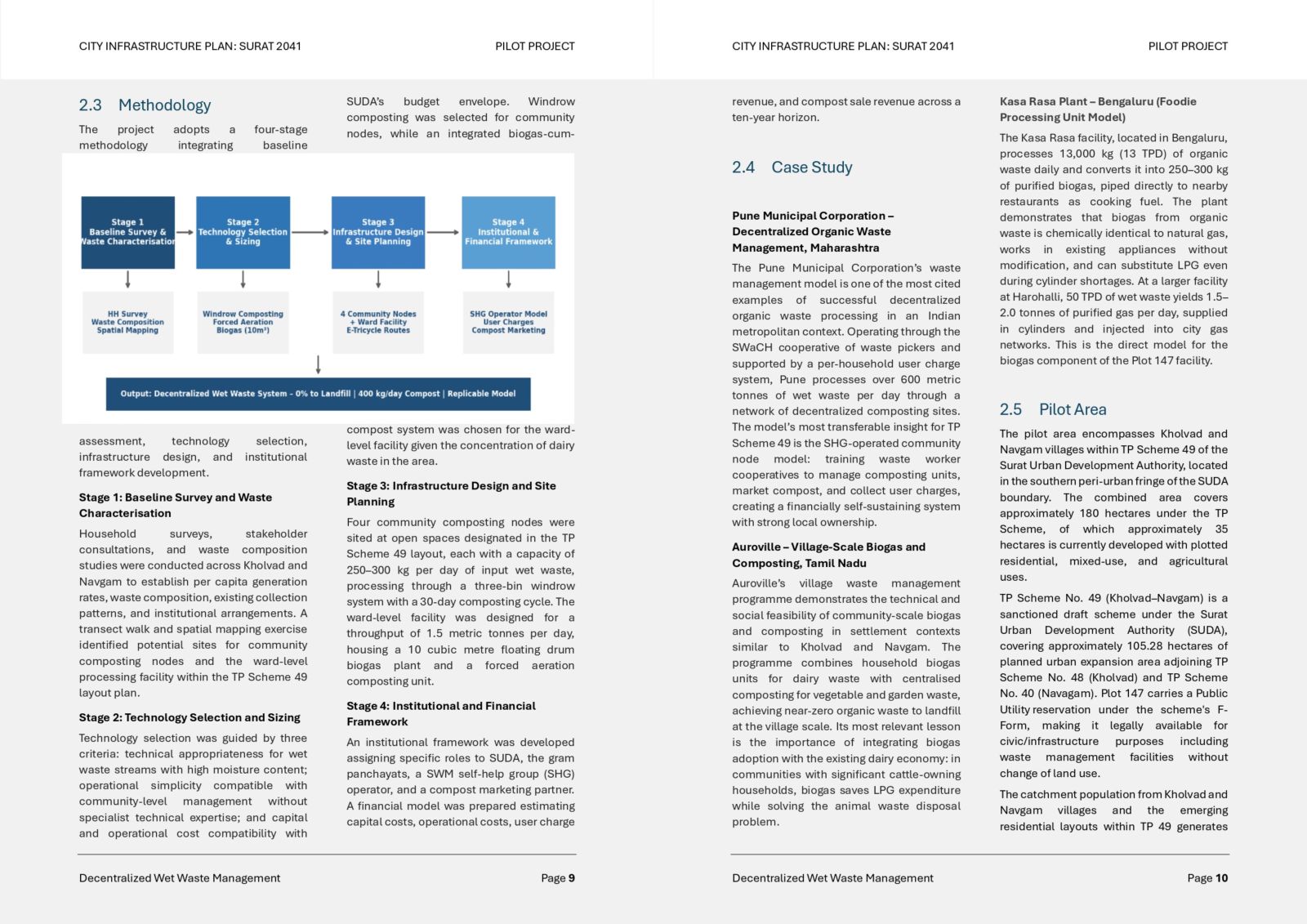
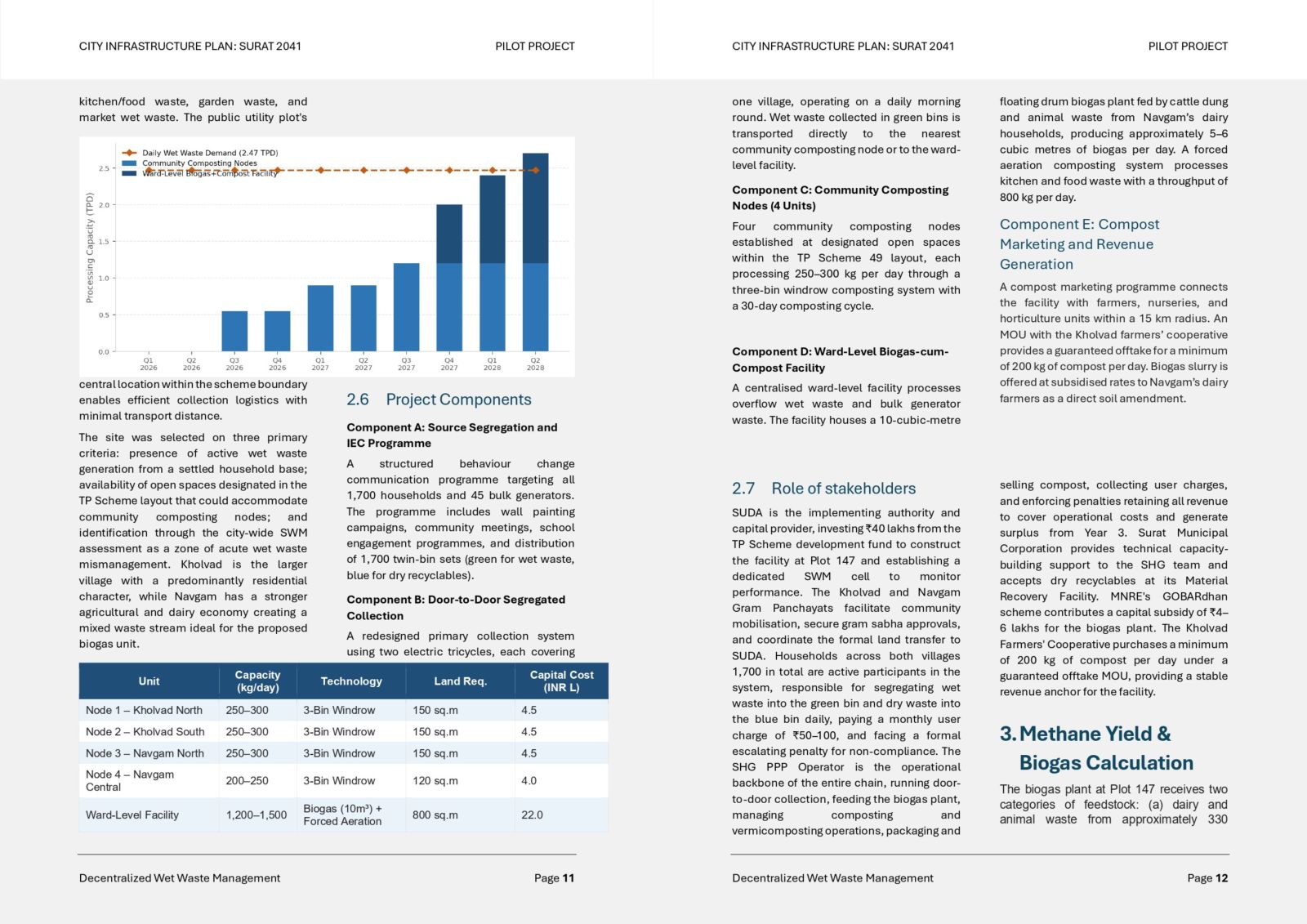
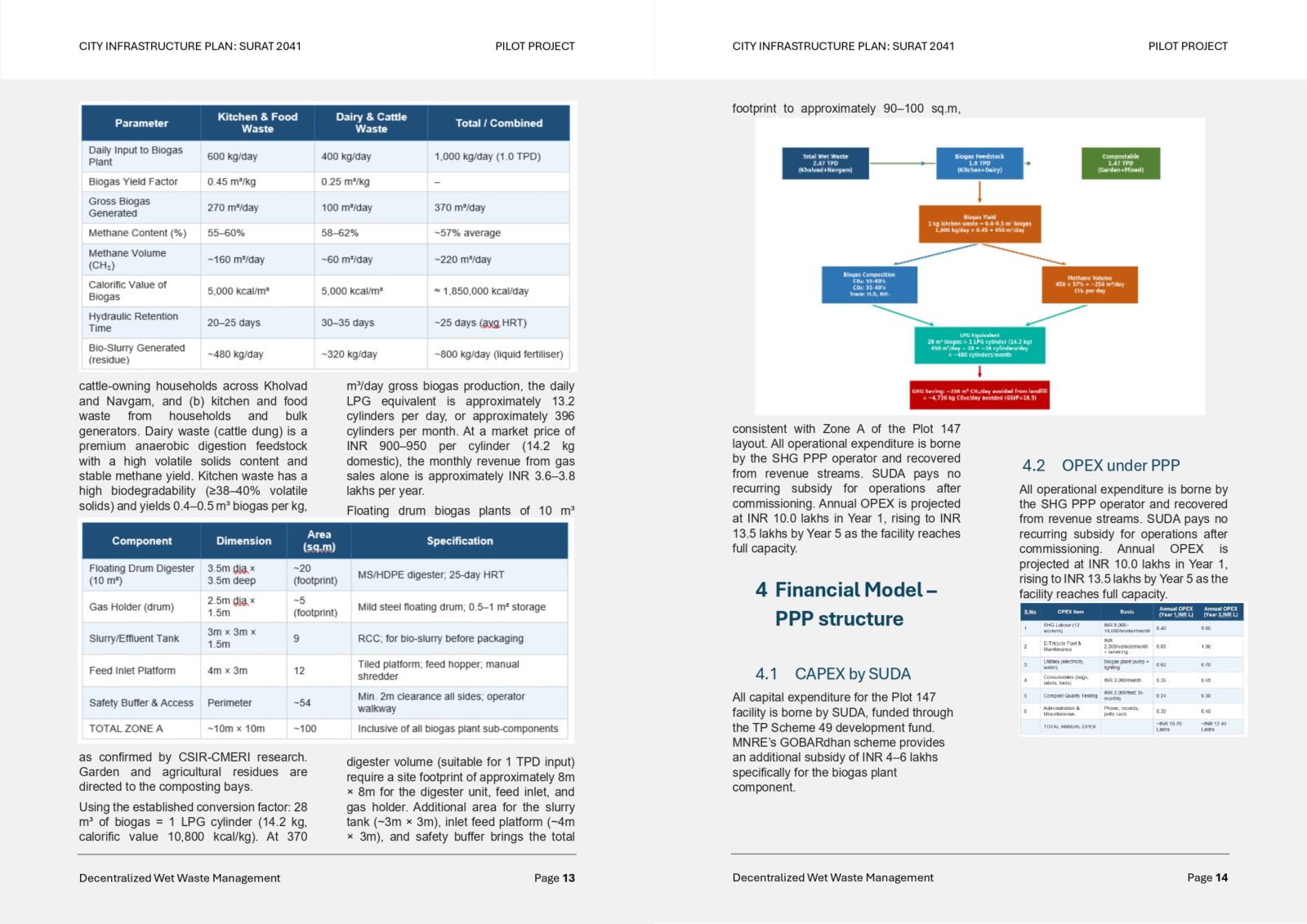
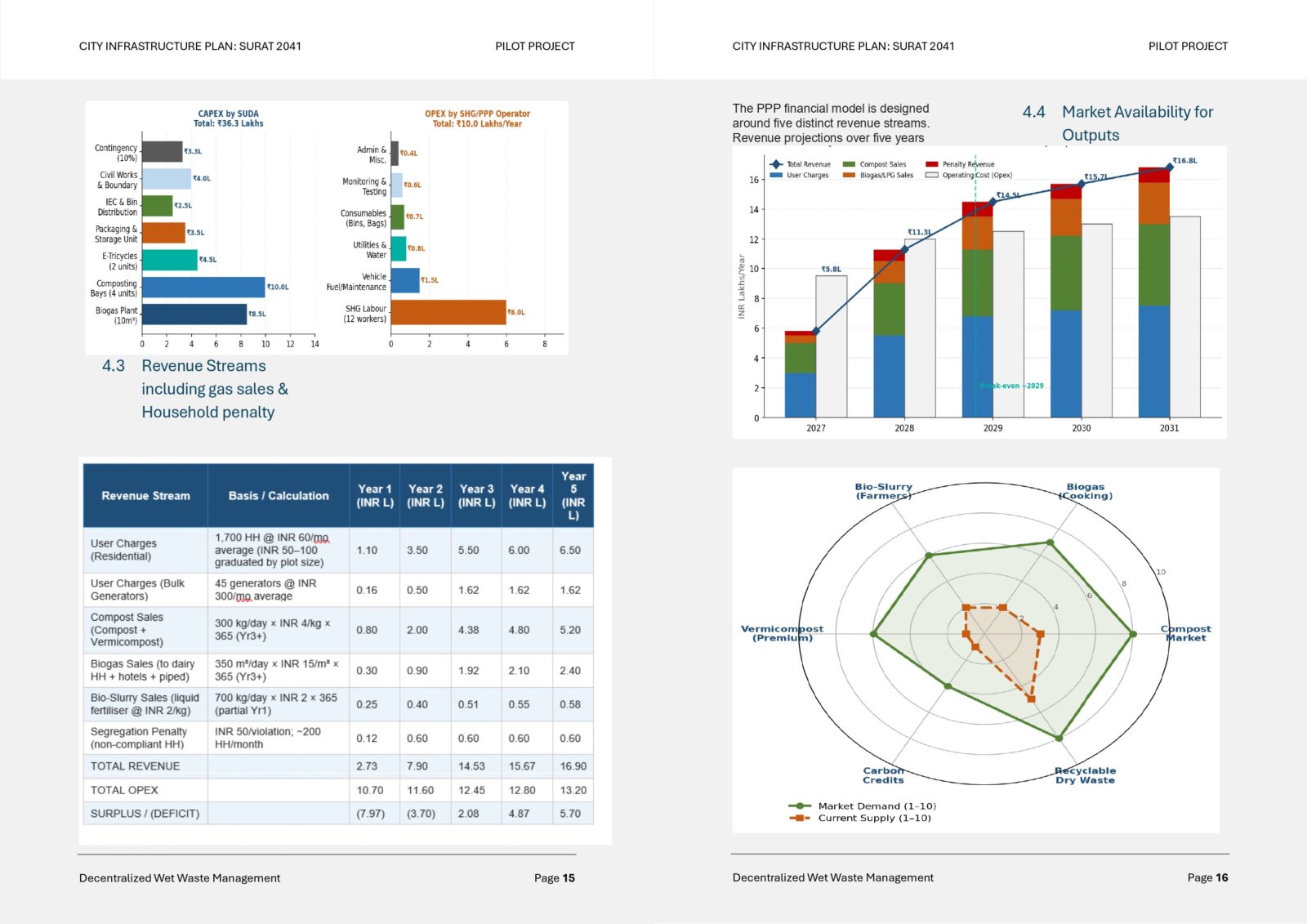
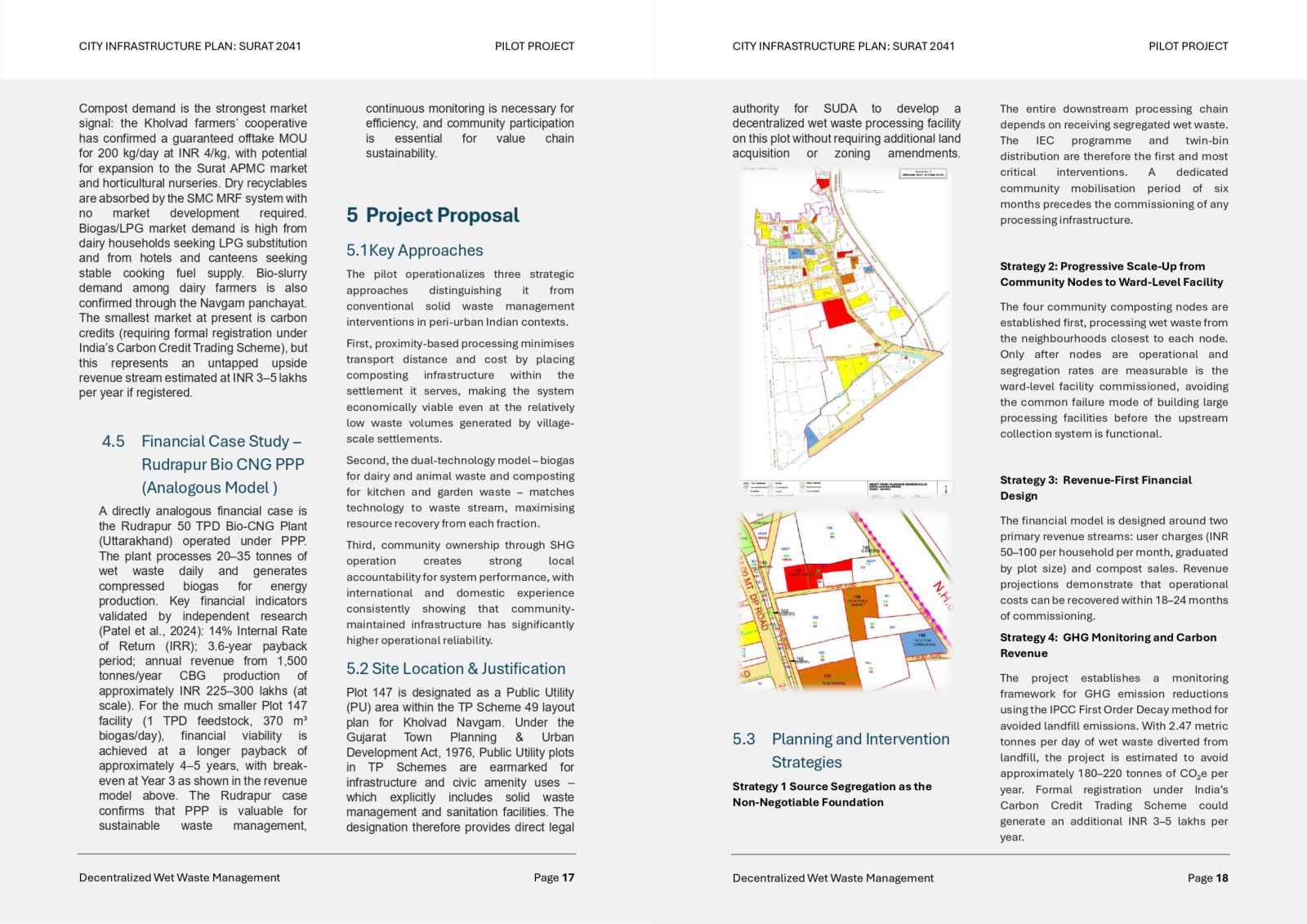
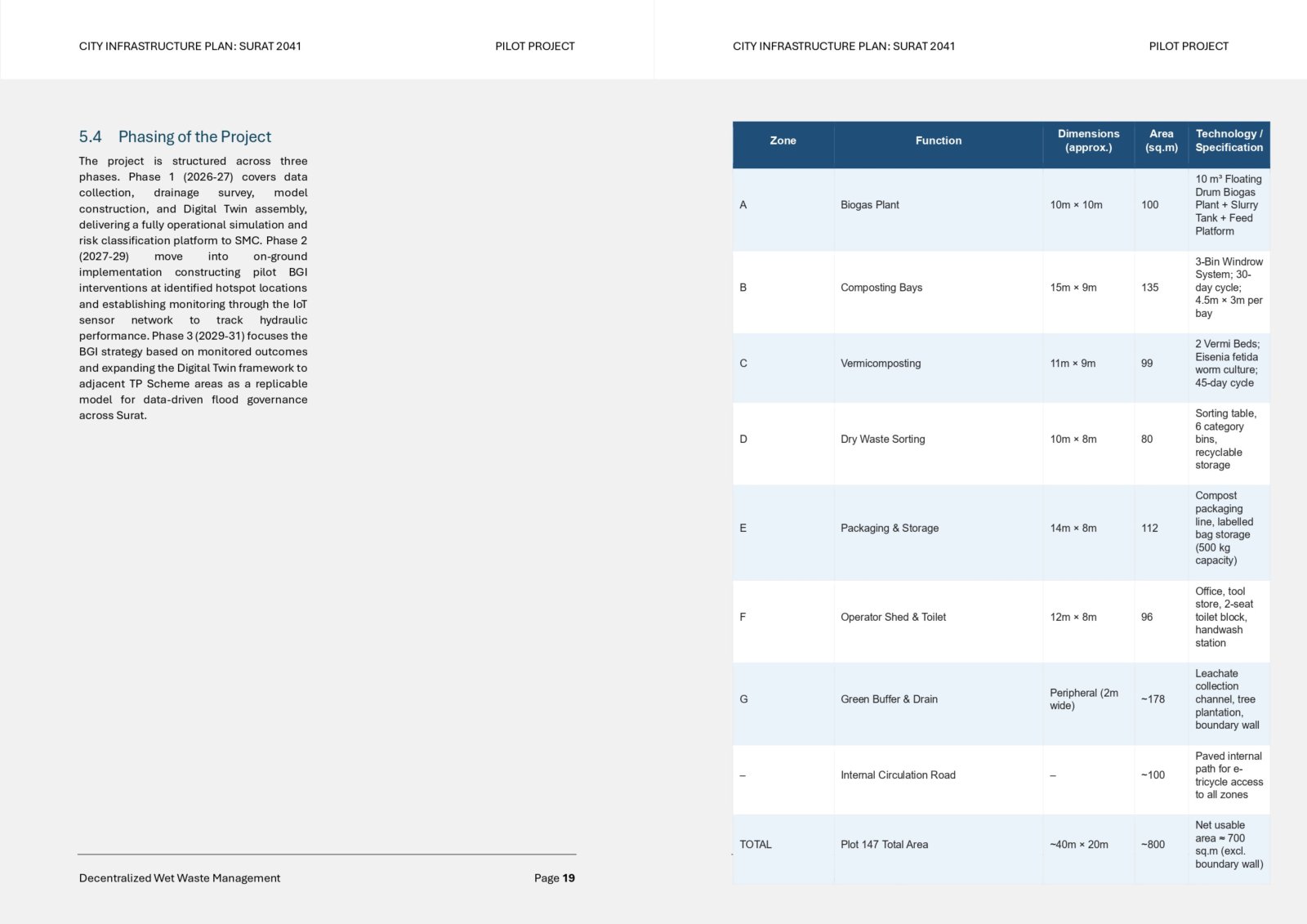
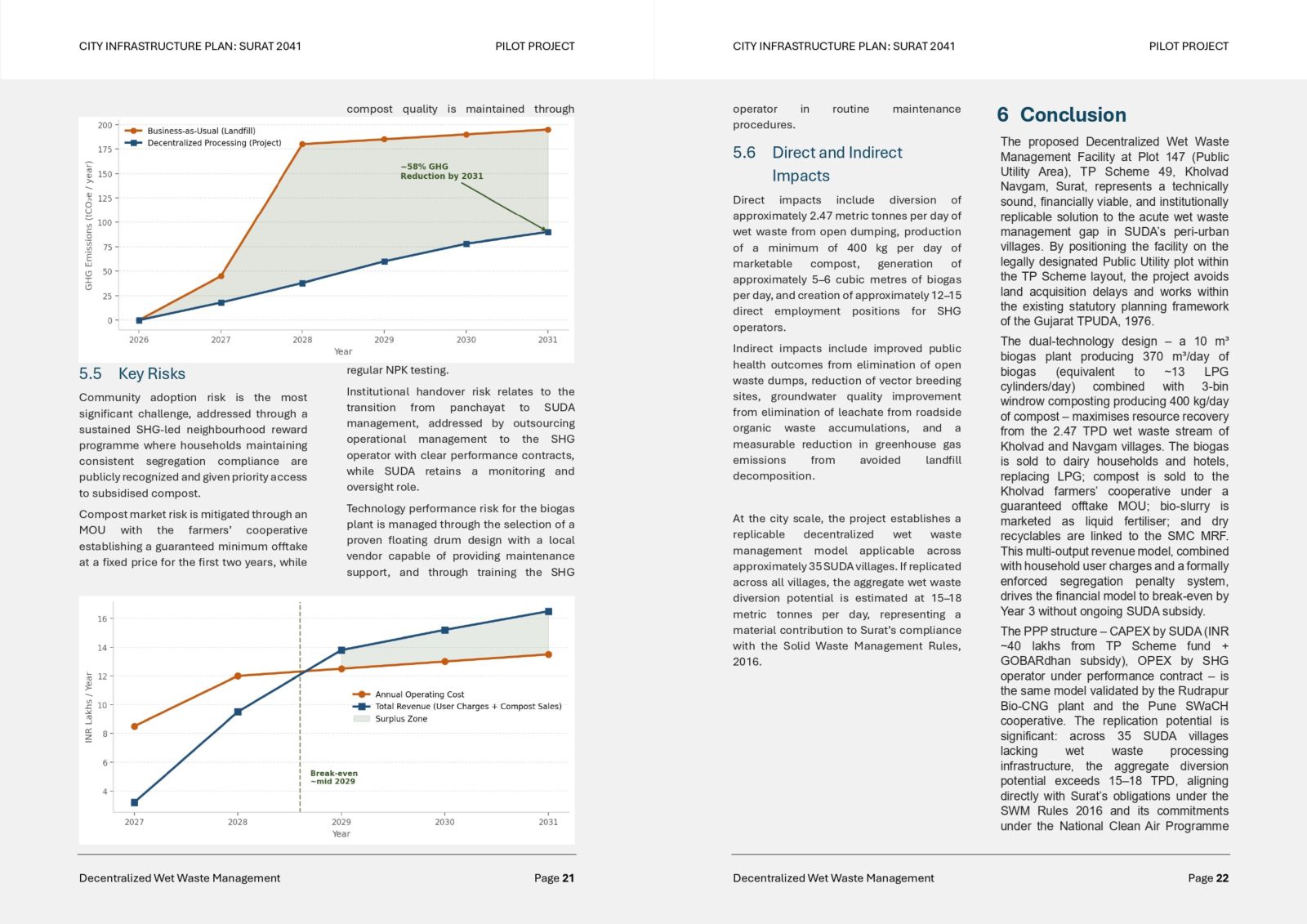
Trash to Treasure is a decentralized wet waste management pilot designed for TP Scheme 49, covering Kholvad and Navgam villages on Surat's peri-urban fringe. The pilot addresses a critical gap: 2.47 tonnes of organic waste generated daily with zero on-site processing infrastructure. The system establishes source segregation at 1,700 households, door-to-door collection via electric tricycles, four community composting nodes, and a ward-level biogas-cum-compost facility at Plot 147 a legally designated Public Utility plot under SUDA. Processing technologies include windrow composting, vermicomposting, and a 10 m³ biogas plant, collectively diverting all wet waste from landfill and producing 400 kg of compost and 370 m³ of biogas daily. Financially structured as a SUDA-funded CAPEX with SHG PPP operations, the system breaks even by 2029 and runs at surplus thereafter. OrganicLoop49 is fully replicable across 35 SUDA peri-urban villages, making it a scalable template for Surat 2041.
View Additional Work