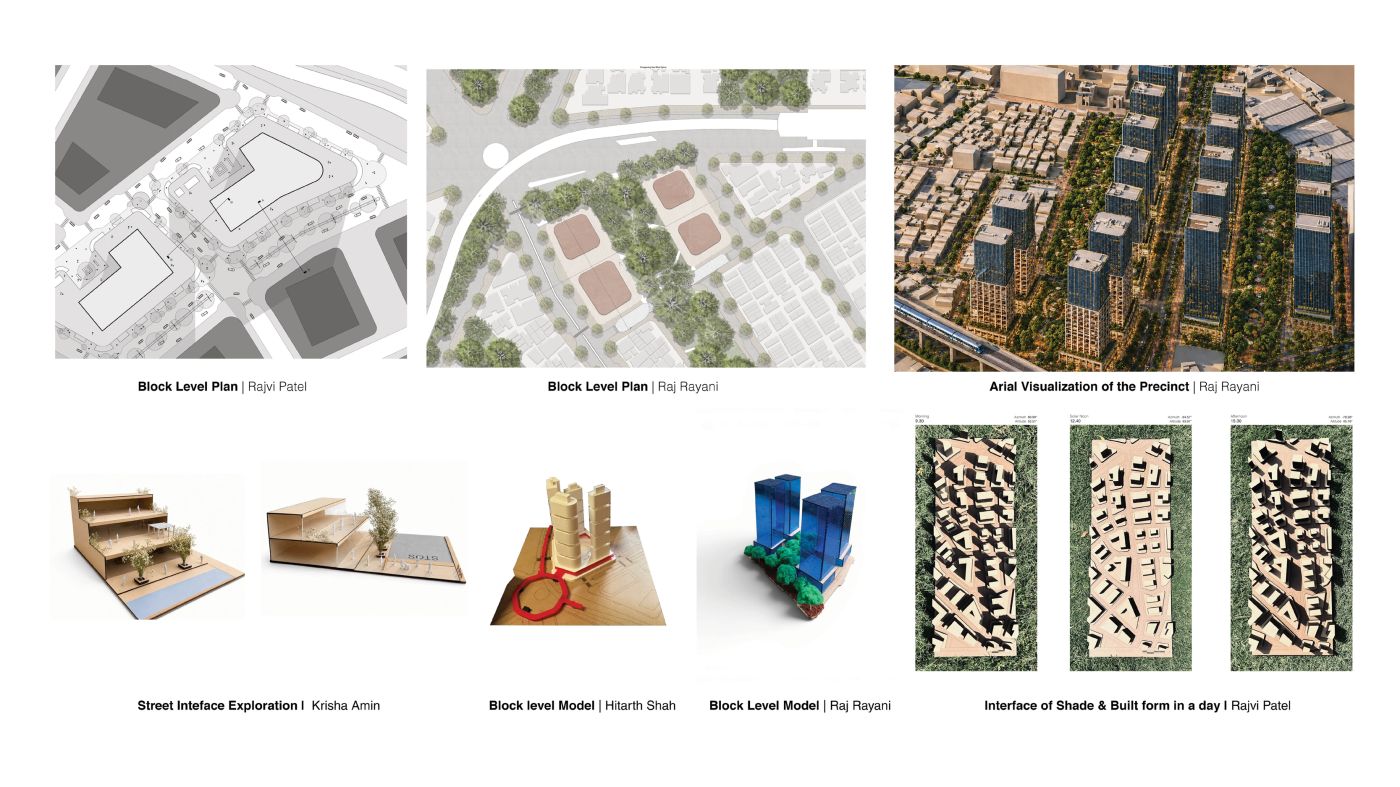
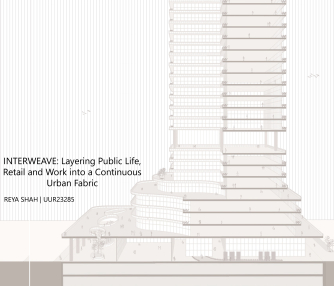
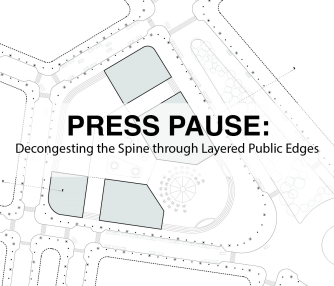
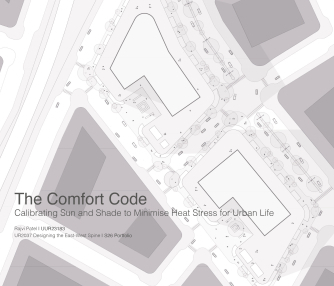
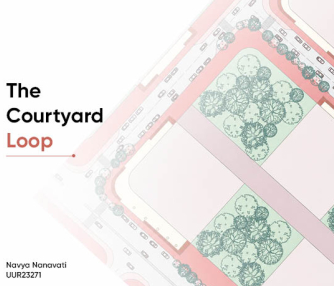
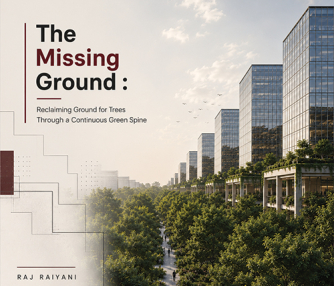
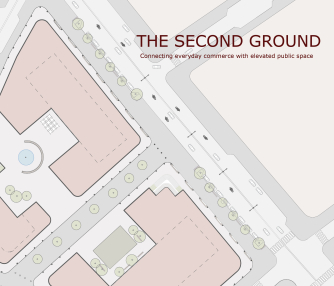
Ahmedabad is entering a decisive stage of growth. The proposed East–West Corridor, from Ognaj to Odhav, is planned as the city’s first continuous spine linking the expanding west with the historic east. Framed mainly as a traffic project—smoother junctions, faster flow, new footpaths—it risks being treated only as infrastructure. The design challenge is whether this corridor can become a civic framework that unites mobility, public life, and identity.
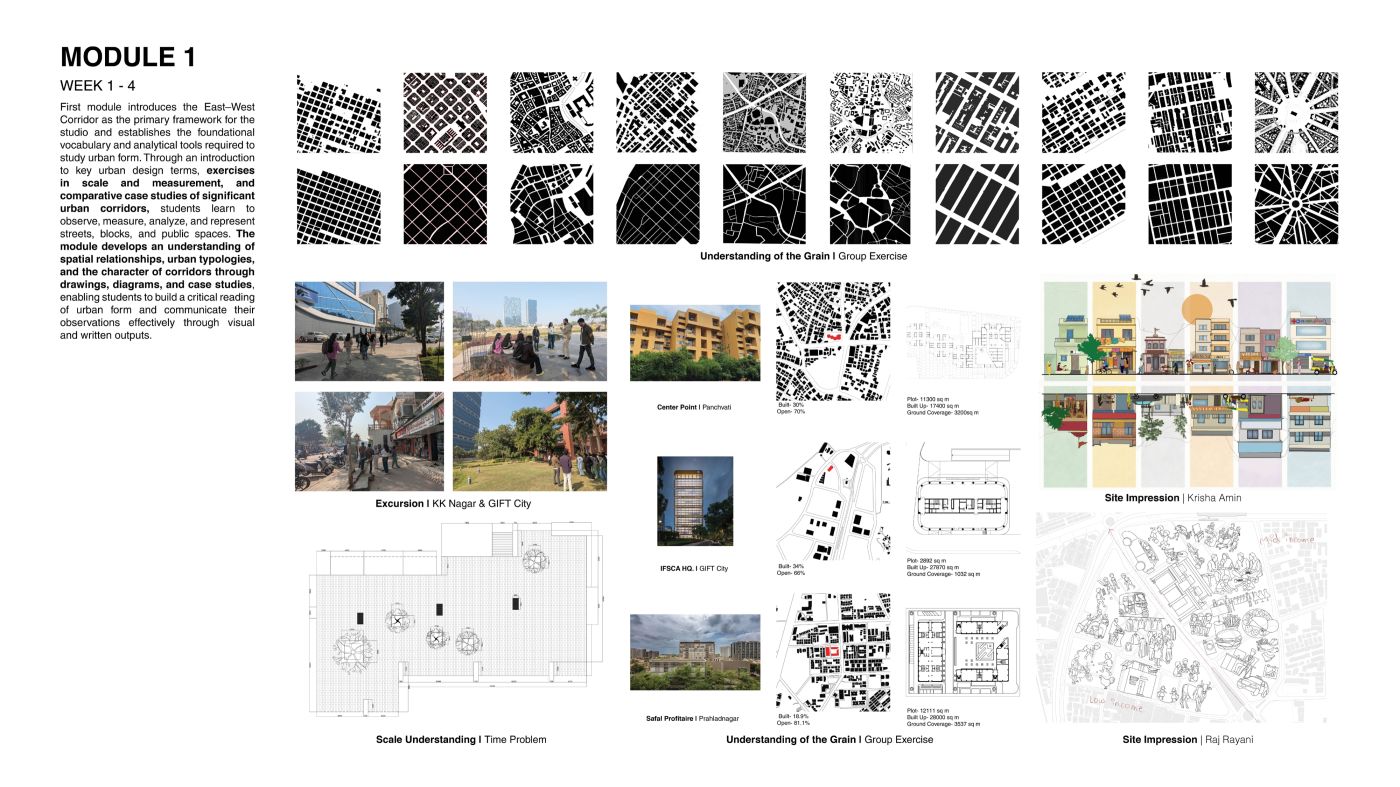
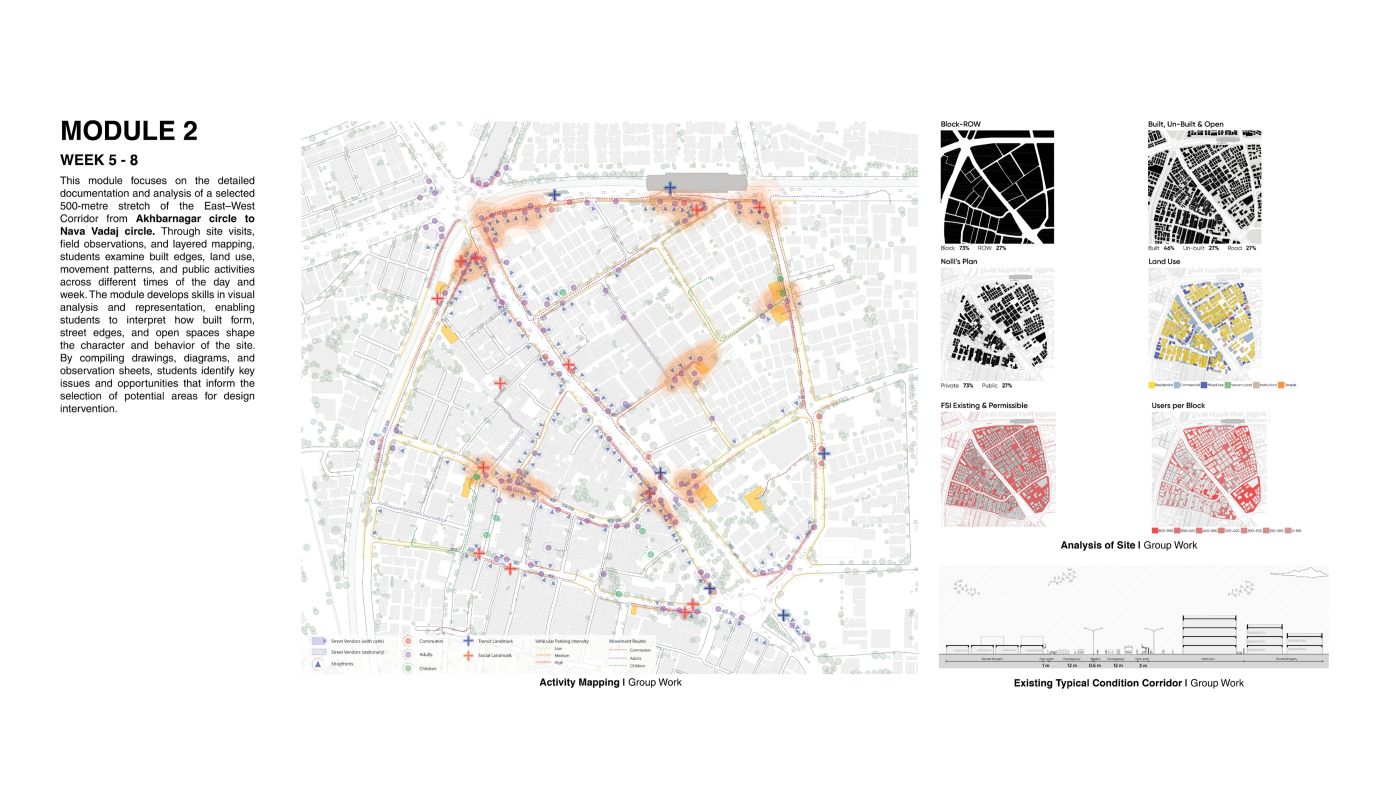
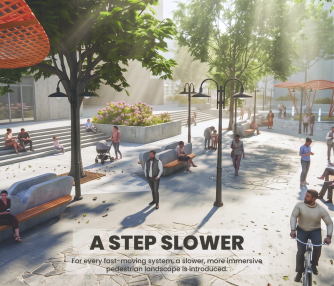
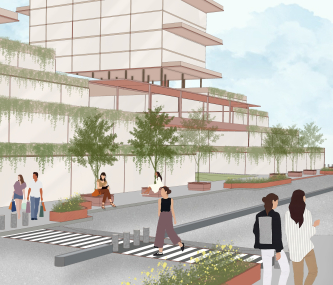
Current patterns show risks: streets designed for vehicles, blocks shaped by generic codes, and regulations producing fragmented edges—blank walls, gated plots, scattered commercial strips. These conditions prevent continuity and weaken the public realm.
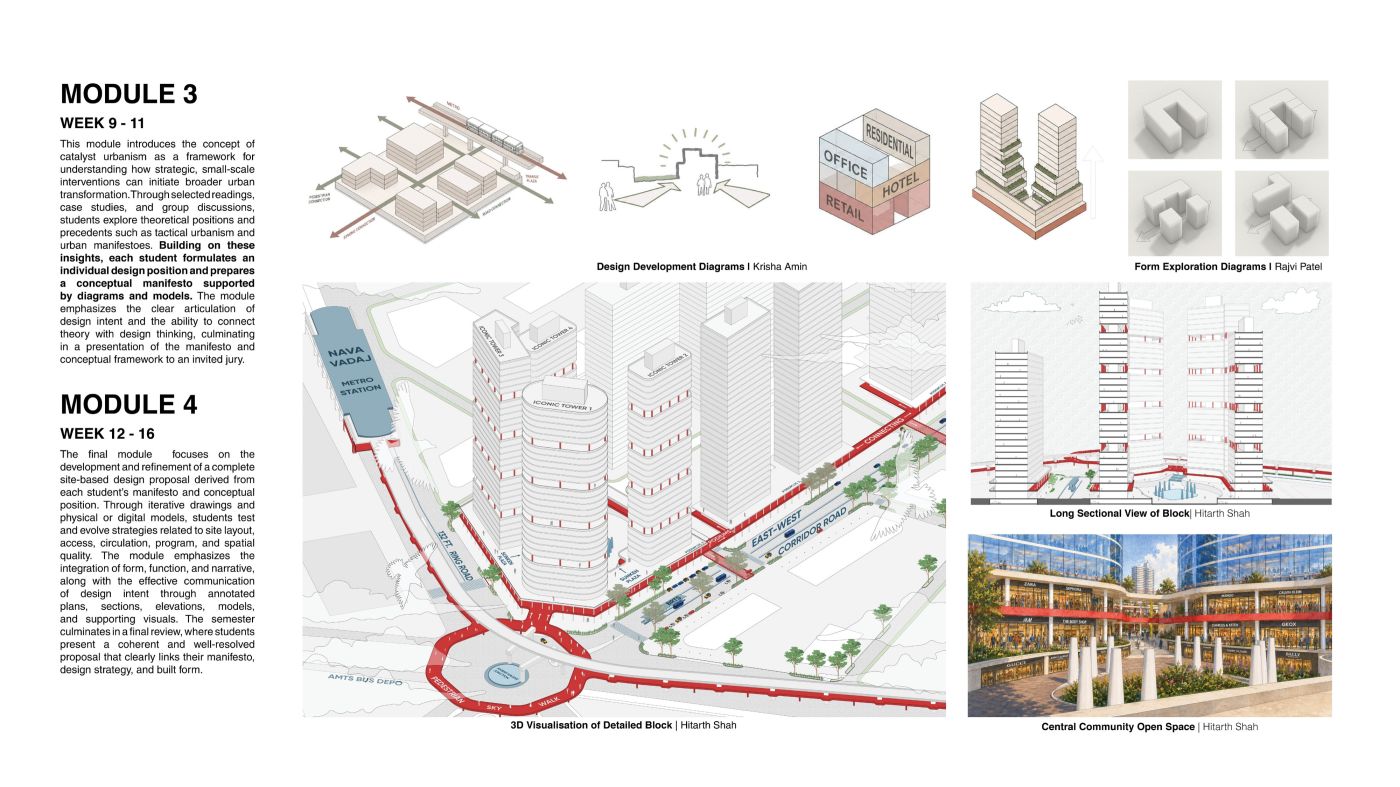
Precedents underline the stakes. Haussmann’s boulevards structured Paris but displaced communities. Shanghai’s Nanjing Road thrives as cultural and commercial spine. Mumbai’s Colaba Causeway demonstrates intense mixed-use life yet faces pressures of congestion and gentrification. Ahmedabad’s own CG Road once anchored commerce but declined under traffic dominance. Each shows corridors succeed only when streets and urban blocks are integrated. This studio will develop strategies focused on block and road design integrity, testing regulation-dependent and regulation-agnostic approaches.