Malhotra Anubhav Mahesh Nishi

UI4051

PUI24036

This research explores the role of India’s Social Stock Exchange in mainstreaming impact investment and strengthening financing for social development. The study examines SSE’s regulatory framework, fundraising mechanisms, investor participation, and global precedents to understand its potential as a platform for mobilizing capital towards measurable social outcomes. It further analyses the intersections of CSR philanthropy, blended finance, and impact investing within the Indian context, particularly across sectors such as healthcare, education, climate action, sanitation, and livelihoods. The project aims to identify key opportunities, limitations, and policy directions for positioning SSE as an effective and transparent mechanism for social development.

View Additional Work
Report Content

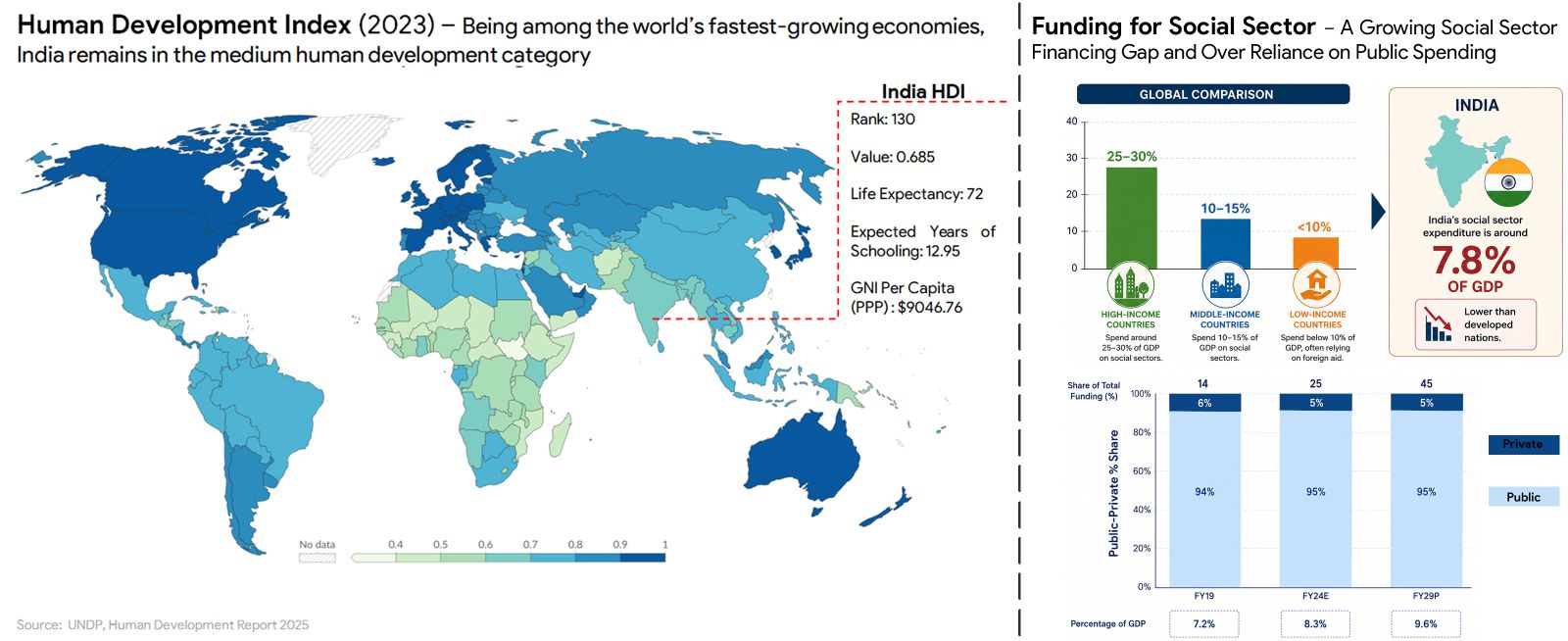
Contextualising the Need for Alternative Social Financing in India

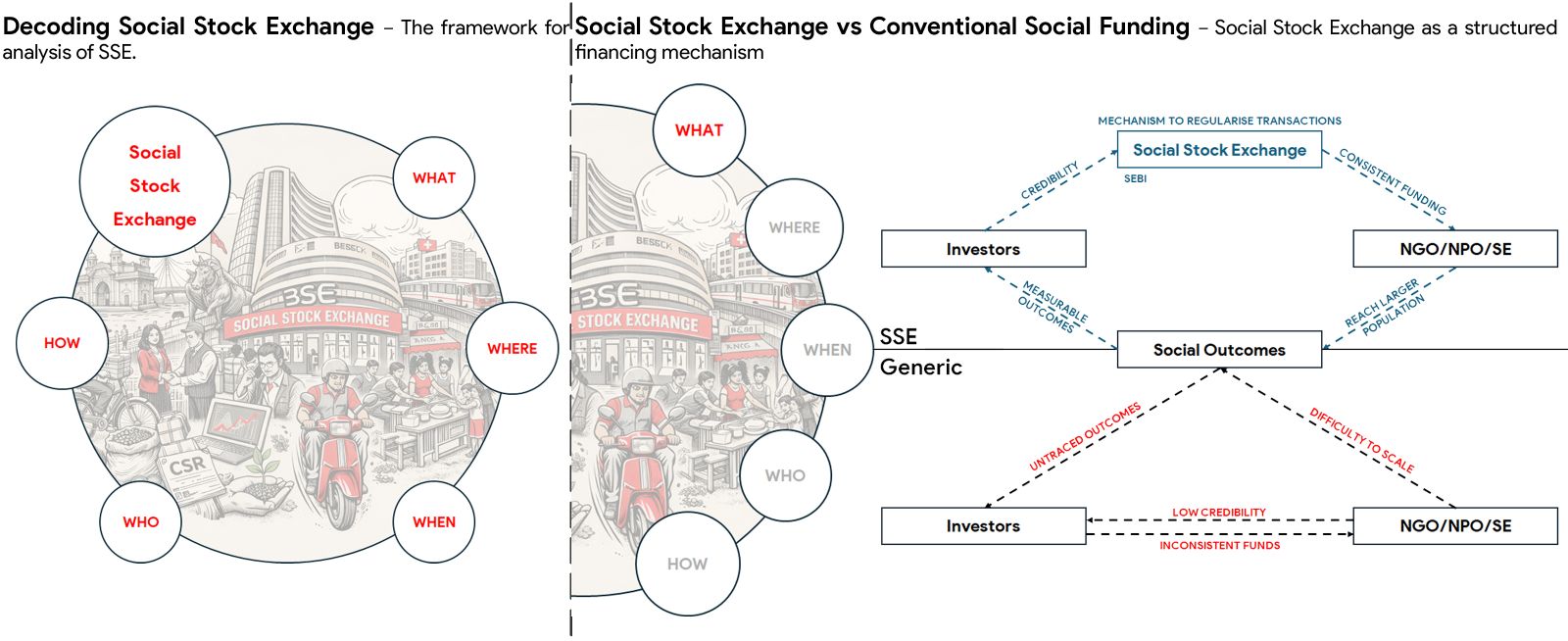
Decoding the Social Stock Exchange as a Structured Impact Financing Mechanism

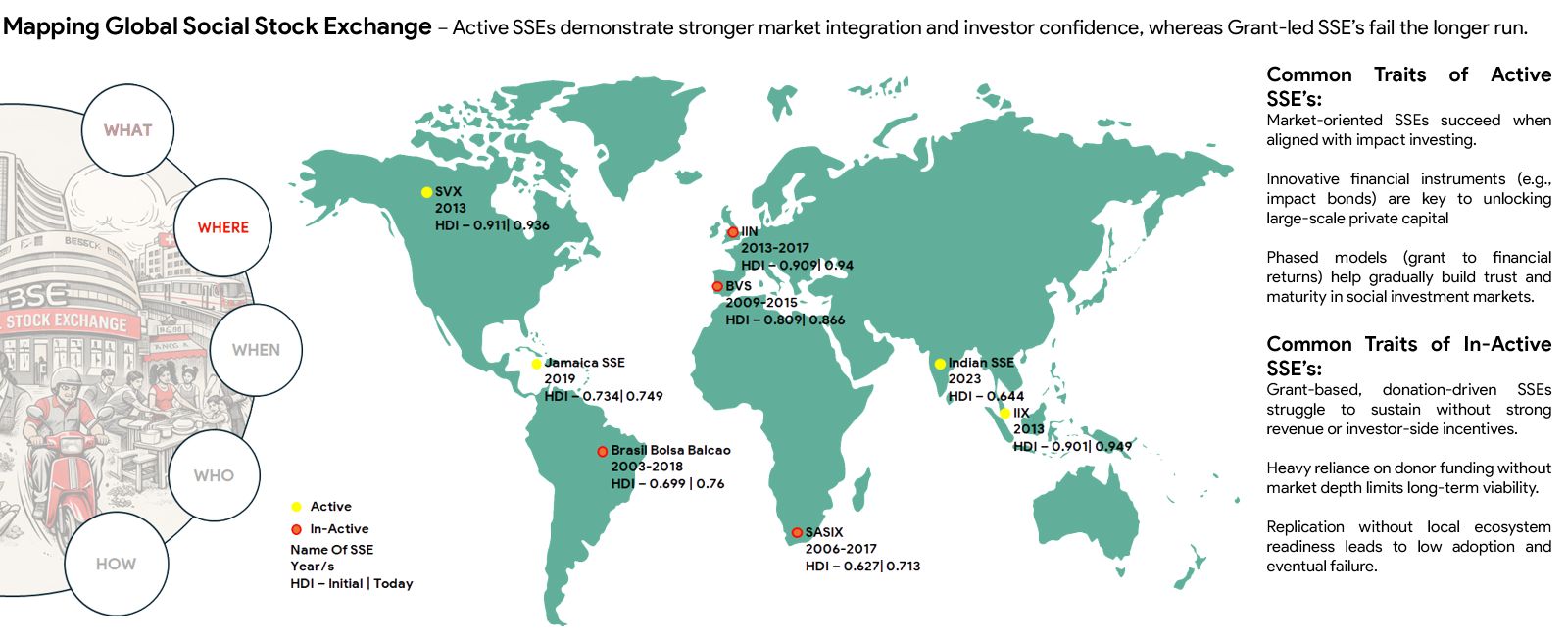
Global SSE models indicate that market-linked and investment-oriented exchanges demonstrate stronger long-term sustainability than grant-led systems.

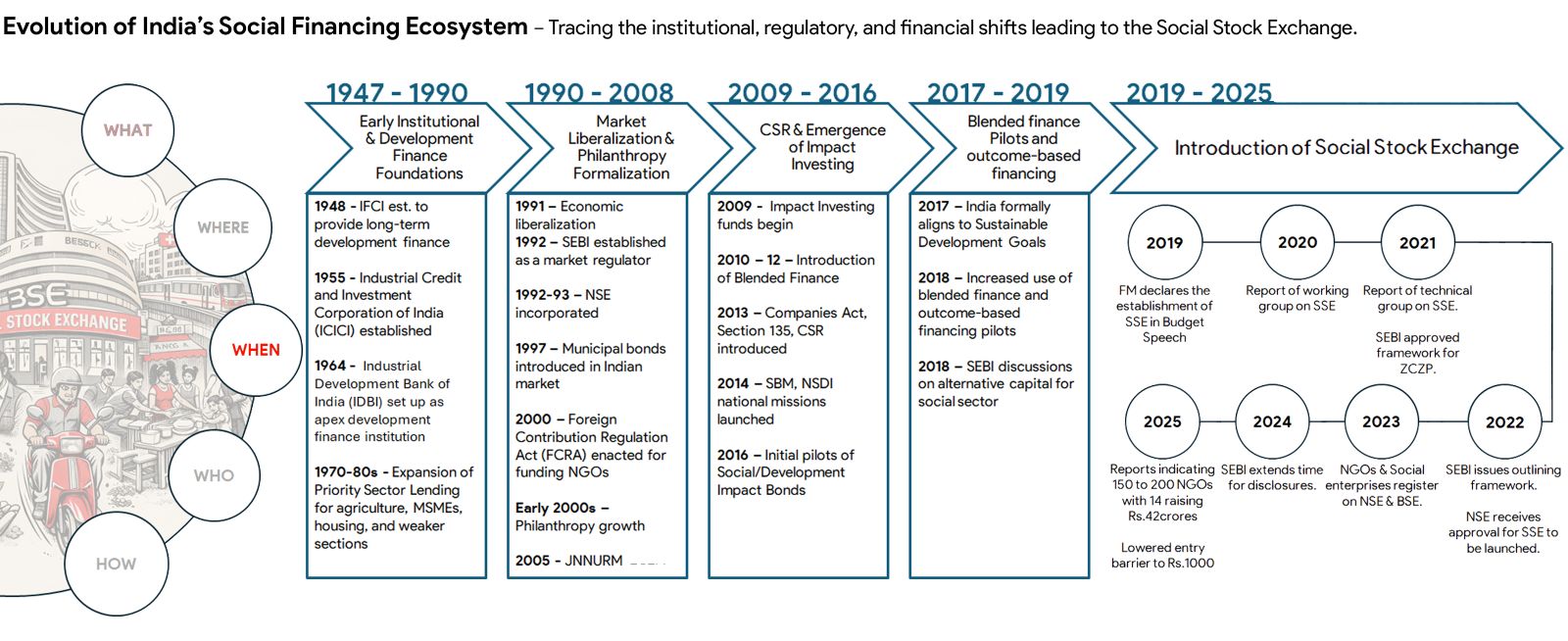
India’s Social Stock Exchange emerges from a long transition from institutional development finance to structured impact-oriented capital systems.

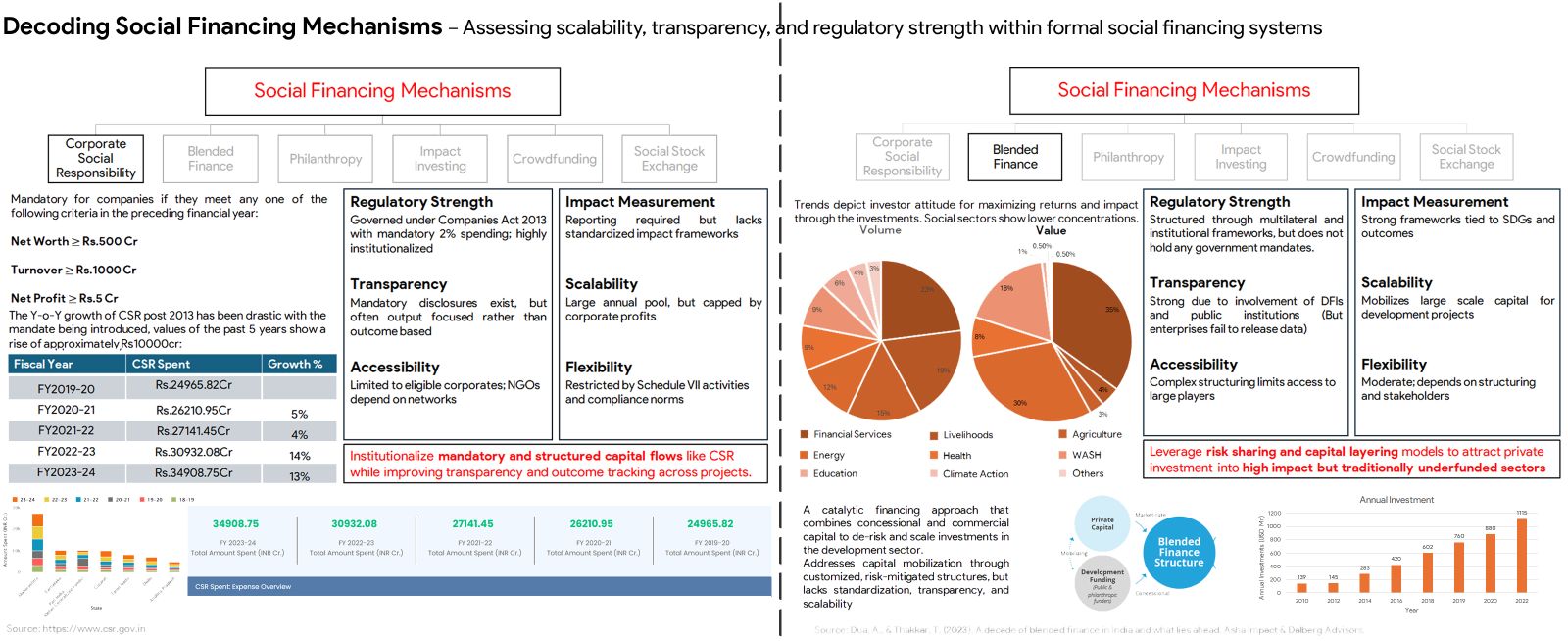
Structured financing mechanisms demonstrate scale and institutional strength, but continue to face challenges of transparency and measurable impact.

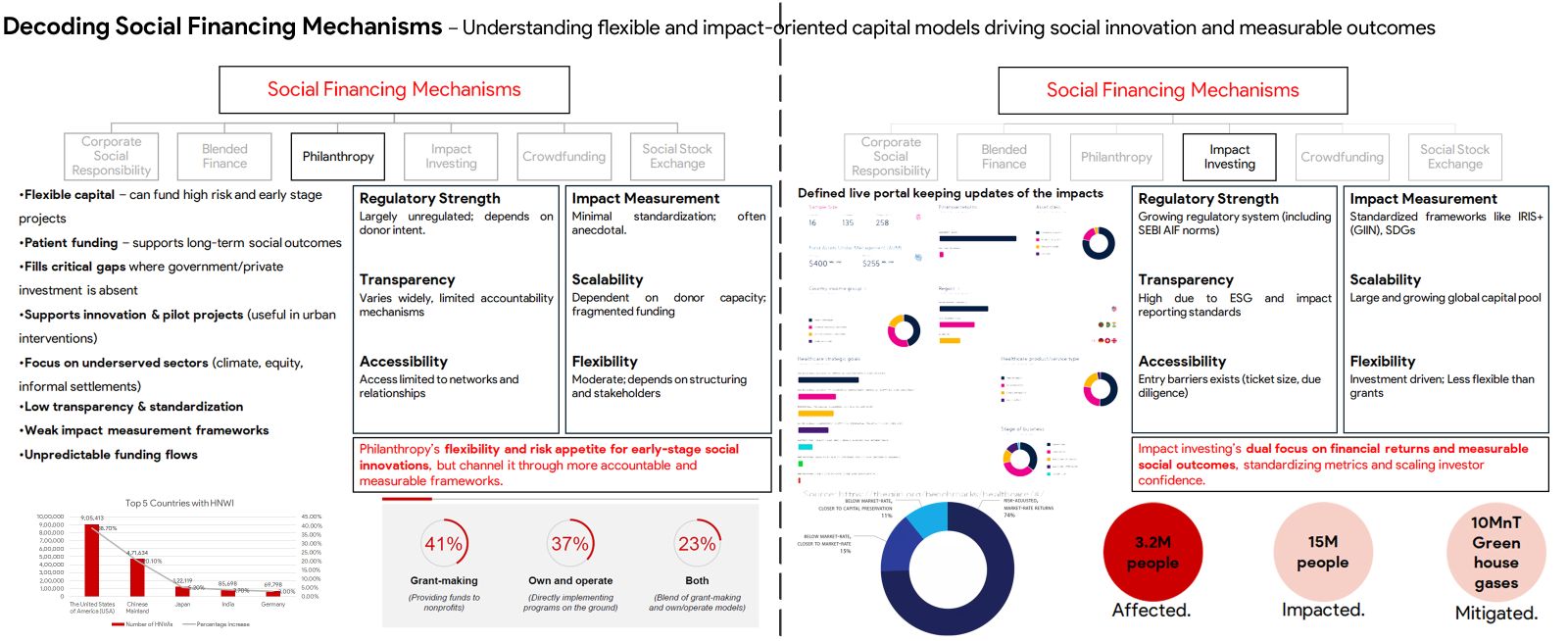
Flexible and impact-oriented capital models enable innovation, but require stronger accountability and standardized outcome measurement frameworks.

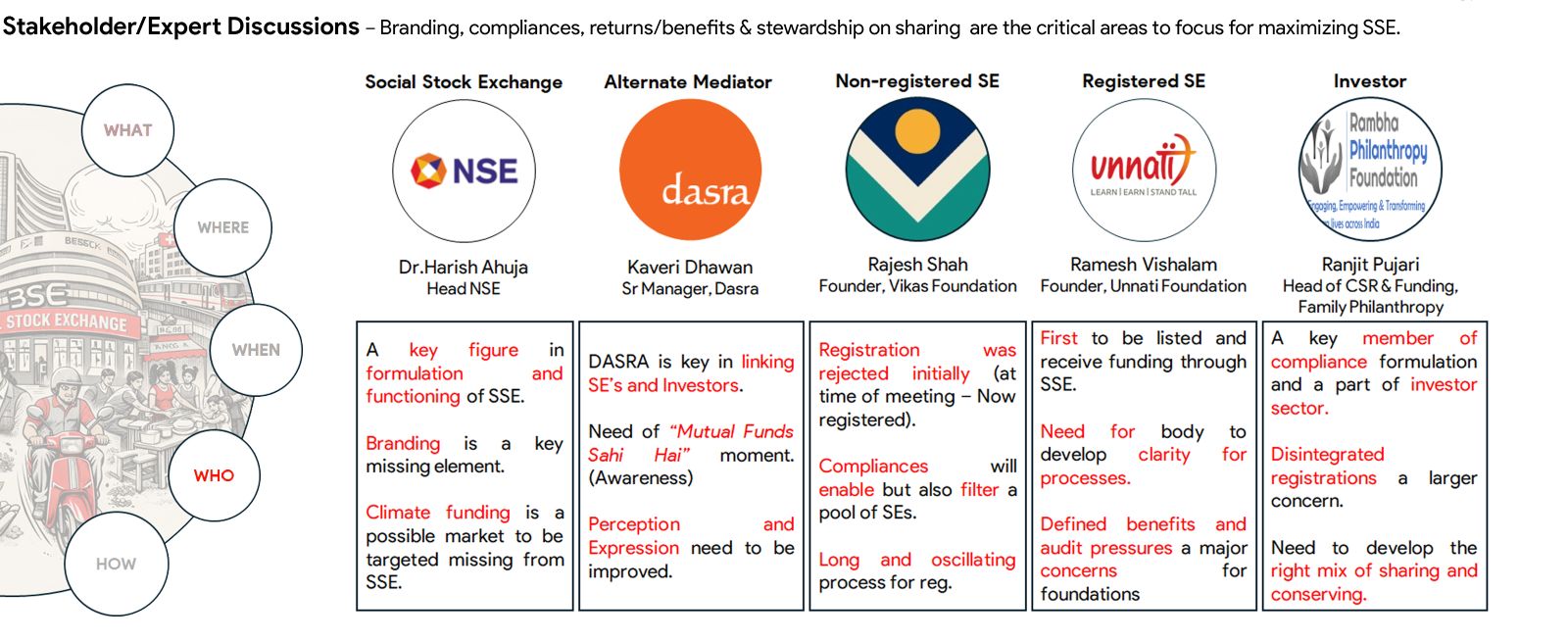
Stakeholder discussions reveal that awareness, compliance clarity, investor confidence, and stewardship remain critical barriers to SSE adoption.

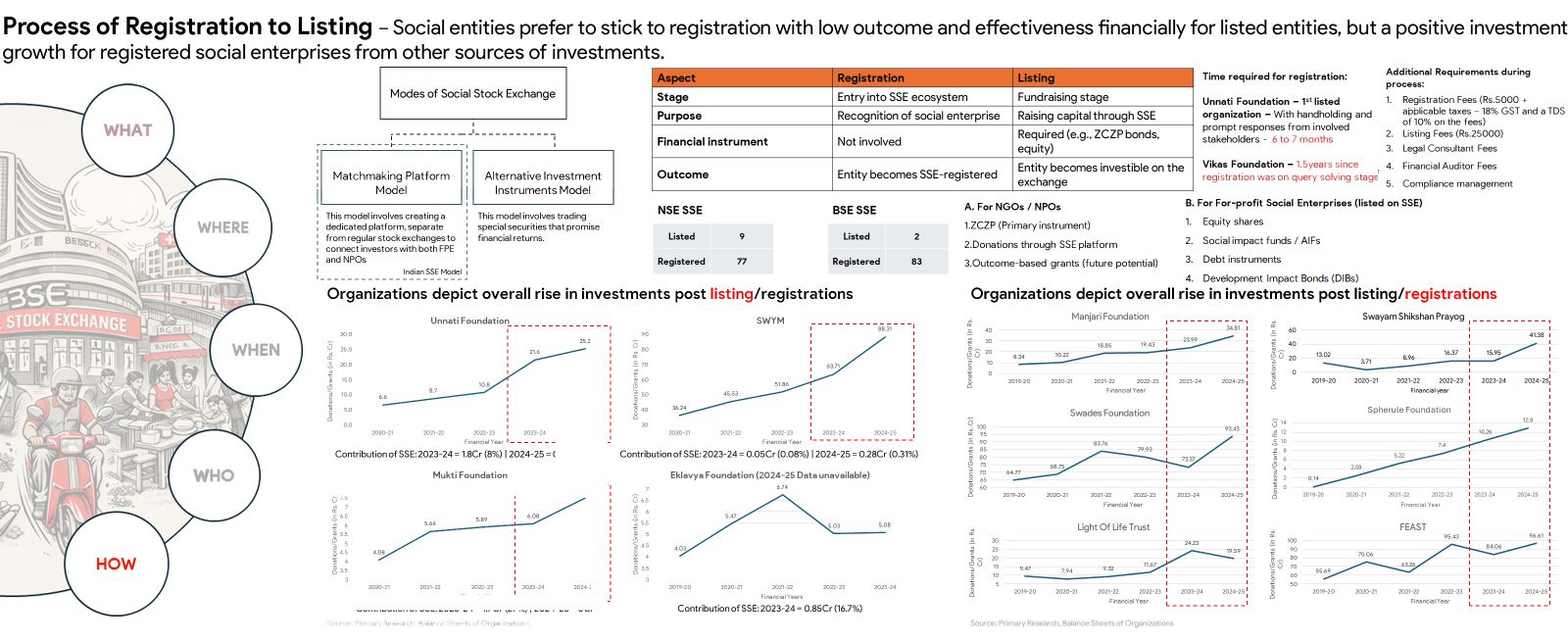
While SSE registration improves visibility and investor confidence, the transition from registration to active listing remains limited and process-intensive.

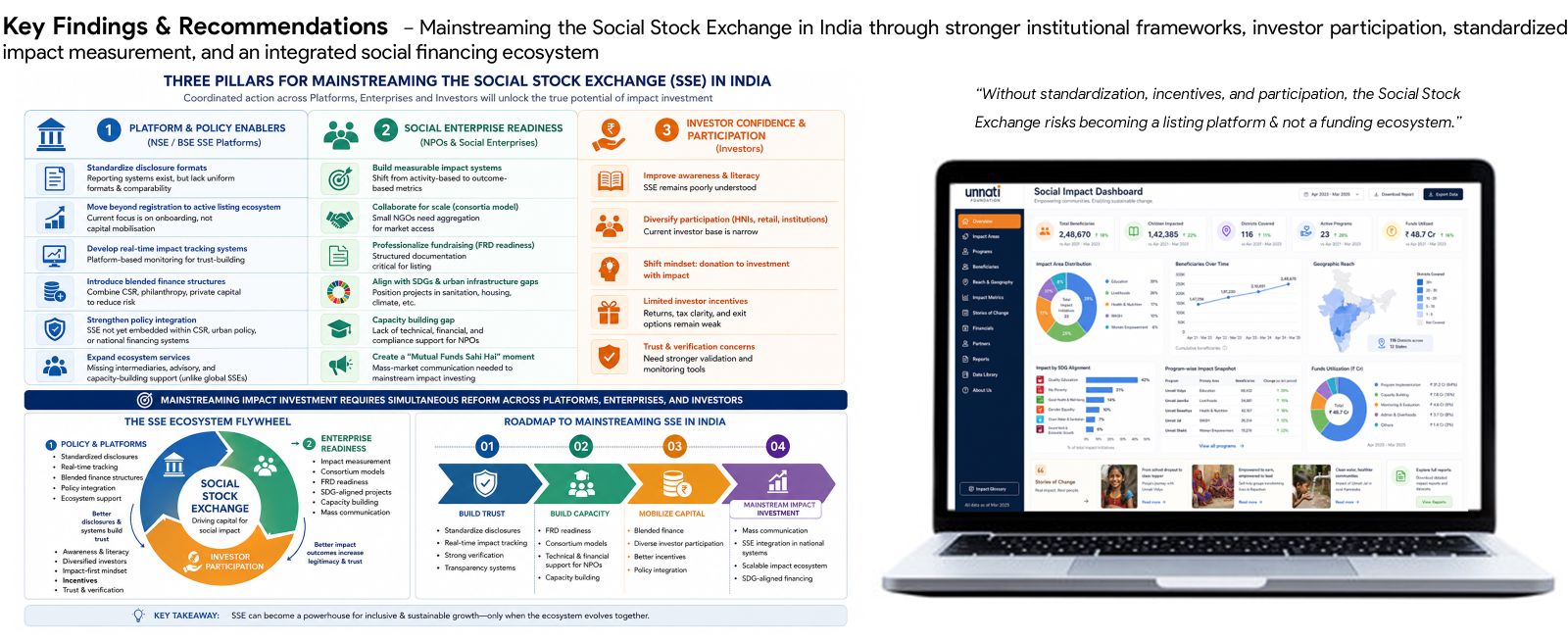
Unlocking the Potential of India’s Social Stock Exchange