Your browser is out-of-date!
For a richer surfing experience on our website, please update your browser. Update my browser now!
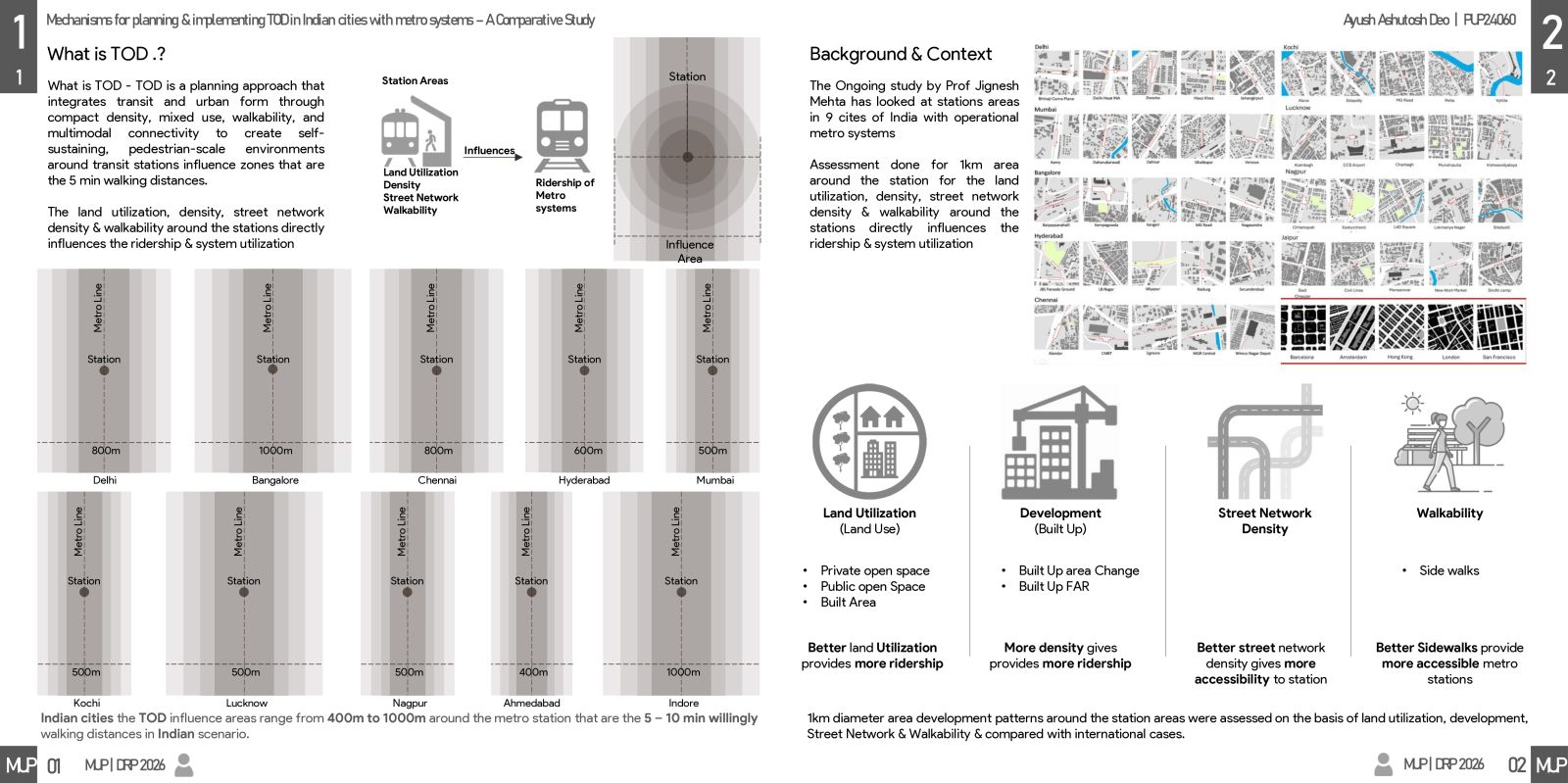
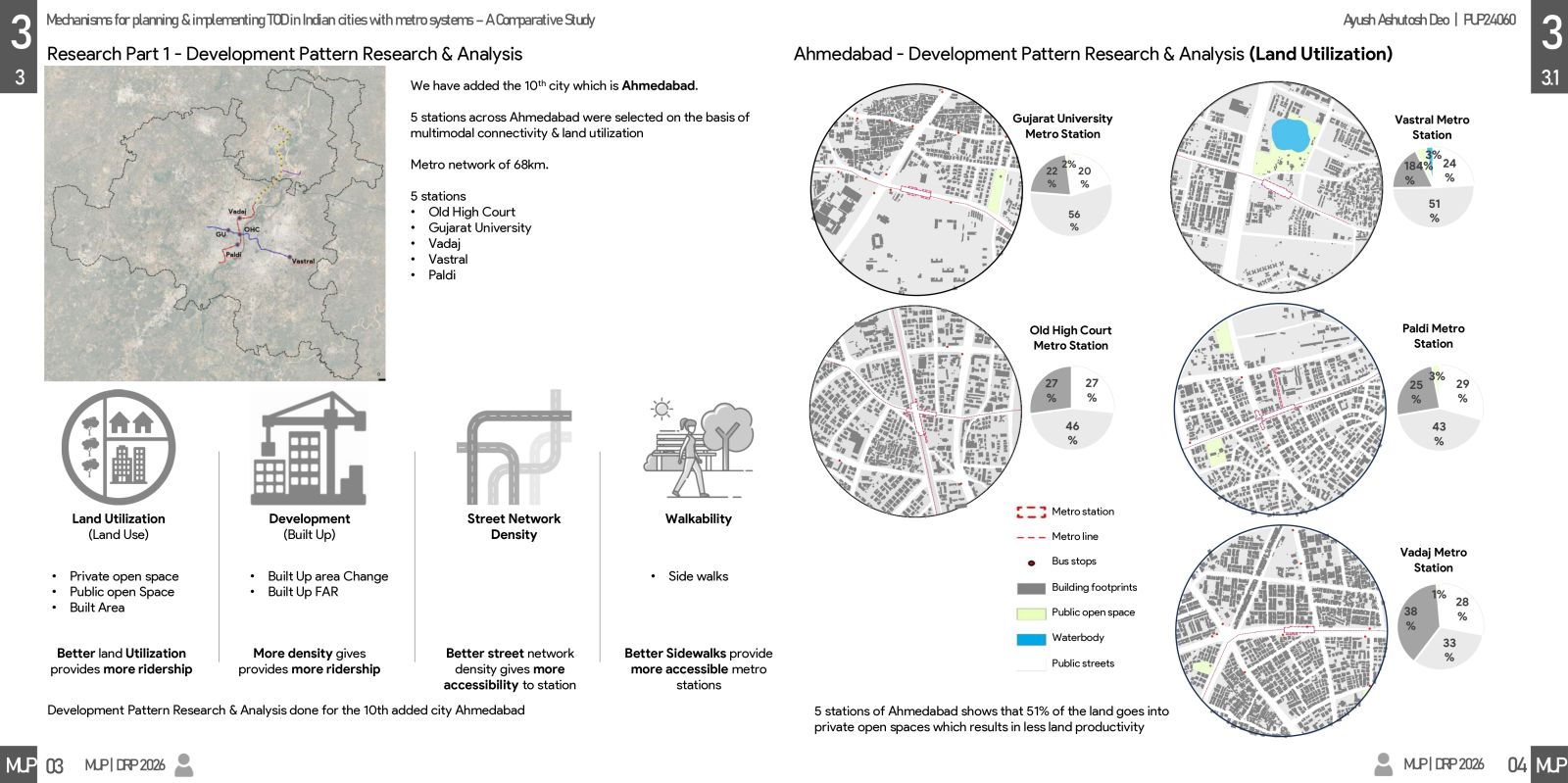
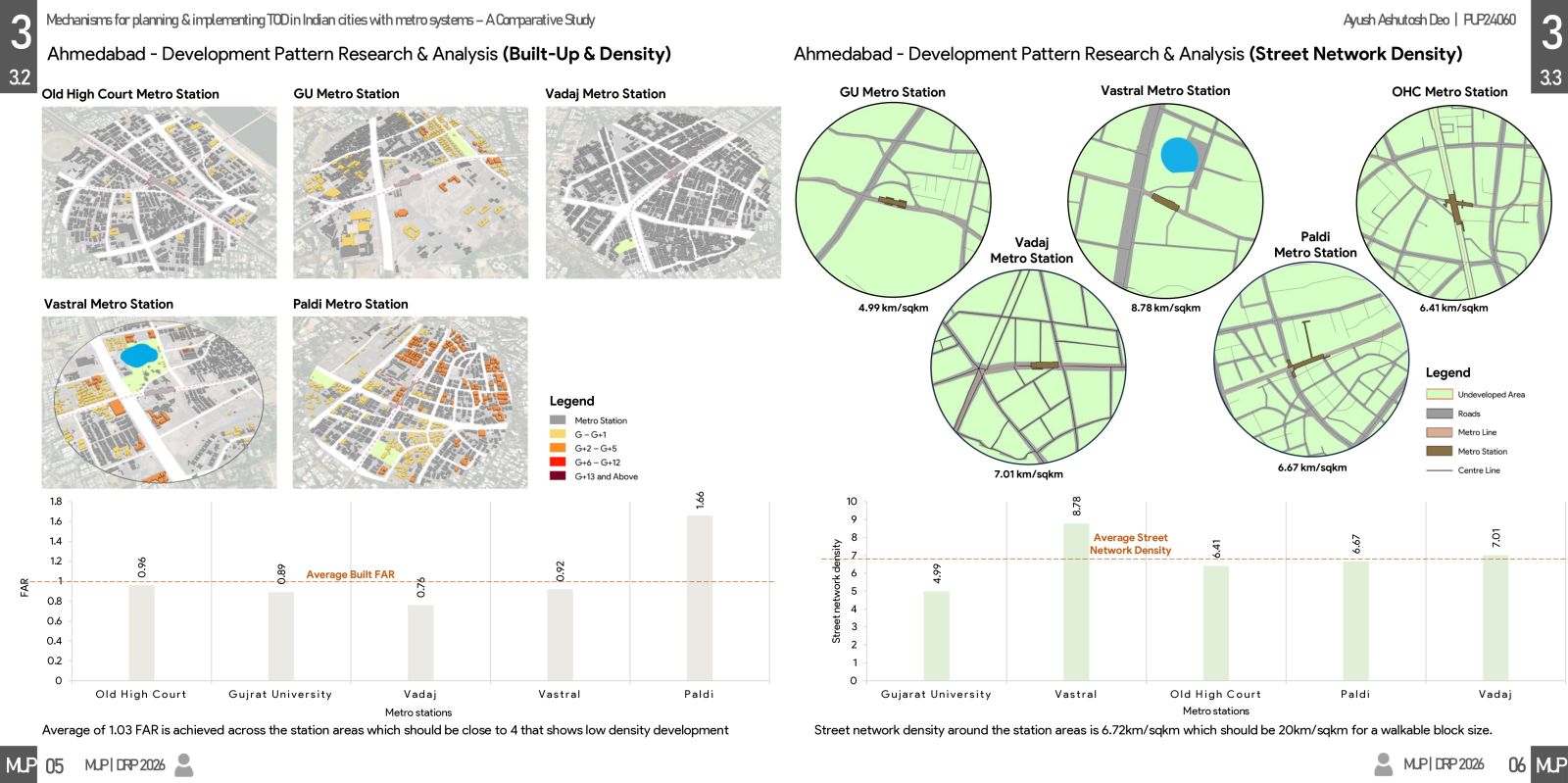
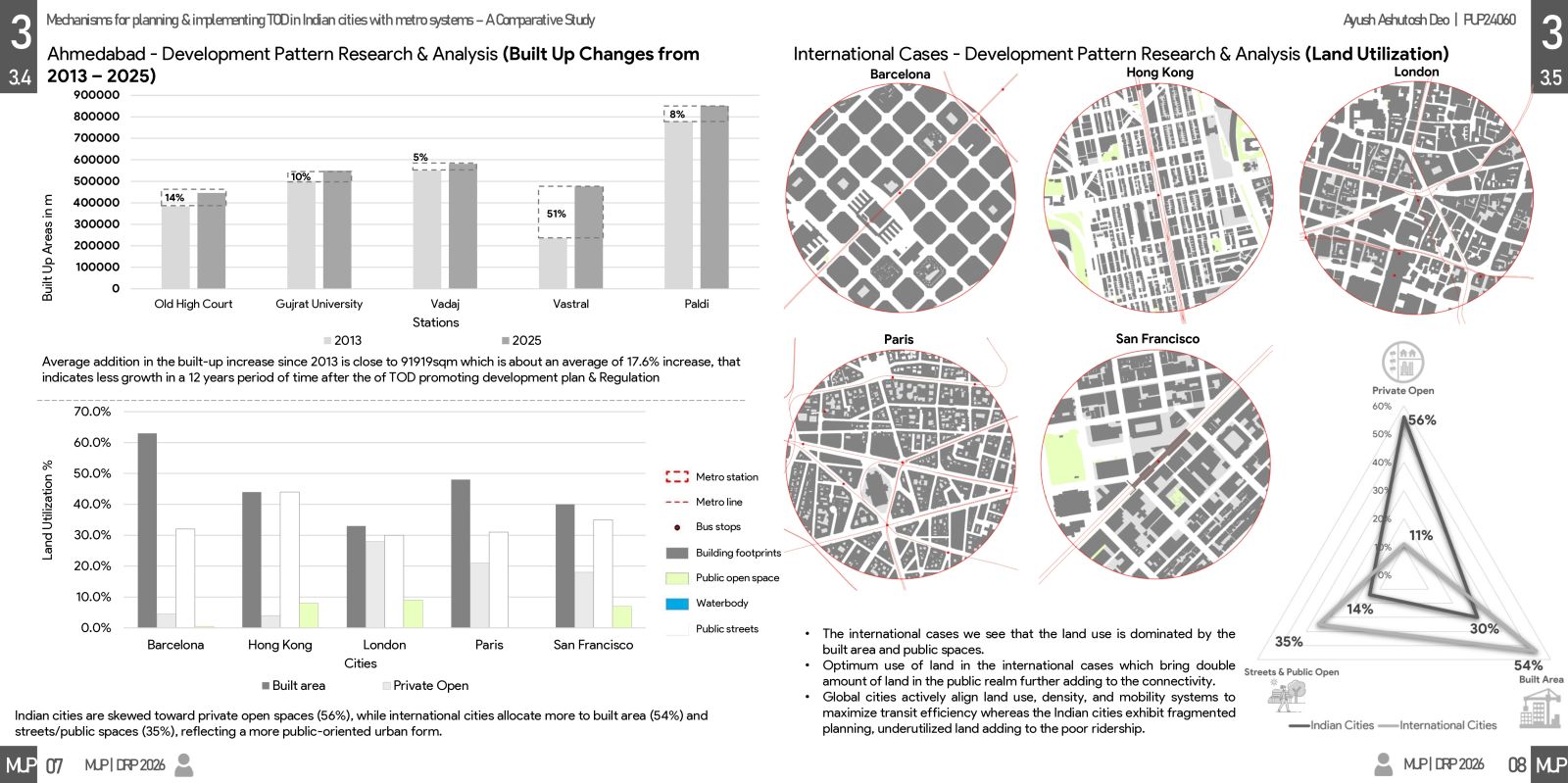
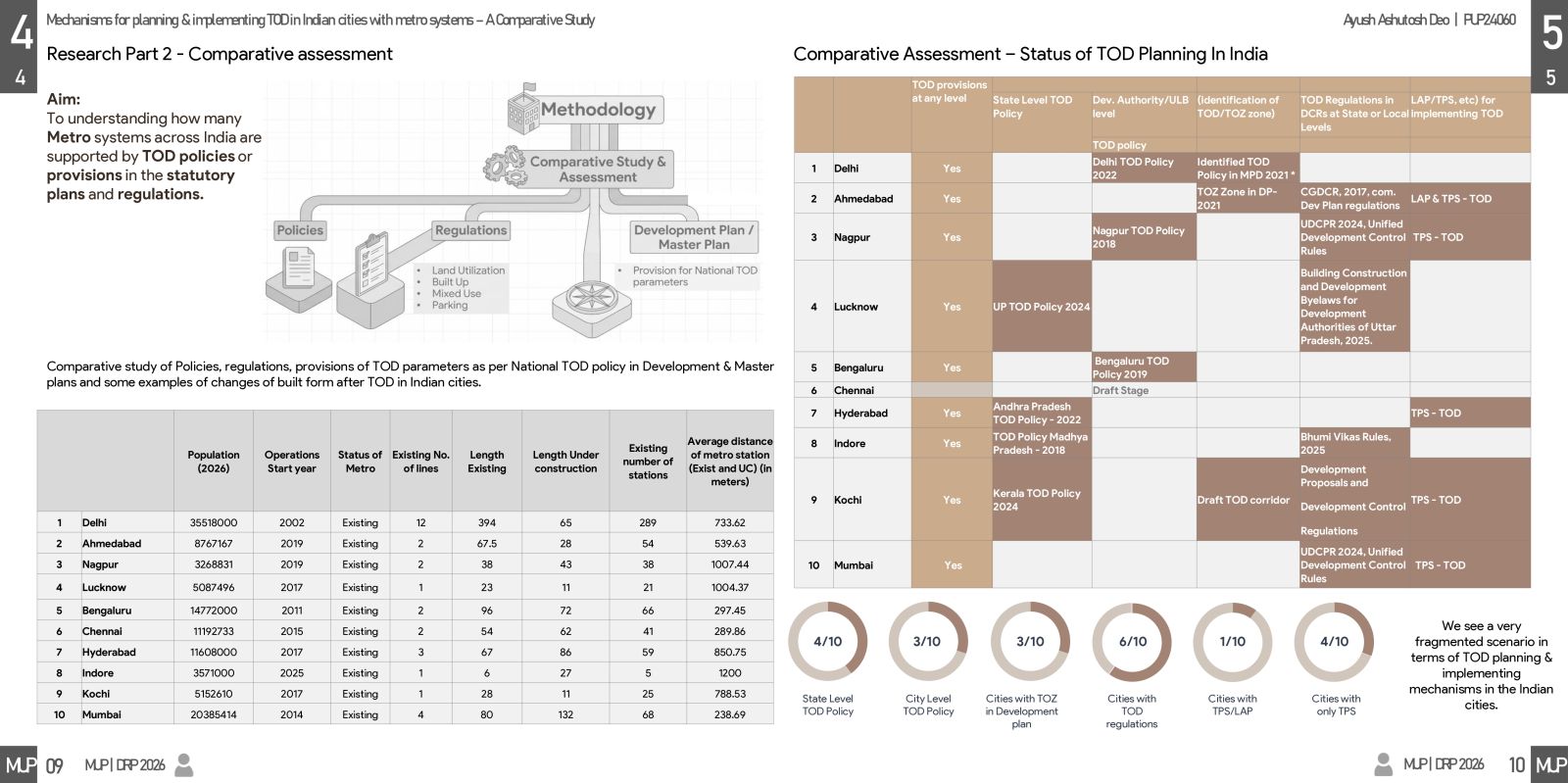
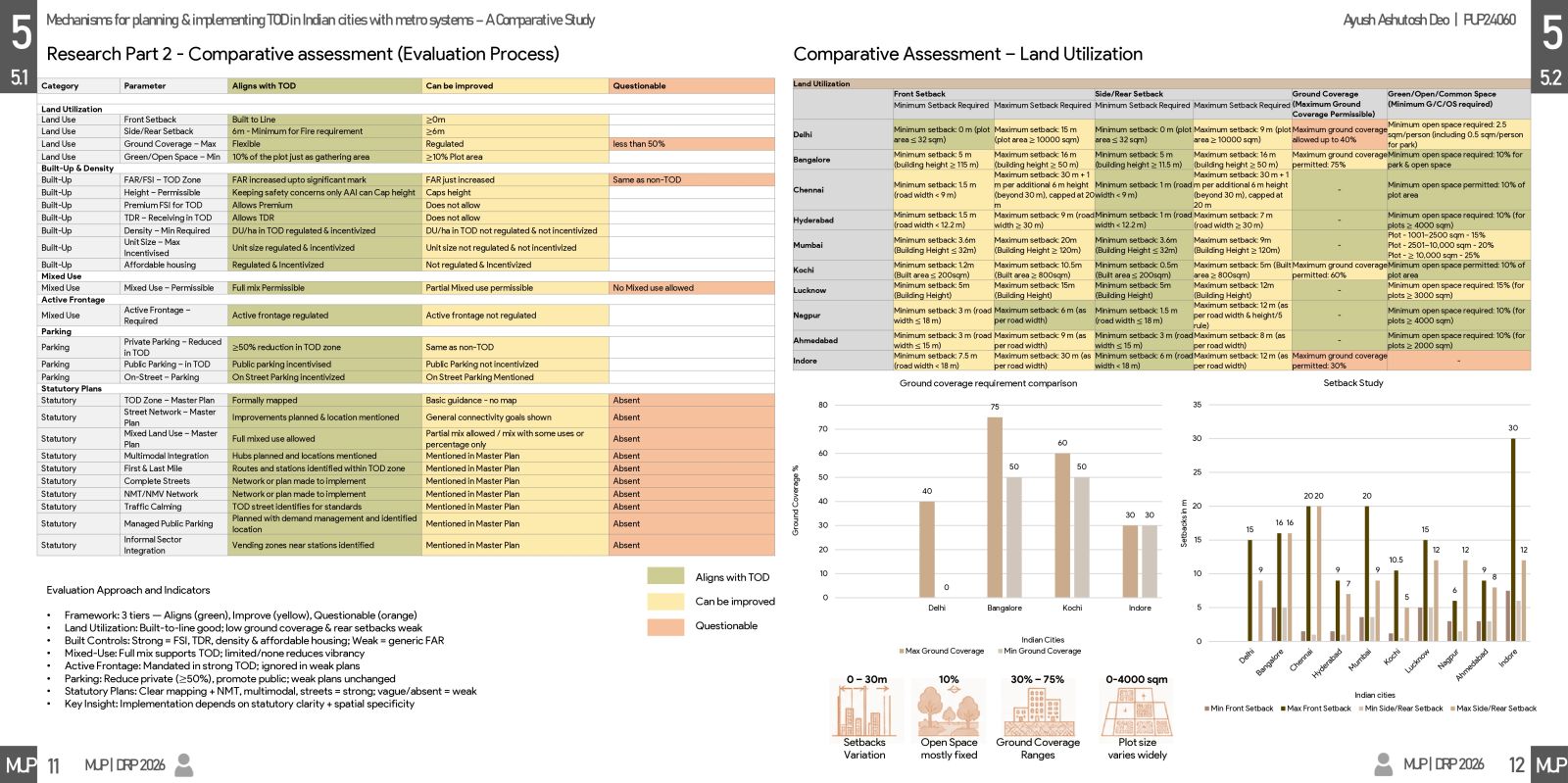
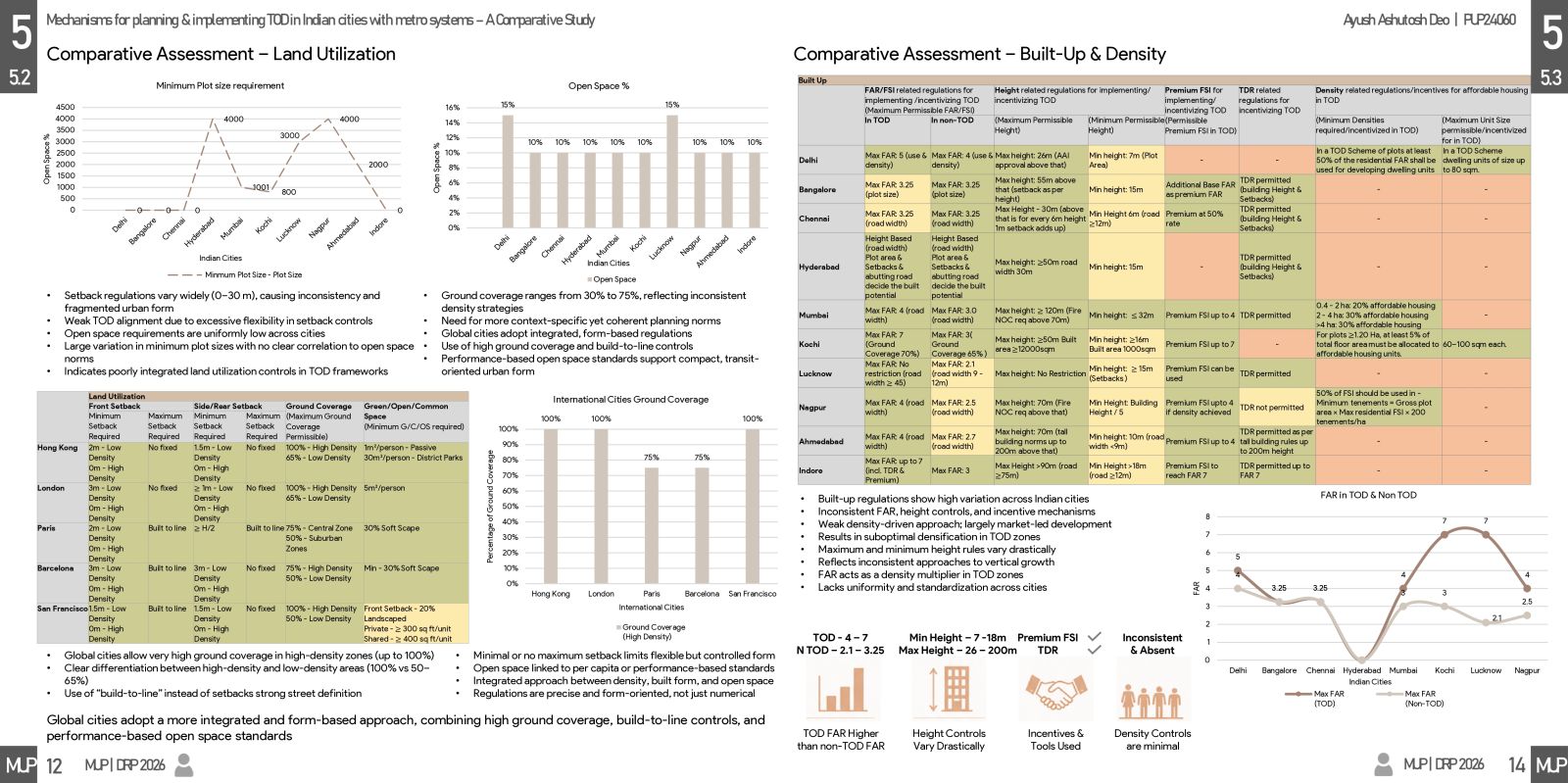
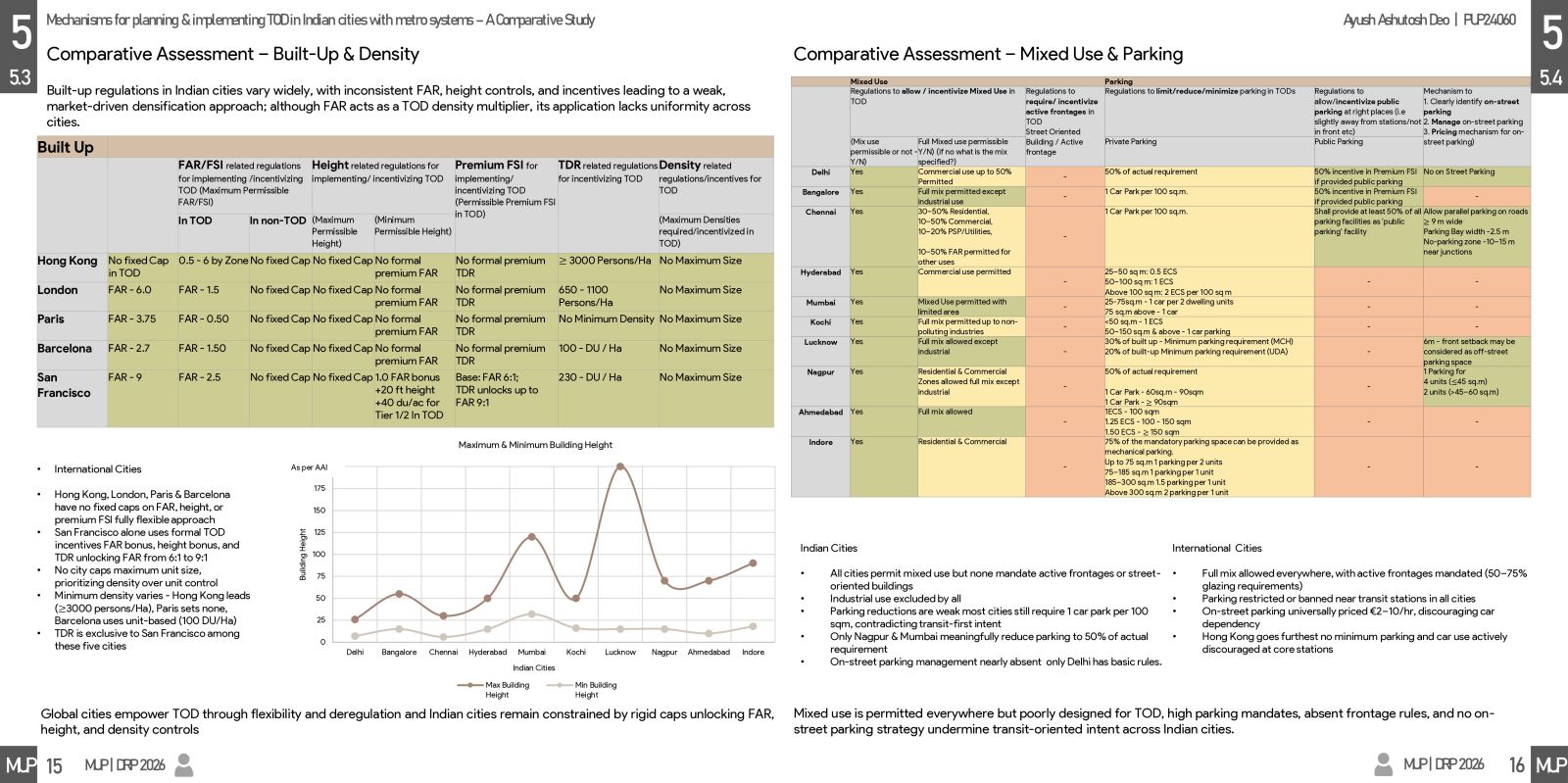
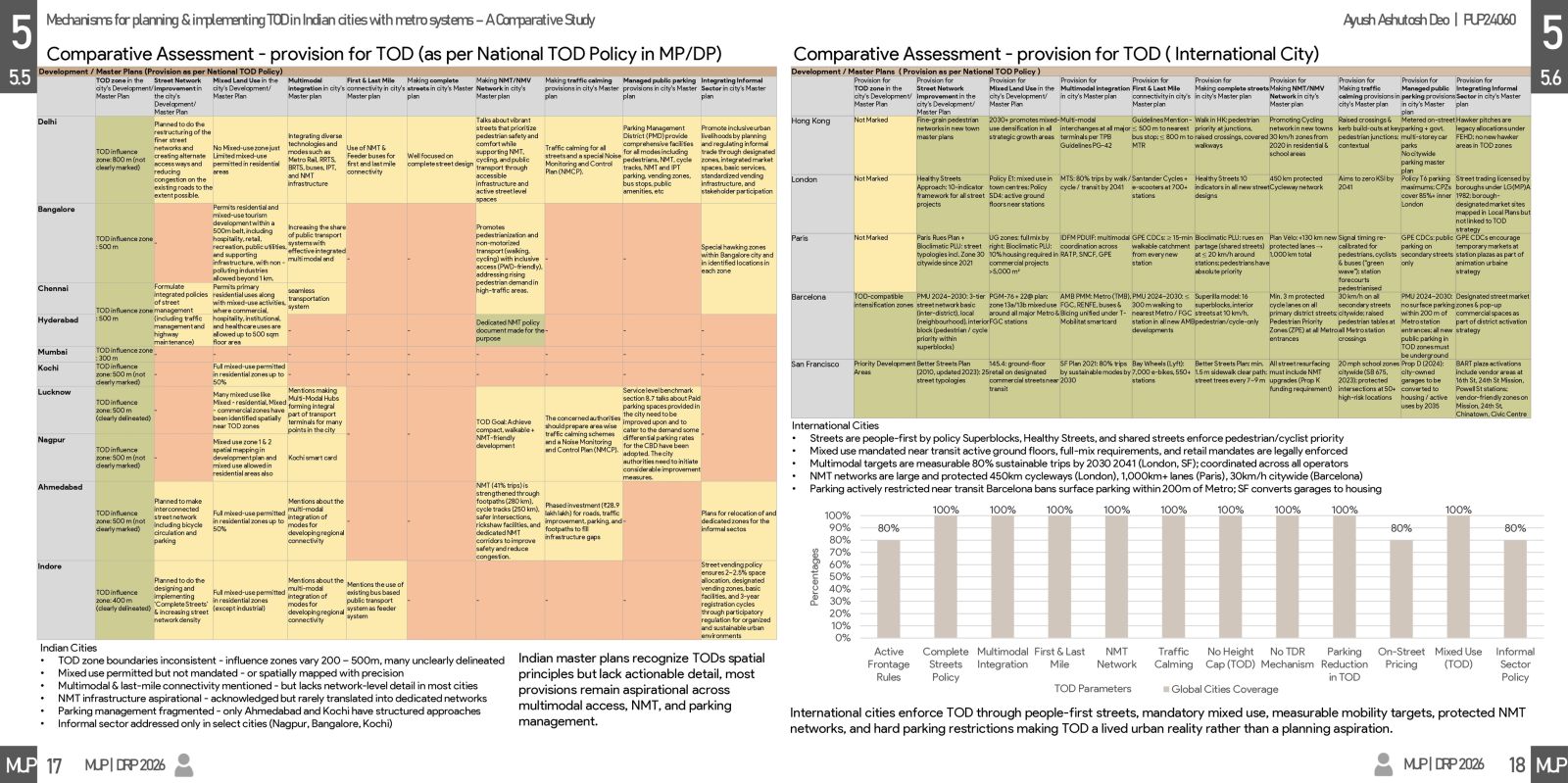
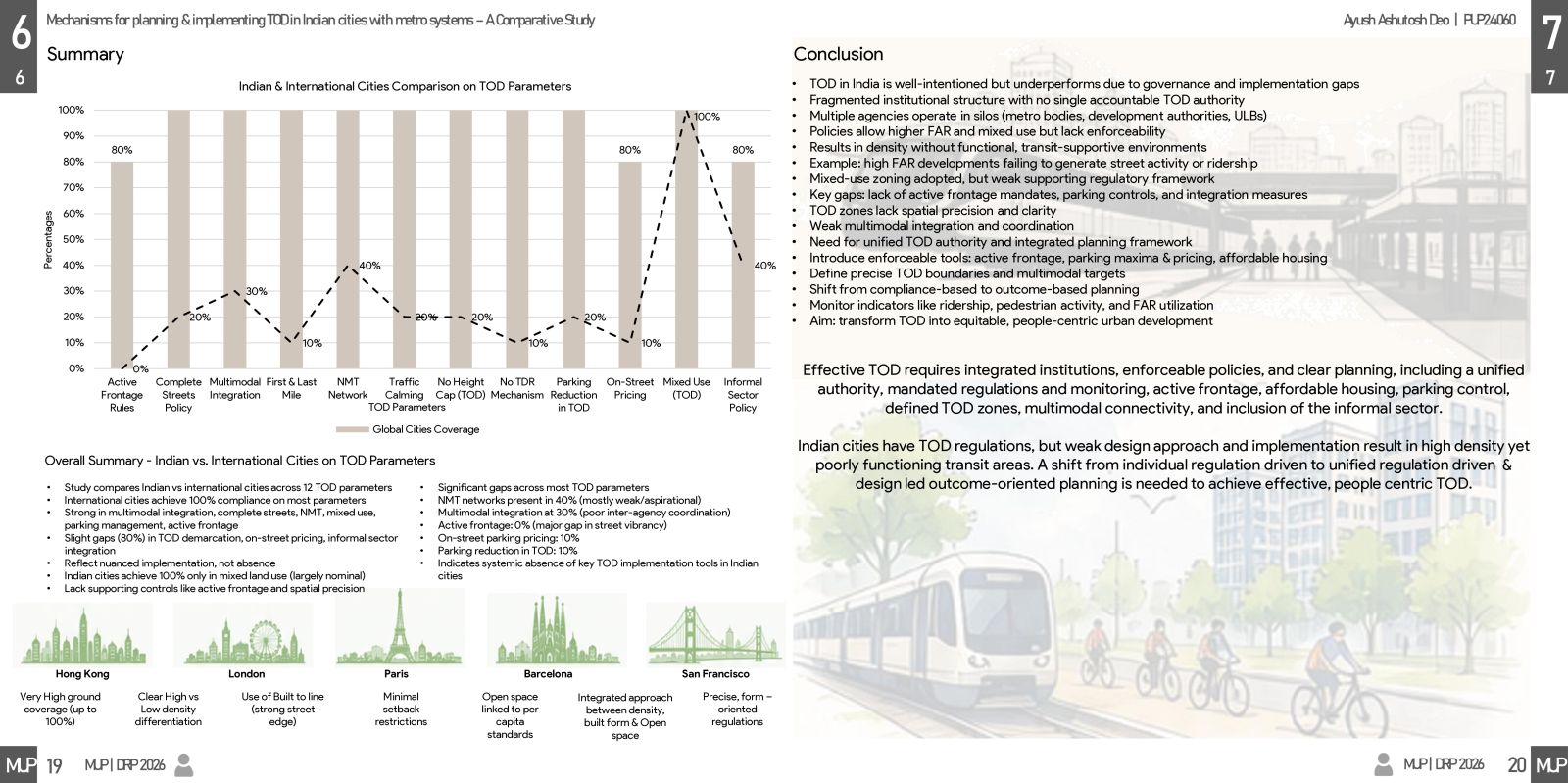
India’s rapid metro expansion represents a massive public investment, yet station areas remain low-density, poorly connected, and largely unresponsive to transit. This research finds that Indian cities lack both the spatial and regulatory conditions necessary for effective Transit-Oriented Development (TOD). Spatially, station catchments are dominated by private open spaces that generate minimal activity or ridership, built densities remain below TOD benchmarks, growth has been modest despite policy provisions, and street networks lack the fine-grained structure required for walkability unlike international cities, which allocate more land to built form and active public realm that directly support transit use. From a policy perspective, TOD frameworks in India are fragmented and weakly enforced, with poorly defined zones, non-mandatory densities, unstructured mixed use, and limited regulation of active frontages, parking, and last-mile connectivity, whereas international approaches rely on enforceable, design-led regulations with clear mobility and urban performance targets. Ultimately, the gap is both institutional stemming from the absence of integrated governance and outcome-based planning and conceptual, reflecting a reliance on isolated regulations rather than cohesive, design-led TOD frameworks, resulting in urban environments that may achieve density but fail to deliver urban quality, accessibility, or increased ridership.