Your browser is out-of-date!
For a richer surfing experience on our website, please update your browser. Update my browser now!
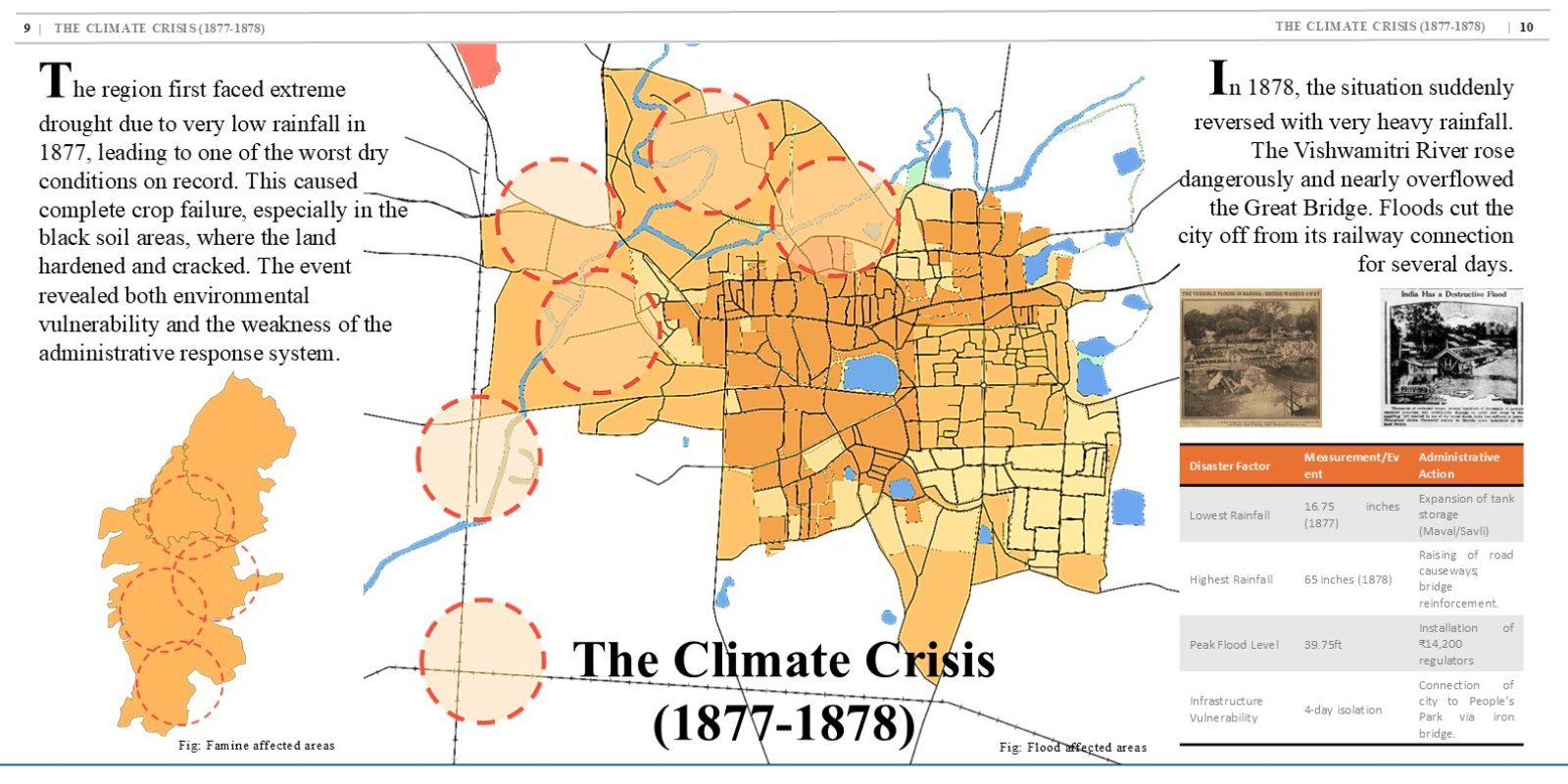
The study of Baroda highlights how princely governance played a crucial role in shaping a planned and resilient urban system beyond colonial influence. The city’s development demonstrates that crises such as famines, floods, and epidemics often became catalysts for long-term infrastructural and institutional reforms. Through integrated planning approaches in public health, transportation, water management, and spatial organization, Baroda successfully balanced modernization with its cultural and historical identity, emerging as a strong example of context-sensitive and governance-led urban development.