Your browser is out-of-date!
For a richer surfing experience on our website, please update your browser. Update my browser now!
Order in Informality:
Examining the Spatial Organisation of Vending within Public Space and Urban Planning Systems in Ahmedabad
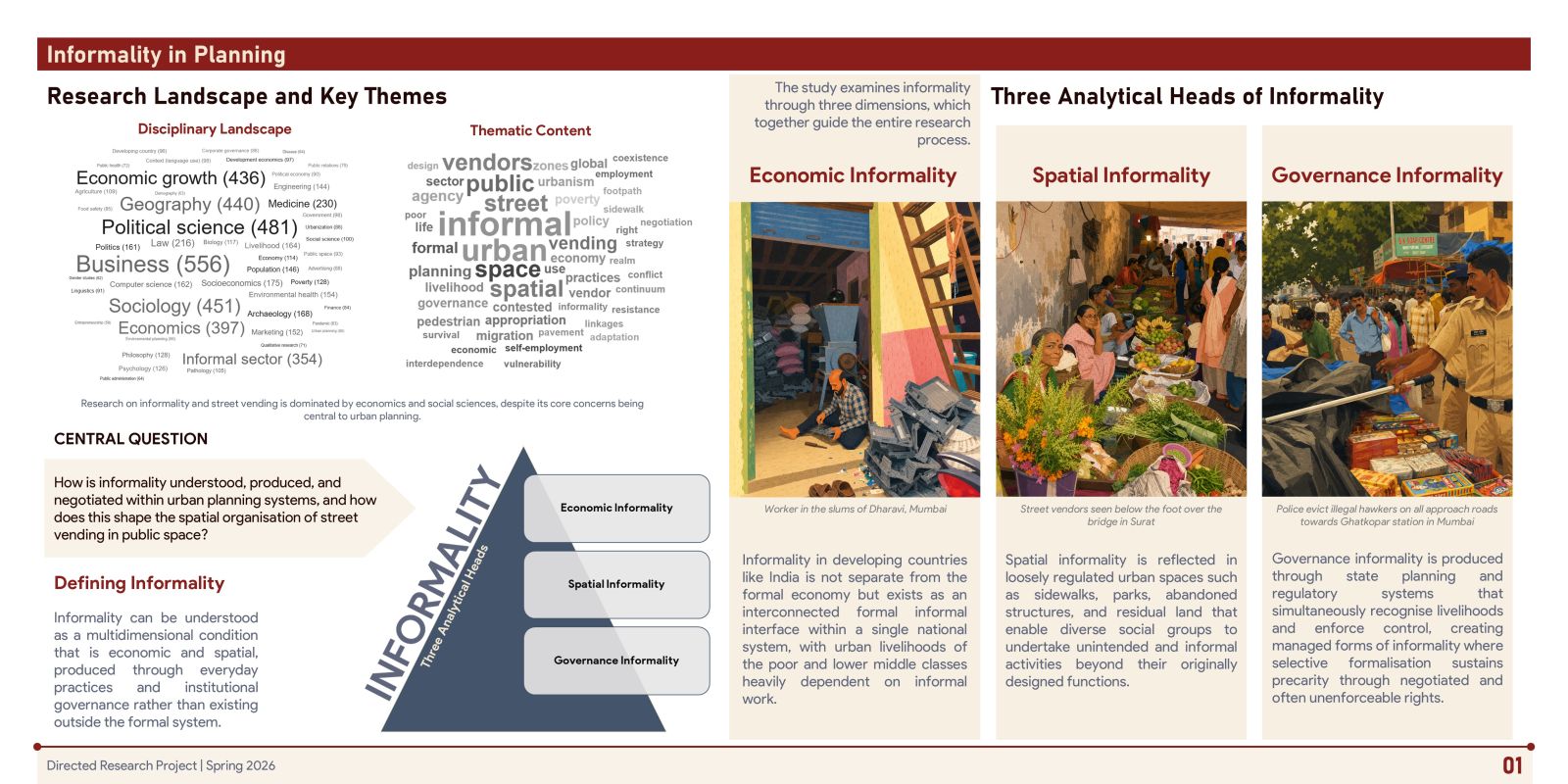
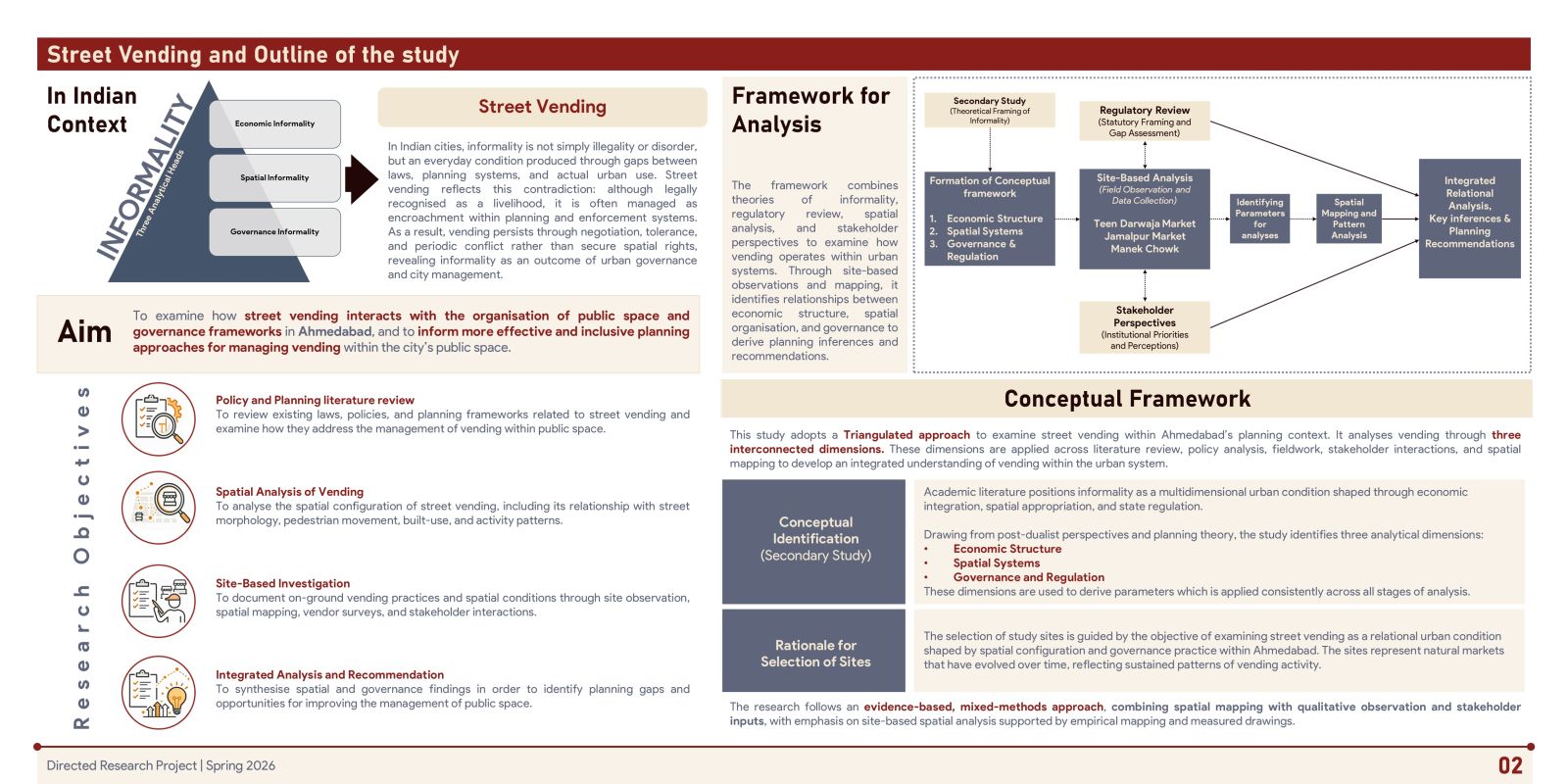
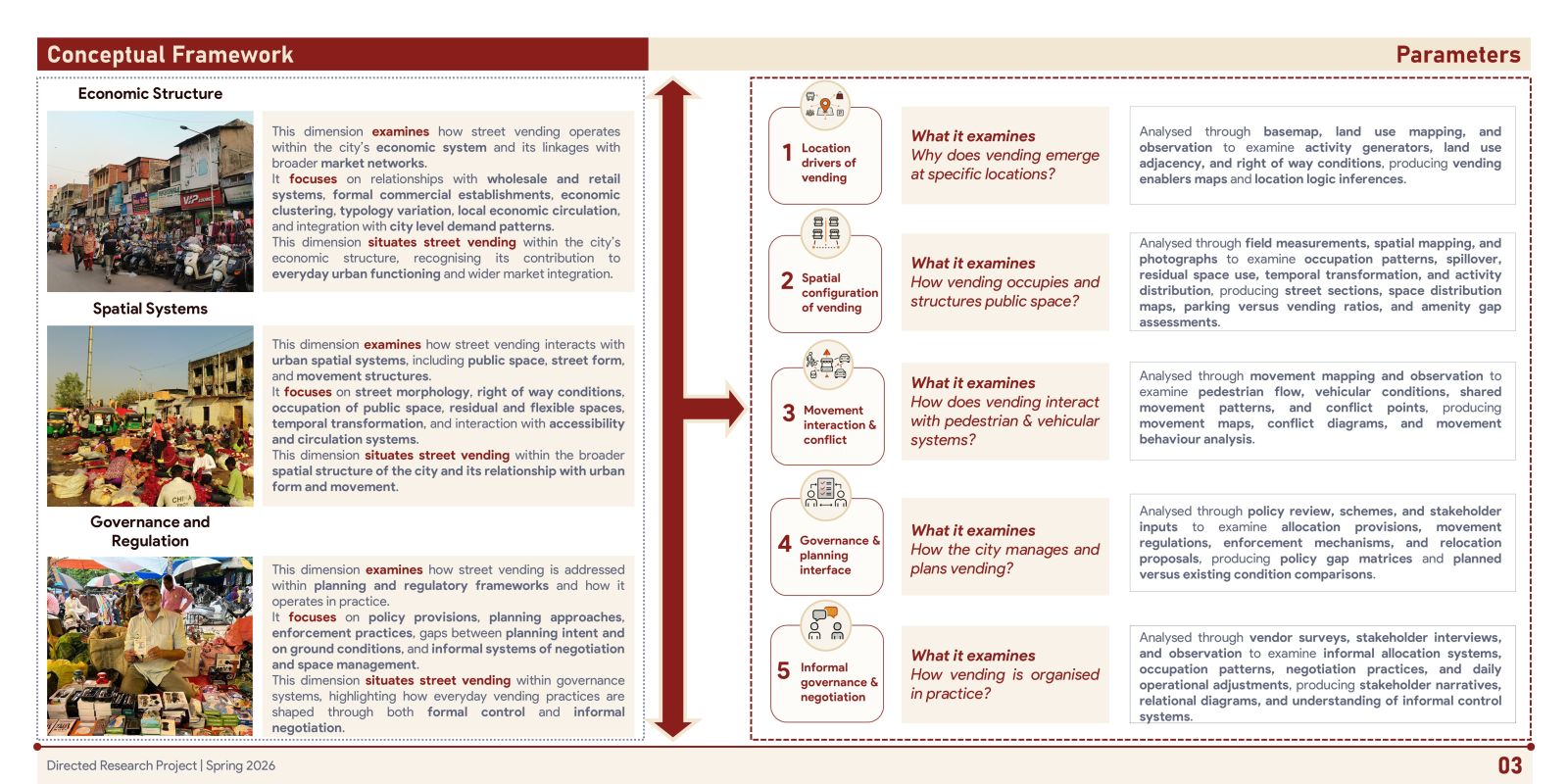
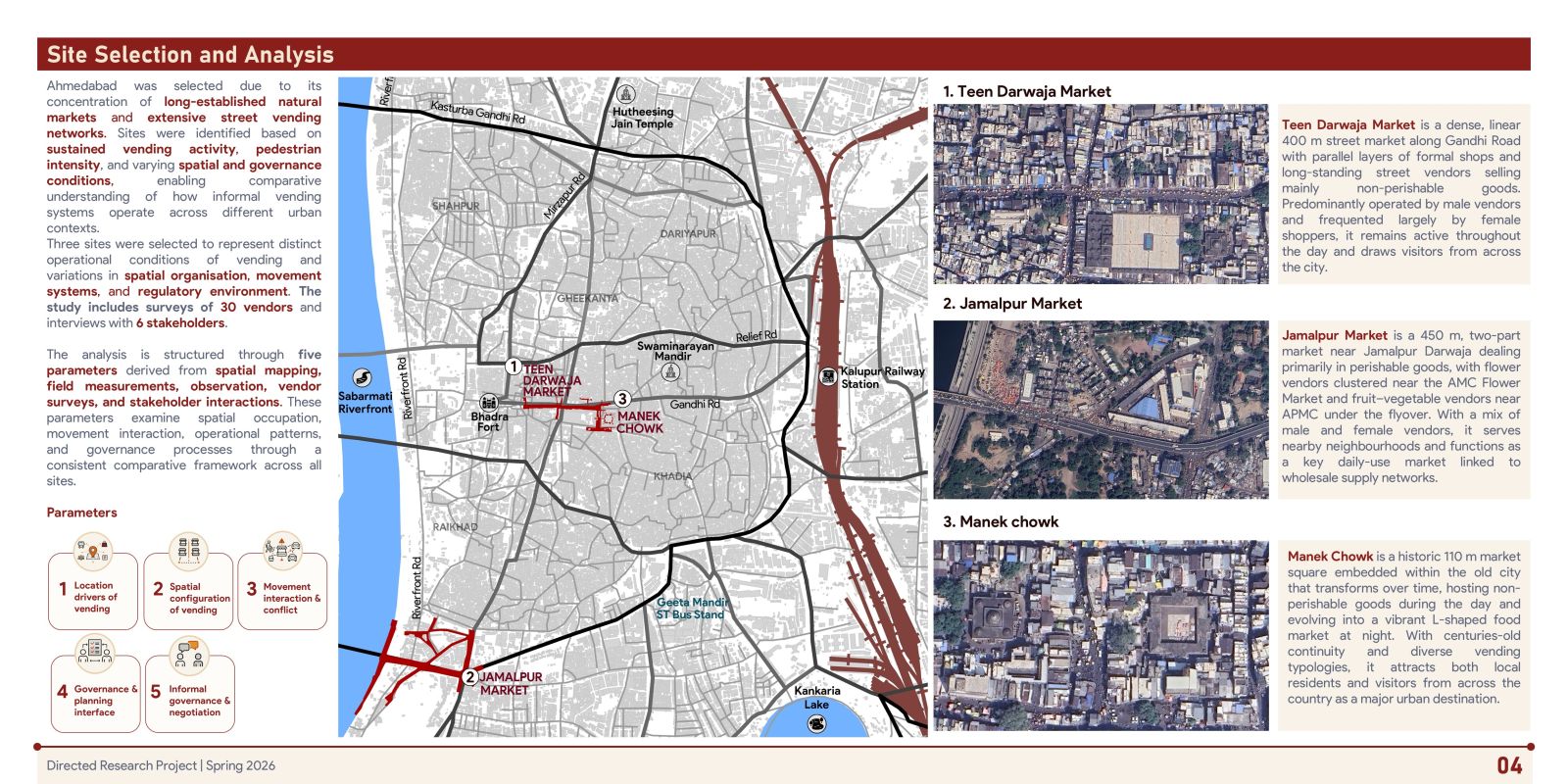
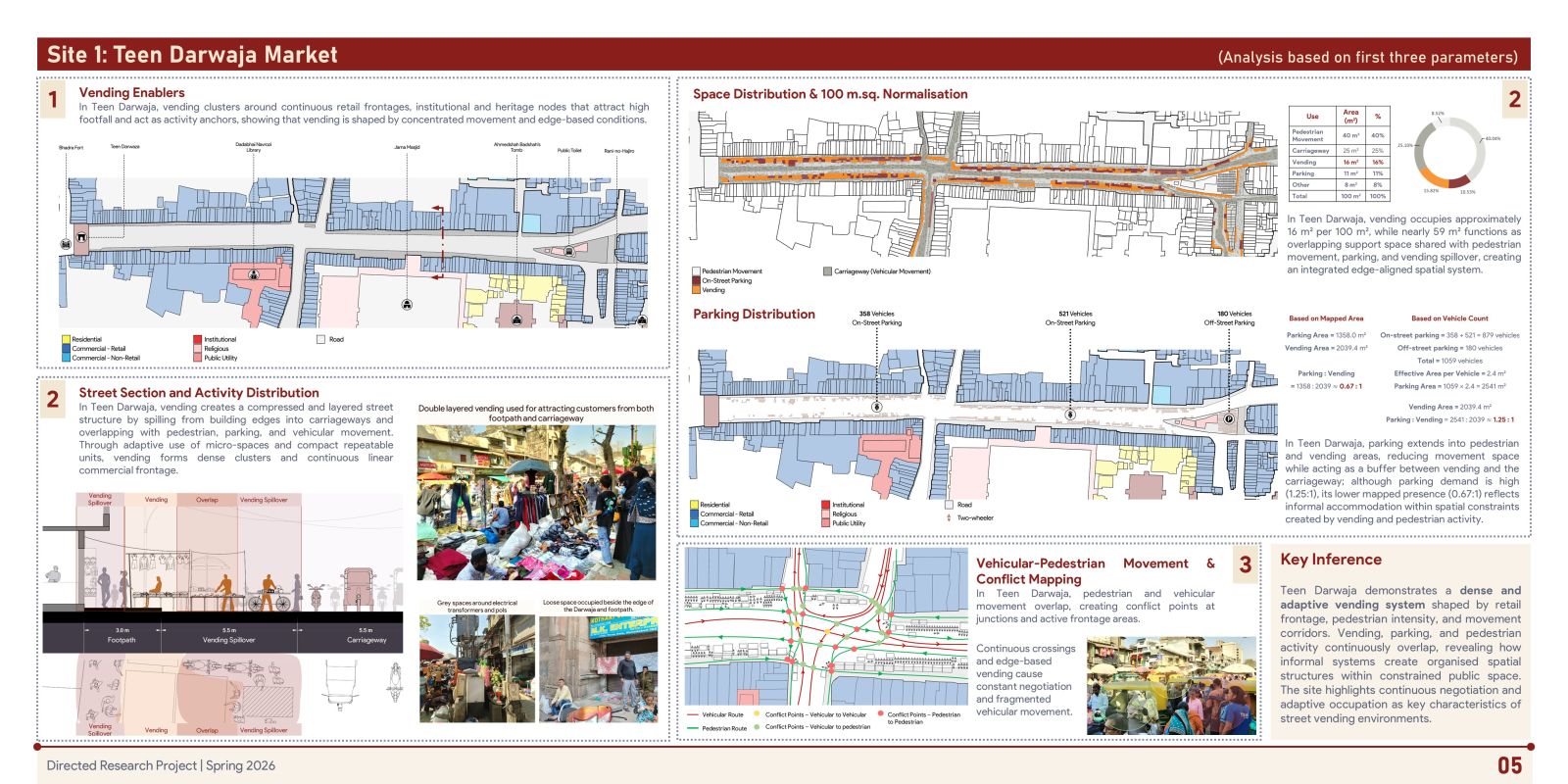
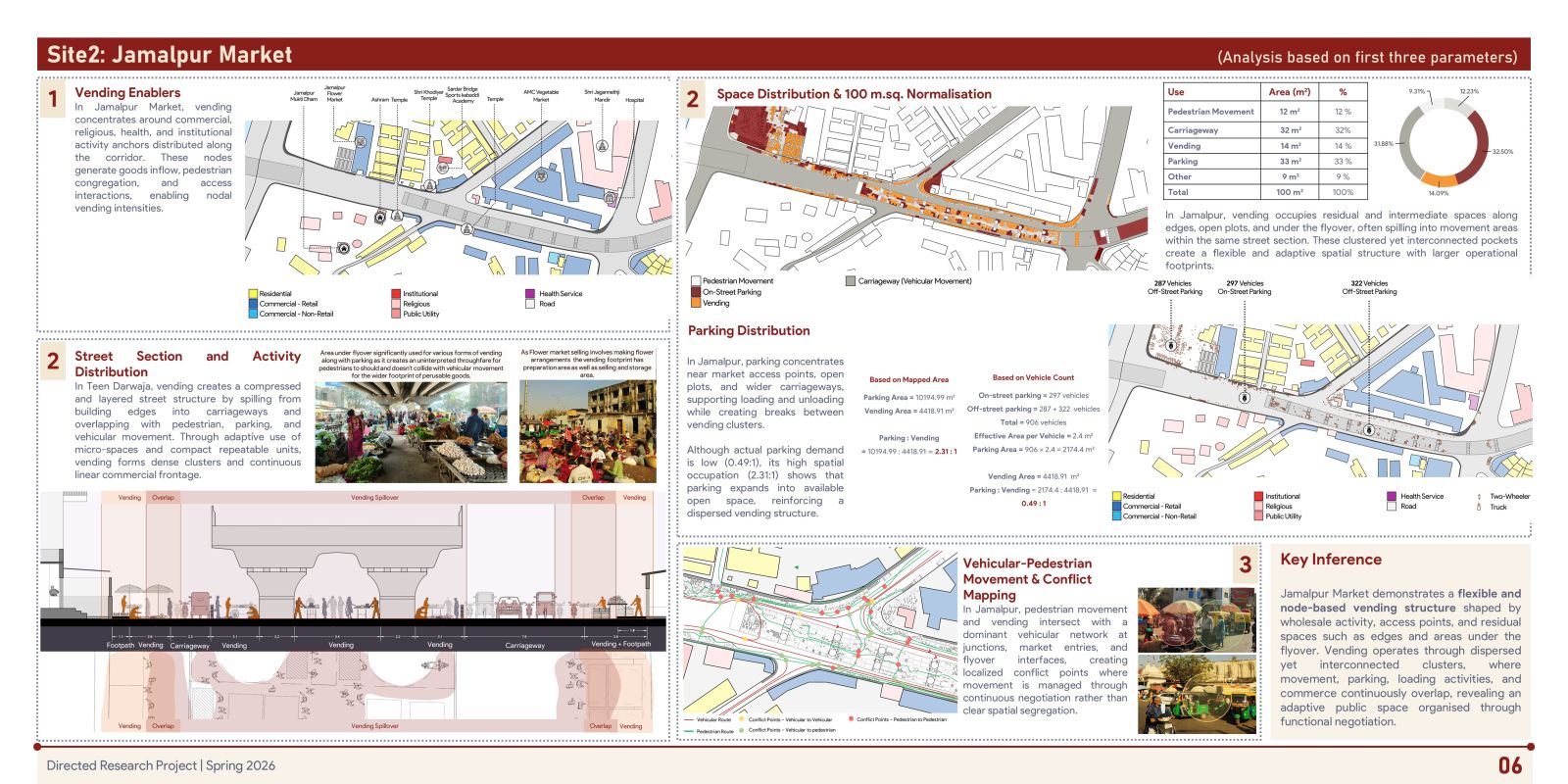
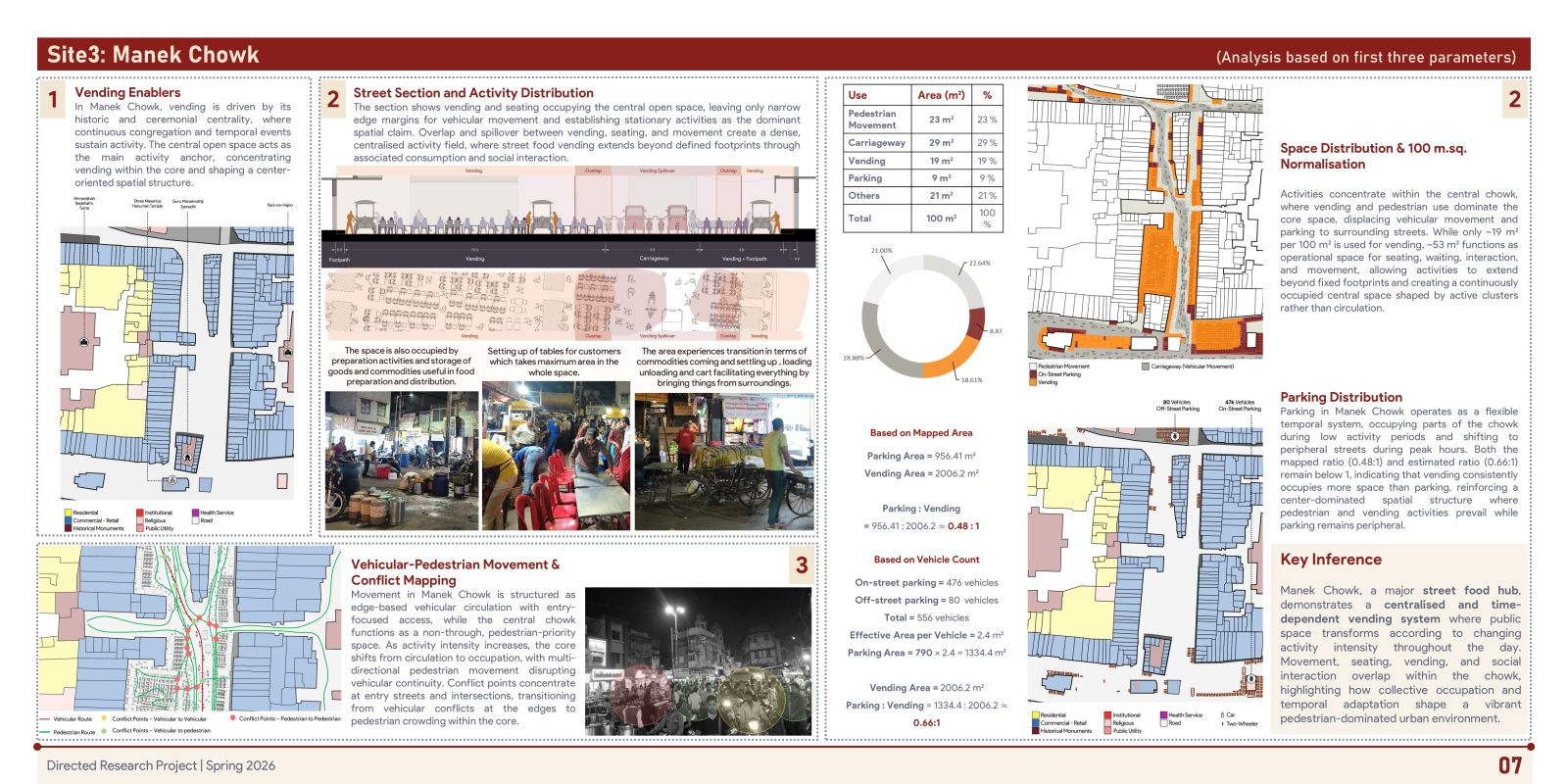
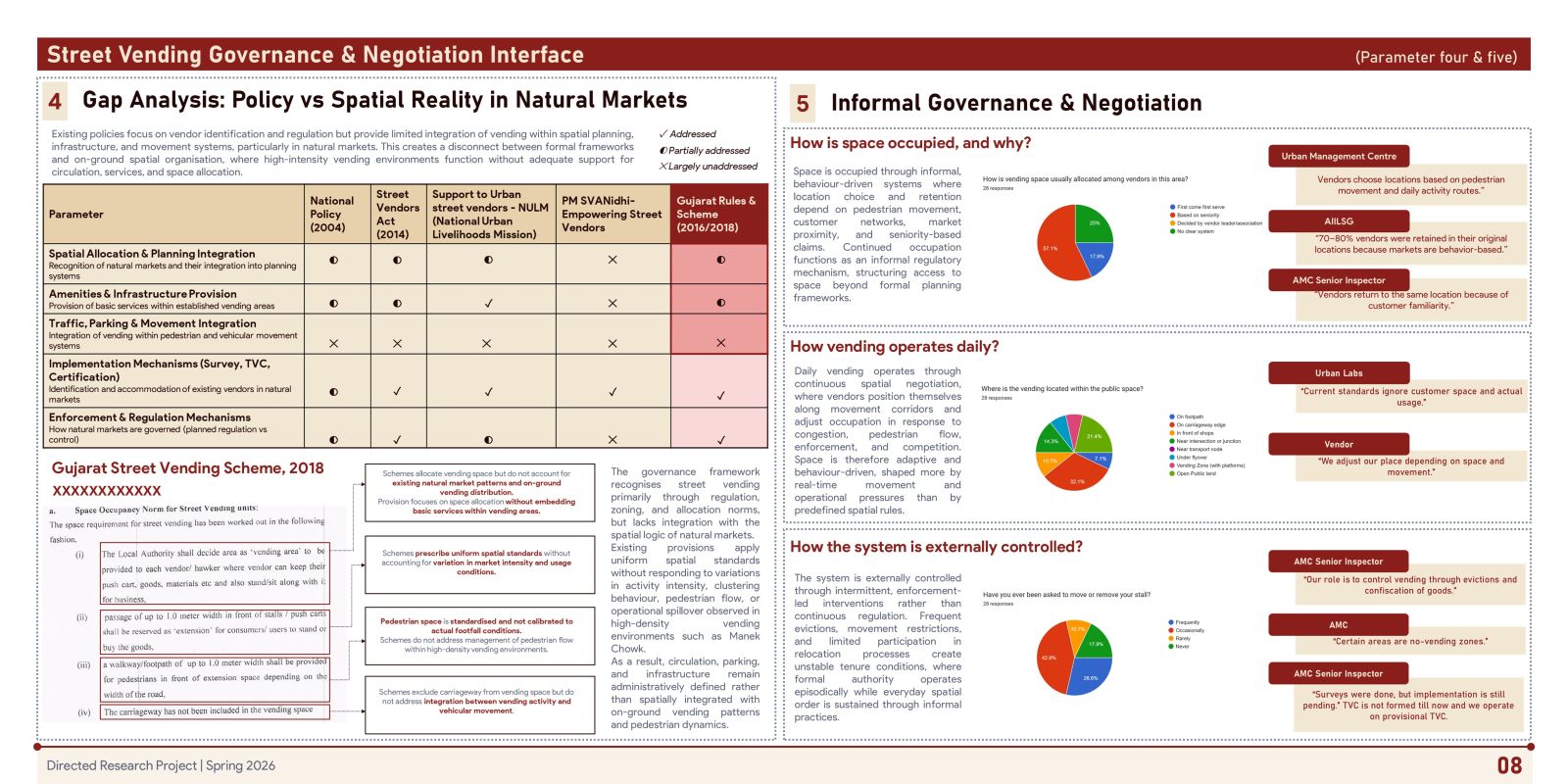
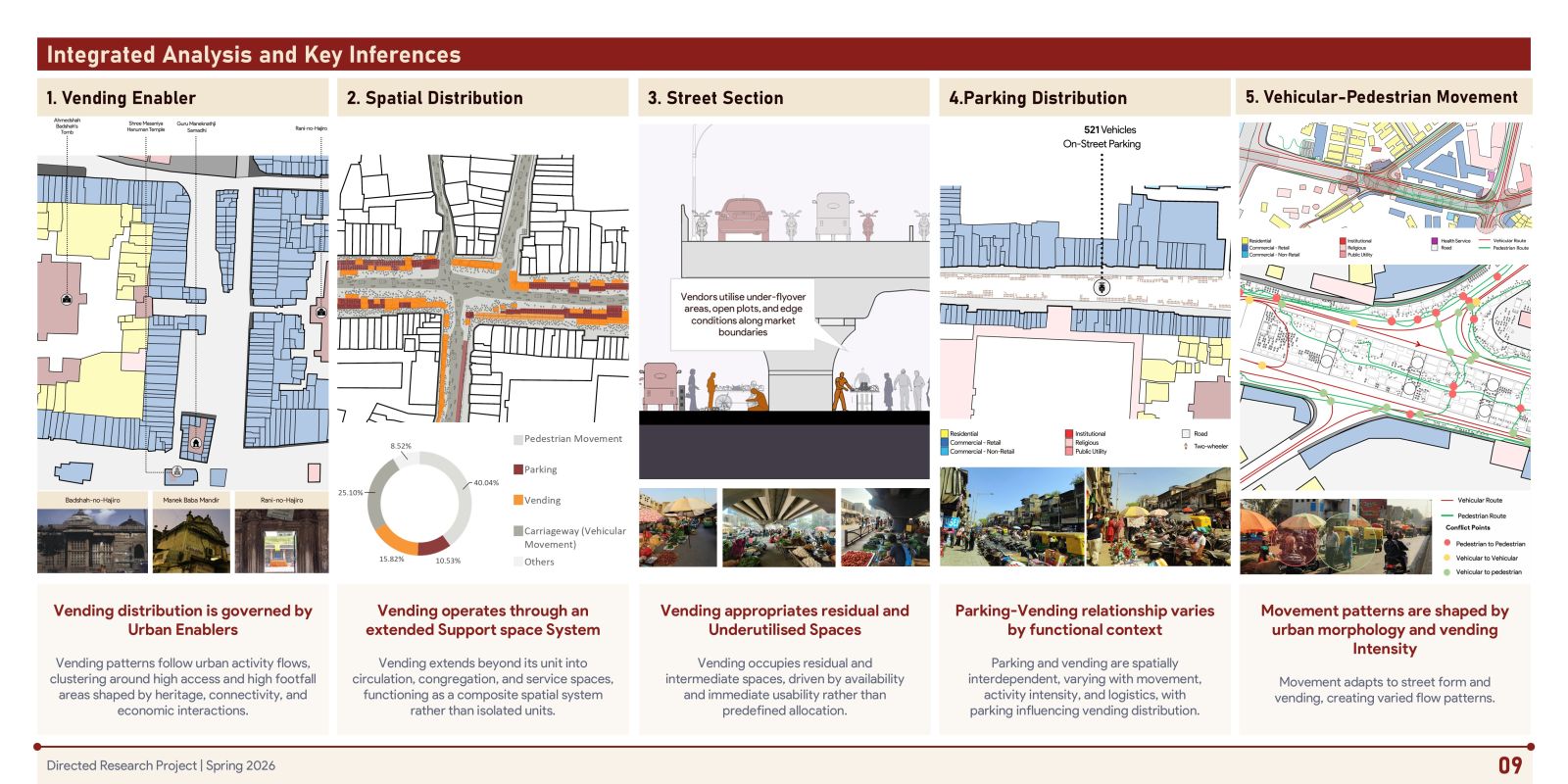
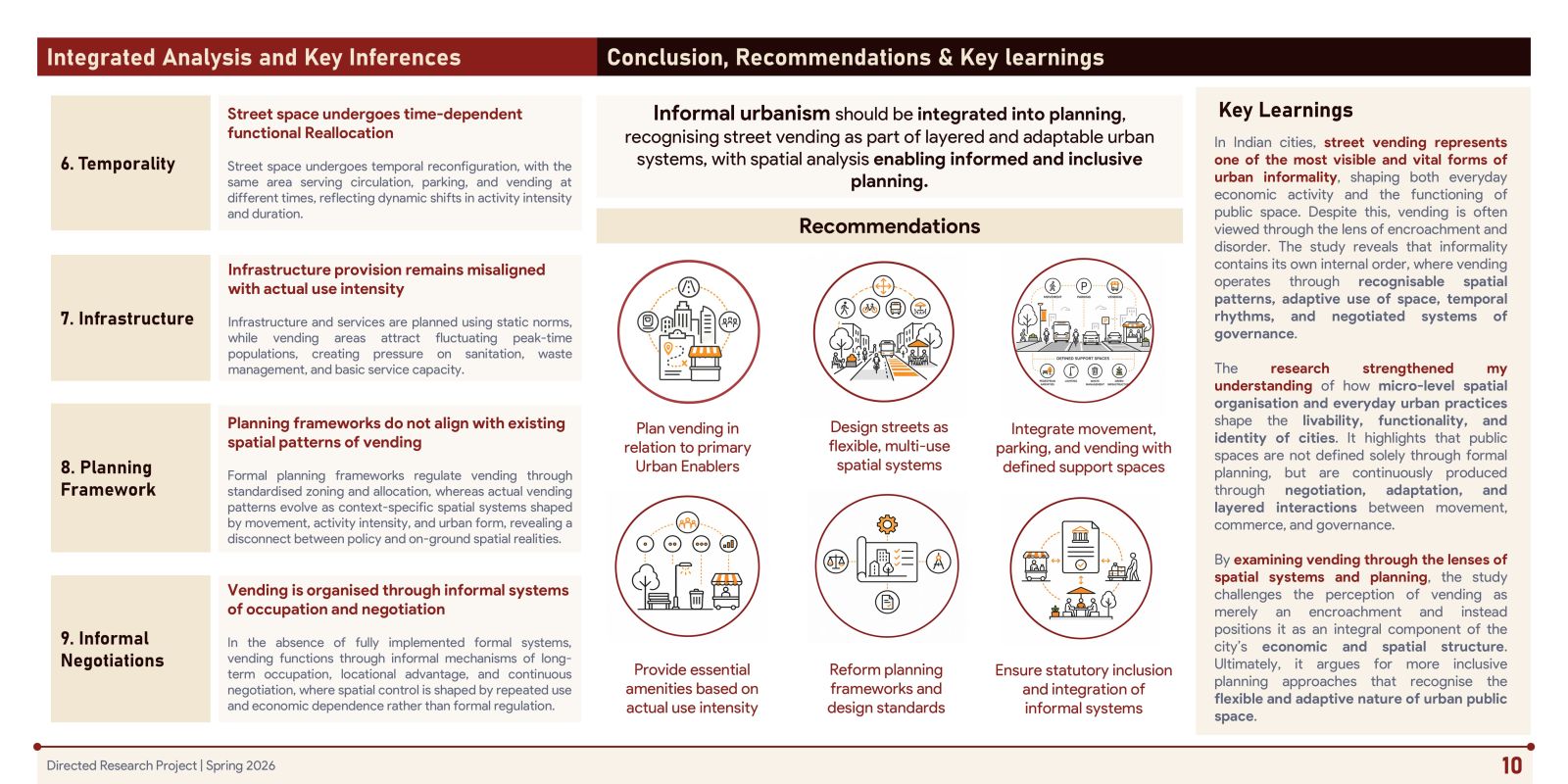
The DRP examines how street vending shapes public space and urban systems in Ahmedabad through the interconnected dimensions of economy, space, and governance. The study investigates how vending operates within natural markets and how informal spatial practices interact with planning frameworks and movement systems. Using spatial mapping, field observations, measured drawings, vendor surveys, and stakeholder interviews, the research analyses three markets: Teen Darwaja, Jamalpur, and Manek Chowk. The study reveals that vending functions through adaptive and negotiated spatial systems rather than disorder, highlighting the need for inclusive planning approaches that integrate informal urbanism within street design, infrastructure, and governance frameworks.