Your browser is out-of-date!
For a richer surfing experience on our website, please update your browser. Update my browser now!
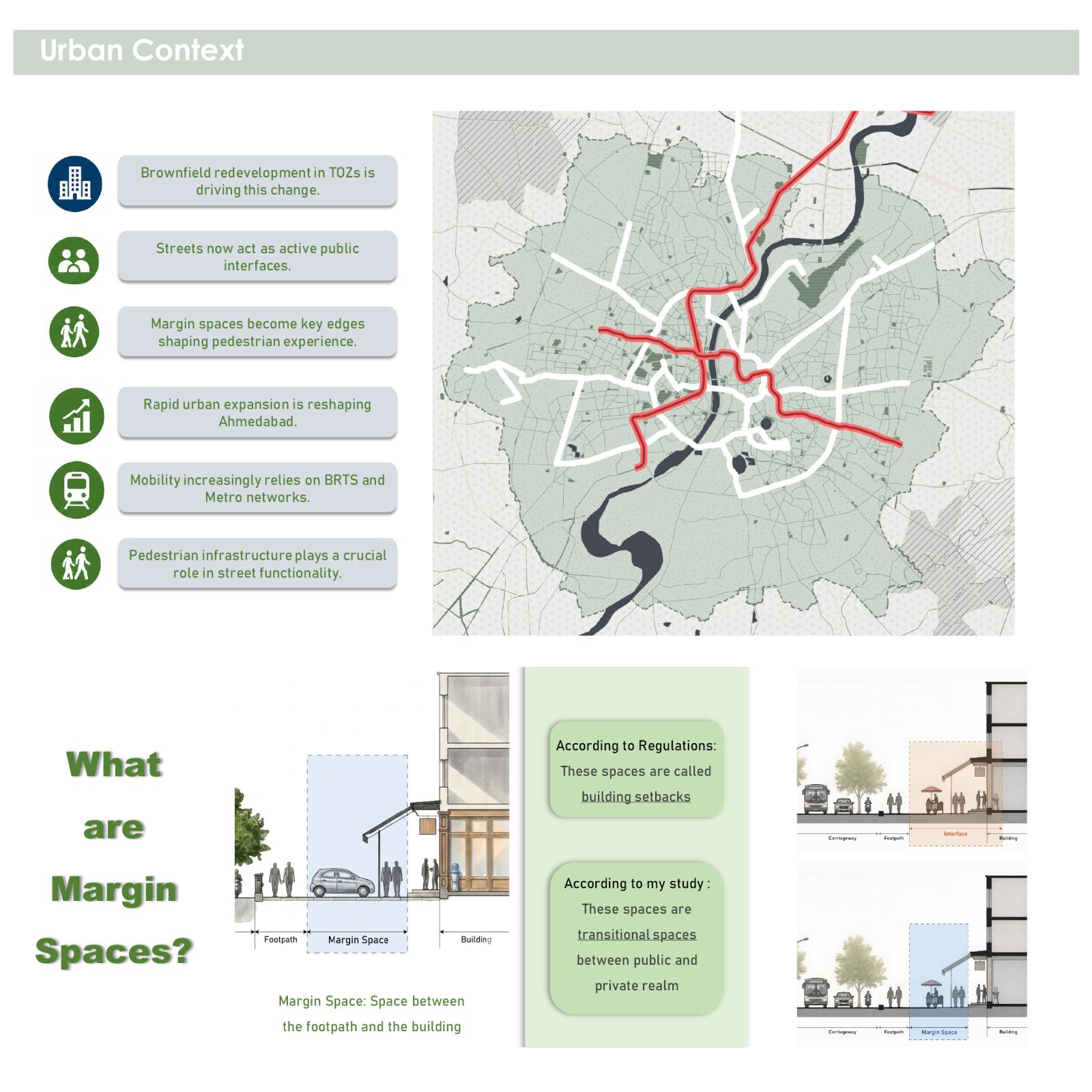
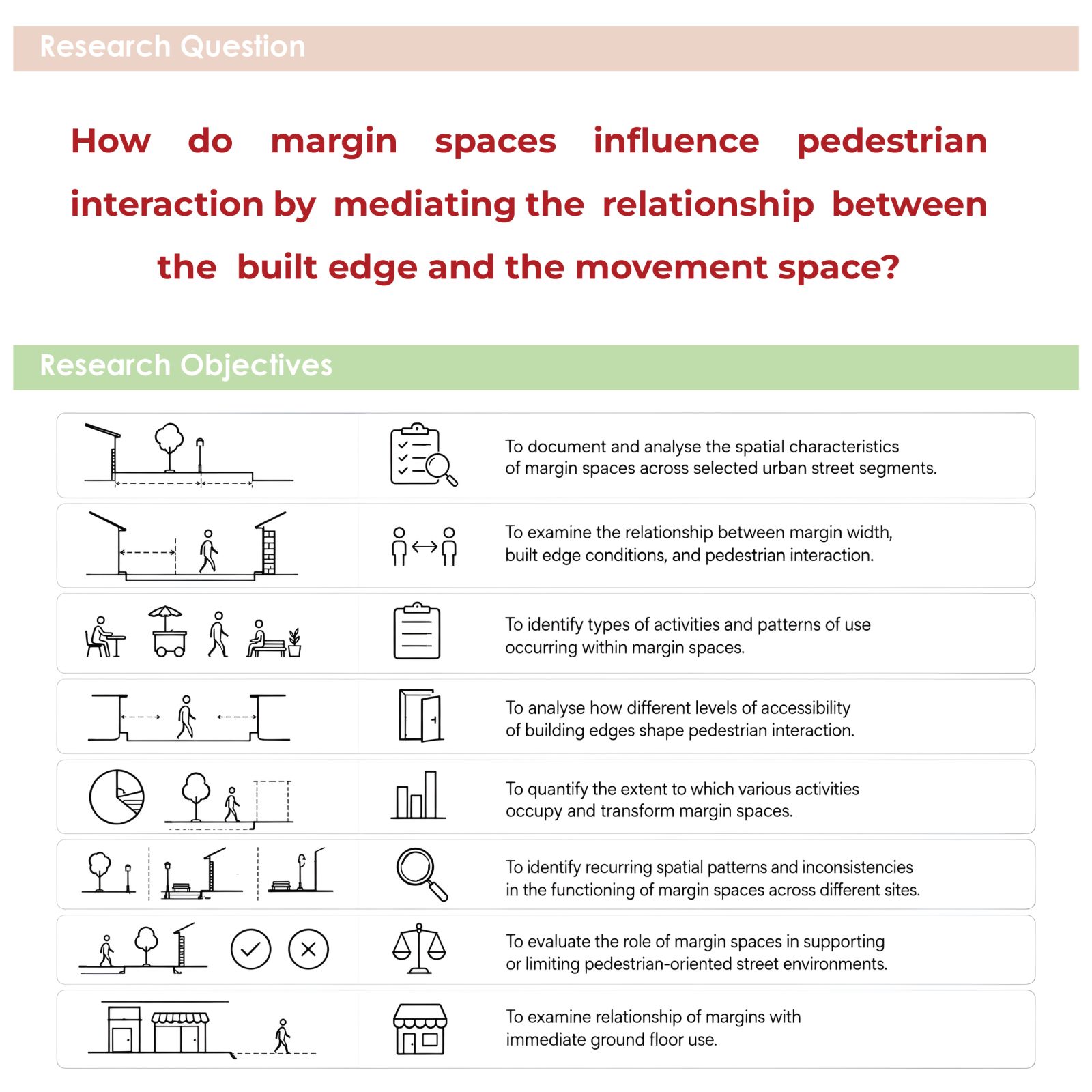
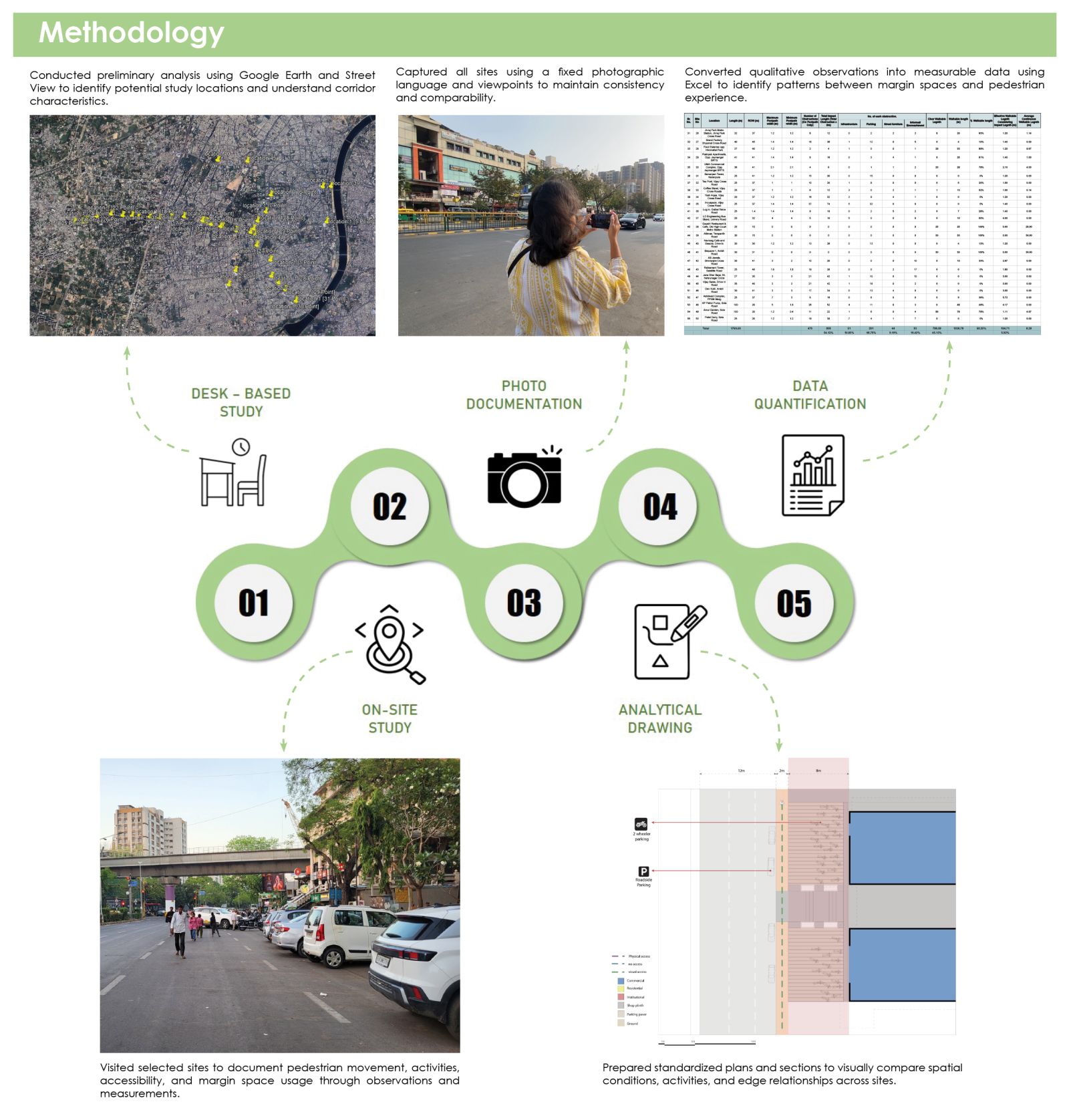
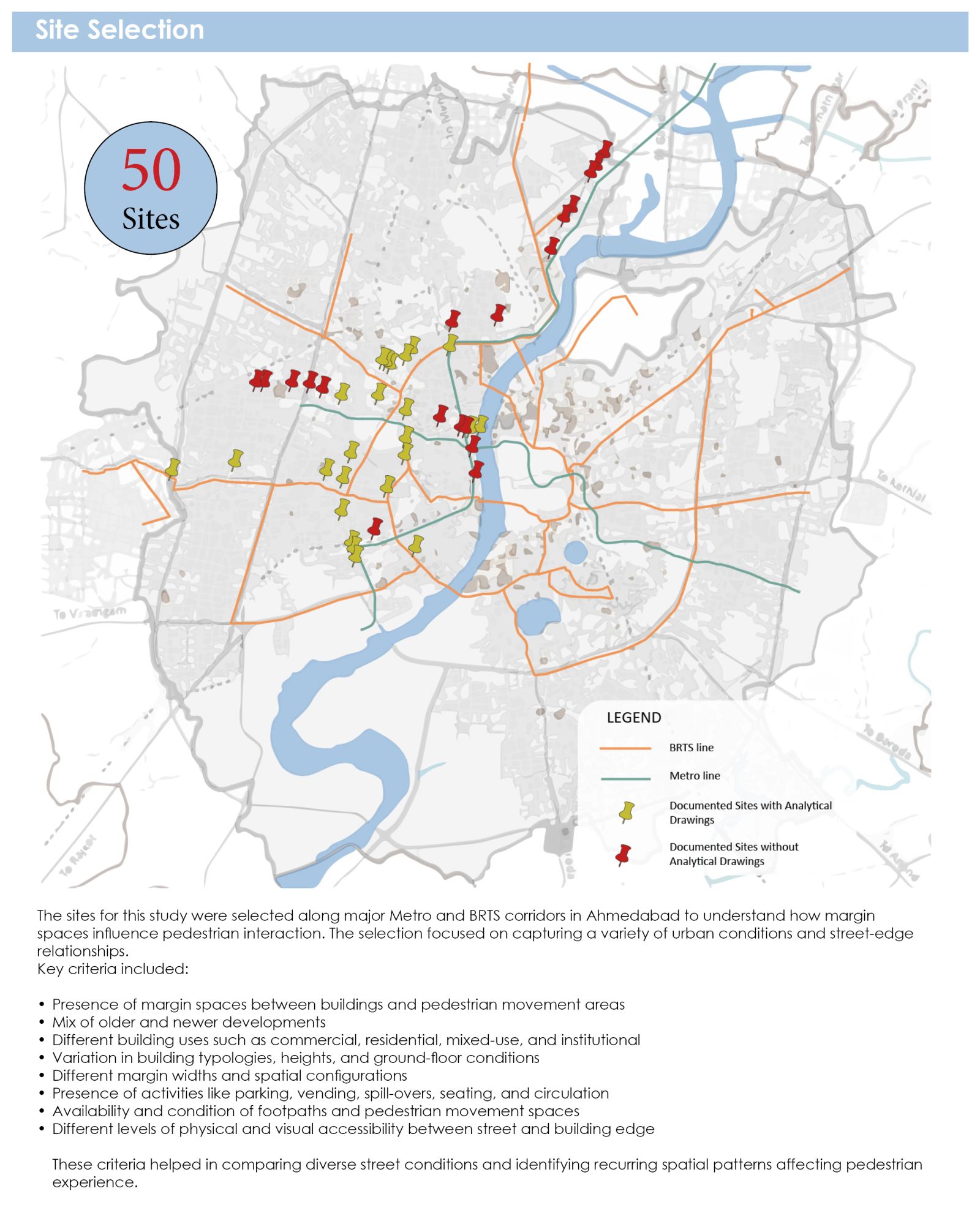
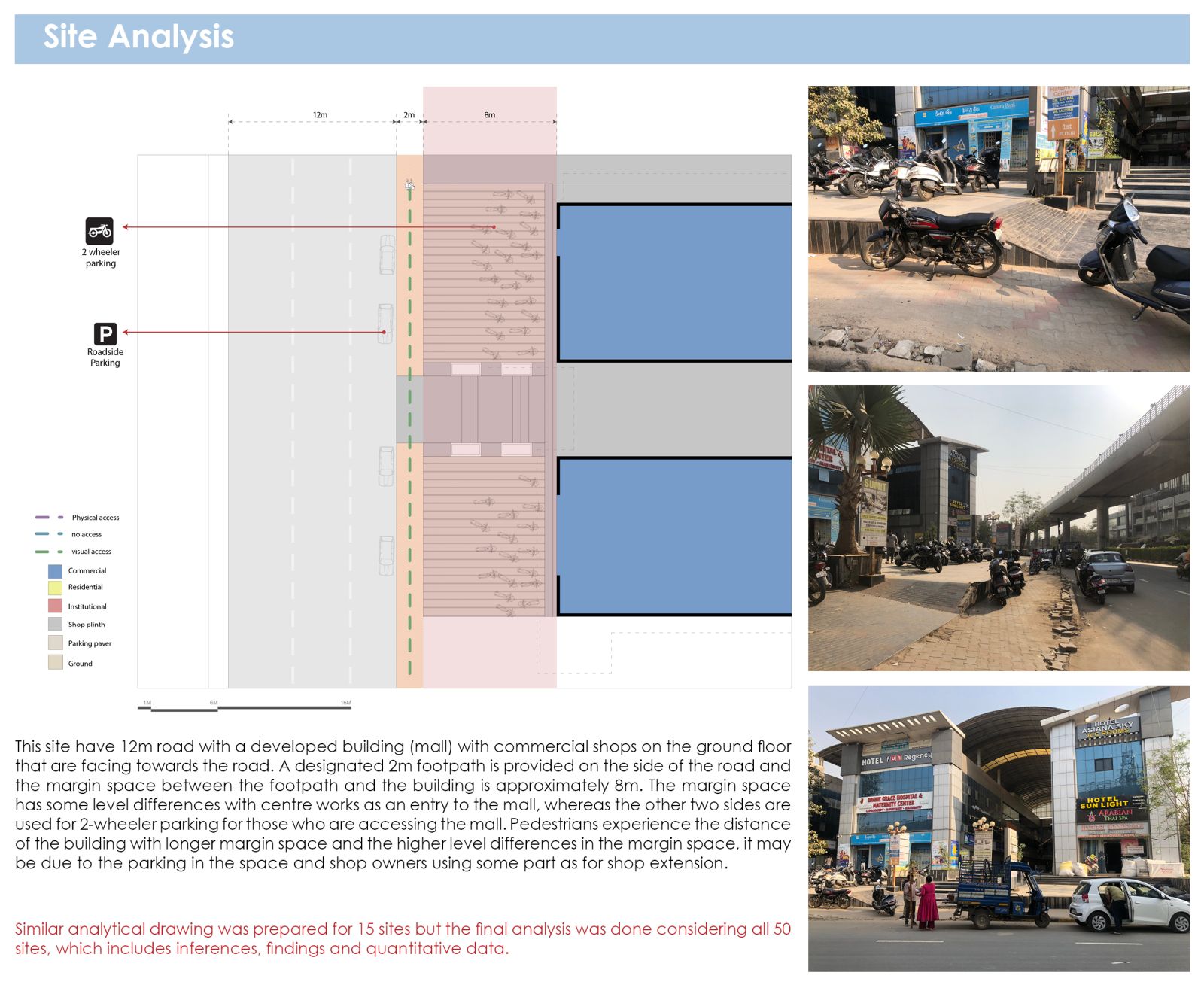
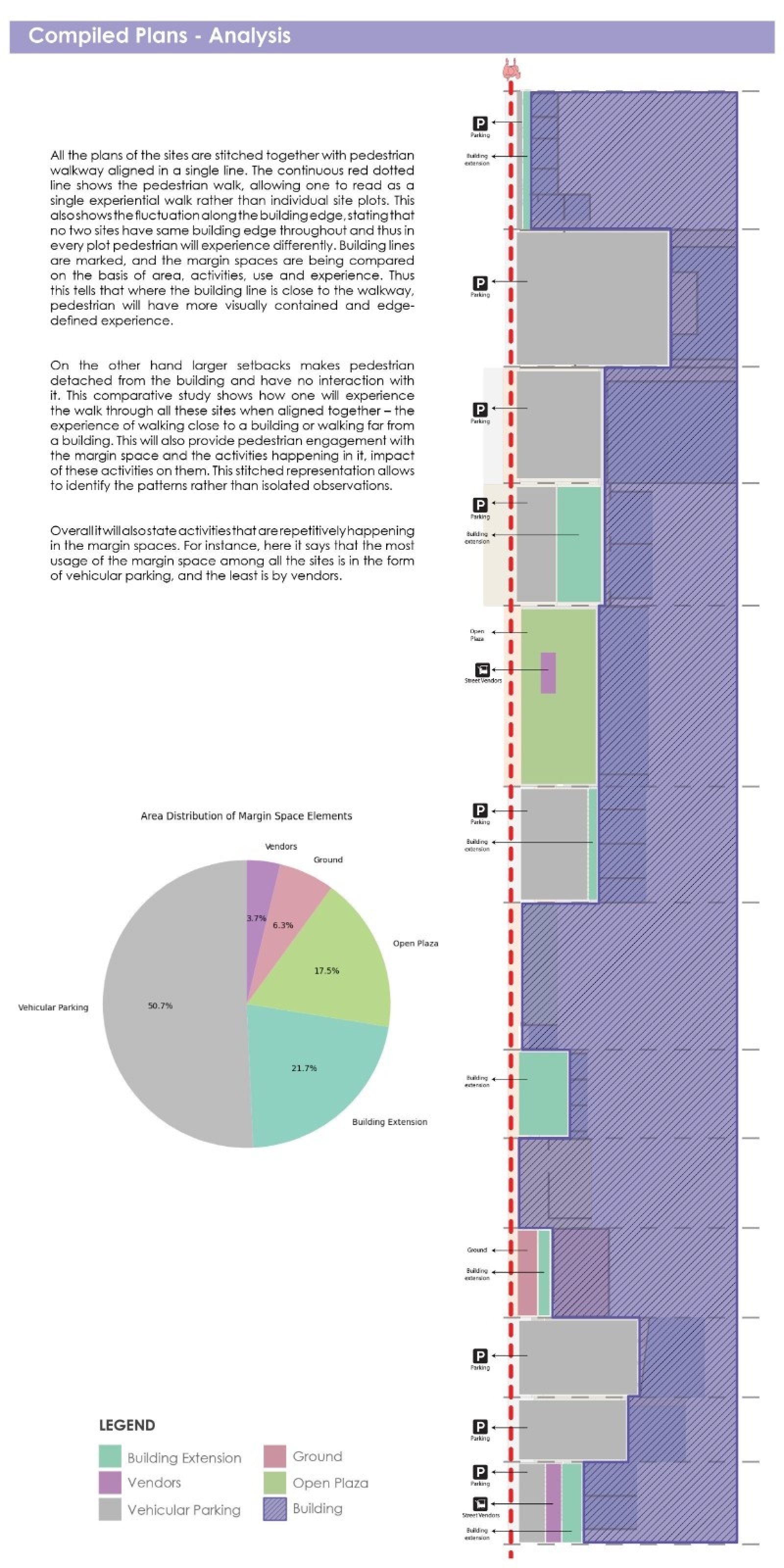
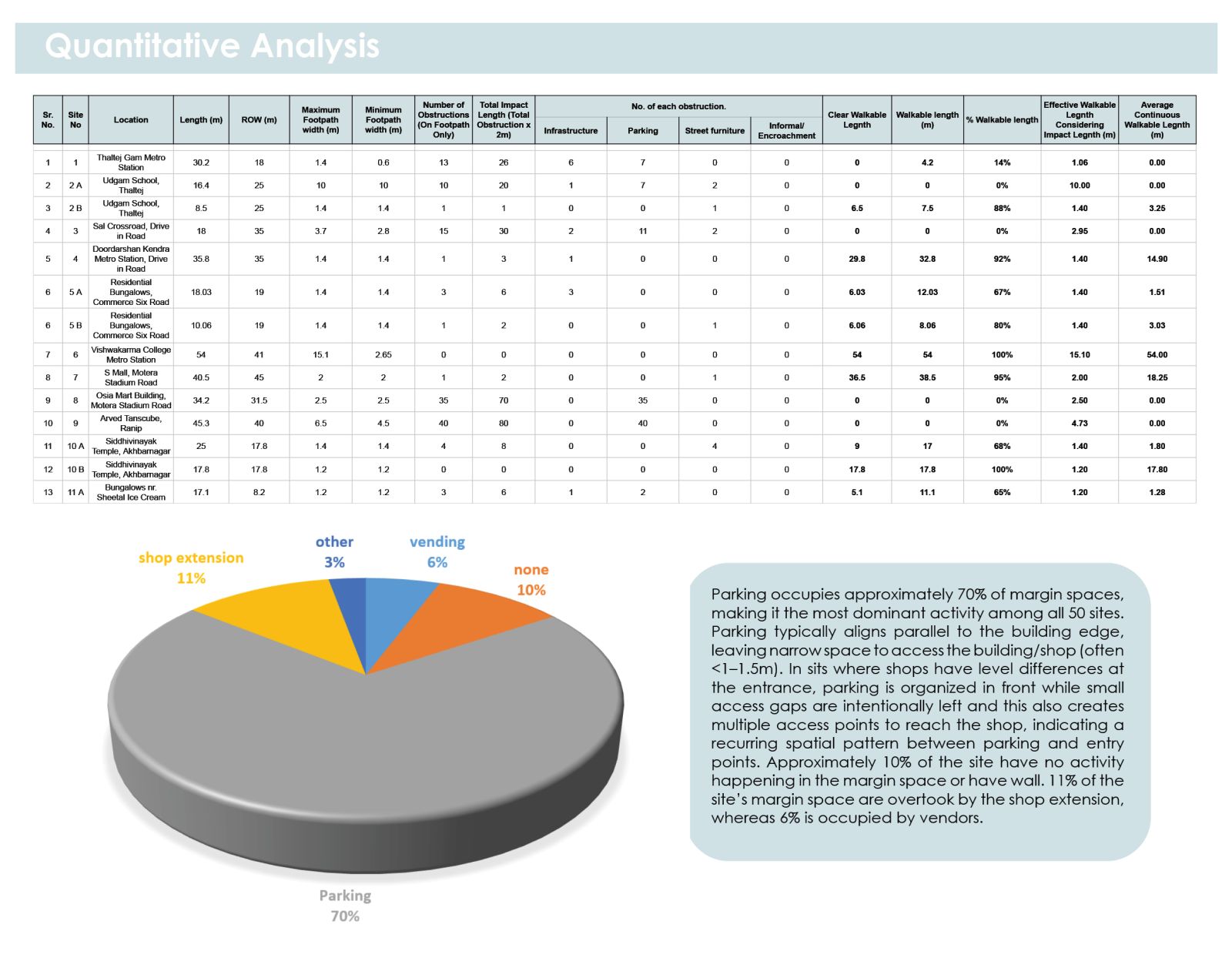
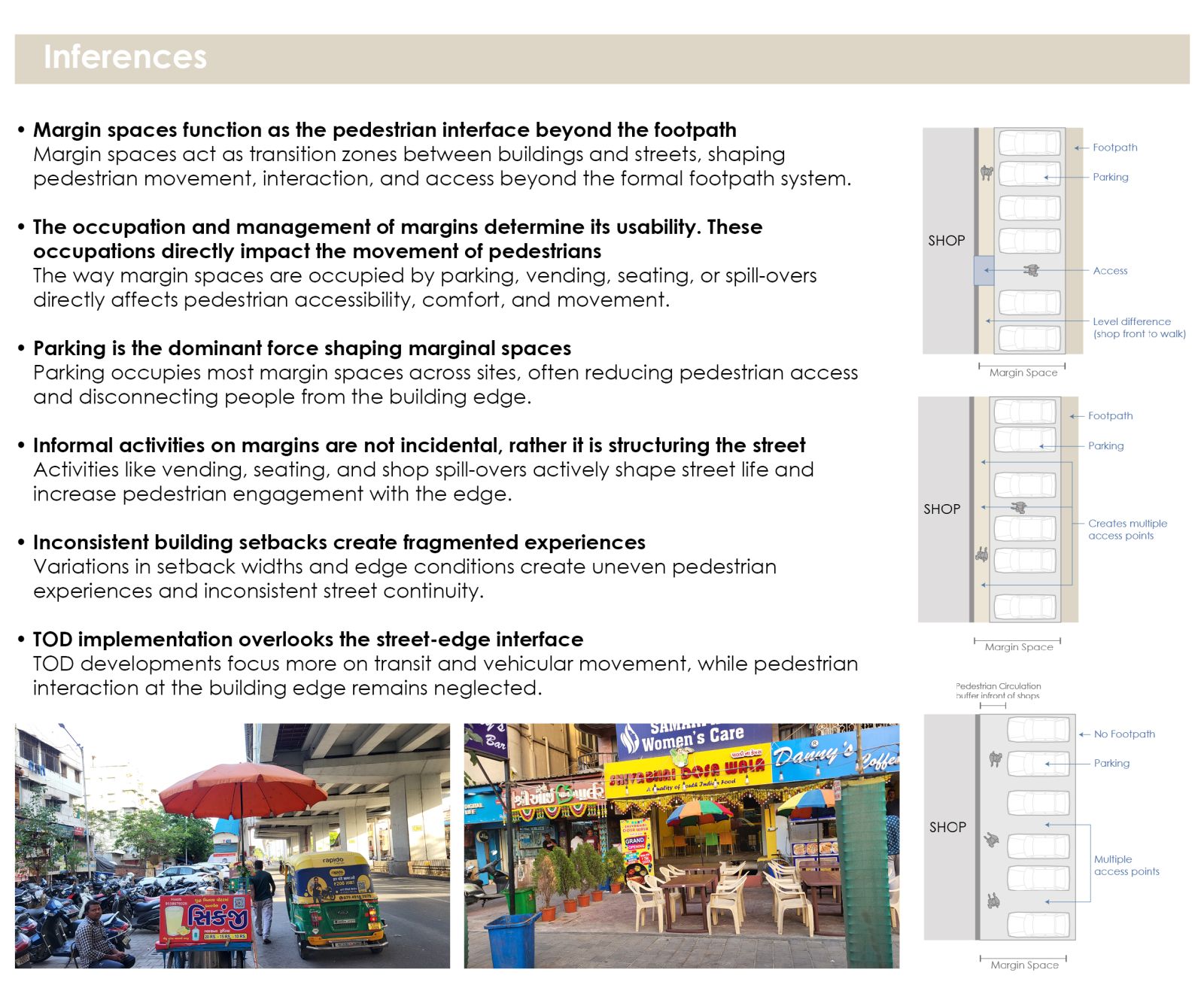
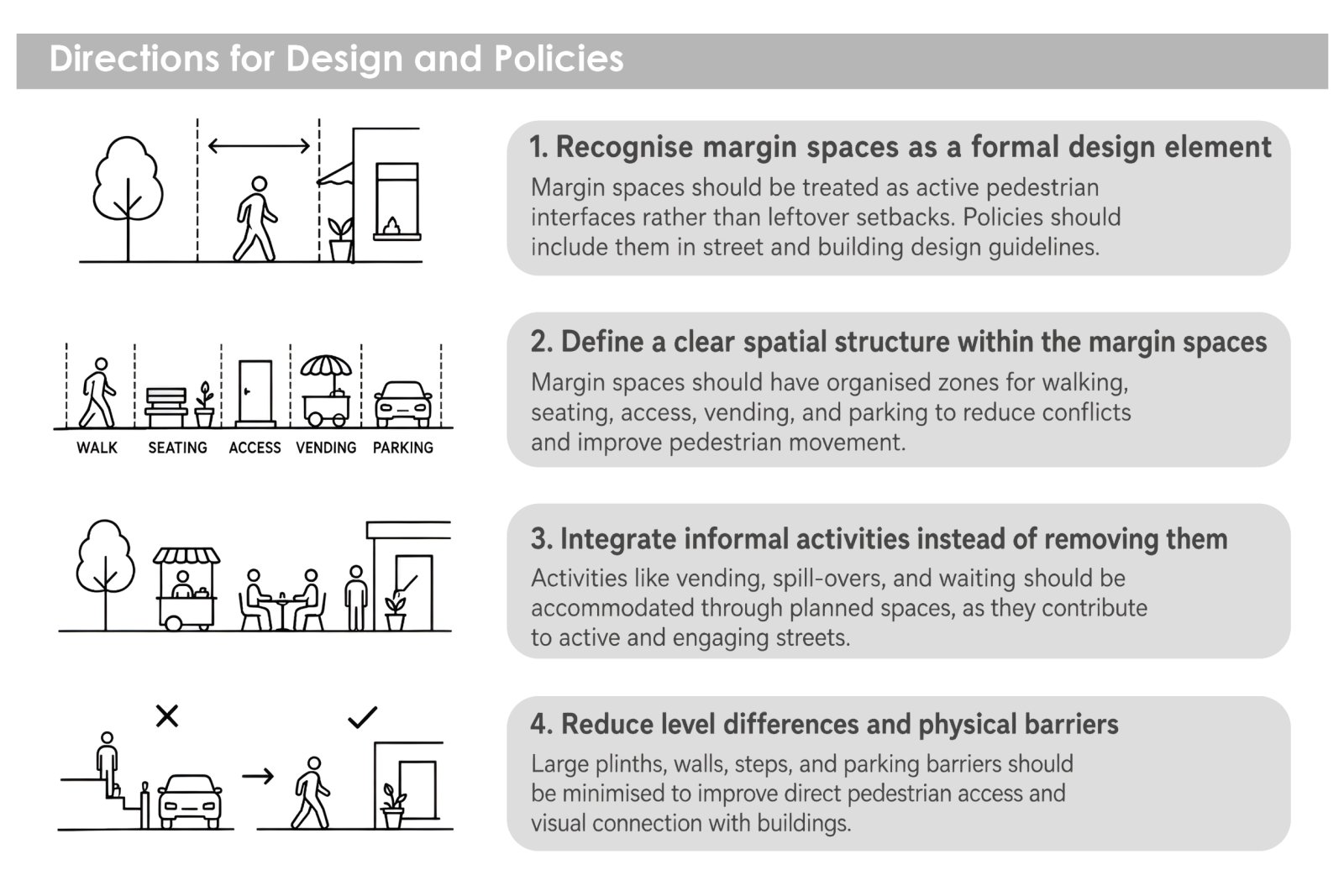
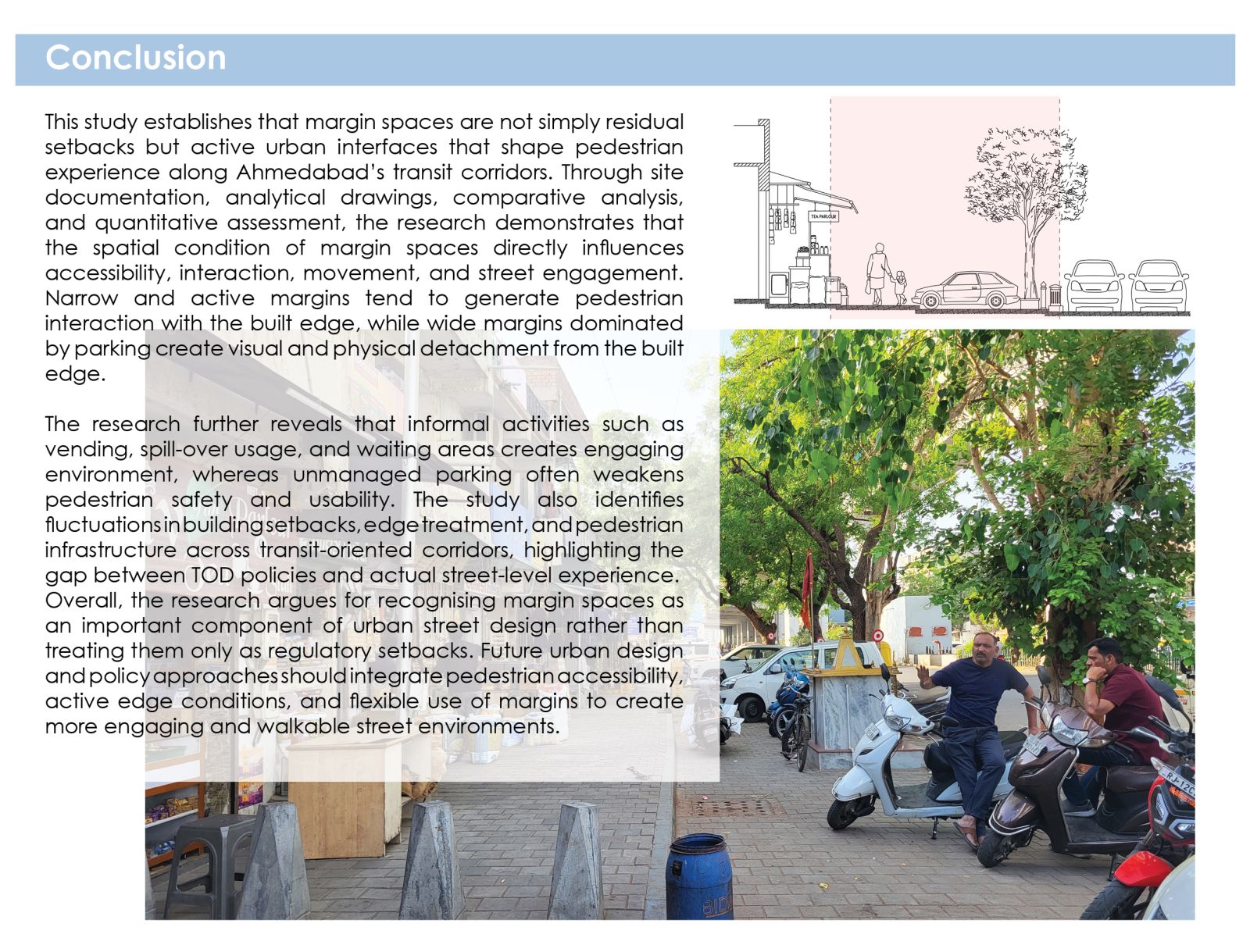
This research investigates the role of margin spaces as critical pedestrian interfaces within urban streets in Ahmedabad. Often treated as leftover or secondary spaces in planning policies and development regulations, these transitional zones between buildings and streets significantly influence pedestrian movement, accessibility, and street activity. The study documents and analyses selected street segments to understand how margin width, built-edge conditions, accessibility, parking, vending, and spill-over activities shape spatial use and pedestrian interaction. Through mapping, observation, and analytical drawings, the research identifies recurring patterns, occupations, and inconsistencies in margin spaces, highlighting their importance in shaping everyday urban experience and informing future urban design and policy directions.
View Additional Work