Your browser is out-of-date!
For a richer surfing experience on our website, please update your browser. Update my browser now!
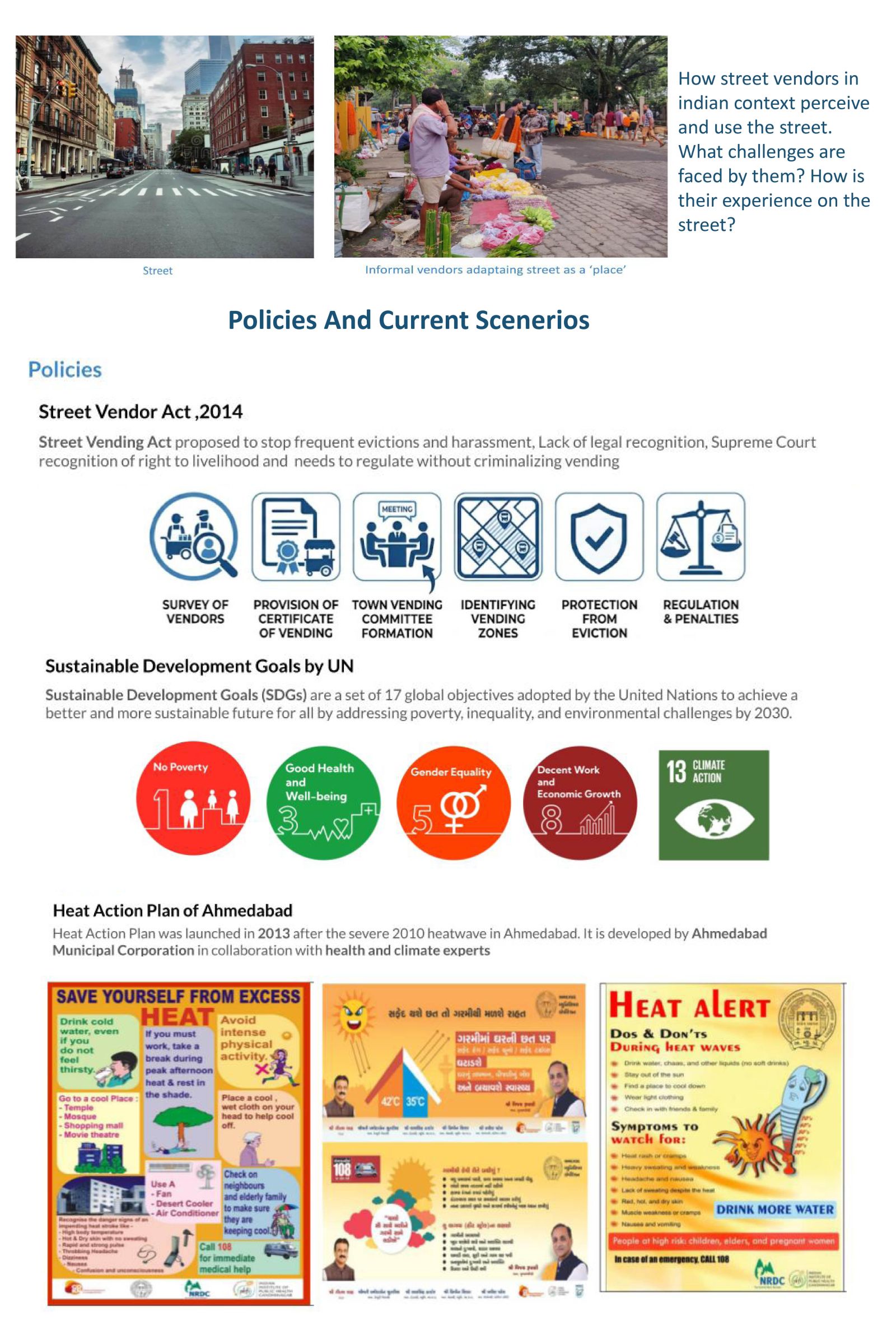
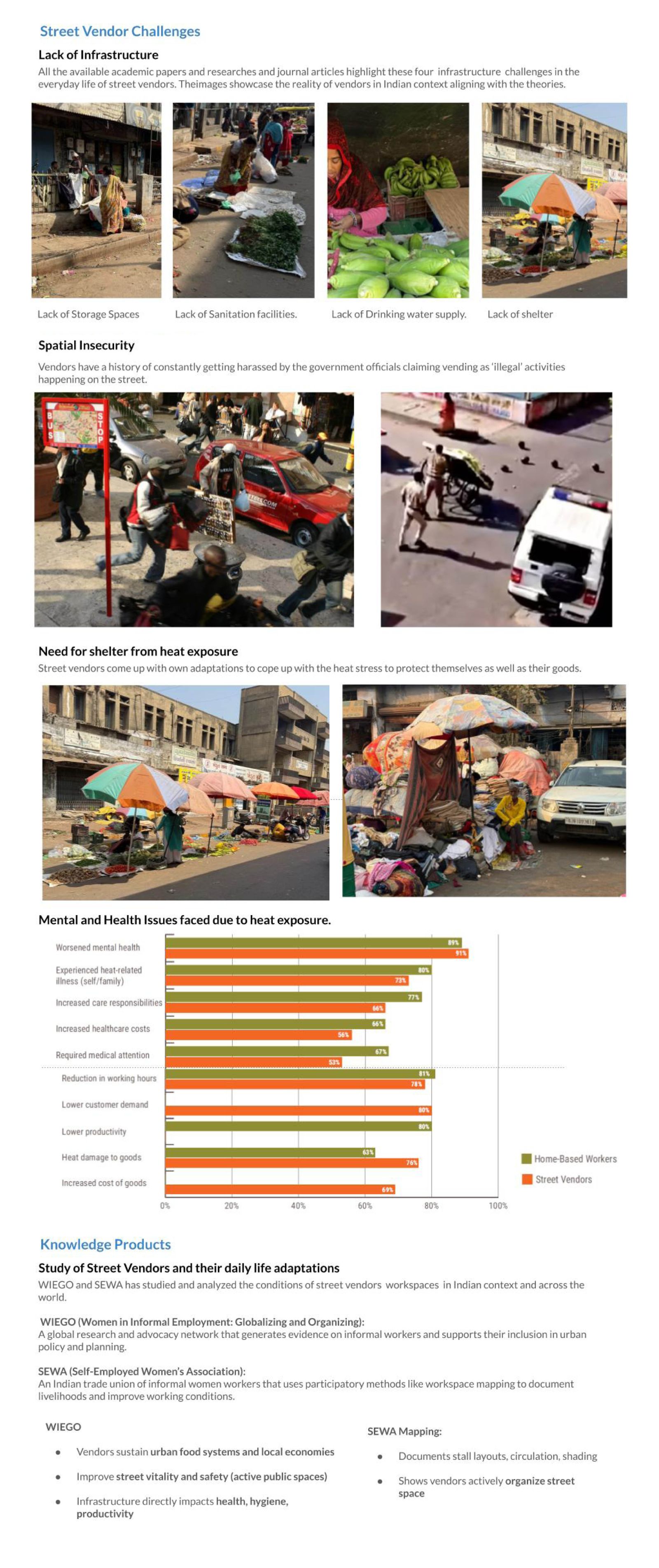
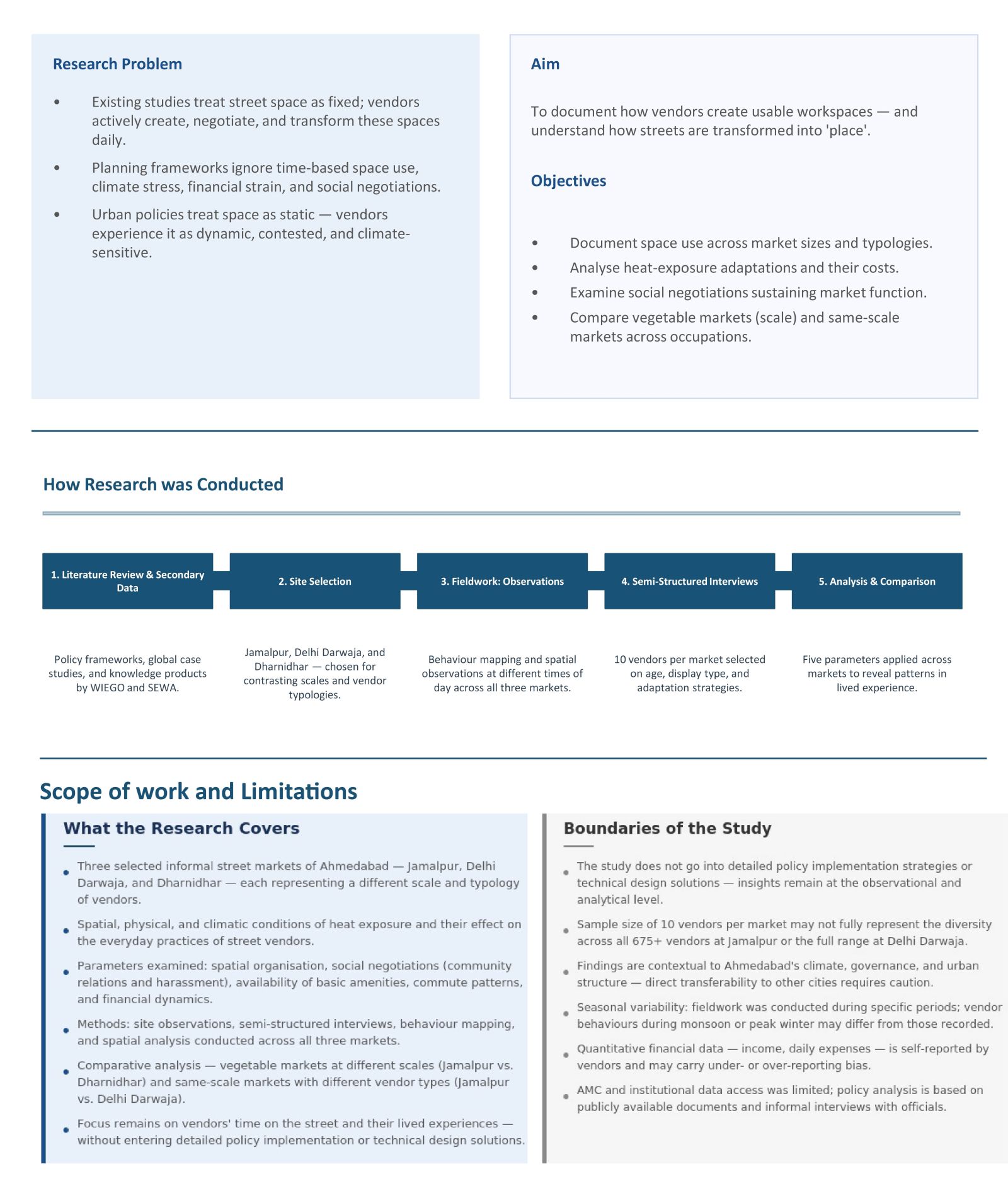
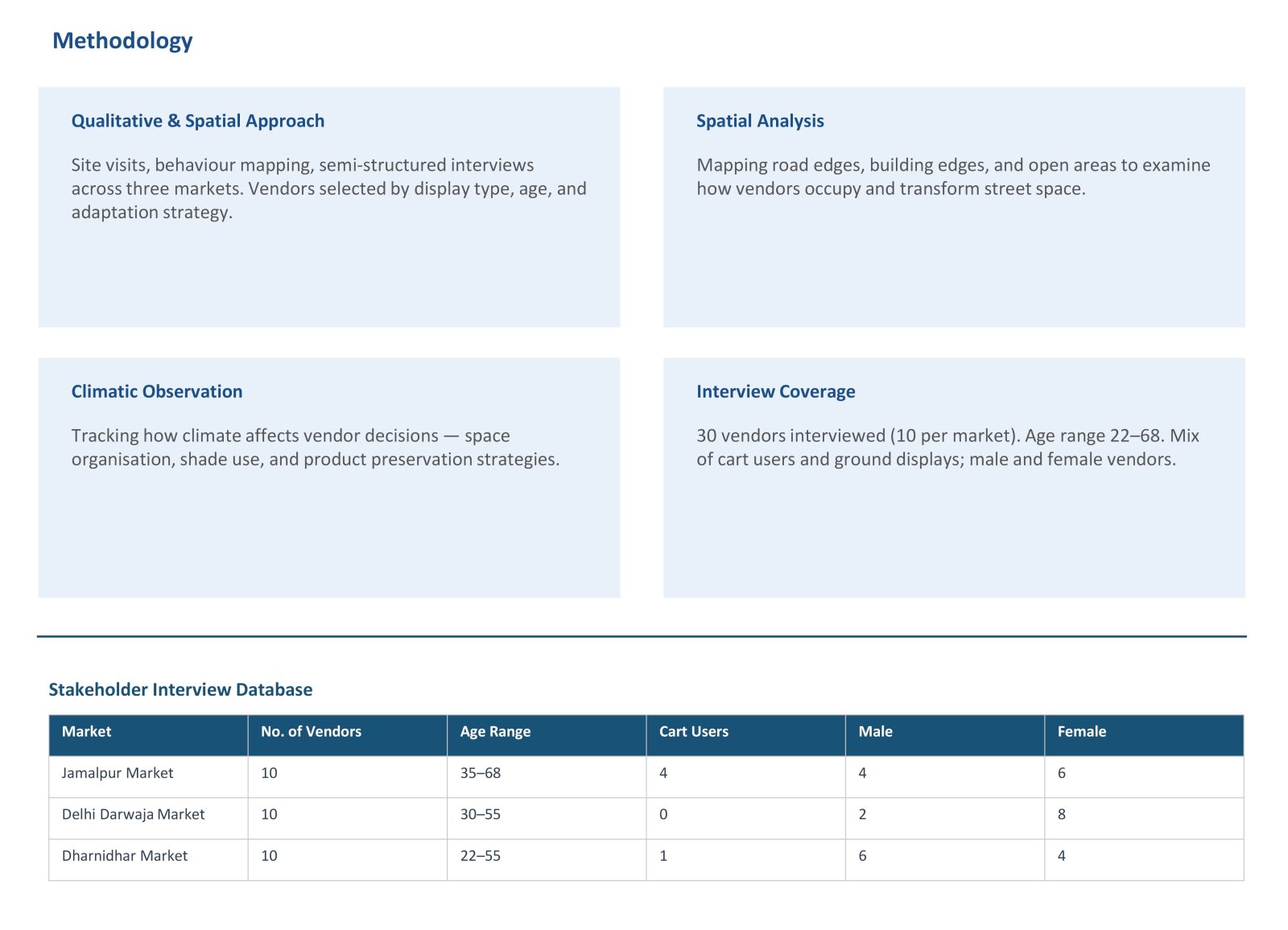
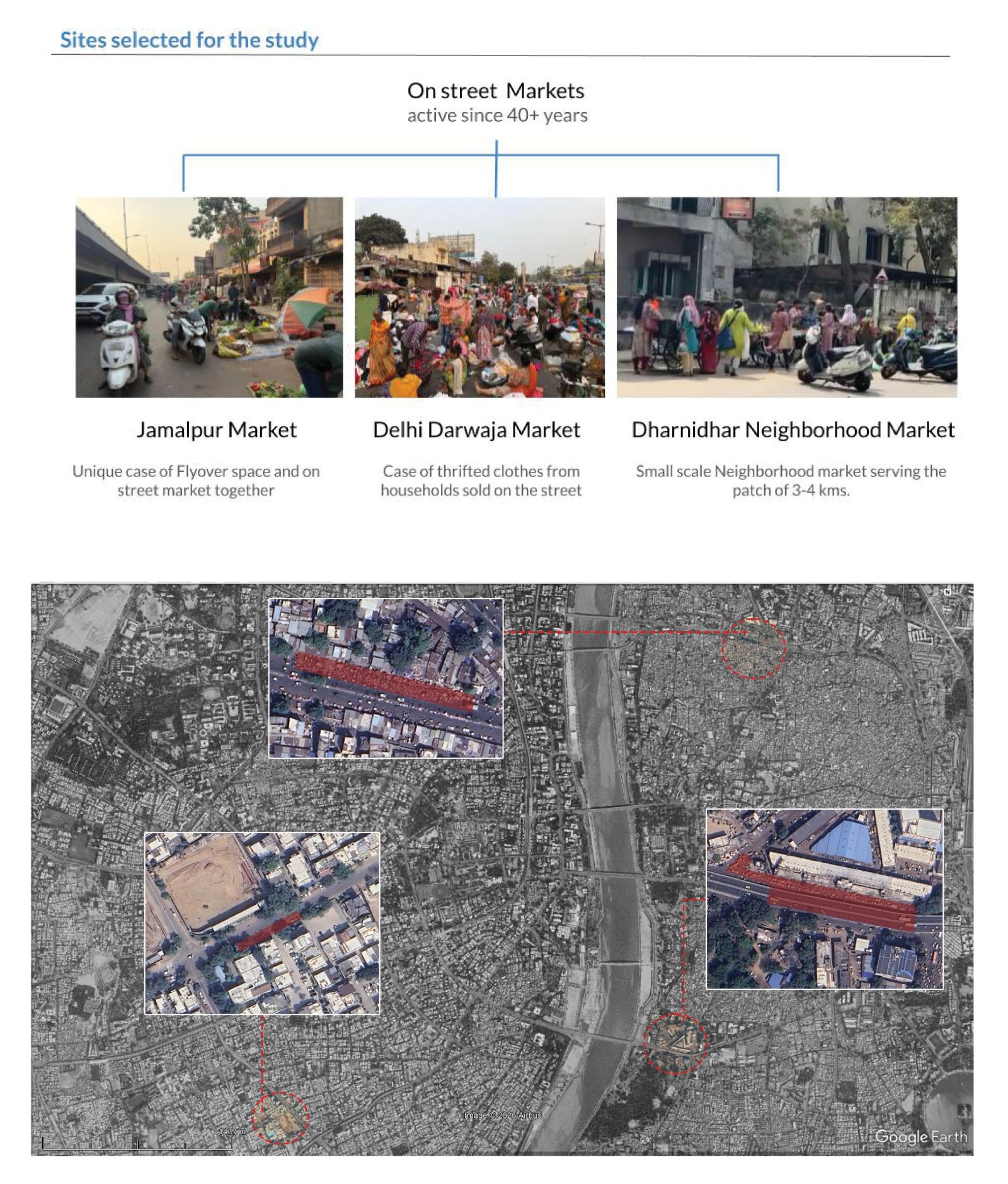
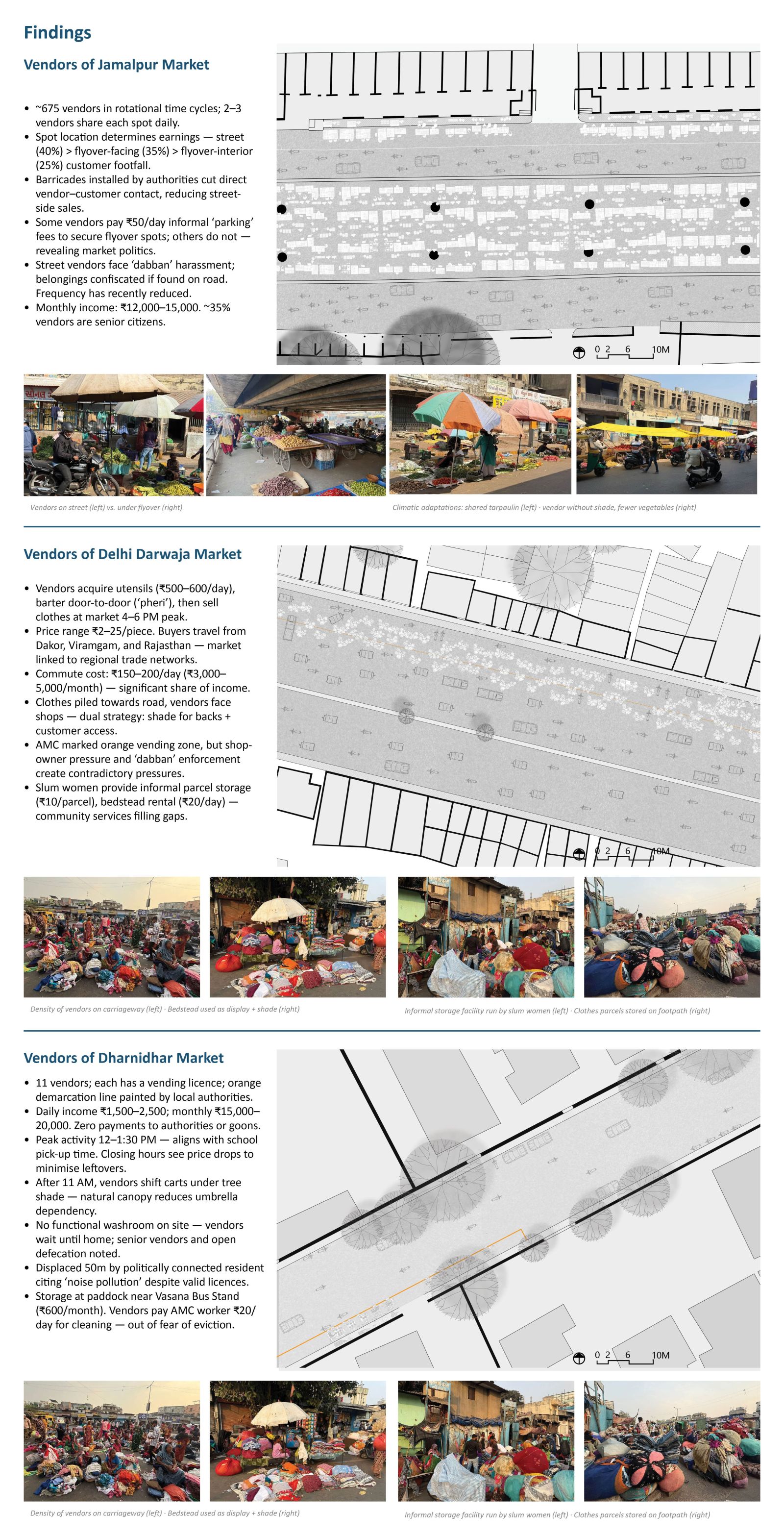
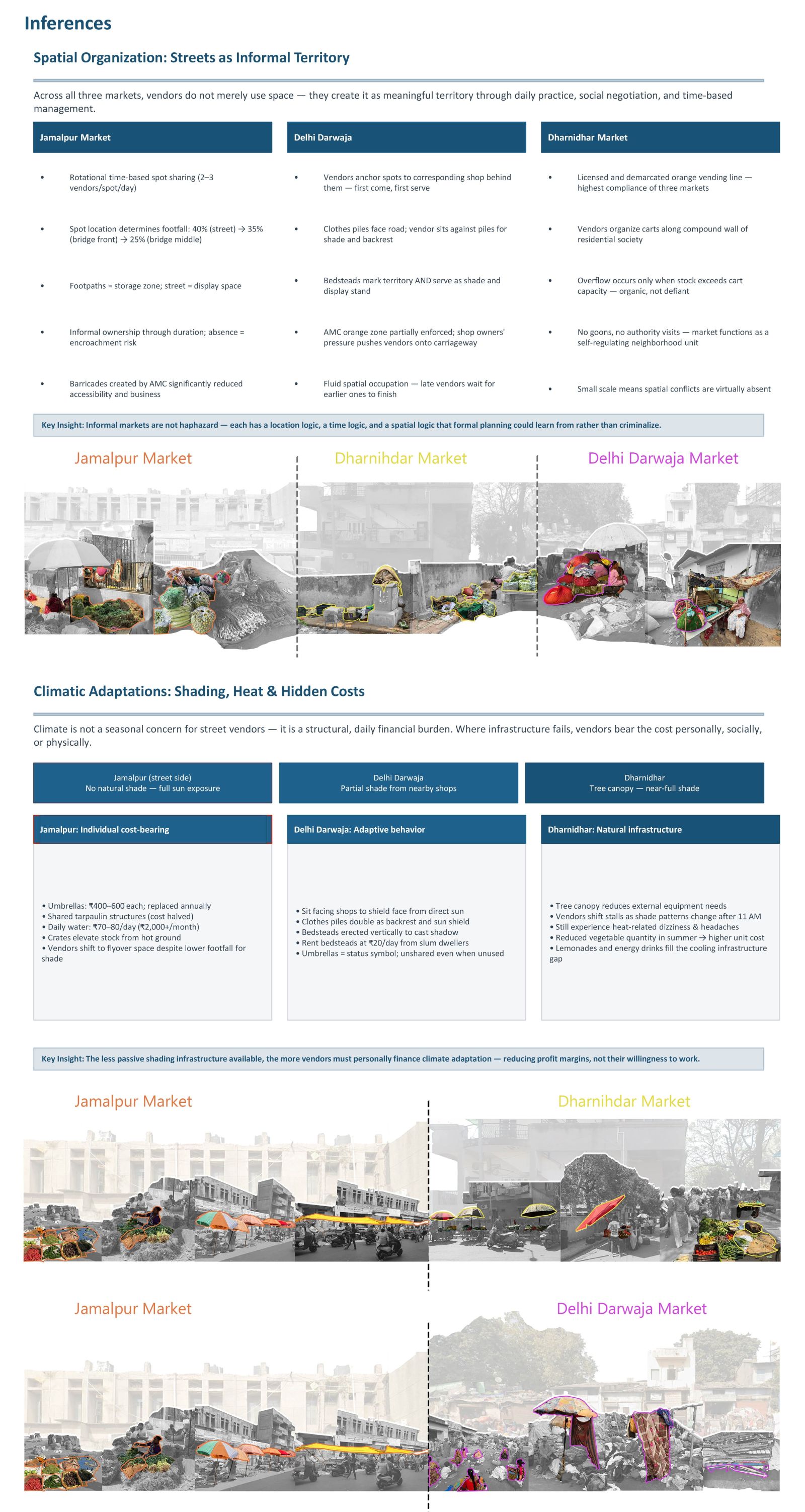
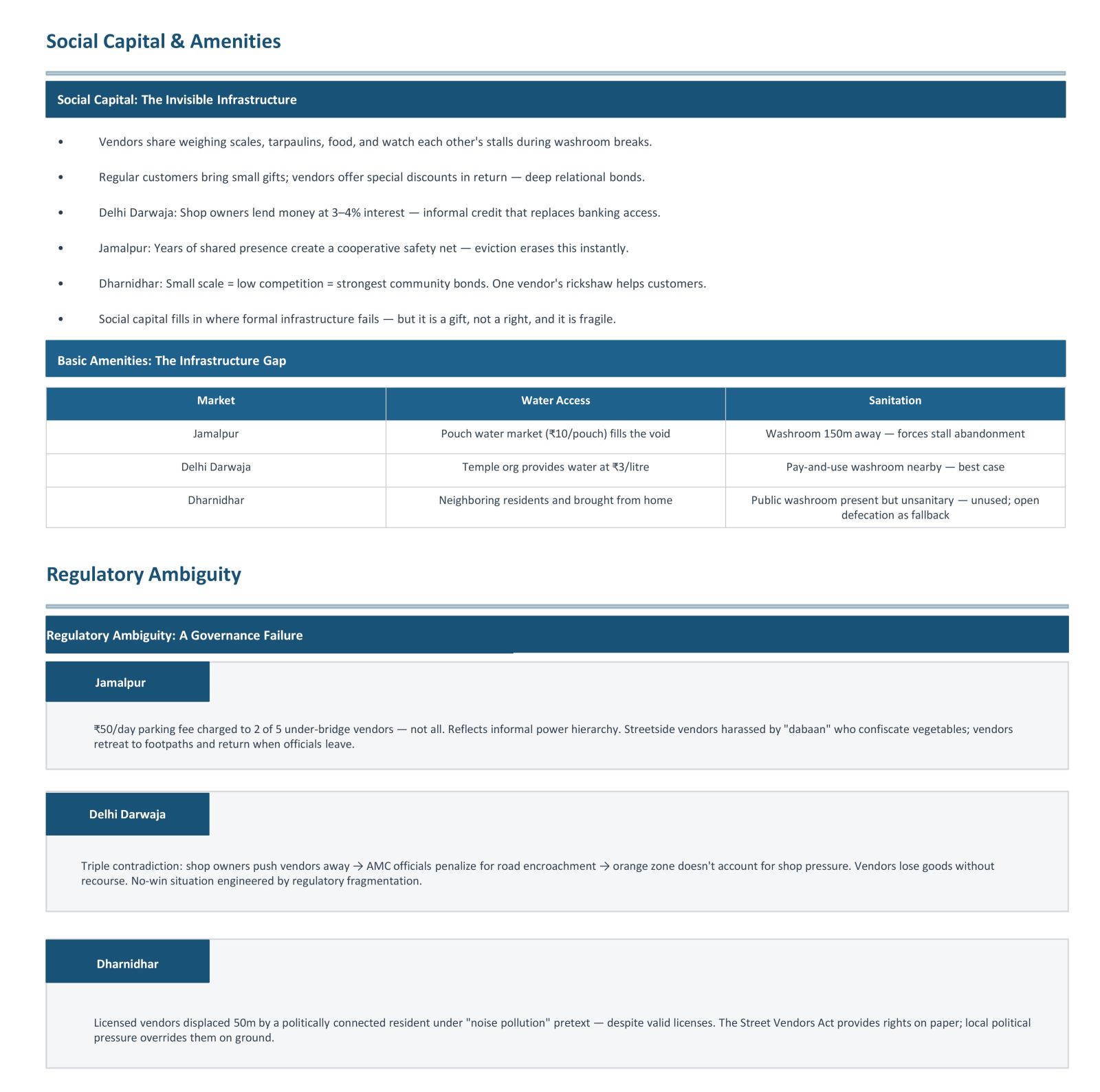
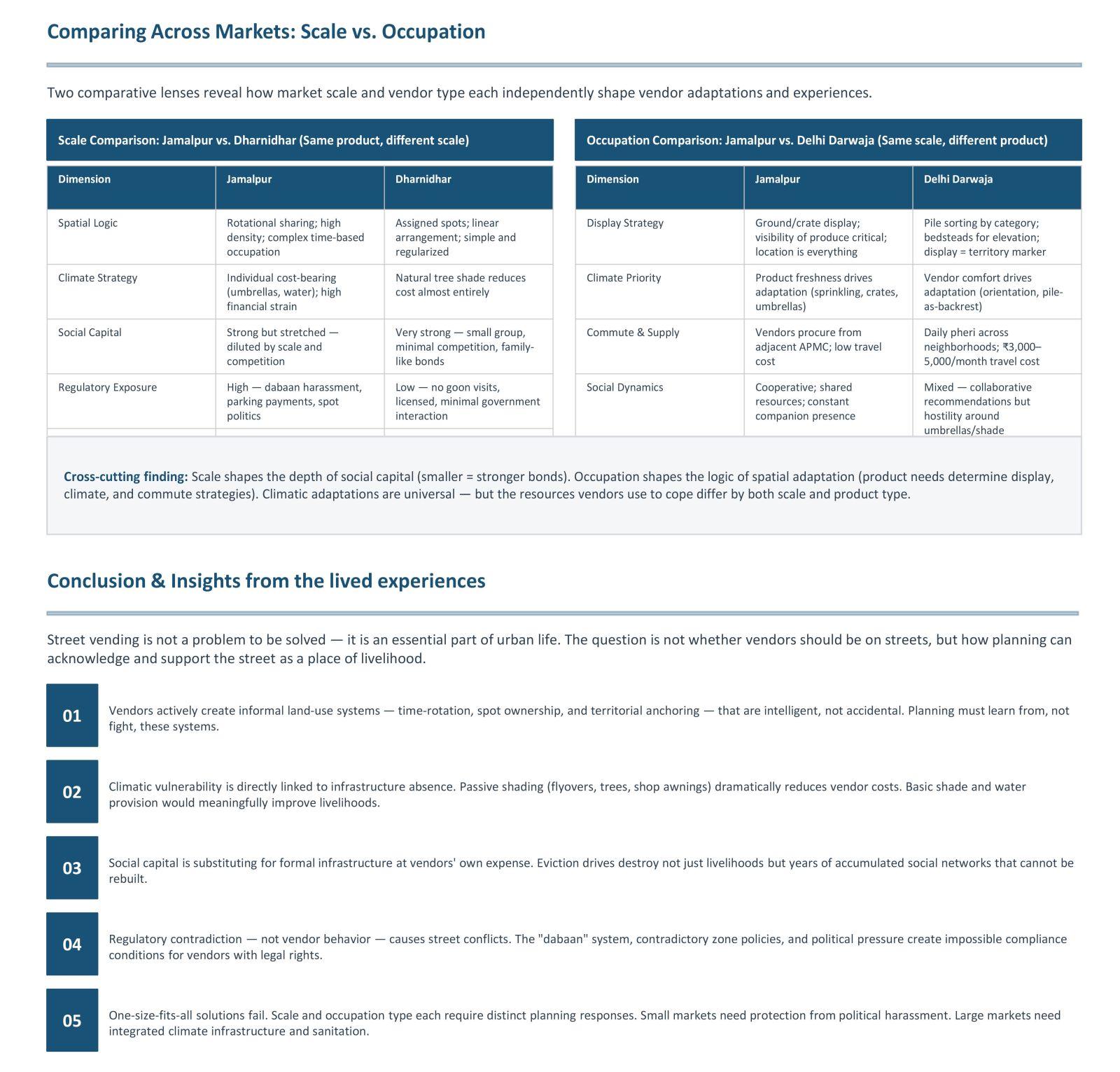
In India, streets function as complex public spaces where informal street vendors play a significant economic and social role, contributing 4.2% of urban employment. Vendors operate in challenging conditions with limited access to sanitation, water, and shelter, while also coping with extreme heat and climate stress. To sustain livelihoods, they adopt adaptive strategies such as temporary shading, material improvisation, and strategic positioning. This study examines vendors in three Ahmedabad markets—Jamalpur, Dharnidhar, and Delhi Darwaja—through spatial observations and interviews. By comparing market scale and vendor typology, the research analyzes spatial, climatic, social, mobility, and financial factors shaping vendors’ everyday negotiations and resilience.
View Additional Work