Your browser is out-of-date!
For a richer surfing experience on our website, please update your browser. Update my browser now!
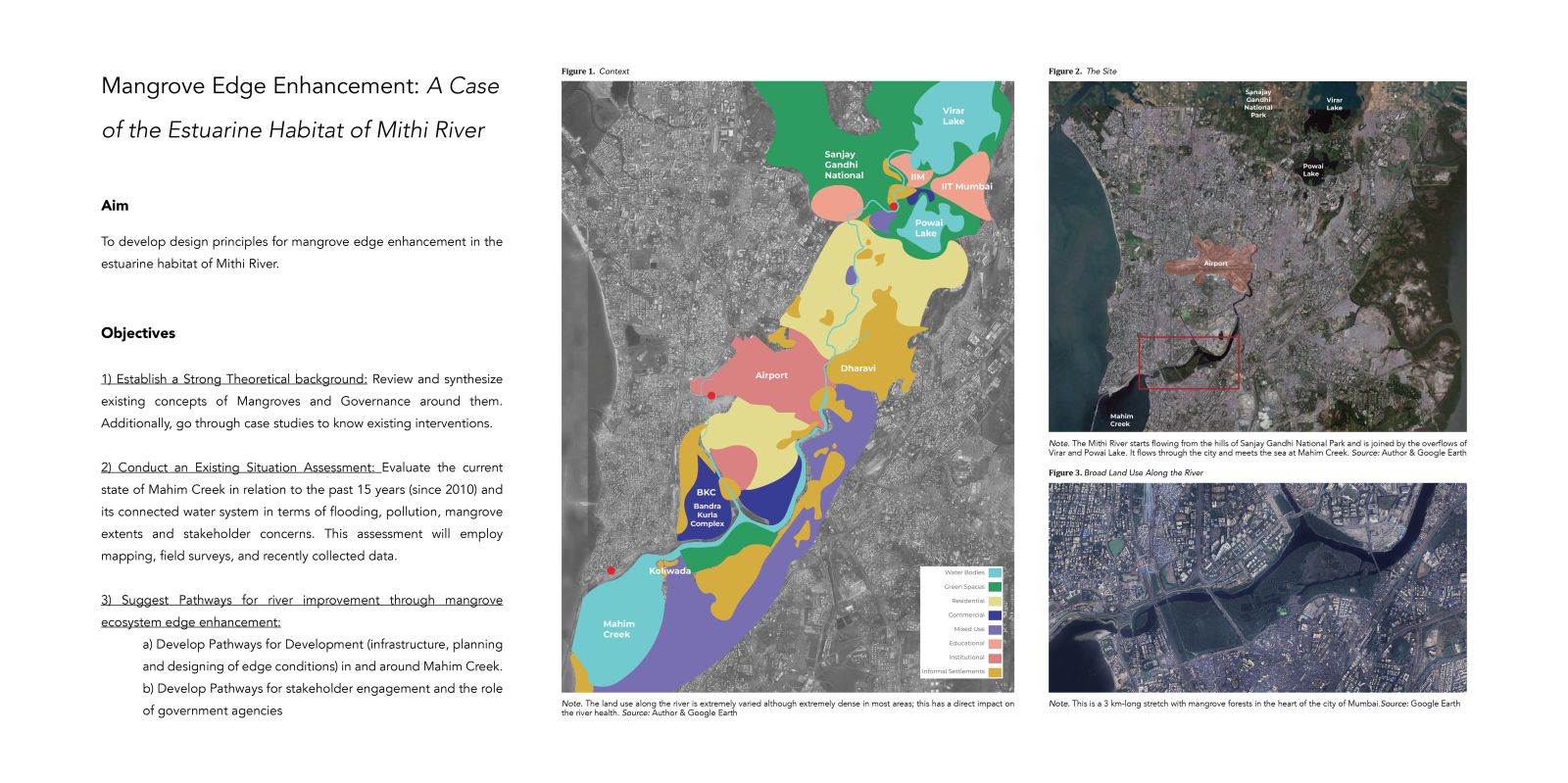
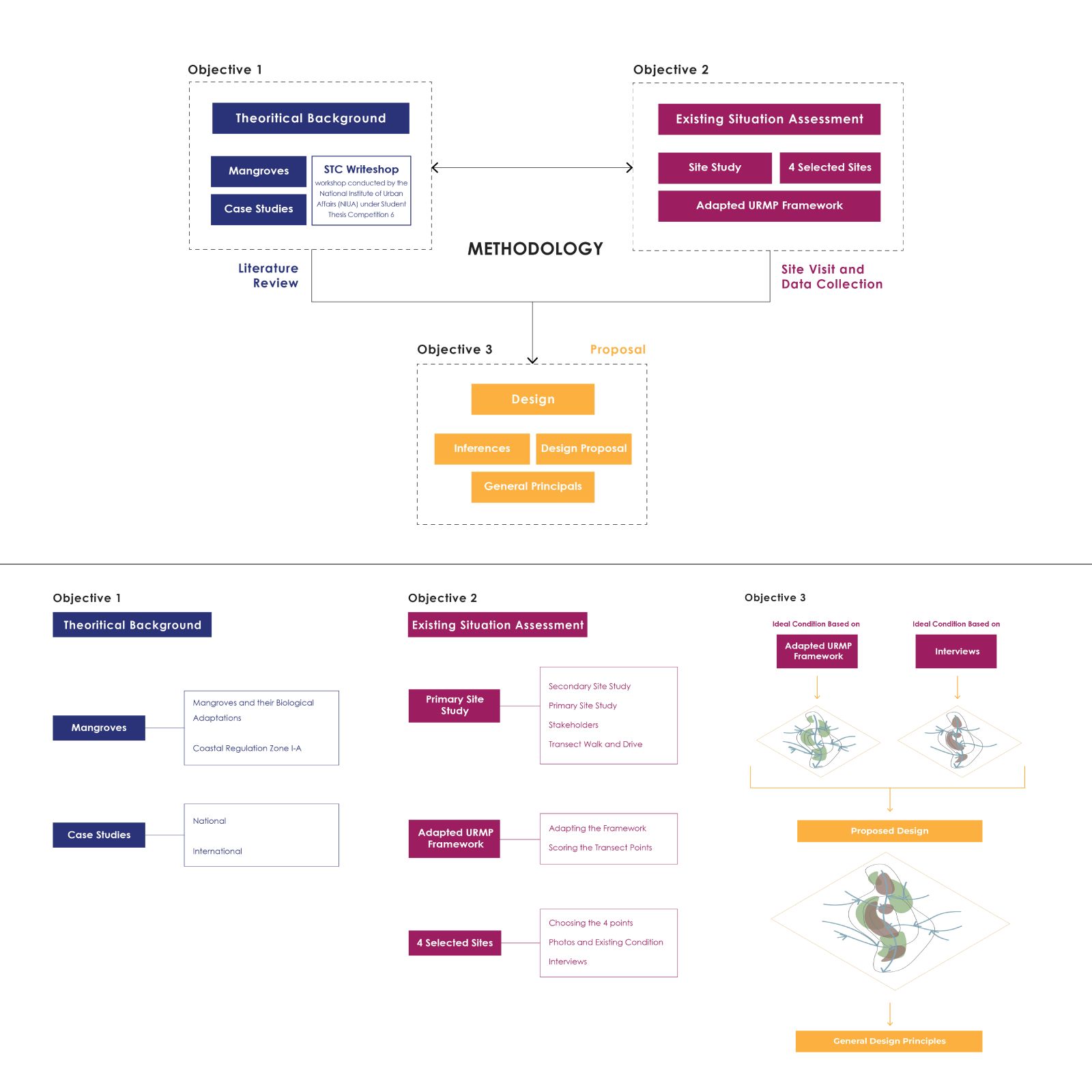
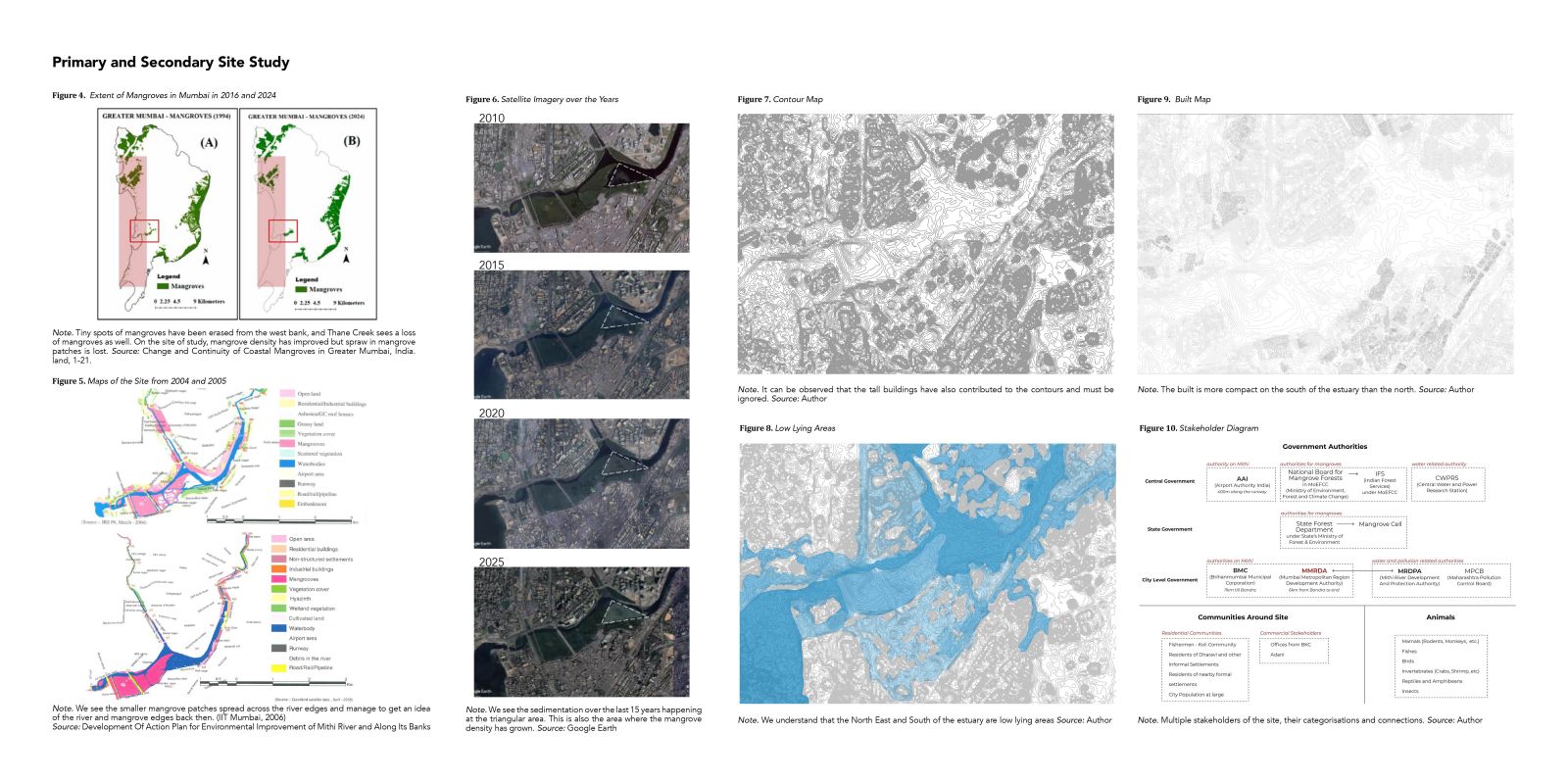
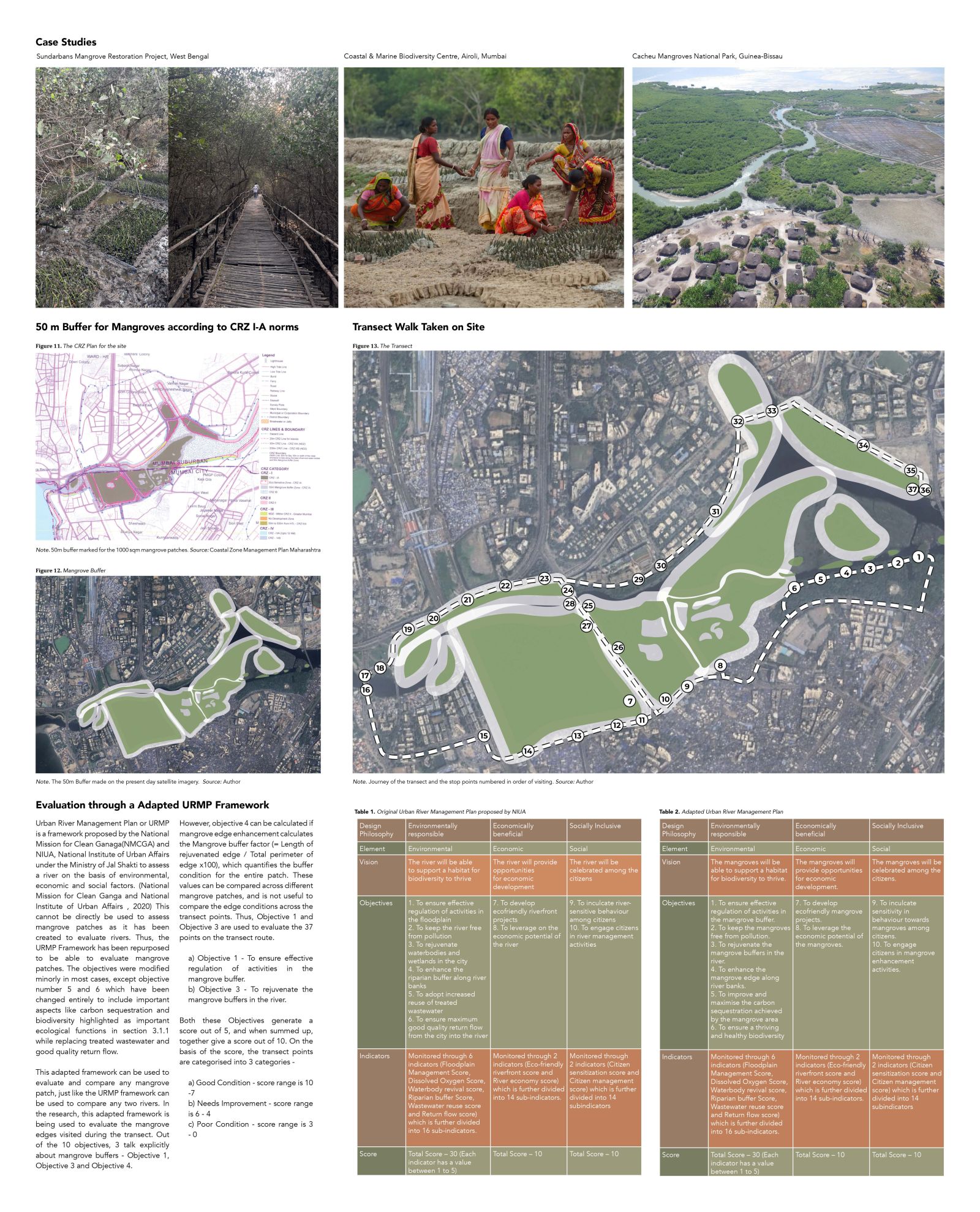
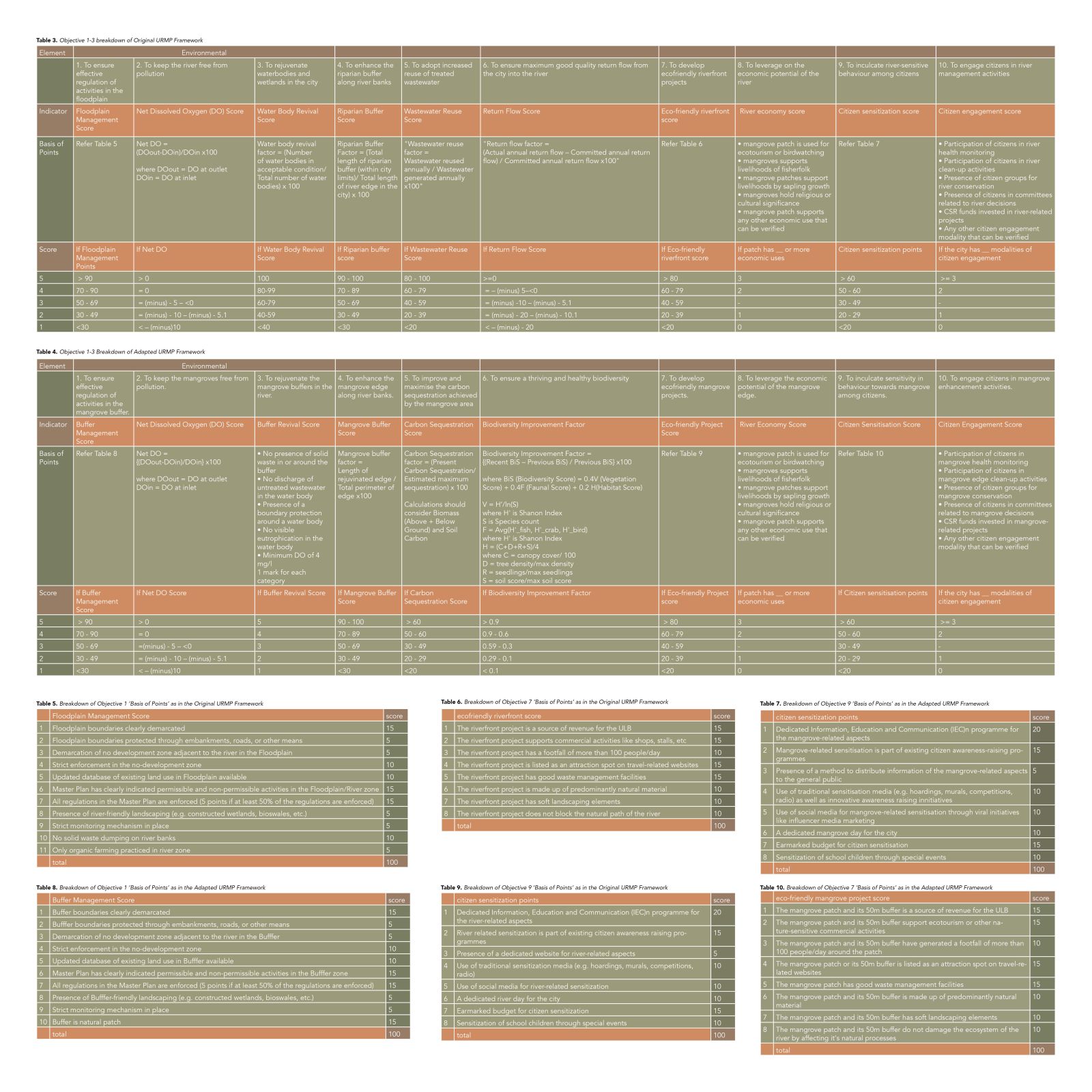
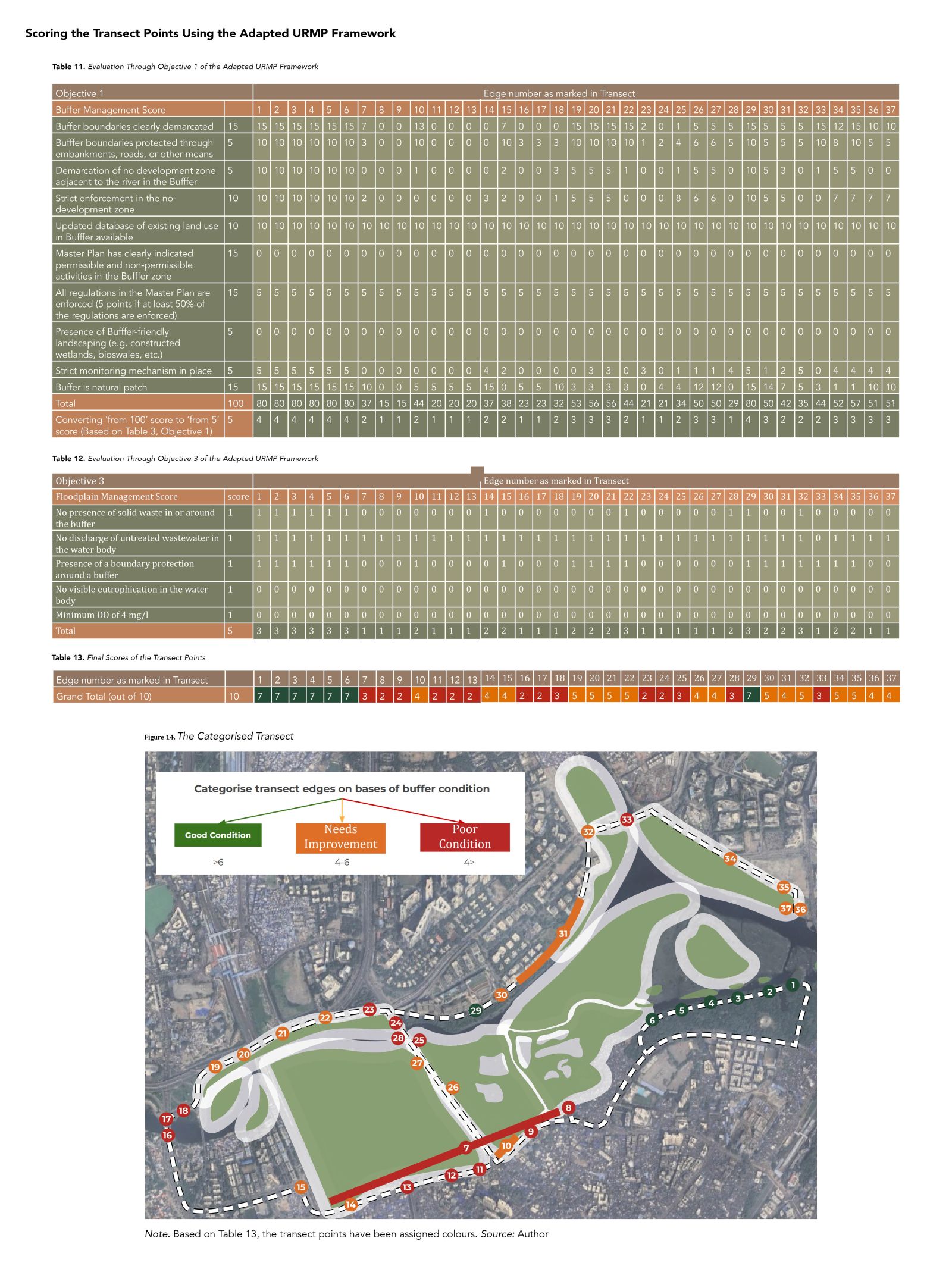
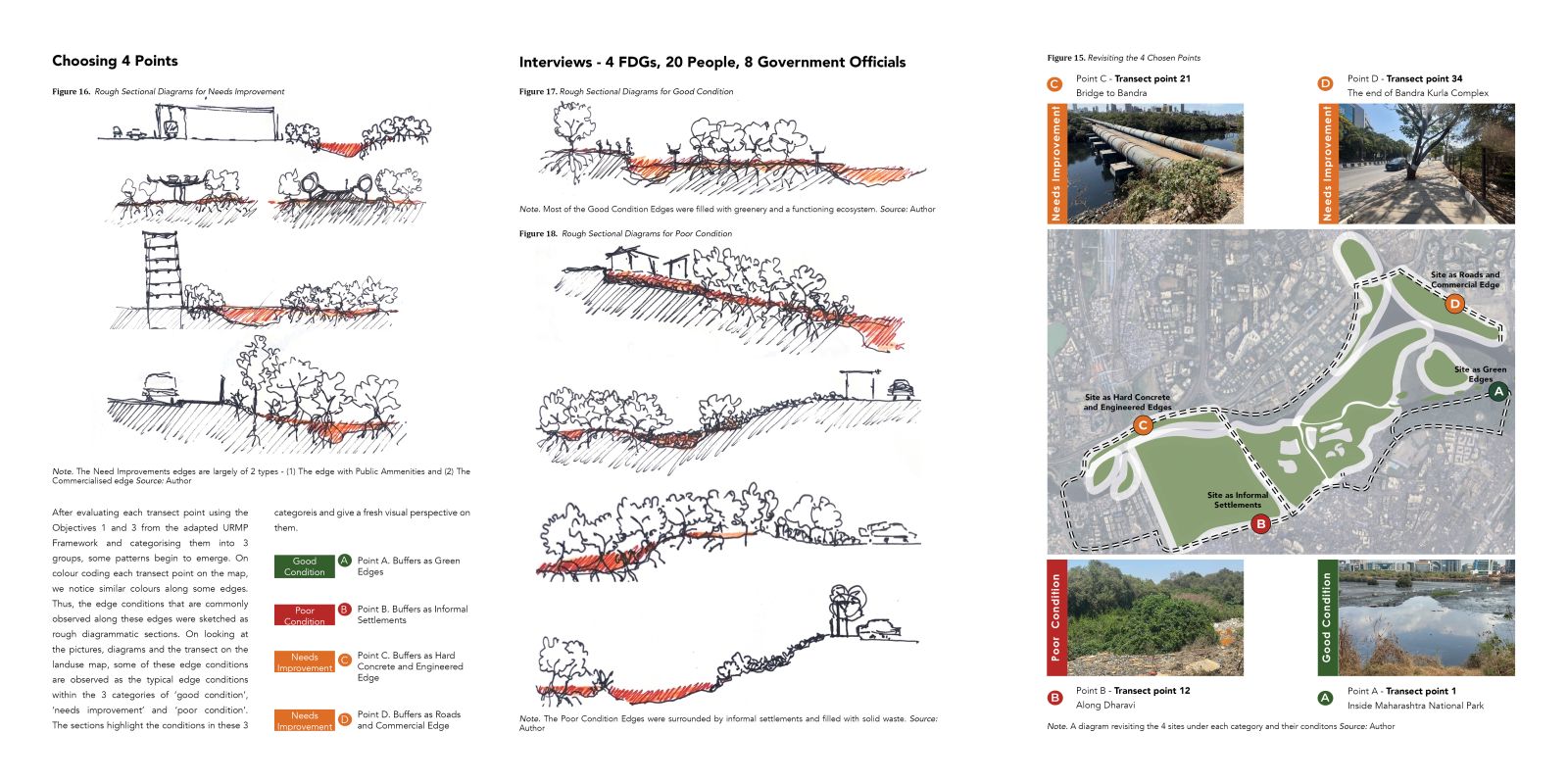
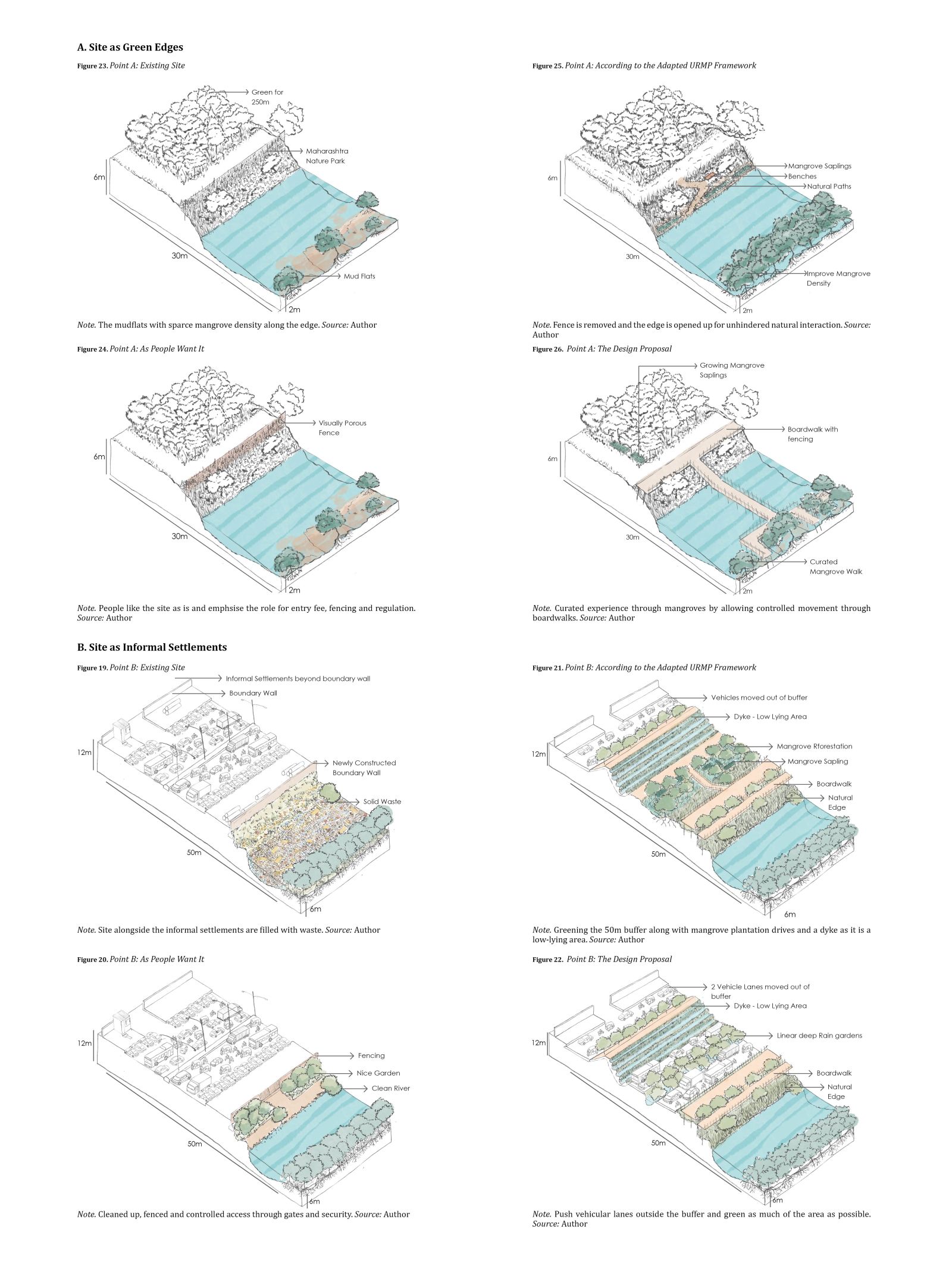
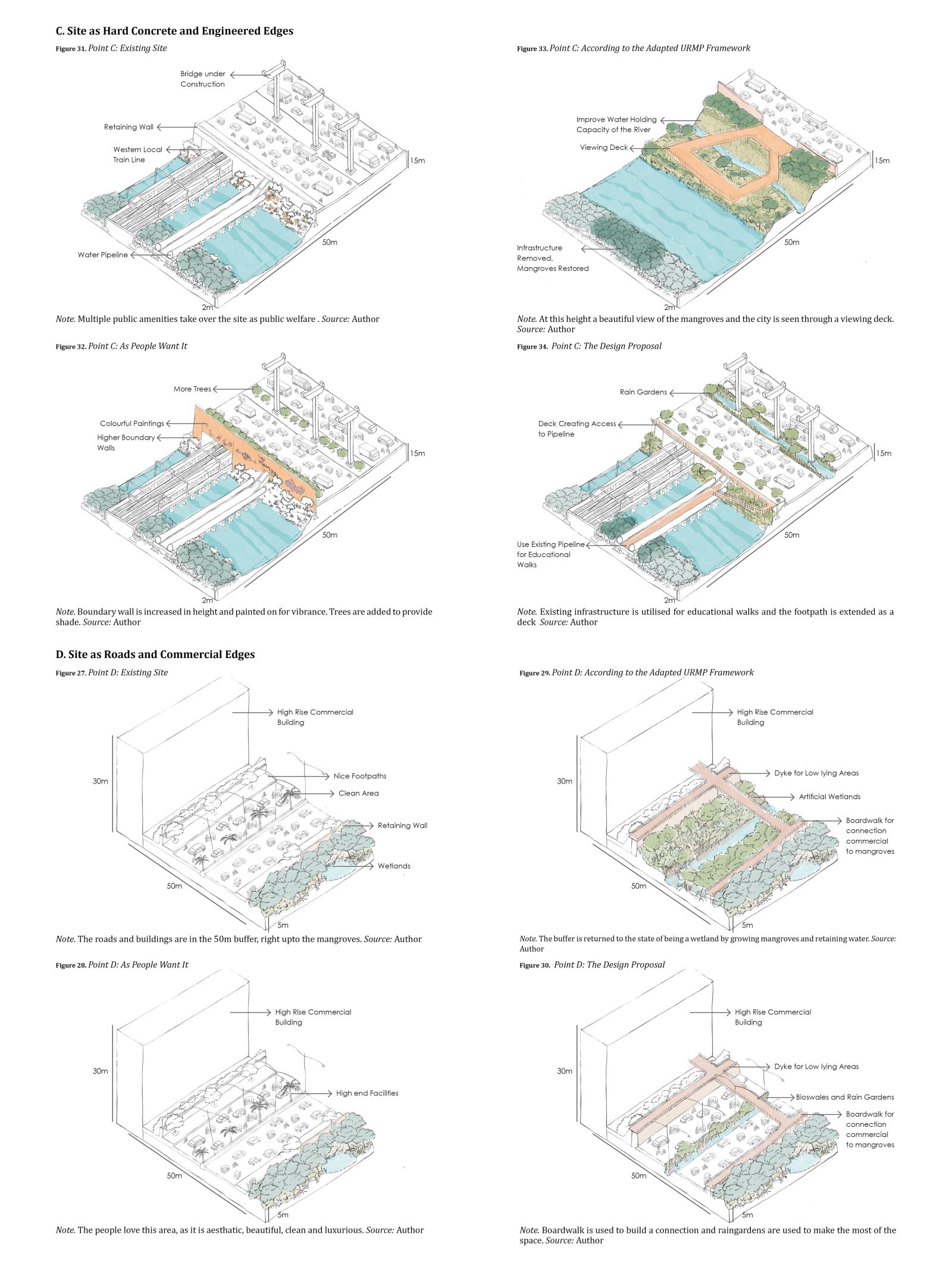
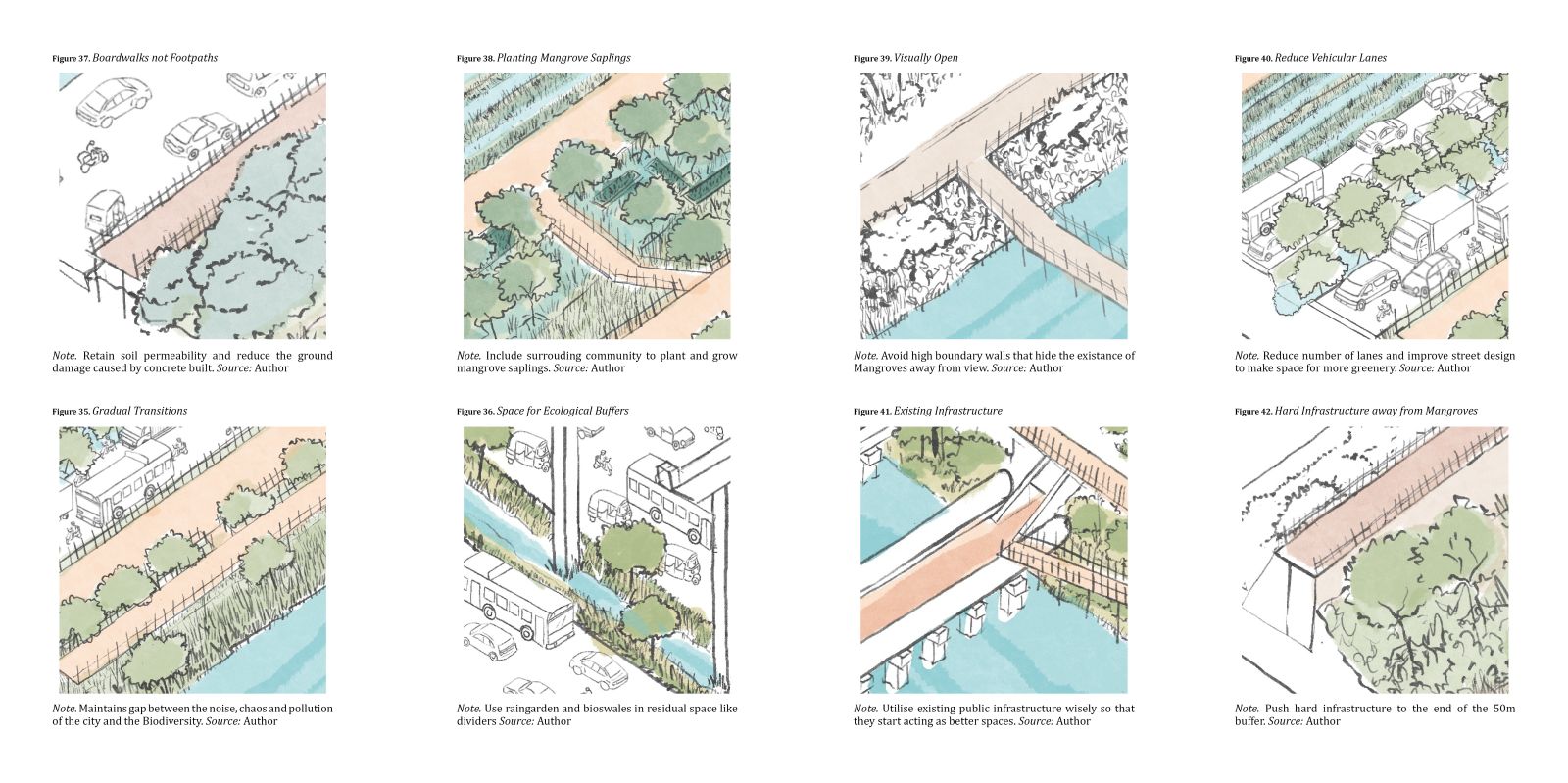
Mangrove forests are some of the most potent natural ecosystems that protect urban coastal regions from severe damage during floods. Additionally, they also trap pollutants and enhance biodiversity, making themselves a huge value addition to urban habitats. Thus, the mangroves of the estuarine habitat of the Mithi River (study area of 3km), Mumbai, are an asset to the city. This research attempts to propose general design principles that can be applied in any area where mangroves meet dense urban edge conditions. A thorough secondary literature study is done to understand the species and functions of mangroves, alongside relevant case studies. Satellite imagery is used to understand the temporal changes at the site, while photography, videography and stakeholder consultation are used for detailed documentation of the existing situation along a 10km transect covering the 3km estuarine stretch. It is realised that the edge conditions of the mangroves with their urban context are largely ignored. The prescribed 50m buffer in the CRZ (Coastal Regulation Zone) norms is translated to the site as garbage dumps, public infrastructure or a line of boundary walls. Four FGDs were conducted along with semi-structured interviews with 20 individuals and 8 Government Officials. Government bodies have been visited, and the reports procured from them have also been studied. From the analysis of these studies and understanding of on-ground realities, the Framework of Urban River Management Plan proposed by NIUA is adapted to evaluate the quality of the edge conditions observed in the transect. The evaluation led to the classification of the study area into 3 types - Good Condition, Needs Improvement and Poor Condition. Four different locations of the study area are selected to propose typical designs. Based on the site observations and stakeholder consultations, three conceptual design alternatives have been developed. The first one, where performative features of mangroves and natural systems have been retained in their near-ideal situation. The second proposal follows the "wish-list" and "comfort" of the stakeholders, which is not ideal from the ecological perspective. The third one is more pragmatic, taking into consideration the negotiations between the demands of the stakeholders and the ideal condition to retain the functions of the mangroves. From the third "negotiated" and "pragmatic" design proposal, general principles are derived which can be applied to similar contexts. Keywords - Mangrove buffers, Edge Conditions, Estuarine Habitat, Mithi River, Mumbai, Interviews, Urban River Management Plan, Design Principles.