Your browser is out-of-date!
For a richer surfing experience on our website, please update your browser. Update my browser now!
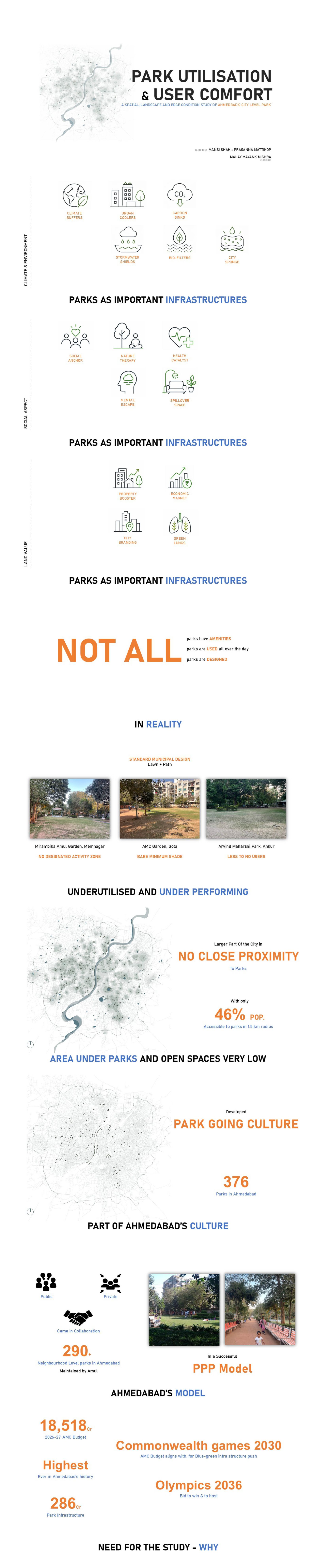
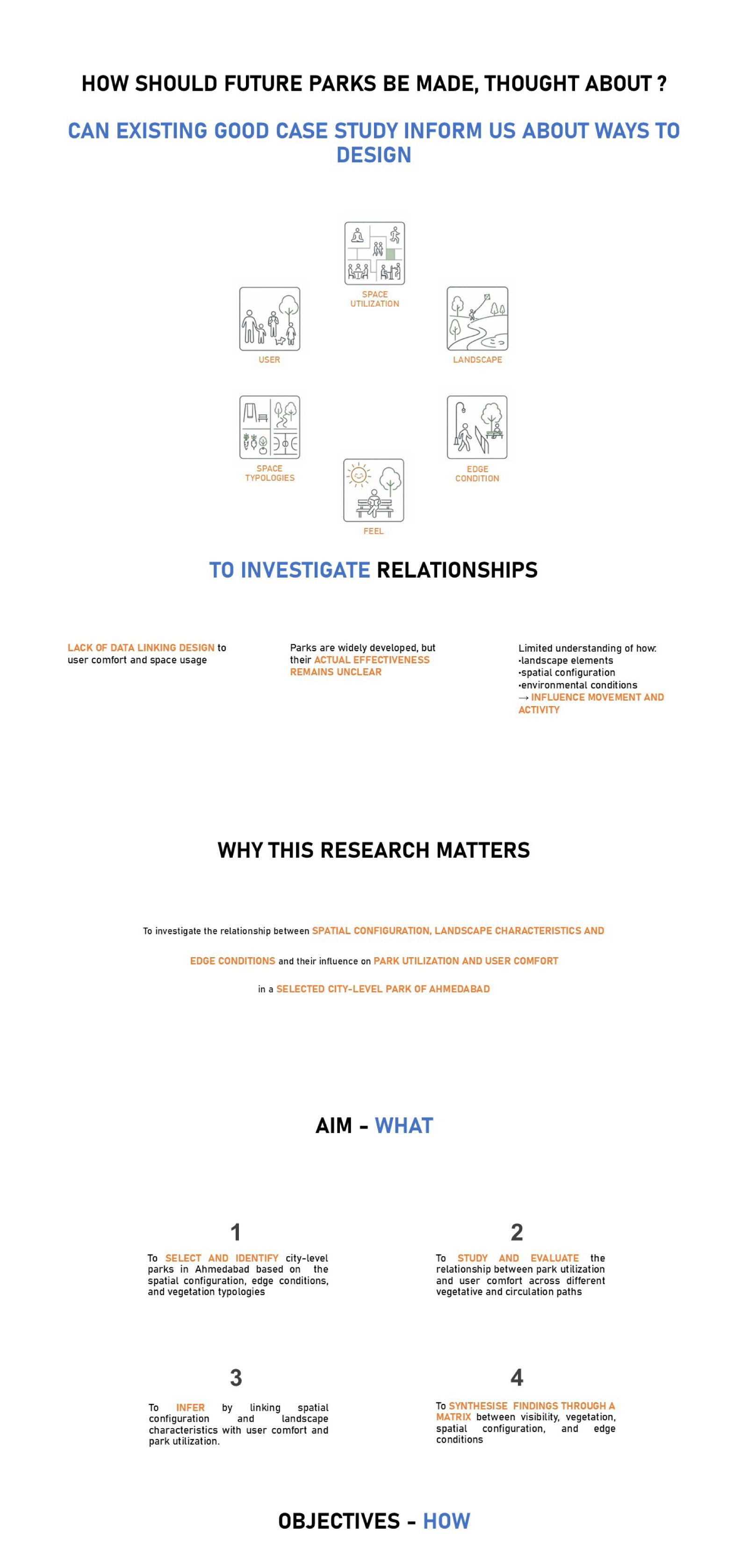
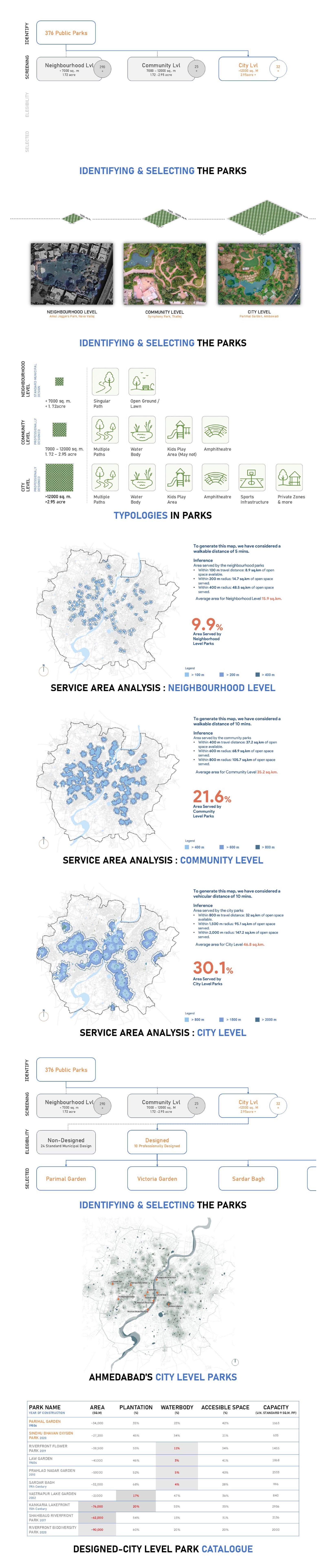
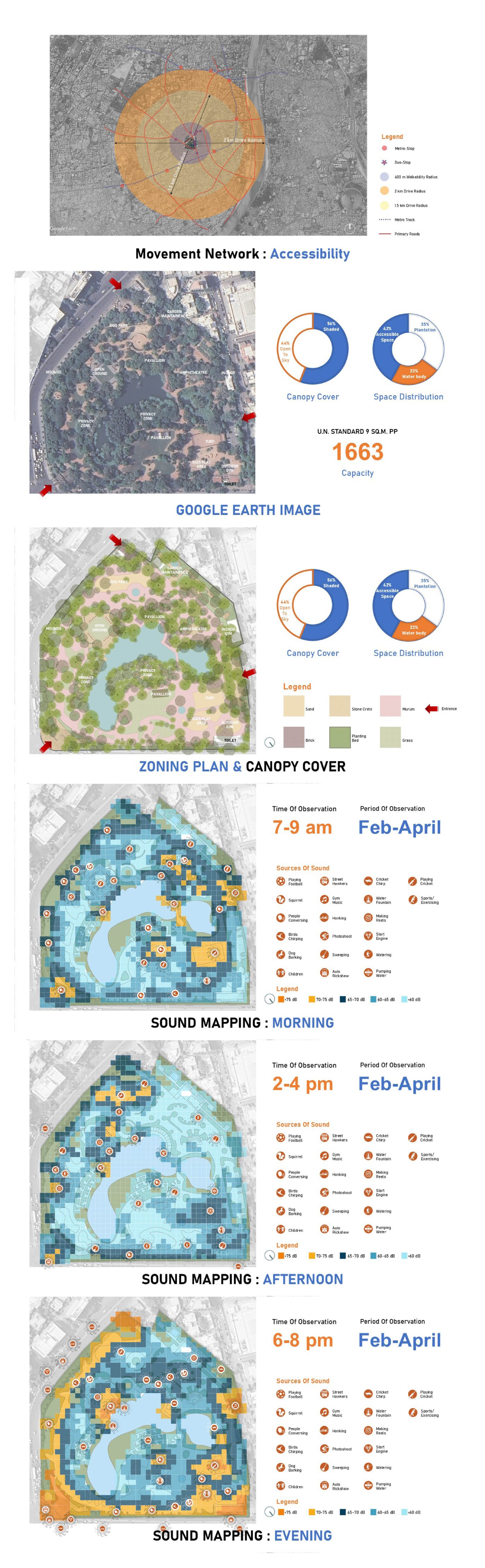
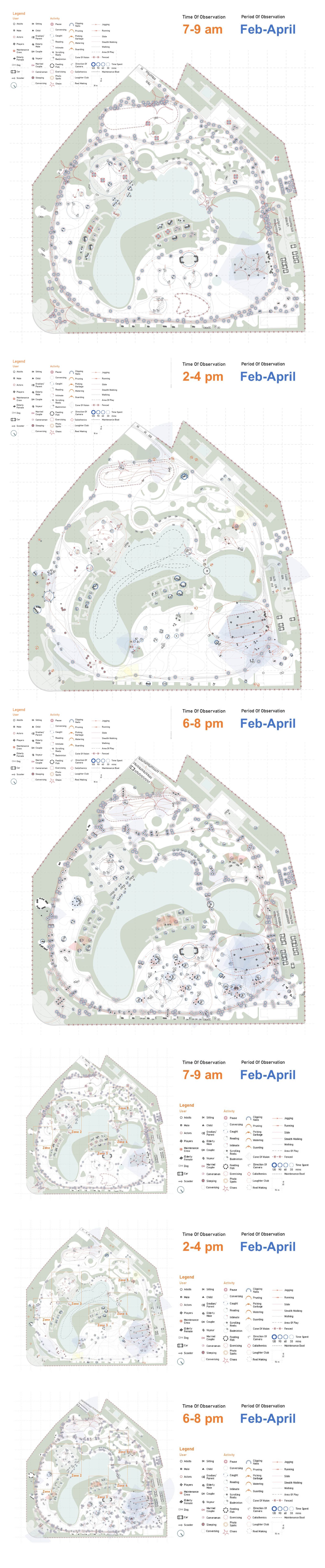
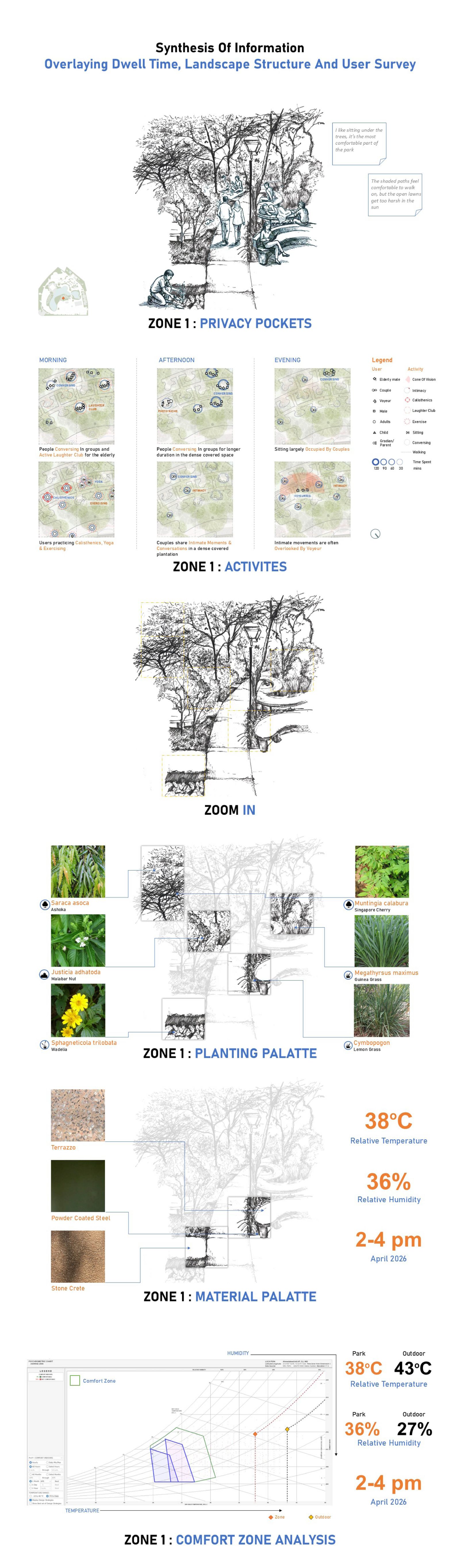
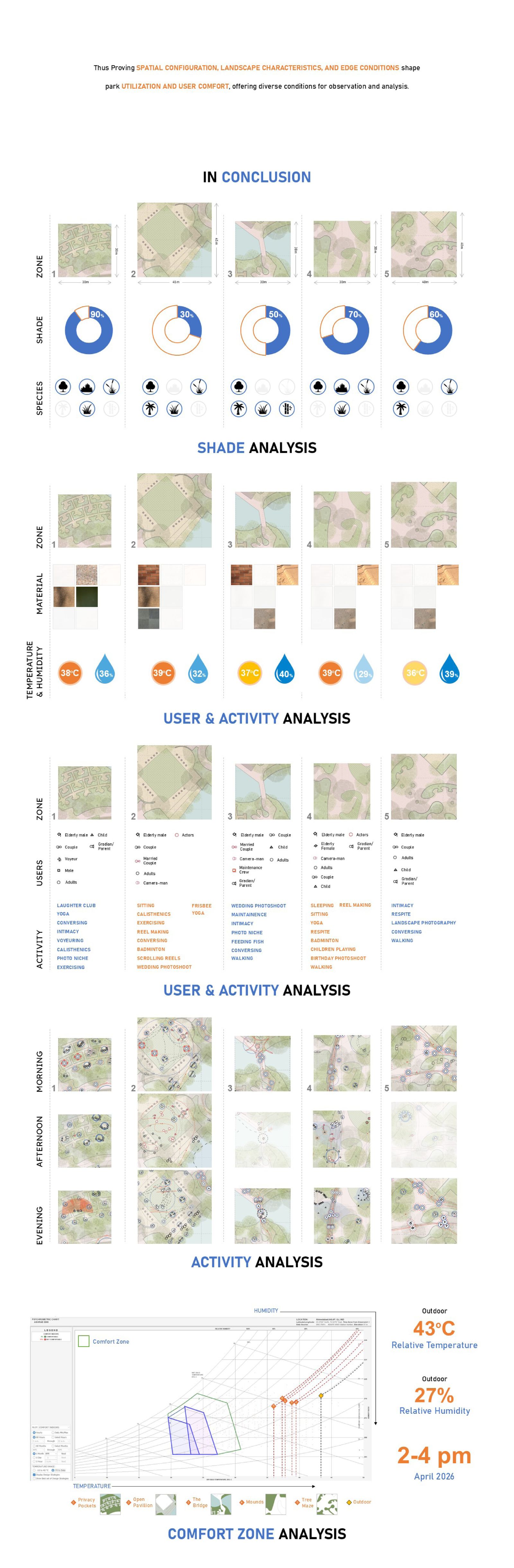
As Indian cities expand and densify, urban parks become essential for social well-being, environmental comfort, and everyday public life. This study examines how spatial configuration, landscape characteristics, vegetation, visibility, and edge conditions influence park utilisation and user comfort in Ahmedabad’s city-level parks. Through site documentation, mapping, activity observation, visibility analysis, environmental comfort assessment, and user surveys, the research analyses how people move, pause, gather, and occupy different park spaces. The findings highlight that shade, vegetation layering, accessibility, acoustic comfort, and spatial enclosure strongly affect user experience, offering design insights for more responsive, comfortable, and performance-based urban parks.
View Additional Work