Your browser is out-of-date!
For a richer surfing experience on our website, please update your browser. Update my browser now!
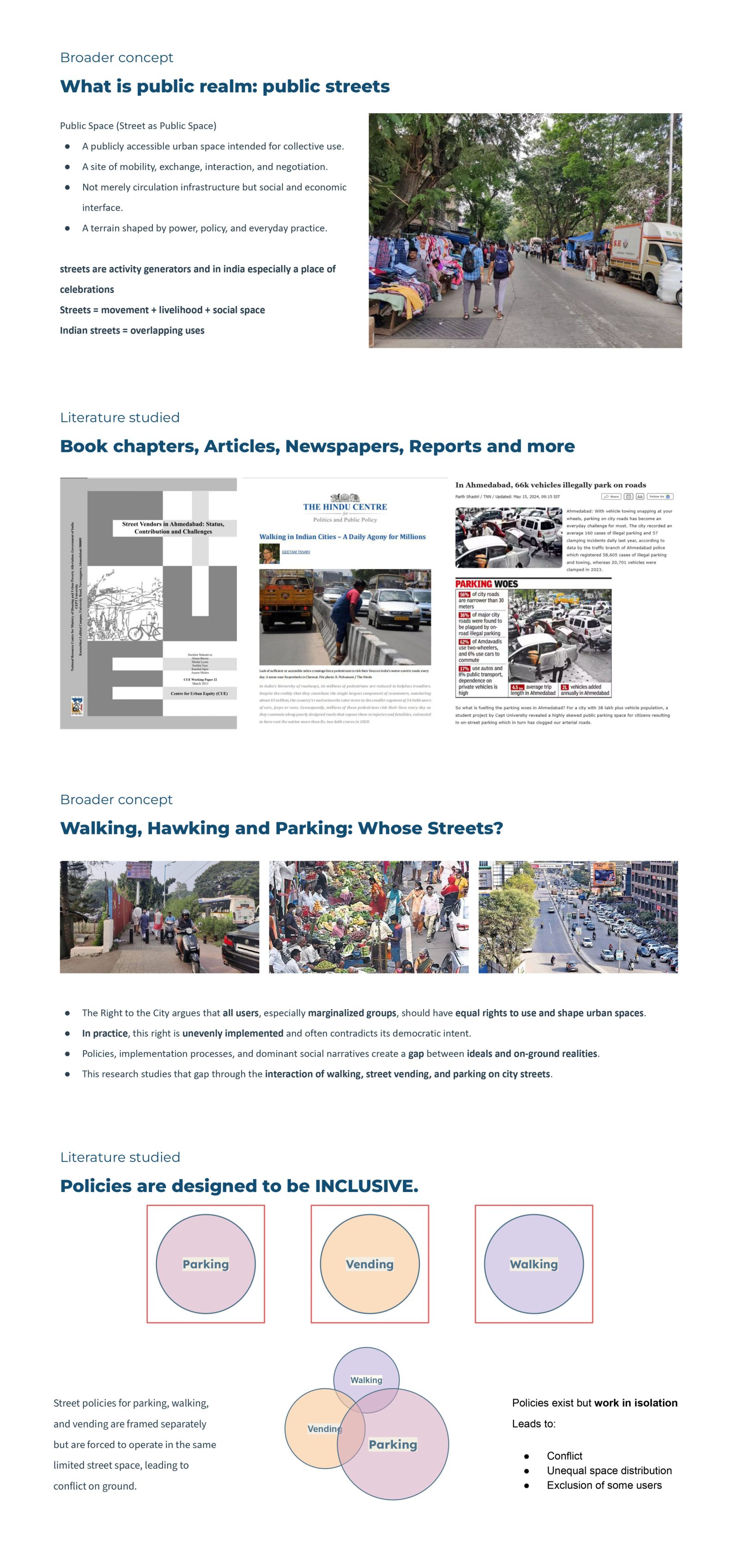
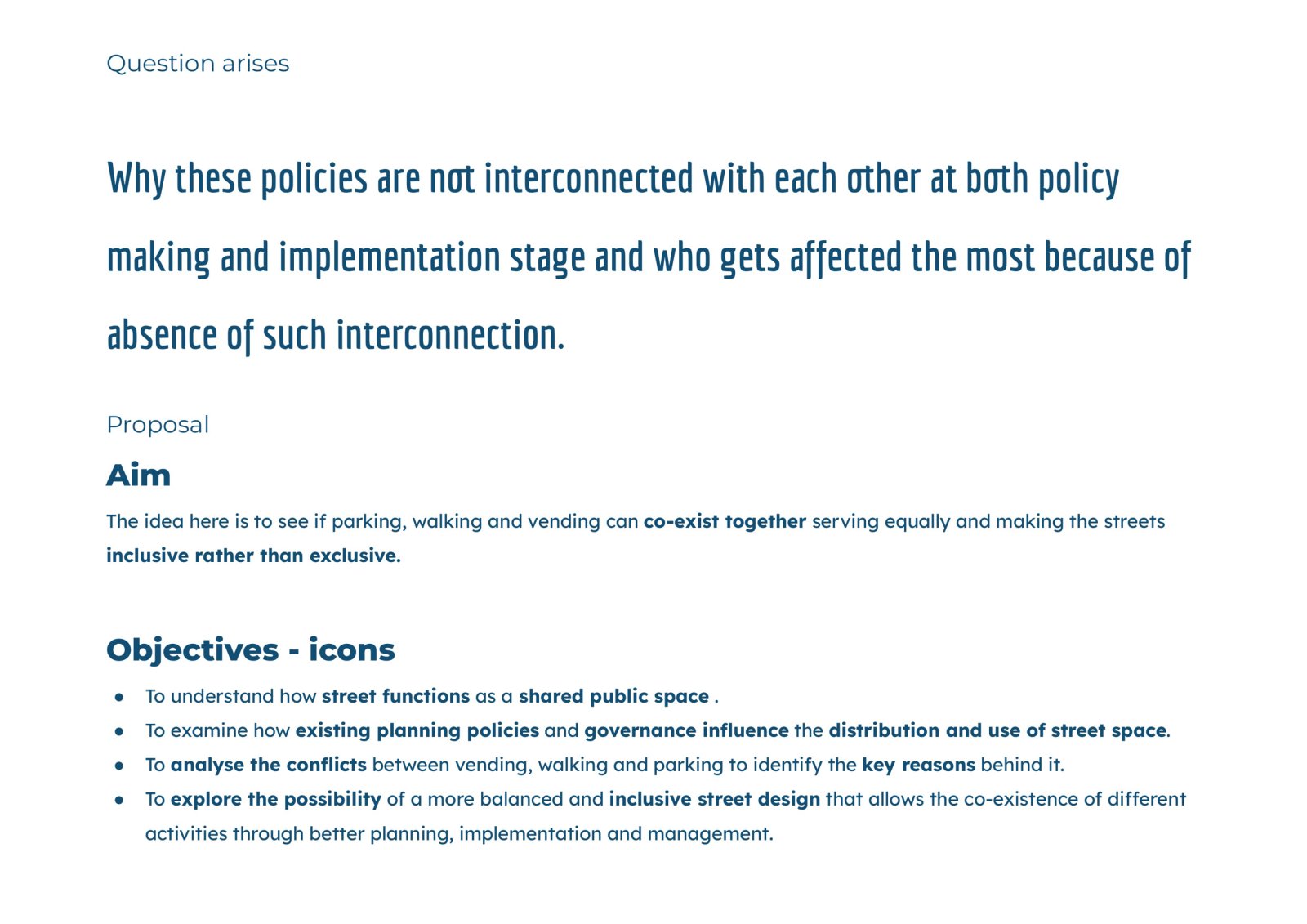
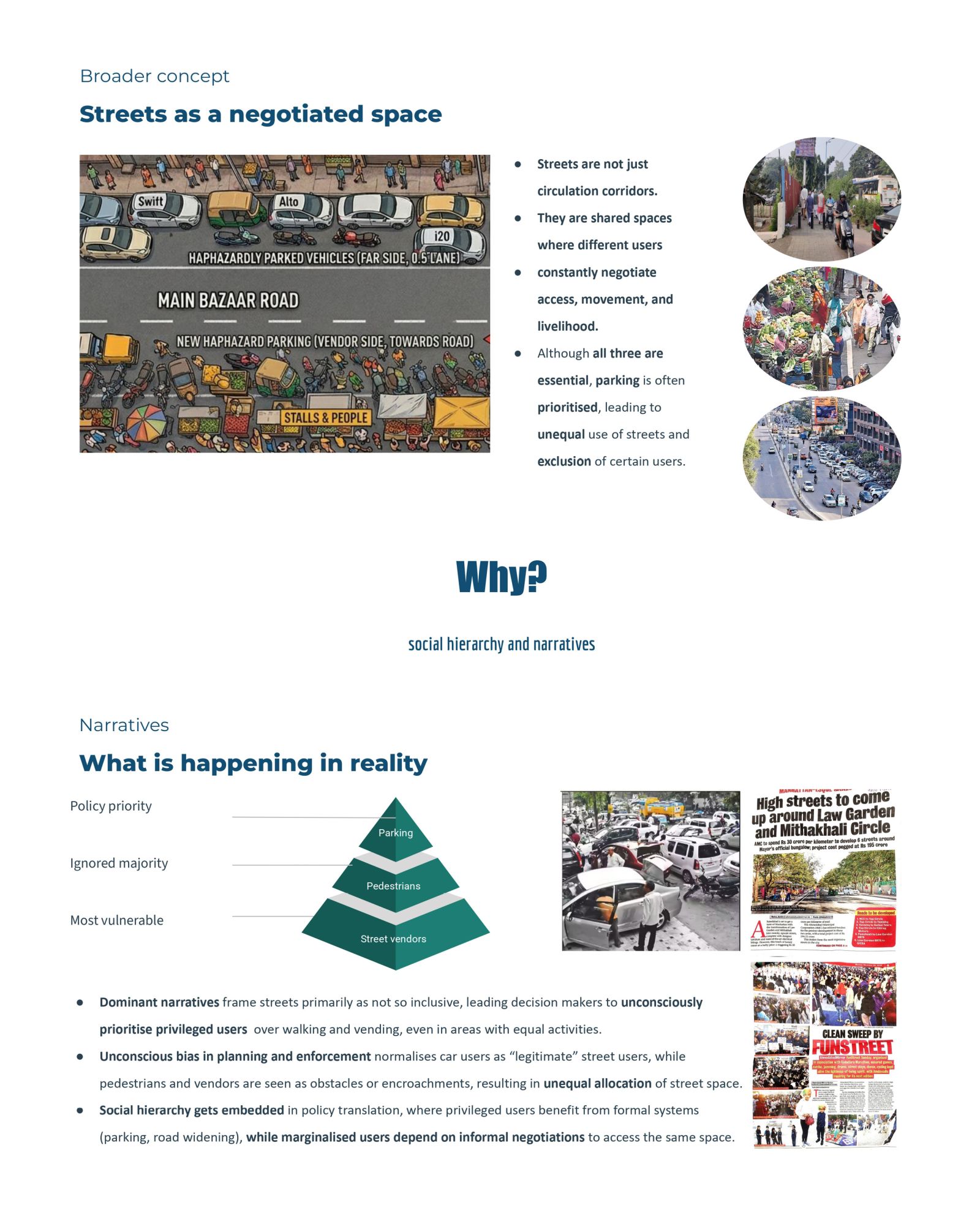
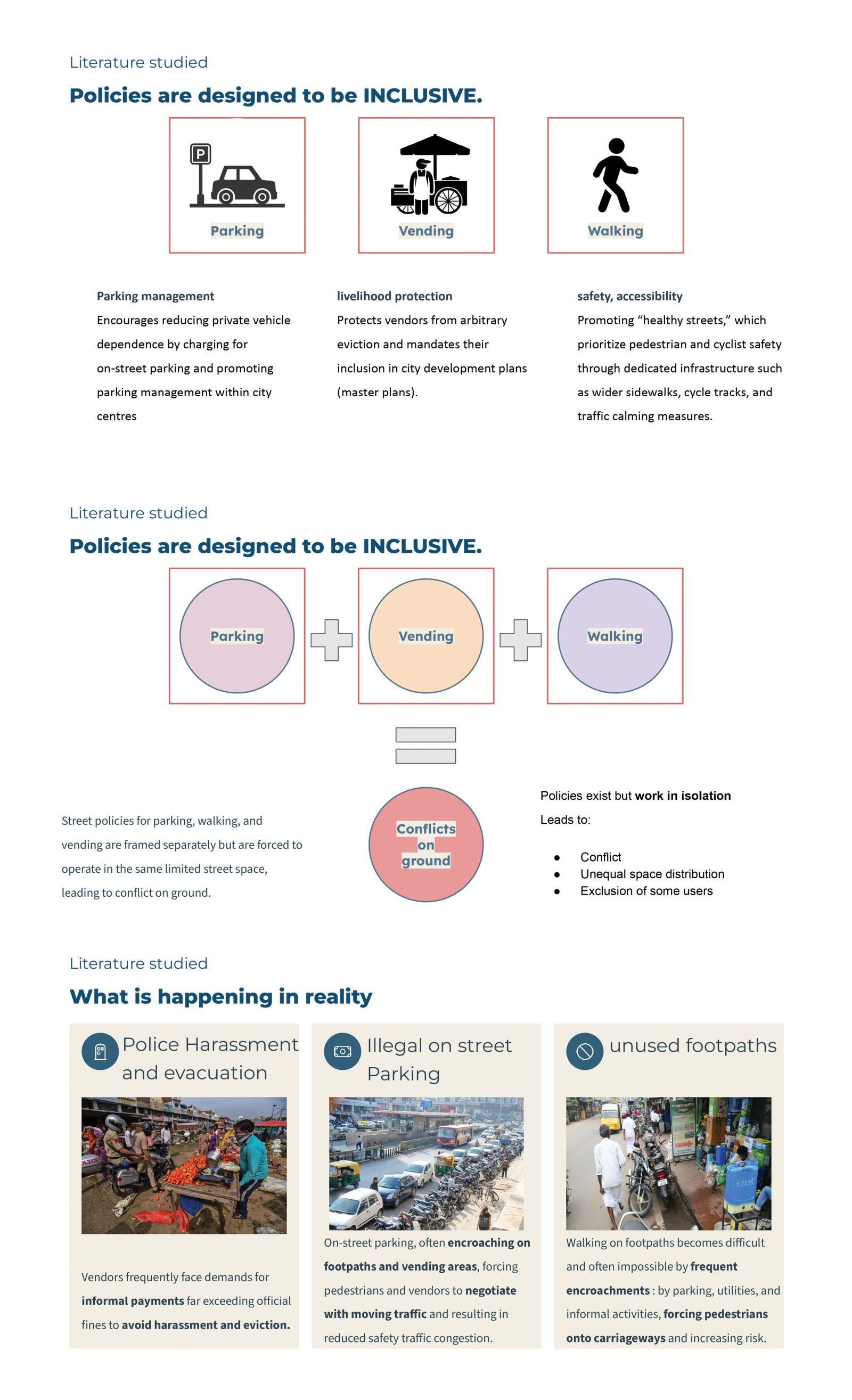
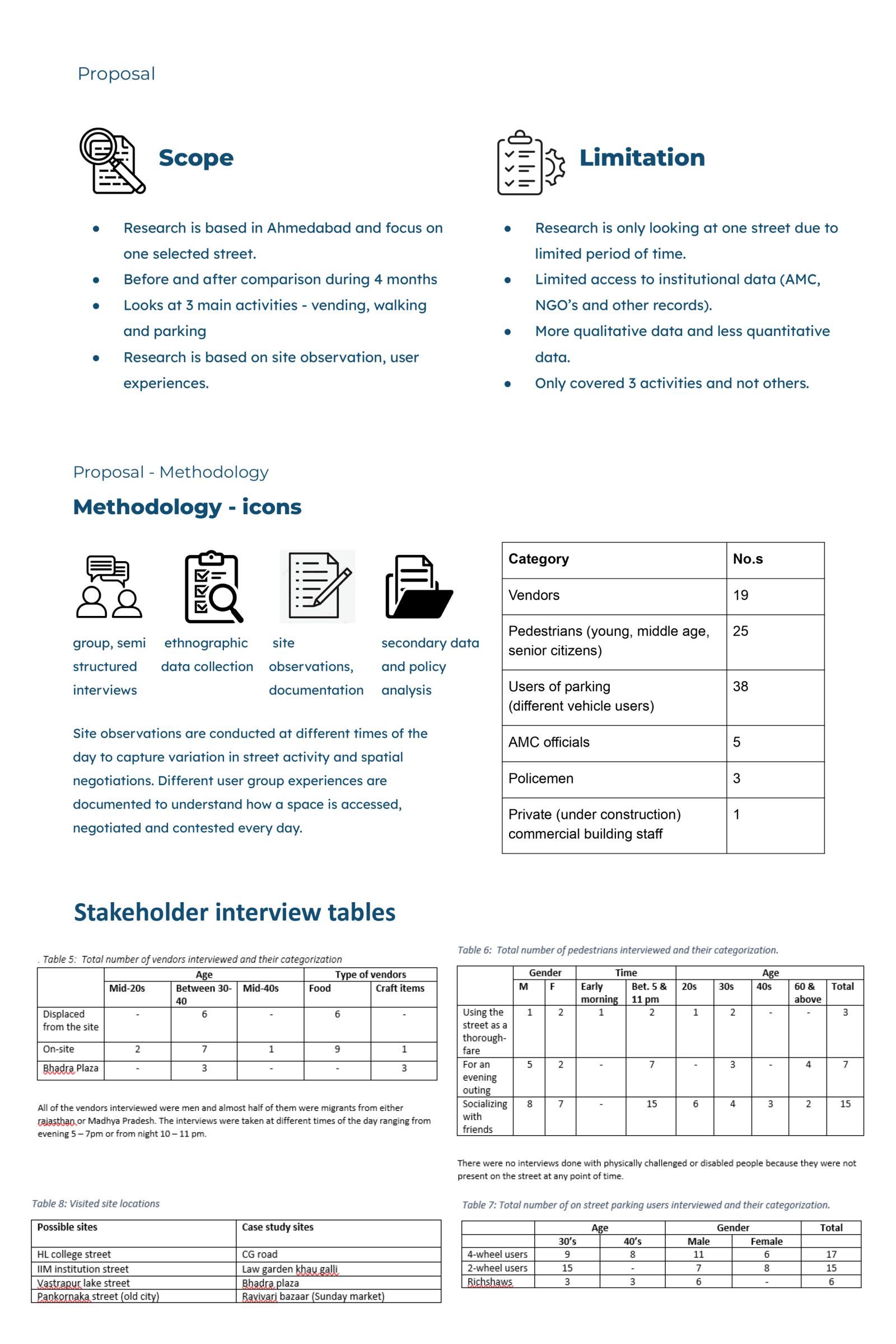
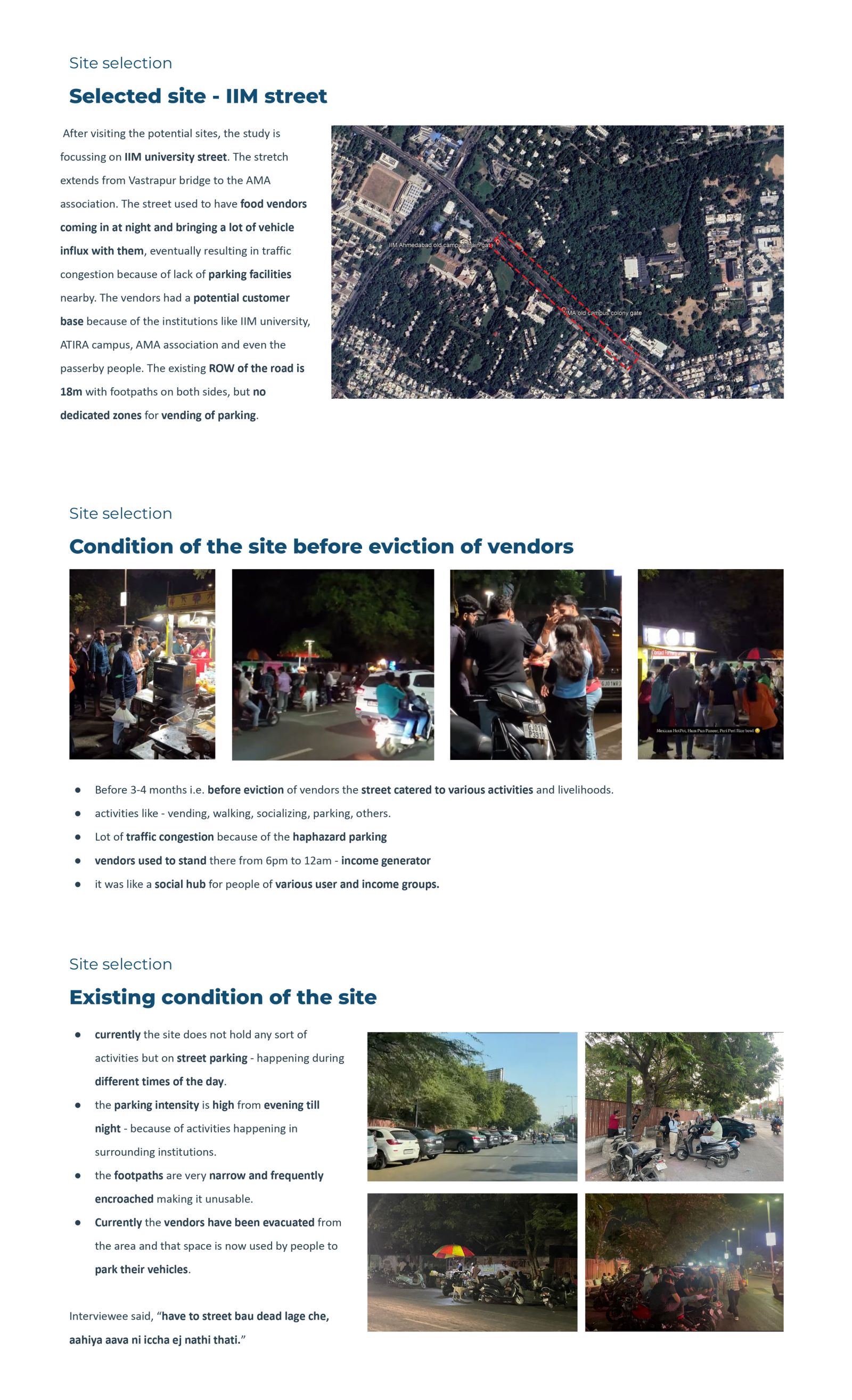
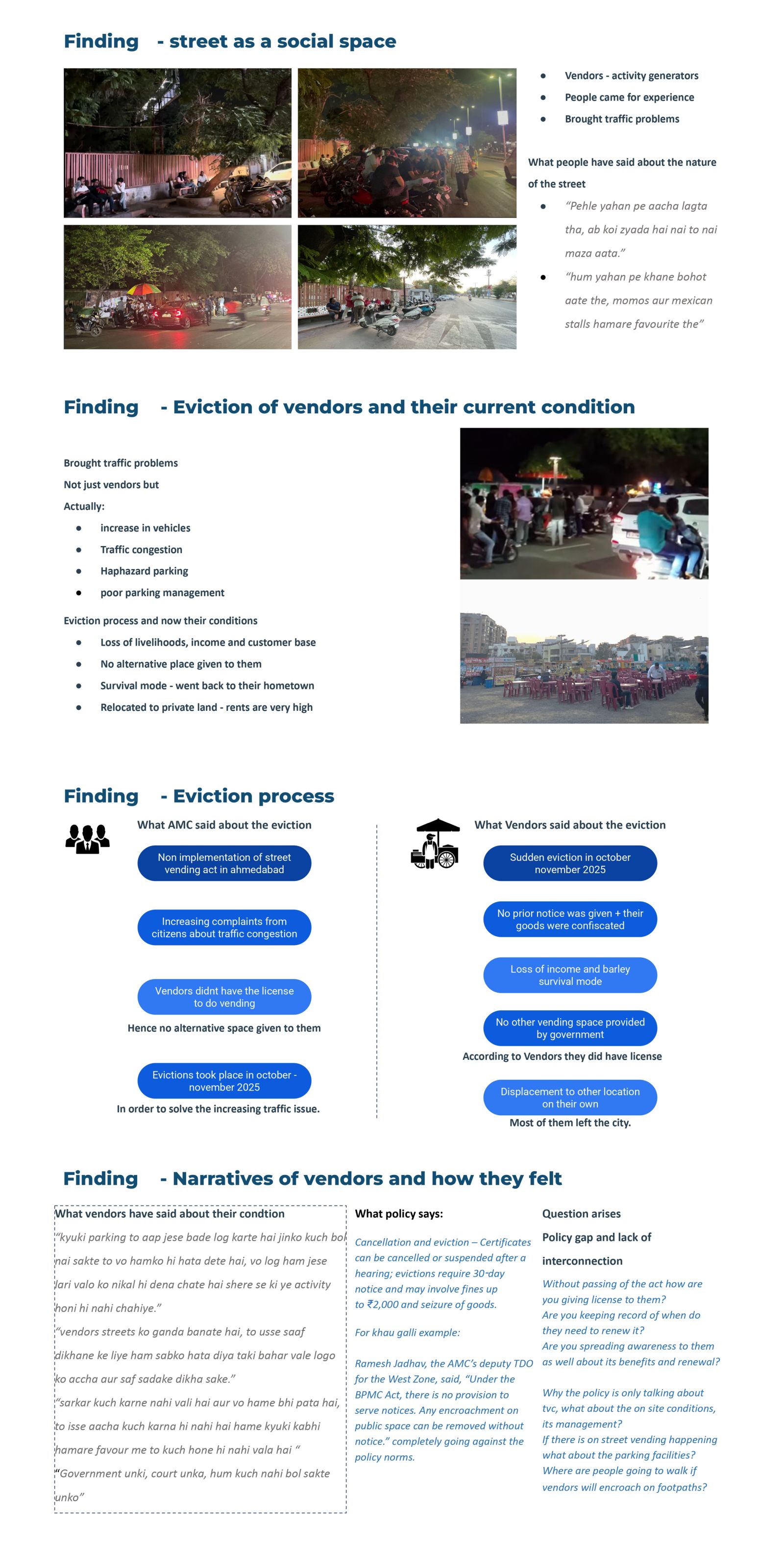
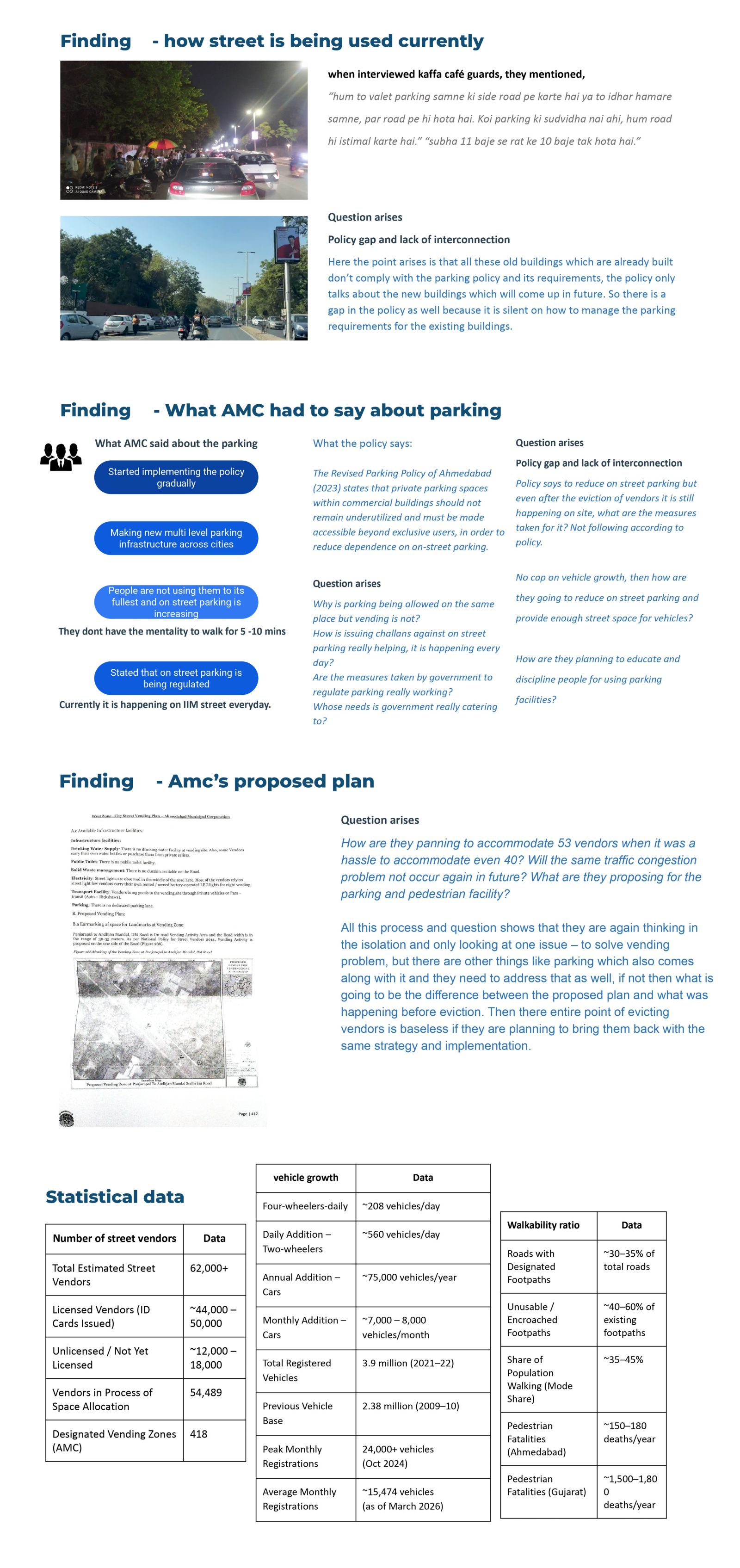
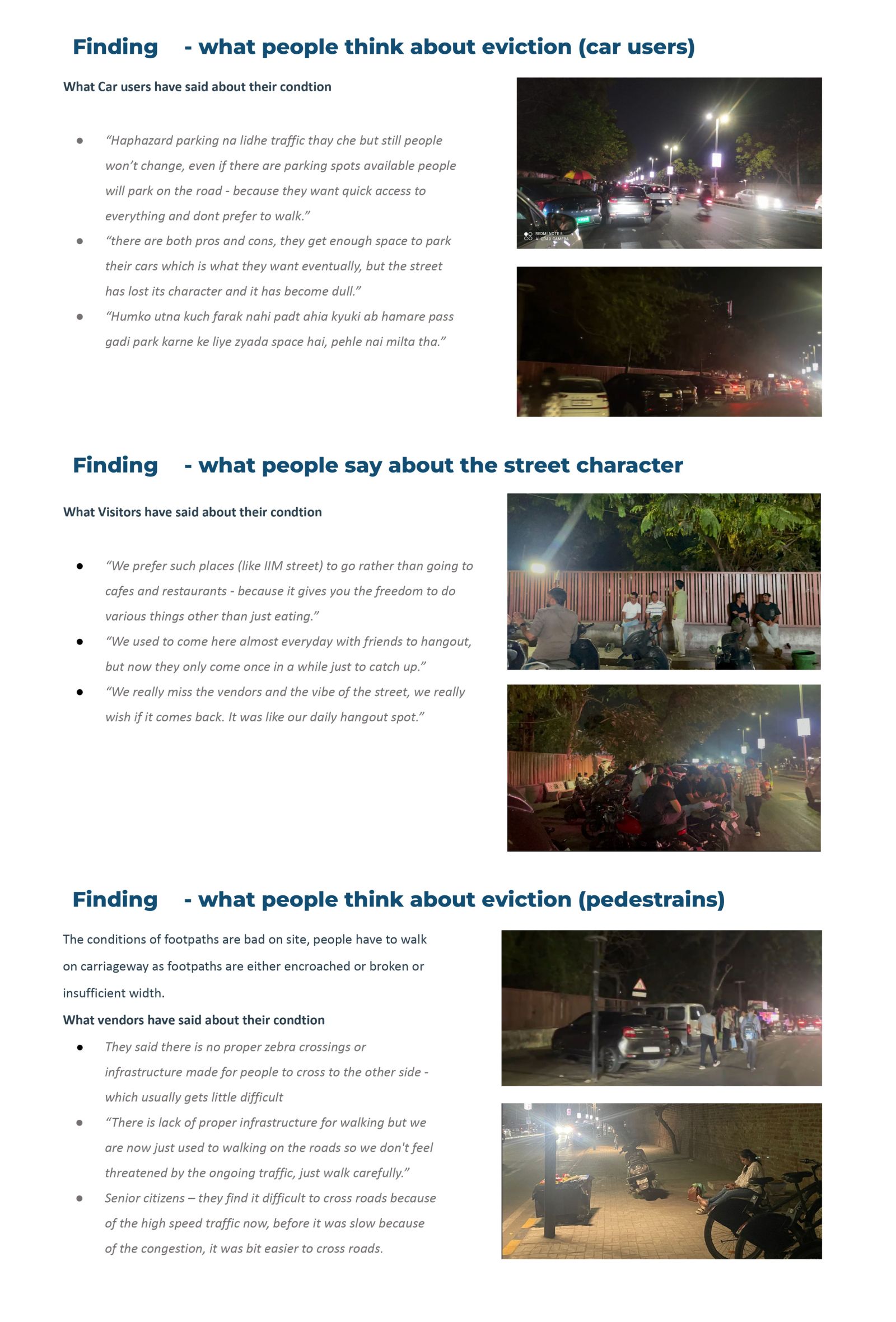
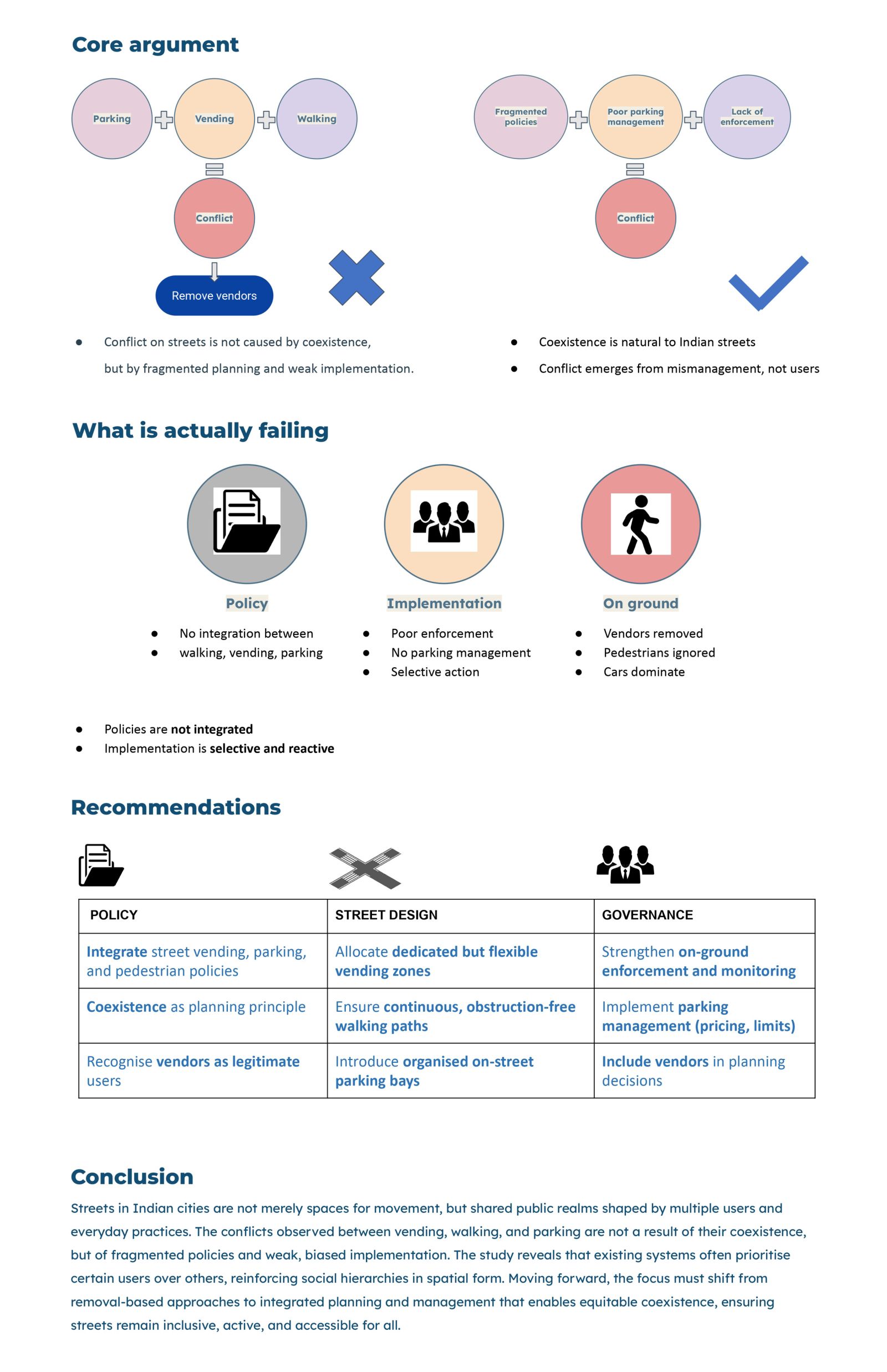
Streets are an important part of the public realm where movement, livelihoods, and everyday interactions take place. Parking, walking, and vending intersect within the same shared space, yet their policies operate in isolation, leading to fragmented implementation and unequal outcomes. Taking Ahmedabad streets as a case, this research examines how such disconnection affects different users and reflects existing social hierarchies. Through interviews, ethnographic observations, policy analysis, and street studies, the research investigates how these hierarchies influence decision-making and implementation, while exploring whether parking, walking, and vending can co-exist in a more inclusive and balanced manner.
View Additional Work