Paramsinh Chauhan

UH4002

Enabling Private Housing Redevelopment

Ahmedabad faces a growing challenge of aging residential housing, with nearly 44% of buildings over 20 years old. This study examines private housing redevelopment as a sustainable solution for urban renewal without expanding the city outward. It analyzes redevelopment through financial, legal, planning, and policy perspectives, focusing on FSI regulations, GDCR constraints, redevelopment economics, and consent mechanisms. The research highlights how redevelopment benefits residents, developers, and the city simultaneously by improving housing quality, optimizing land use, and utilizing existing infrastructure efficiently. The study also proposes reforms to unlock redevelopment potential and create a scalable, market-driven framework for Ahmedabad’s future urban growth. 

Report Content

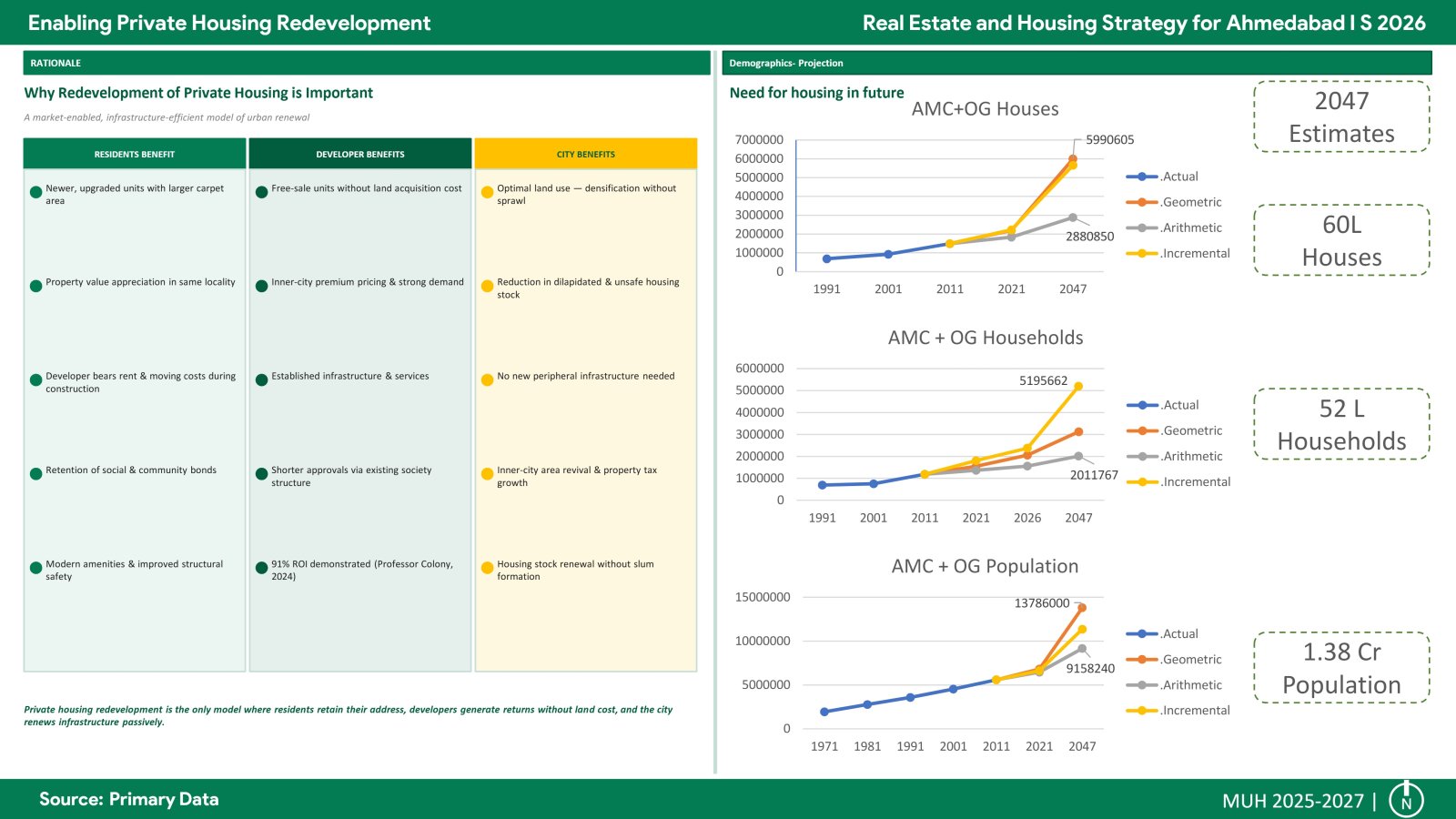
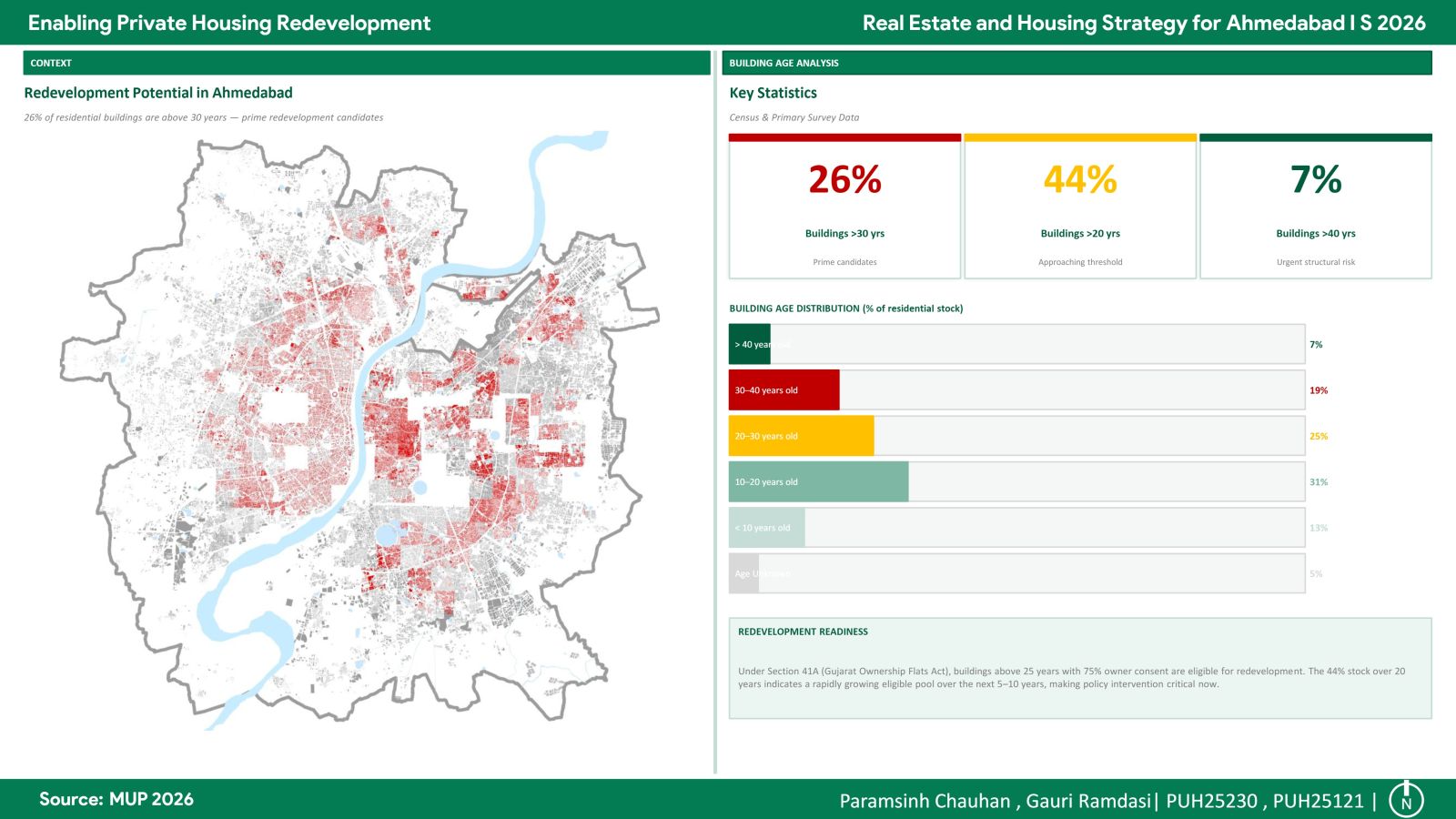
Ahmedabad has a rapidly aging housing stock, with 44% of residential buildings over 20 years old and increasingly eligible for redevelopment. The study identifies these older inner-city areas as critical opportunities for future urban renewal and infrastructure optimization.

Private housing redevelopment creates mutual benefits for residents, developers, and the city through efficient land reuse and housing renewal. Future population and housing demand projections highlight redevelopment as a necessary strategy for accommodating Ahmedabad’s long-term growth.

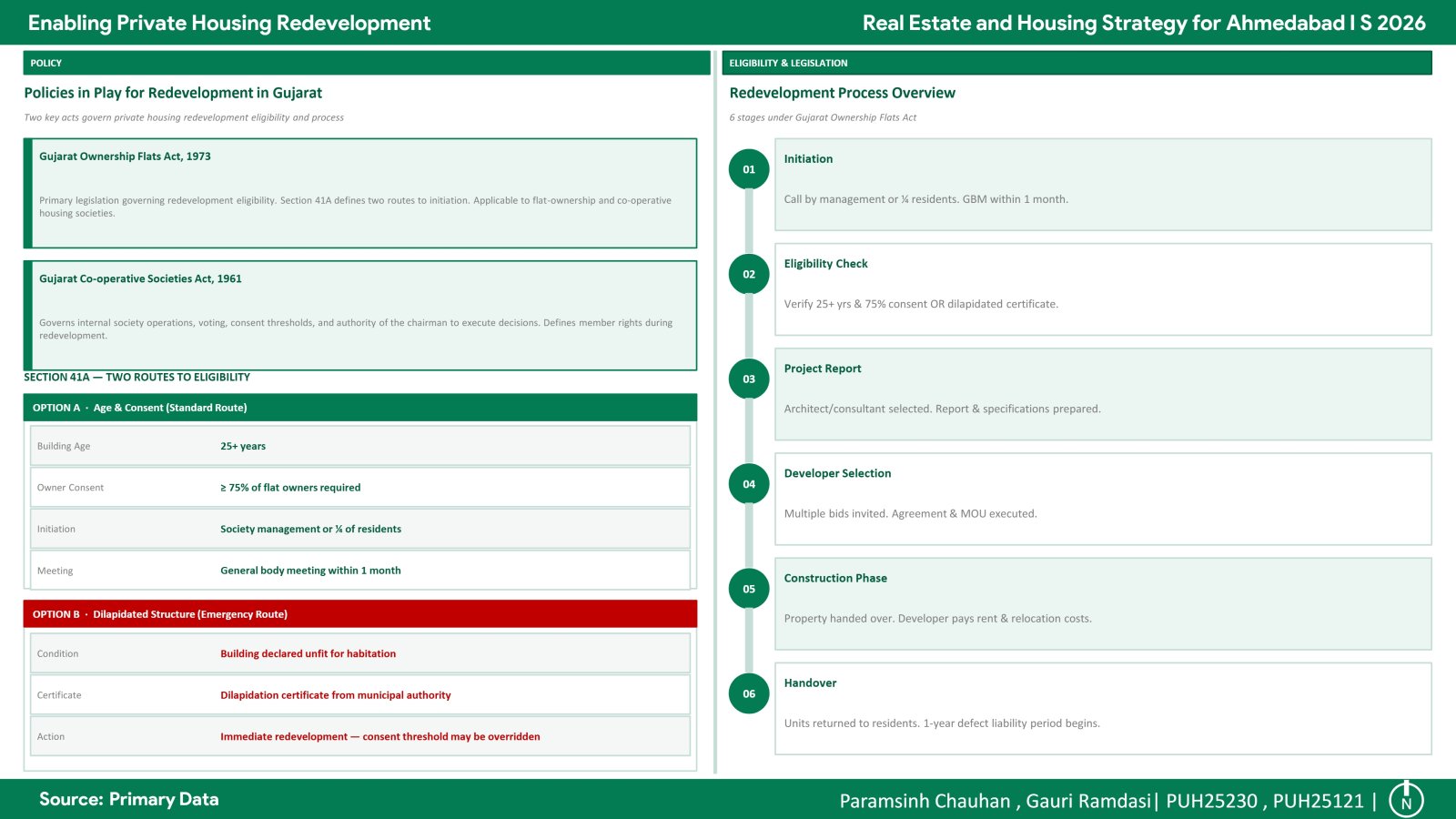
The redevelopment process in Gujarat is governed primarily through Section 41A of the Gujarat Ownership Flats Act and co-operative society laws. The slide outlines legal eligibility, consent requirements, and the step-by-step redevelopment process framework.

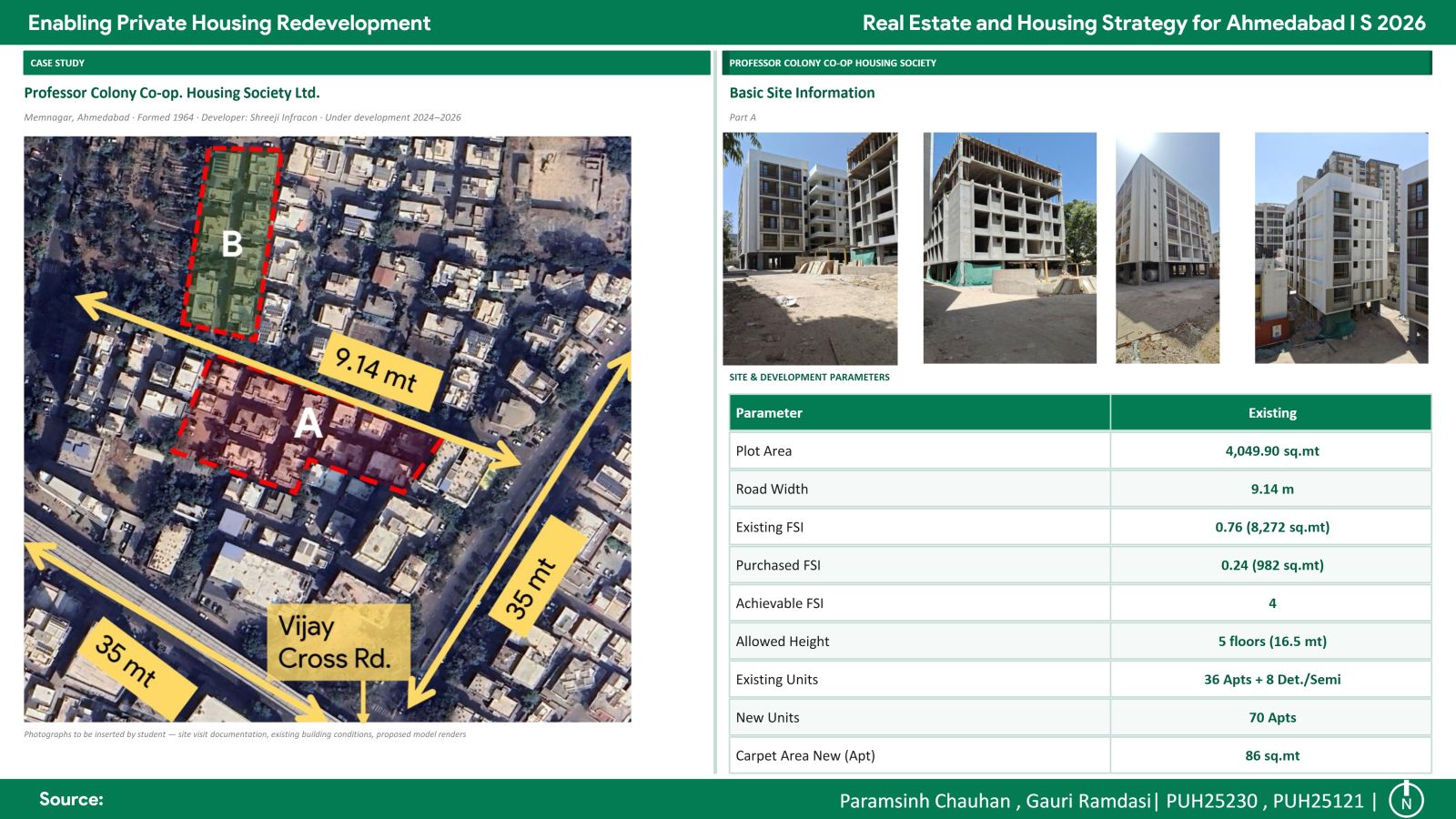
The Professor Colony redevelopment demonstrates how aging low-rise housing can be transformed into higher-density modern residential development. The project illustrates practical redevelopment parameters including FSI utilization, unit increase, and site-level planning conditions.

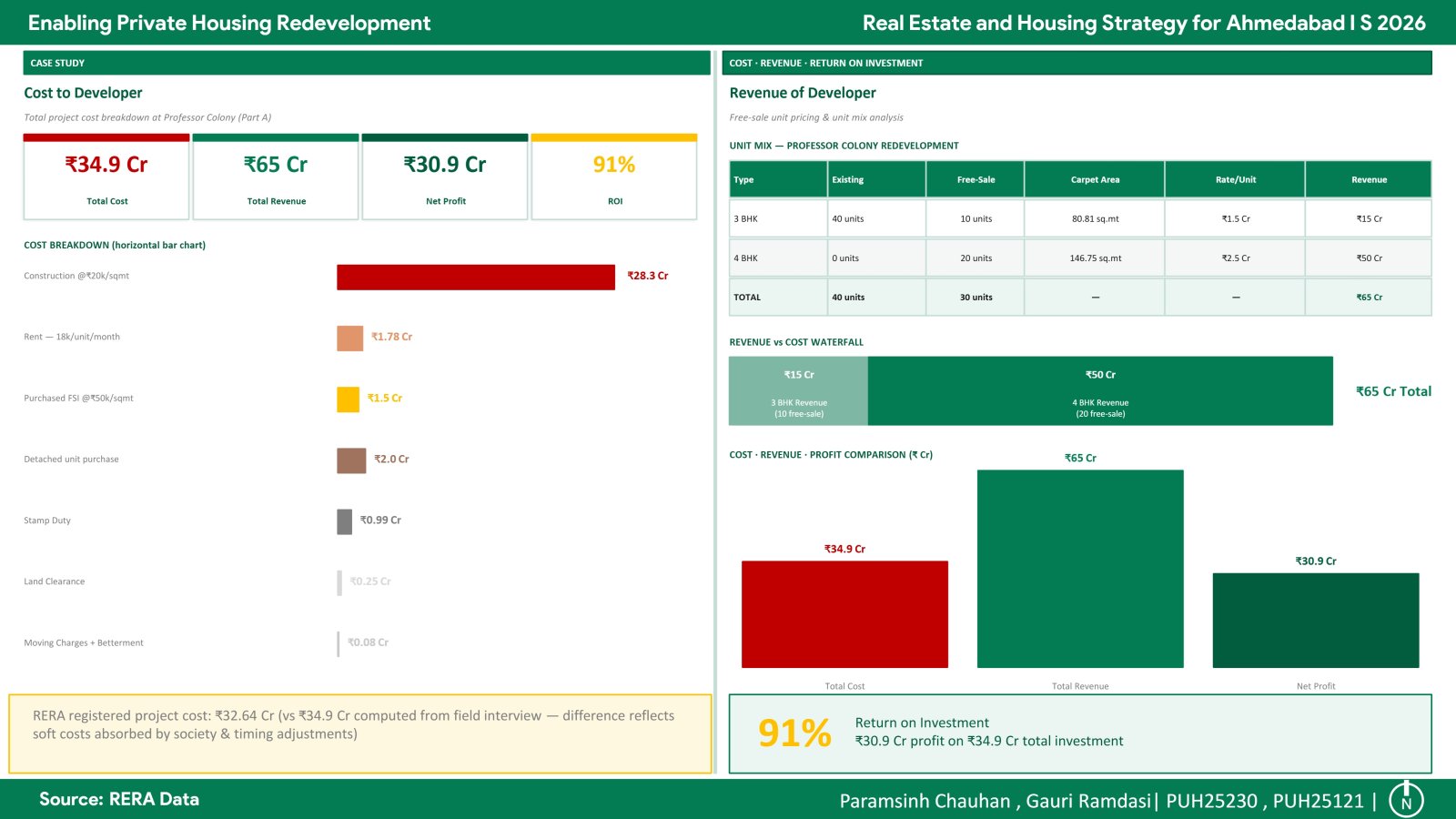
The case study proves redevelopment viability through a detailed financial analysis showing strong developer returns and project profitability. Revenue from free-sale units significantly exceeds redevelopment costs, demonstrating redevelopment as a commercially sustainable model.

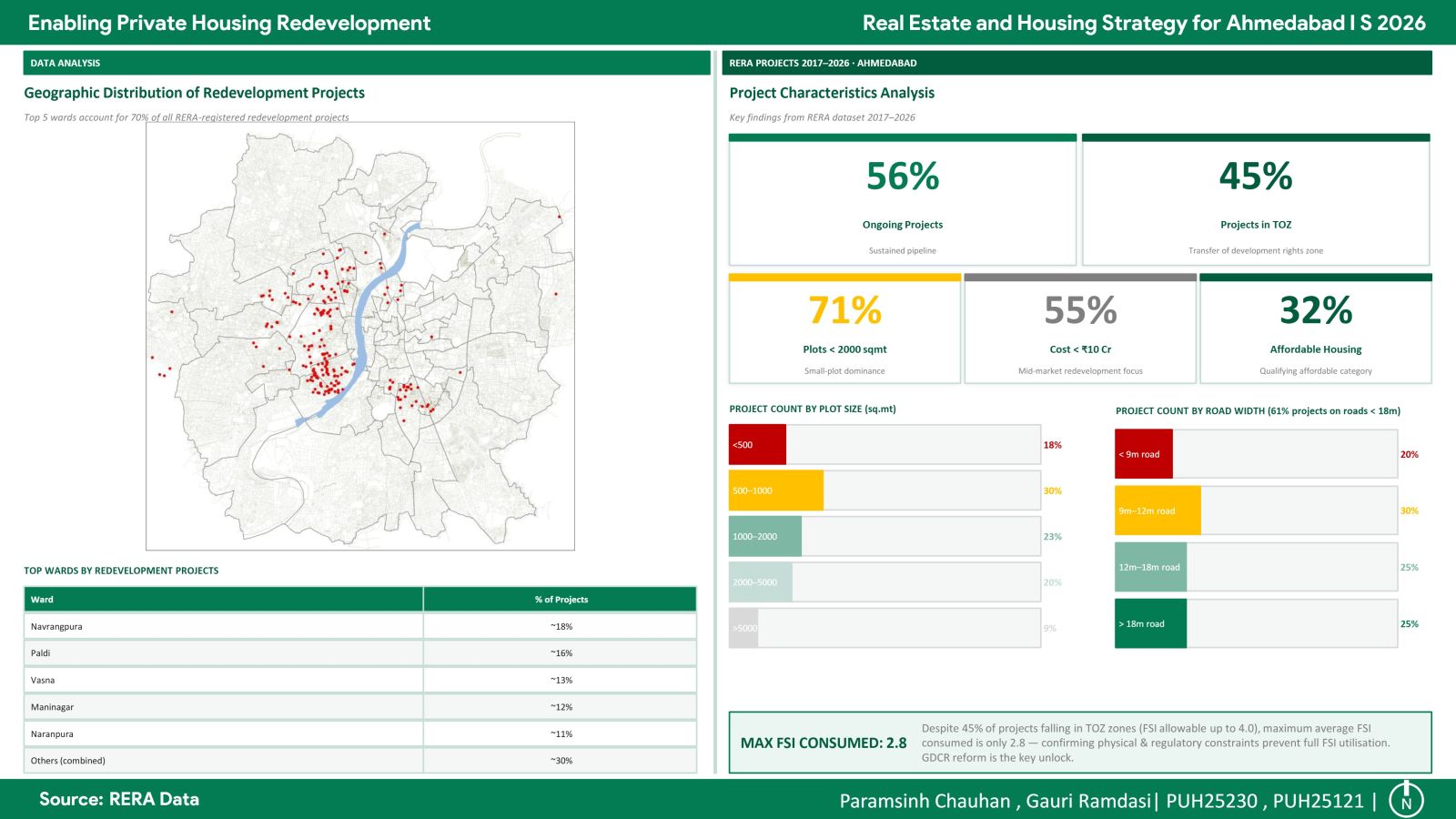
RERA data reveals redevelopment activity is concentrated in established inner-city wards with strong housing demand and infrastructure access. The analysis also highlights how small plots, road-width limitations, and regulatory constraints restrict full FSI utilization.

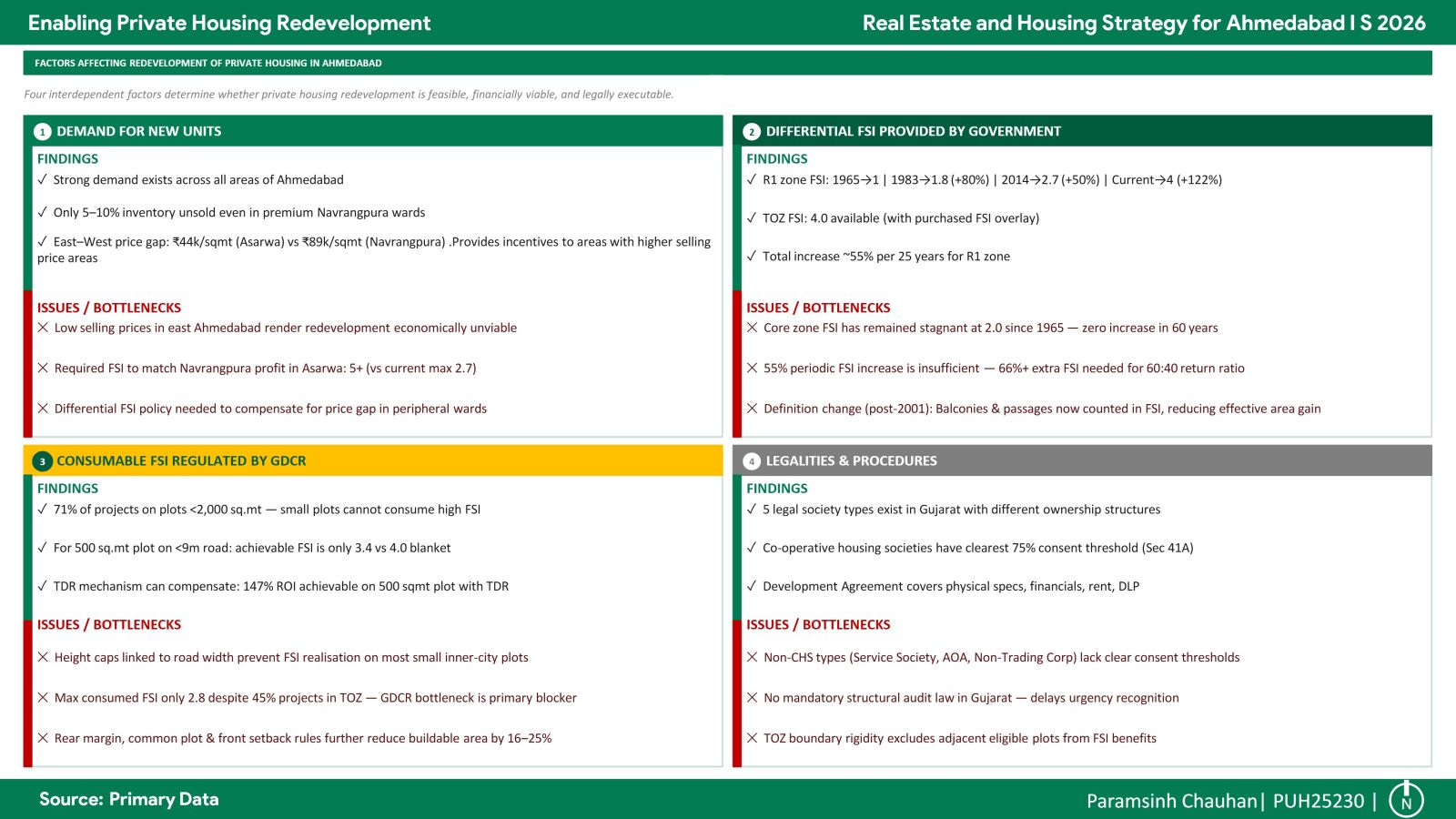
Redevelopment feasibility depends on four interconnected factors: housing demand, FSI policy, GDCR constraints, and legal procedures. The study identifies major bottlenecks that currently limit redevelopment viability across many parts of Ahmedabad.

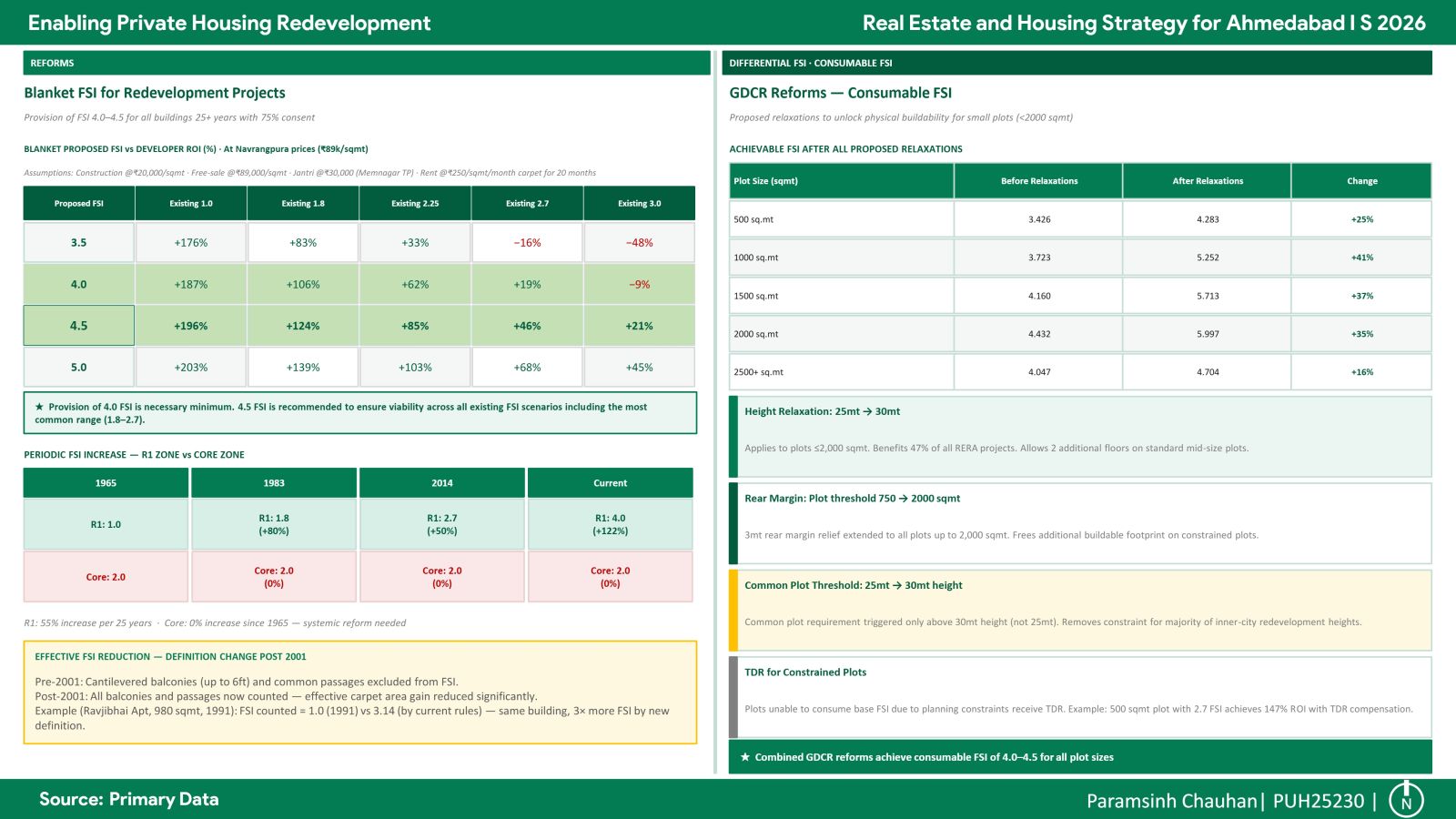
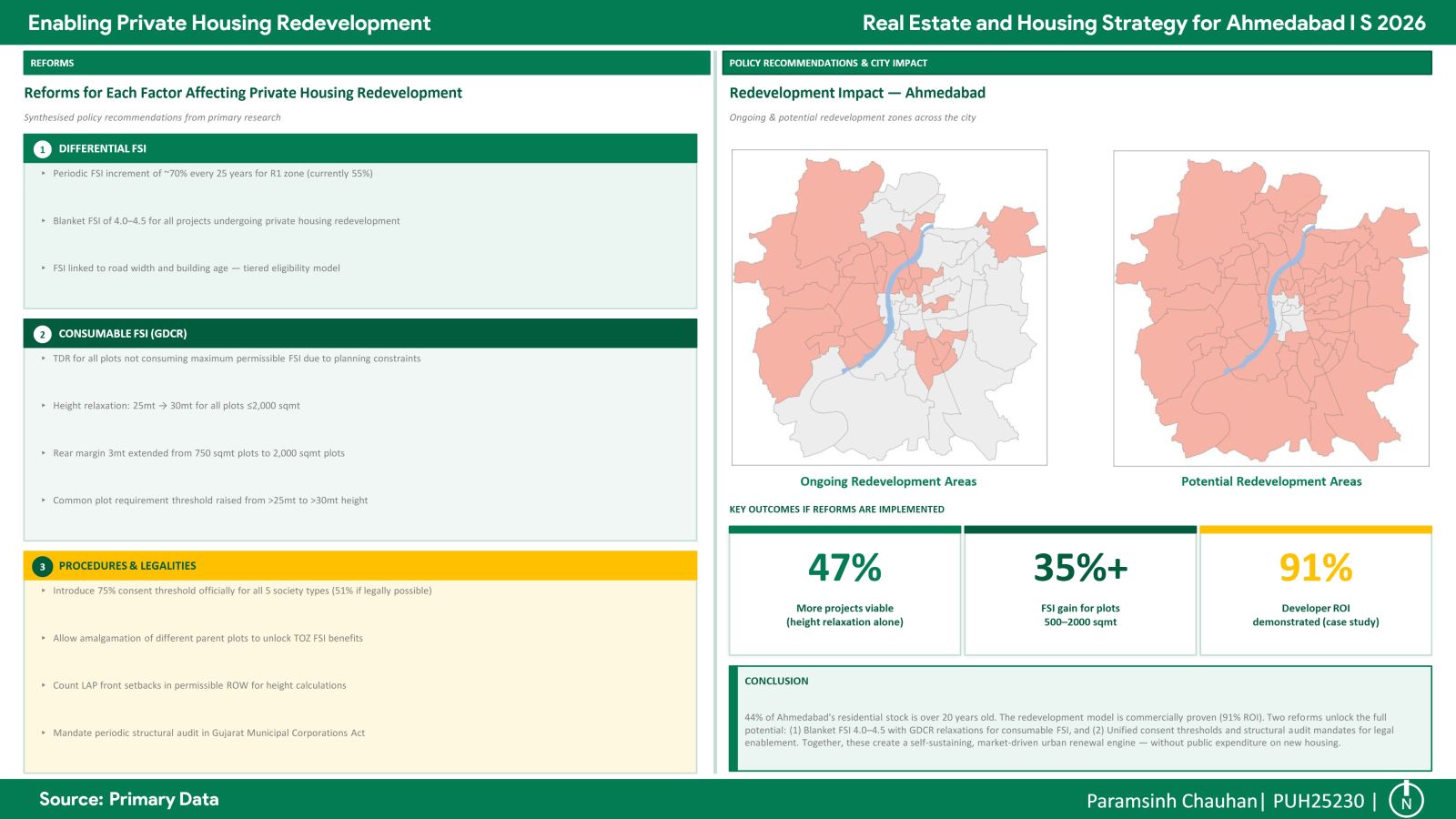
The study proposes higher blanket redevelopment FSI and GDCR relaxations to improve redevelopment feasibility across varying plot sizes. These reforms significantly increase achievable FSI, unlock profitability, and improve redevelopment viability citywide.

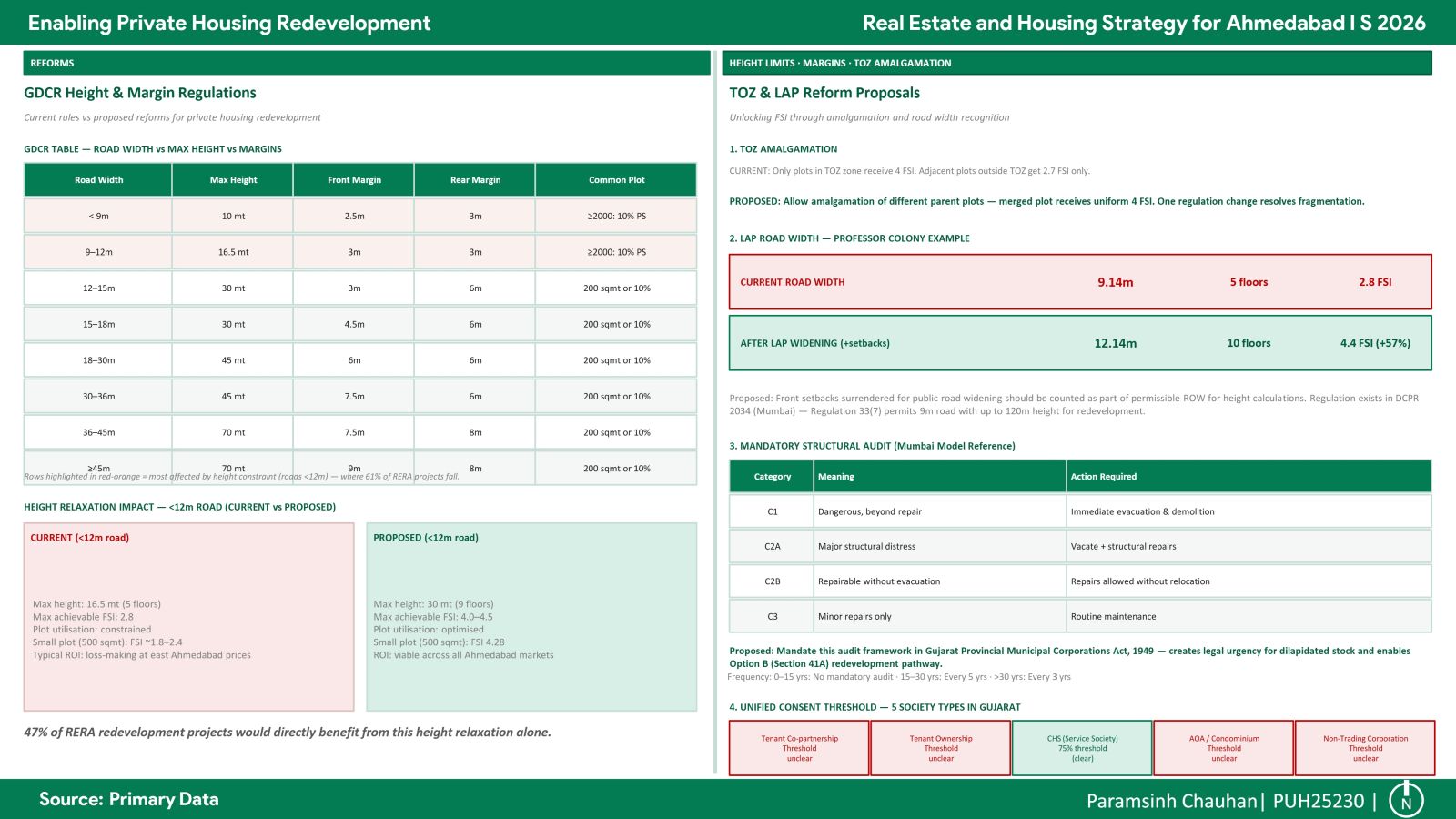
Existing height and margin regulations severely constrain redevelopment potential on smaller inner-city plots and narrow roads. The proposed reforms aim to unlock buildable potential through height relaxations, TOZ amalgamation, and structural audit frameworks.

The study concludes with policy recommendations focused on FSI reform, GDCR relaxation, and legal simplification for redevelopment projects. Together, these reforms can create a scalable, market-driven urban renewal model for Ahmedabad without major public expenditure.