Pragathi M

UH4002

Enabling Real Estate for Olympic City

As India advances its 2036 Olympic bid with Ahmedabad as the primary host city, enabling the real estate market becomes central to both event delivery and long-term urban legacy. Drawing on precedents from past mega-events, the study argues that infrastructure investment must be paired with smart financing mechanisms, density-led zoning reforms, and post-Games conversion strategies to ensure that Olympic-era development catalyzes lasting value rather than creating stranded assets. Overall, the study demonstrates how sports-led infrastructure can support long-term urban development within a unified planning framework.
Report Content

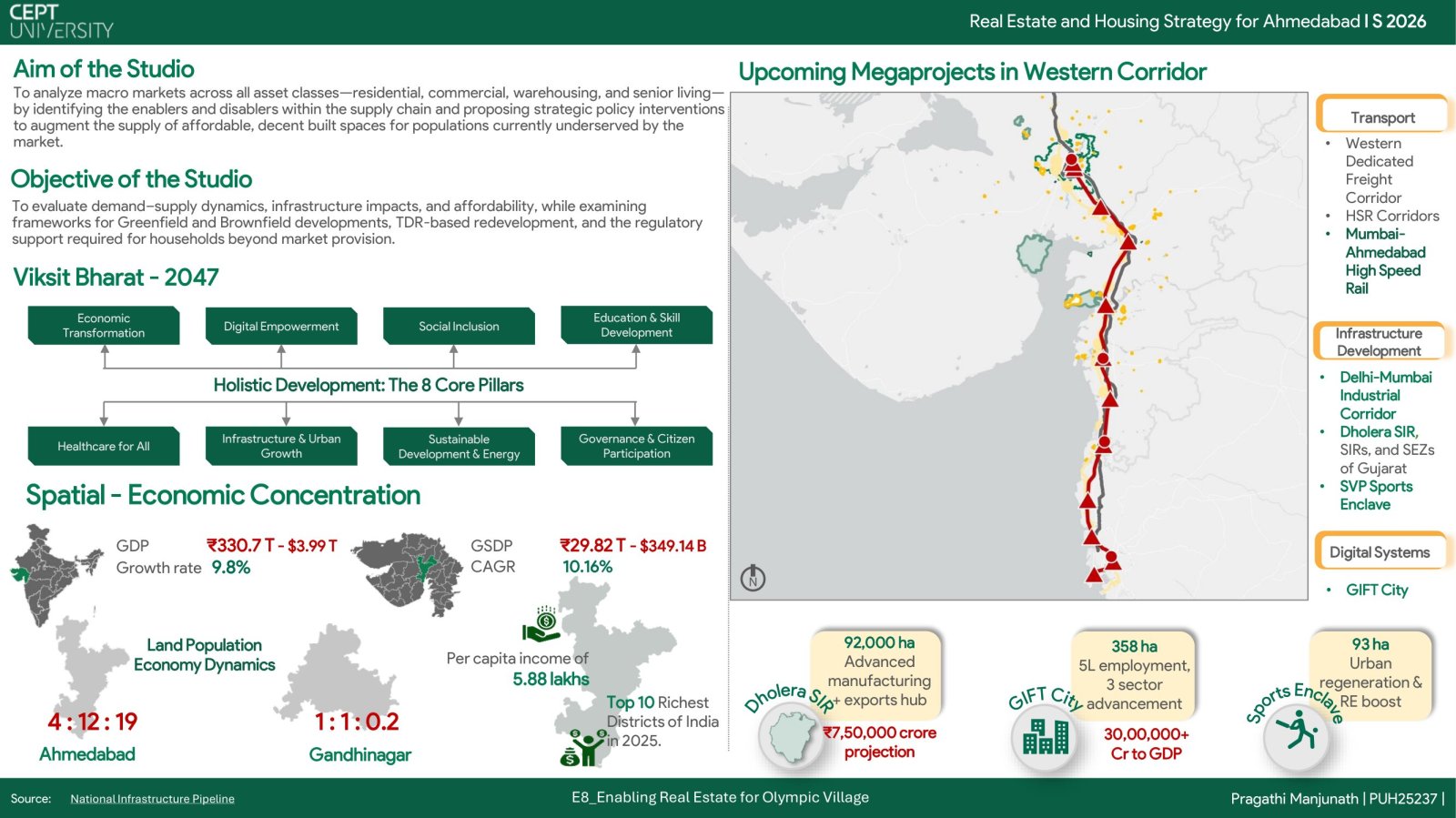
Ahmedabad’s emerging economic corridor positions the city as a strategic hub for sports-led urban growth.

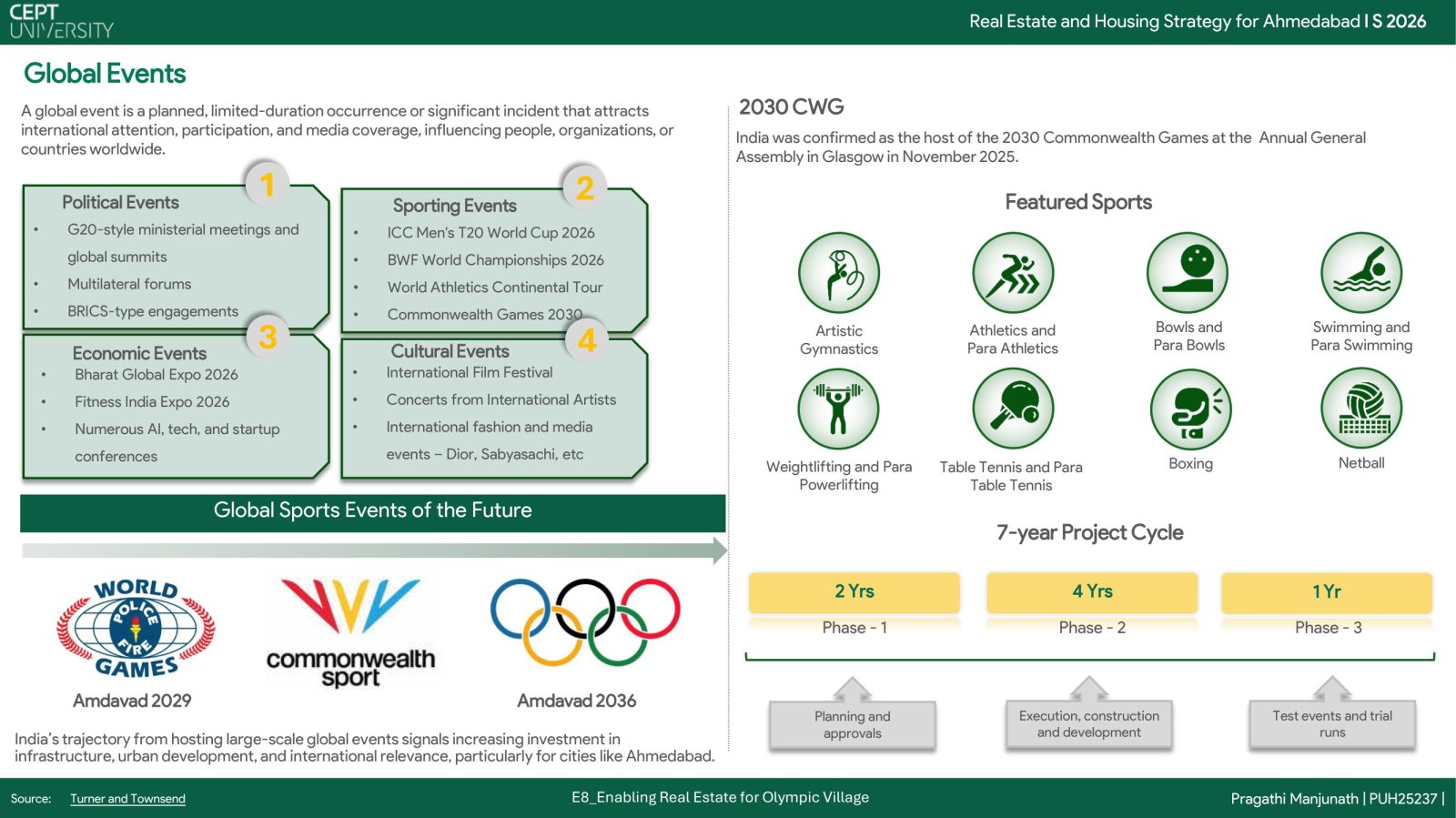
Global sporting events increasingly shape infrastructure investment, international visibility, and urban transformation.

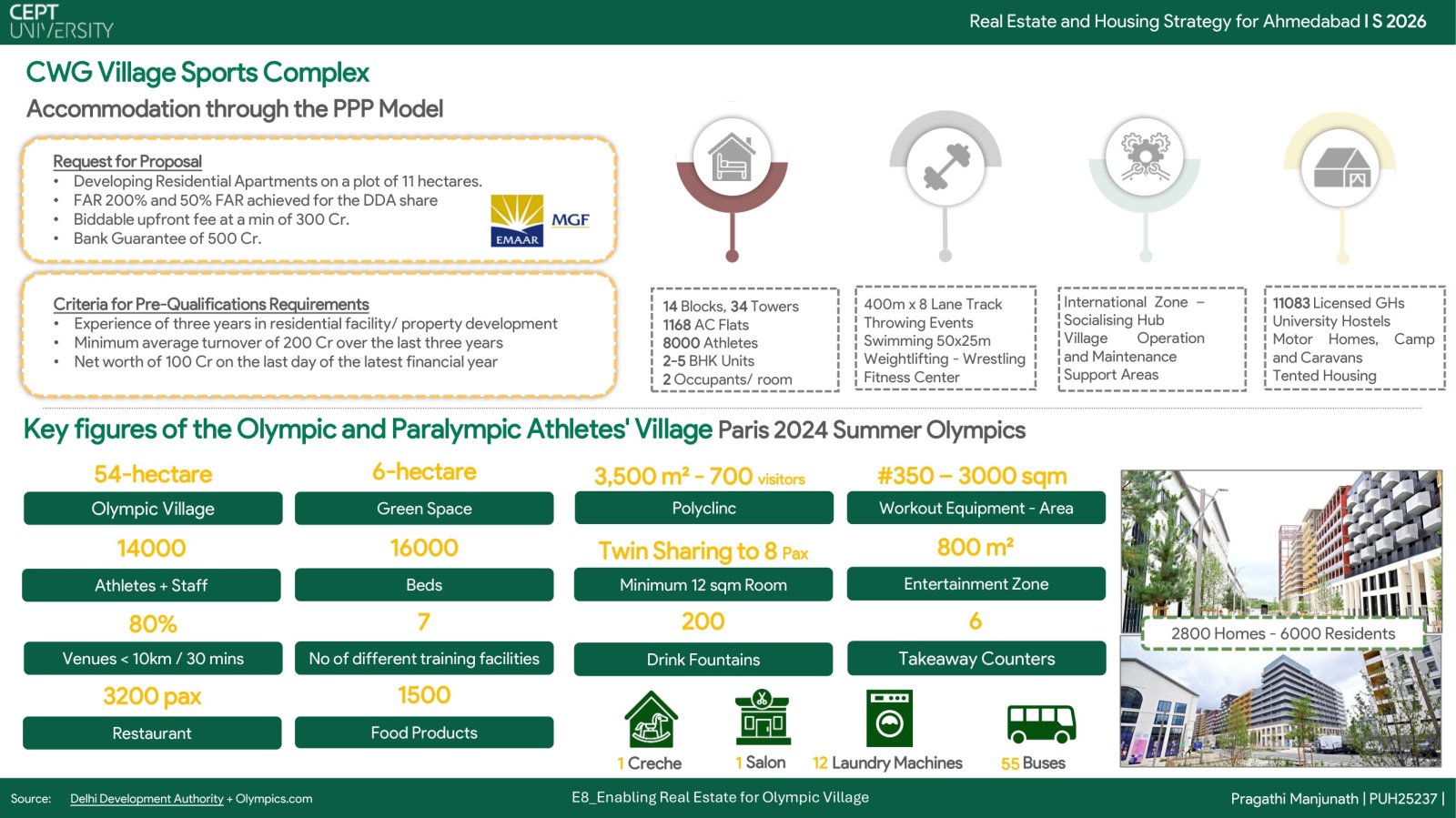
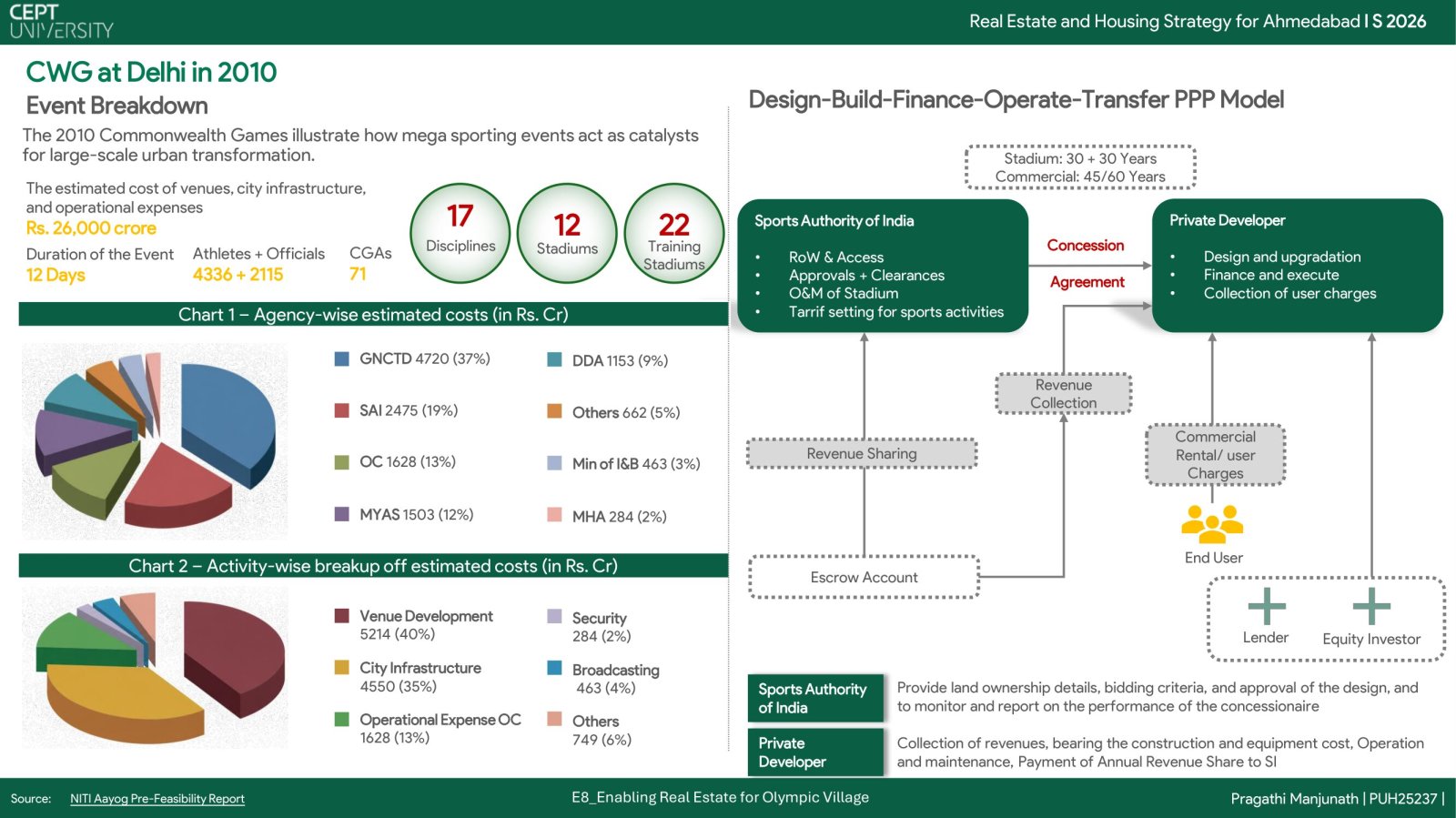
The 2010 CWG demonstrates how mega-events can catalyze large-scale urban infrastructure development through PPP models.

Athletes’ villages are evolving into integrated mixed-use developments with long-term residential and social legacy value.

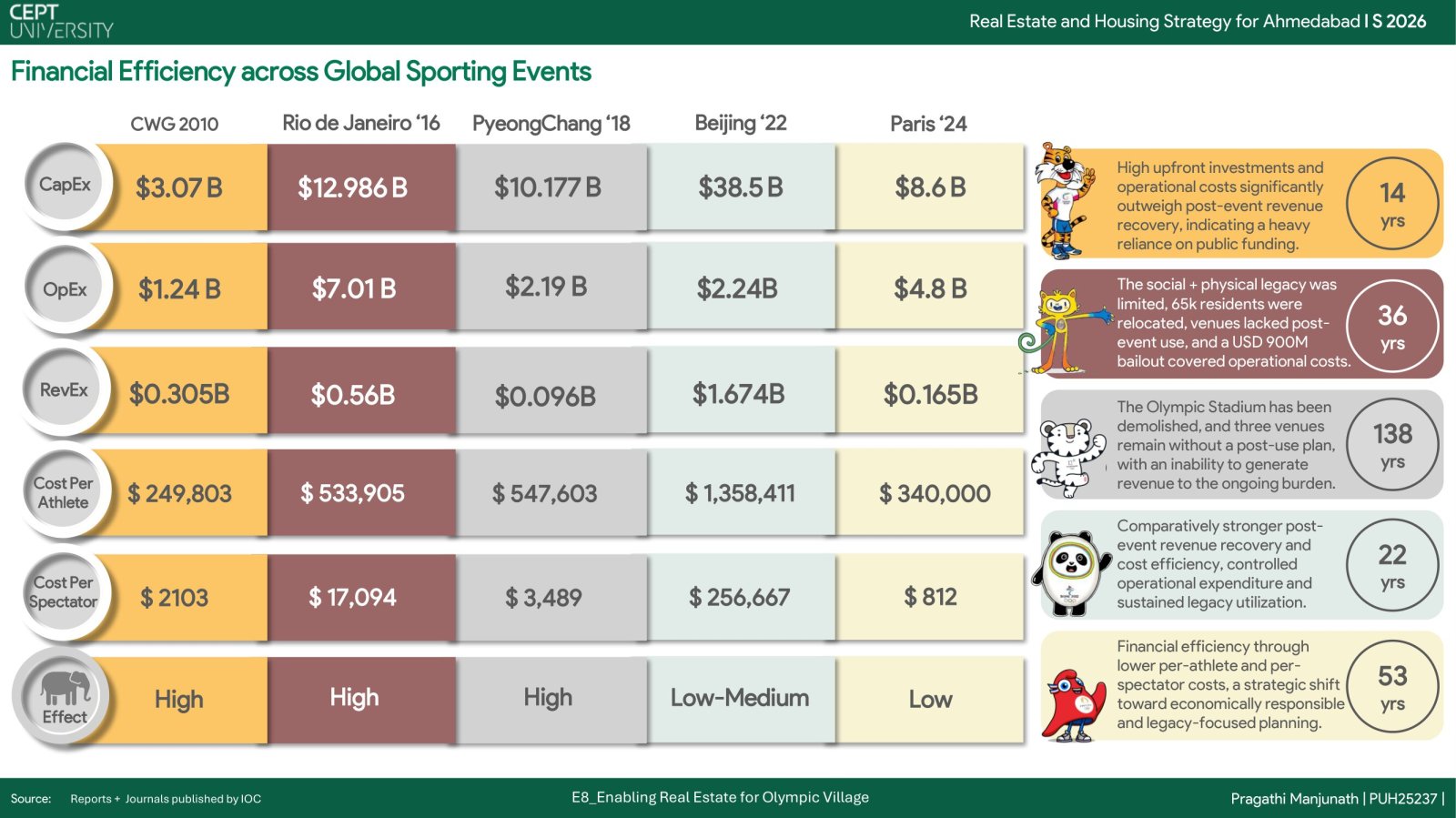
Global case studies highlight the importance of balancing event expenditure with long-term financial and social returns.

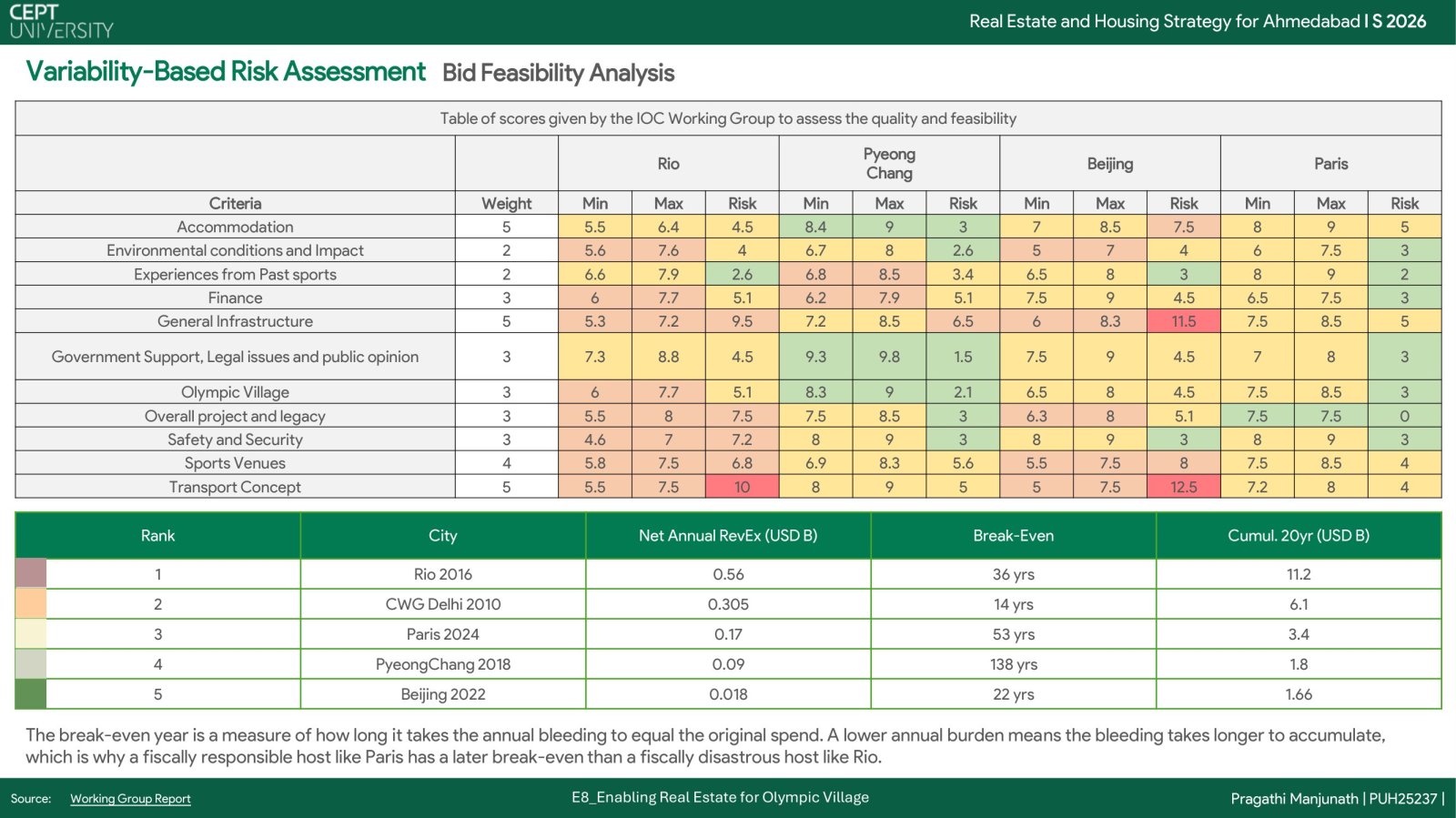
Bid feasibility depends on managing infrastructure, finance, transport, and legacy risks through strategic planning.

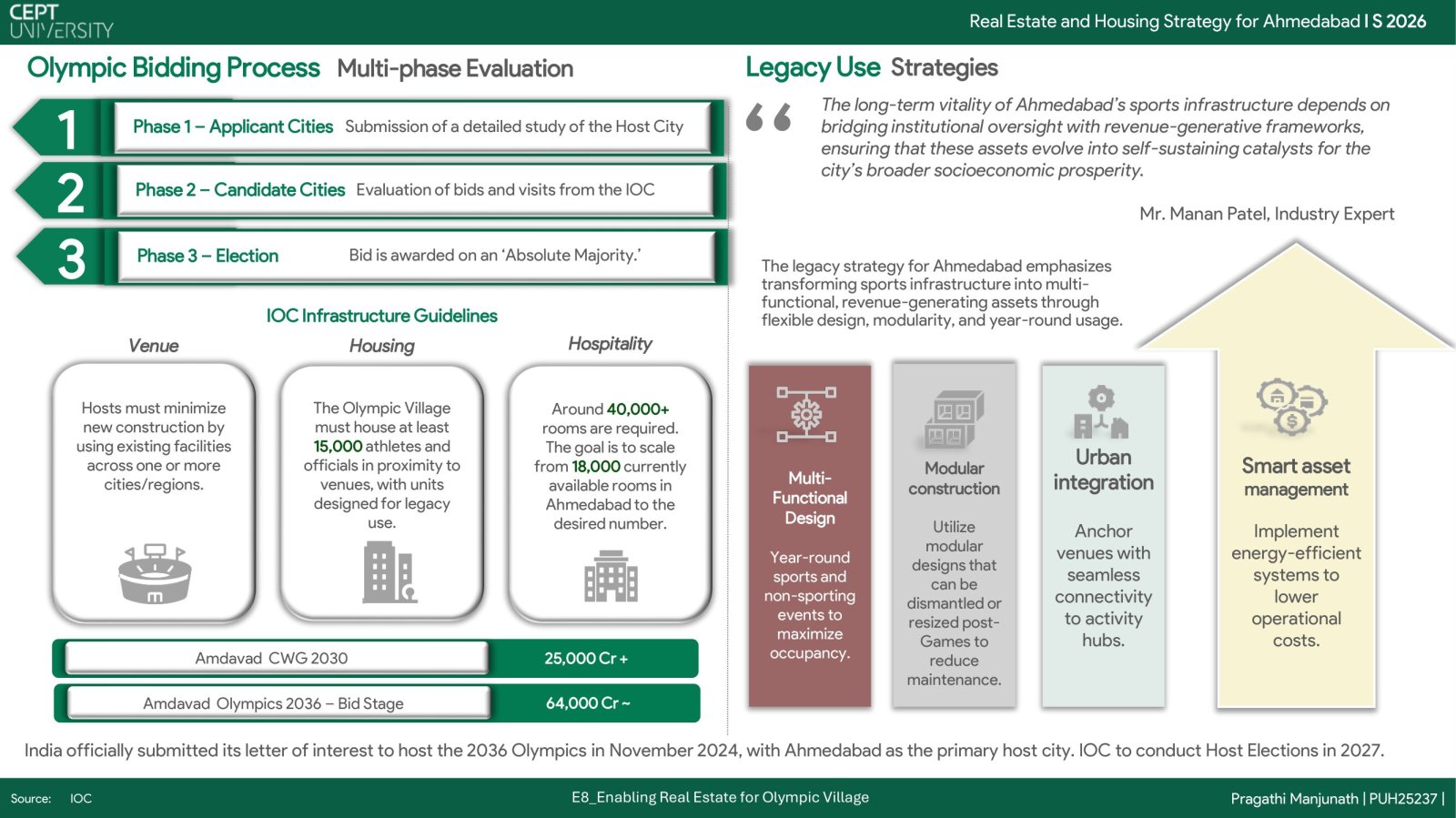
Ahmedabad’s Olympic bid emphasizes legacy-driven infrastructure with flexible, revenue-generating post-event use strategies.

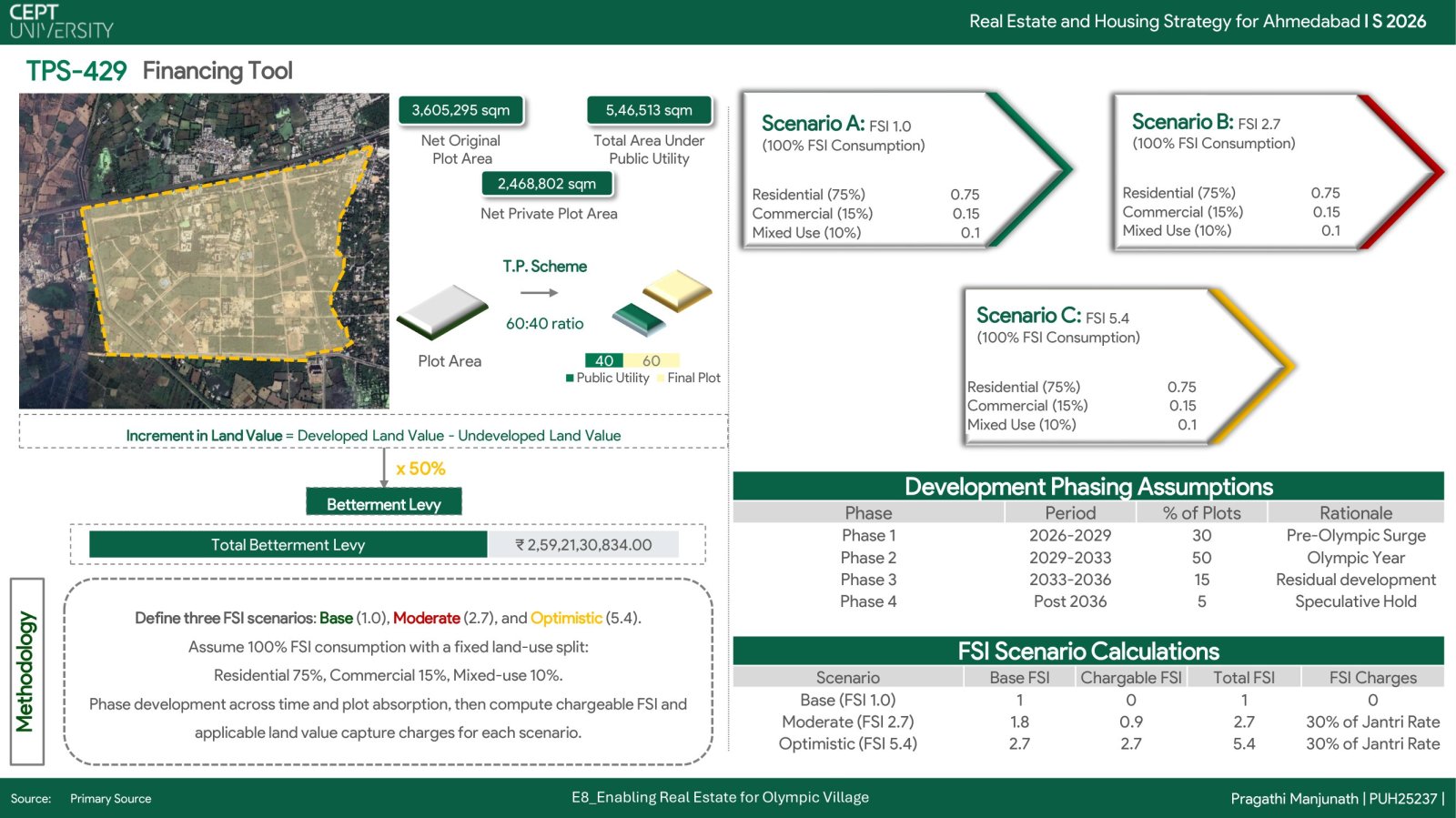
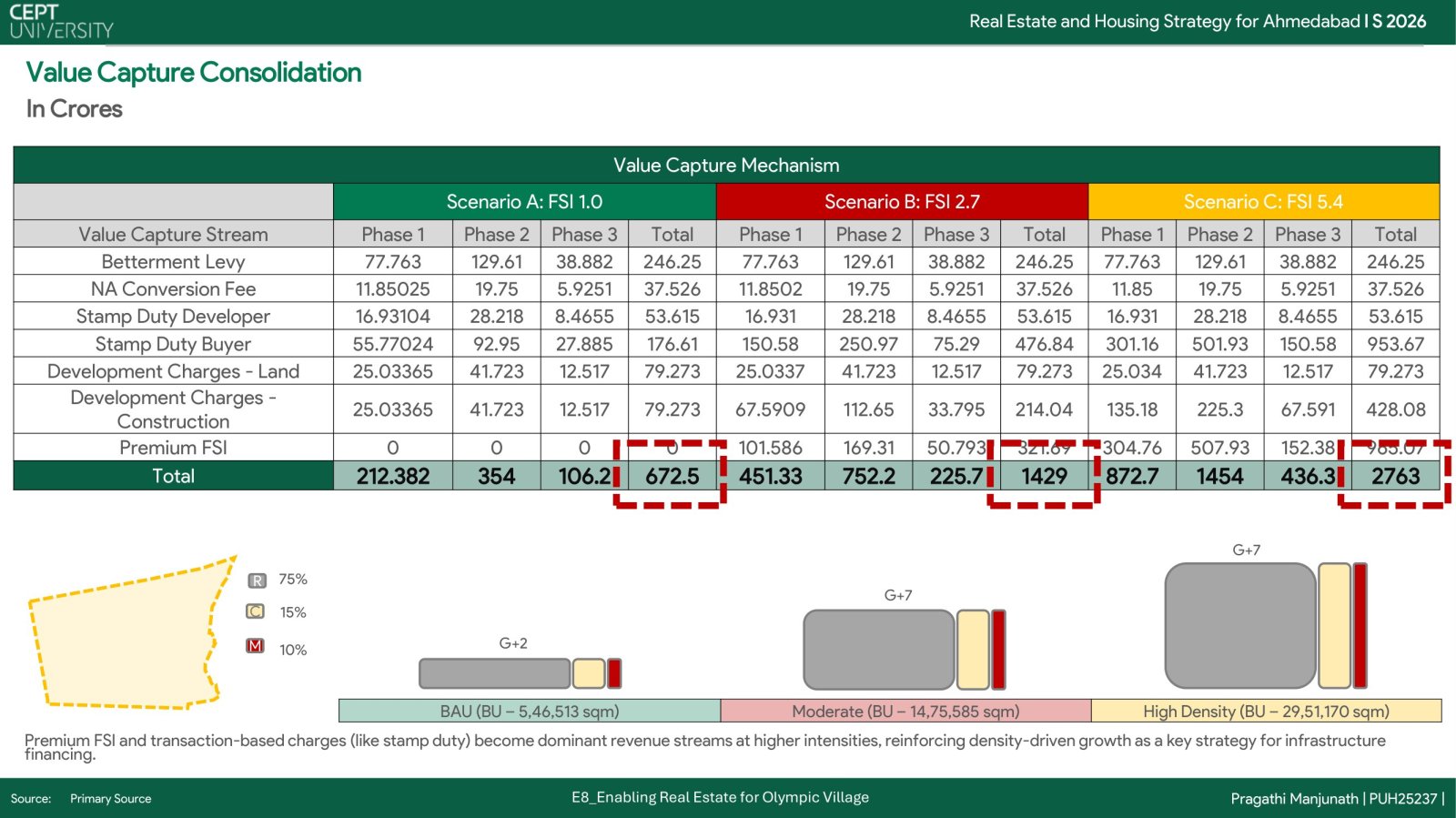
TPS-429 demonstrates how land value capture and FSI-based financing can support Olympic-scale infrastructure delivery.

Higher-density development scenarios generate stronger value capture potential for financing sports infrastructure investments.

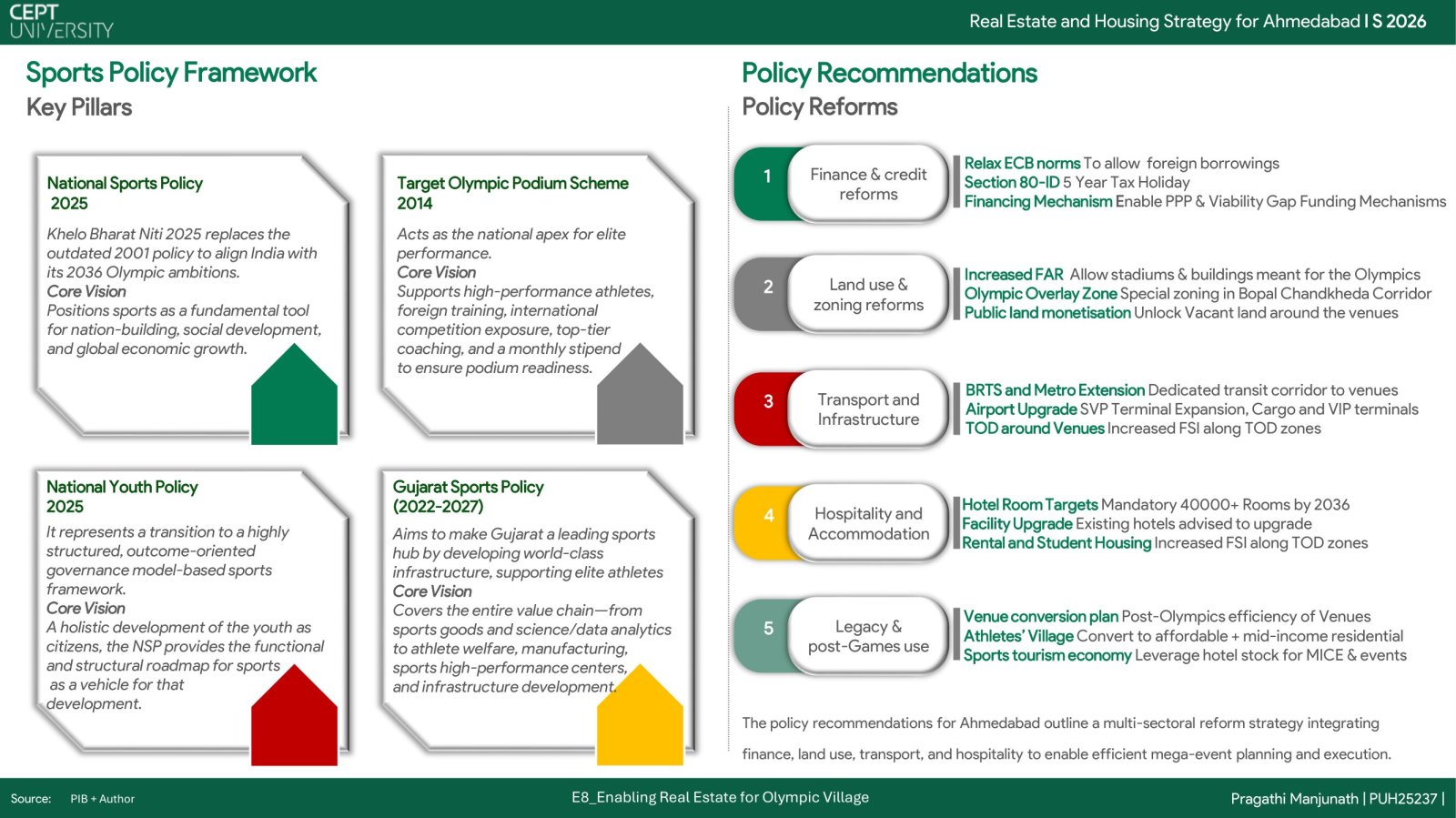
Integrated policy reforms across finance, land use, transport, and hospitality are essential for successful mega-event planning.