• Home
  • FP
  • UH4002
  • Enabling the Warehousing Real Estate Market

Pulimi Venkata Lasya Reddy

UH4002

Enabling the Warehousing Real Estate Market

This project analyzes the emerging warehousing real estate market in Ahmedabad and explores strategies to enable its long-term growth through infrastructure, policy reforms, and integrated planning. The study identifies major logistics clusters, their functional roles, investment potential, and future growth patterns driven by highways, industrial corridors, and GIDC developments. It examines Grade A warehousing standards, land acquisition and approval processes, and investment performance across different micro-markets. The project further highlights challenges such as fragmented development, policy-business mismatches, and TP schemes to improve efficiency, scalability, accessibility, and the overall viability of warehousing development.
Report Content

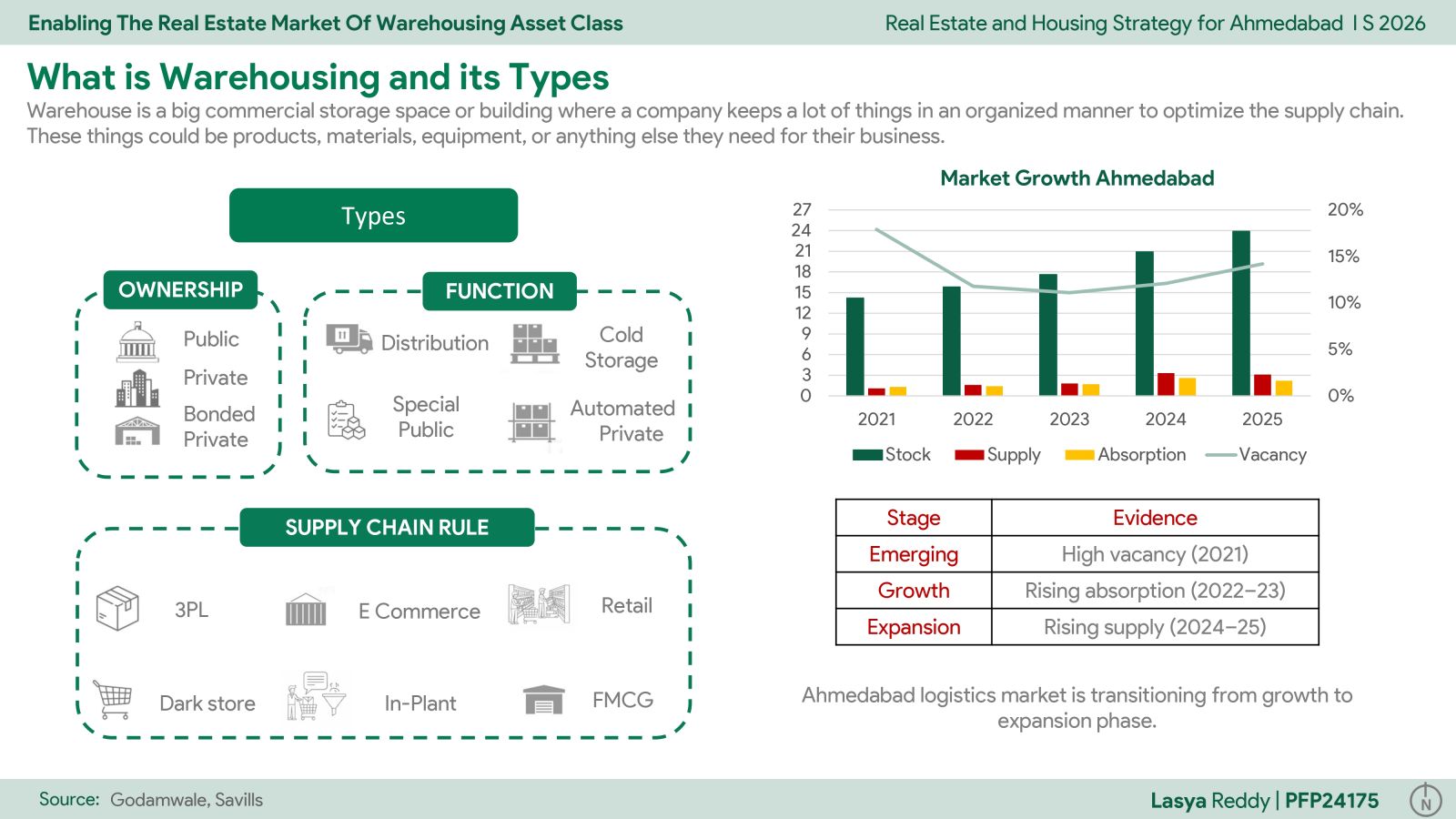
Understanding Ahmedabad’s evolving warehousing real estate landscape.

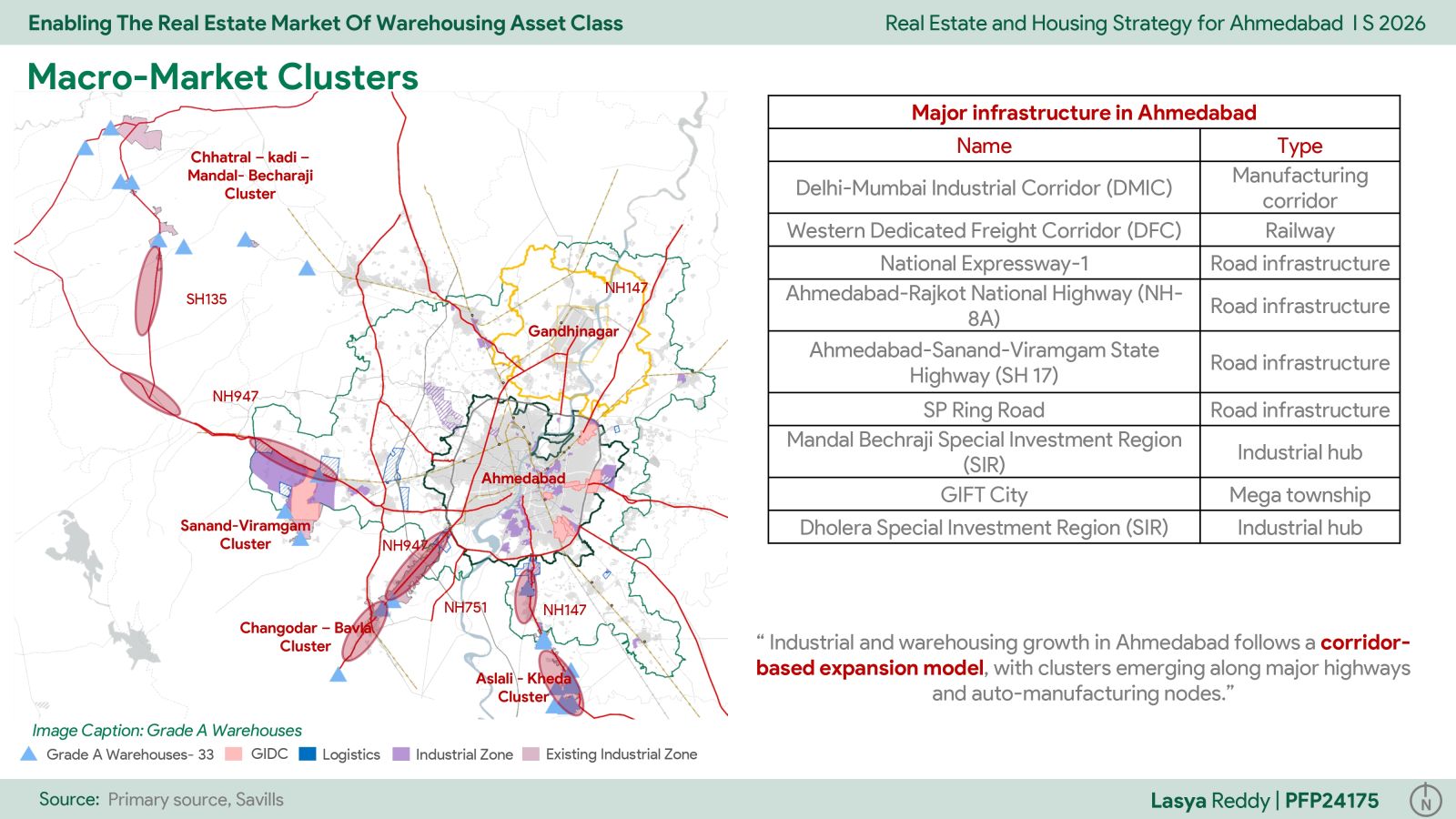
Industrial corridors and infrastructure networks shape Ahmedabad’s warehousing clusters.

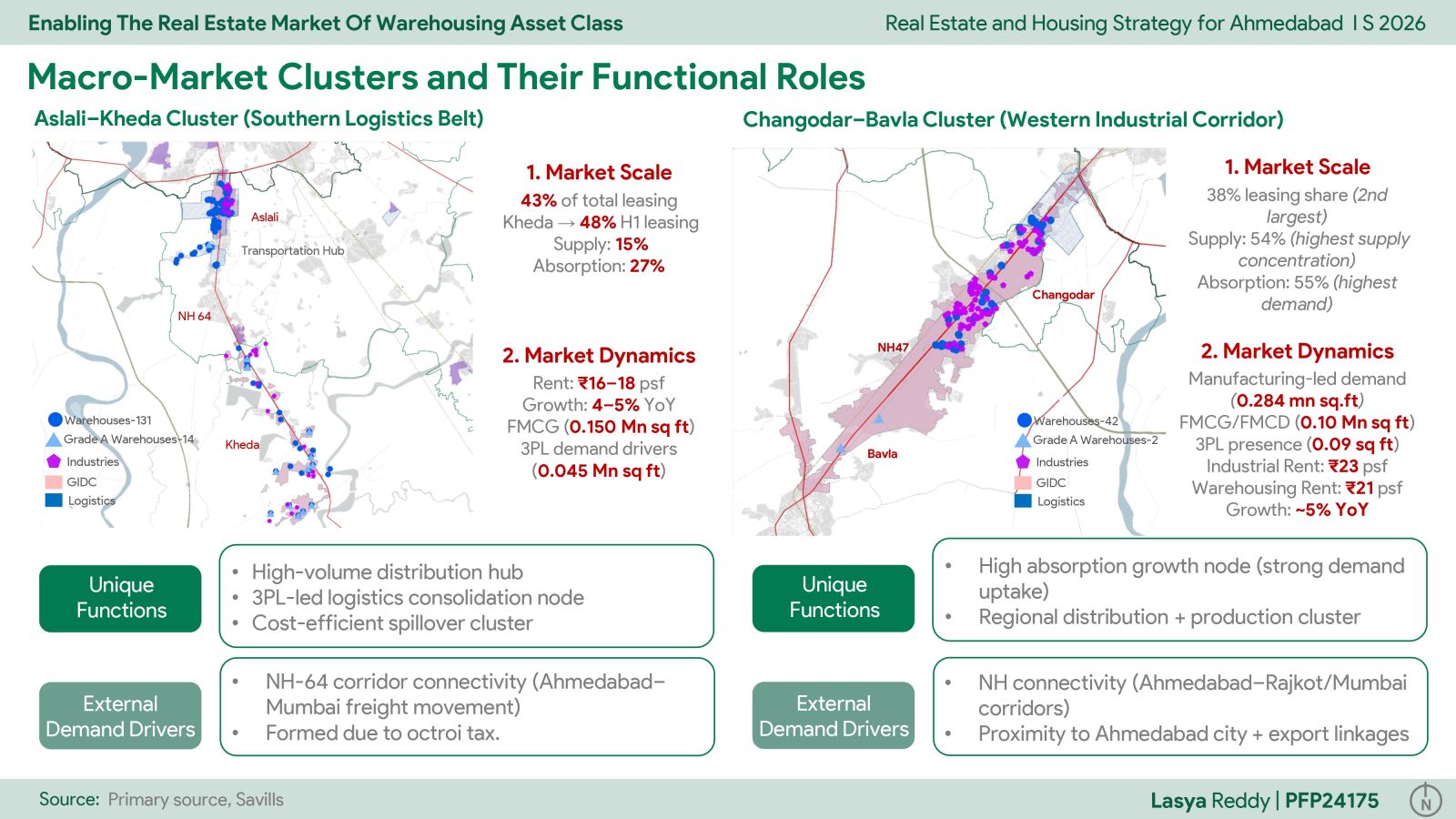
Functional Roles – Aslali & Changodar: Each cluster performs distinct logistics and industrial functions within the regional supply chain.

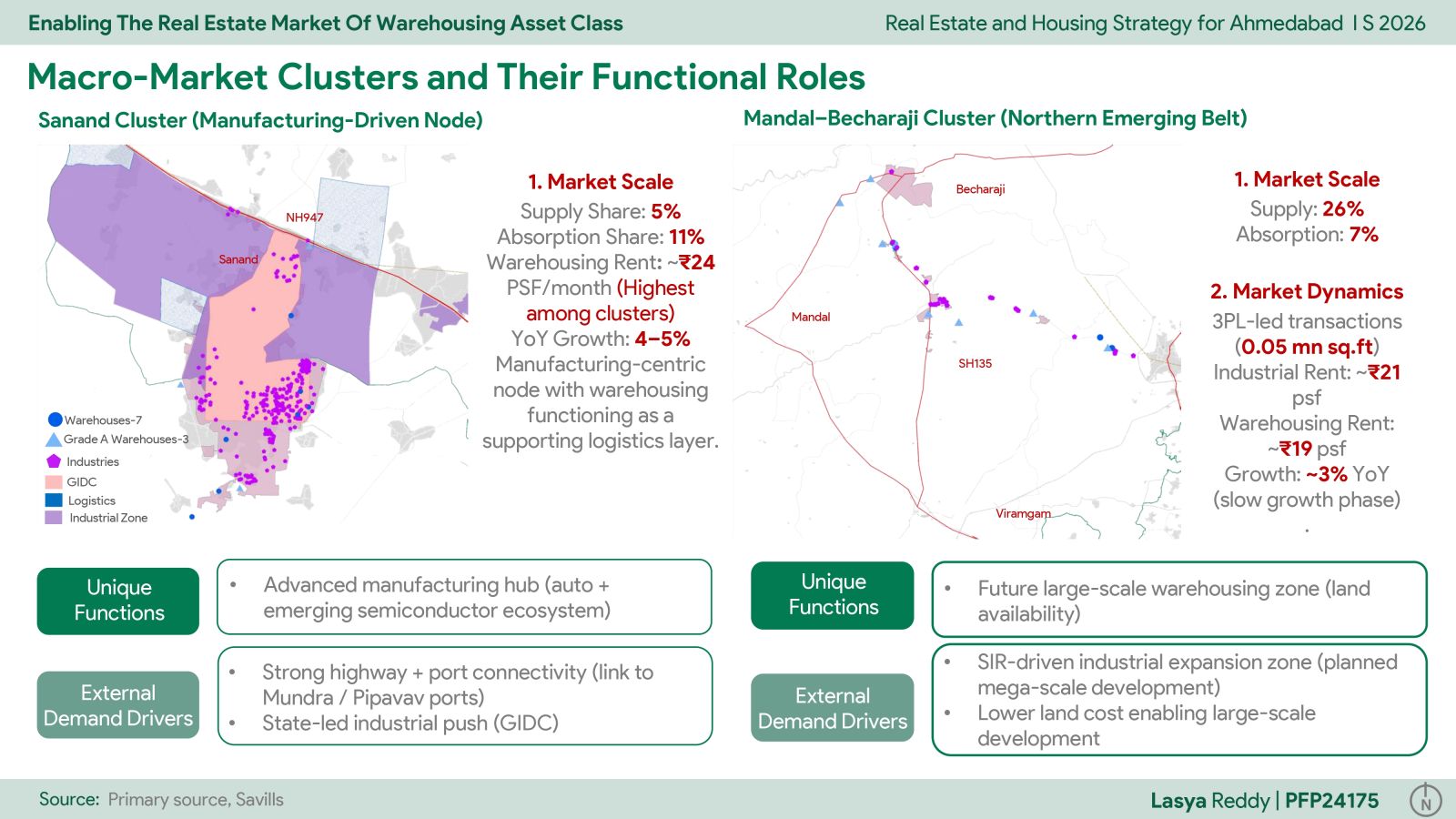
Functional Roles – Sanand & Mandal-Becharaji: Emerging industrial nodes are driving future warehousing expansion and regional connectivity.

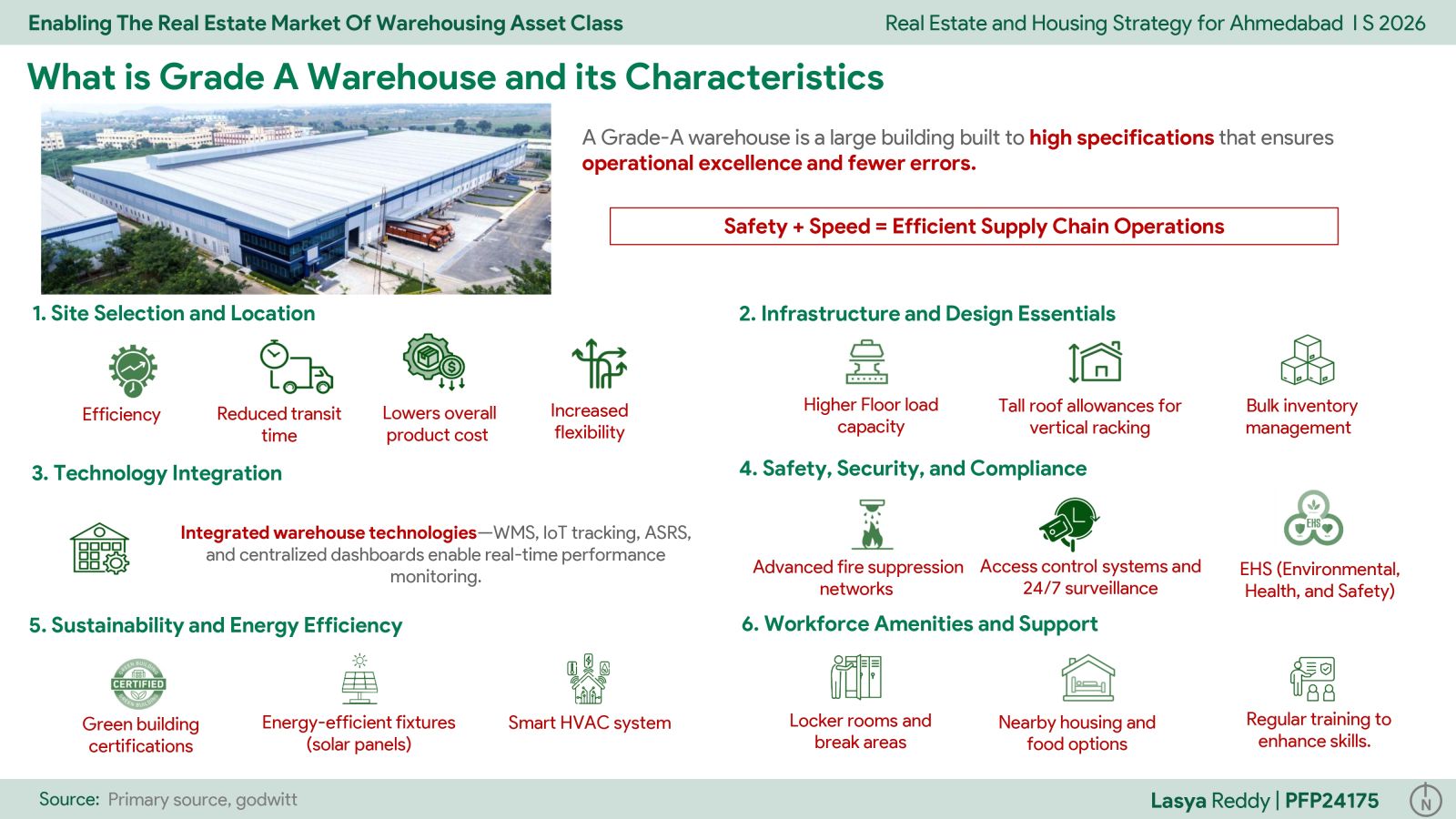
Grade A warehouses enhance operational efficiency through technology, infrastructure, and sustainability.

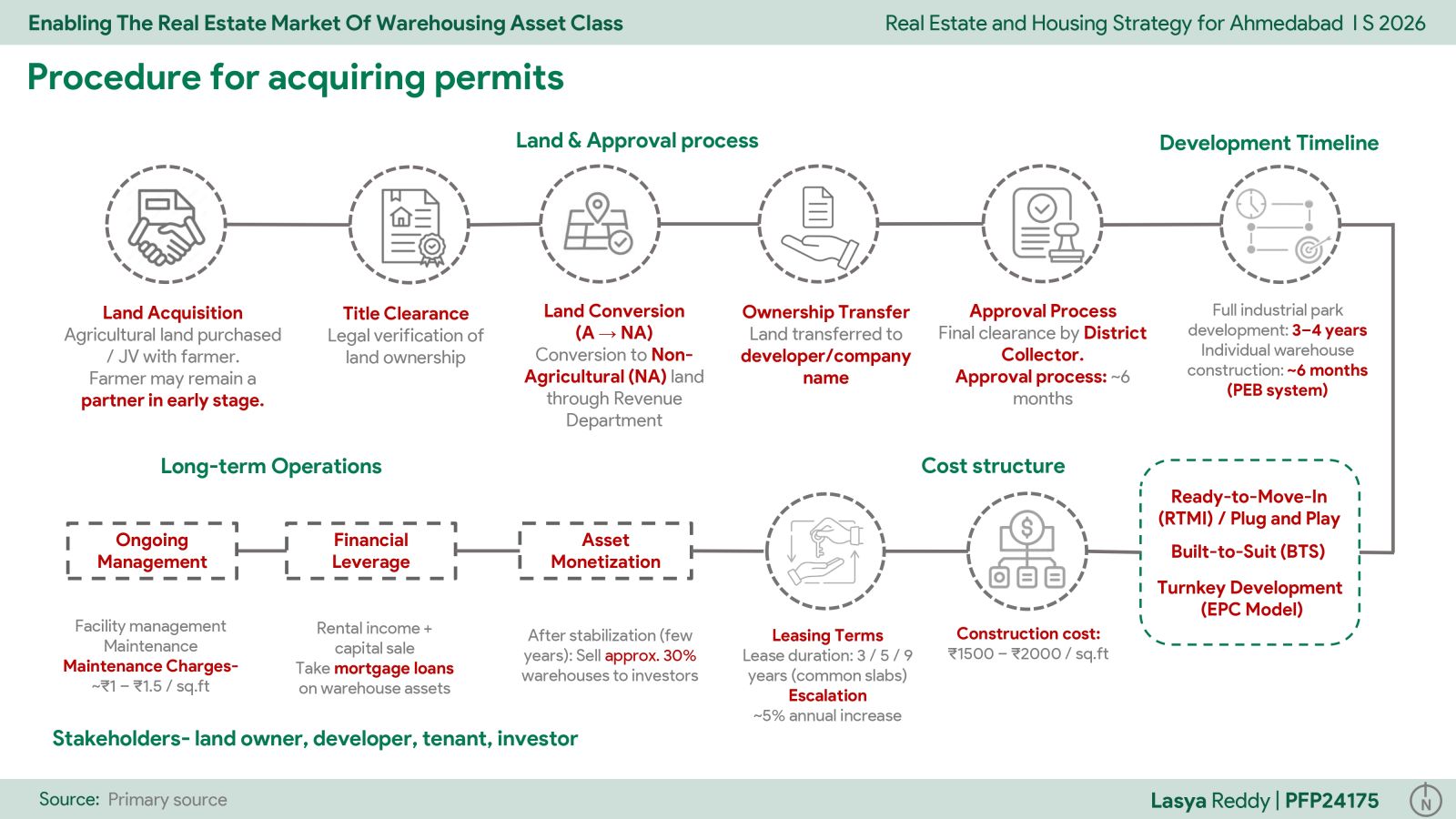
Warehousing development involves multi-stage approvals, investments, and long-term asset operations.

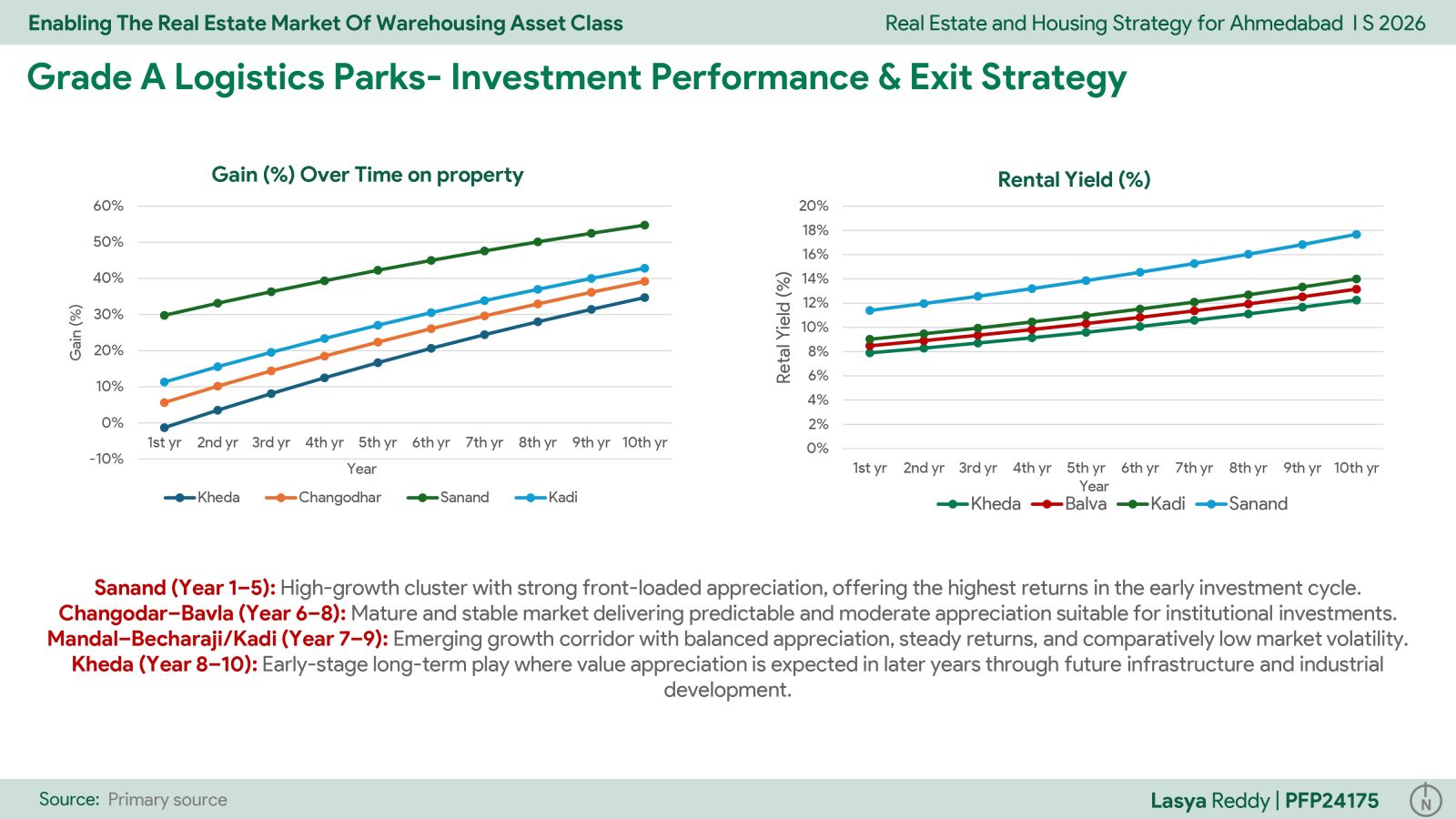
Different clusters offer varied investment returns based on market maturity and growth potential.

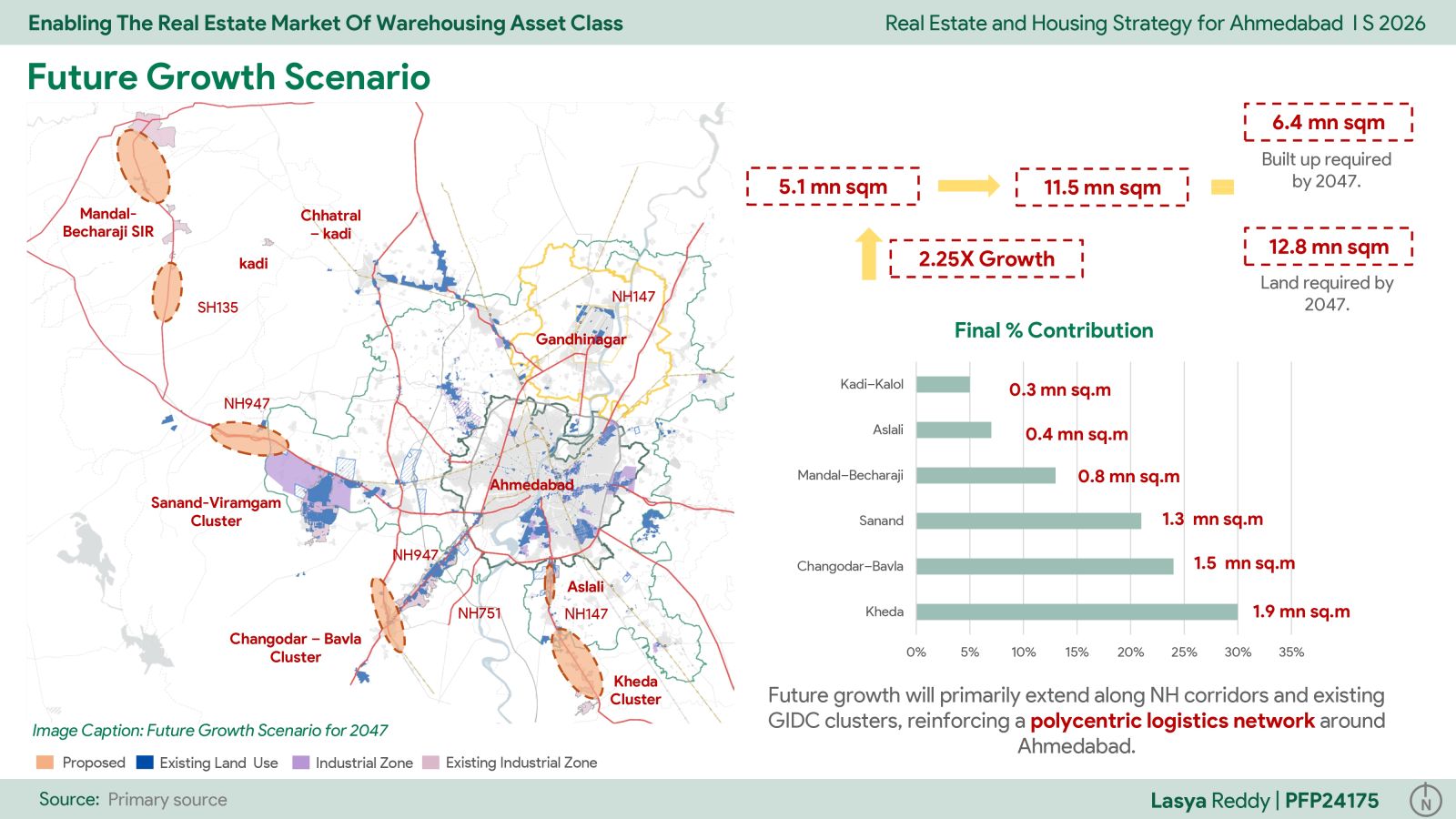
Ahmedabad’s warehousing demand is projected to expand through corridor-based logistics growth.

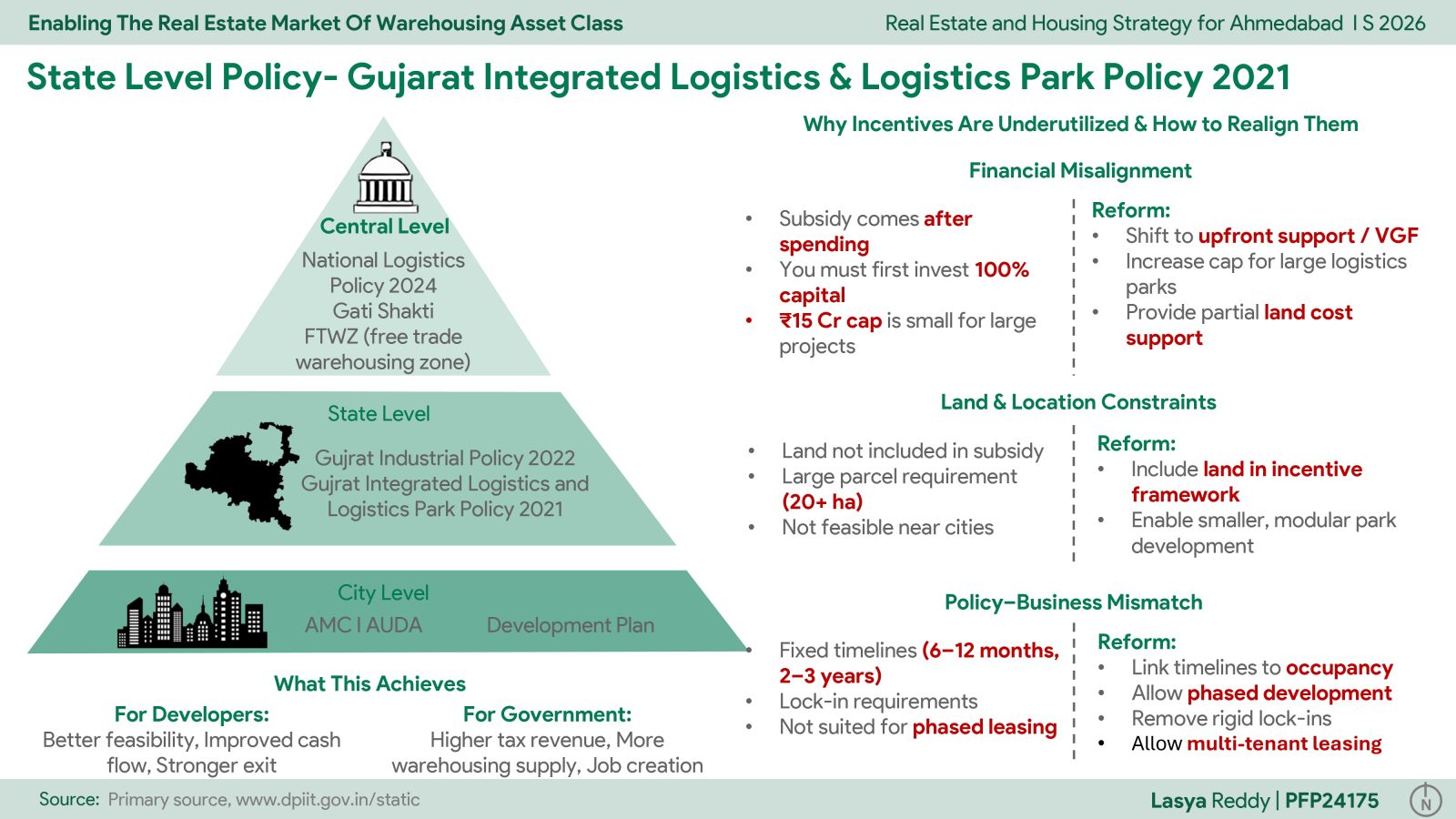
Flexible and market-aligned reforms can improve the viability of warehousing development.
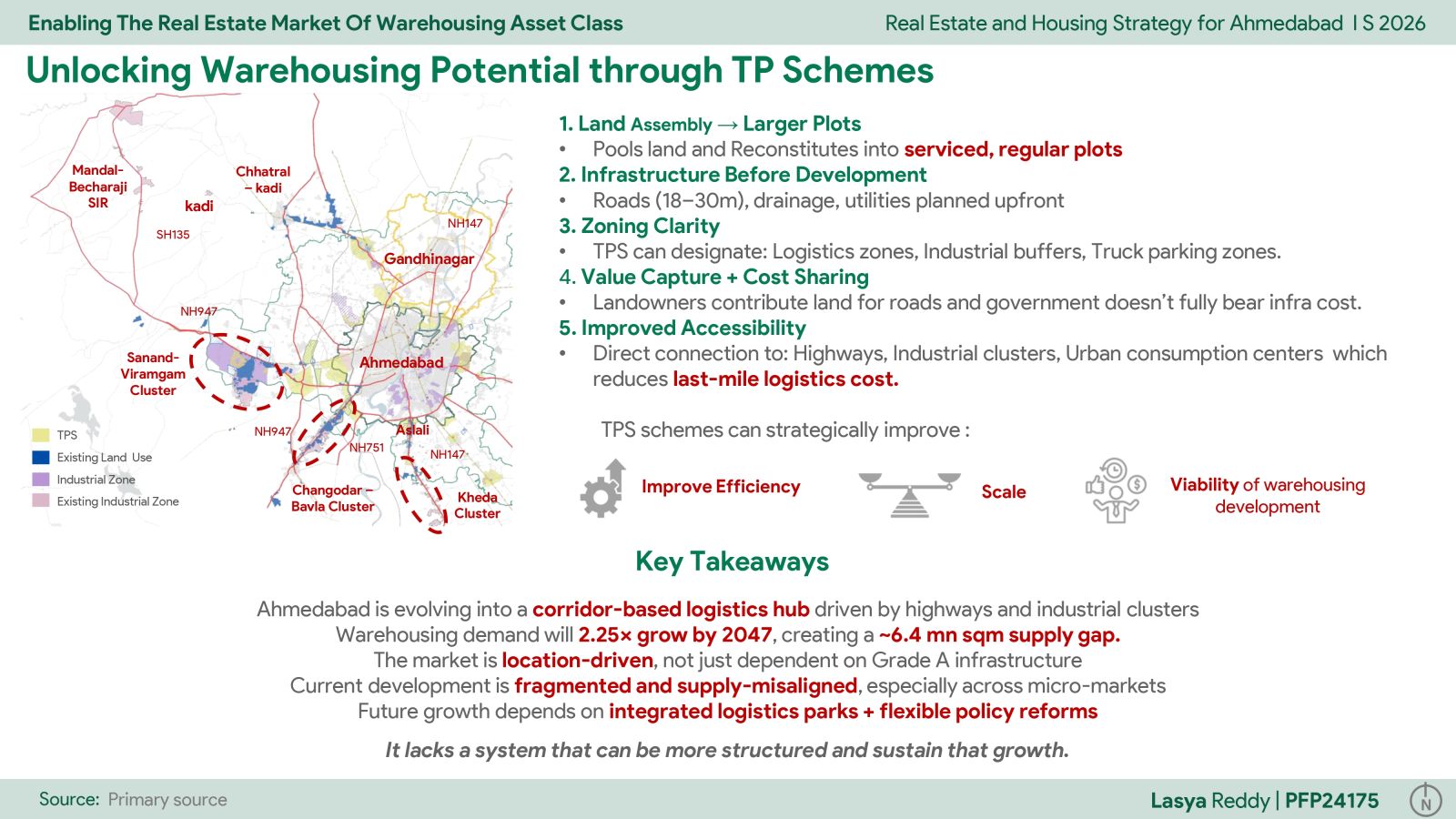
TP Schemes can enable structured, scalable, and efficient warehousing growth in Ahmedabad.