• Home
  • FP
  • UT4004
  • Reclaiming Efficiency: Data-Driven Corridor Analysis

Pranjal Hingwe

UT4004

Reclaiming Efficiency: Data-Driven Corridor Analysis

This project aims to improve transport efficiency in Ahmedabad through a corridor-based analysis of key urban roads. Using primary surveys and data analysis, major issues such as congestion, junction delays, and encroachments were identified. Multiple intervention scenarios, including geometric improvements, signal optimization, public transport shifts, and flyovers, were tested using PTV VISSIM micro-simulation. The results show that integrated strategies, especially public transport improvements, provide the most effective and sustainable reduction in travel time and congestion. 

Report Content

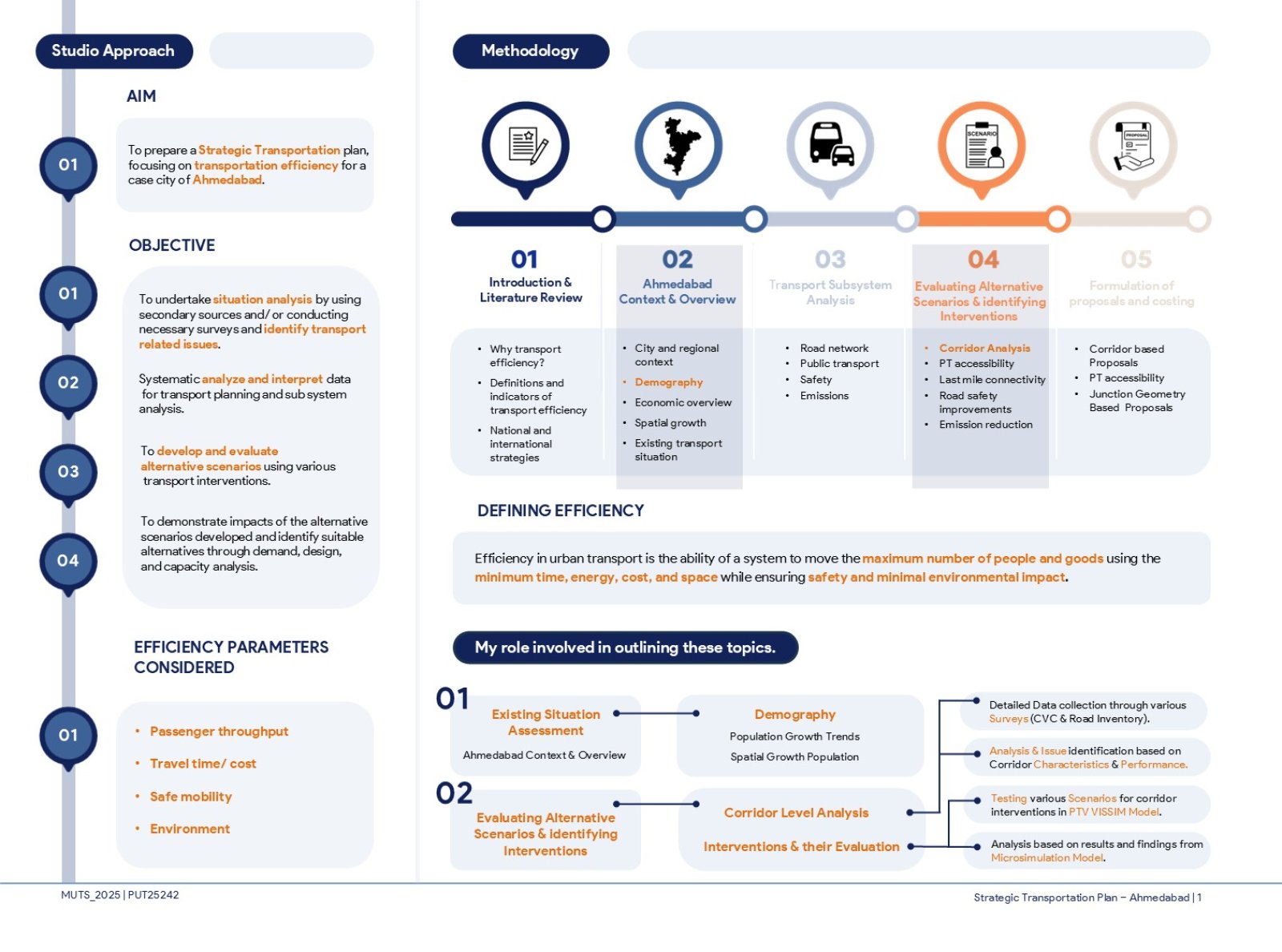
This study focuses on improving transport efficiency in Ahmedabad through data-driven analysis and scenario-based interventions. It evaluates existing issues and proposes optimized solutions.

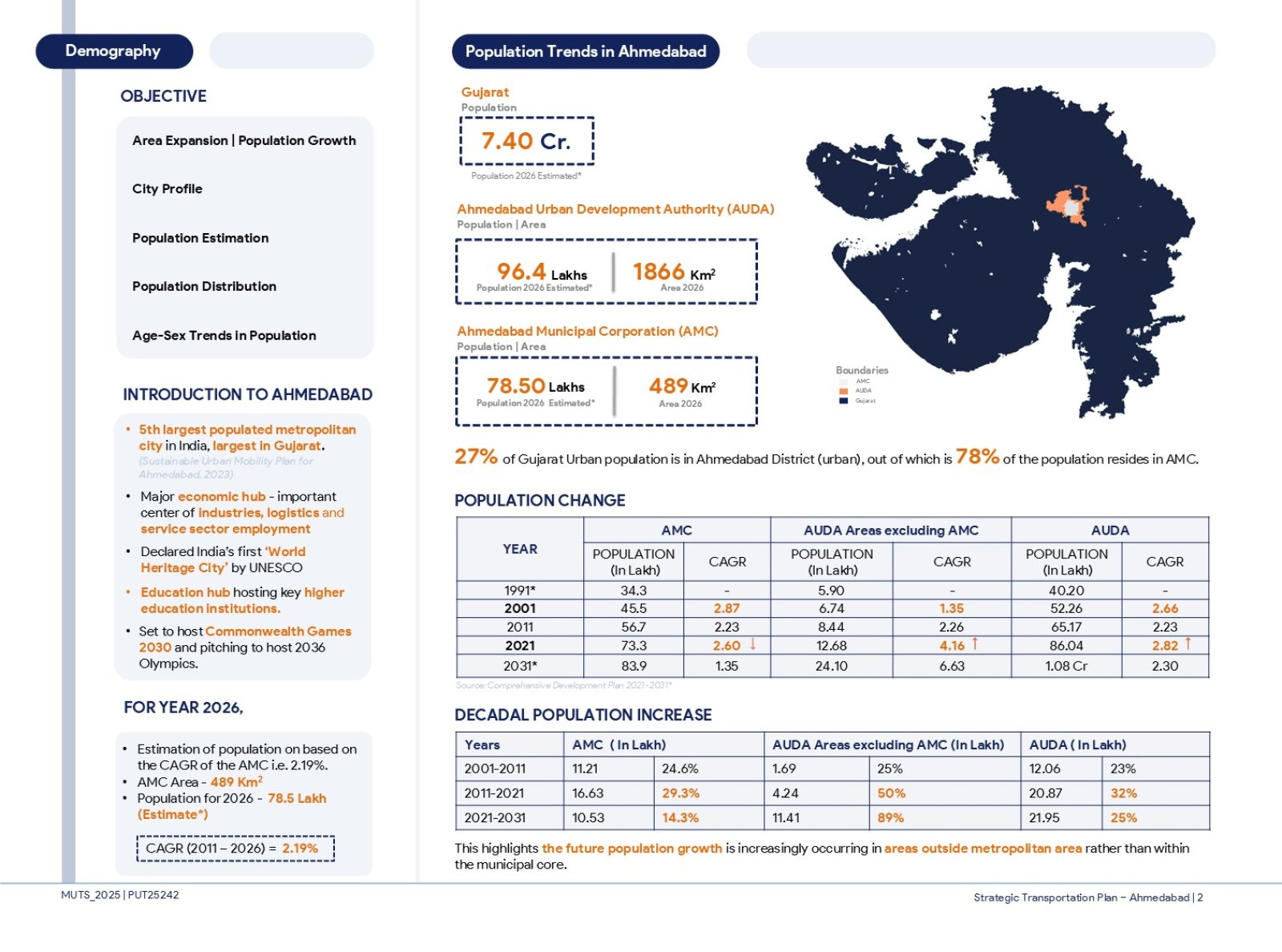
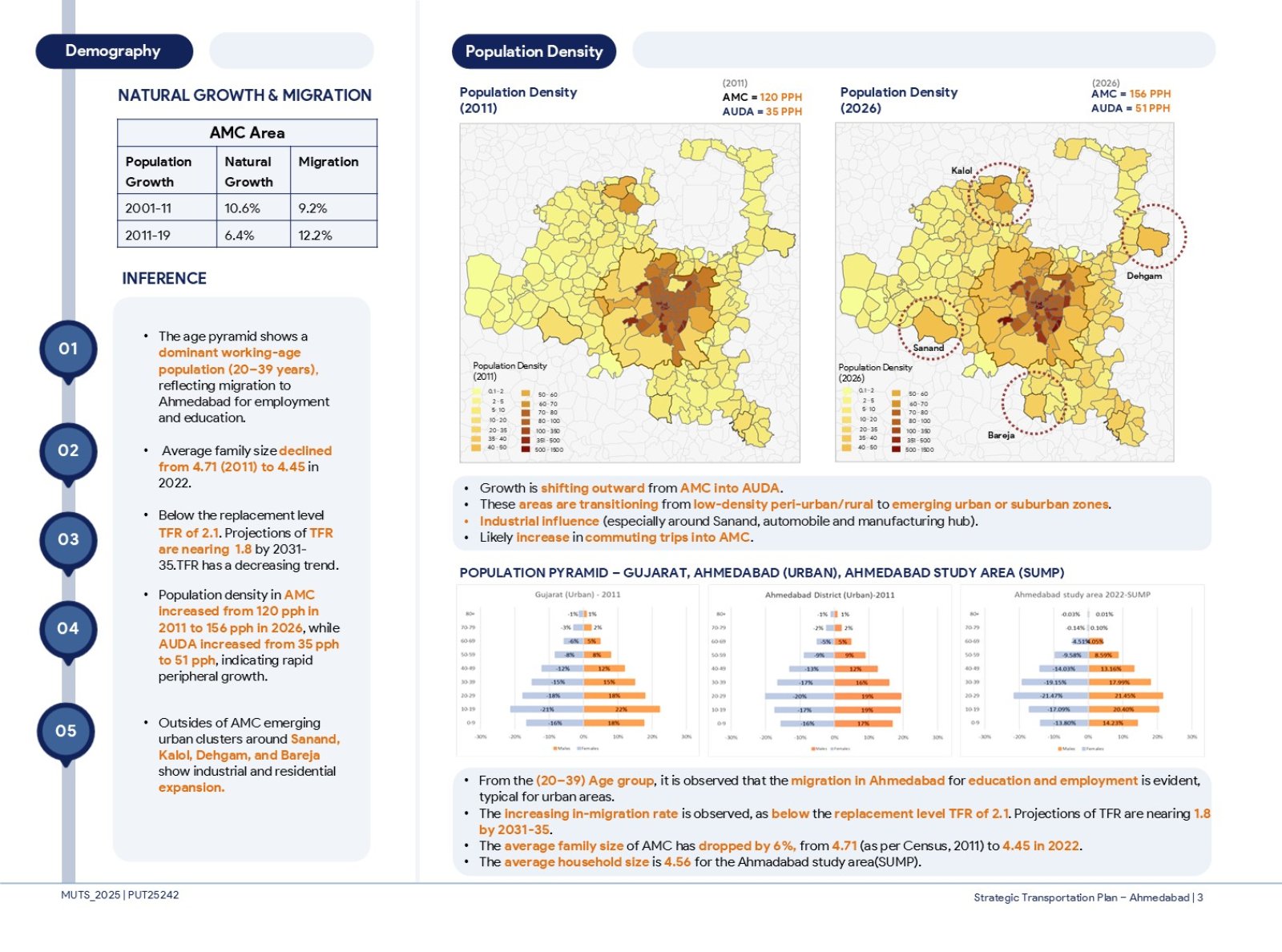
Ahmedabad is a rapidly growing economic hub with expanding urban boundaries, where population growth is increasingly shifting from AMC to AUDA regions.

The city shows strong growth in the working-age population and rising peripheral density, indicating increased commuting demand and pressure on transport systems.

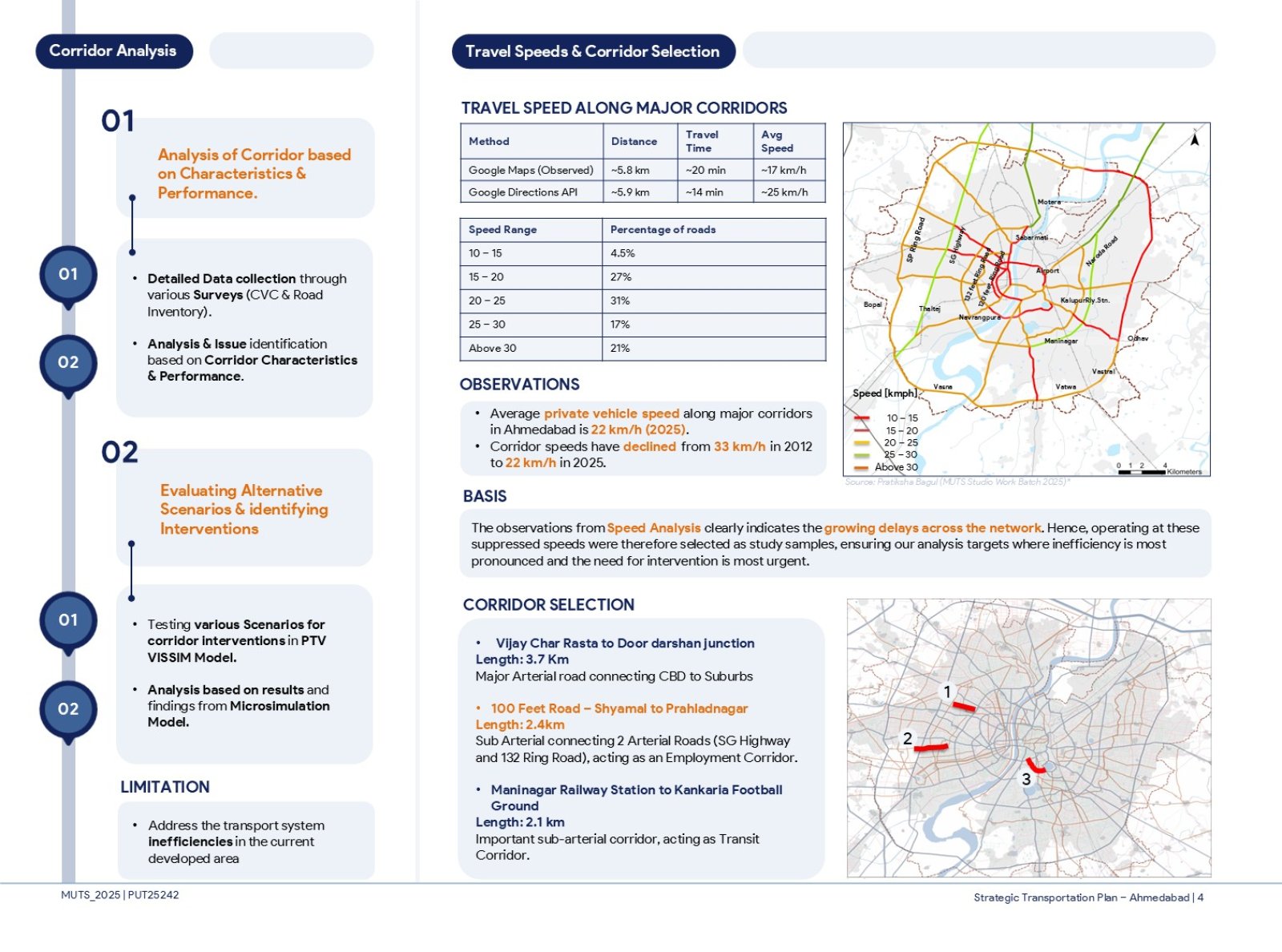
Declining corridor speeds from 33 km/h to 22 km/h highlight inefficiencies, which guided the selection of key corridors for detailed analysis.

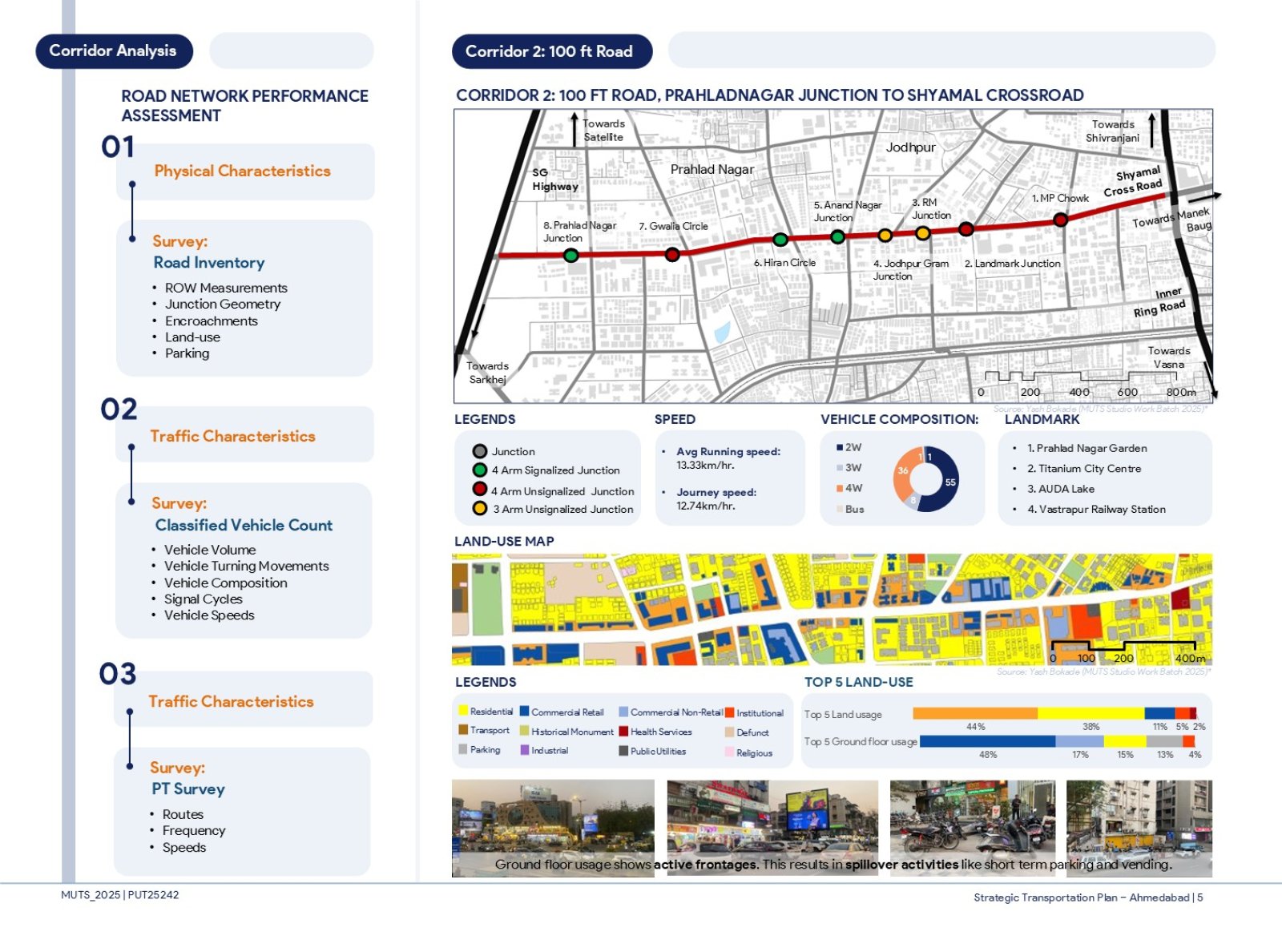
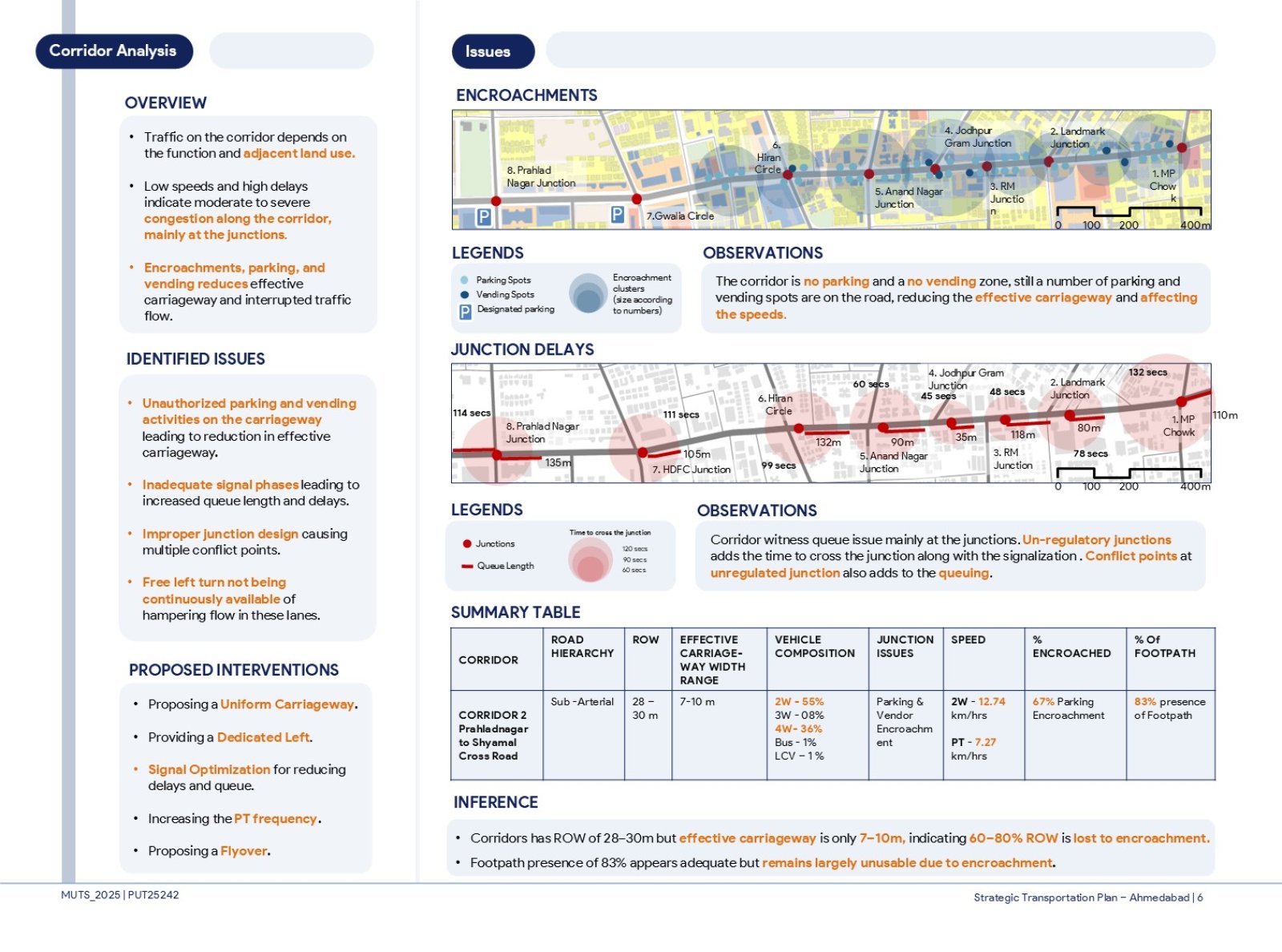
The corridor has mixed land use and active frontages, leading to encroachments and reduced effective carriageway despite adequate ROW.

Major issues include junction delays, parking and vending encroachments, and poor signal design, causing congestion and reduced speeds.

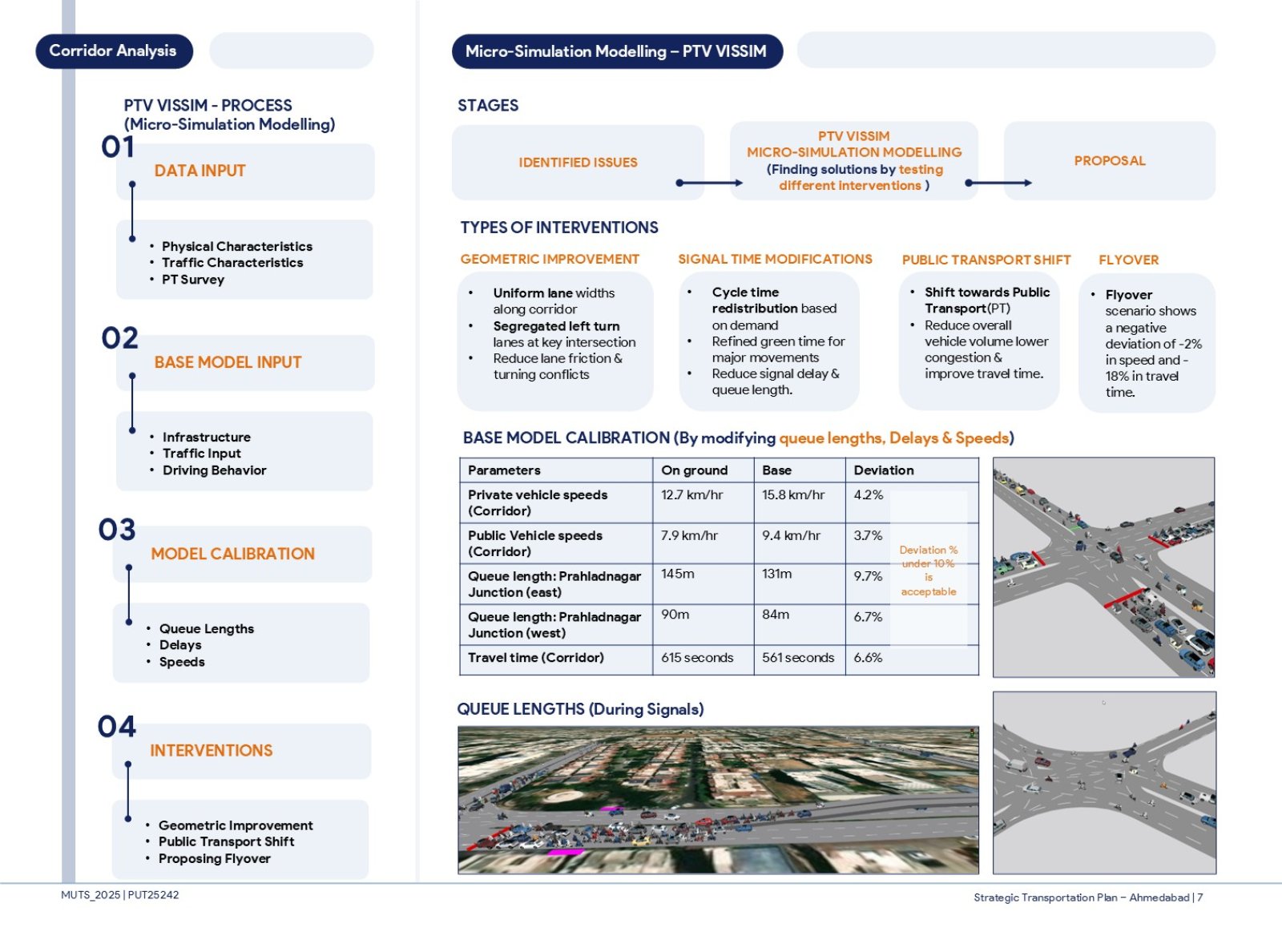
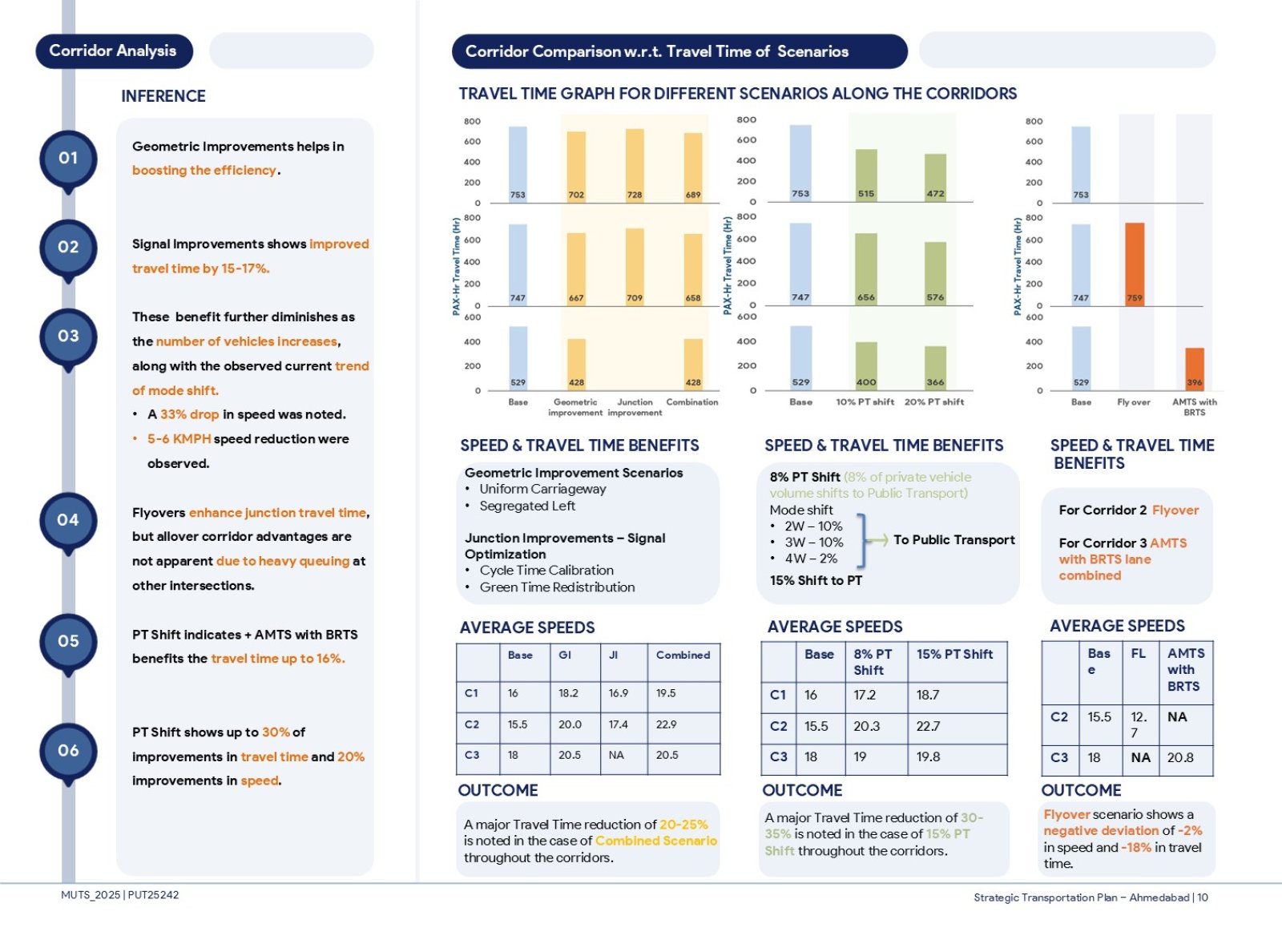
Micro-simulation using PTV VISSIM was used to test interventions like geometric improvements, signal optimization, PT shift, and flyovers.

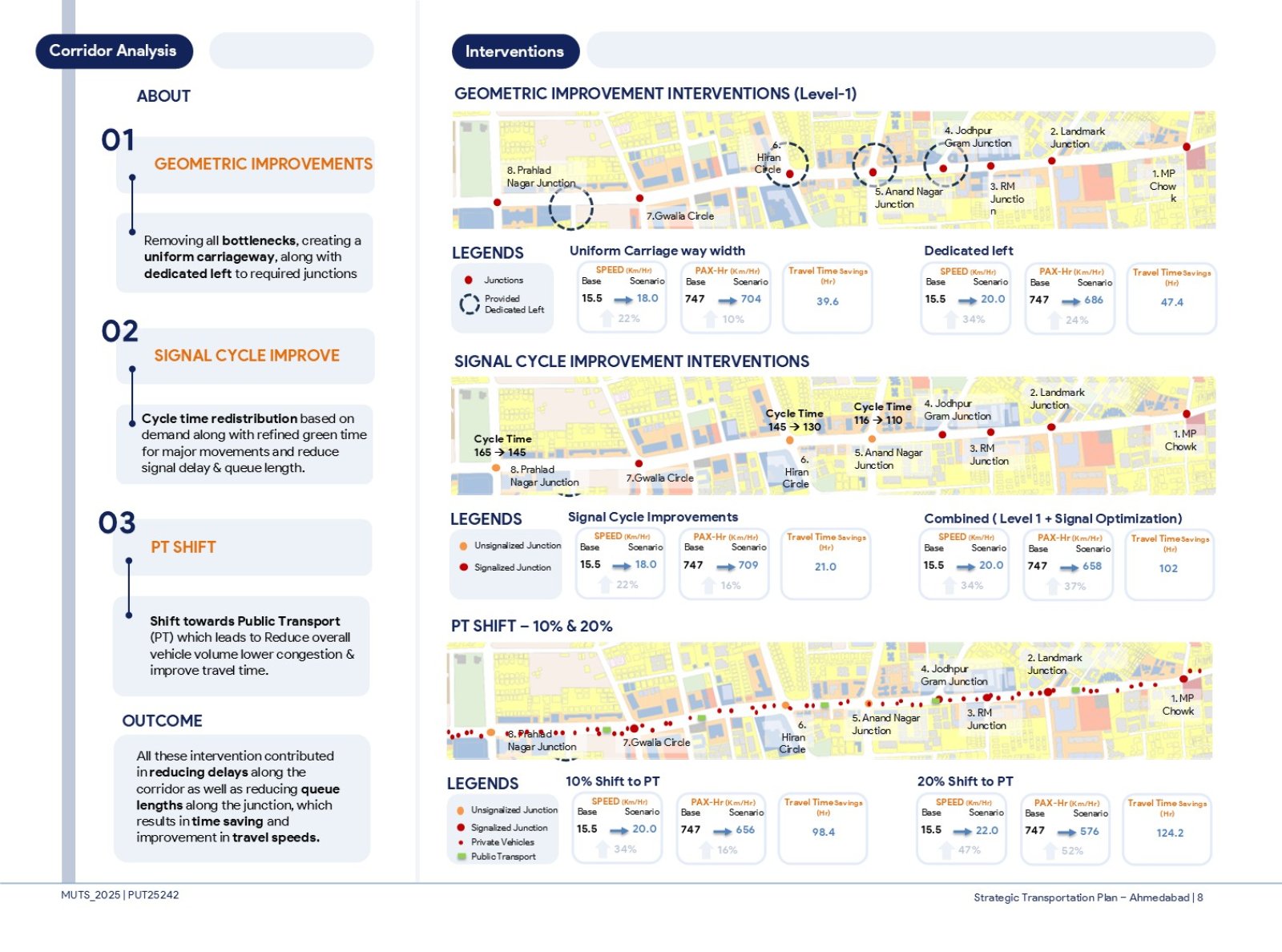
Geometric and signal improvements significantly increased speeds and reduced travel time, while PT shift showed the highest efficiency gains.

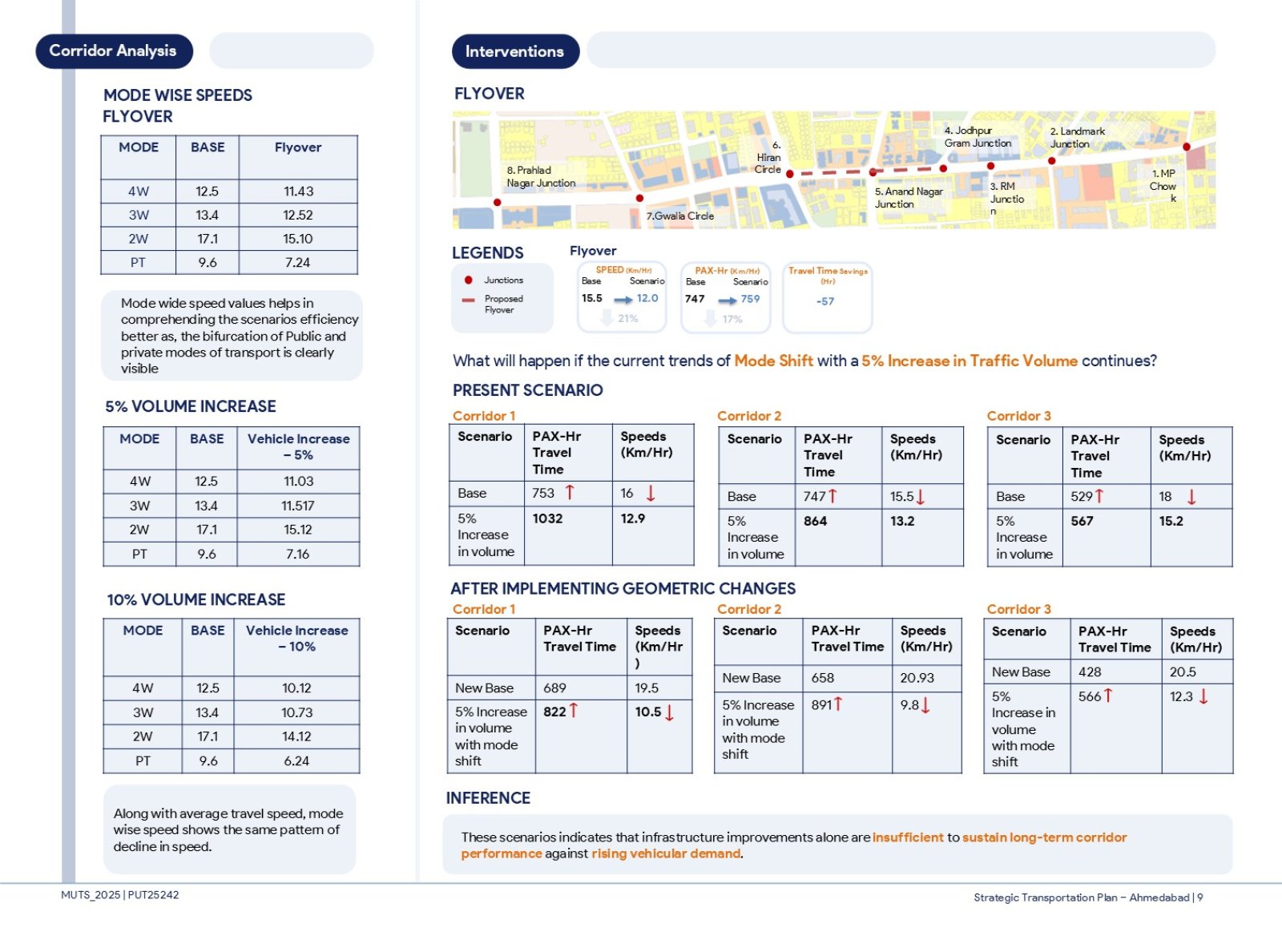
Increasing traffic volumes reduce system performance, and flyovers alone show limited corridor-level benefits.

Combined strategies and PT shift yield up to 30–35% travel time savings, proving that demand management is key to long-term efficiency.