Your browser is out-of-date!
For a richer surfing experience on our website, please update your browser. Update my browser now!
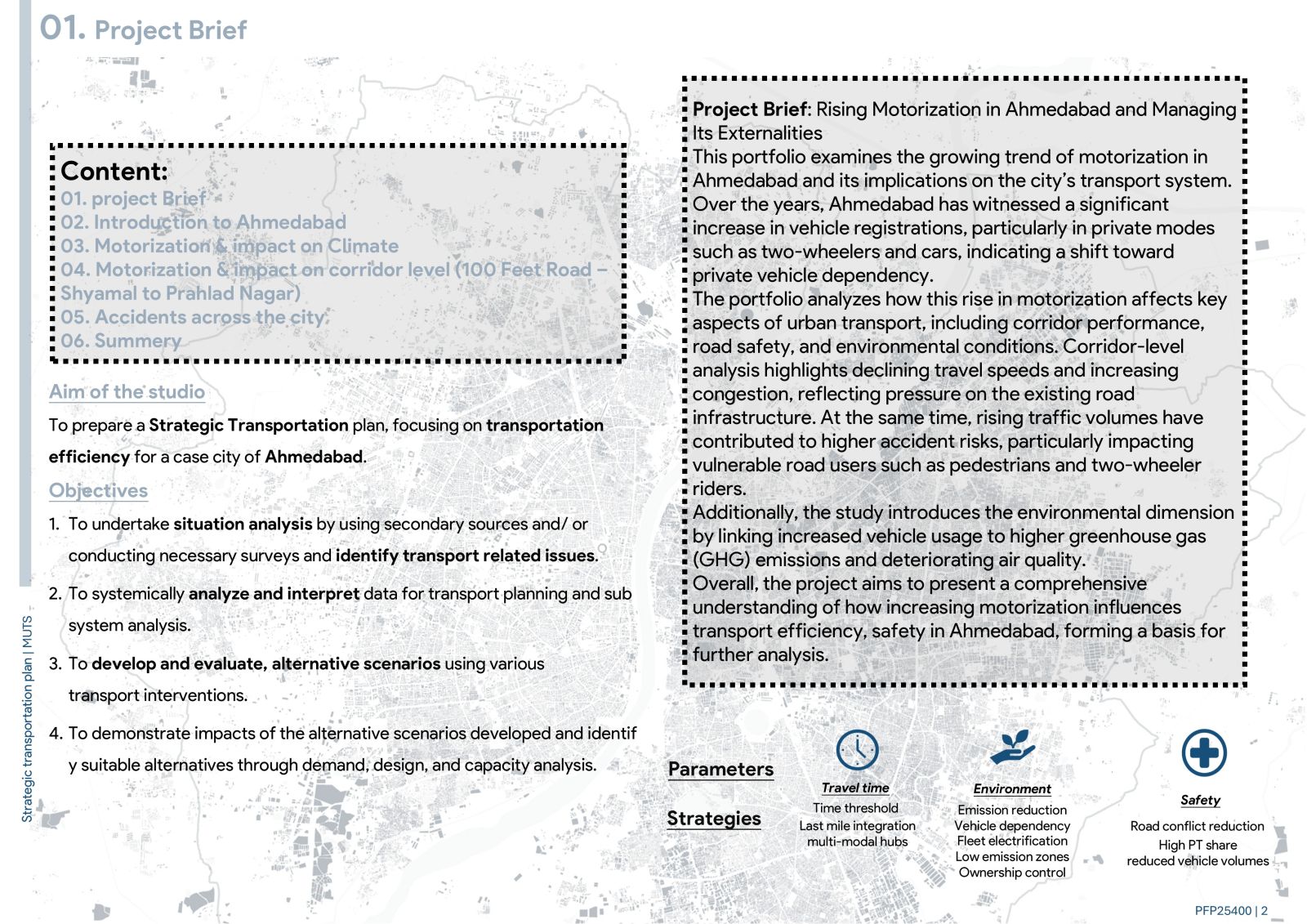
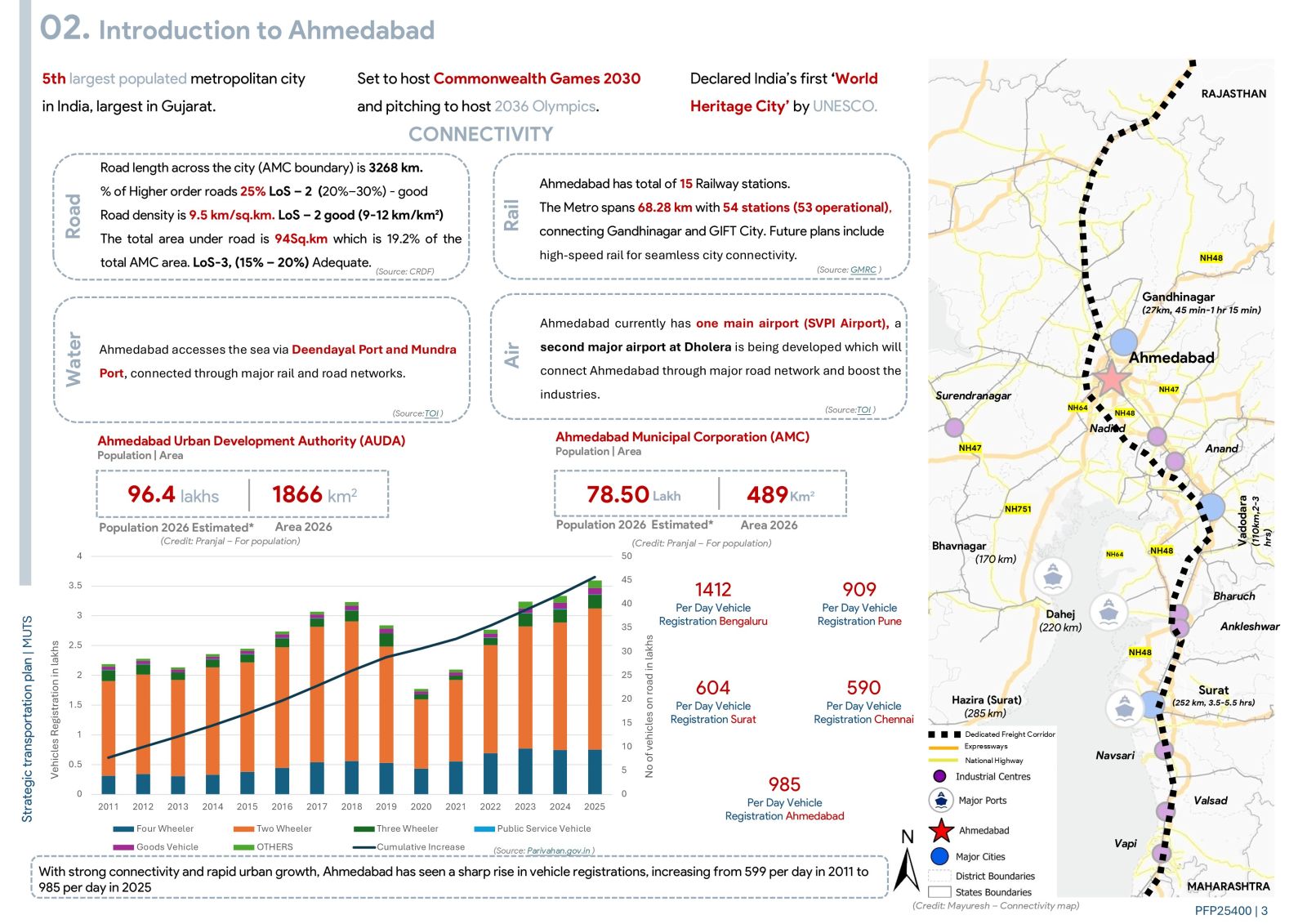
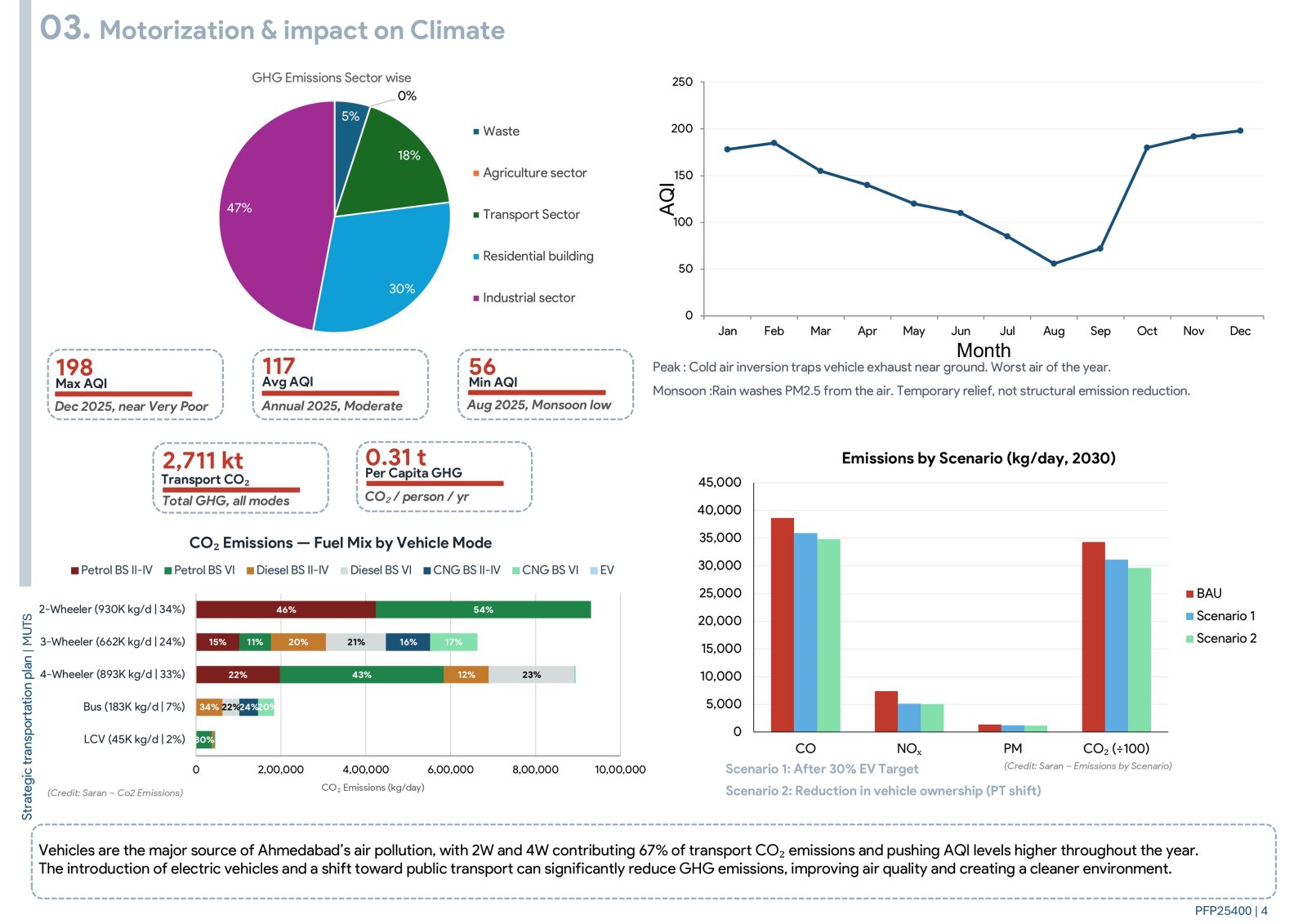
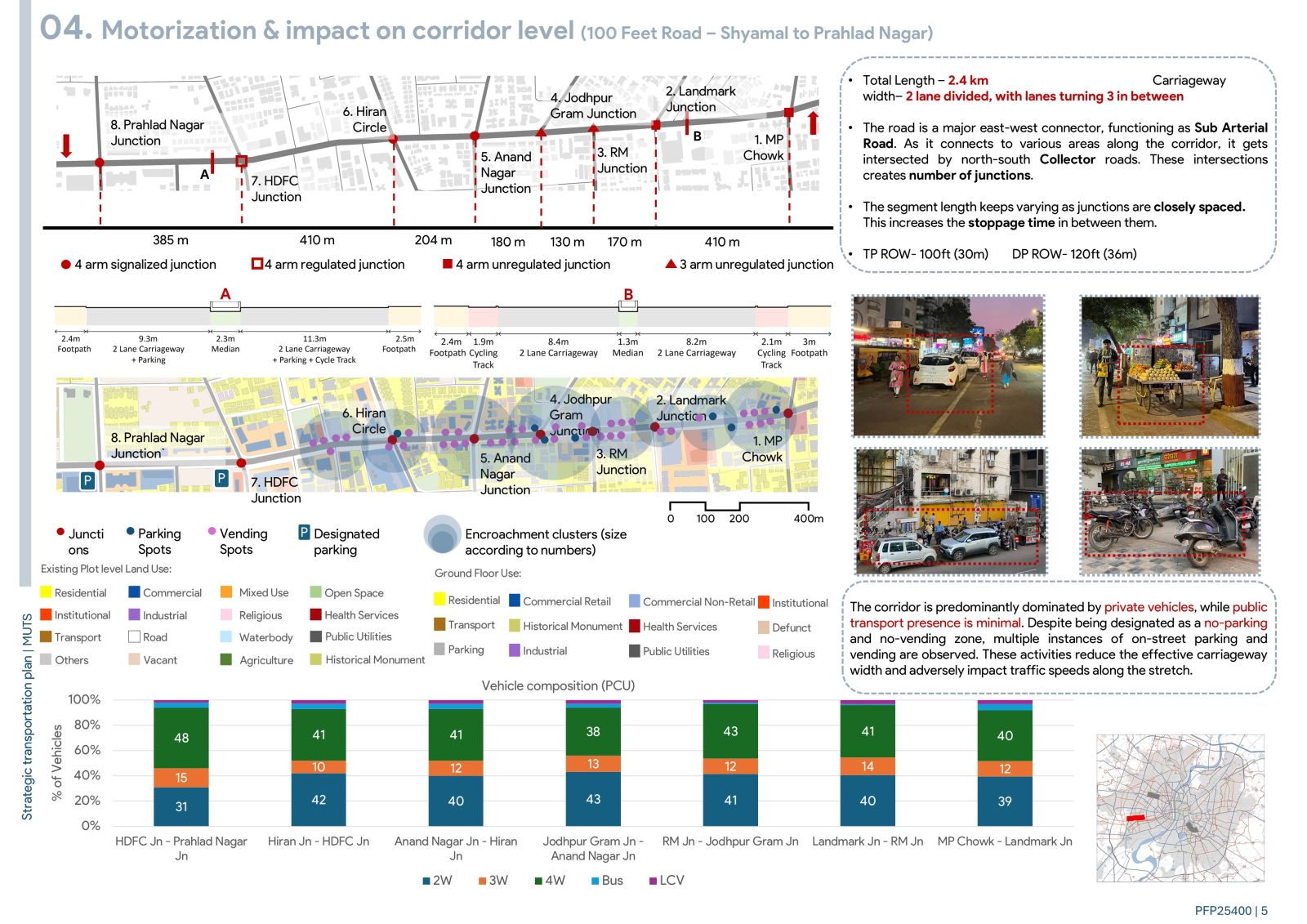
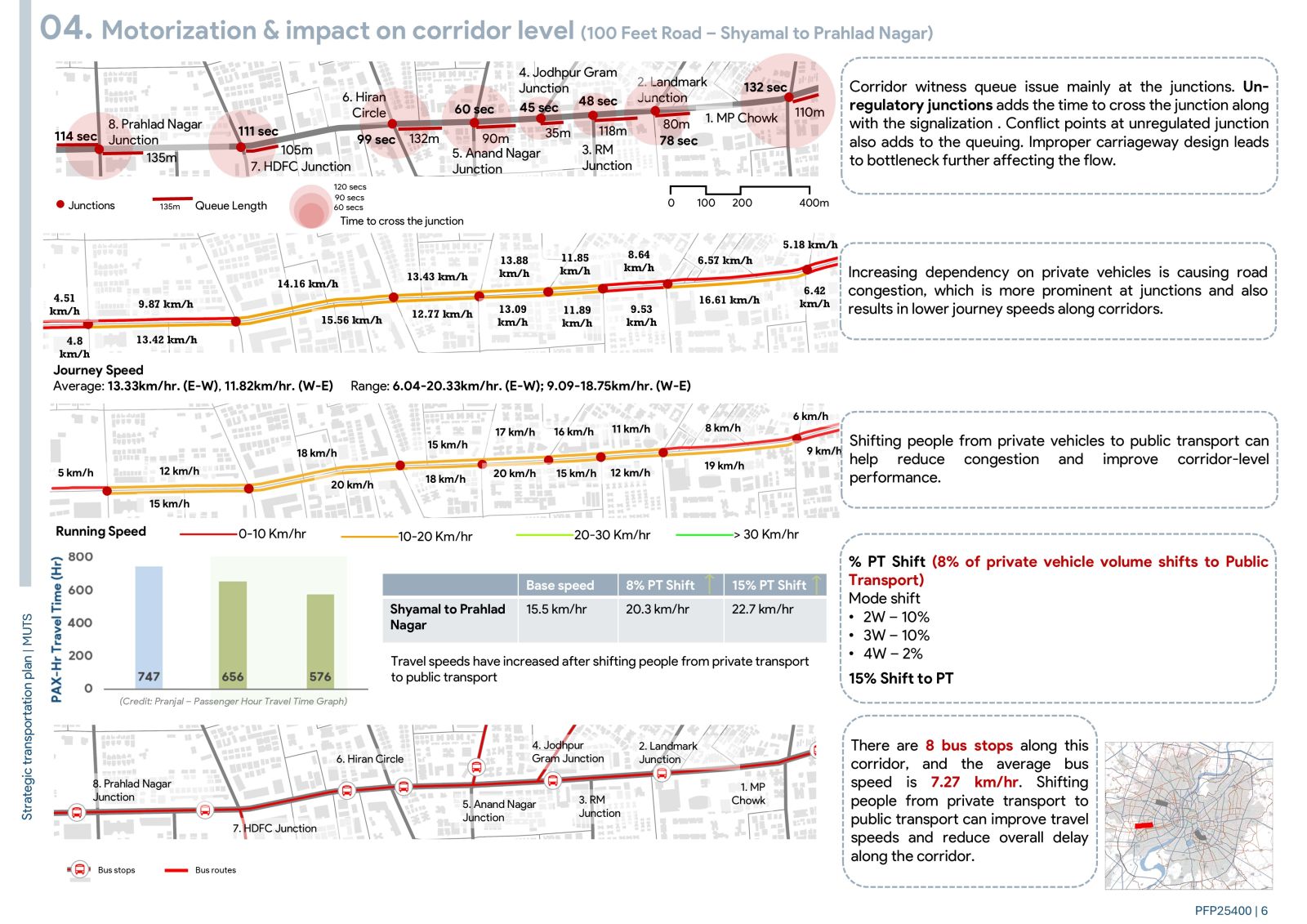
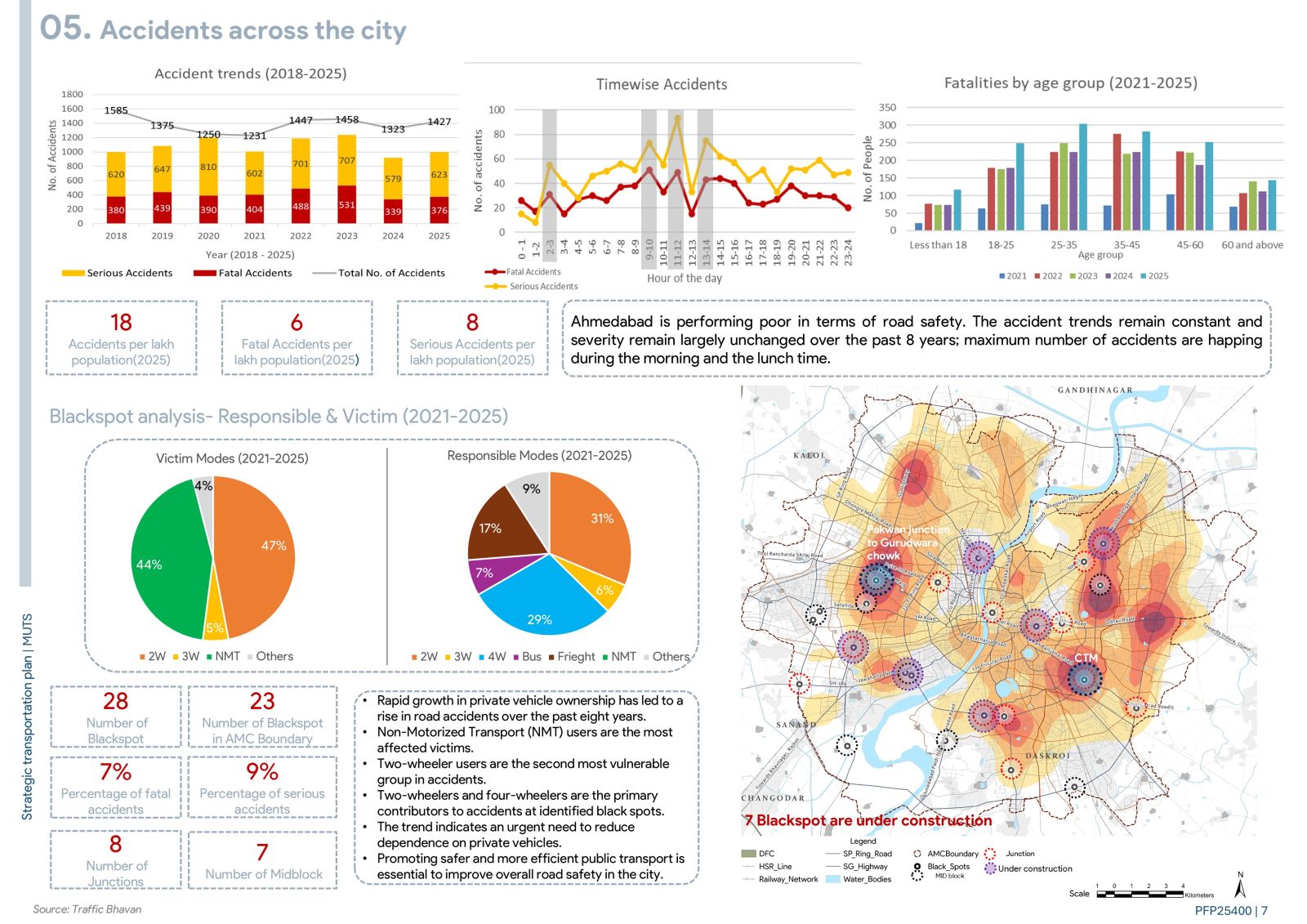
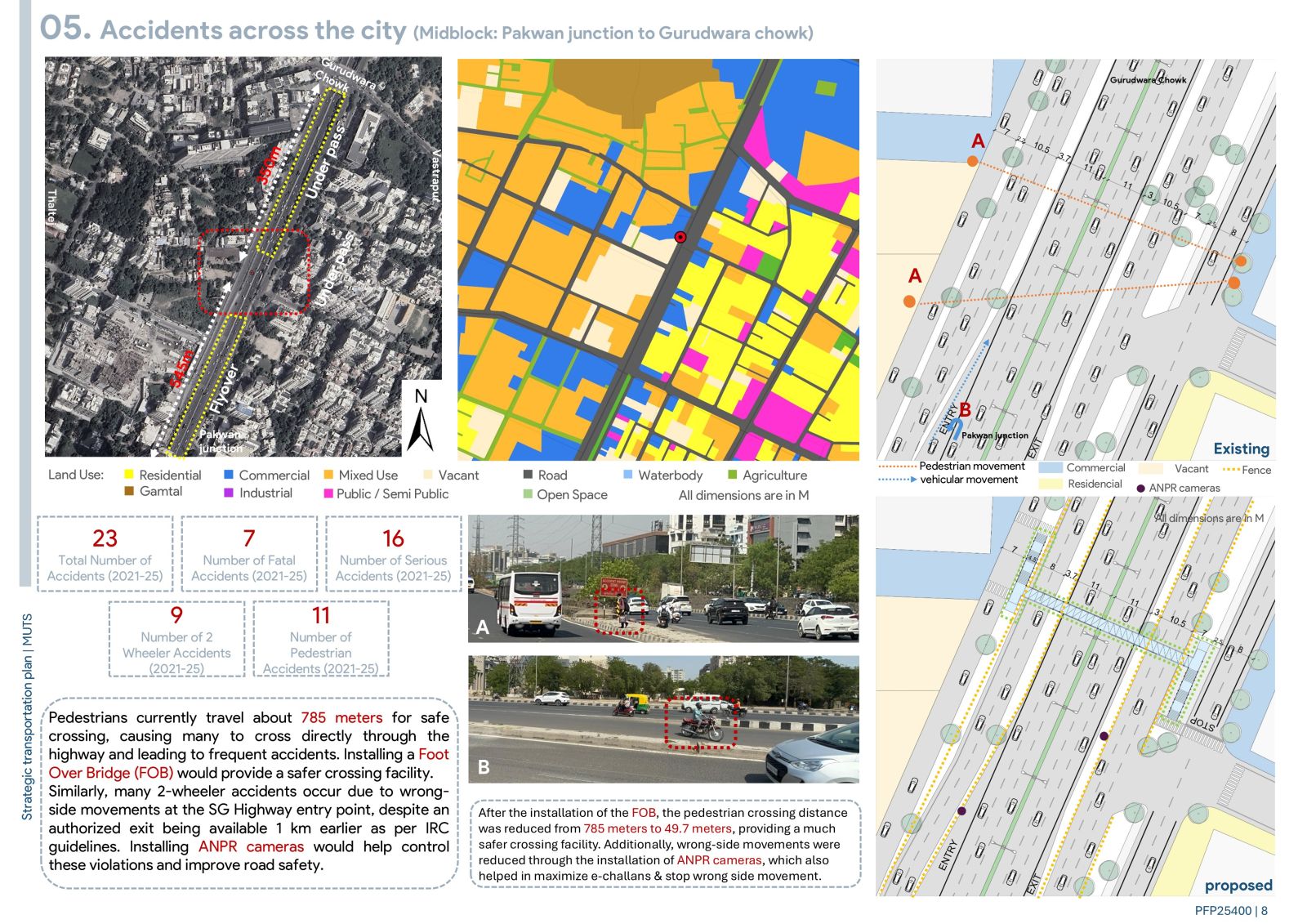
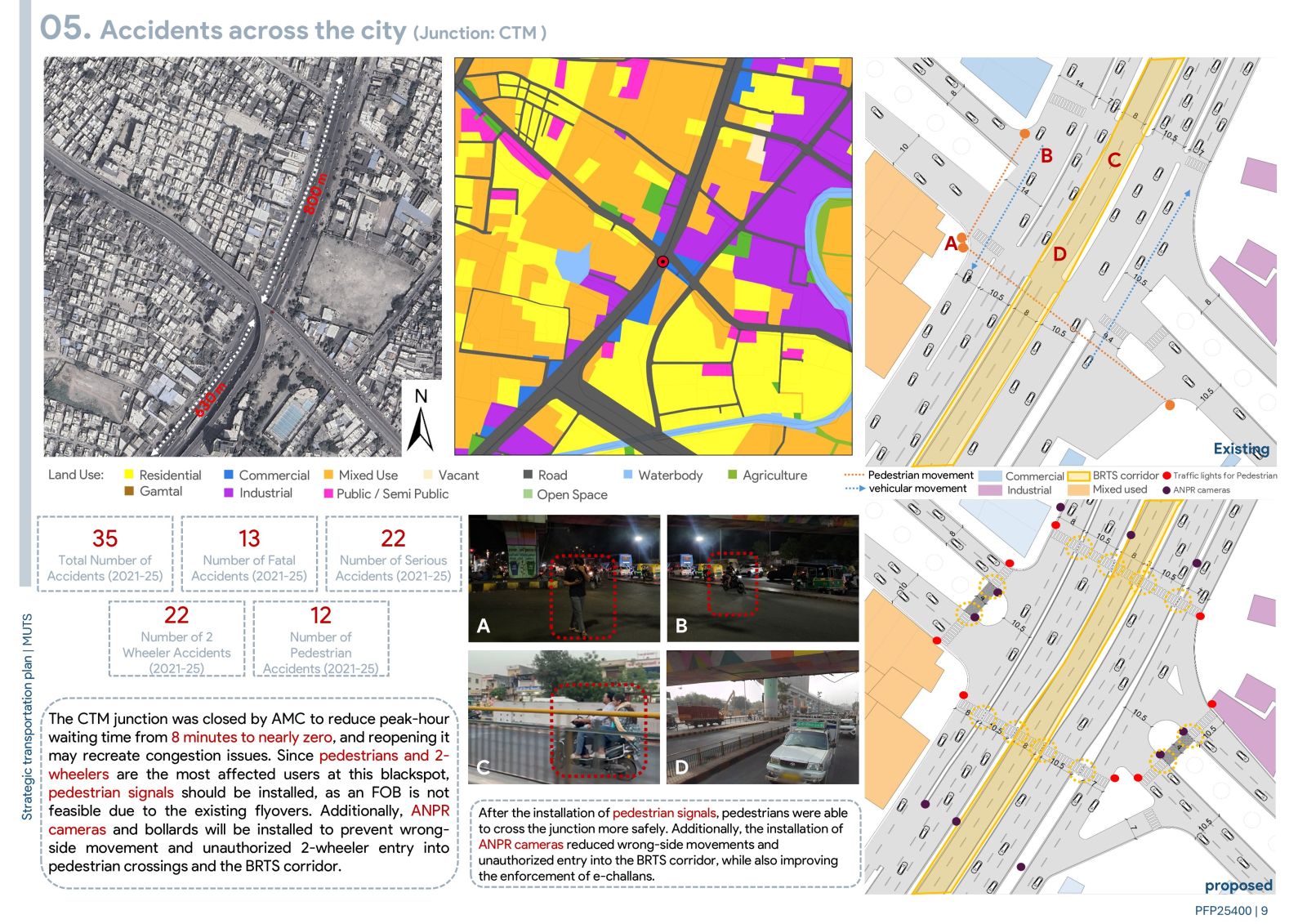
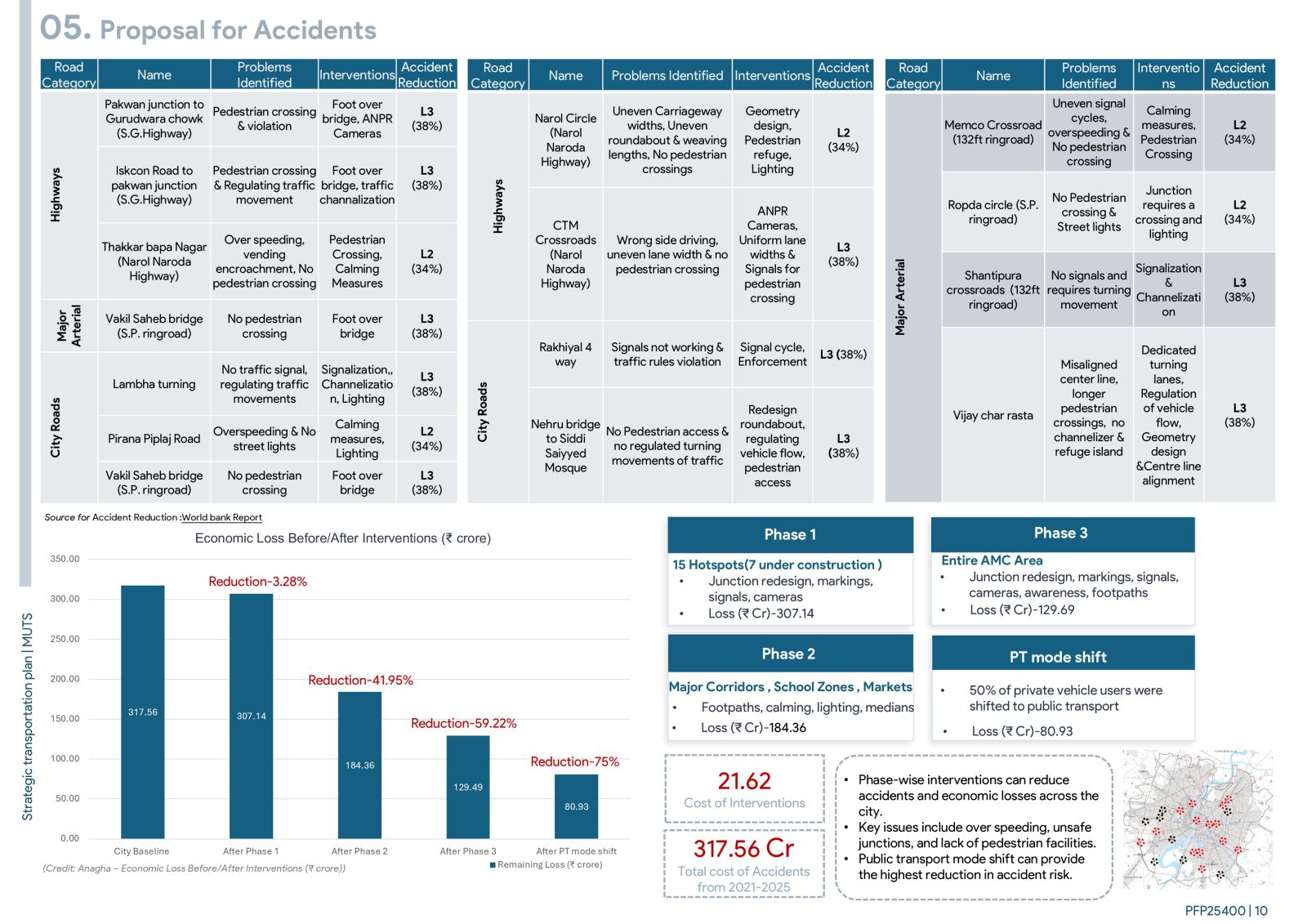
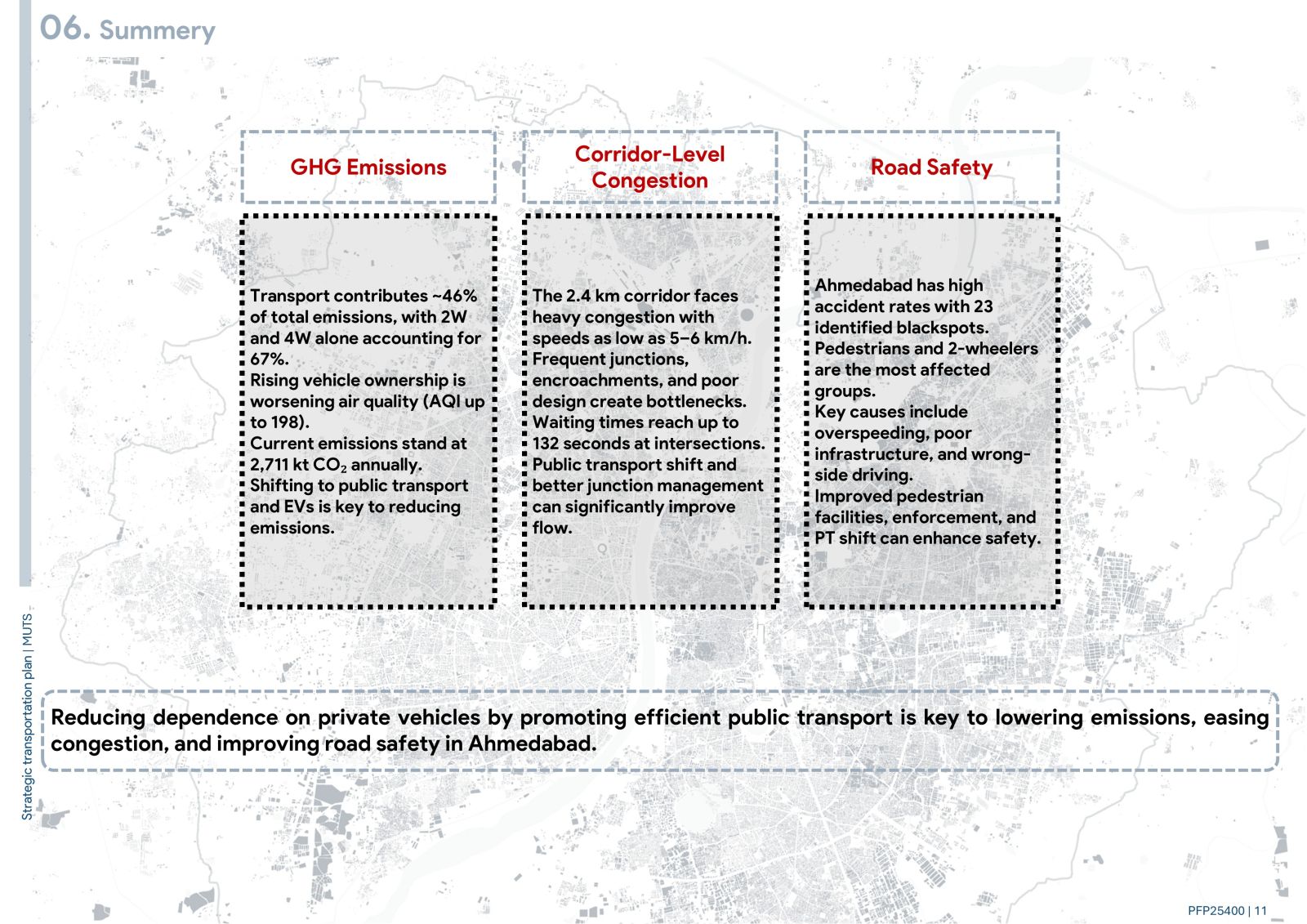
This project explores the rapid rise of motorization in Ahmedabad and its impact on urban transport. Increasing dependence on private vehicles has led to higher congestion, declining travel speeds, rising accident risks, and worsening air quality. The study analyzes these impacts across corridor performance, environmental conditions, and road safety, with a focus on the 100 Feet Road corridor. It identifies key issues such as inefficient junctions, encroachments, and risks to vulnerable road users. The project highlights the need for solutions such as public transport enhancement, improved traffic management, and reduced vehicle dependency to create a safer and more efficient transport system.