• Home
  • FP
  • UP4000-3
  • Planning Surat by integrating Resilience & Livability

Parmar Krupa Amitkumar

UP4000-3

Planning Surat by integrating Resilience & Livability

This portfolio presents a comprehensive development plan for Surat, addressing rapid urbanization, economic concentration, and environmental vulnerability. It analyzes growth patterns, population trends, and spatial imbalances to identify key challenges and opportunities. The proposal focuses on redefining planning boundaries, promoting balanced regional development, and integrating ecological systems into urban structure. Strategies emphasize resilience through nature-based solutions, including sponge parks and blue-green networks, to mitigate flooding and enhance livability. The vision aims to transform Surat into a resilient, sustainable, and inclusive city by aligning infrastructure, environment, and growth within a structured and forward-looking planning framework.
Report Content

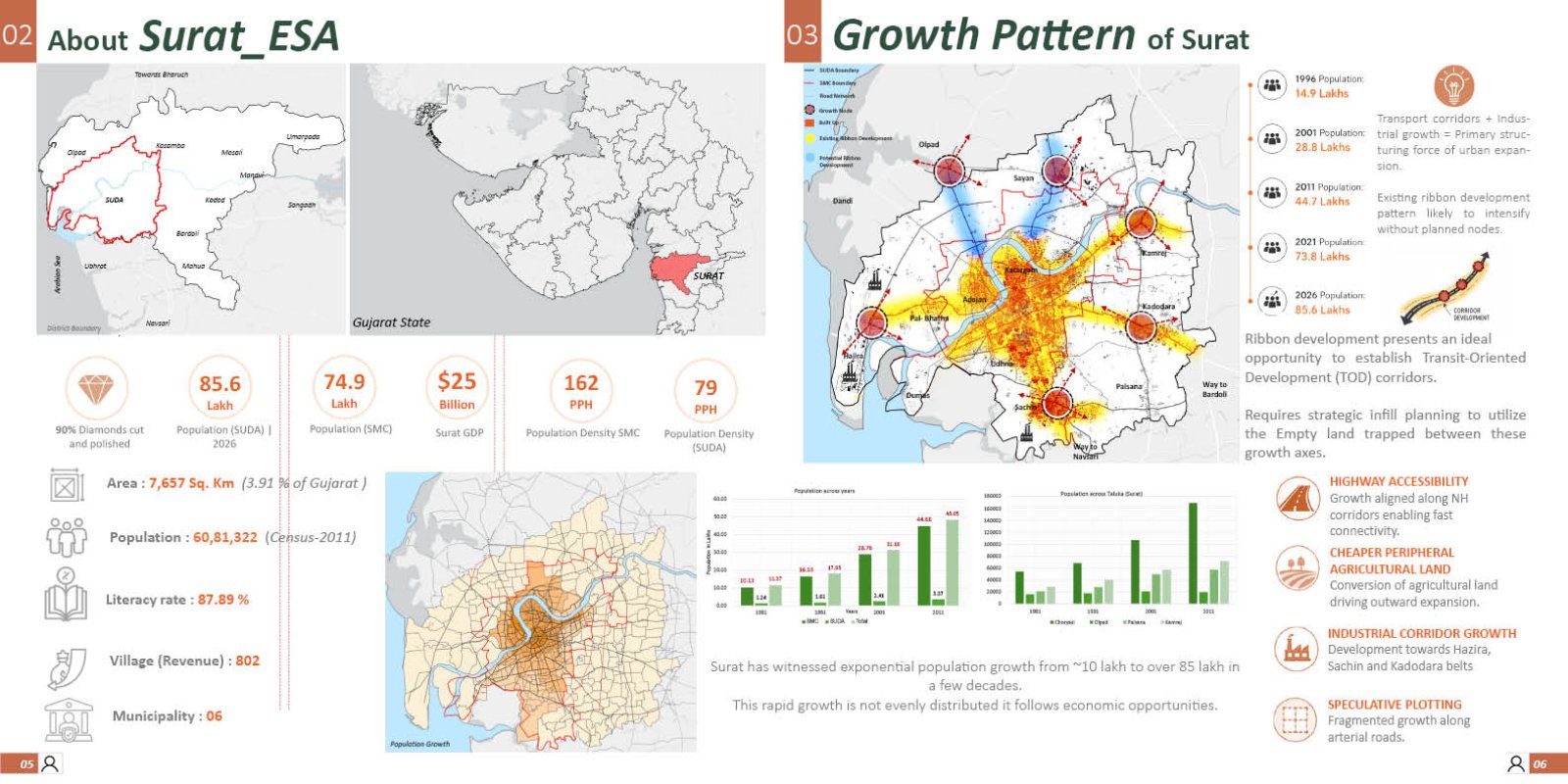
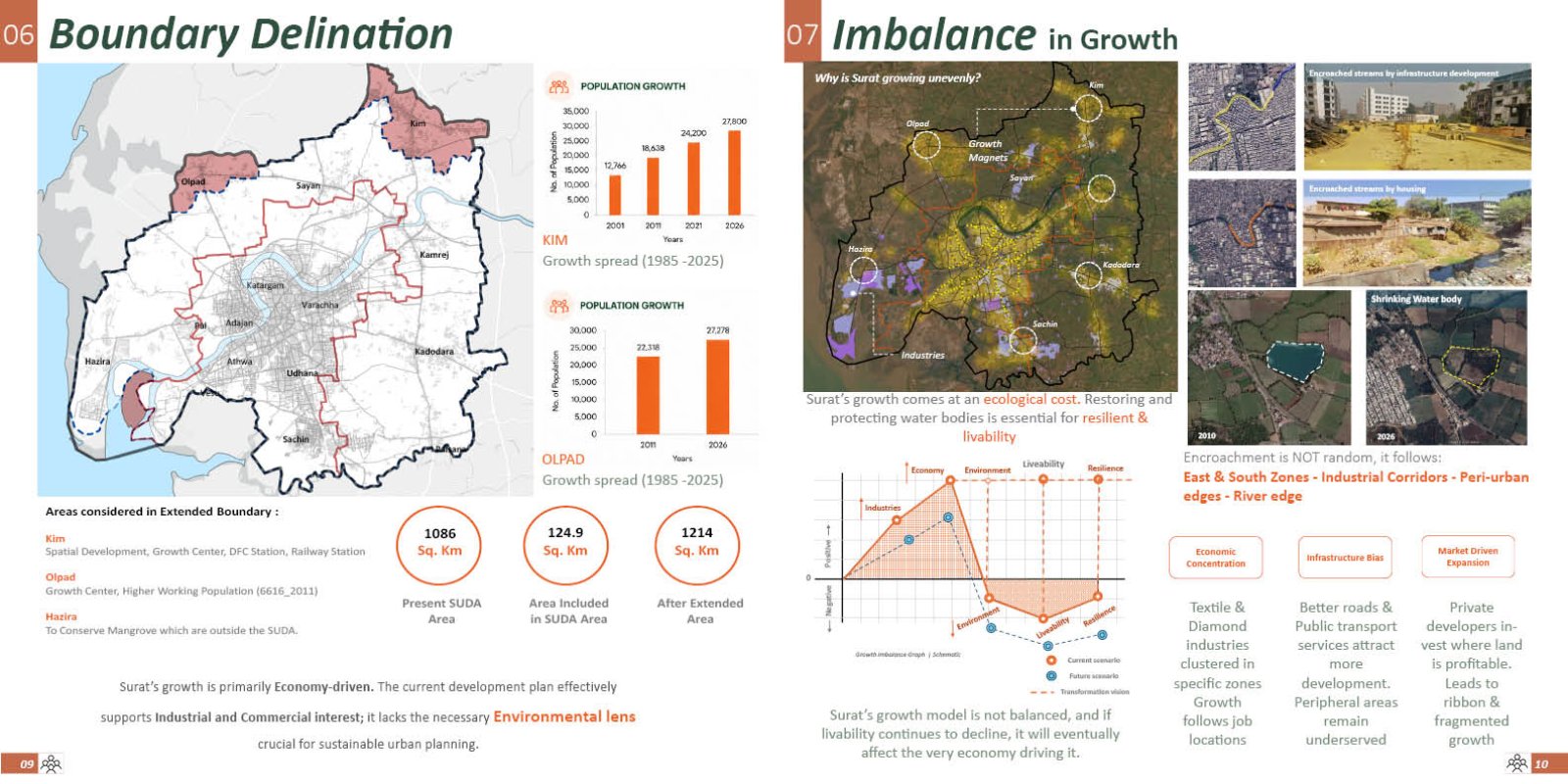
Visualizing how industrial corridors and transport axes have historically shaped Surat’s outward "ribbon" expansion.

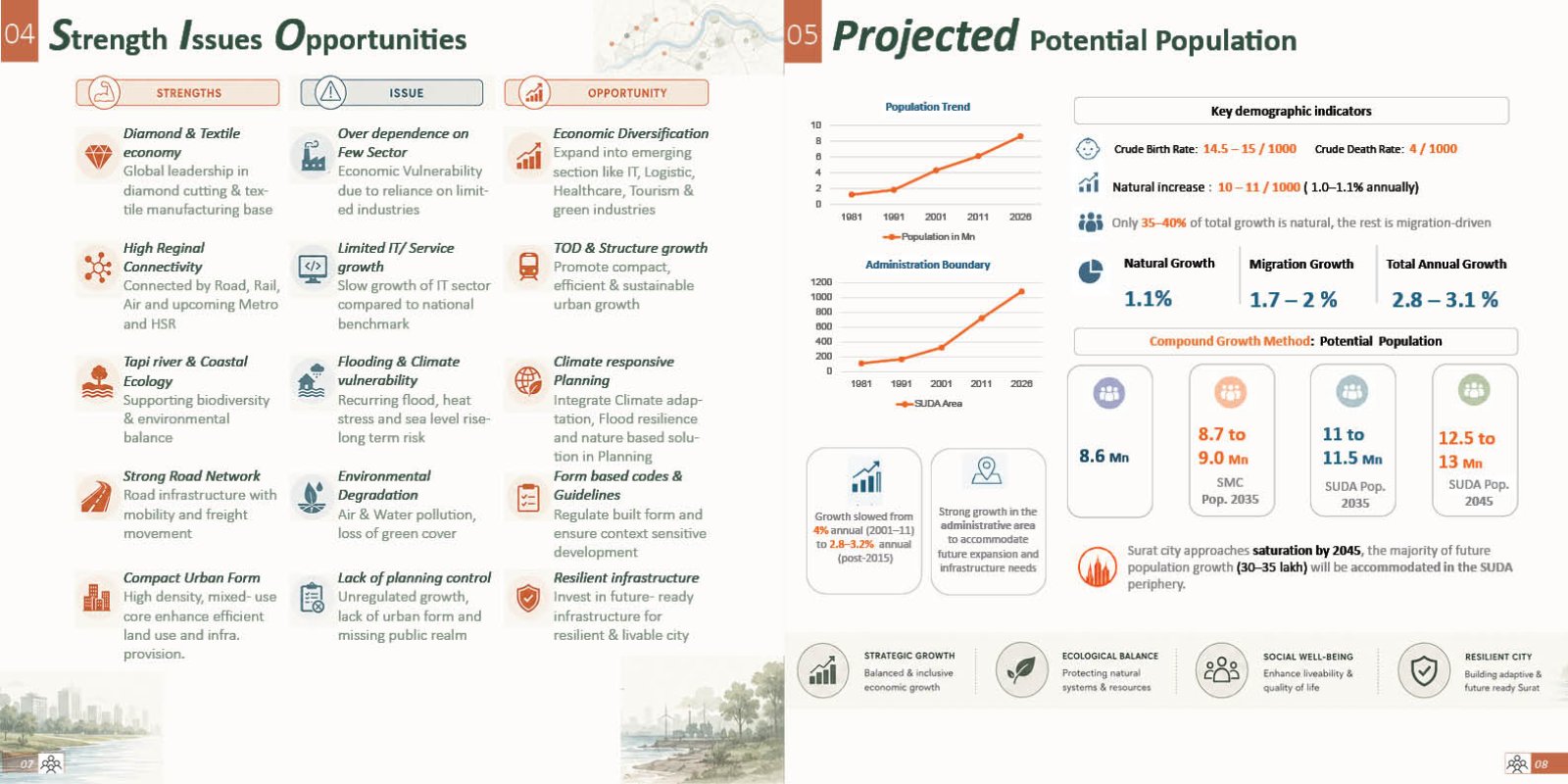
Projecting a population by 2045 and identifying the critical overlap between economic strength and climate vulnerability.

Proposing an extended planning boundary to curb uneven growth and protect the city’s shrinking ecological assets.

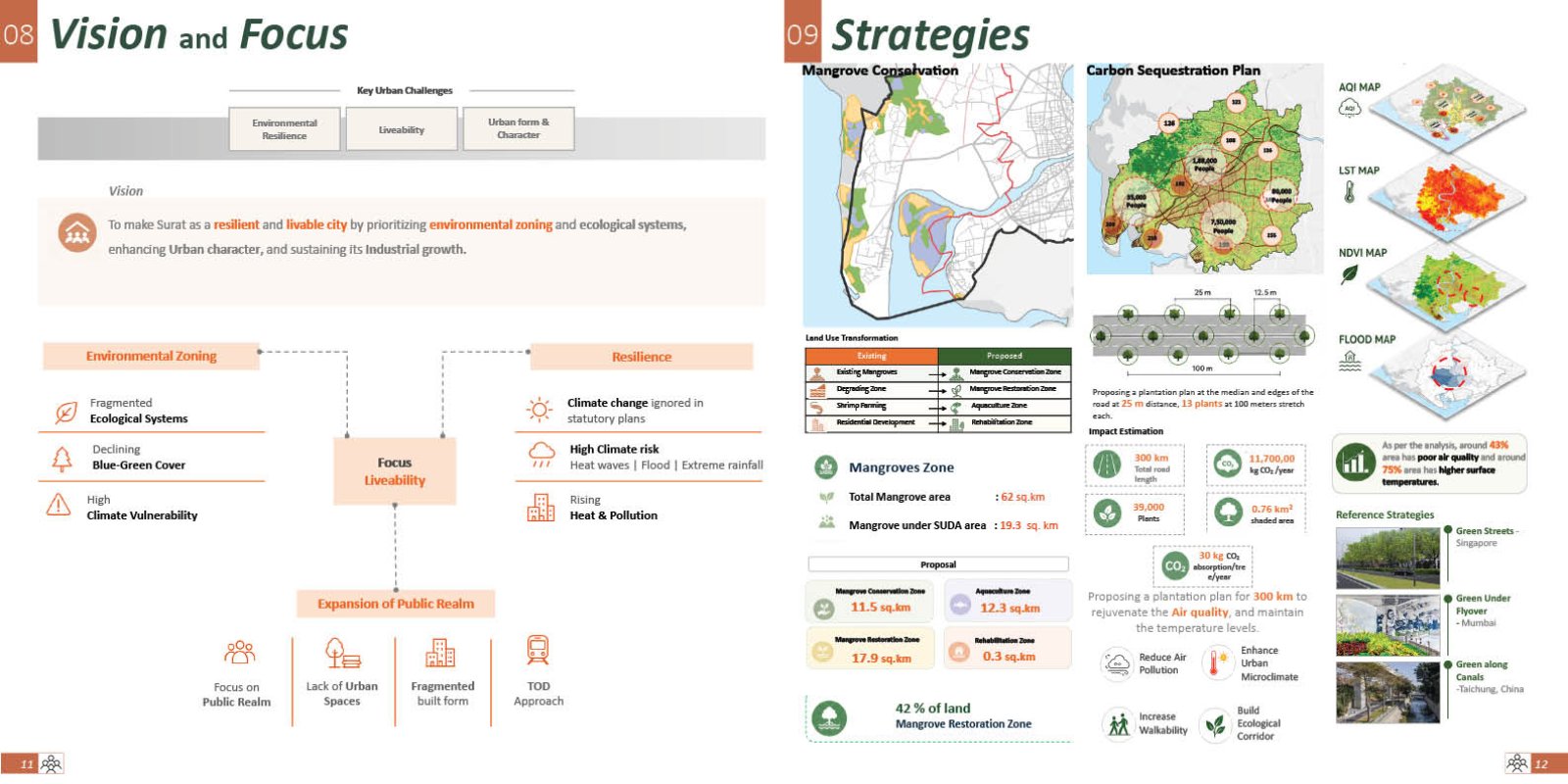
Centering the 2045 plan on a "Focus: Livability" framework through public realm expansion and climate-responsive zoning.

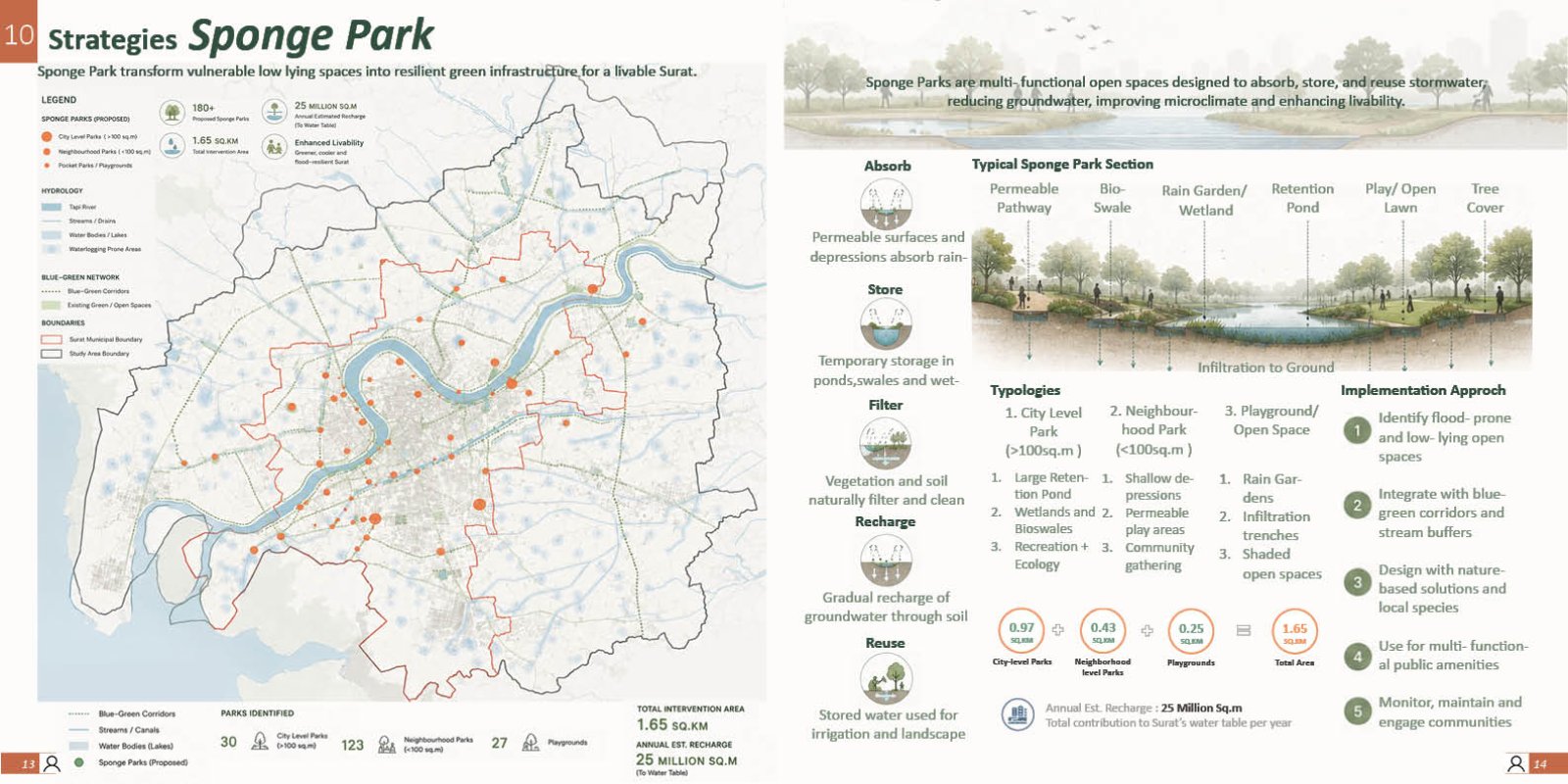
Transforming low-lying urban spaces into a multifunctional "sponge" network to manage floods and recharge the water table.

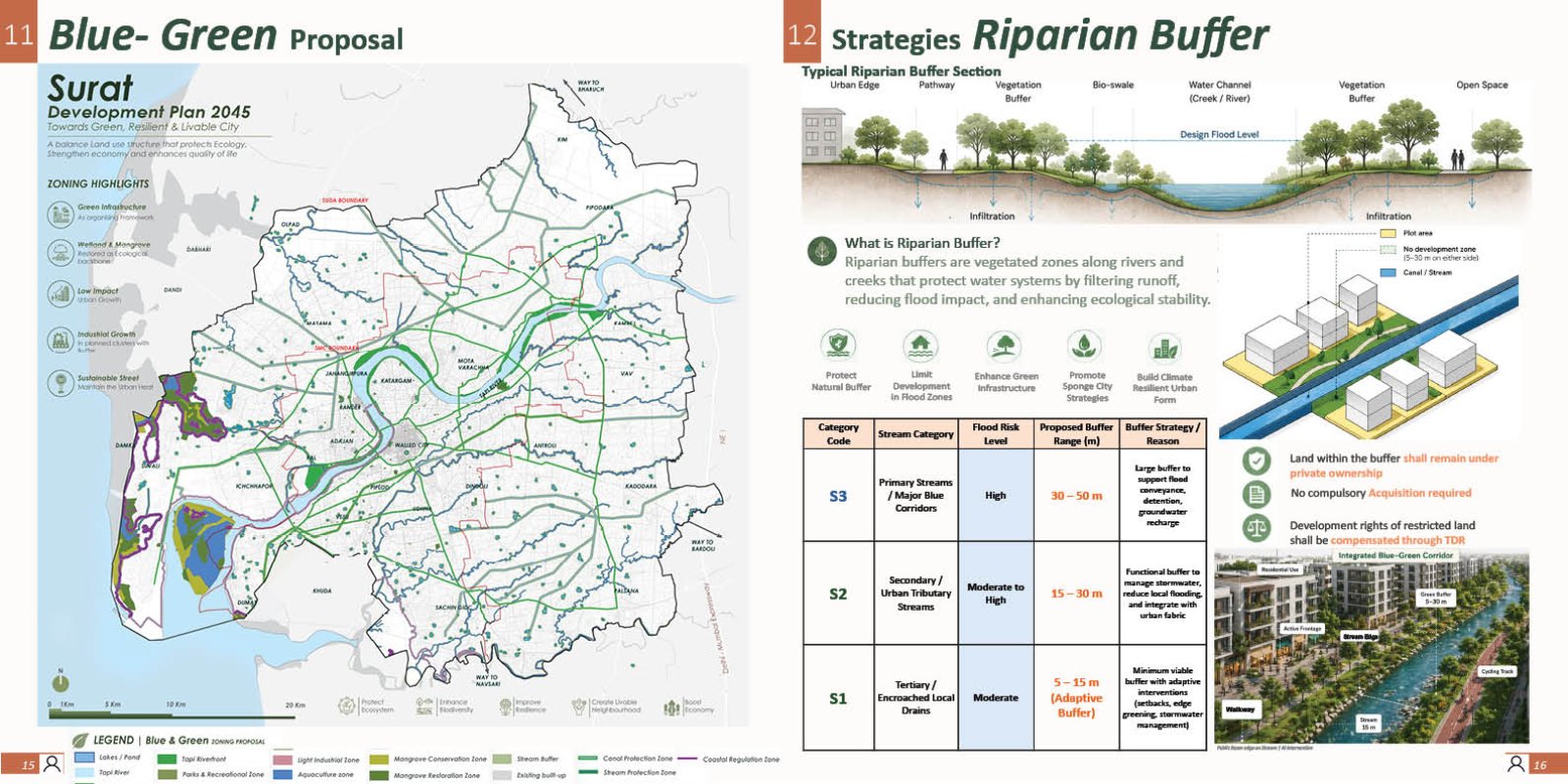
Integrating Surat’s water bodies into the urban fabric through protected blue-green corridors and strategic vegetated buffers.

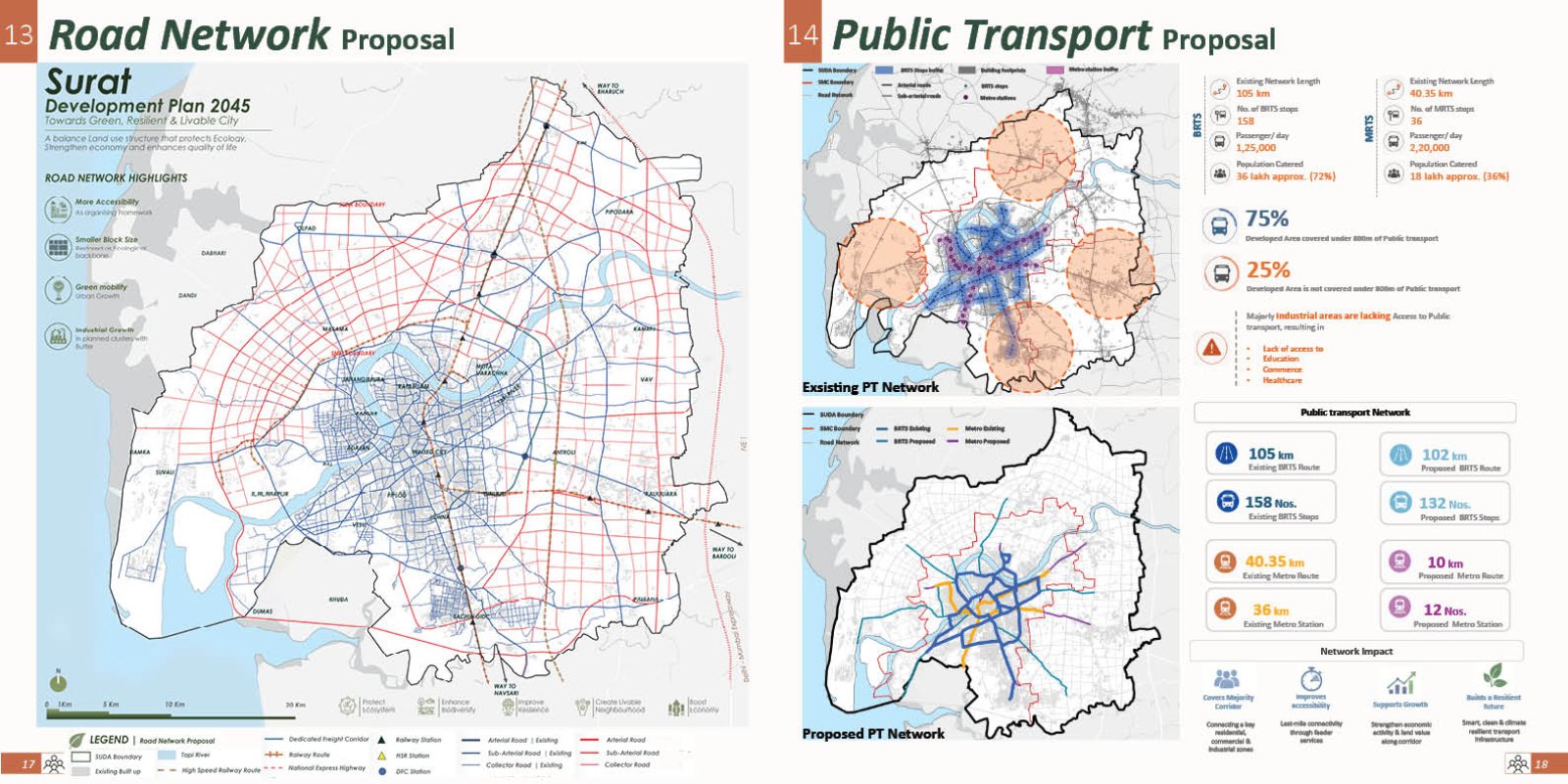
Redesigning the transit network to provide equitable access to education and jobs, particularly in underserved industrial zones.

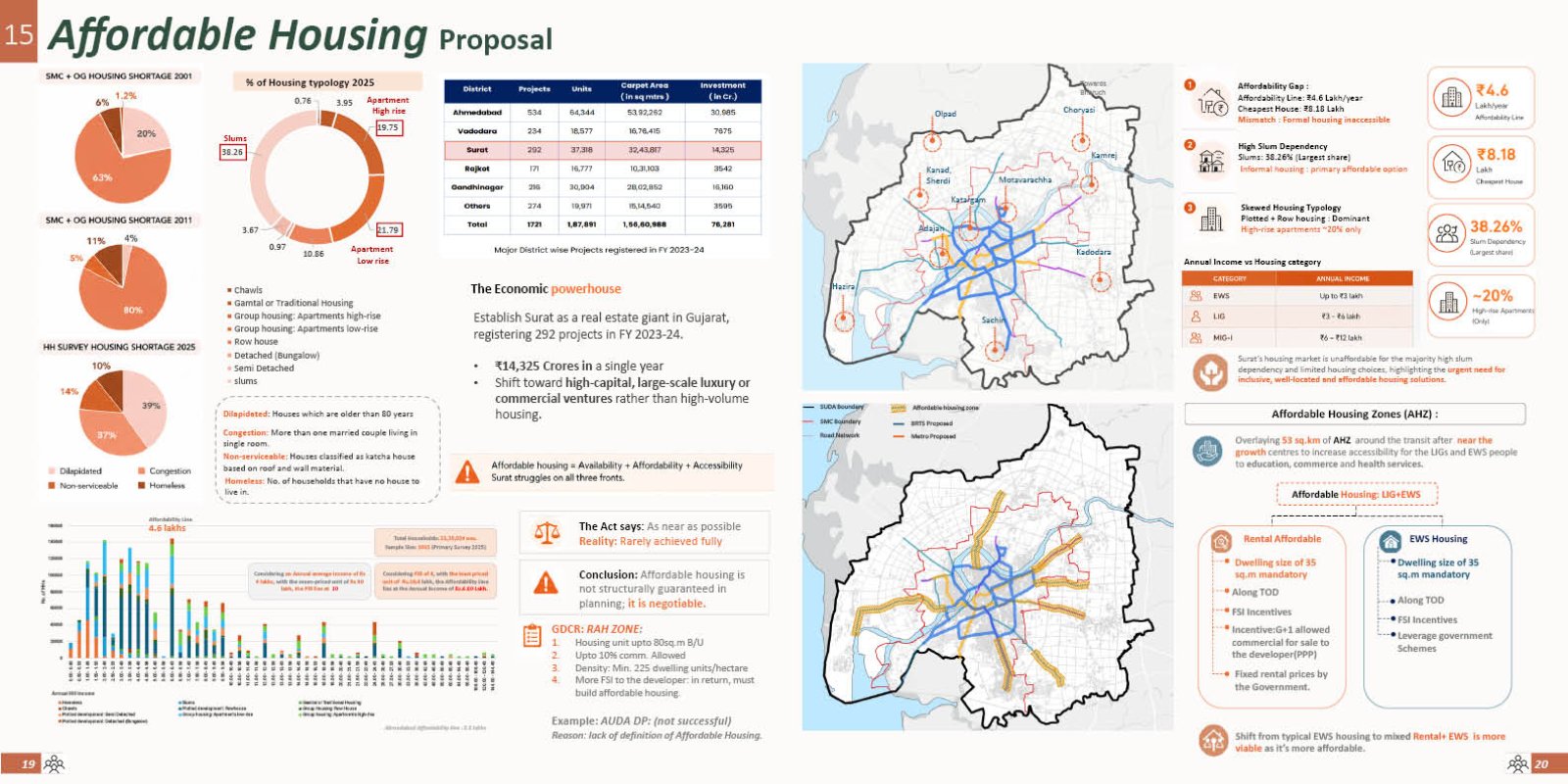
Tackling the high slum dependency in affordable housing zones near growth centers and transit.

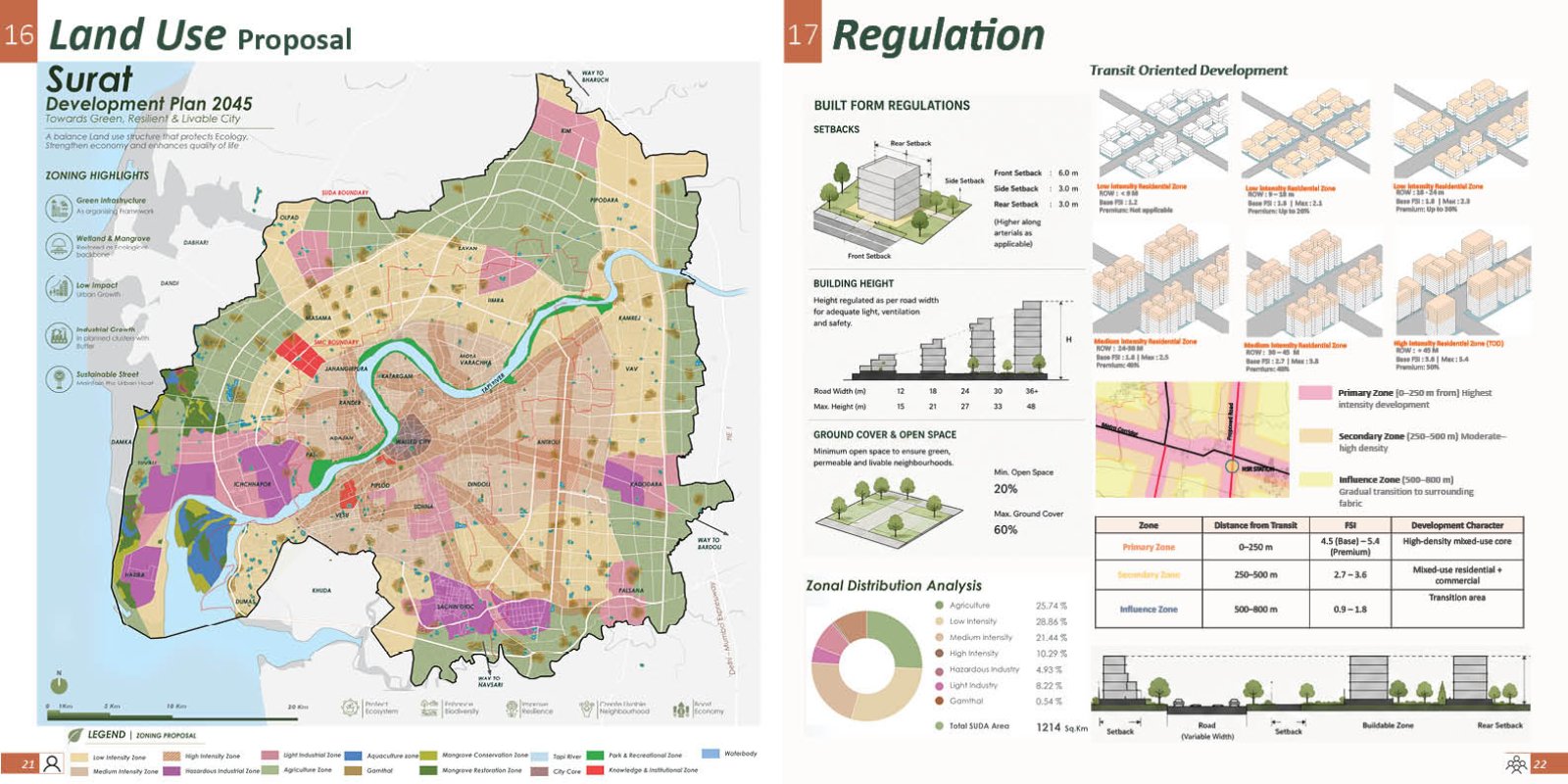
The final DP 2045 Land Use structure for high-intensity transit cores supported by resilient environmental zoning.

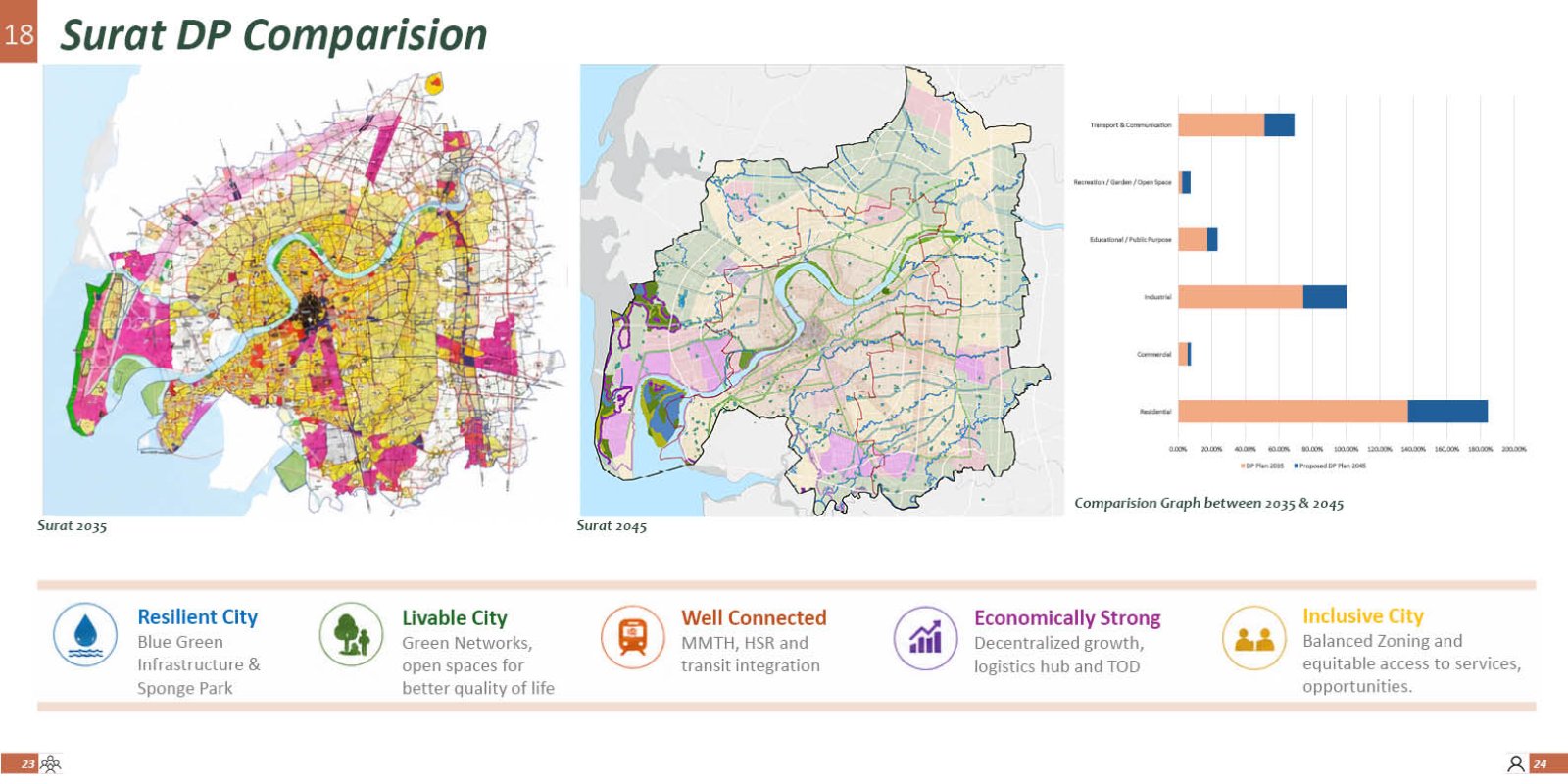
Evaluating the shift from 2035 to 2045, showing a measurable increase in green networks and inclusive infrastructure.