Your browser is out-of-date!
For a richer surfing experience on our website, please update your browser. Update my browser now!
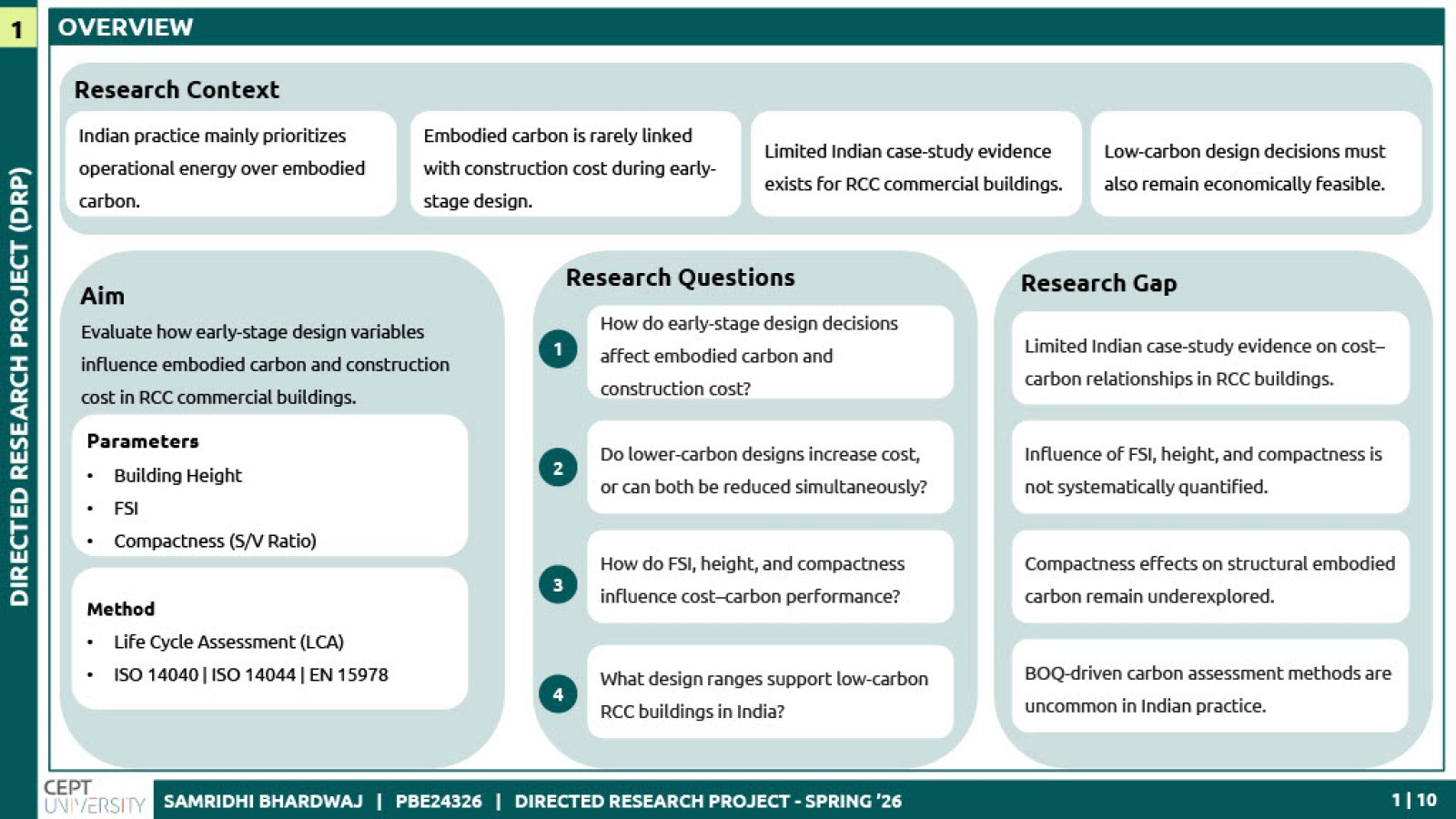
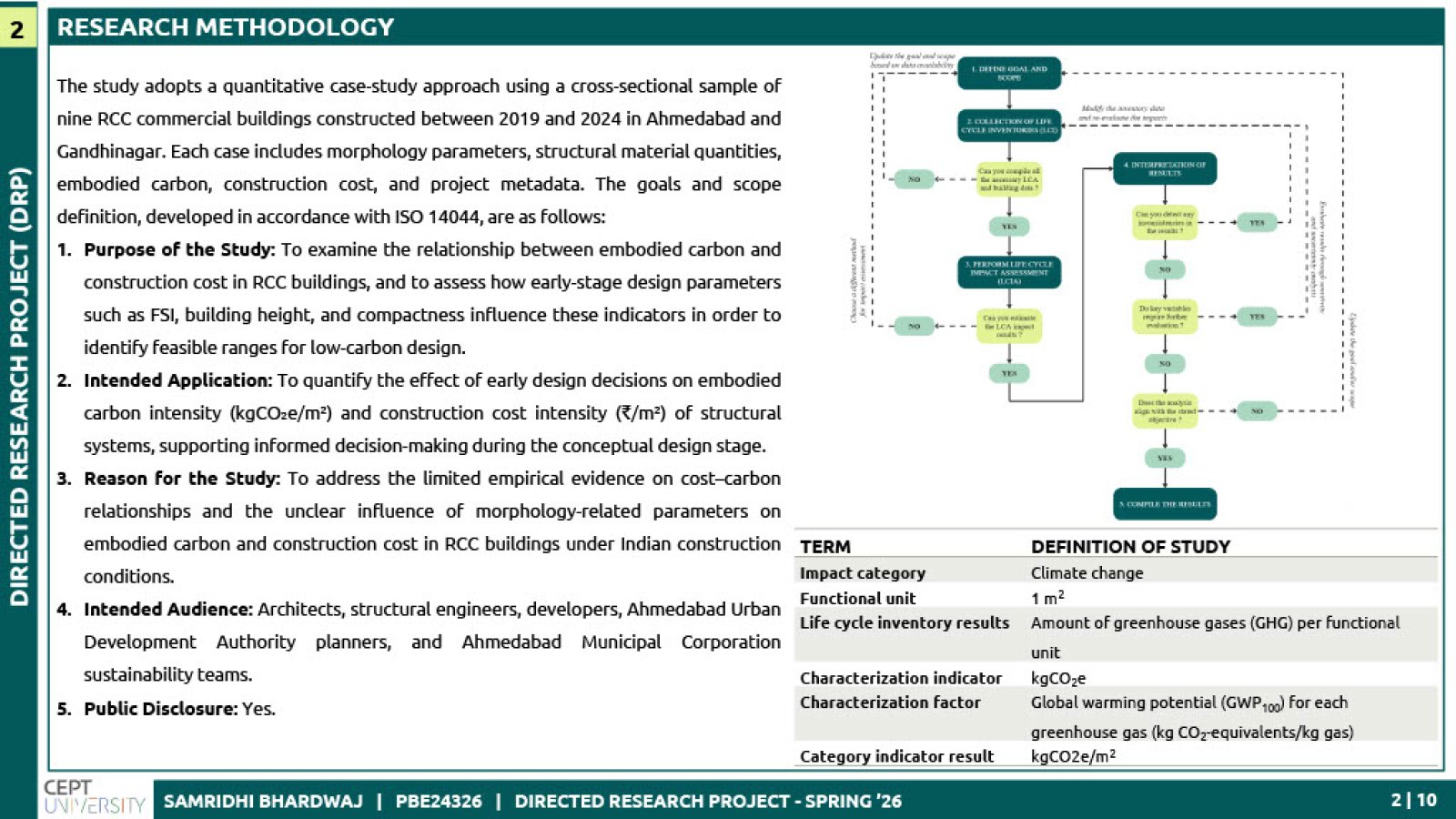
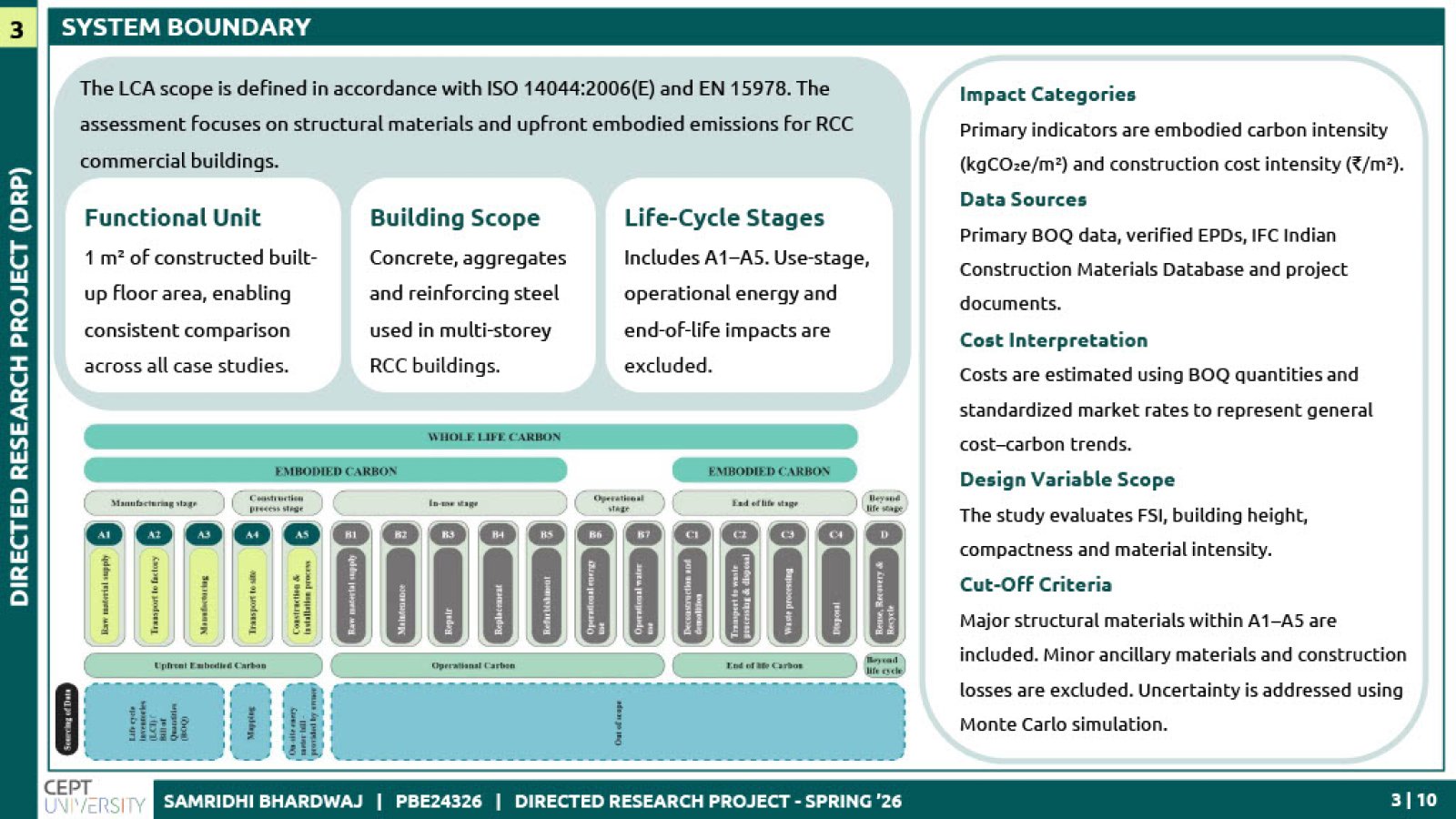
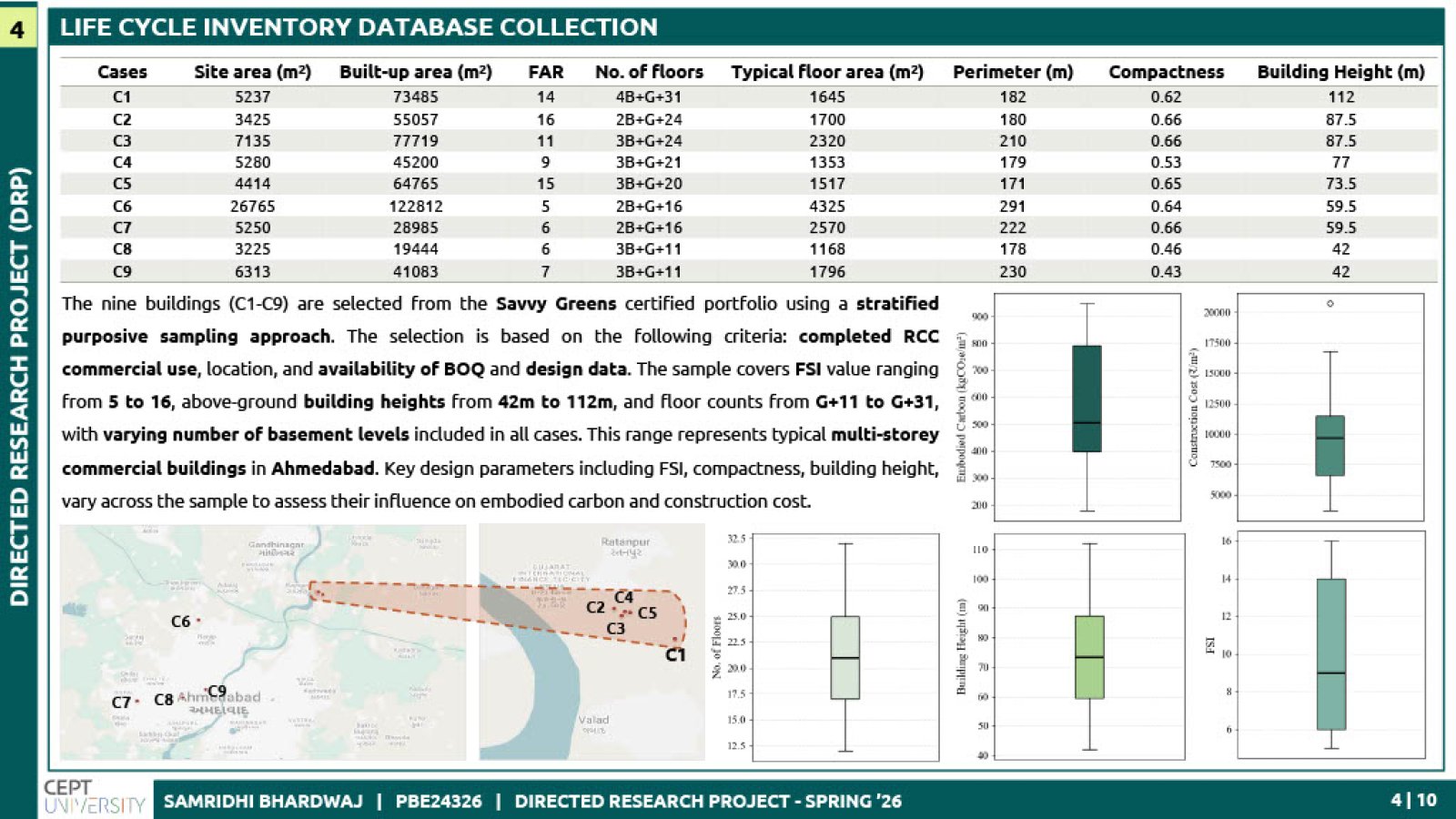
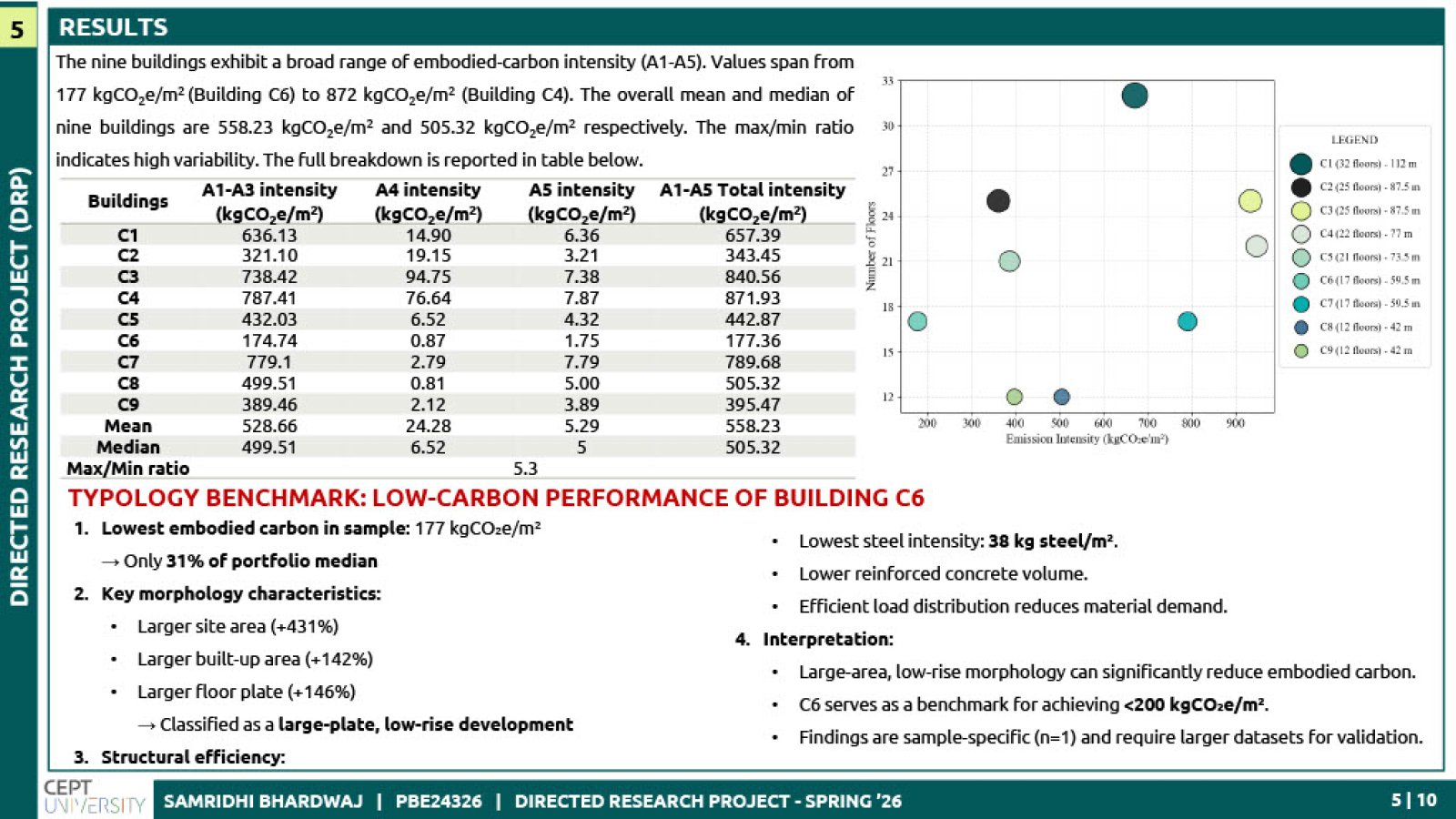
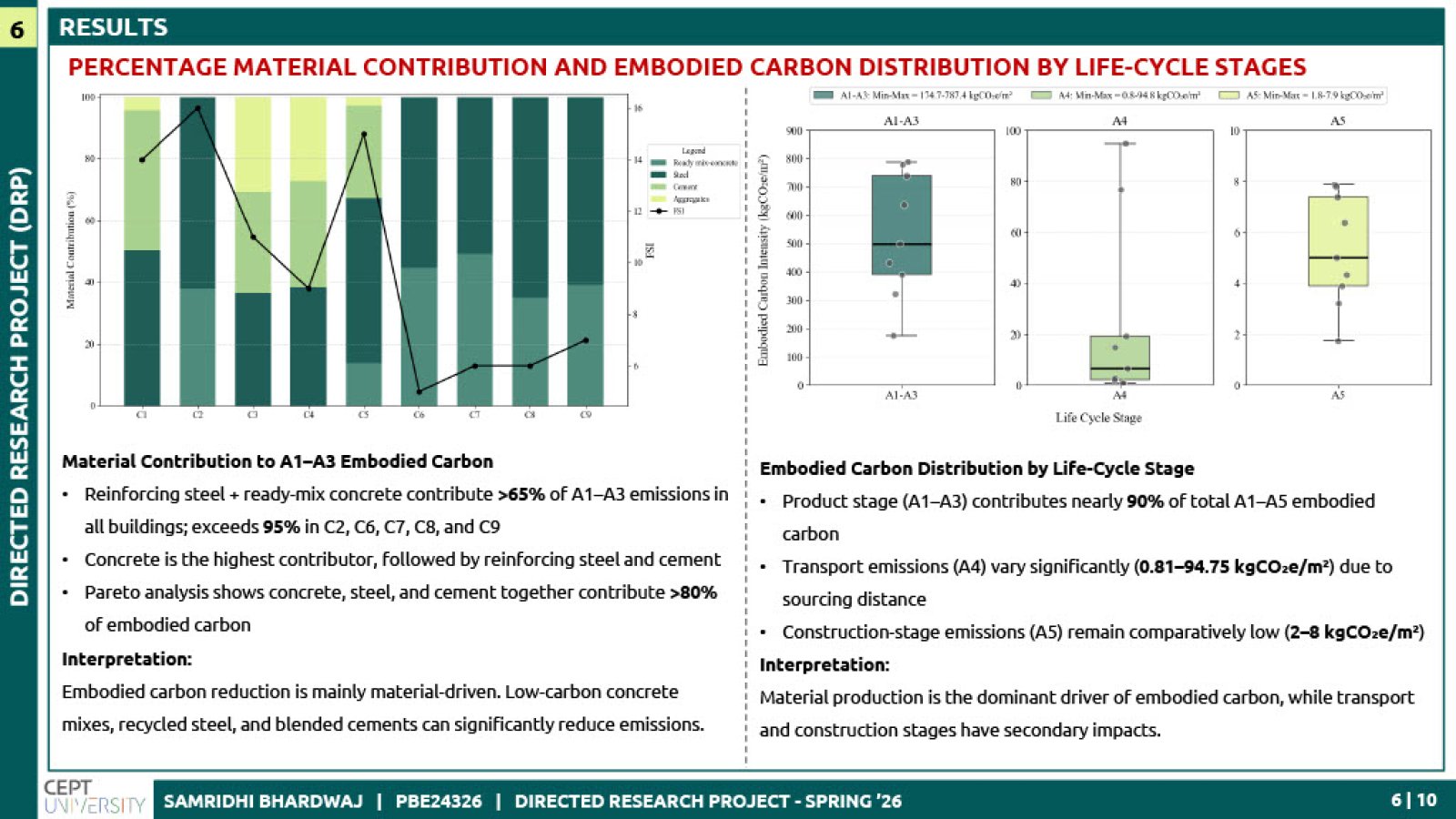
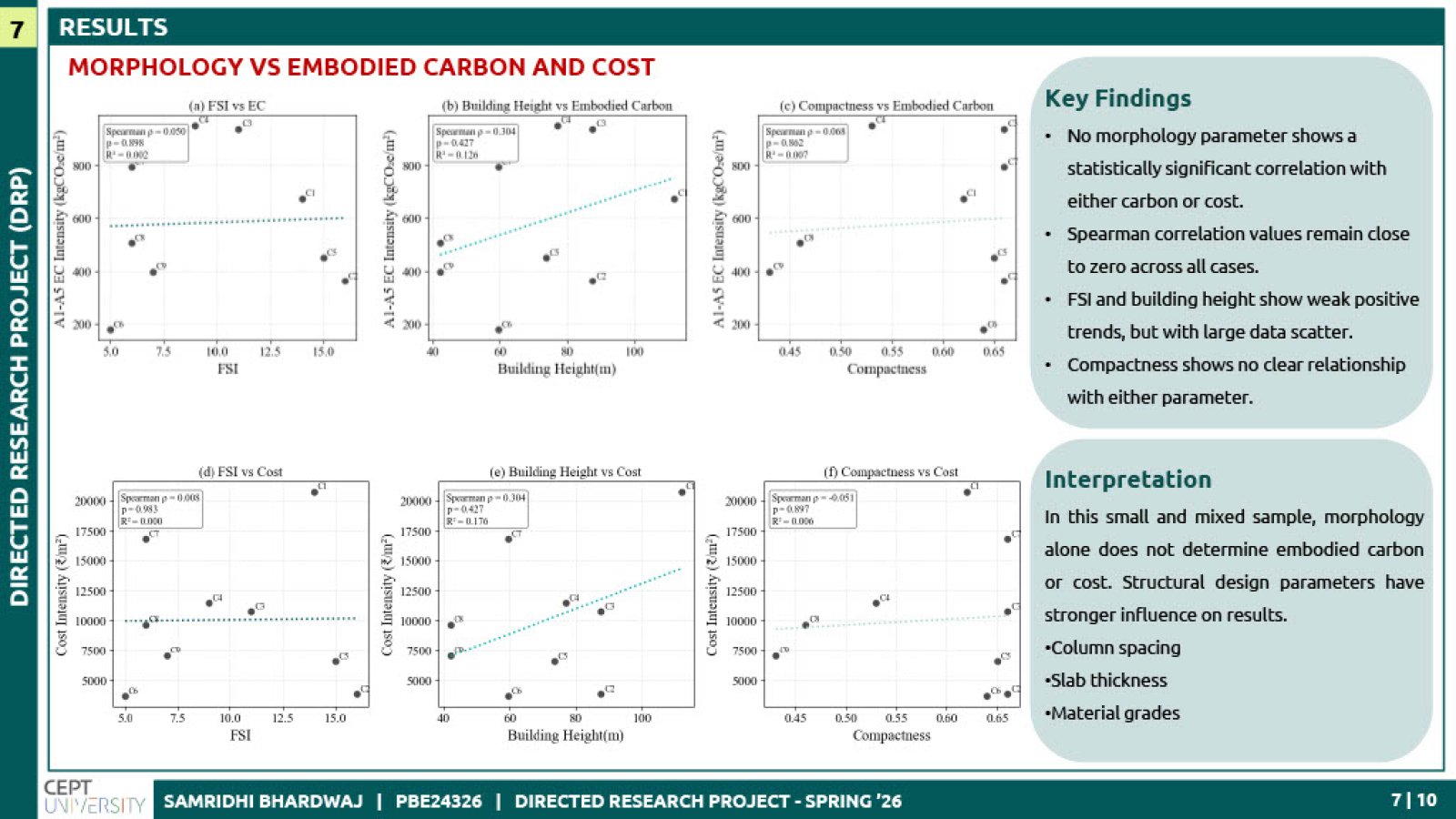
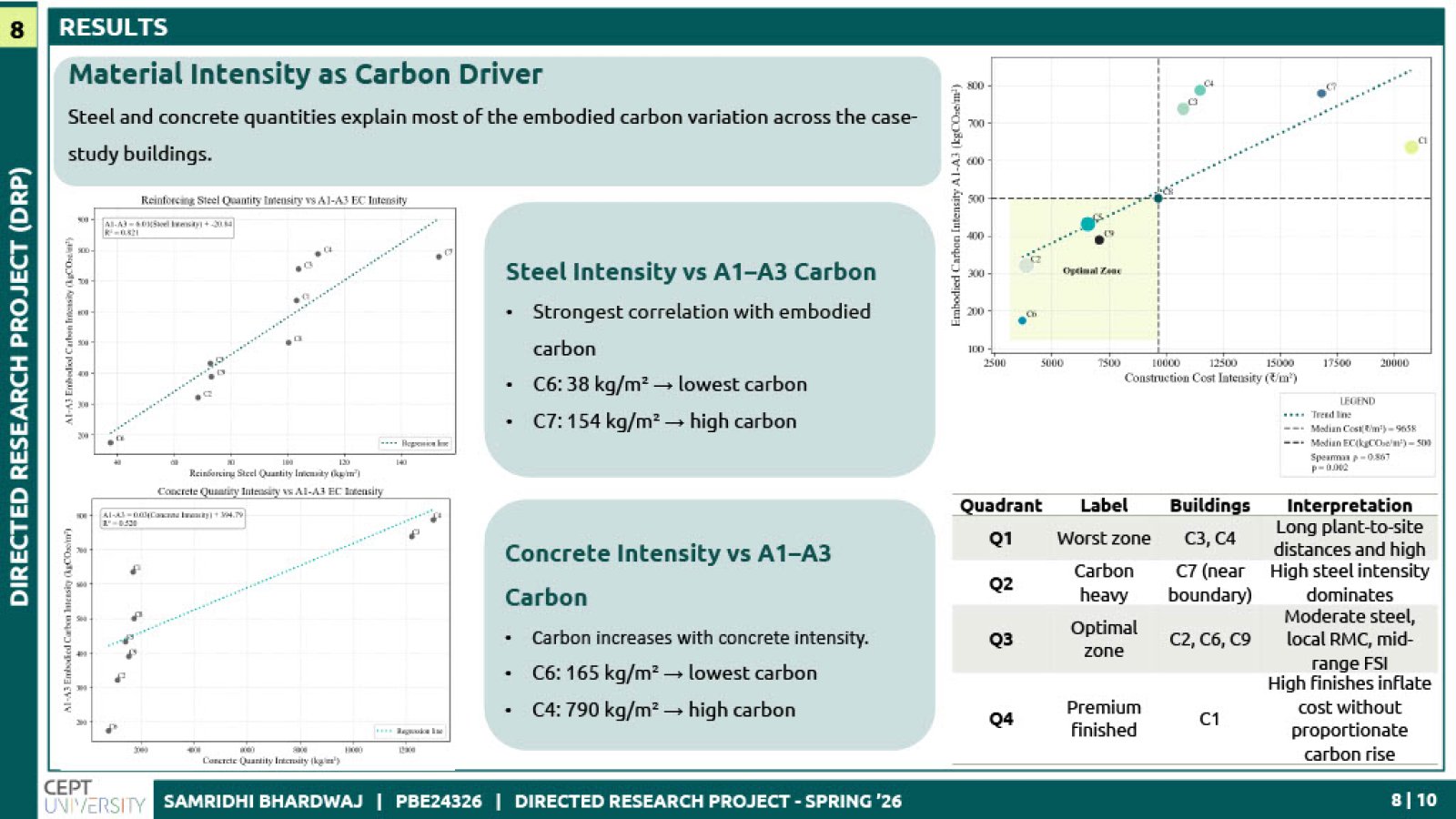
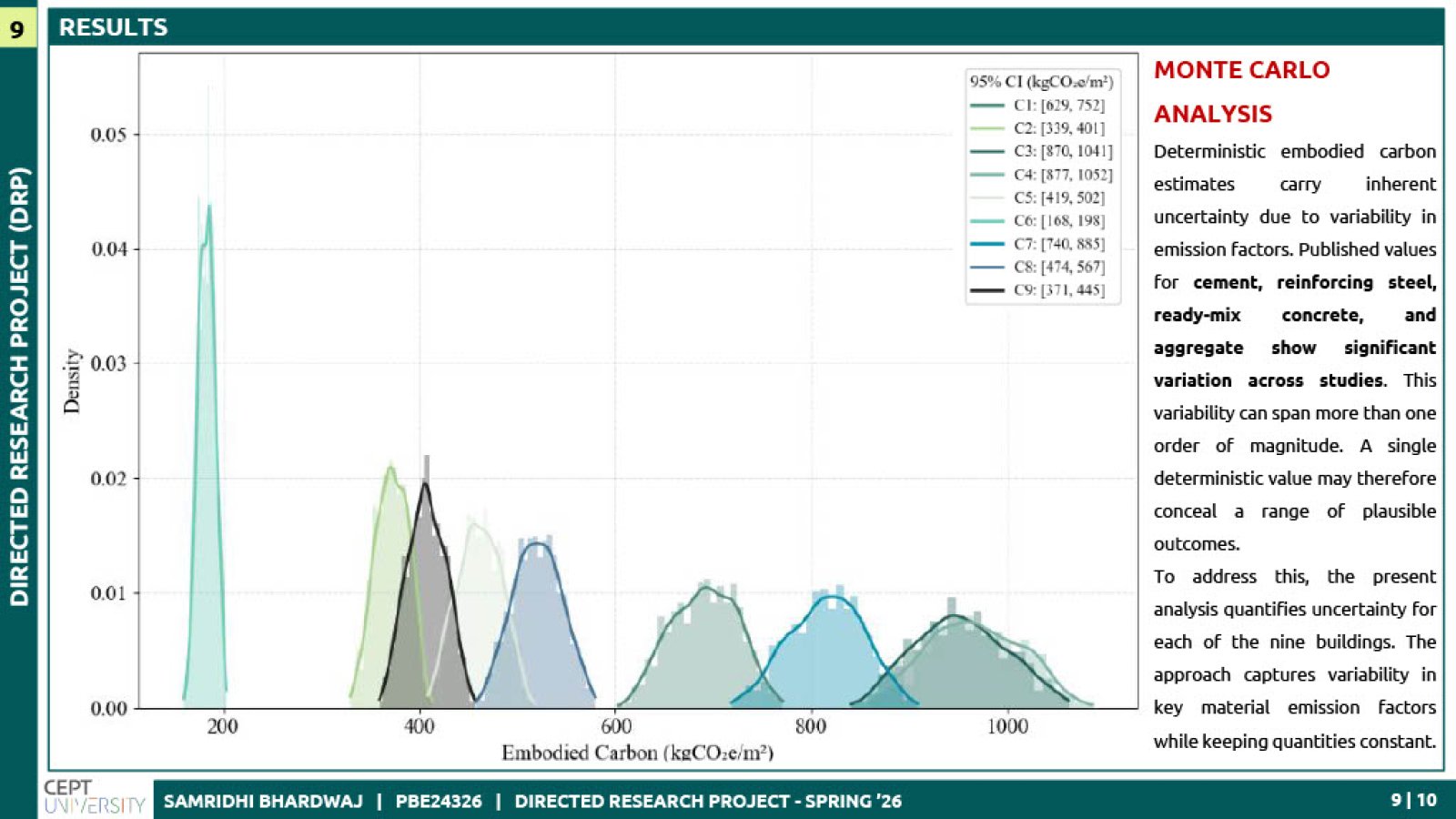
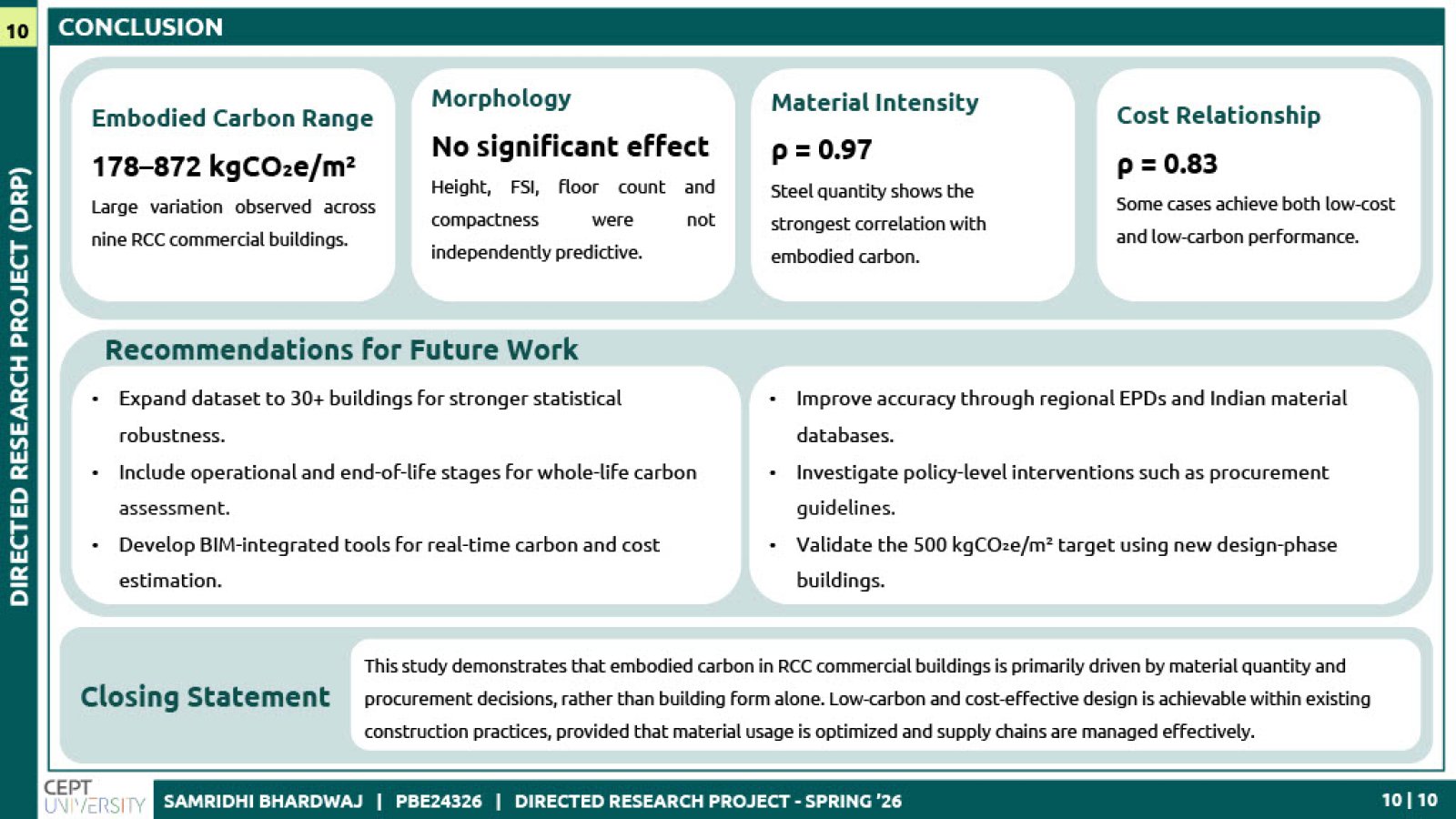
The building sector accounts for nearly 37% of global CO2 emissions, and as operational performance improves, upfront embodied carbon (A1-A5) is becoming the dominant share of life-cycle impacts. In rapidly urbanizing Indian cities such as Ahmedabad, however, India-specific embodied carbon benchmarks for RCC commercial buildings remain scarce, and the combined influence of early-stage morphological parameters- FSI, building height, and compactness – together with construction cost trade-offs from a developer’s perspective is poorly understood. This study quantifies embodied carbon intensity (kgCO2e/m2) and construction cost intensity (?/m2) for nine existing RCC commercial buildings in Ahmedabad and Gandhinagar. The assessment follows ISO 14044 and EN 15978, covering life-cycle stages A1-A5 within a functional unit of 1m2 of built-up area. Primary inventory data are drawn from project Bills of Quantities (BOQ); emission factors are sourced from verified EPSs and IFC Indian Construction Material Database (ICMD) and A4 transport emissions use India GHG Programme road-freight factors with actual plant-to-site distances. Morphological parameters are extracted from architectural drawings. Statistical interpretation combines descriptive analysis, spearman rank correlation, OLS regression, pareto decomposition of material contribution, and Monte Carlo simulation to address emission-factor uncertainty. Embodied carbon intensity ranges from 178 to 872 kgCO2e/m2 (median 506 kgCO2e/m2; max/min ratio 5.3), confirming wide variability across the portfolio. Concrete and reinforcing steel dominate A1-A3 emissions, and steel quantity shows a strong positive correlation with embodied carbon (?=0.97). Morphological variables - FSI, building height, and compactness are not statistically significant predictors of either carbon or cost in this small sample, indicating that structural-design choices override geometric form. Cost and embodied carbon are strongly and significantly correlated (?=0.83, p=0.005), yet a distinct low-carbon-low-cost quadrant exists, populated by buildings with lower steel intensity, blended cement, and shorter transport distances. From these findings, an early-stage design envelope is proposed that enables embodied carbon below 500 kgCO2e/m2 without a cost premium, providing actionable, India-specific guidance for architects, structural engineers, developers, and urban planning authorities pursuing low-carbon commercial construction.