Your browser is out-of-date!
For a richer surfing experience on our website, please update your browser. Update my browser now!
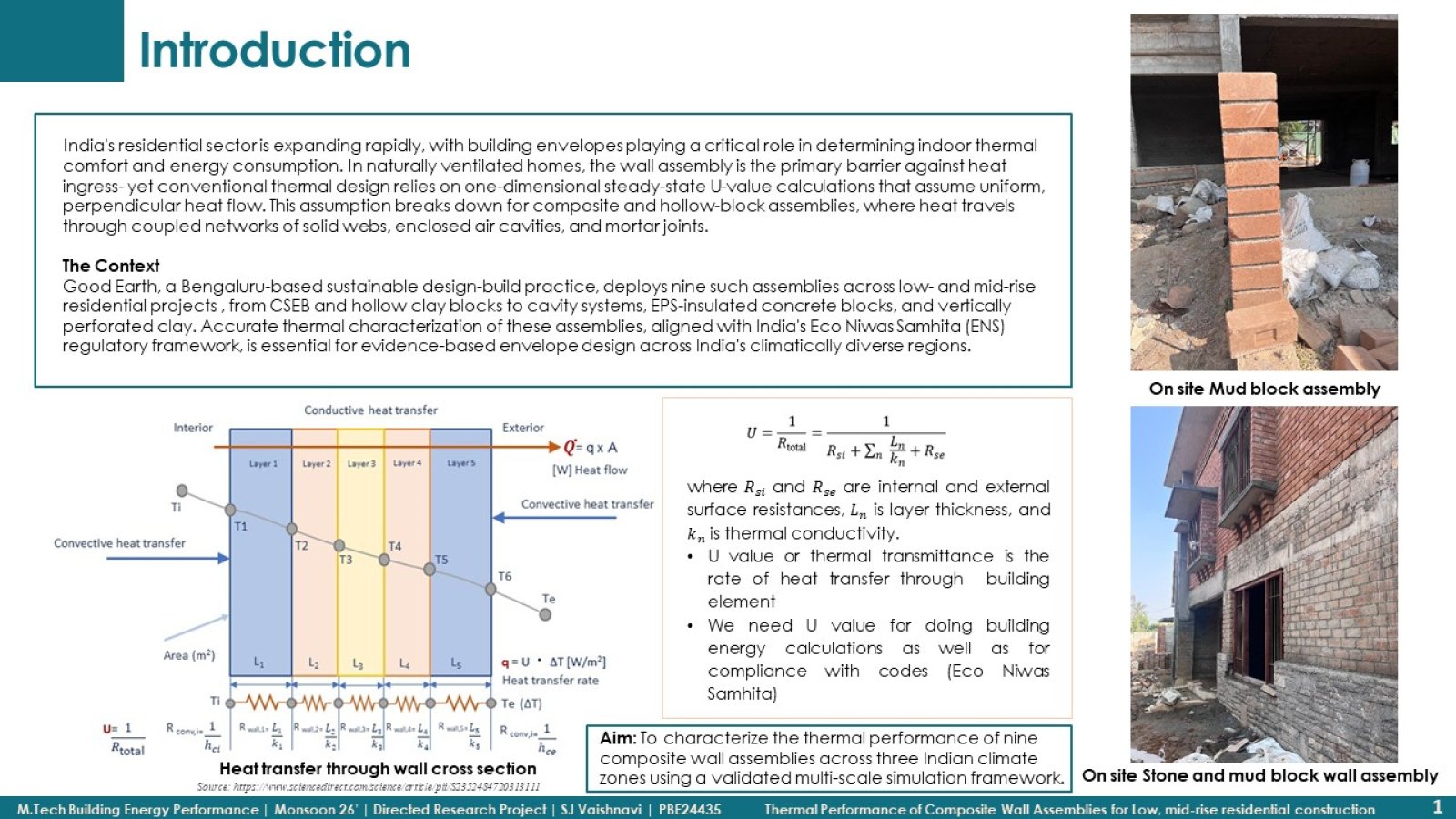
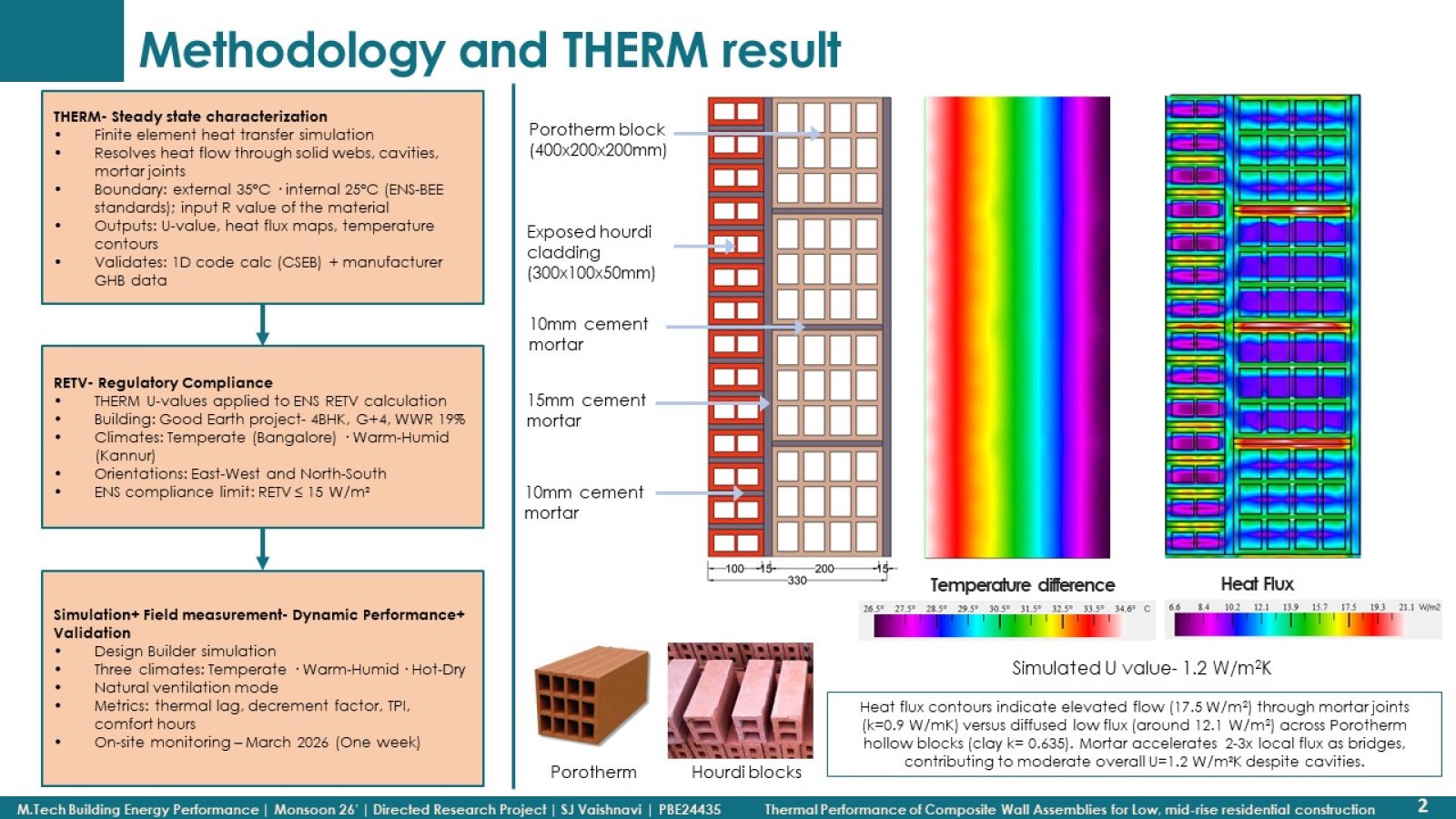
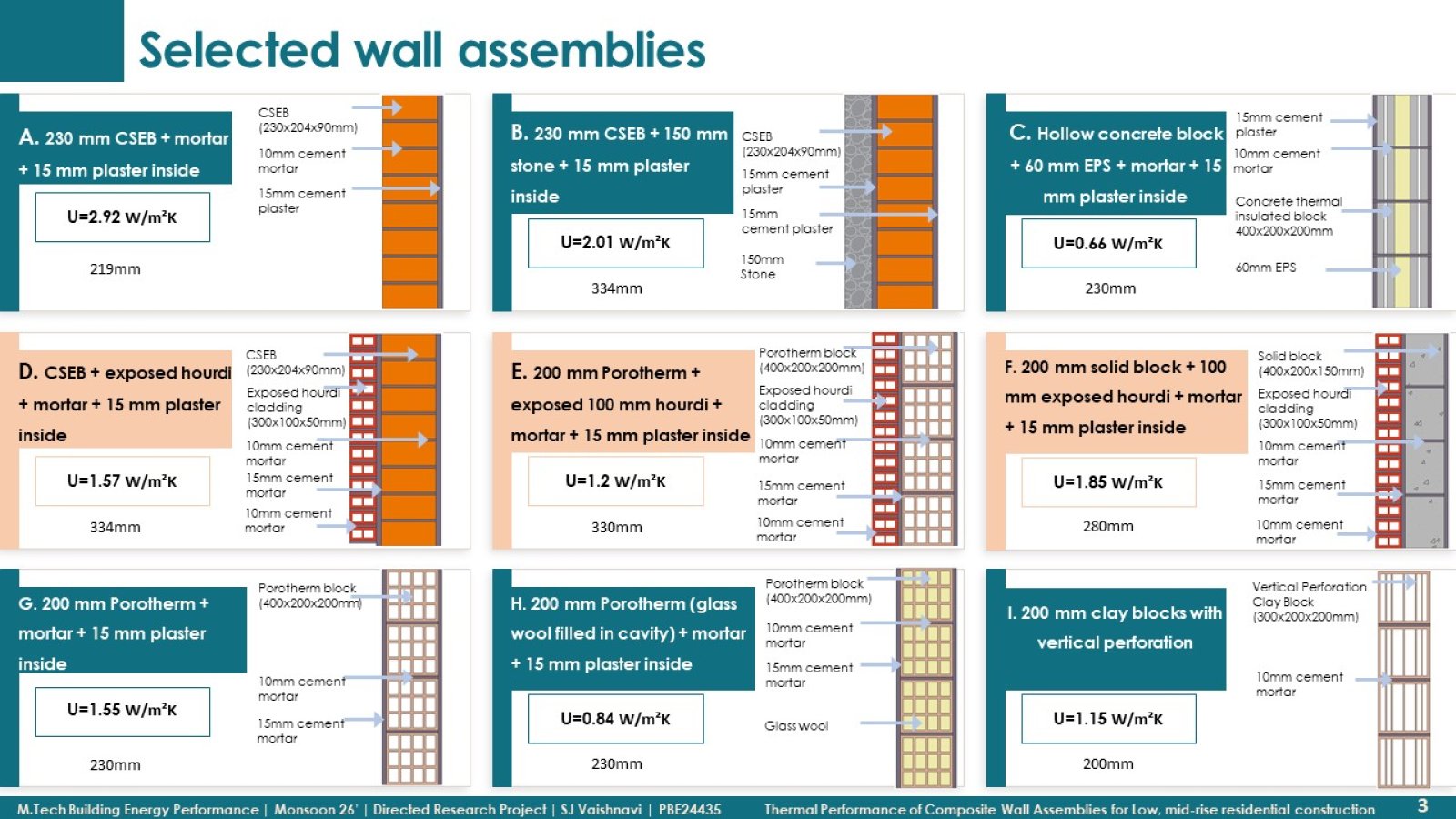
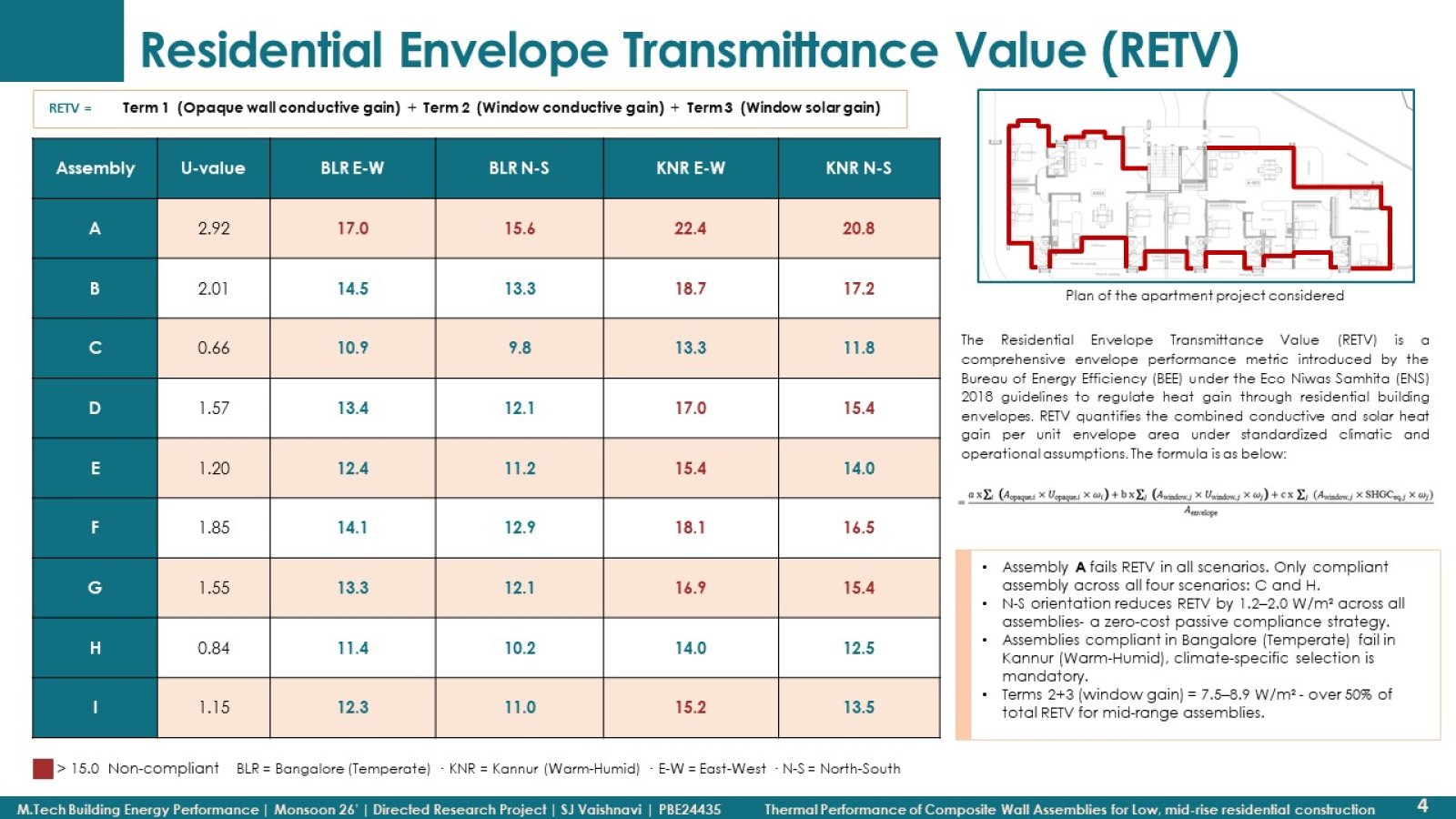
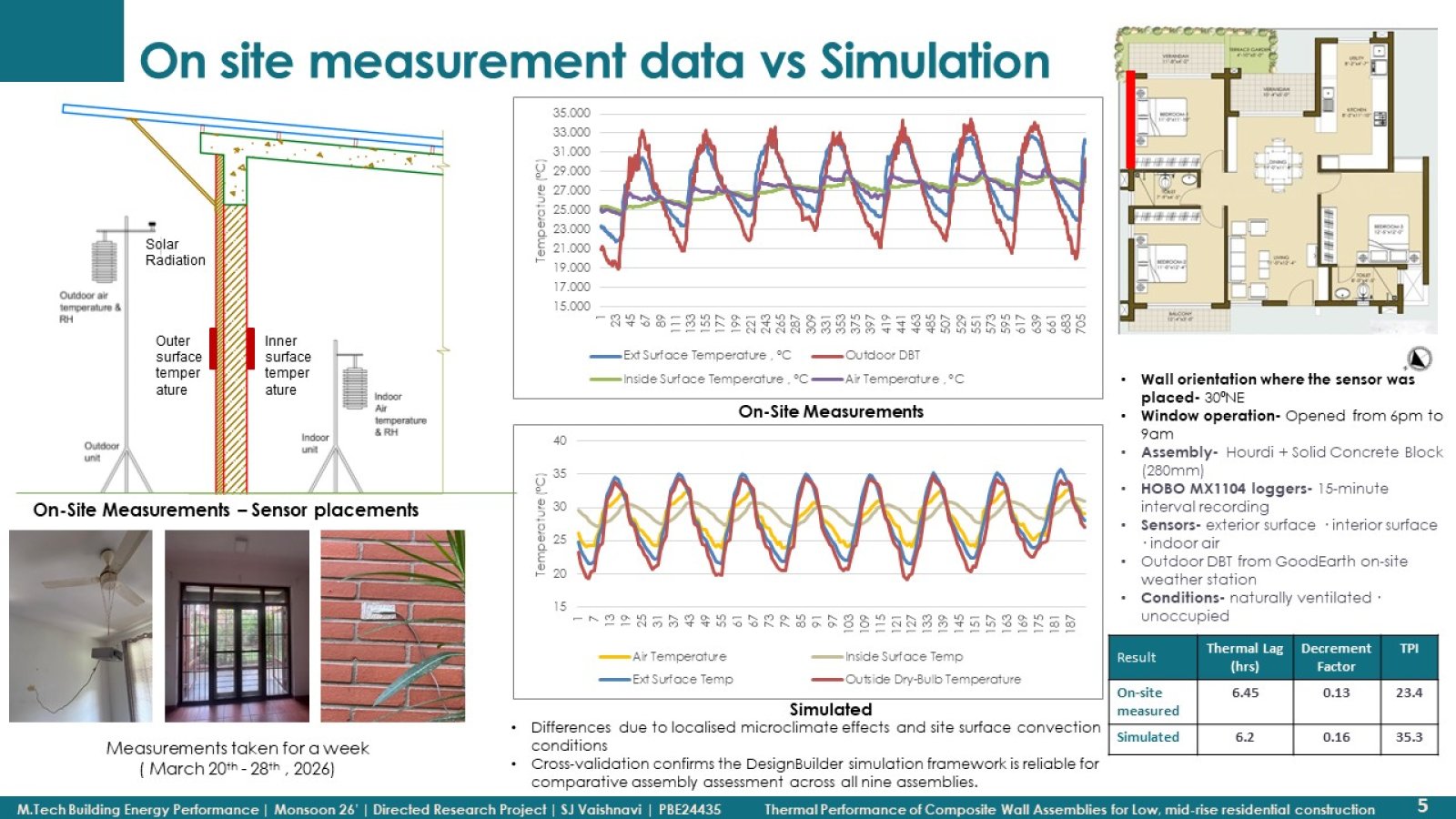
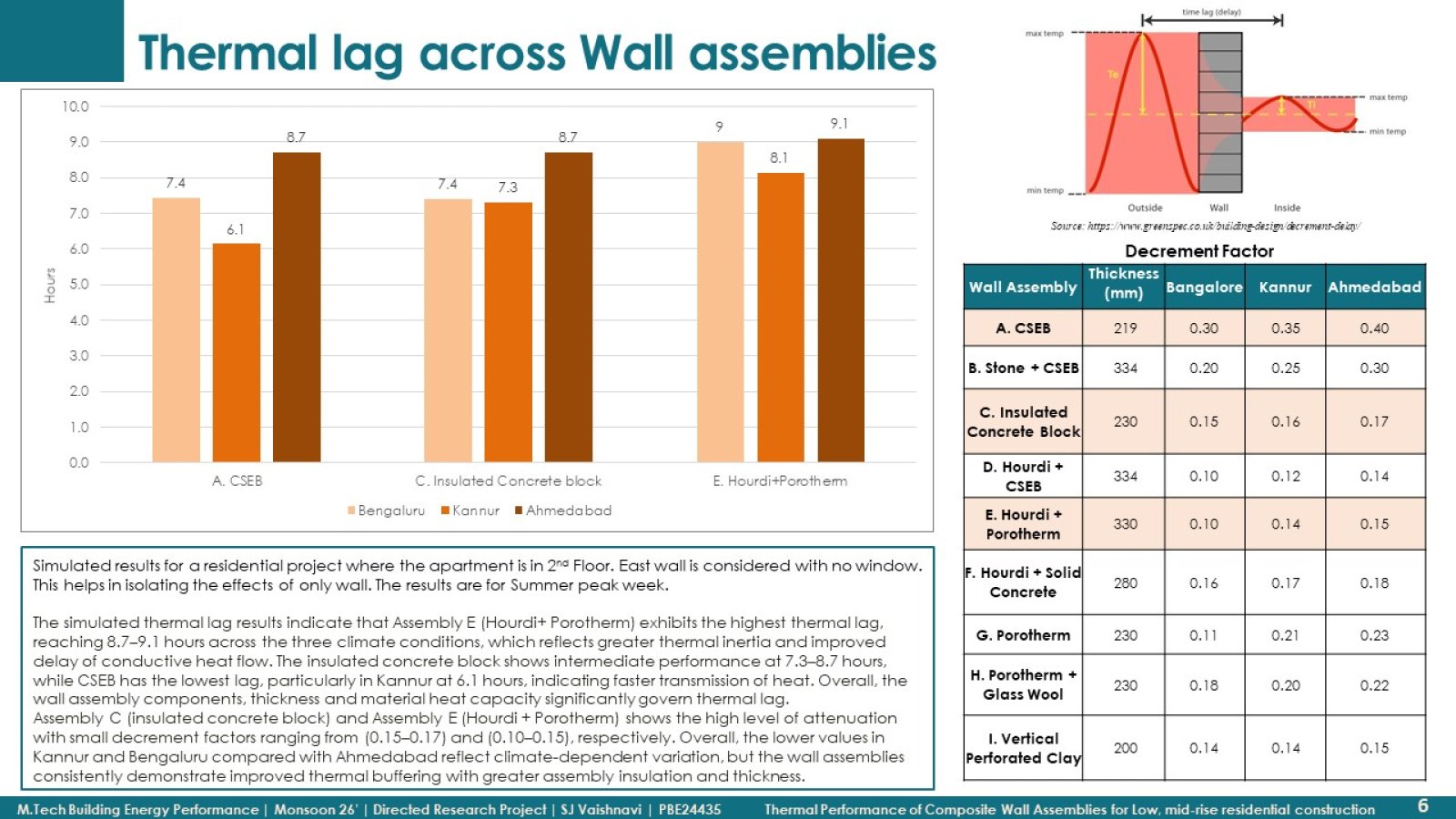
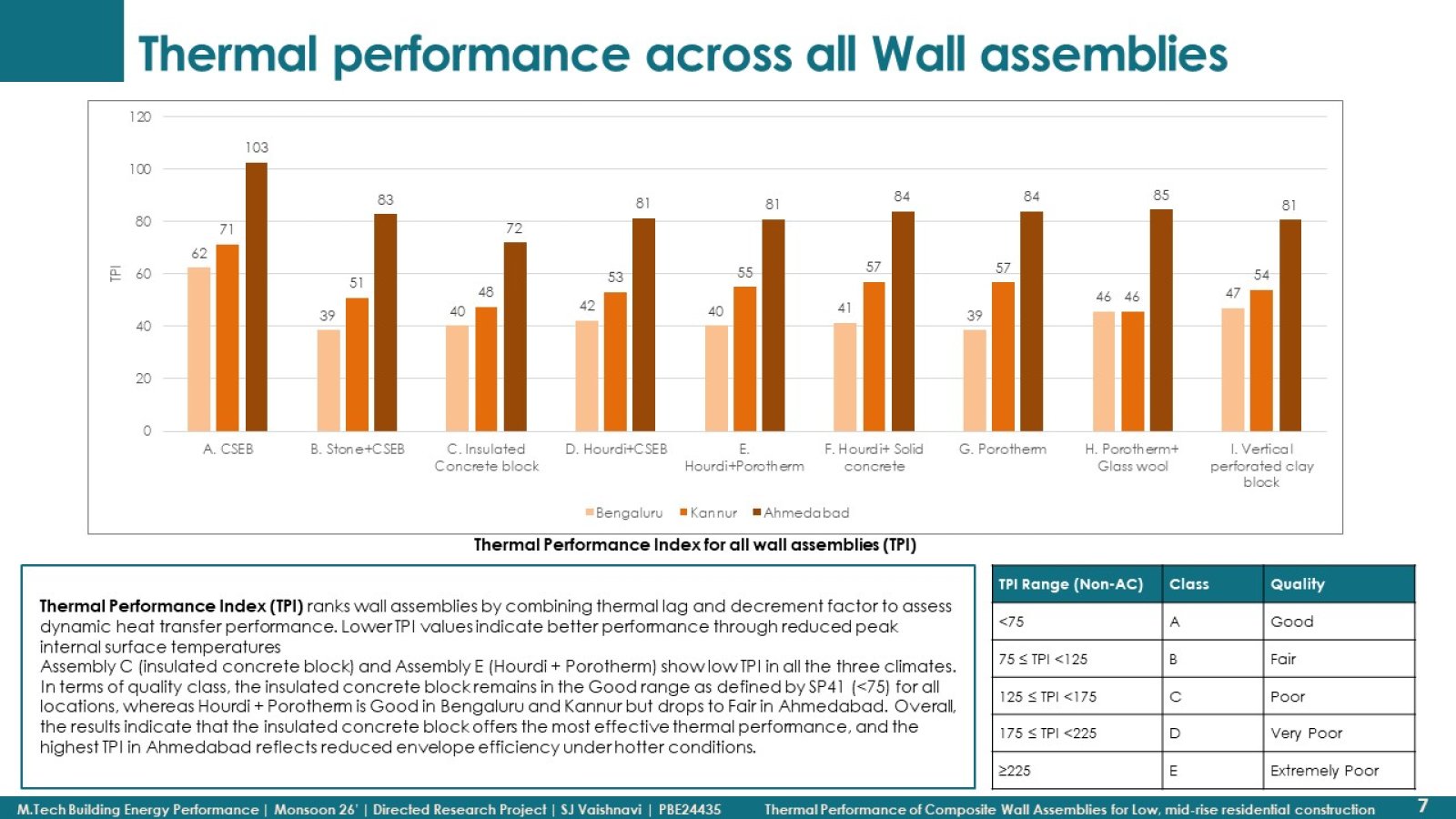
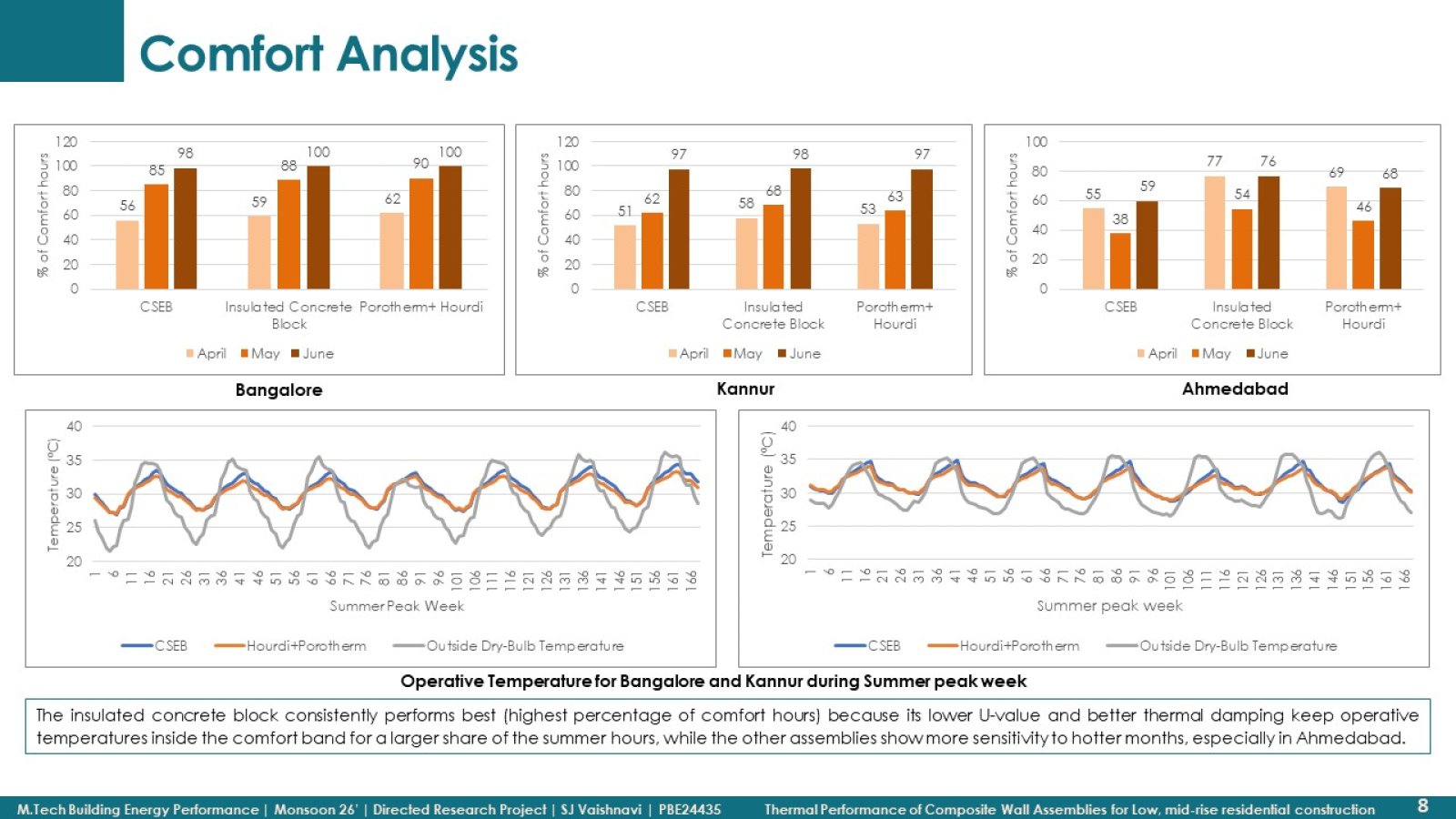
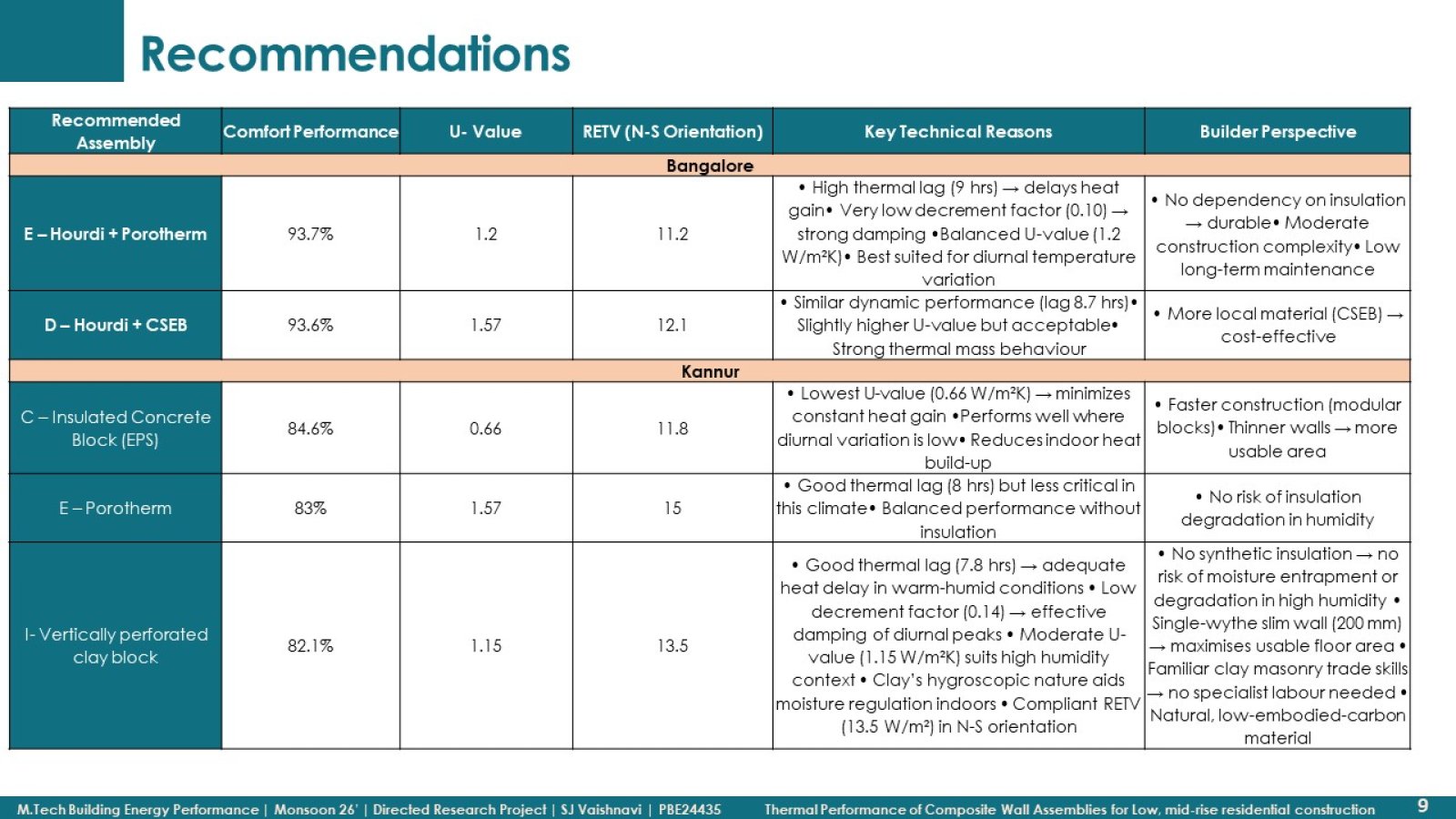
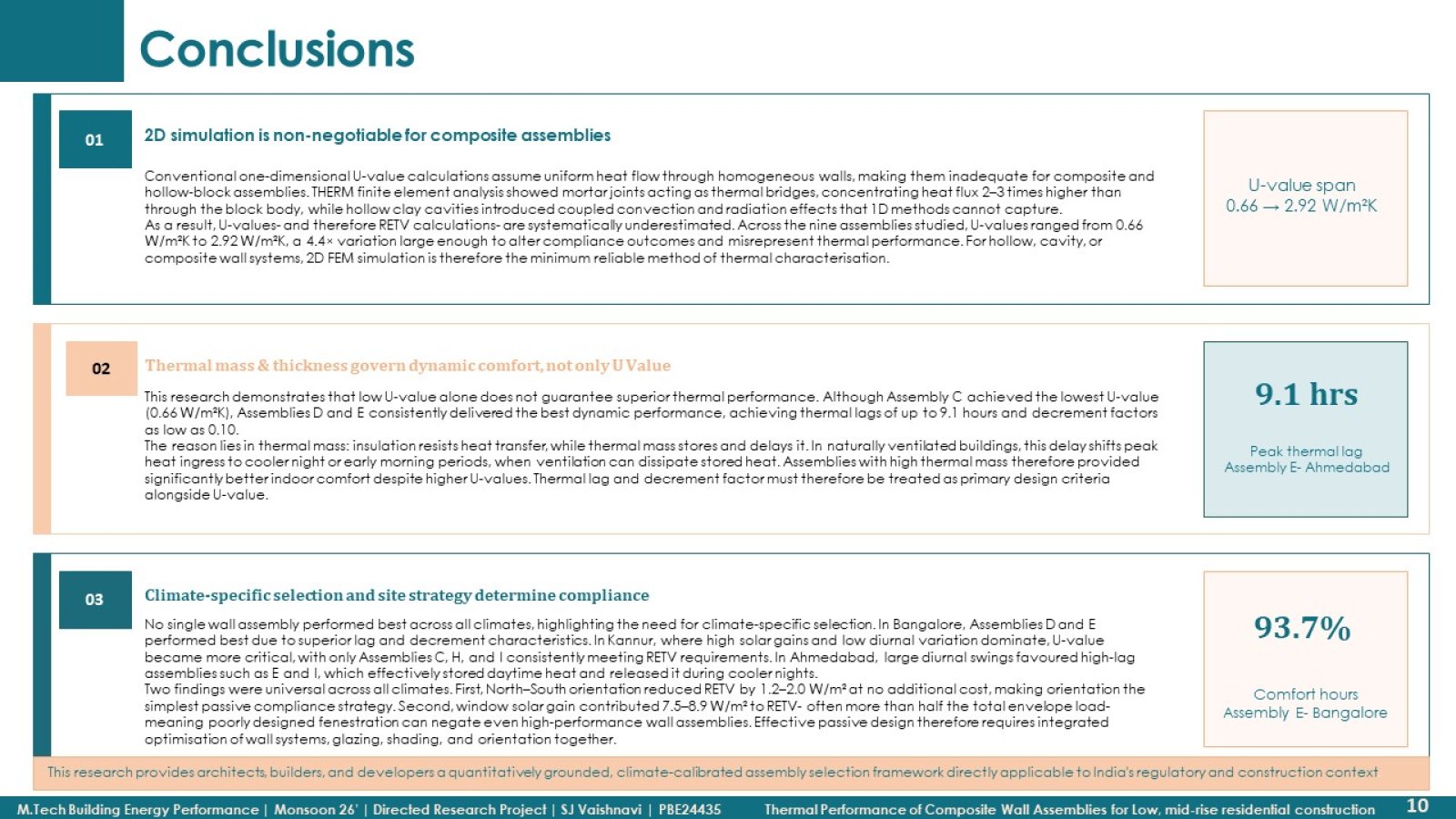
As Indian cities warm, naturally ventilated residences depend entirely on their wall envelope for thermal protection. Yet conventional one-dimensional U-value calculations cannot adequately characterise the composite and hollow-block assemblies increasingly used in sustainable construction. This research evaluates nine such assemblies deployed by Good Earth, Bangalore, using a three-phase simulation framework- THERM finite element analysis, ENS RETV compliance assessment, and DesignBuilder dynamic simulation- validated through on-site field monitoring. Across three climate zones, results show that wall thickness and thermal mass, not U-value alone, govern dynamic comfort, achieving up to 9.1-hour thermal lags and 93.7% adaptive comfort hours without mechanical cooling.