Your browser is out-of-date!
For a richer surfing experience on our website, please update your browser. Update my browser now!
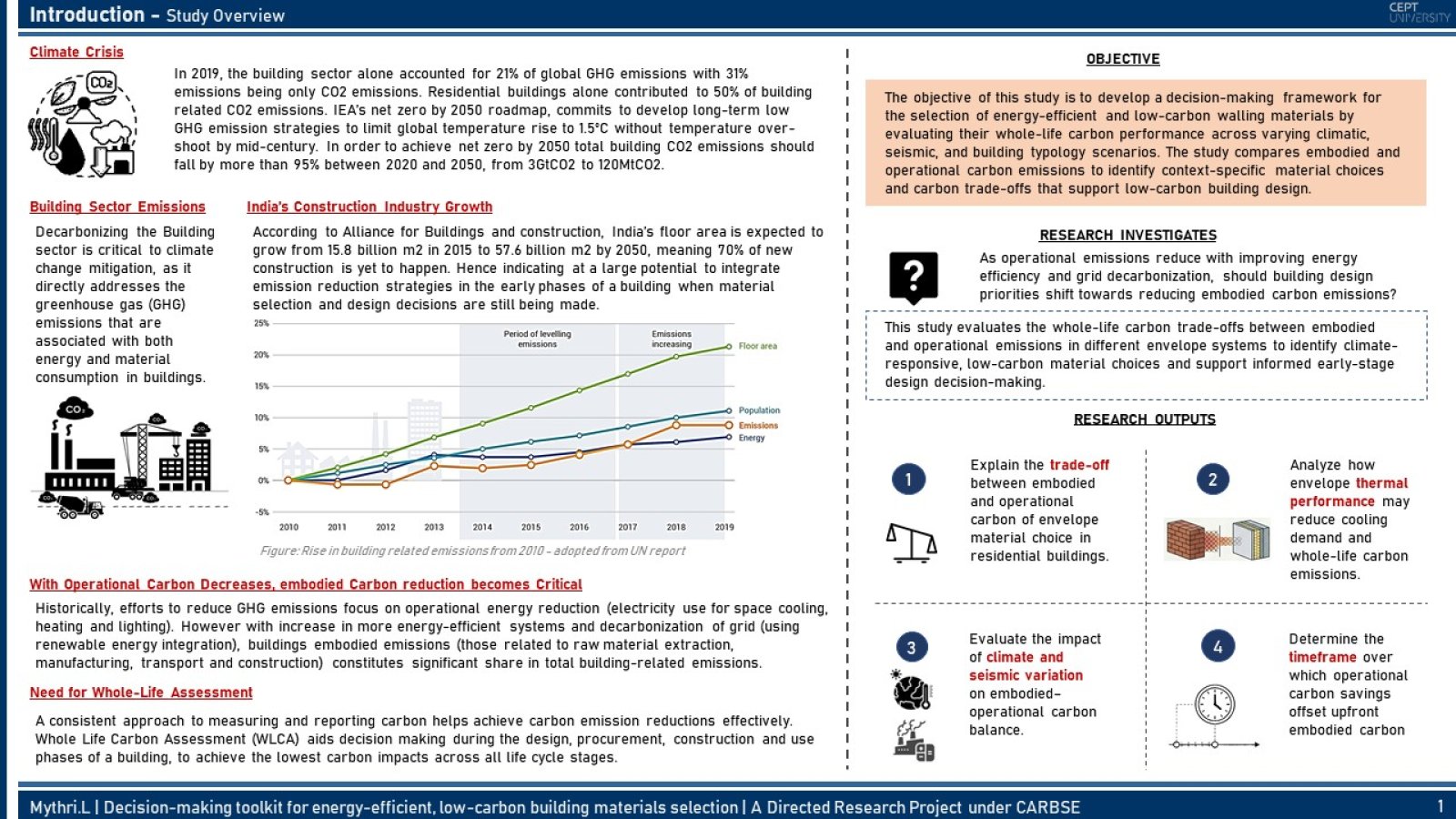
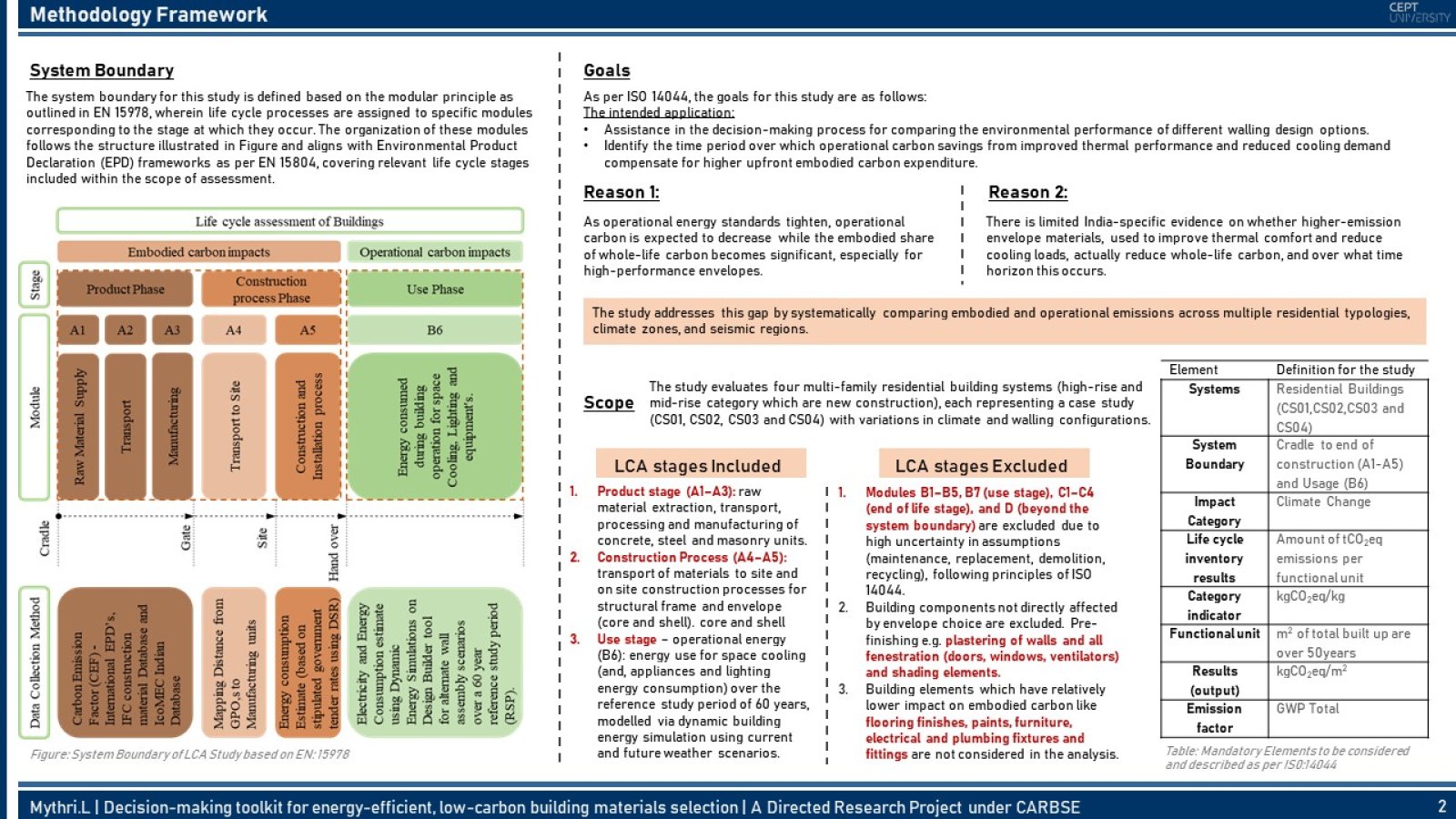
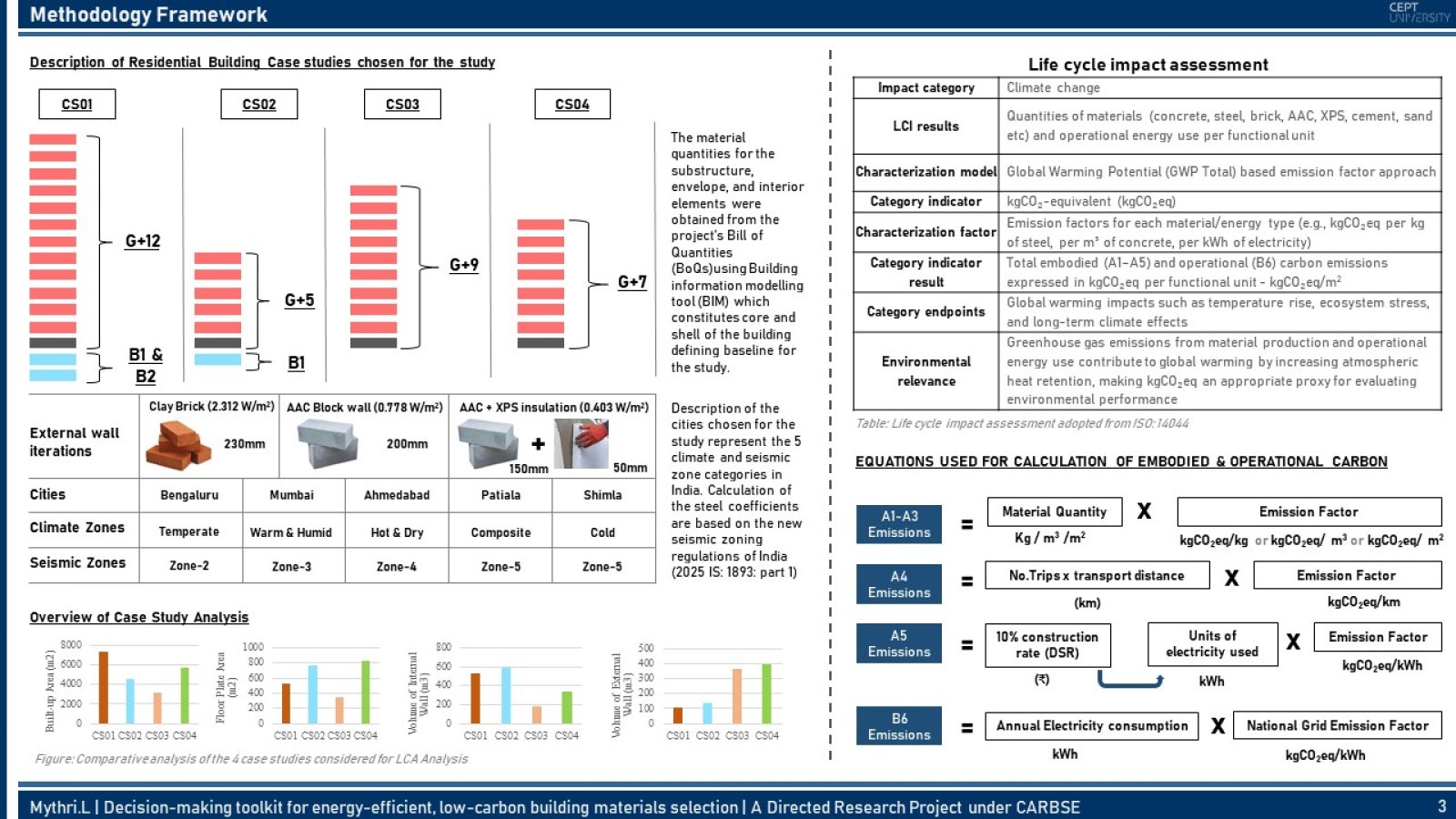
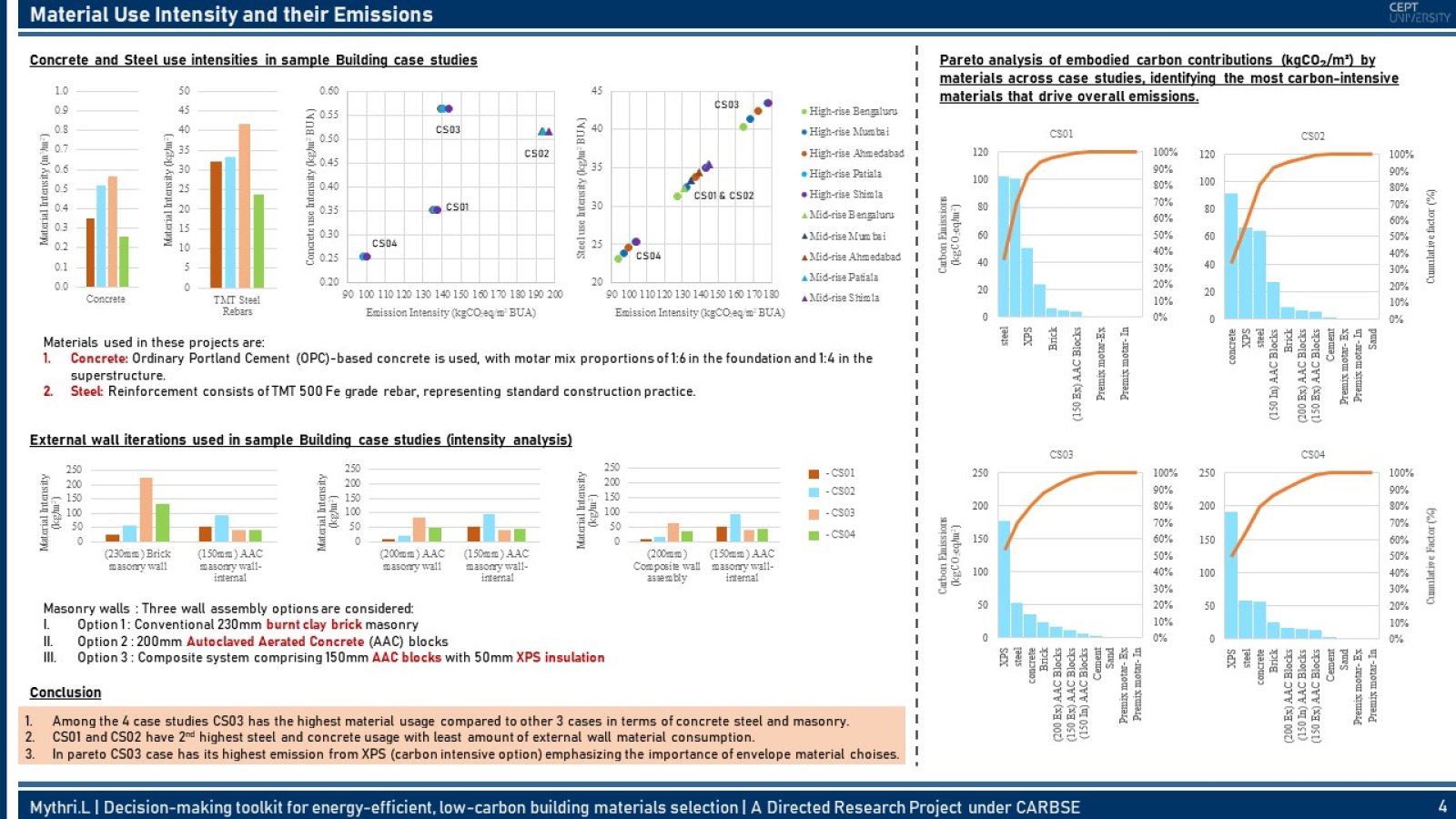
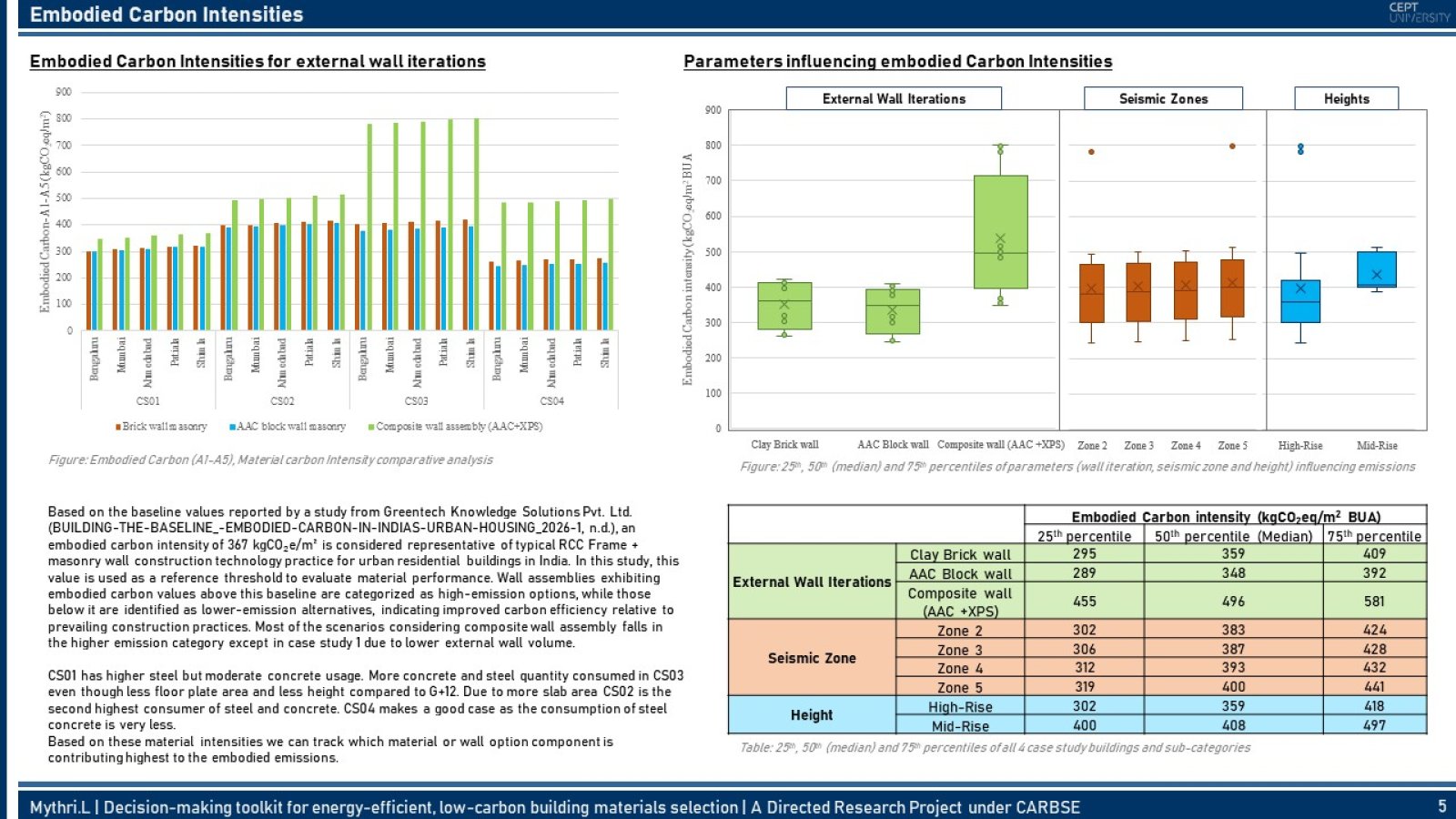
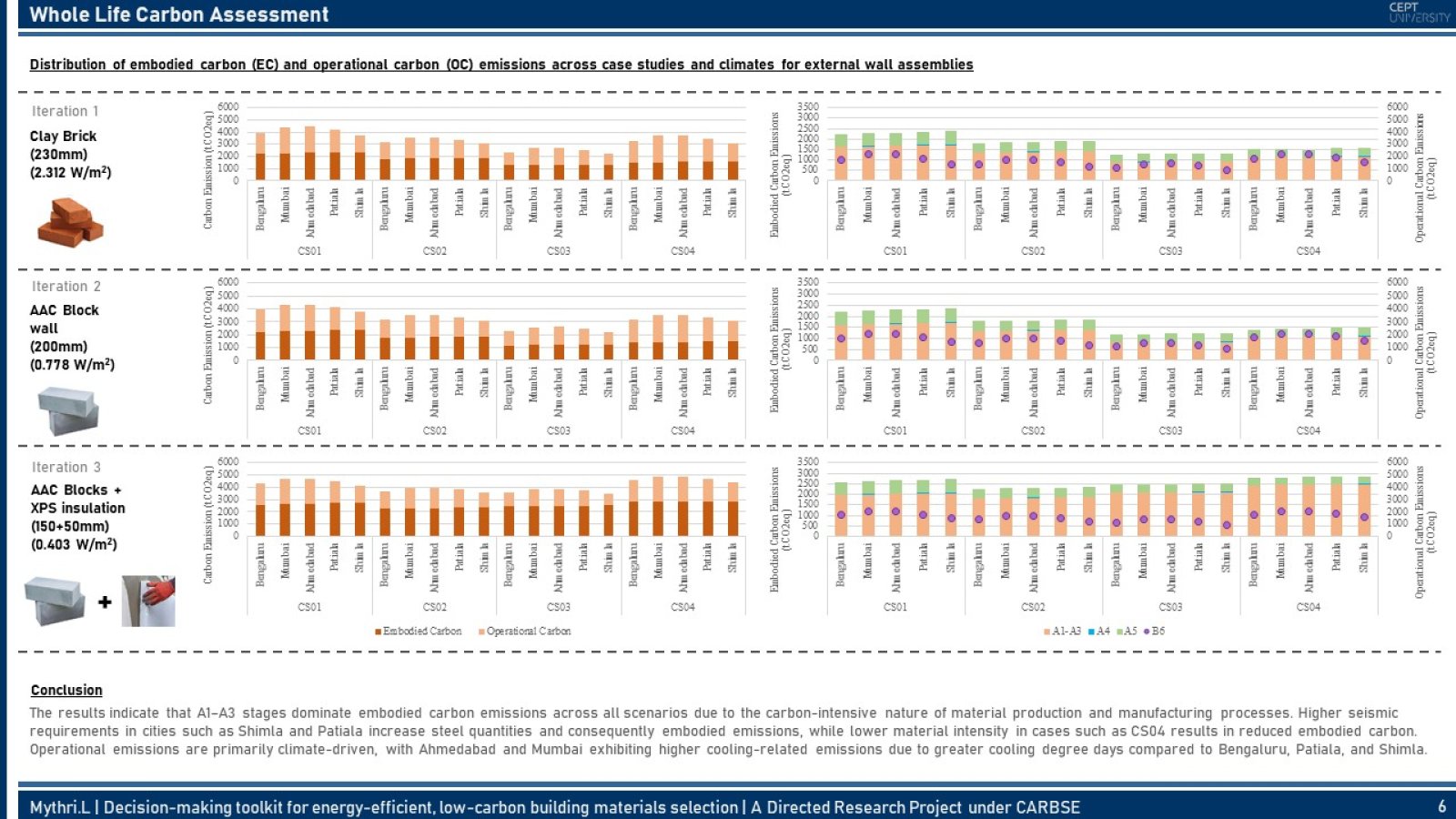
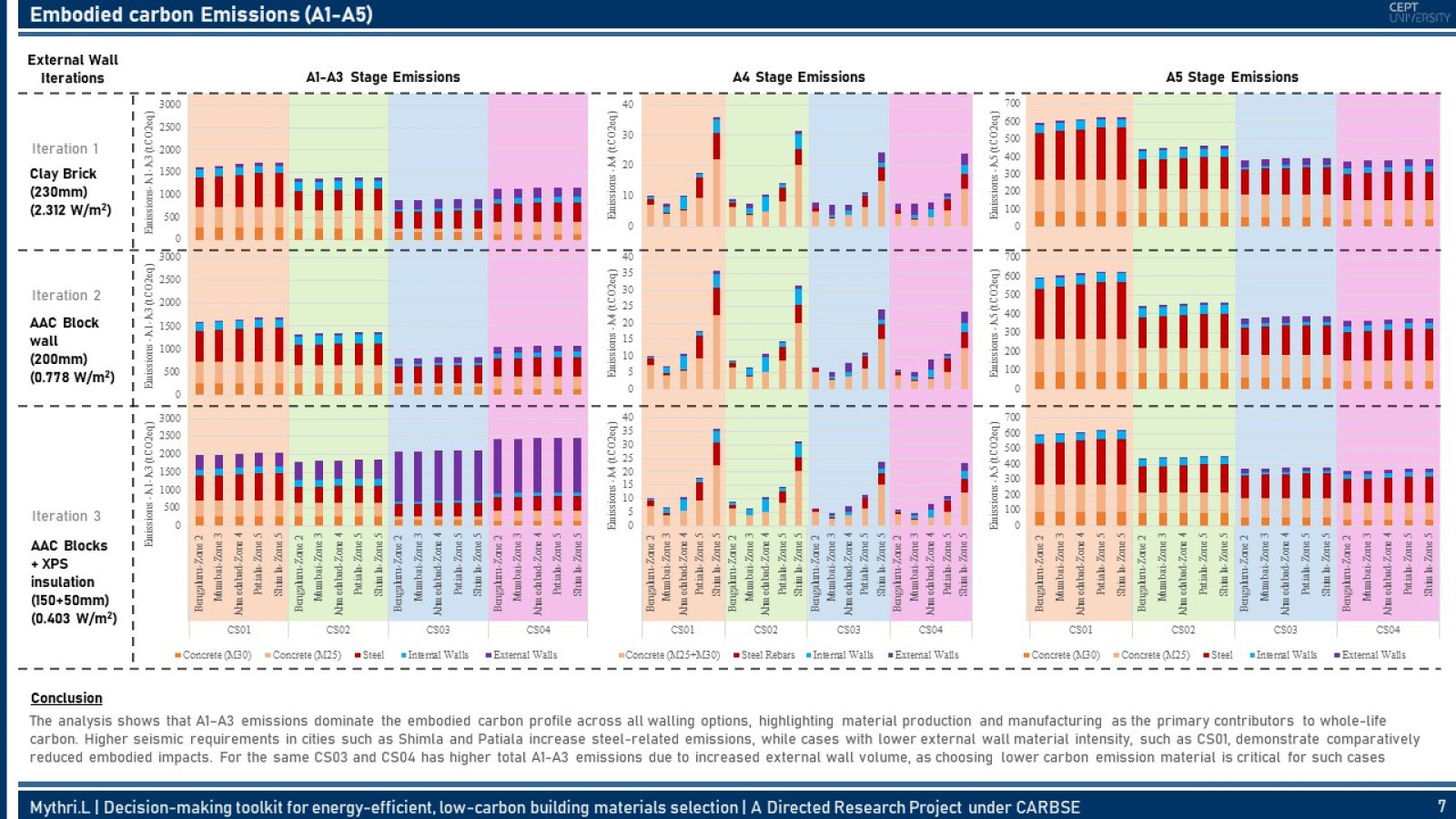
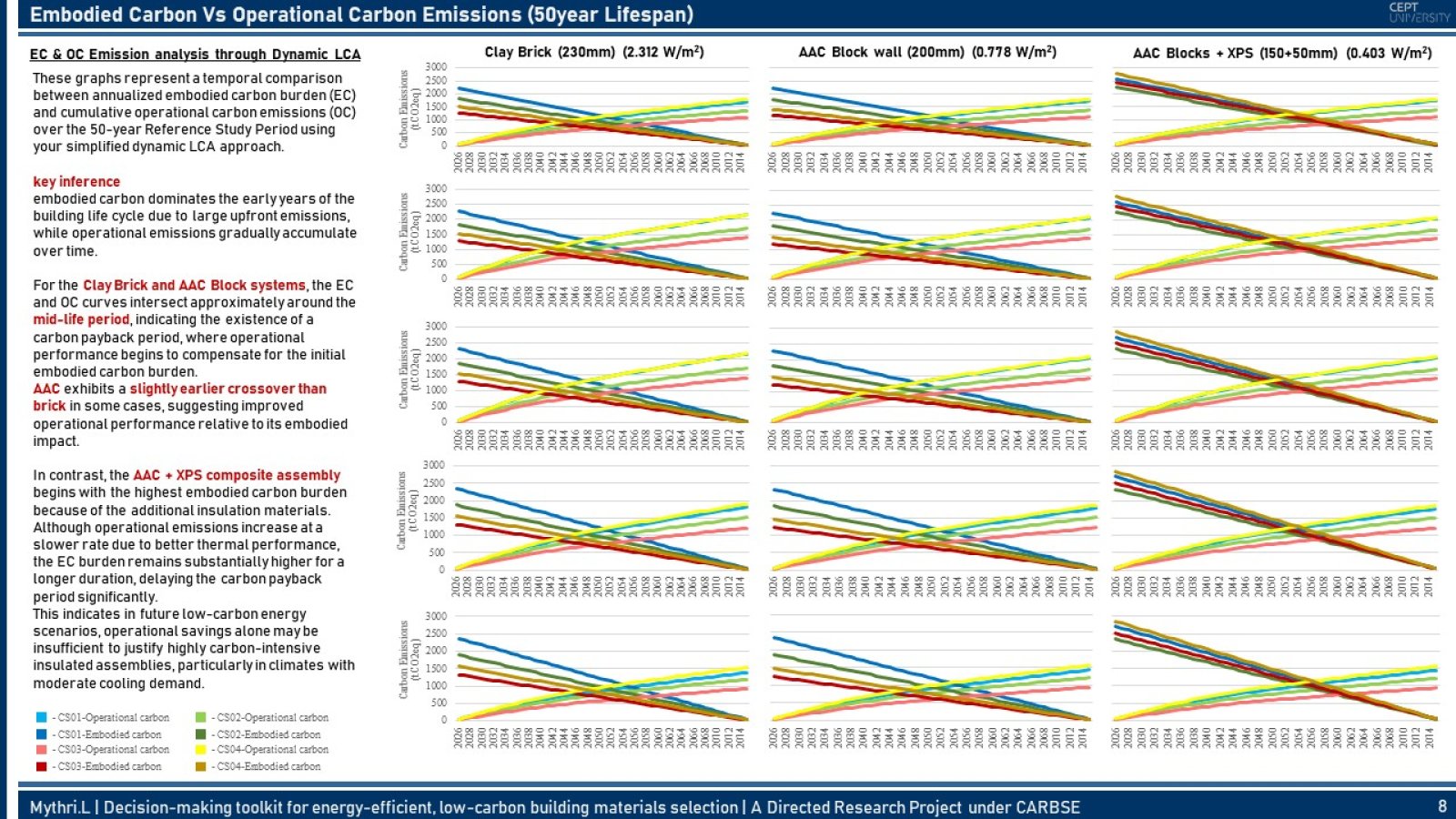
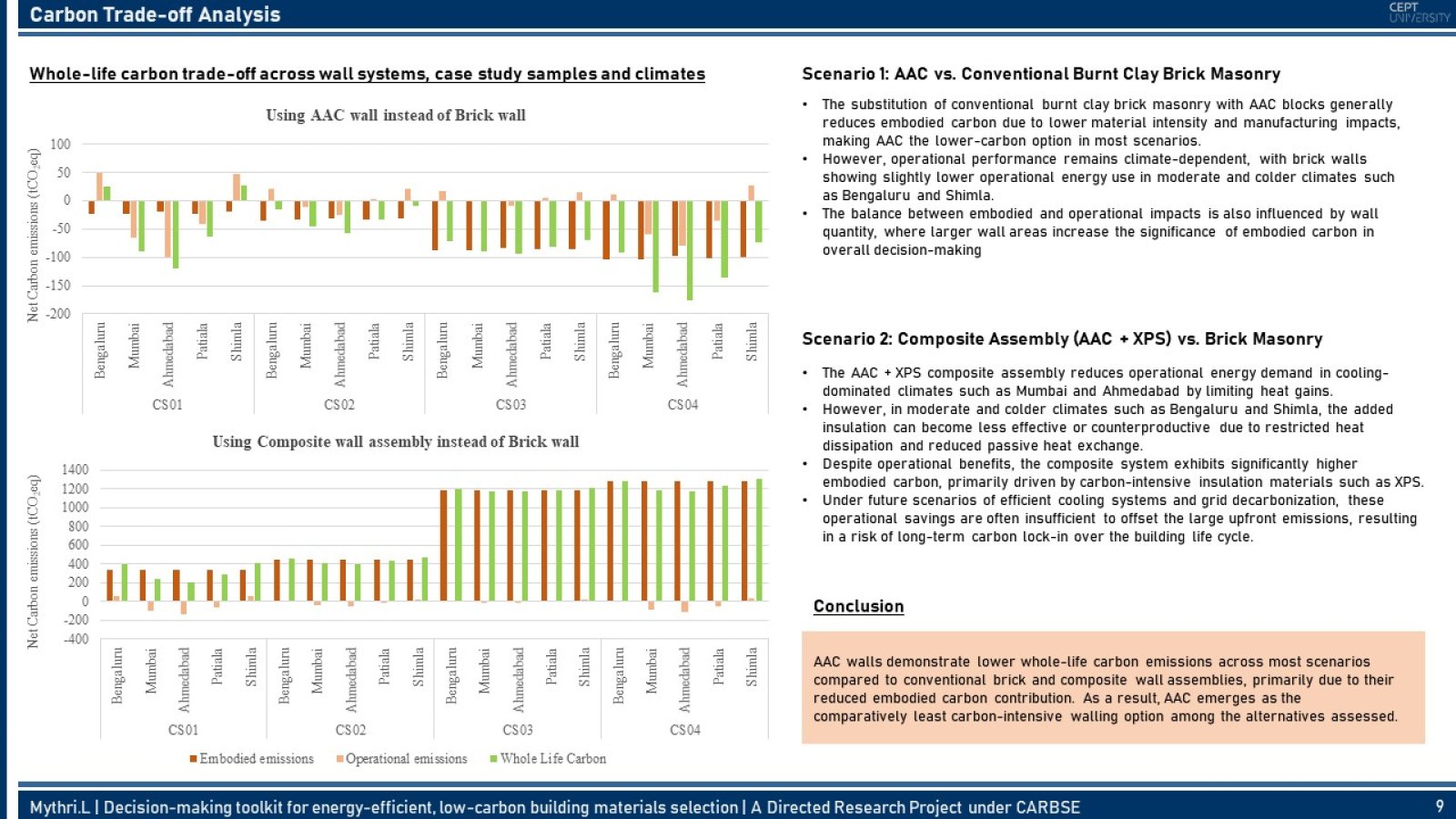
Decarbonizing building sector is critical to climate change mitigation. As energy performance standards tighten, operational carbon declines through improved envelopes and services; however, higher-performance envelope materials may increase embodied emissions, potentially shifting carbon from operational to product and construction stages rather than reducing whole-life carbon. This paper evaluates whether higher-emission material choices used to improve envelope thermal performance, reduce cooling demand through enhanced thermal comfort lead to operational carbon savings, and determines timeframe over which these savings offset upfront embodied carbon. Parametric whole-life carbon assessment aligned with ISO 14044 evaluates four residential buildings, including mid- and high-rise typologies, across five Indian climate zones and varying seismic regions. BIM-derived quantities for the reinforced concrete core and shell define the baseline, with three wall assemblies applied: Brick 2.312 W/m²K, Autoclaved Aerated Concrete 0.778 W/m²K, and composite wall 0.403 W/m²K, generating 60 LCA scenarios. Embodied–operational ratios indicate upfront and long-term carbon balance. Keywords: Whole-life carbon assessment, Buildings, Embodied carbon, Operational carbon, Embodied–operational trade-off, Envelope thermal performance, India.