Your browser is out-of-date!
For a richer surfing experience on our website, please update your browser. Update my browser now!
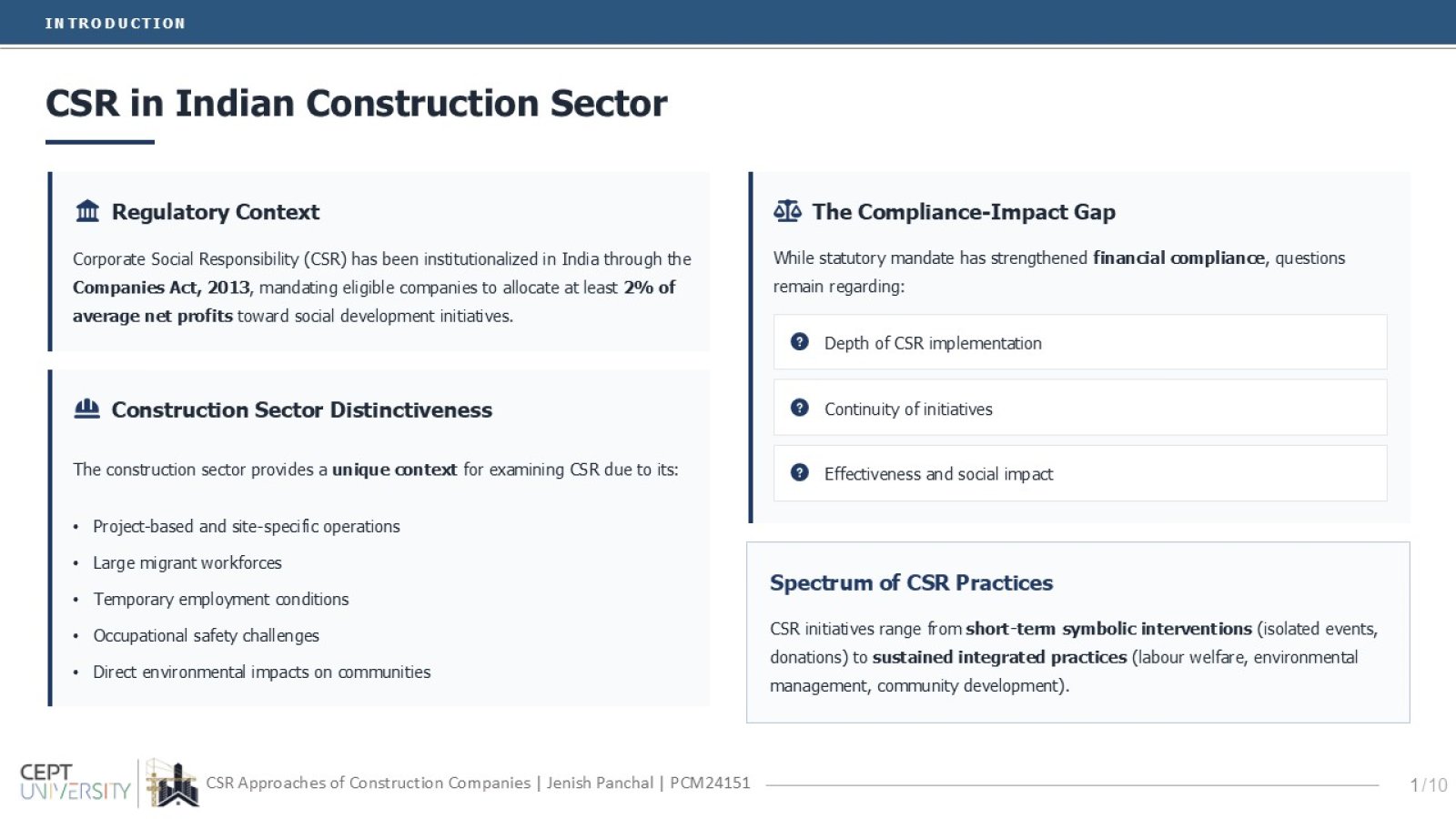
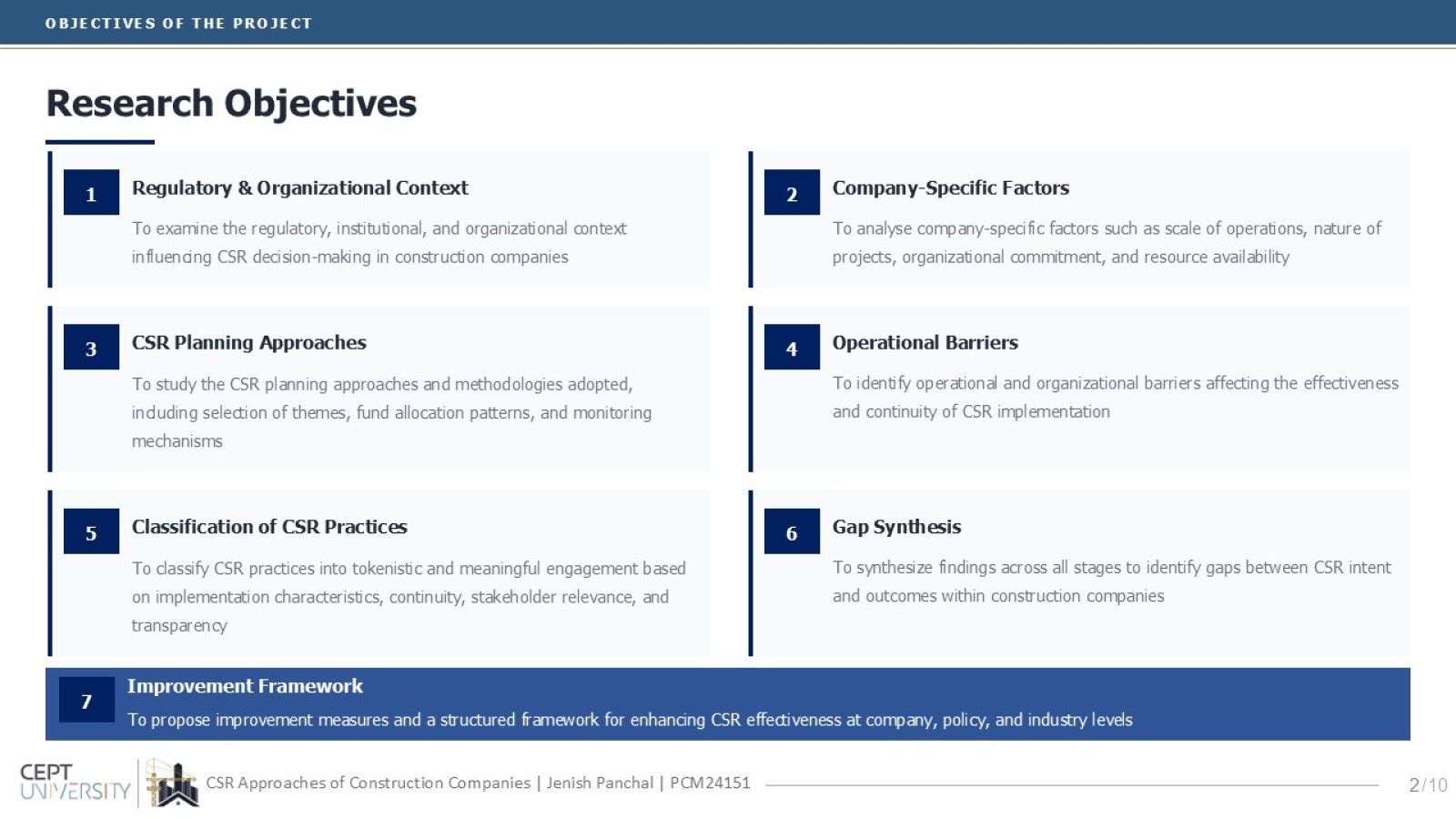
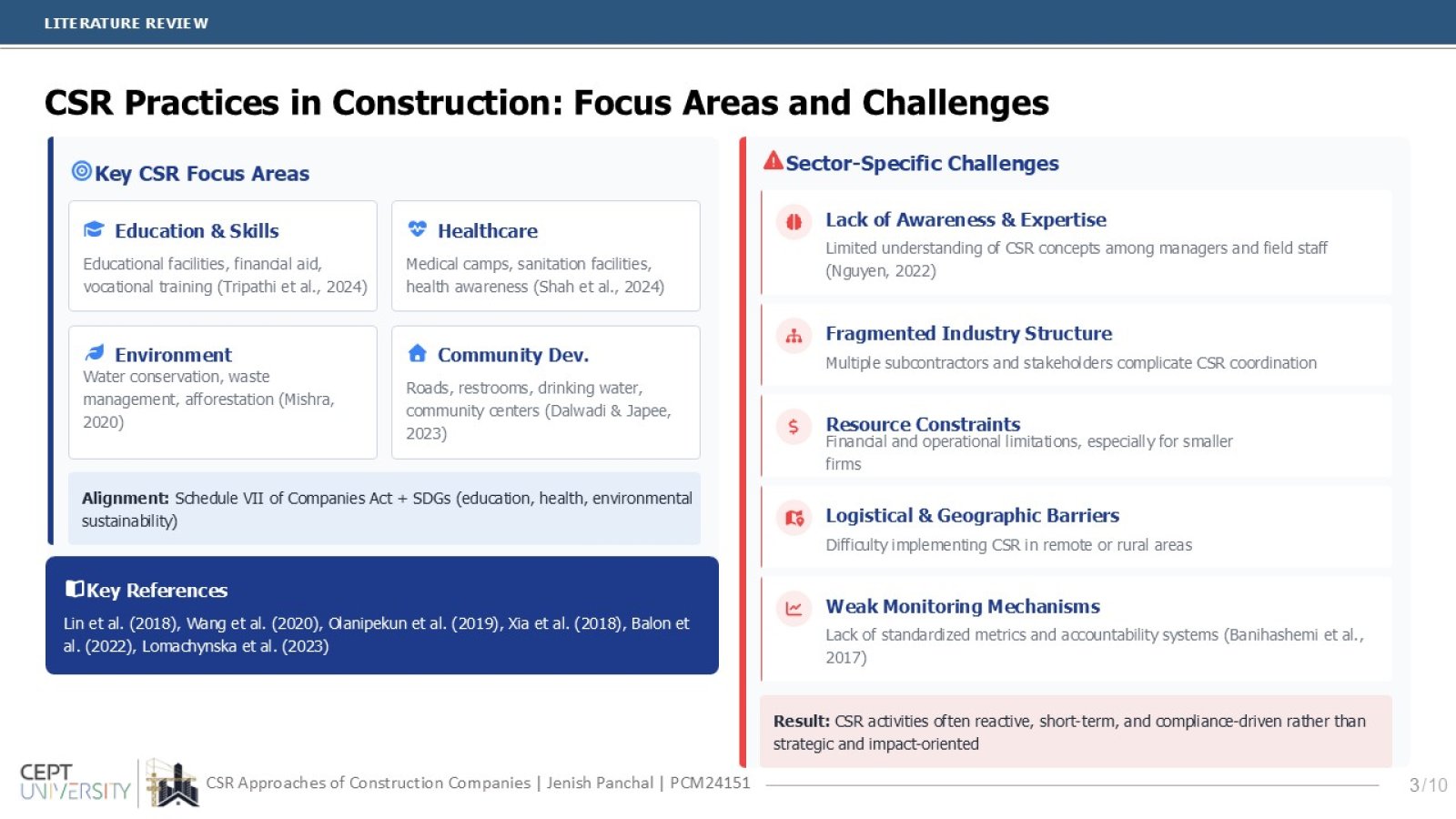
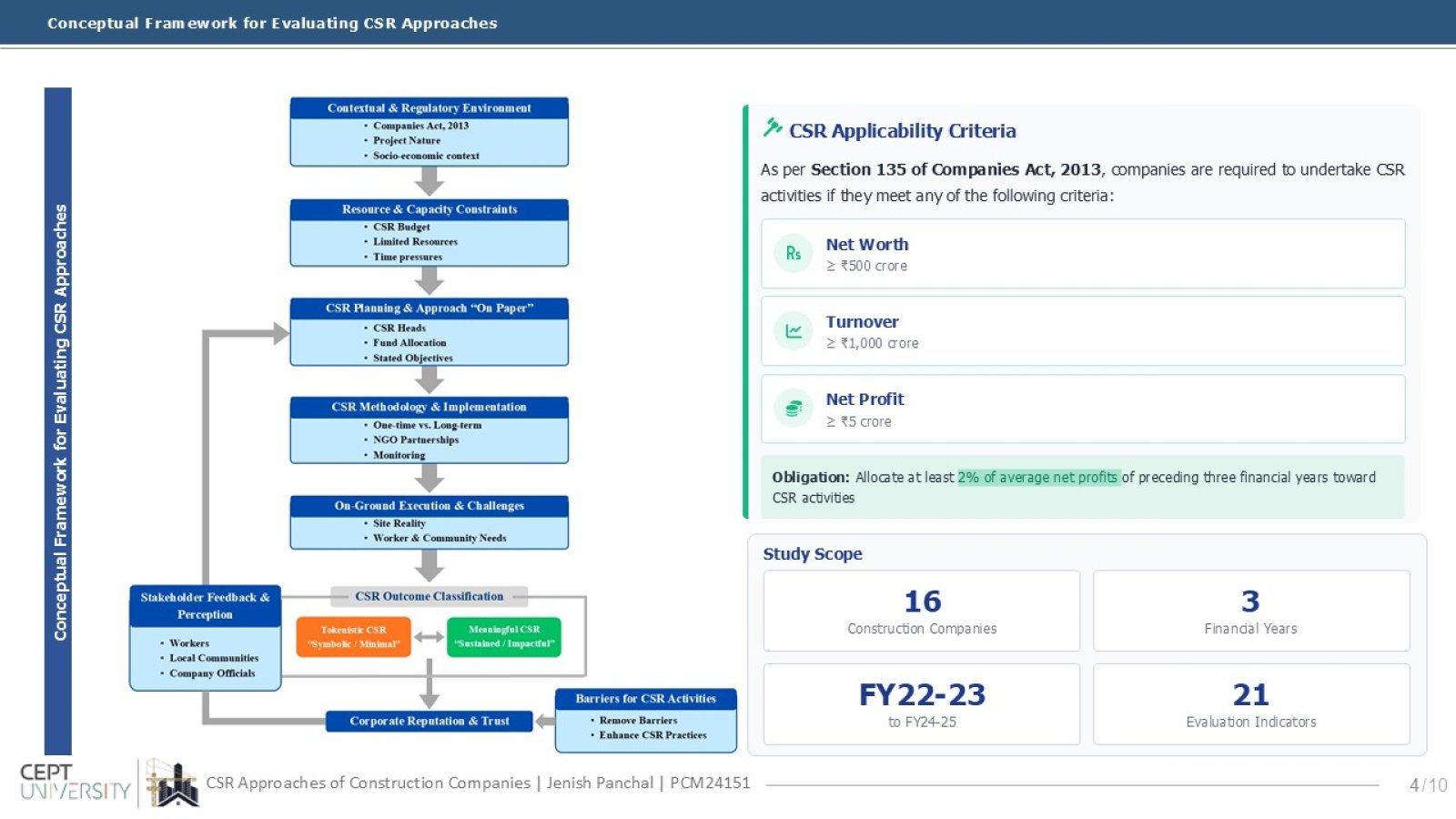
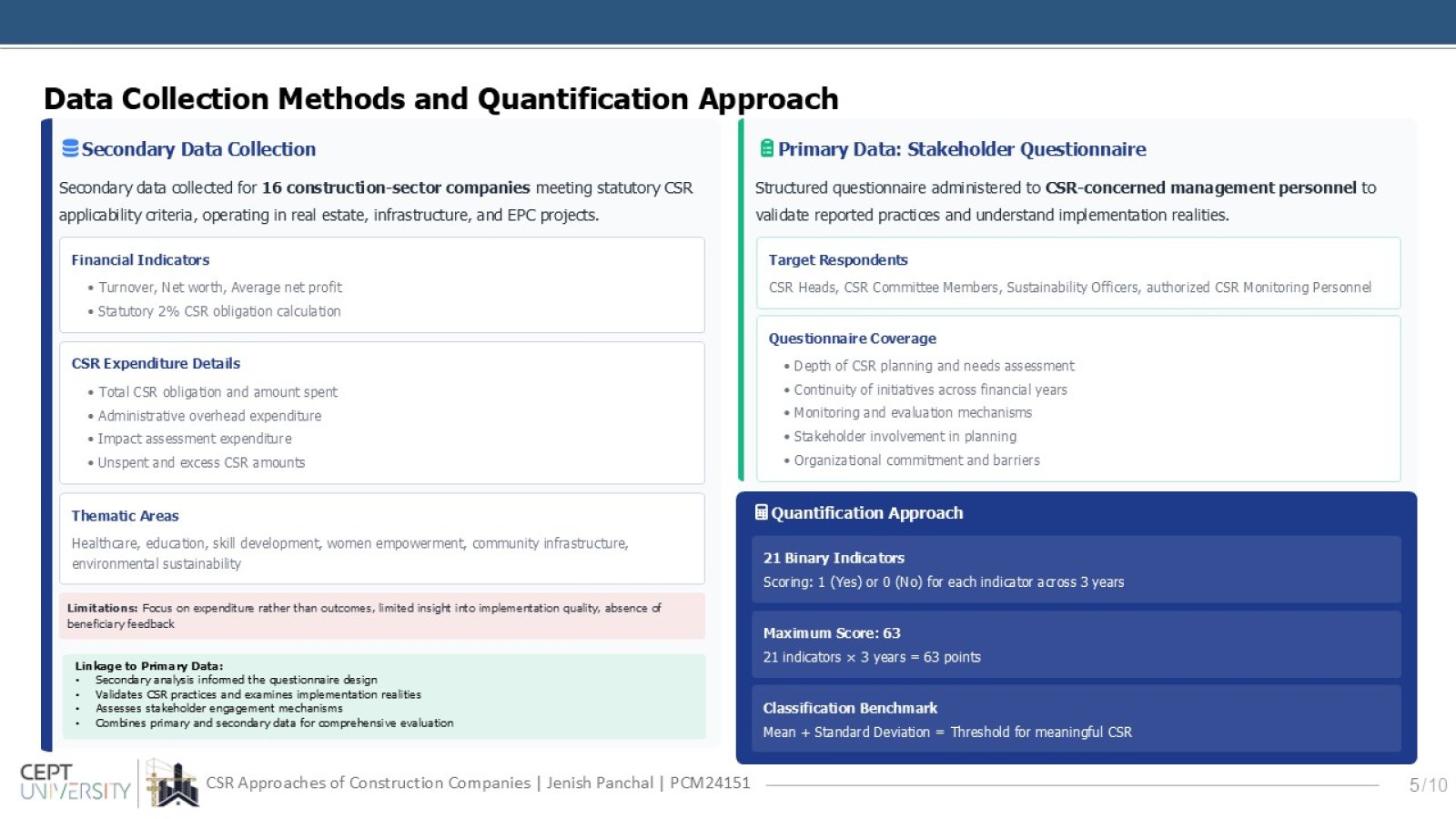
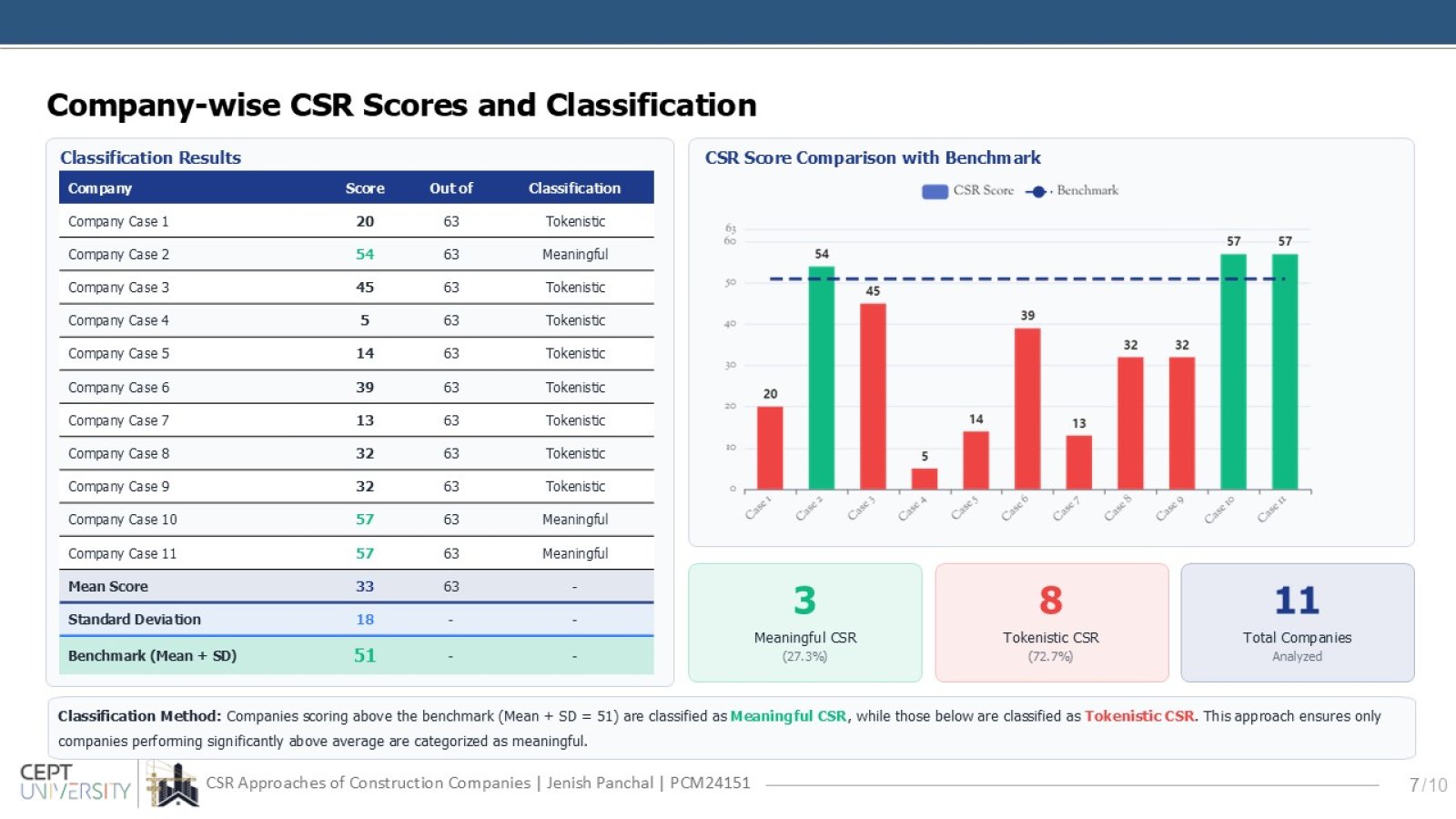
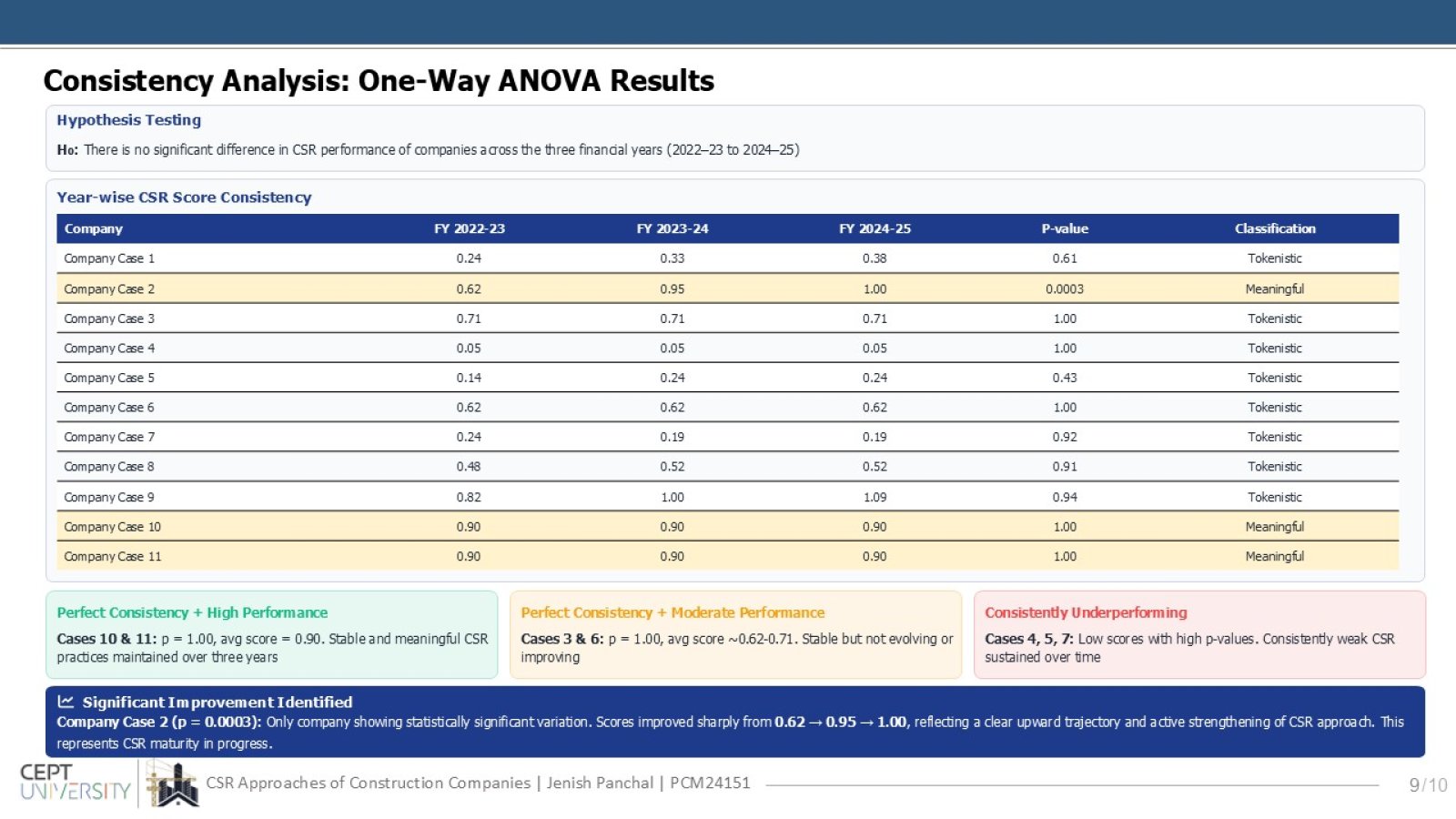
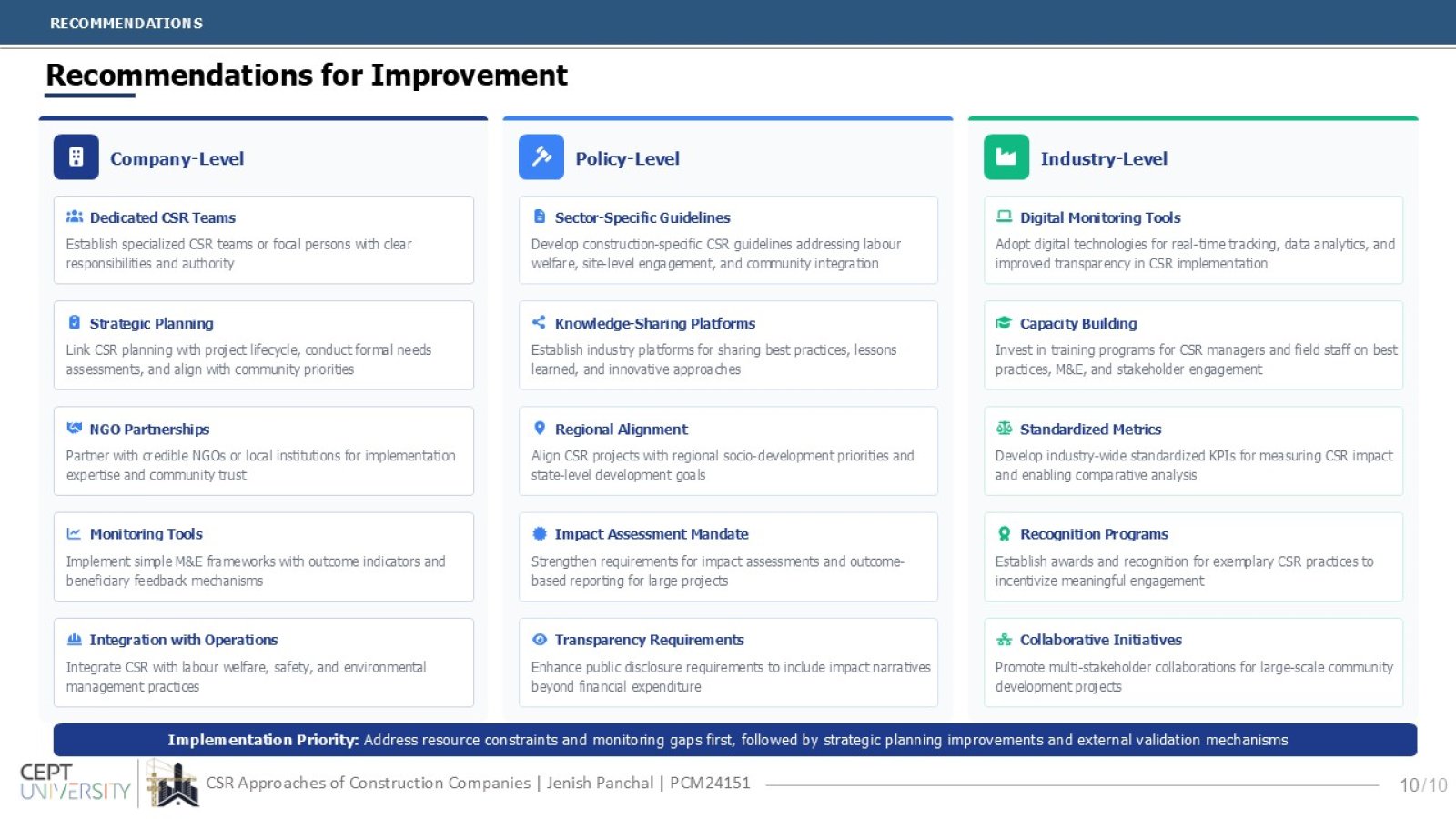
Corporate Social Responsibility (CSR) in India has been institutionalised through the mandatory provisions of the Companies Act, 2013, requiring eligible companies to allocate at least two percent of their average net profits toward social development initiatives. While this statutory mandate has strengthened financial compliance, questions remain regarding the depth, continuity, and effectiveness of CSR implementation, particularly within the construction sector, which operates in complex, project-based, and socially intensive environments. This Directed Research Project examines CSR approaches adopted by construction companies in India to determine whether prevailing practices reflect tokenistic compliance or meaningful engagement. The study adopts a mixed-method research design combining secondary data analysis of sixteen construction companies over three financial years (FY 2022–23 to FY 2024–25) with primary data collected through structured questionnaires administered to CSR-concerned management personnel. Secondary analysis evaluated CSR obligations, expenditure patterns, administrative overheads, impact assessment spending, and thematic focus areas, while primary data captured insights on needs assessment practices, stakeholder consultation, monitoring frameworks, project continuity, and implementation barriers. Based on a structured conceptual framework, CSR activities were classified into tokenistic and meaningful categories using indicators such as long-term engagement, stakeholder alignment, monitoring depth, and integration with core construction practices. The findings indicate that although most companies demonstrate compliance with statutory spending requirements, many initiatives remain short-term, output-focused, and weakly integrated with project-level operations. Key challenges identified include limited organizational capacity, inadequate monitoring and evaluation systems, fragmented site-level ownership, and CSR being treated primarily as a regulatory obligation rather than a strategic function. The study proposes remedial measures including dedicated CSR teams, structured needs assessments, stronger monitoring mechanisms, integration of CSR with labour welfare and environmental management practices, and sector-specific guidelines for construction companies. The research contributes a sector-focused evaluative framework to strengthen meaningful CSR engagement and enhance long-term social impact within the construction industry.