Your browser is out-of-date!
For a richer surfing experience on our website, please update your browser. Update my browser now!
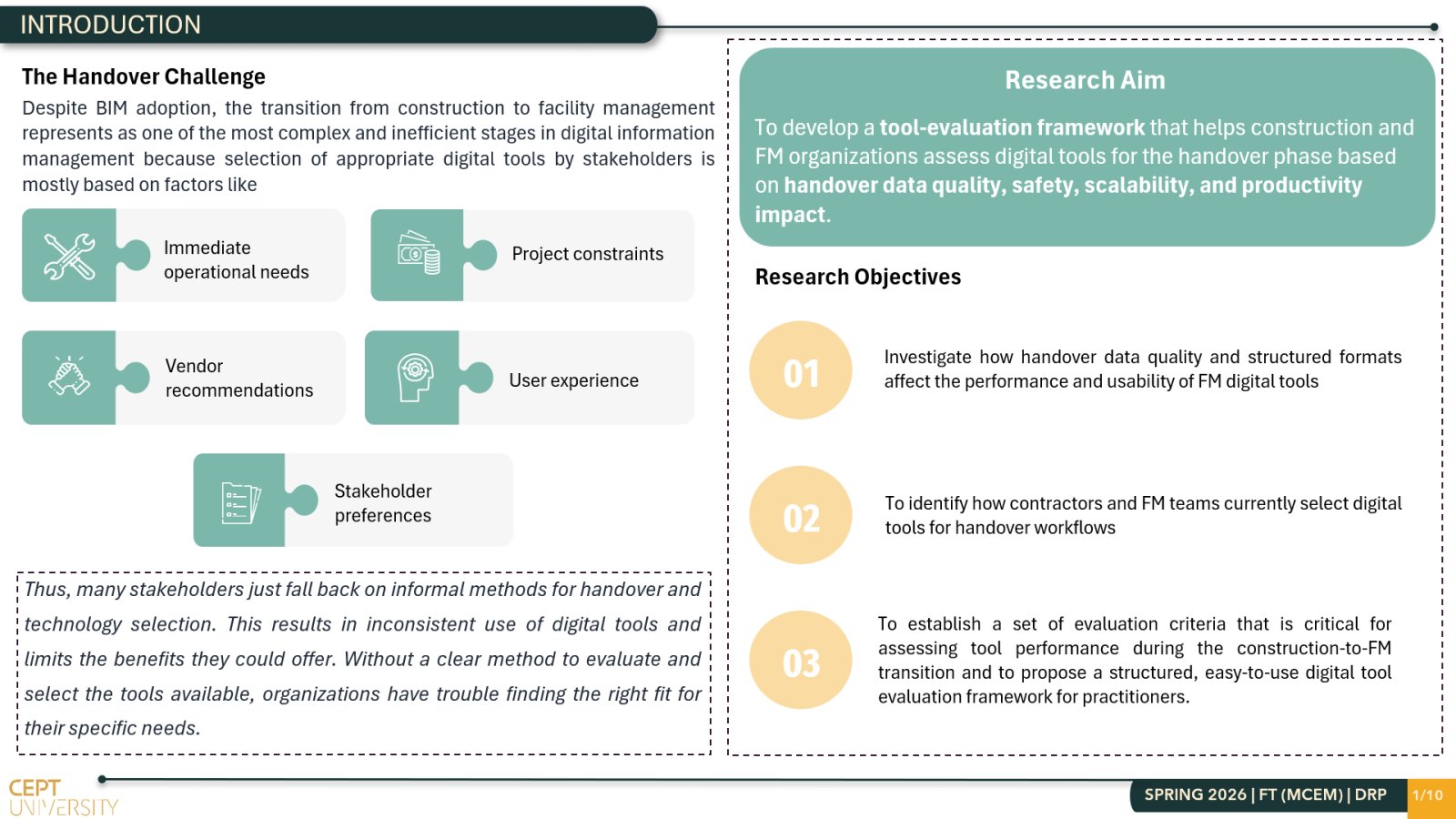
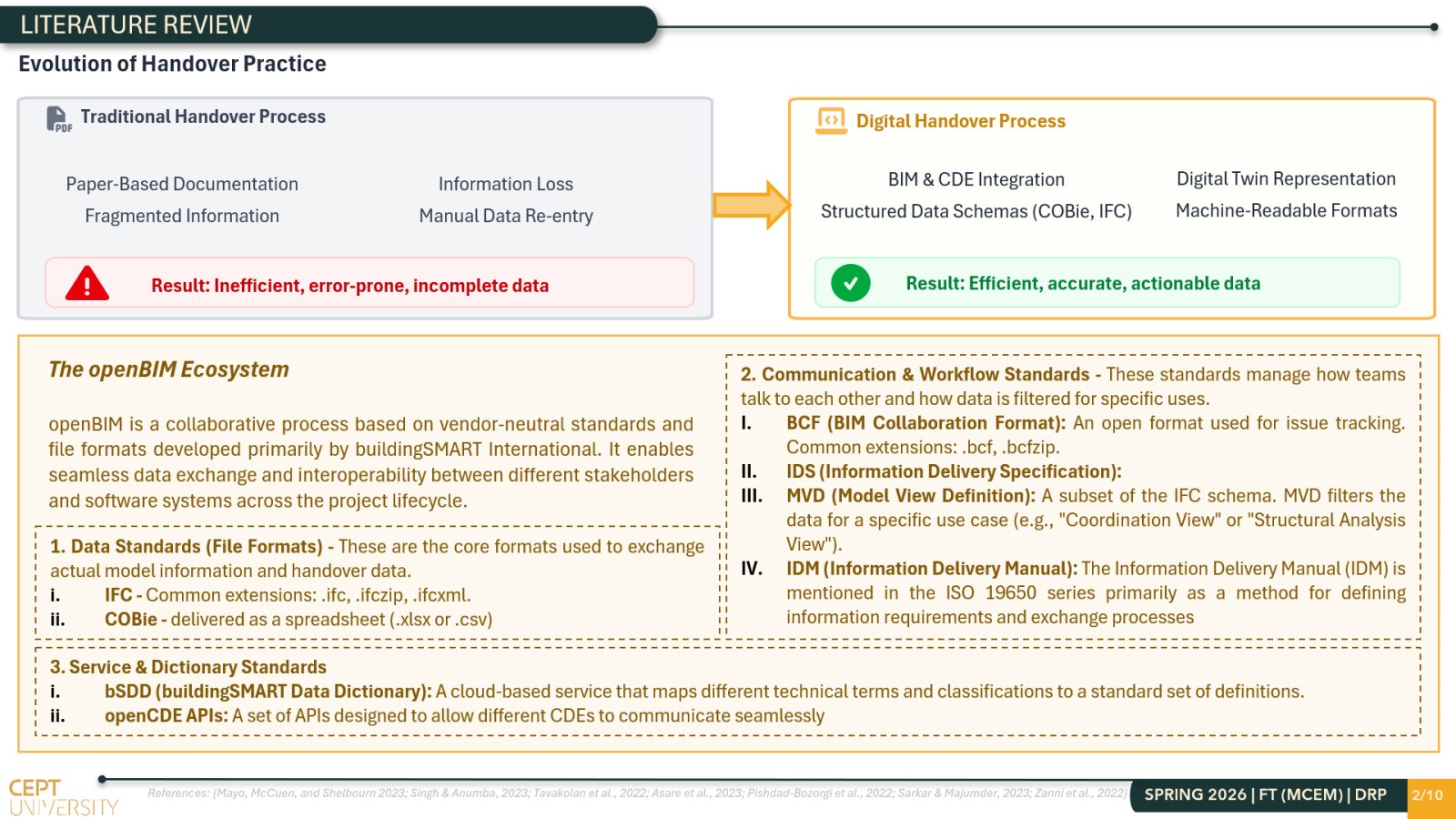
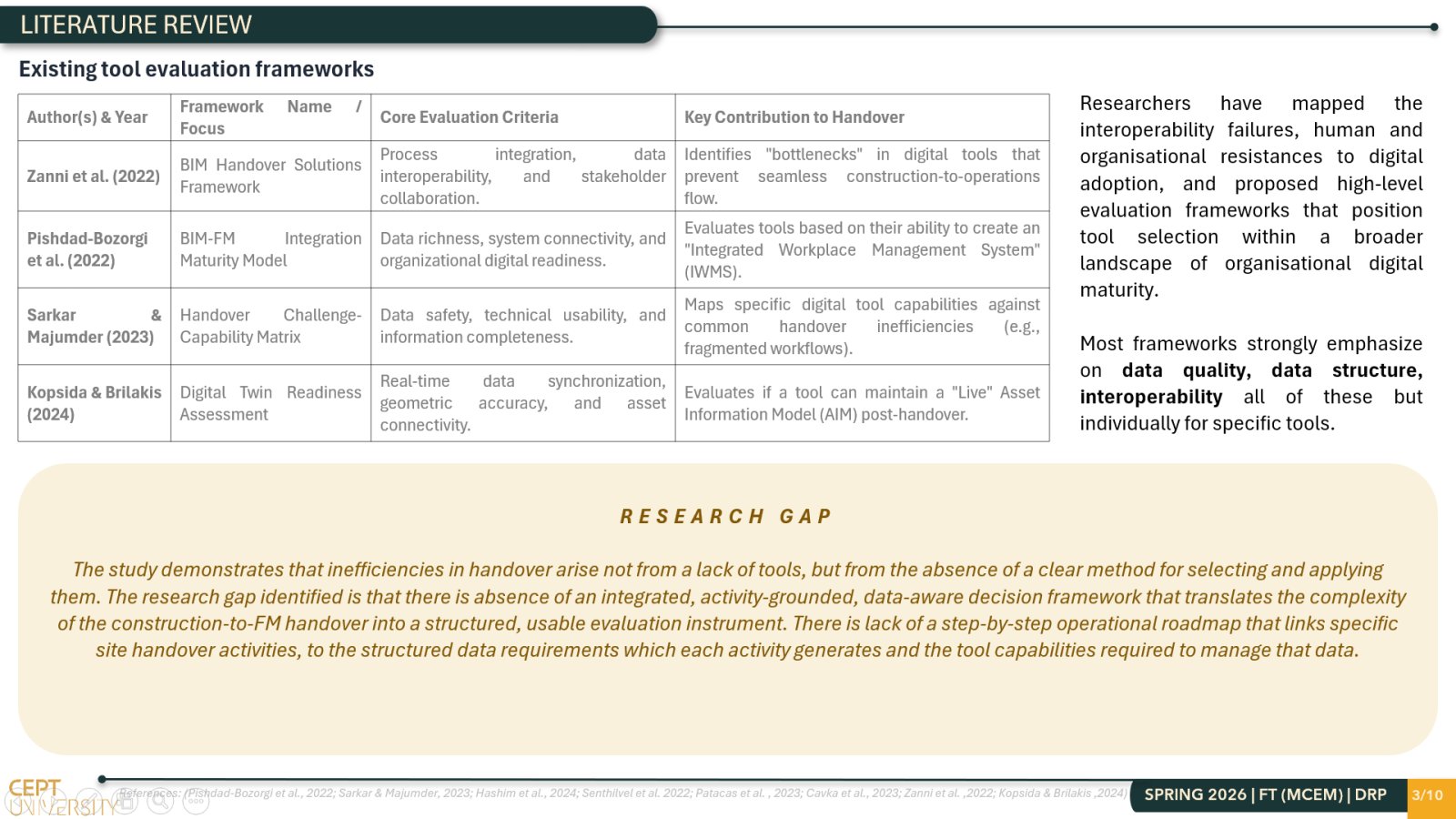
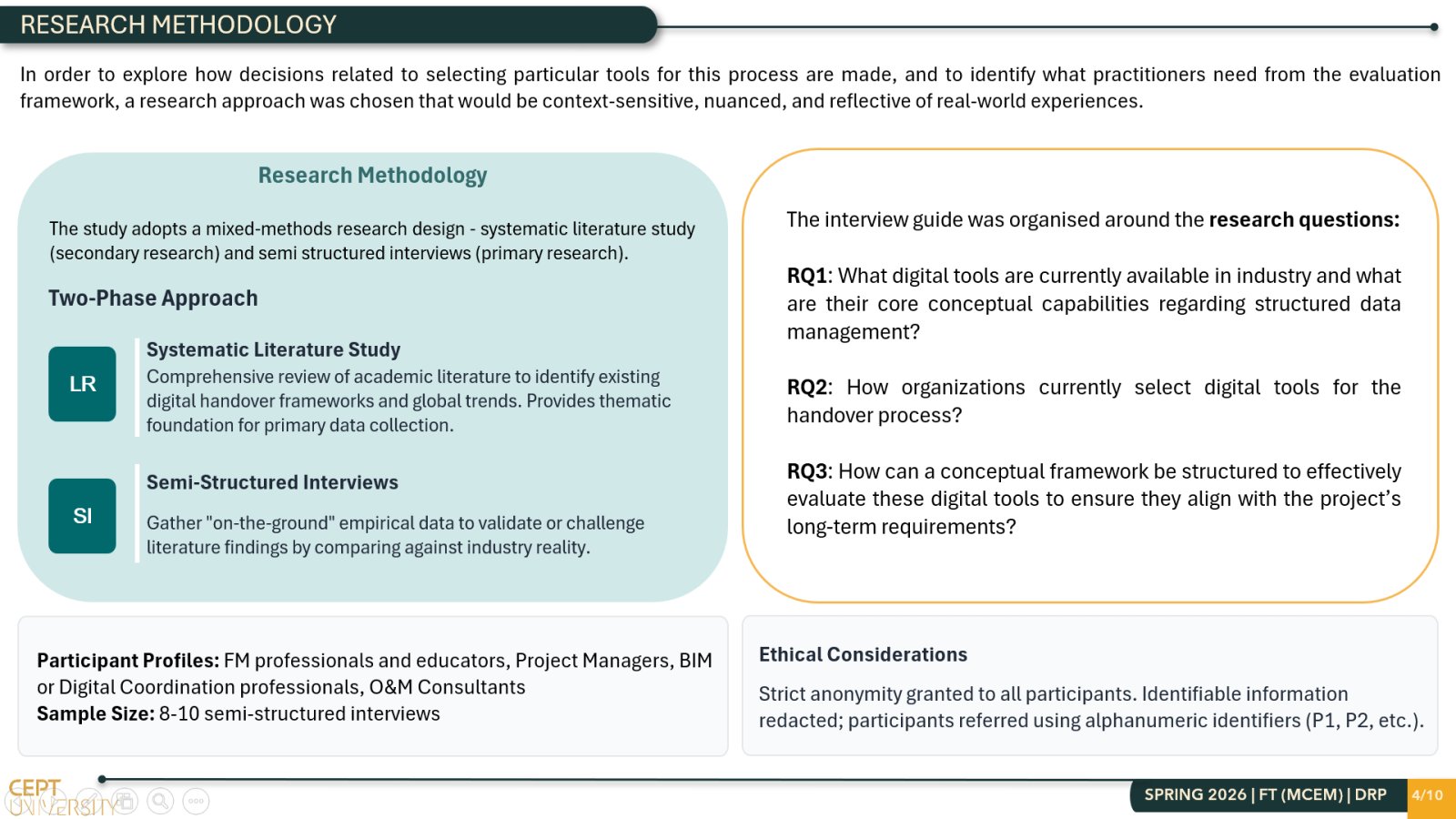
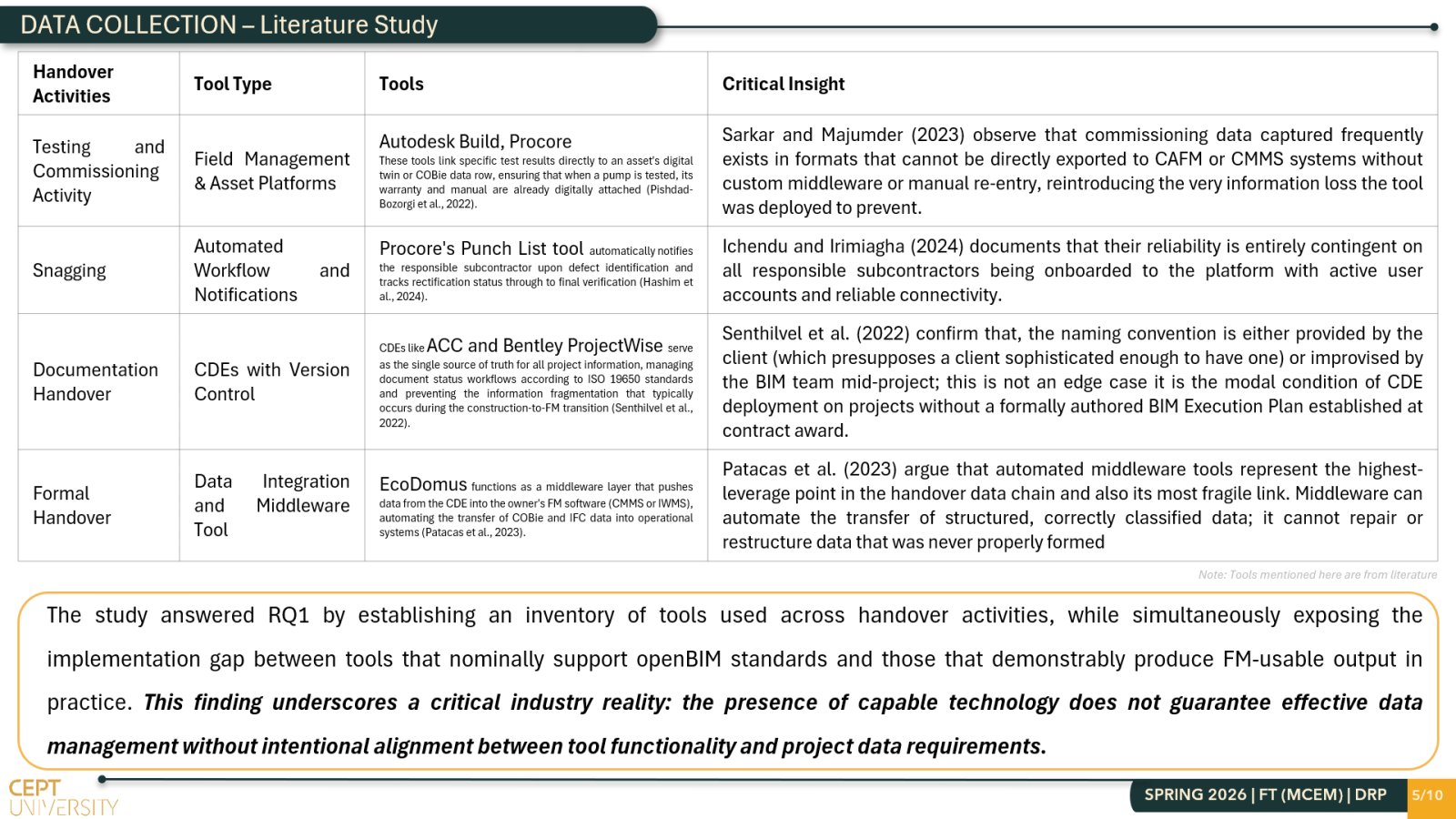
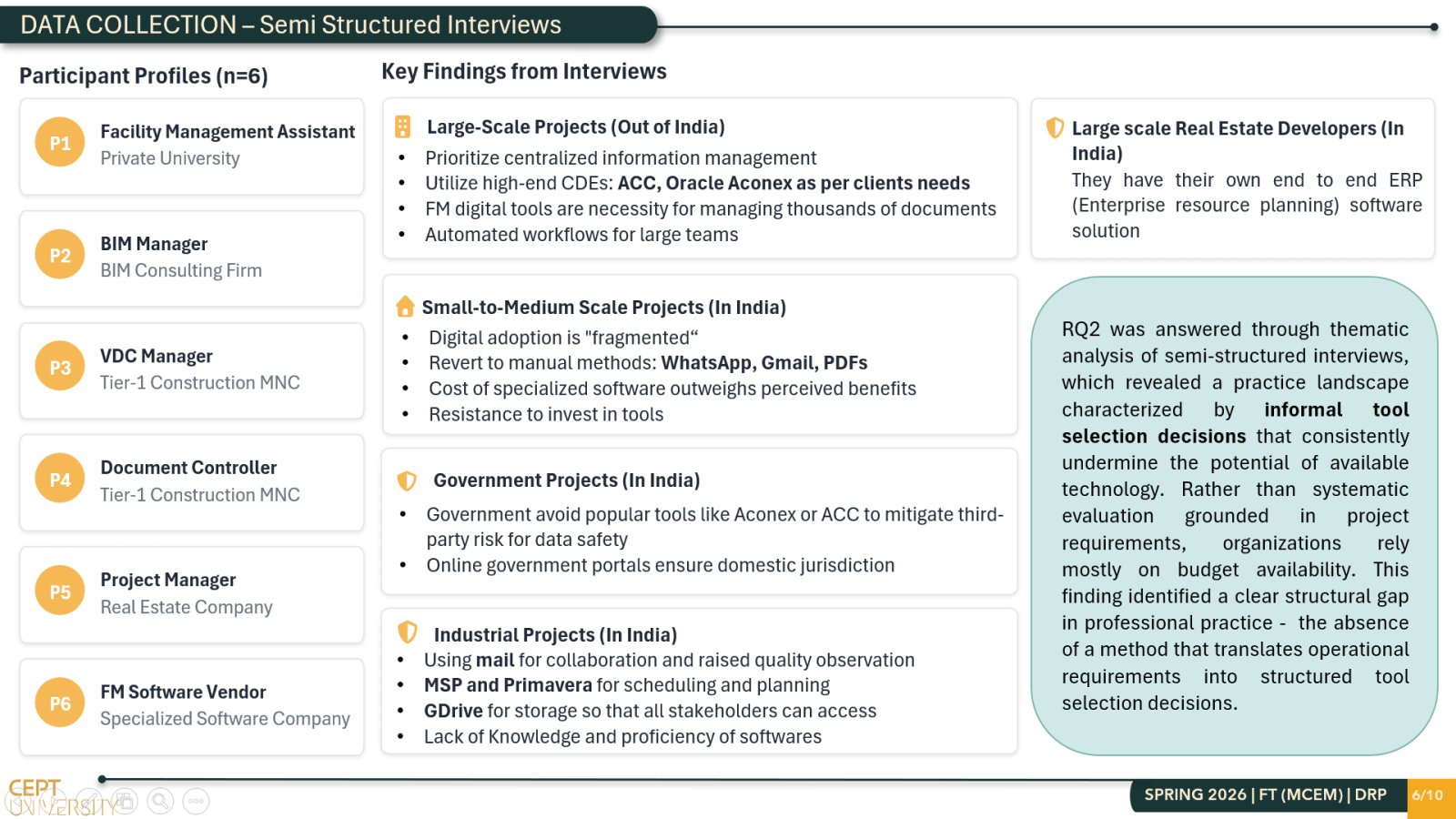
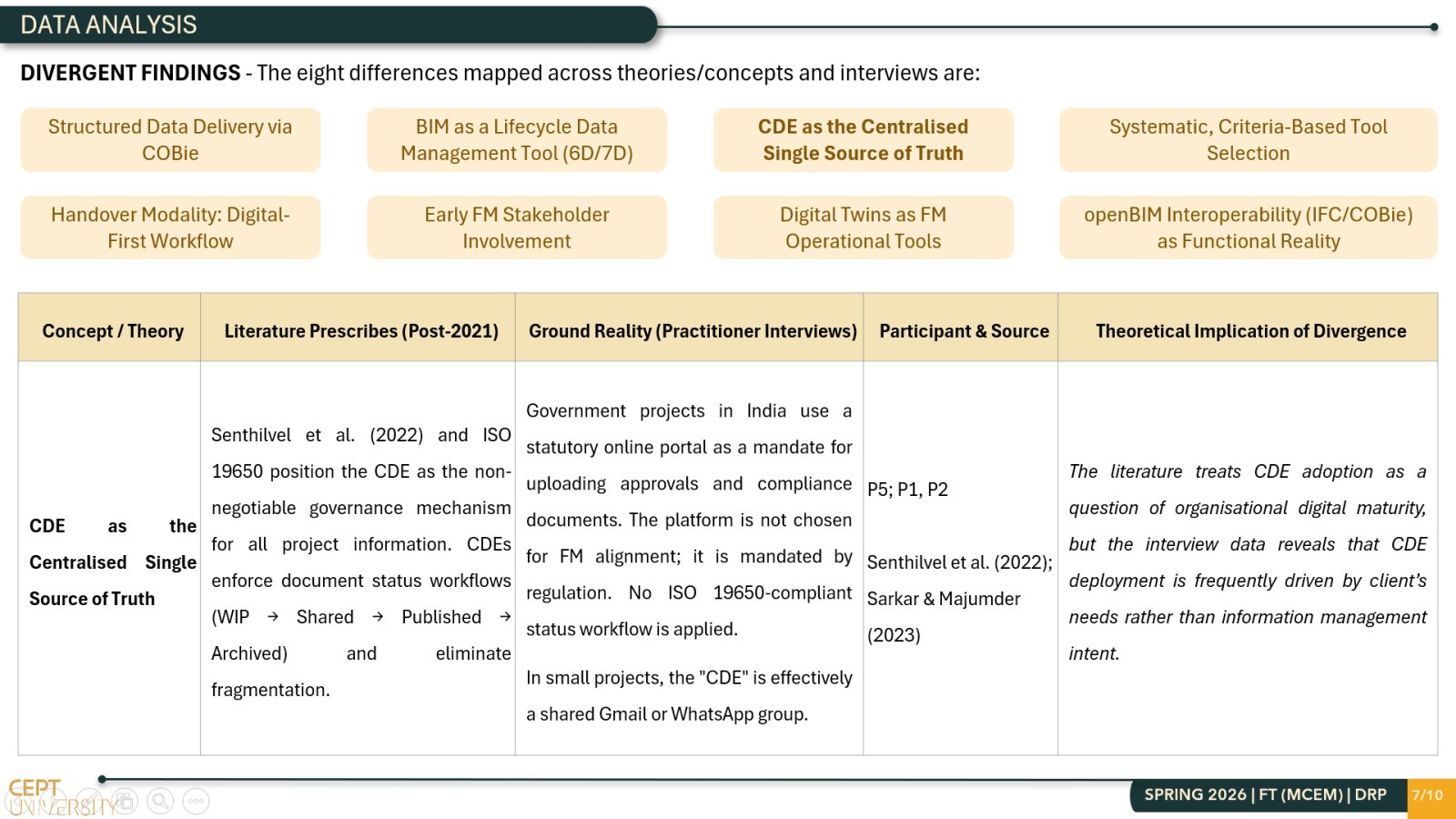
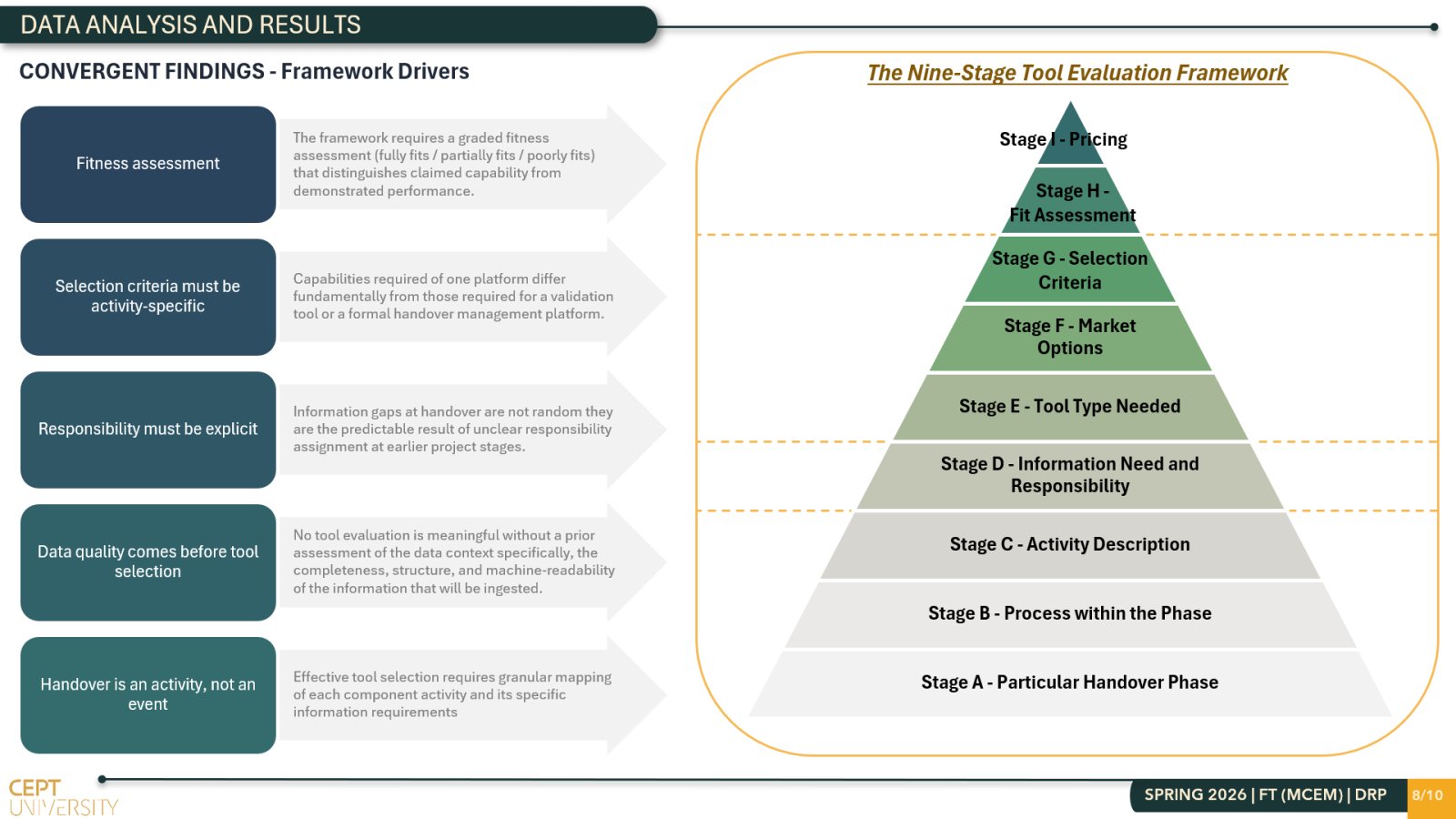
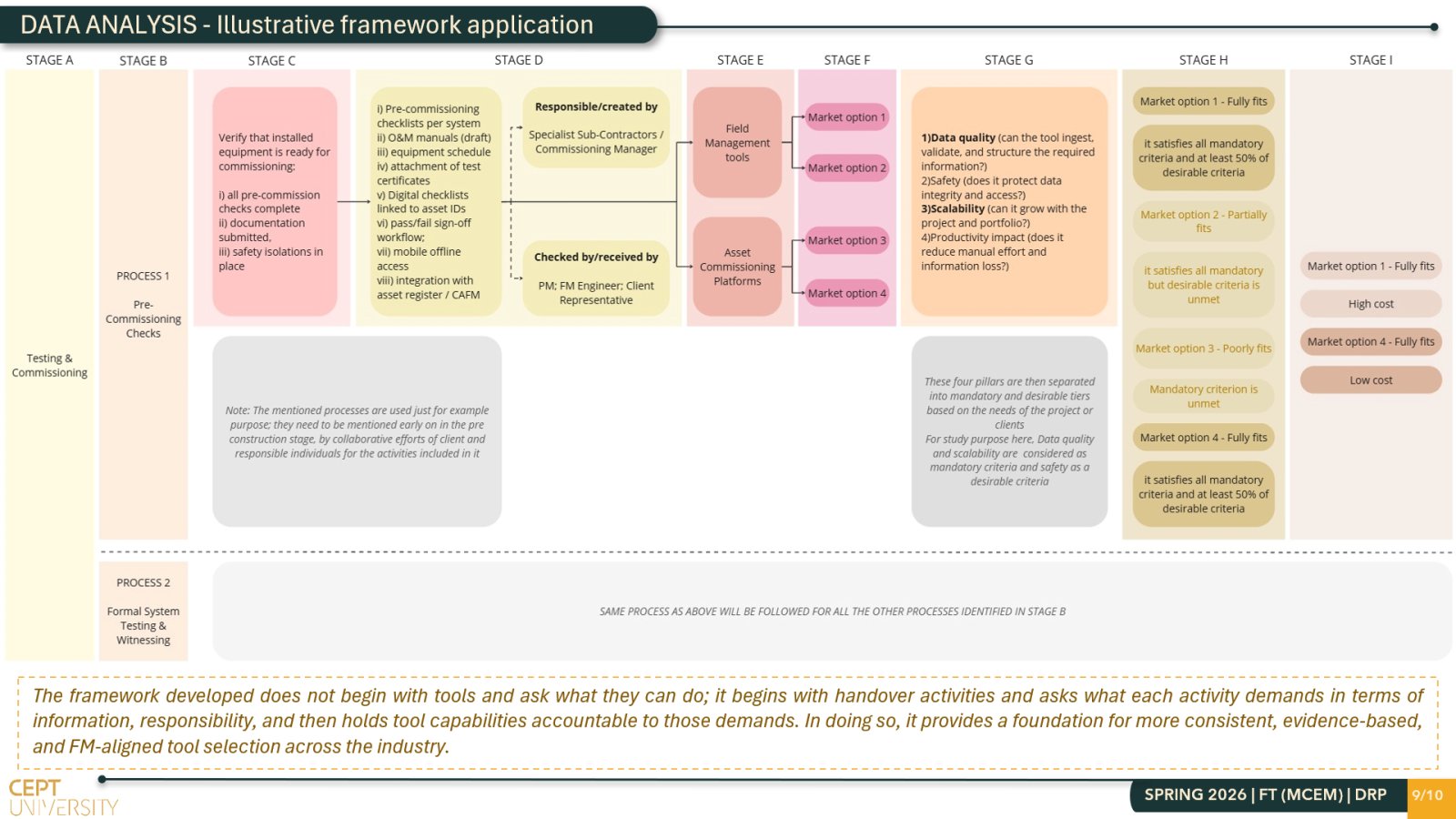
The transition from construction to Facility Management (FM) is a critical stage where significant project data is often lost due to fragmented information practices. Despite the adoption of BIM and CDEs, the AEC industry lacks a structured, practitioner-oriented method for aligning digital tools with handover activities. This study addresses this gap by developing a systematic evaluation framework that assesses tools based on data quality, safety, scalability, and productivity, promoting evidence-based rather than vendor-driven decision-making. The study adopts a mixed-methods approach, combining a review of post-2021 literature, including ISO 19650 and openBIM standards, with semi-structured interviews of industry experts. Findings highlight uneven BIM maturity, with adoption often limited to 5D in emerging markets while progressing toward 7D elsewhere. It also identifies three handover modalities, from manual to platform-based workflows. The results indicate that handover failures arise not from technology limitations but from the lack of a structured workflow between activities, information requirements, and tool capabilities. The key contribution of this research is a nine-stage construction-to-FM handover tool evaluation framework that emphasizes activity-based requirements over software features. Unlike existing models, it evaluates tools at the task level, ensuring decisions are grounded in actual data conditions. The framework advances BIM–FM integration research while offering a practical, scalable decision-support tool that reduces information loss and improves asset readiness at handover.