Your browser is out-of-date!
For a richer surfing experience on our website, please update your browser. Update my browser now!
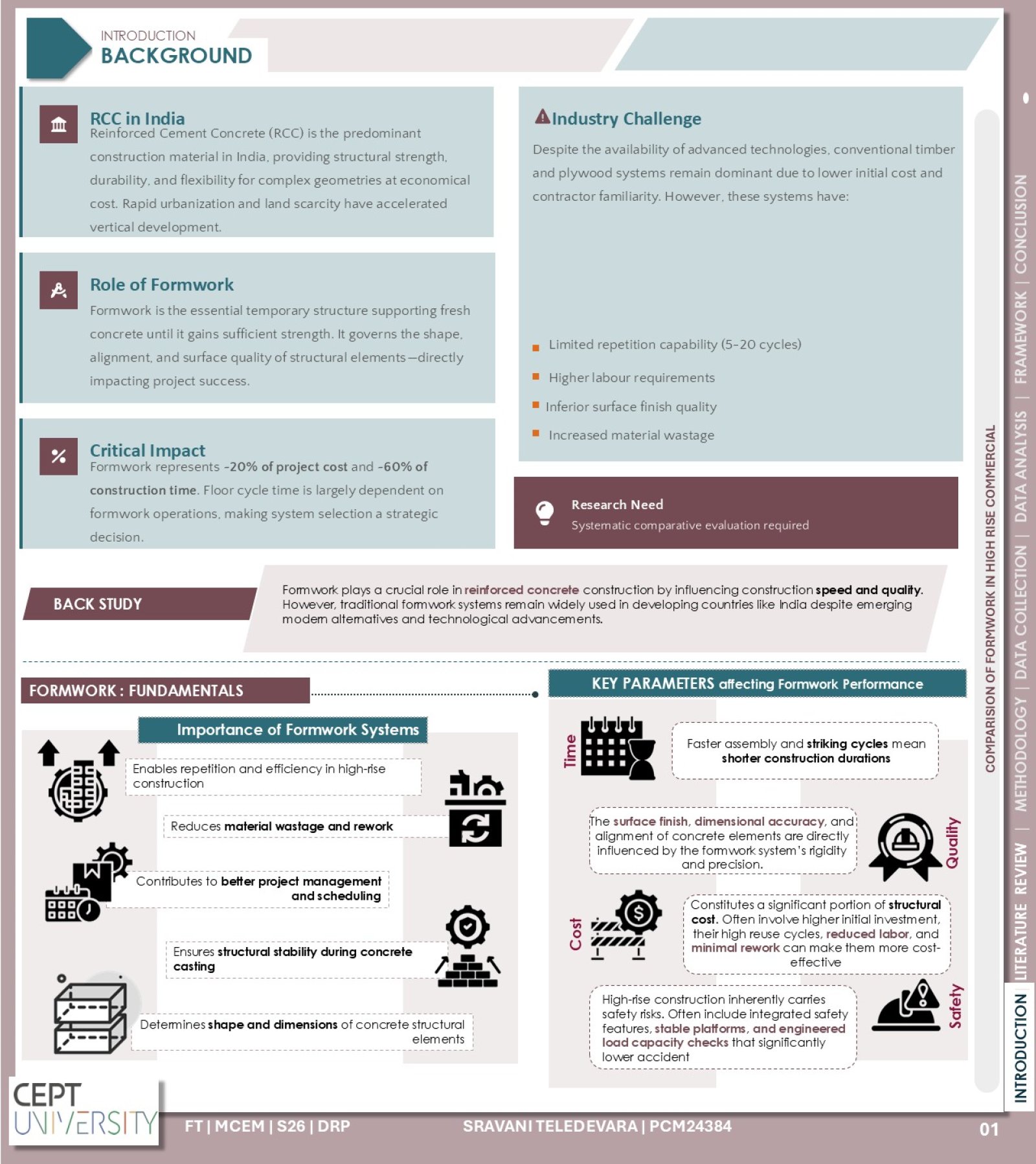
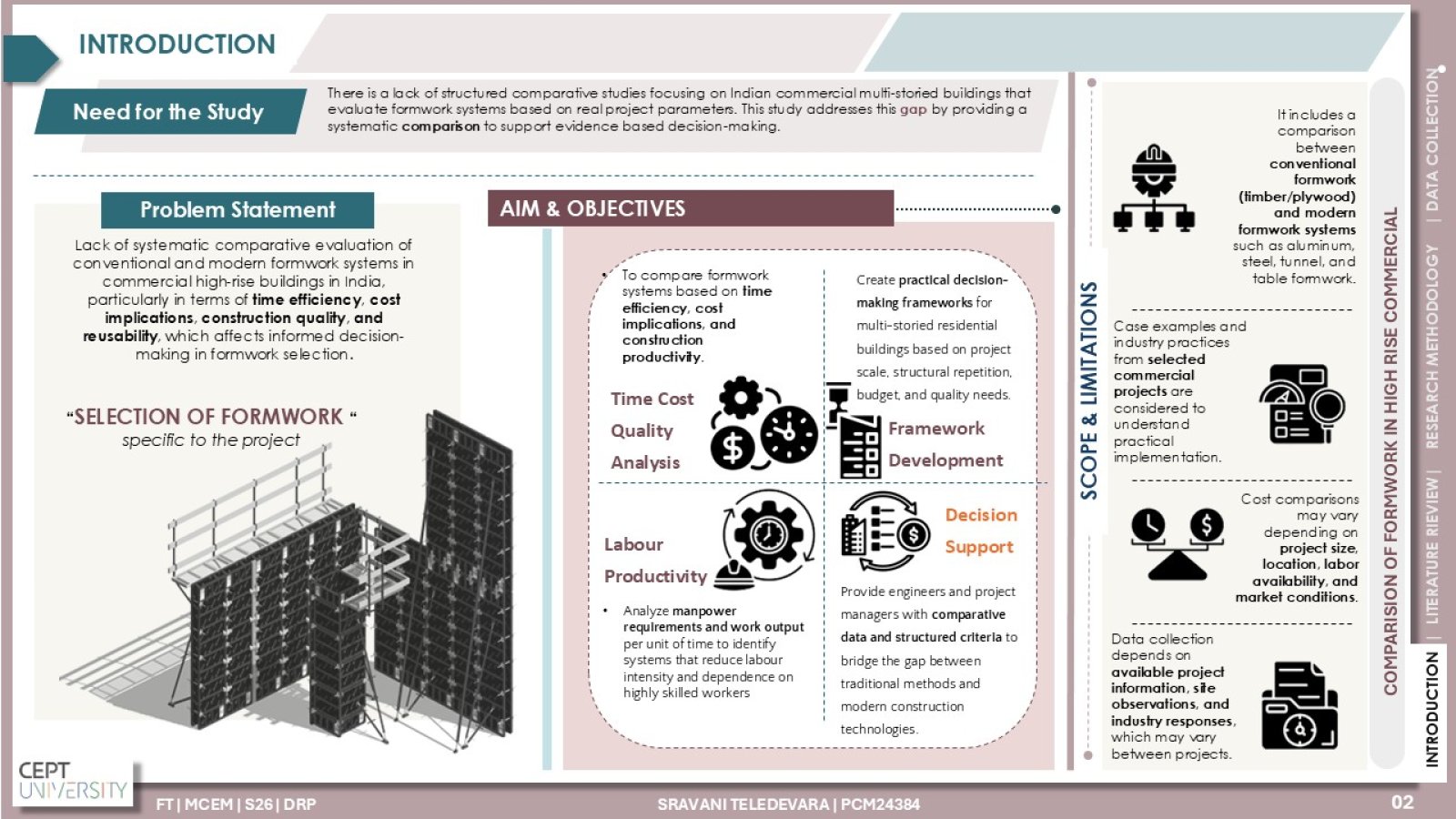
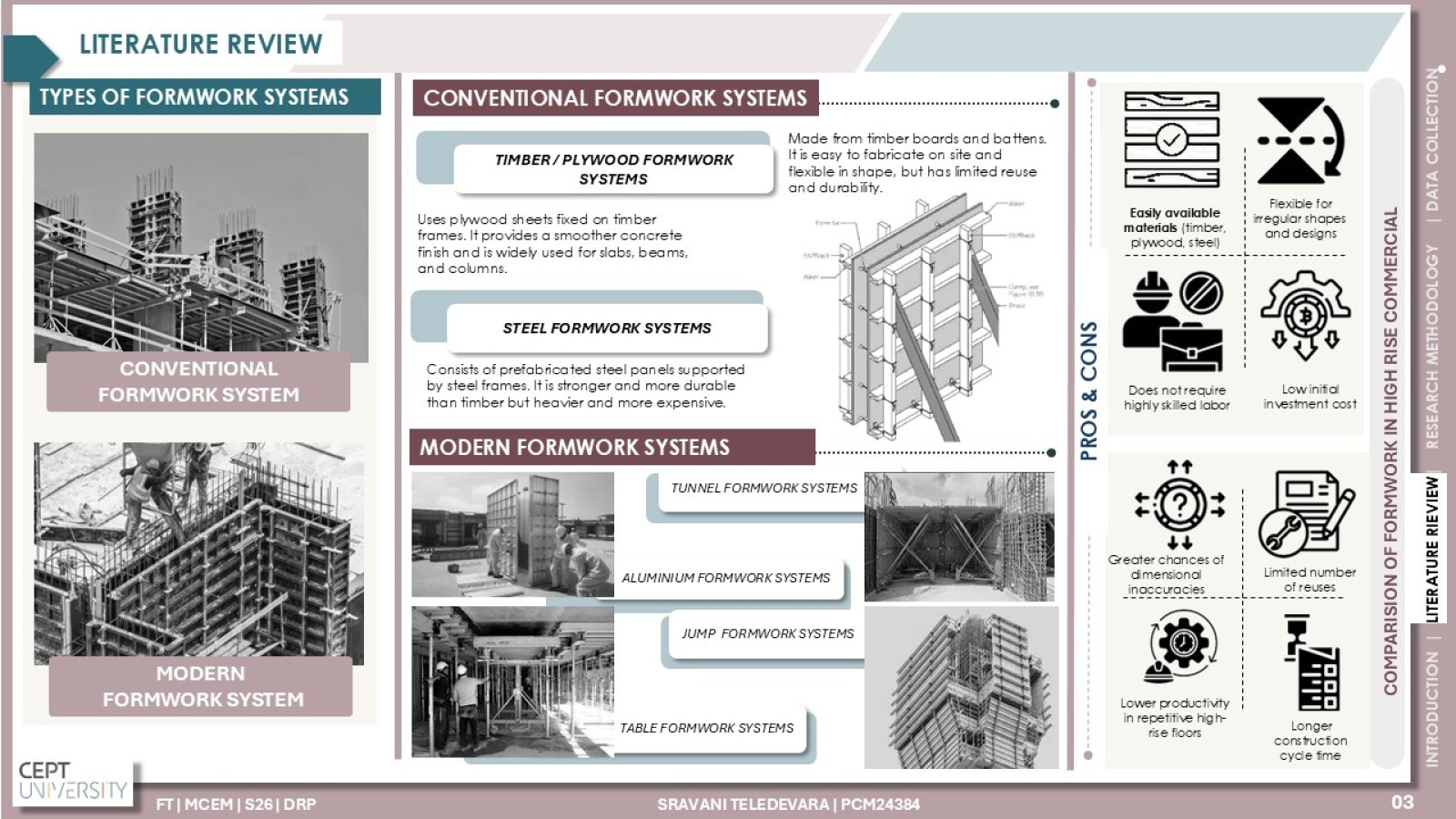
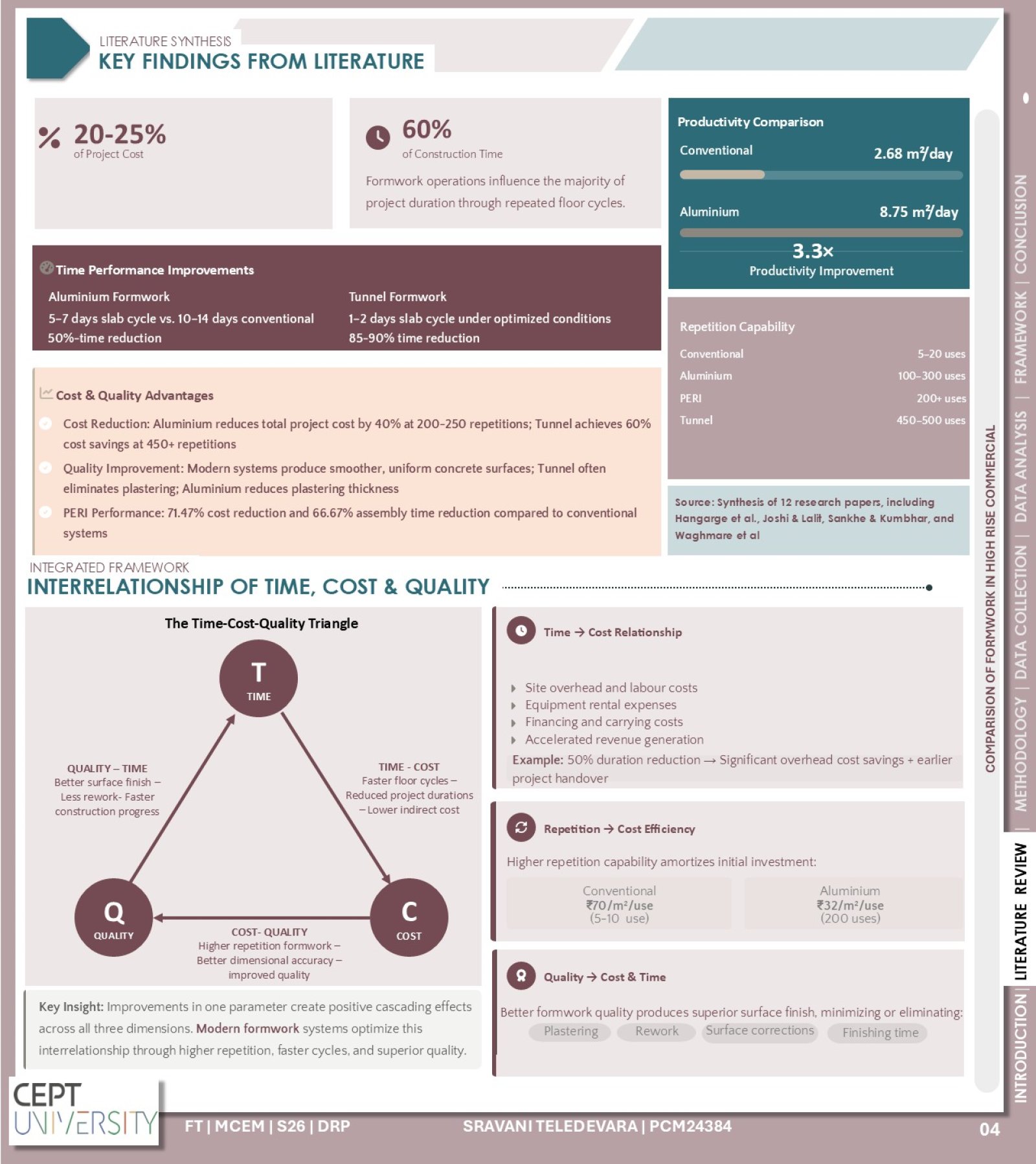
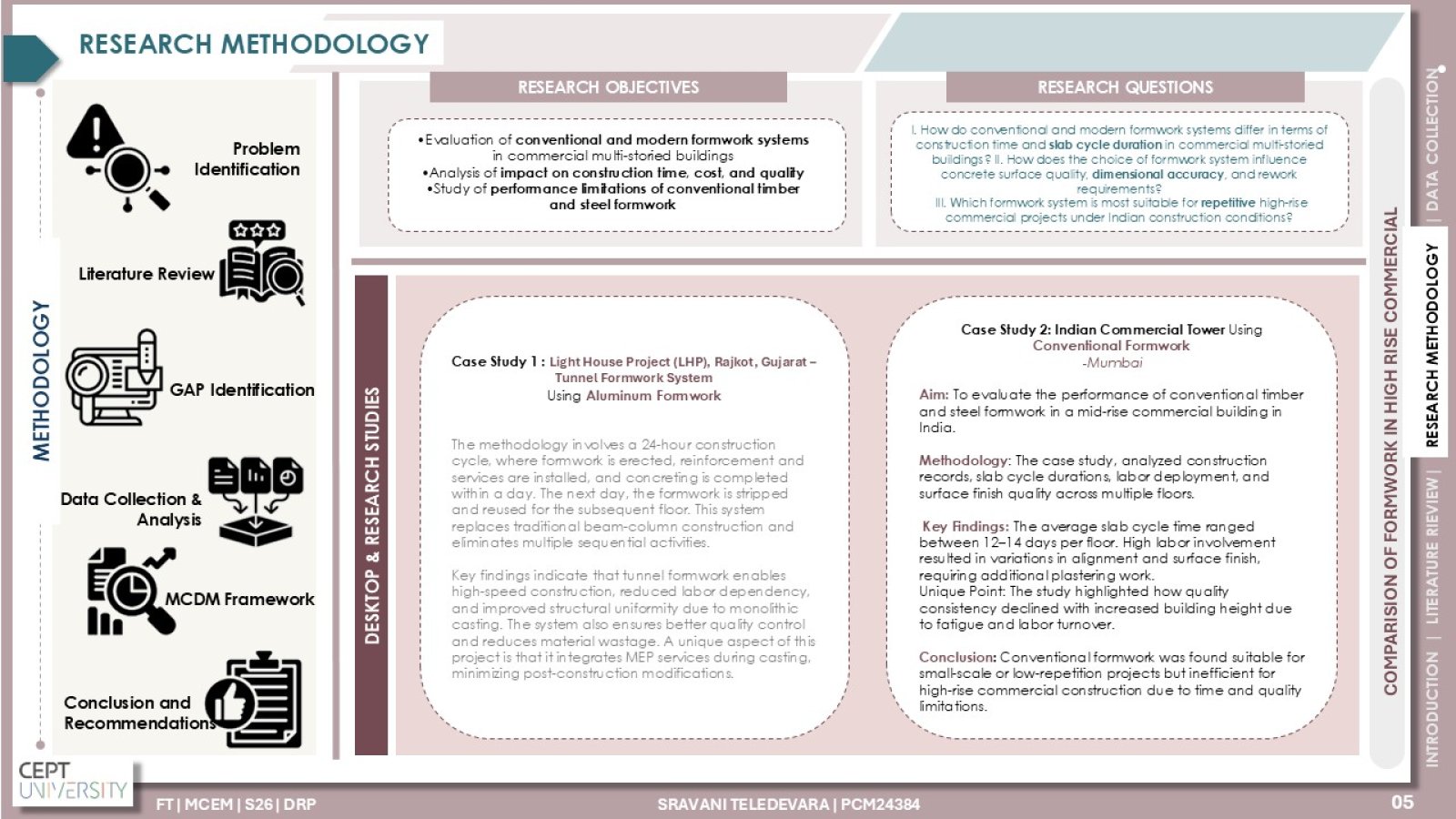
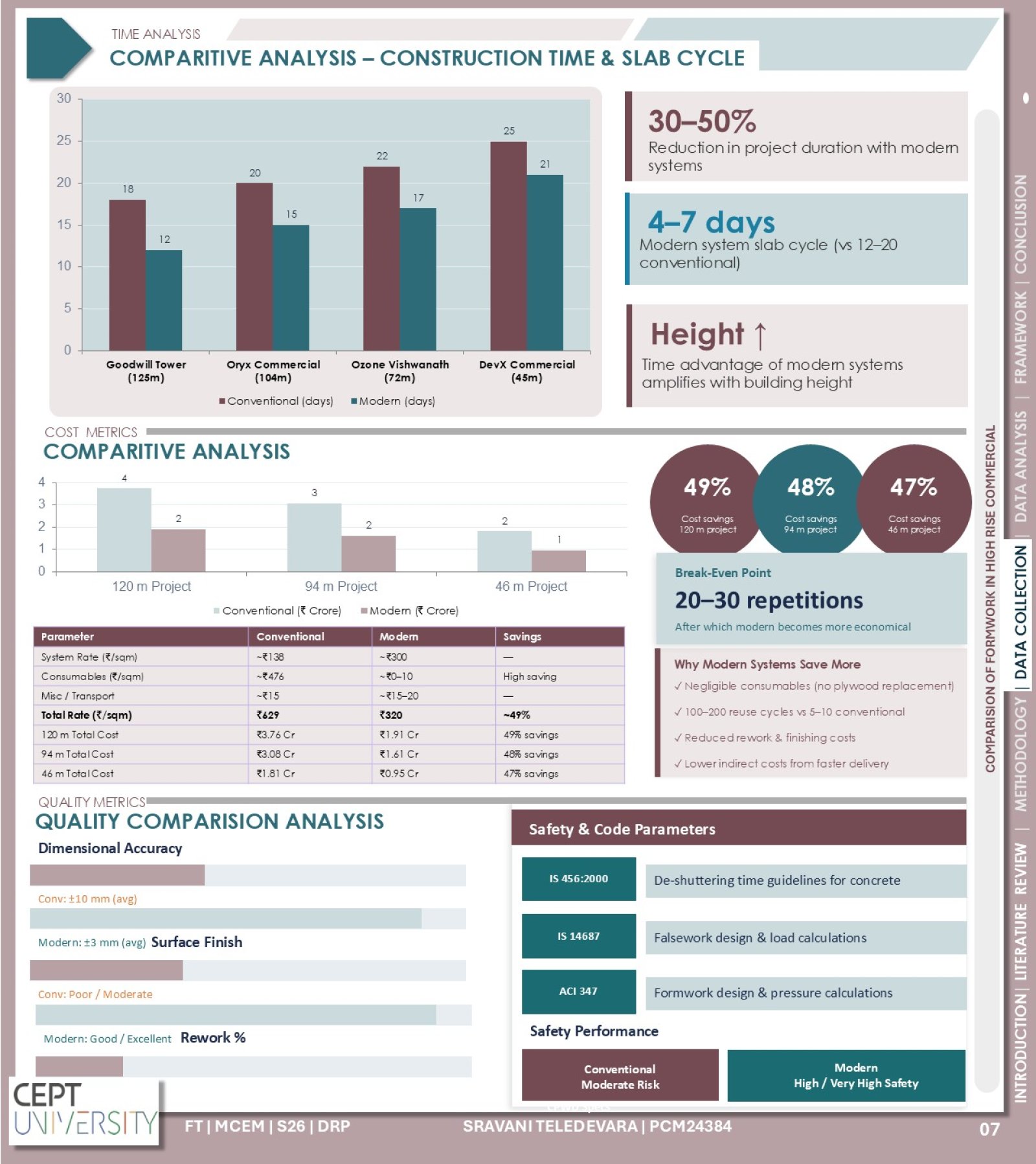
The thesis is highly important in the context of rapid urbanization and increasing demand for high-rise construction. Formwork accounts for a significant portion of the total construction cost and directly influences project duration and structural quality. Selecting an appropriate formwork system is therefore a critical decision for project success. Traditional formwork systems, though widely used, often involve higher labor dependency, longer cycle times, and variable quality due to manual processes. In contrast, modern formwork systems such as aluminum, tunnel, table, and jump formwork offer improved speed, dimensional accuracy, surface finish, and safety. However, their higher initial cost and requirement for skilled planning often raise concerns among project stakeholders. This thesis is important because it provides a systematic comparison of conventional and modern formwork systems based on real project parameters such as time efficiency, cost optimization, quality of concrete finish, labor productivity, and reusability. The findings help engineers, contractors, and project managers make informed decisions tailored to project scale, repetition, and resource availability. By evaluating formwork performance in multi-storied buildings, the study contributes to improved construction planning, sustainable material usage, and enhanced quality control. Ultimately, the research supports adoption of efficient construction technologies, leading to 2 faster project delivery, cost savings, and improved structural performance in the modern construction industry.