Your browser is out-of-date!
For a richer surfing experience on our website, please update your browser. Update my browser now!
Role of Project Coordination in Museum Projects -
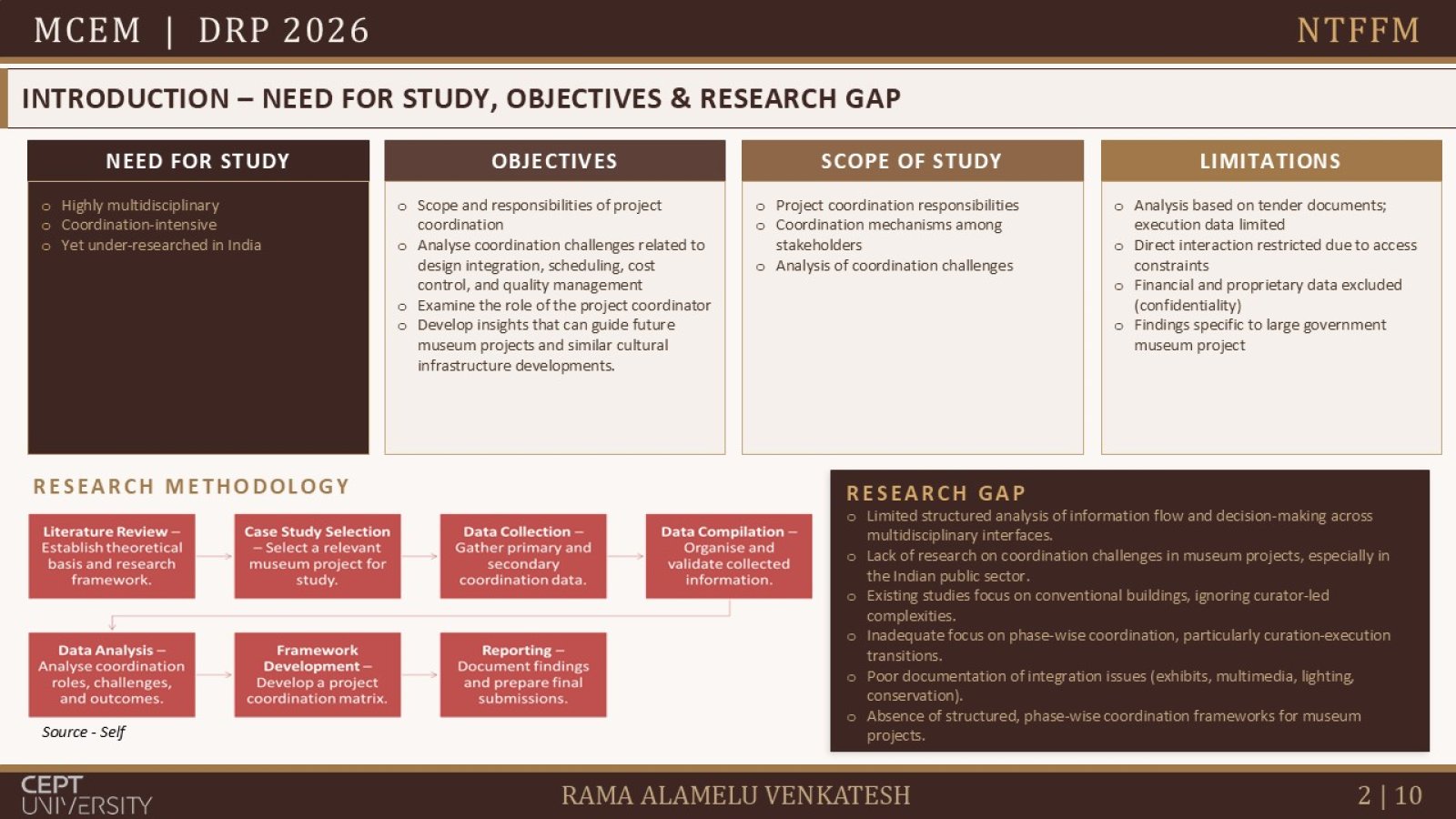
Museum projects represent a distinctive category of construction undertakings that
extend beyond conventional building delivery to encompass layered coordination across
architecture, exhibition design, curatorial vision, building systems, conservation
standards, and advanced technologies. This research examines the role of project
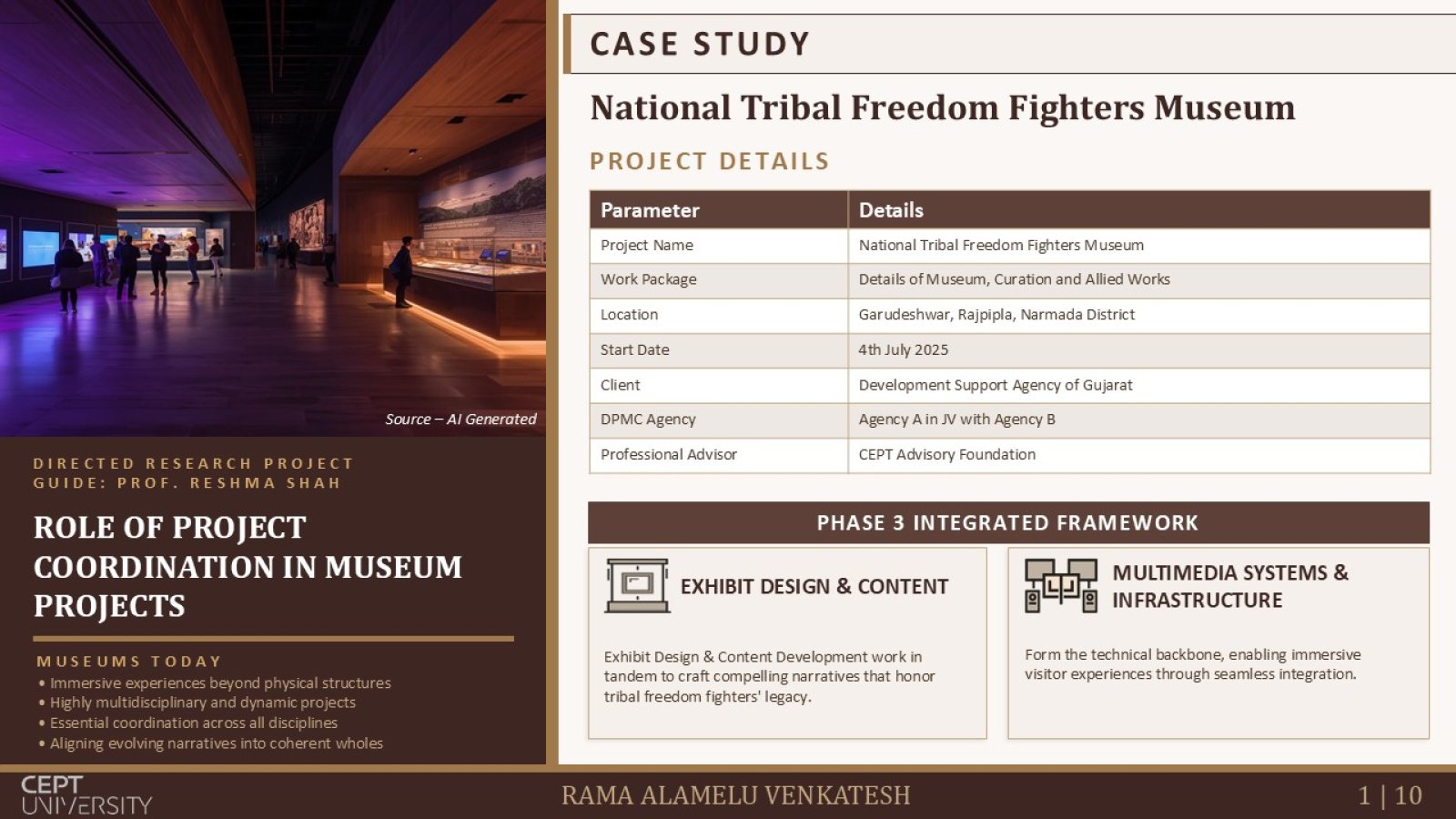
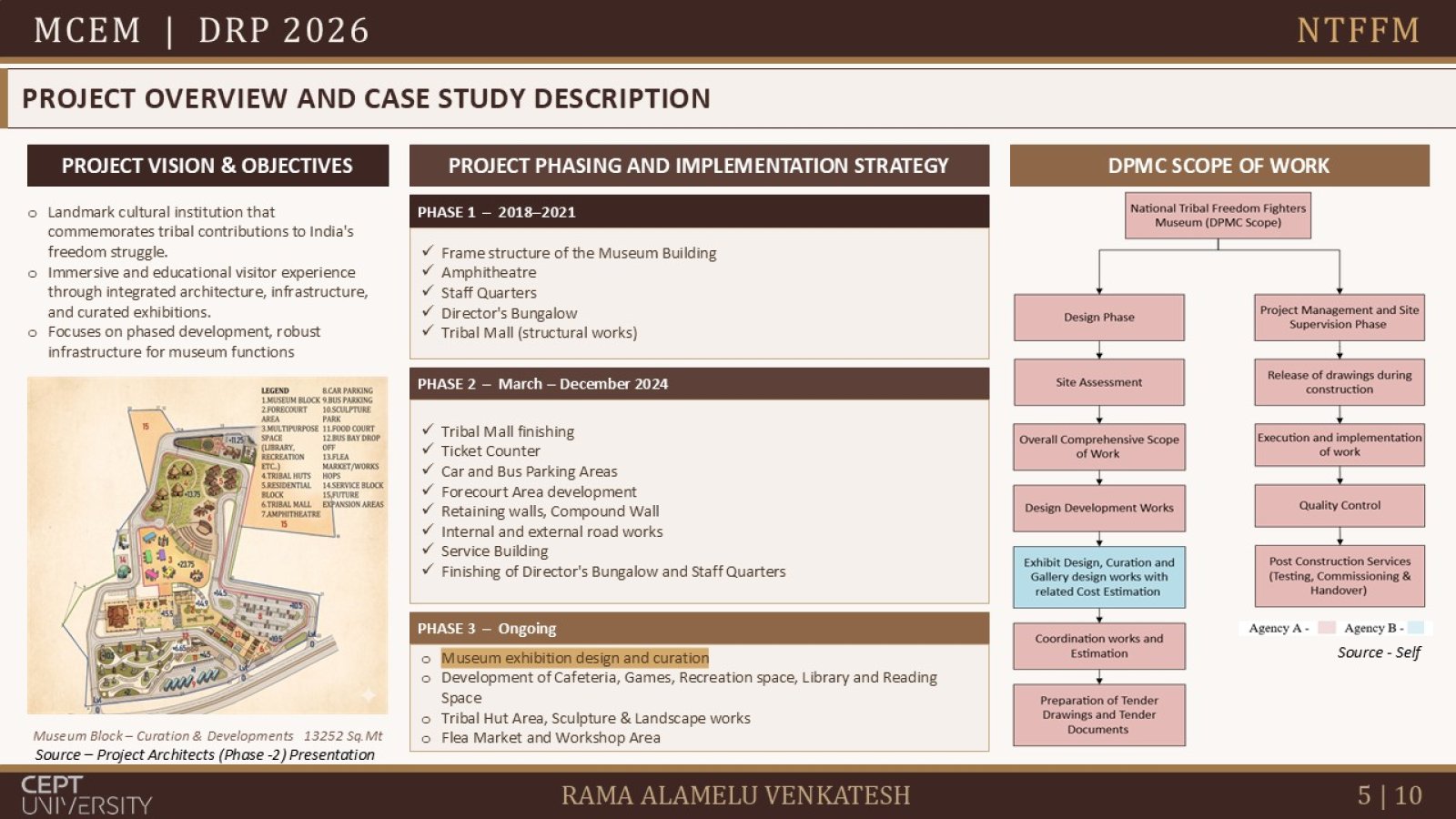
coordination in Phase 3 (Museum, Curation and Allied Works) of the National Tribal
Freedom Fighters Museum at Garudeshwar, Gujarat, implemented through a Design and
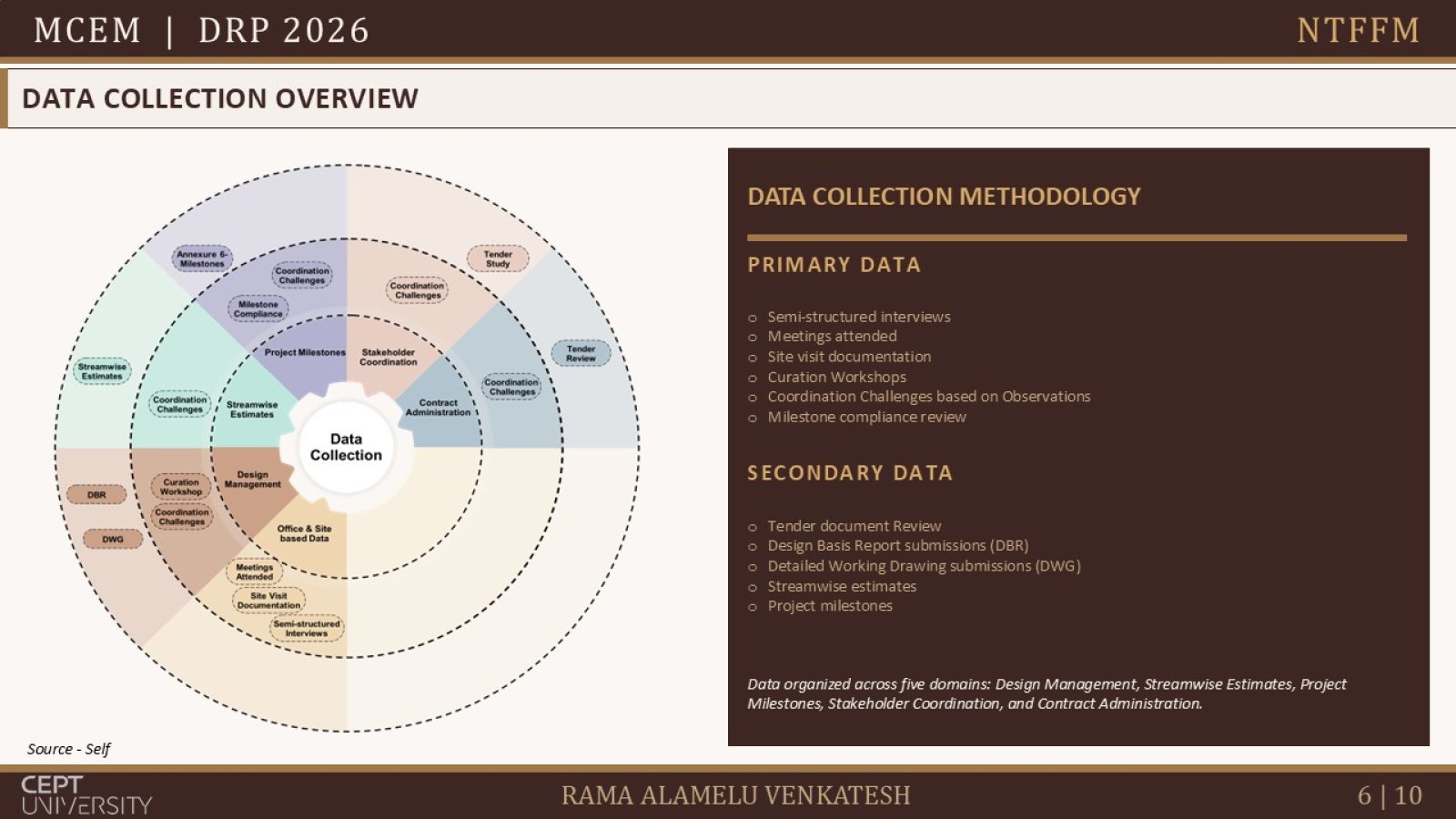
Project Management Consultant framework. A qualitative case study methodology was
employed, utilizing primary data from interviews, site observations, and design reviews,
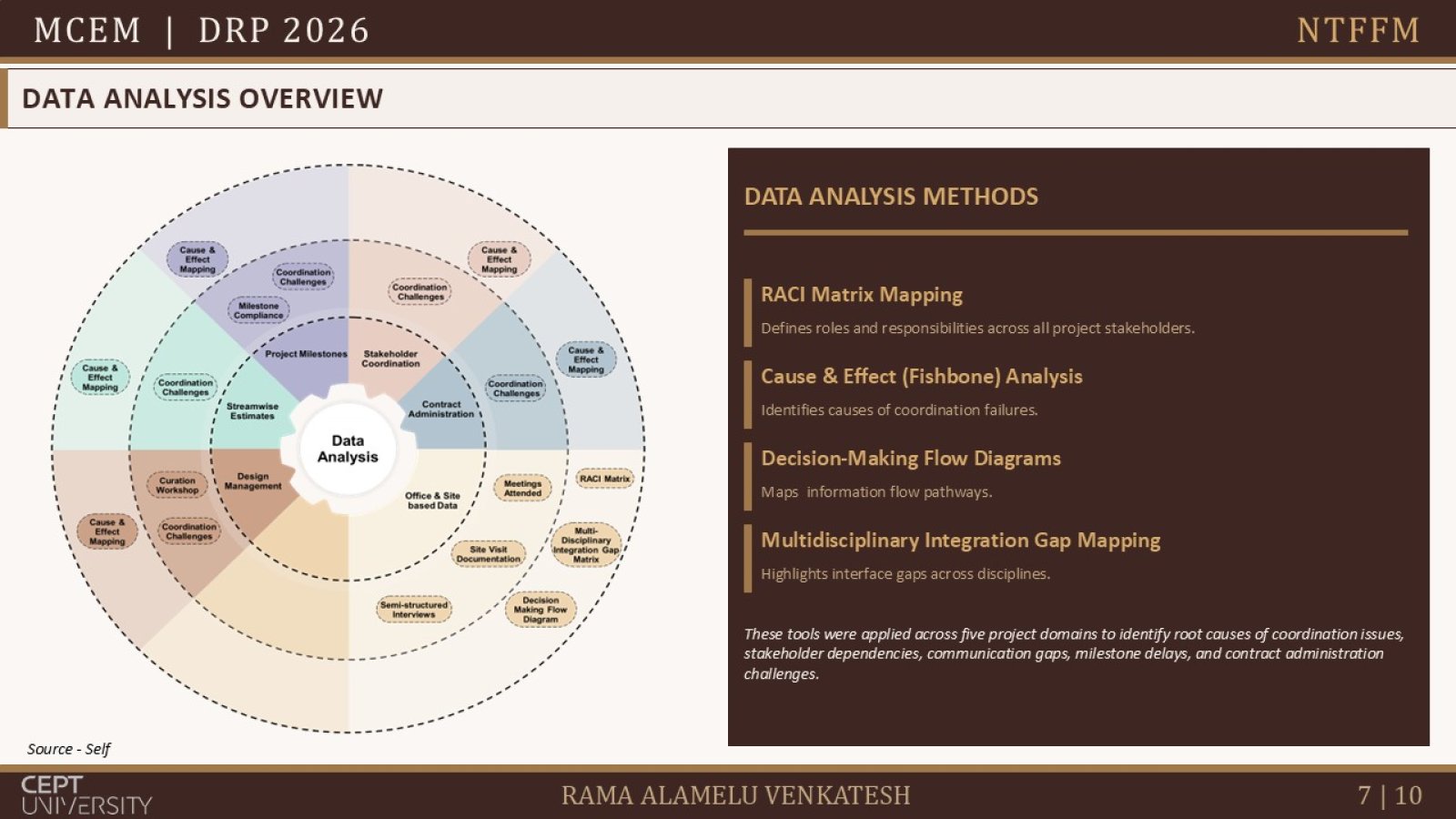
combined with secondary data from contract documents and project records. Analysis
tools included RACI matrices, multidisciplinary integration gap mapping, decision
making flow analysis, and cause-and-effect analysis across design management,
streamwise estimates, project milestones, stakeholder coordination, and contract
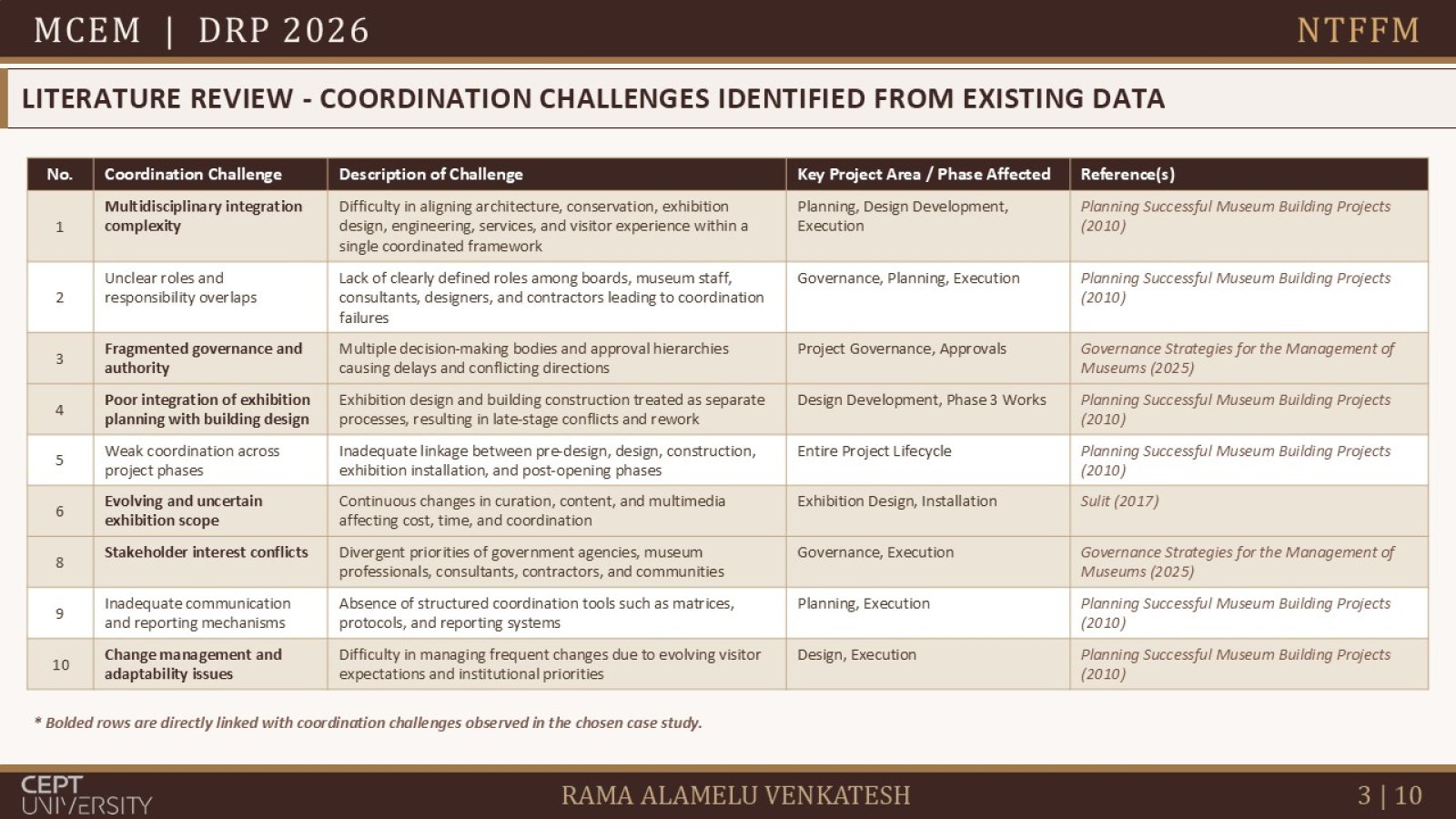
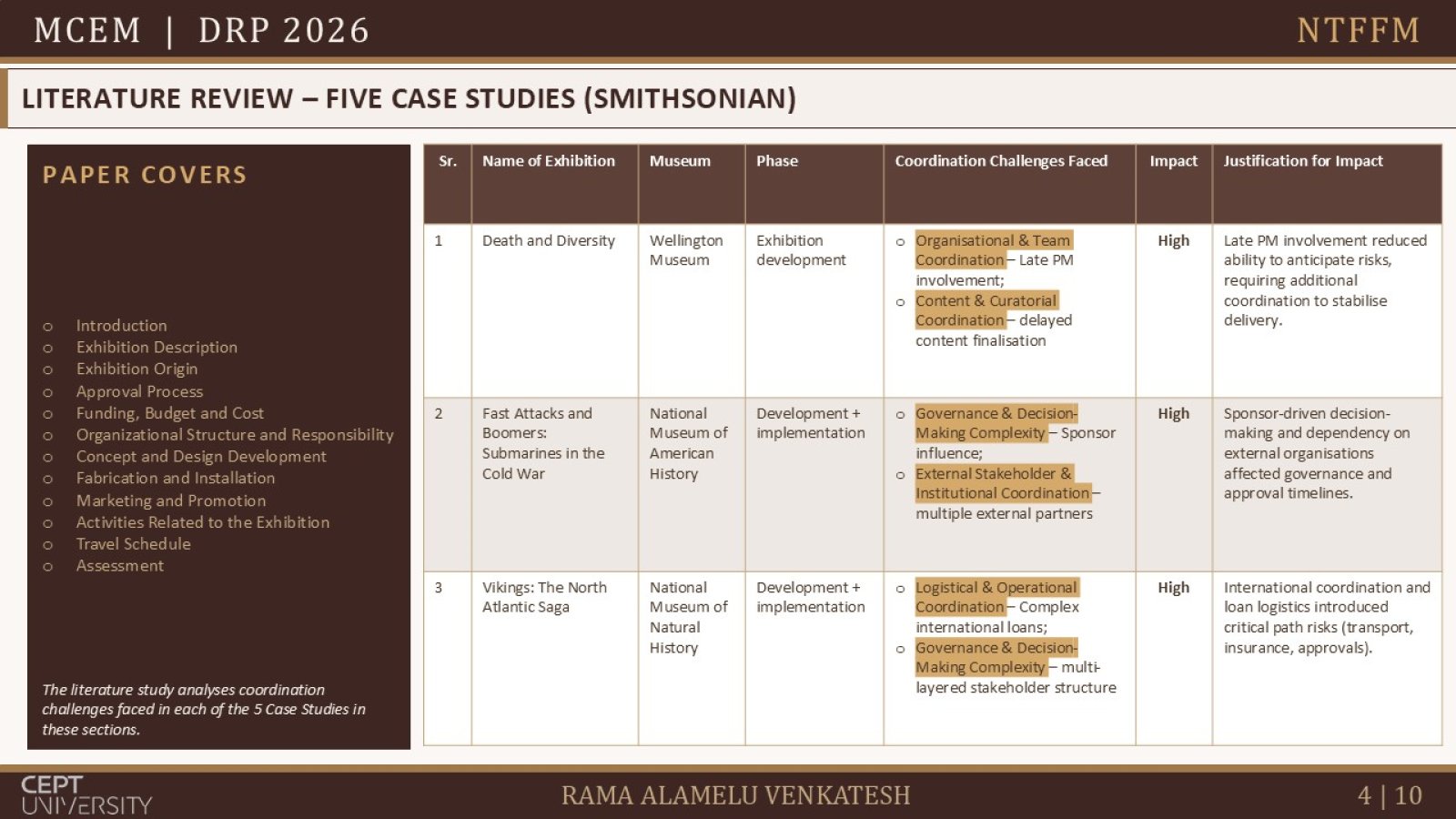
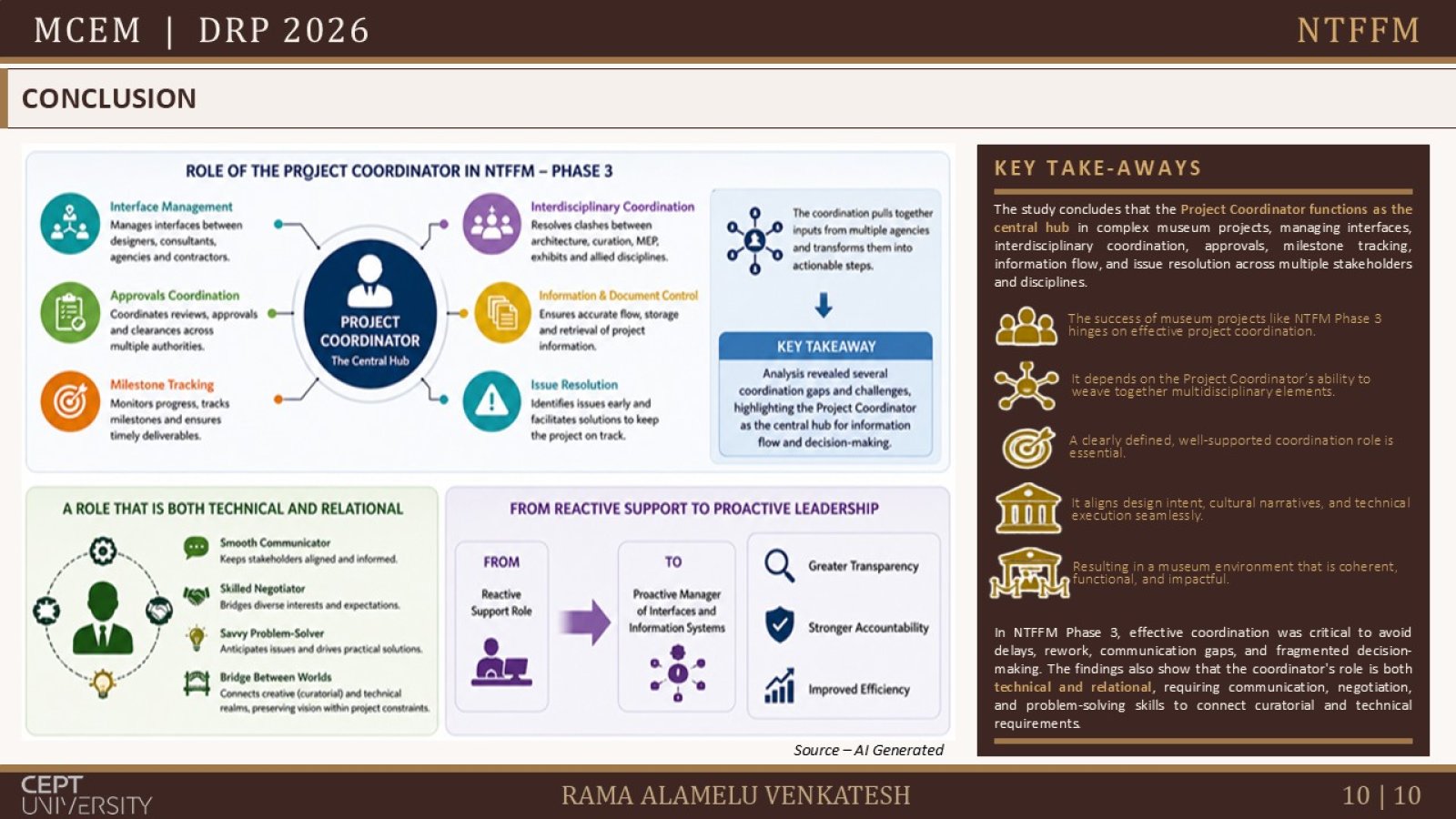
administration. Findings reveal that project coordination functions as an integrative
mechanism essential to reconciling multidisciplinary inputs, managing information flows,
resolving stakeholder conflicts, and maintaining alignment between curatorial intent and
technical execution. Coordination gaps were identified in design standardization, cost
estimation transparency, milestone tracking, inter-agency communication, and contract
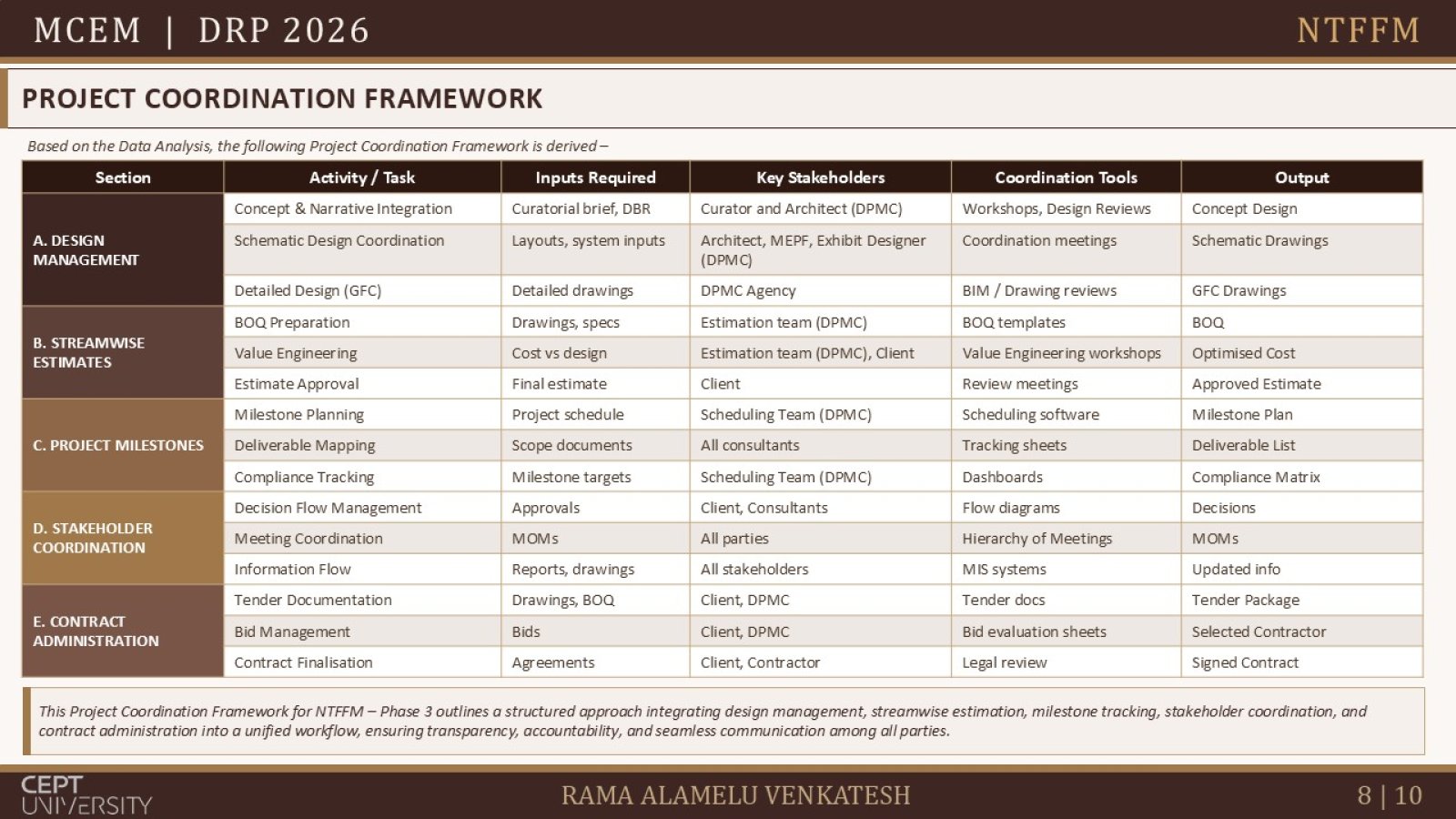
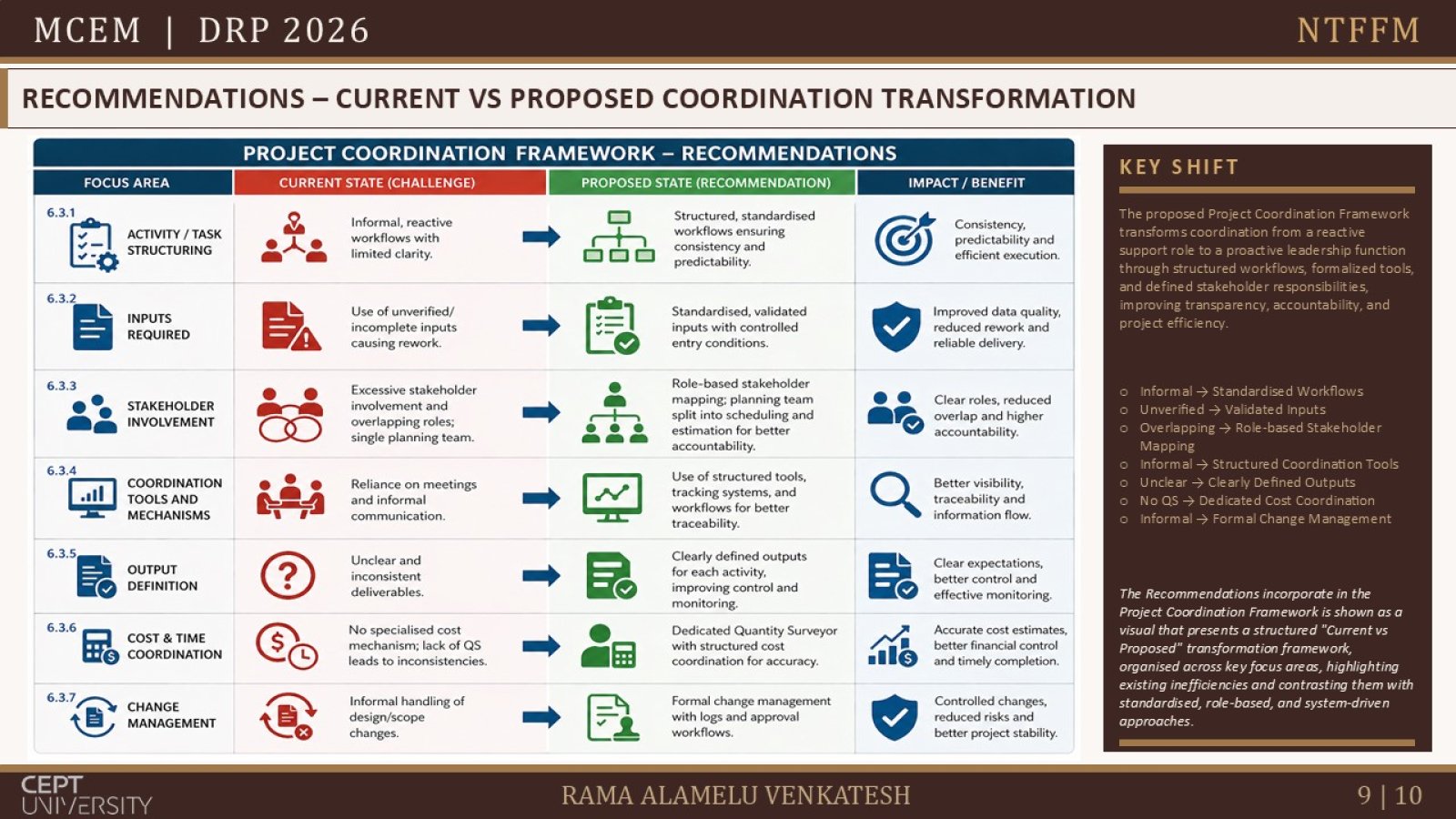
compliance. A structured Project Coordination Framework is proposed that transitions
coordination from informal, meeting-driven processes to systematic, activity-based
coordination with clearly defined inputs, processes, and deliverables. This framework
addresses the distinctive coordination demands of large-scale, publicly funded museum
projects and offers actionable guidance for practitioners managing similar cultural
infrastructure initiatives.