Your browser is out-of-date!
For a richer surfing experience on our website, please update your browser. Update my browser now!
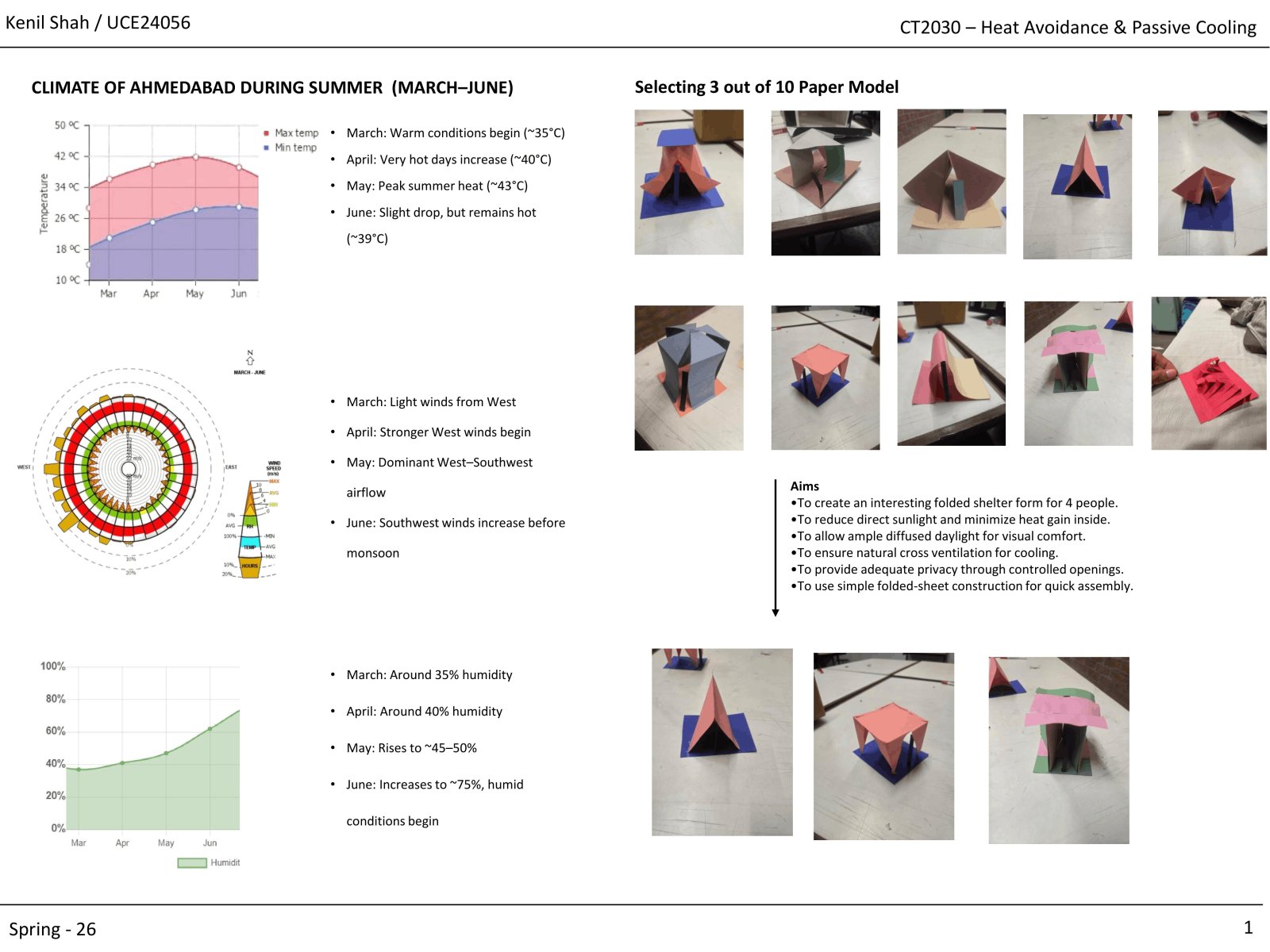
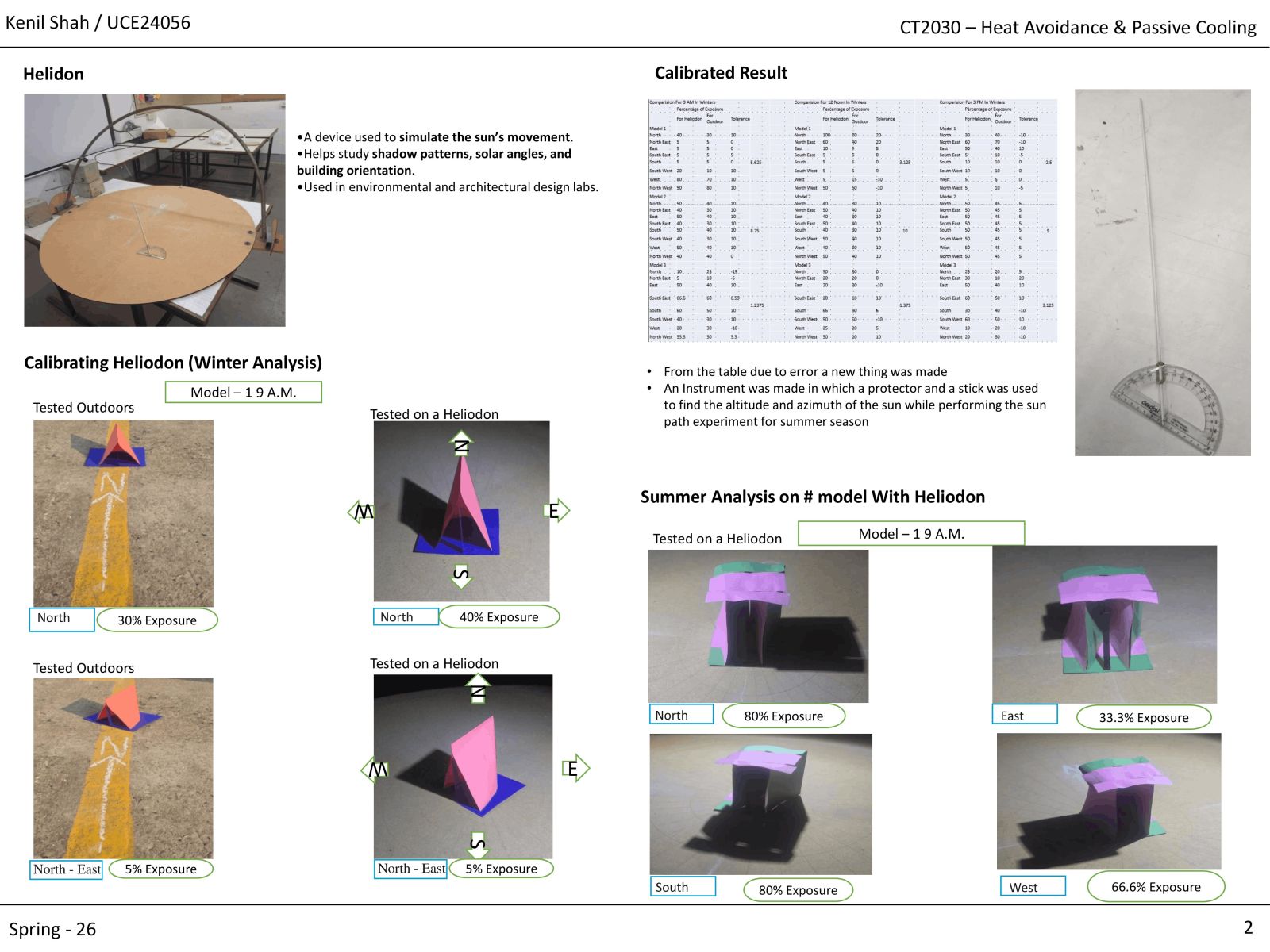
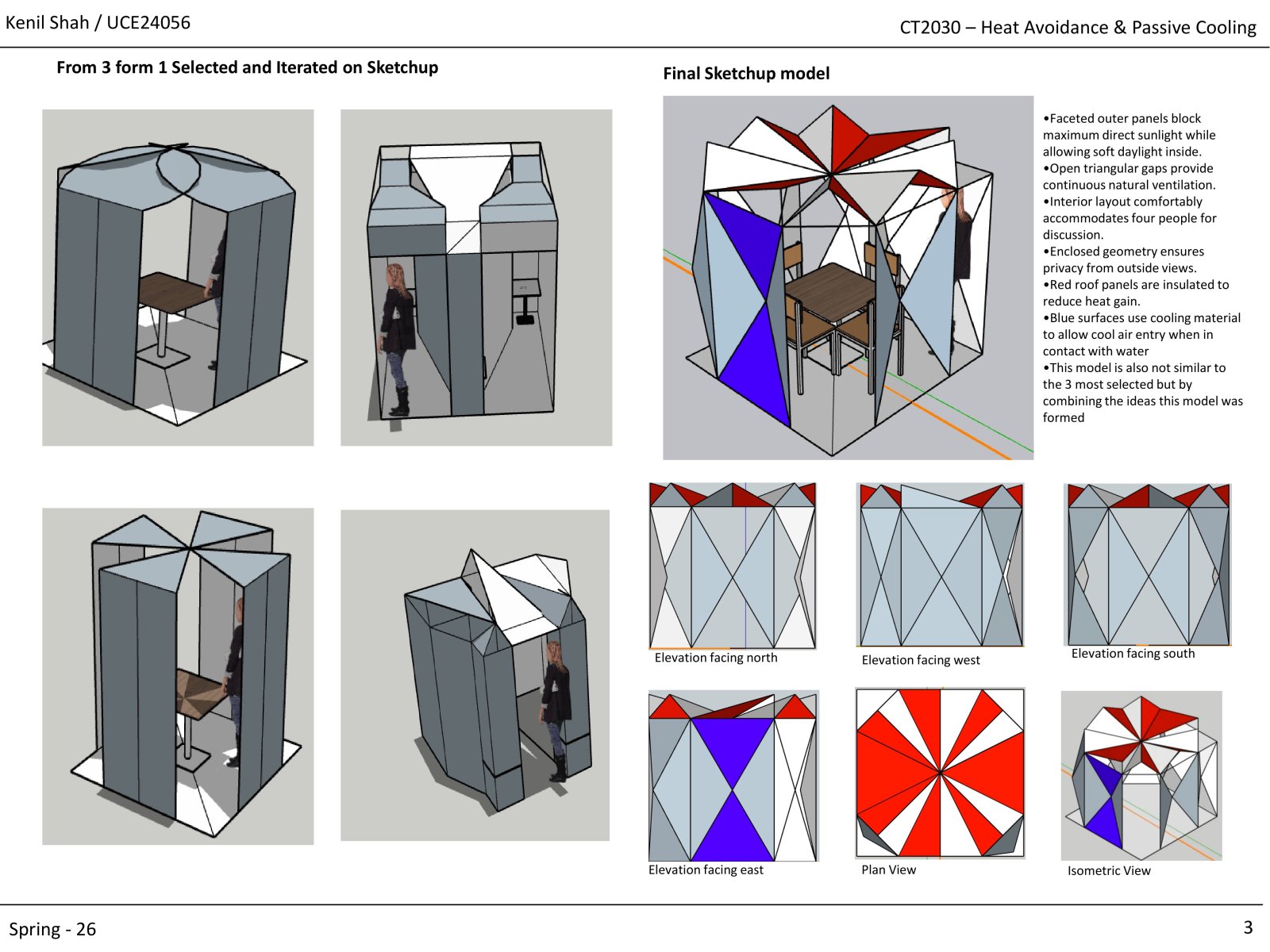
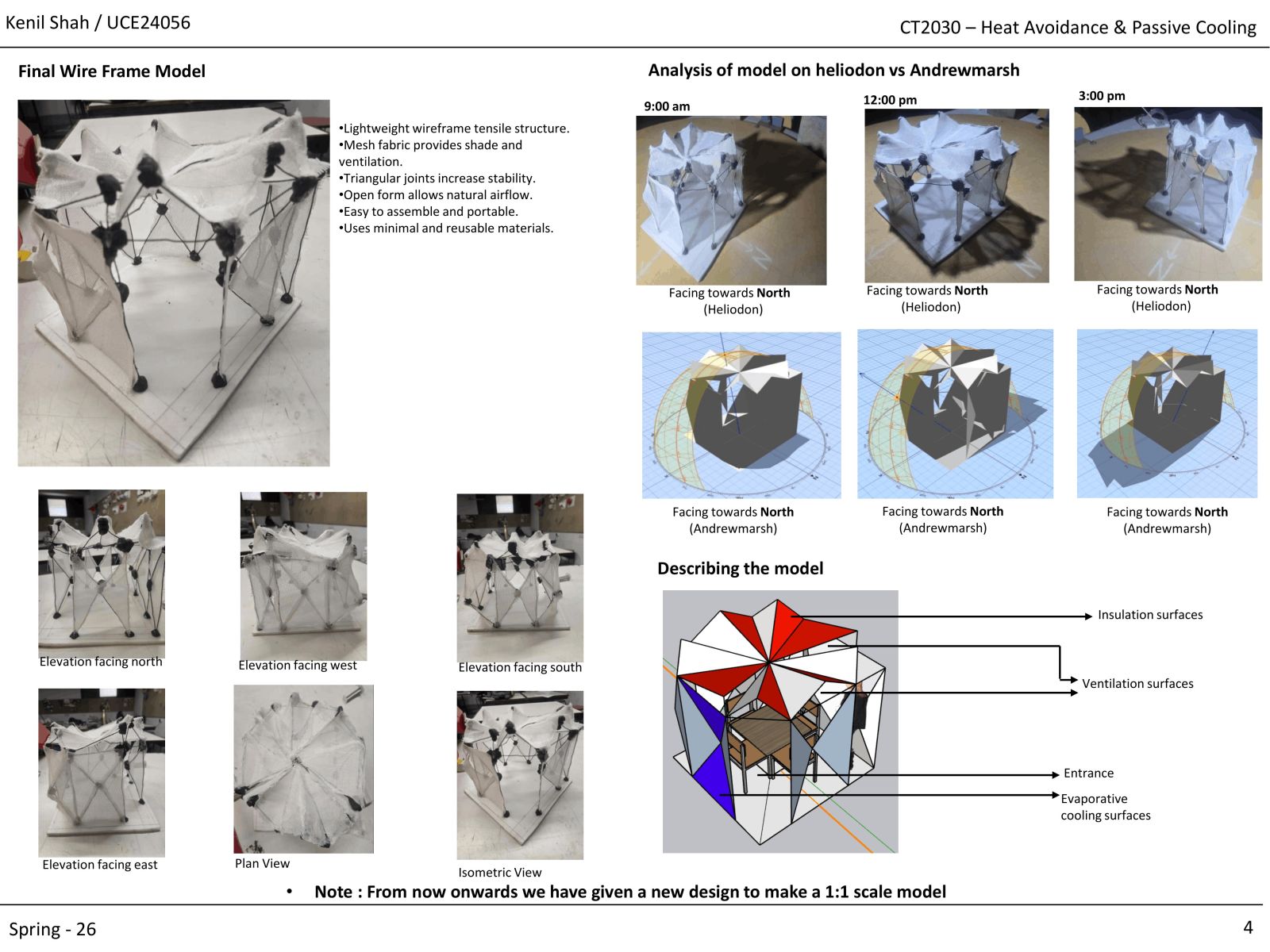
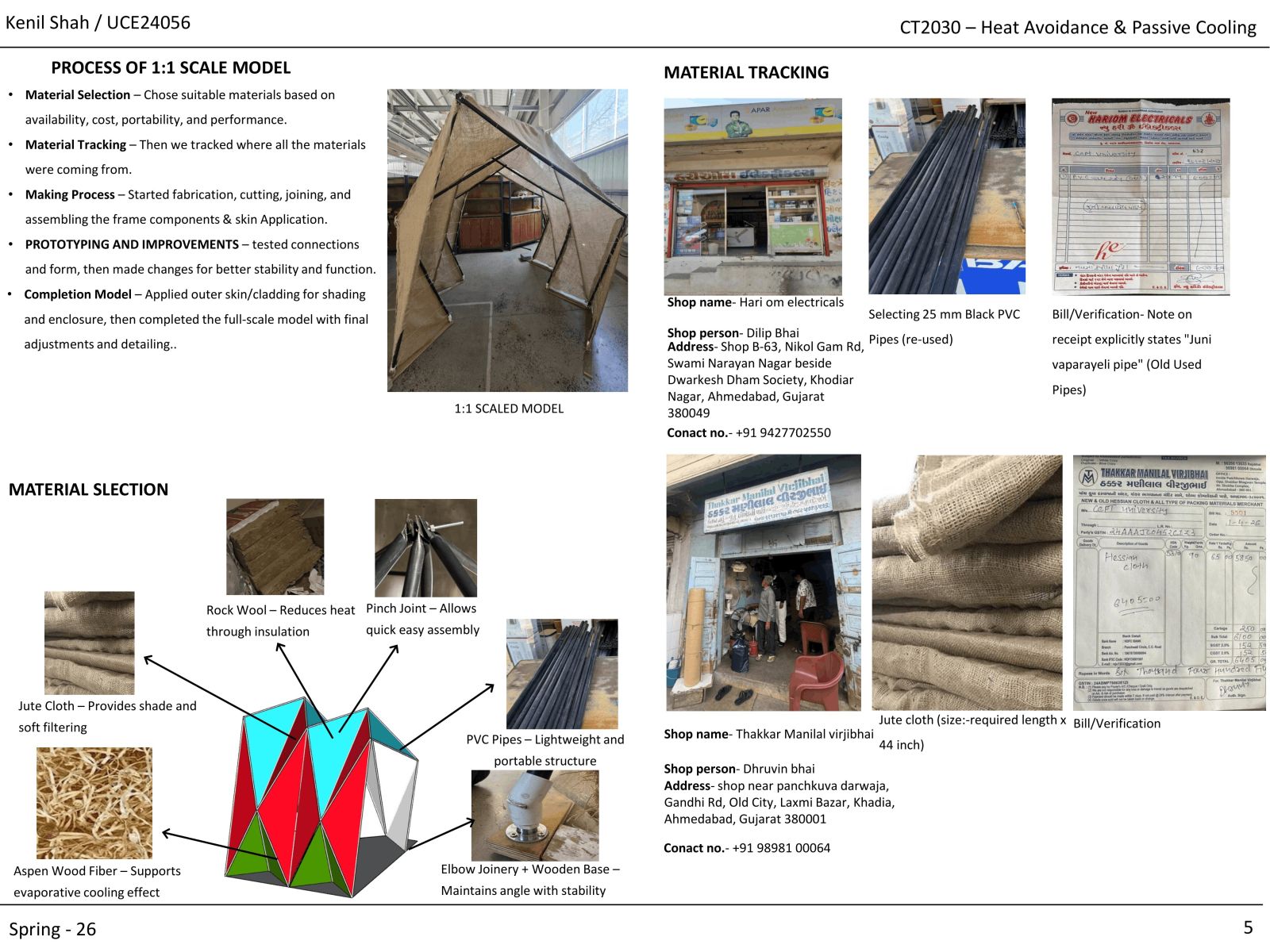
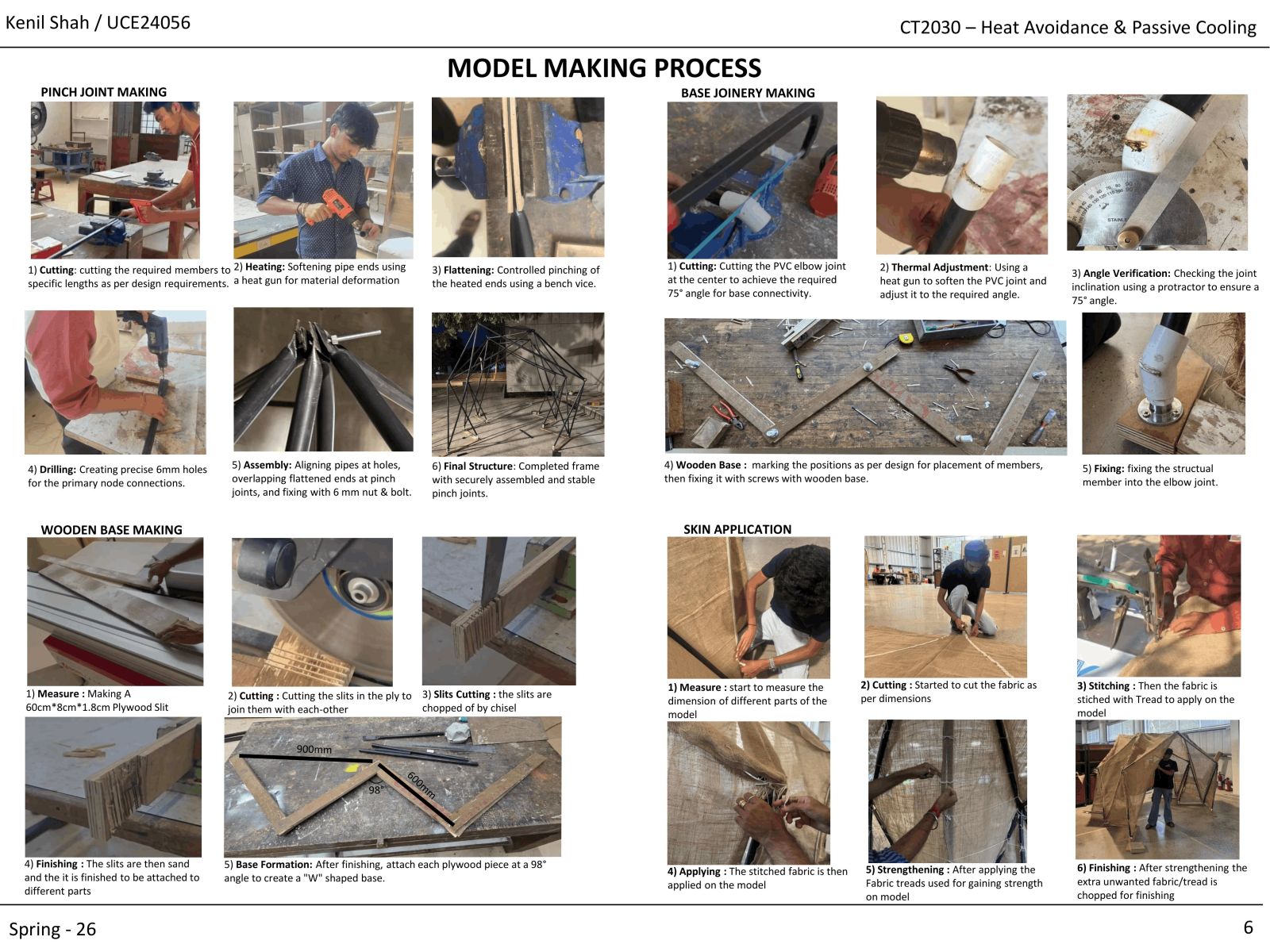
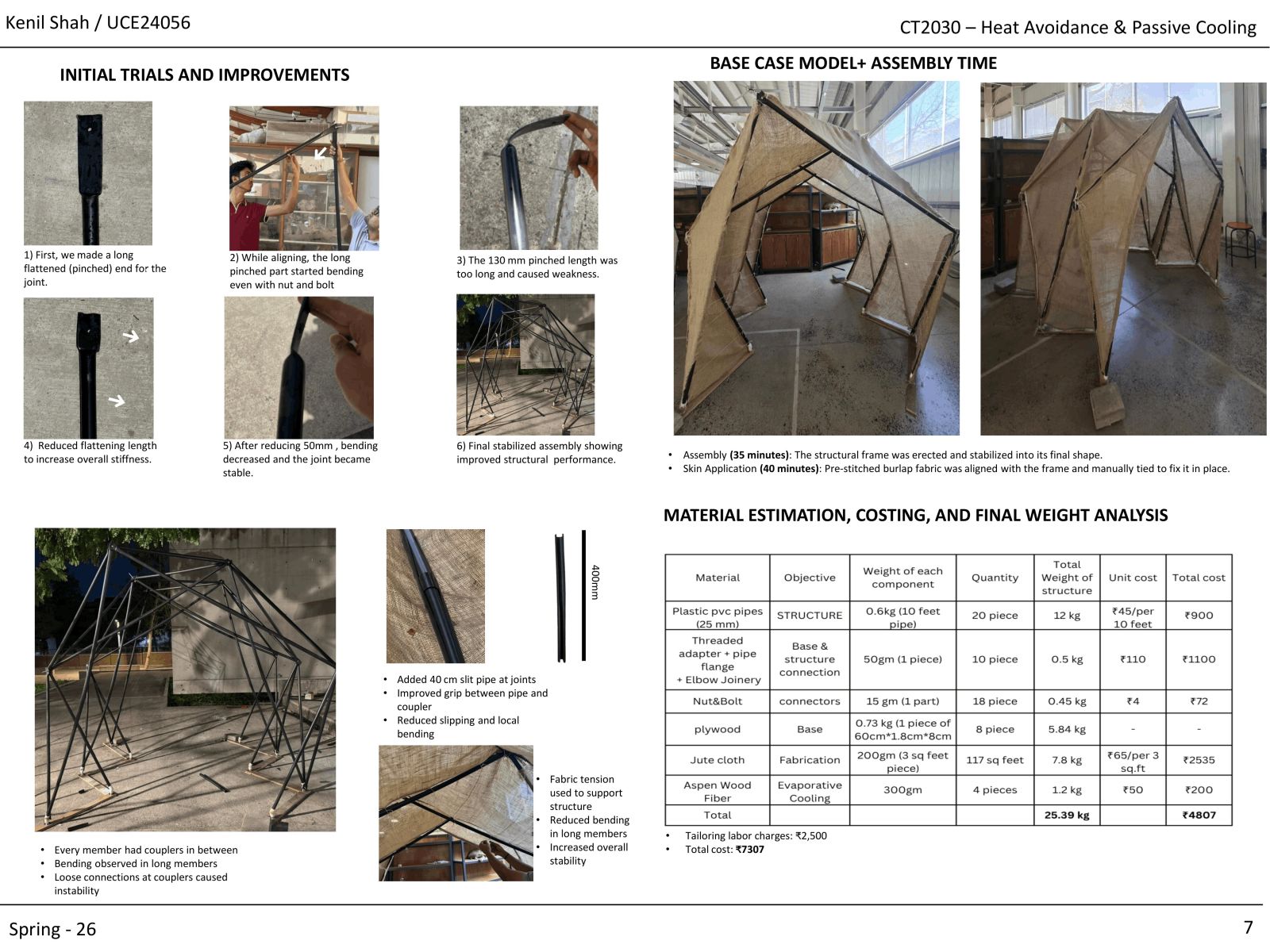
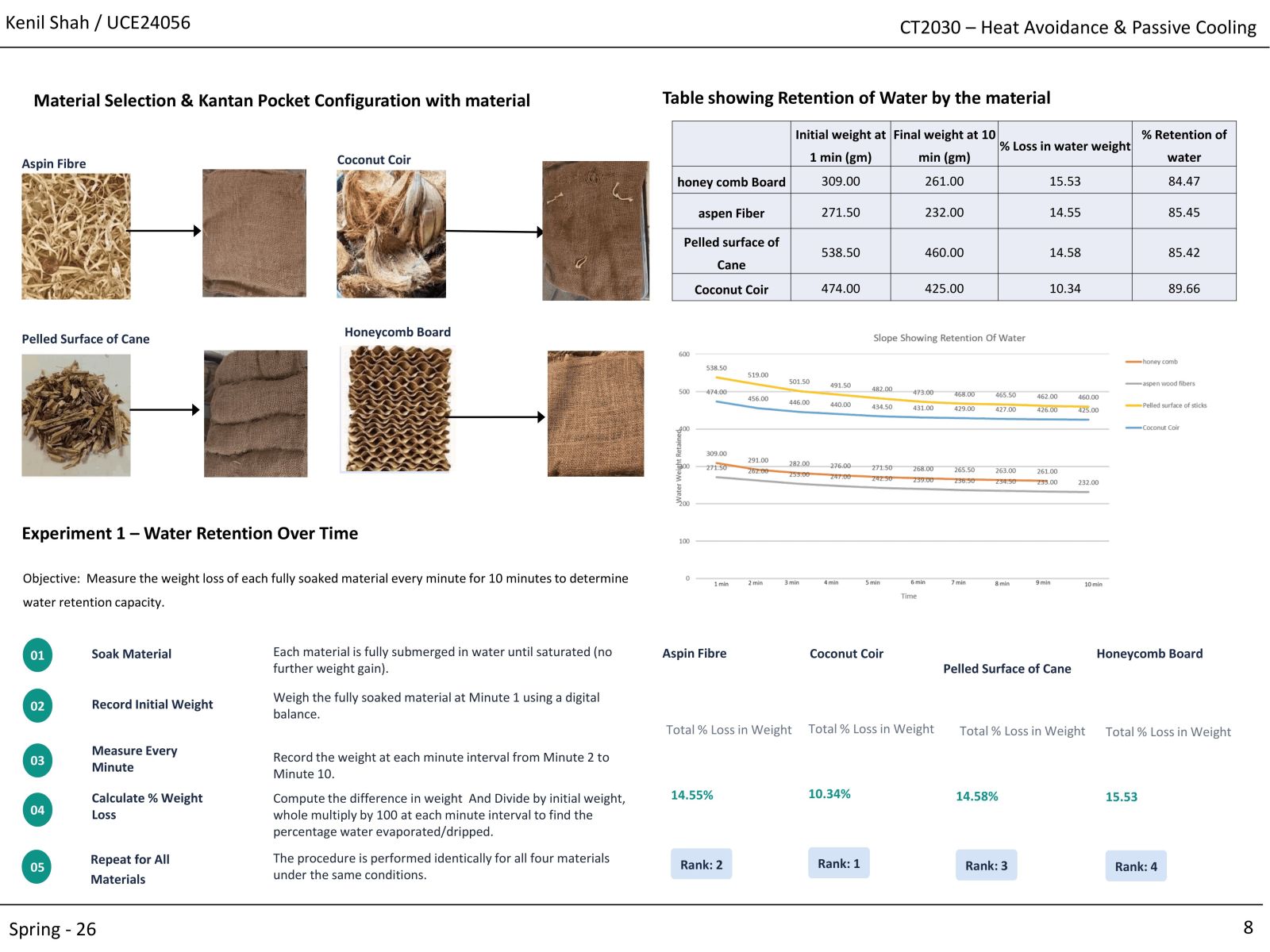
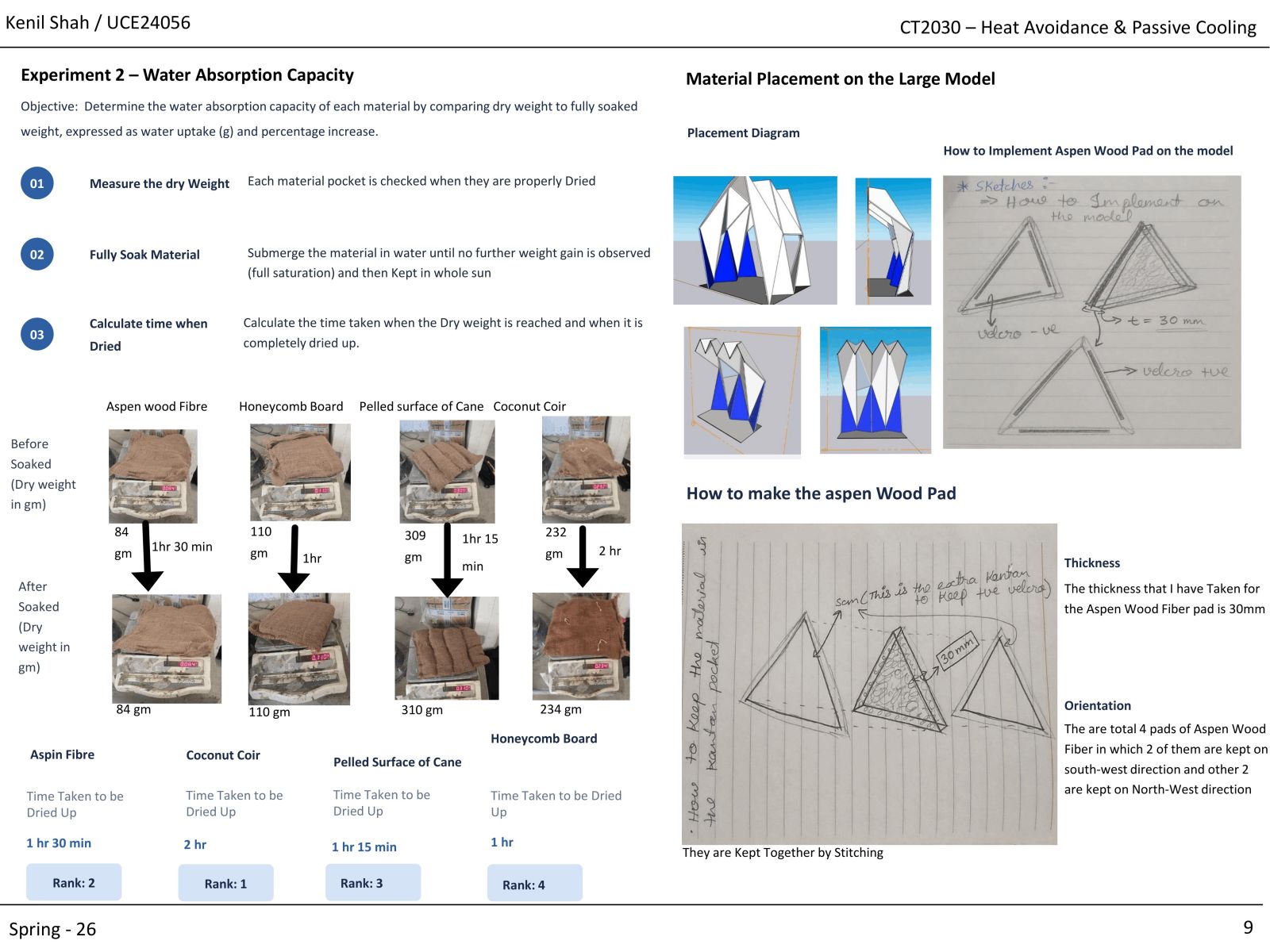
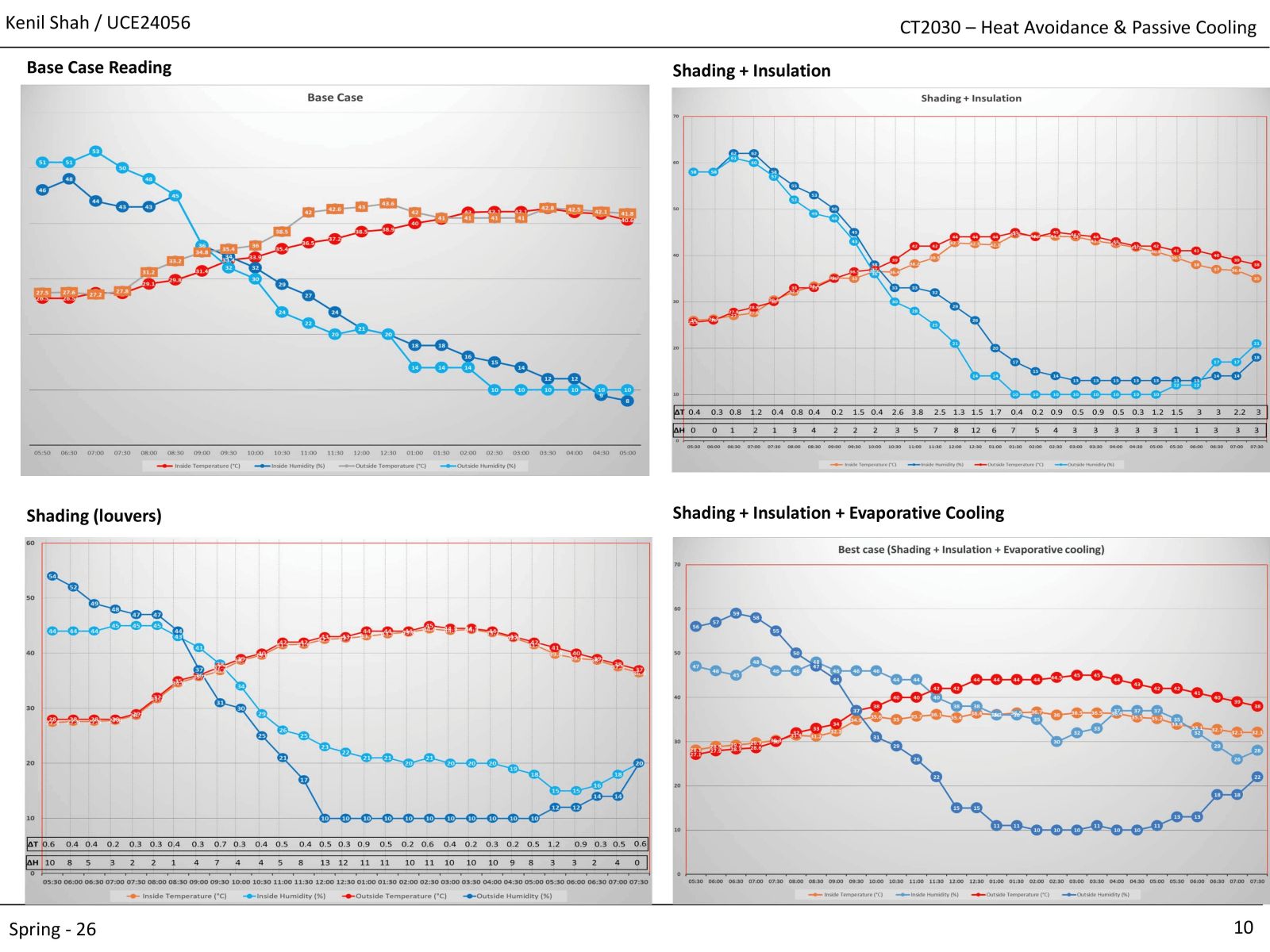
This project explores the design and fabrication of a climate-responsive outdoor shelter specifically engineered for Ahmedabad's intense summer heat. By integrating climate data with architectural form, the design utilizes a faceted geometry that maximizes "soft" daylight while strategically blocking direct solar radiation. The workflow transitioned from initial paper modeling and digital SketchUp iterations to rigorous solar testing using a Heliodon to verify shading effectiveness. Central to the project is the use of passive cooling through material science. After conducting experiments on the water retention and absorption capacities of various natural fibers—including coconut coir and aspen wood—the latter was selected to create evaporative cooling pads. These pads are integrated into the shelter’s skin to cool incoming breezes. The final 1:1 scale prototype was constructed using affordable, lightweight materials: a recycled PVC pipe frame with custom pinch joints, a jute cloth skin for shading, and insulated roof panels. Performance data confirmed that this hybrid approach of shading, insulation, and evaporation successfully lowered internal temperatures, providing a cost-effective and portable solution for thermal comfort.