Gaikwad Shreya Santosh

BE4000

Spring Semester 2026_ HVAC Lab

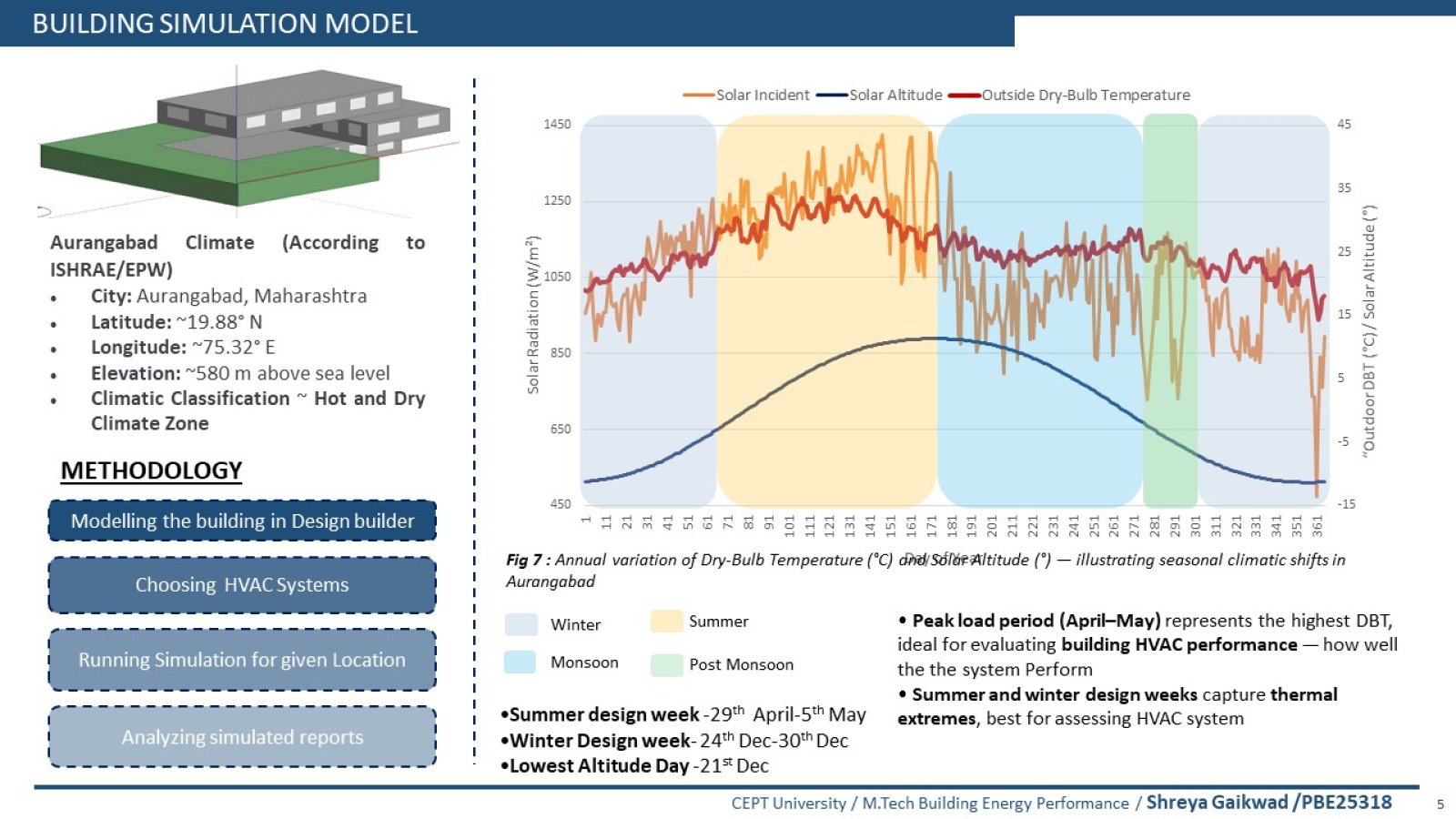
Moving beyond passive design, the HVAC Lab focused on the technical engineering of active mechanical systems. Initially, I conducted field measurements, analyzing refrigeration cycles, ERV performance, and using CO2 decay to determine ventilation rates. During the simulation phase, I utilized DesignBuilder to model advanced system architectures, including water-cooled VAV, VRF, and PTAC units. I focused on optimizing efficiency through chiller sequencing, zoning strategies, and performance curve analysis. By adhering to ECBC 2017 standards, I quantified how different control strategies and hybrid systems impact building energy demand and occupant thermal comfort.
Report Content

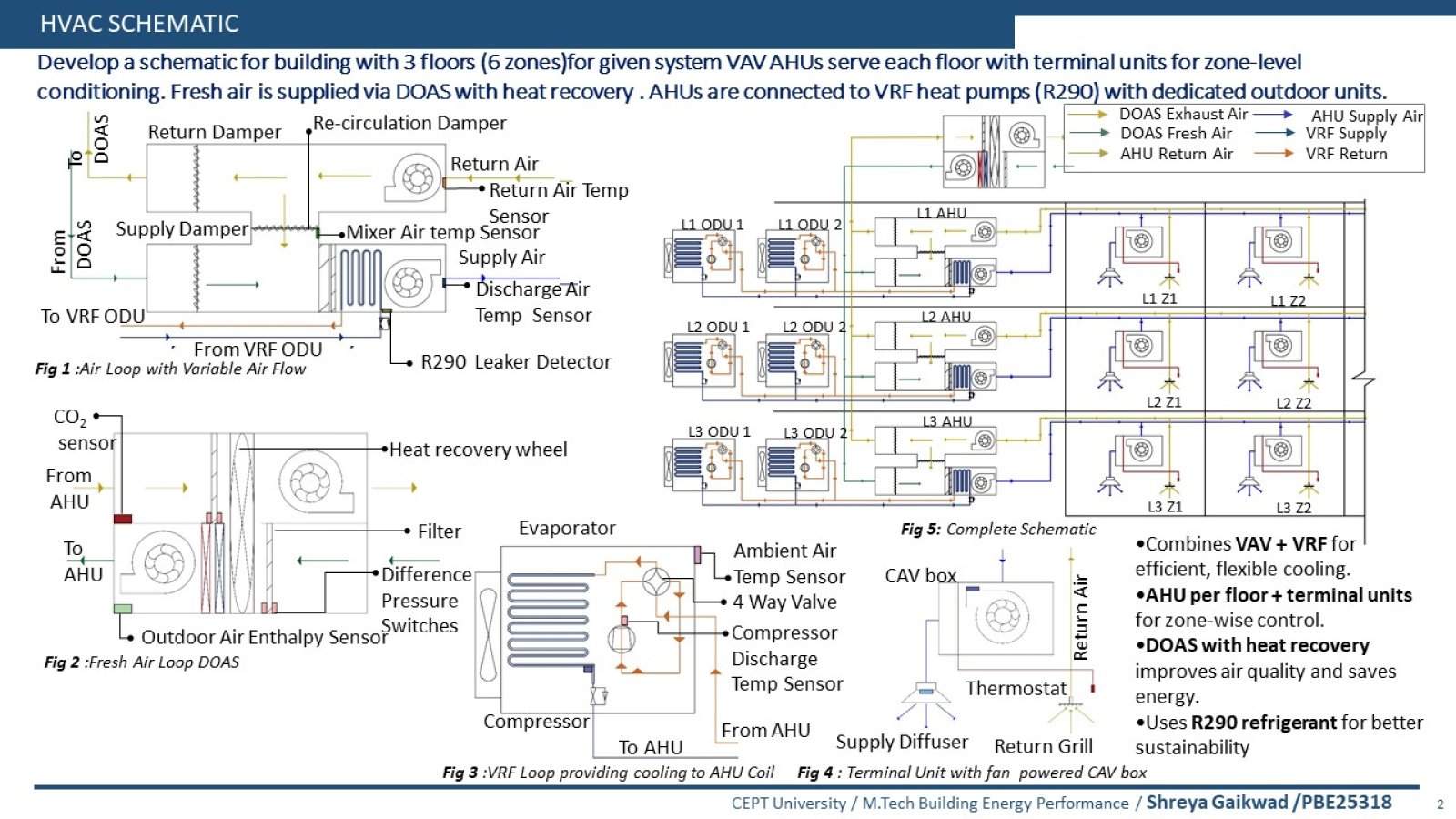
Develop a schematic for building with 3 floors (6 zones) for given system VAV AHUs serve each floor with terminal units for zone-level conditioning. Fresh air is supplied via DOAS with heat recovery. AHUs are connected to VRF heat pumps (R290) with dedicated outdoor units.

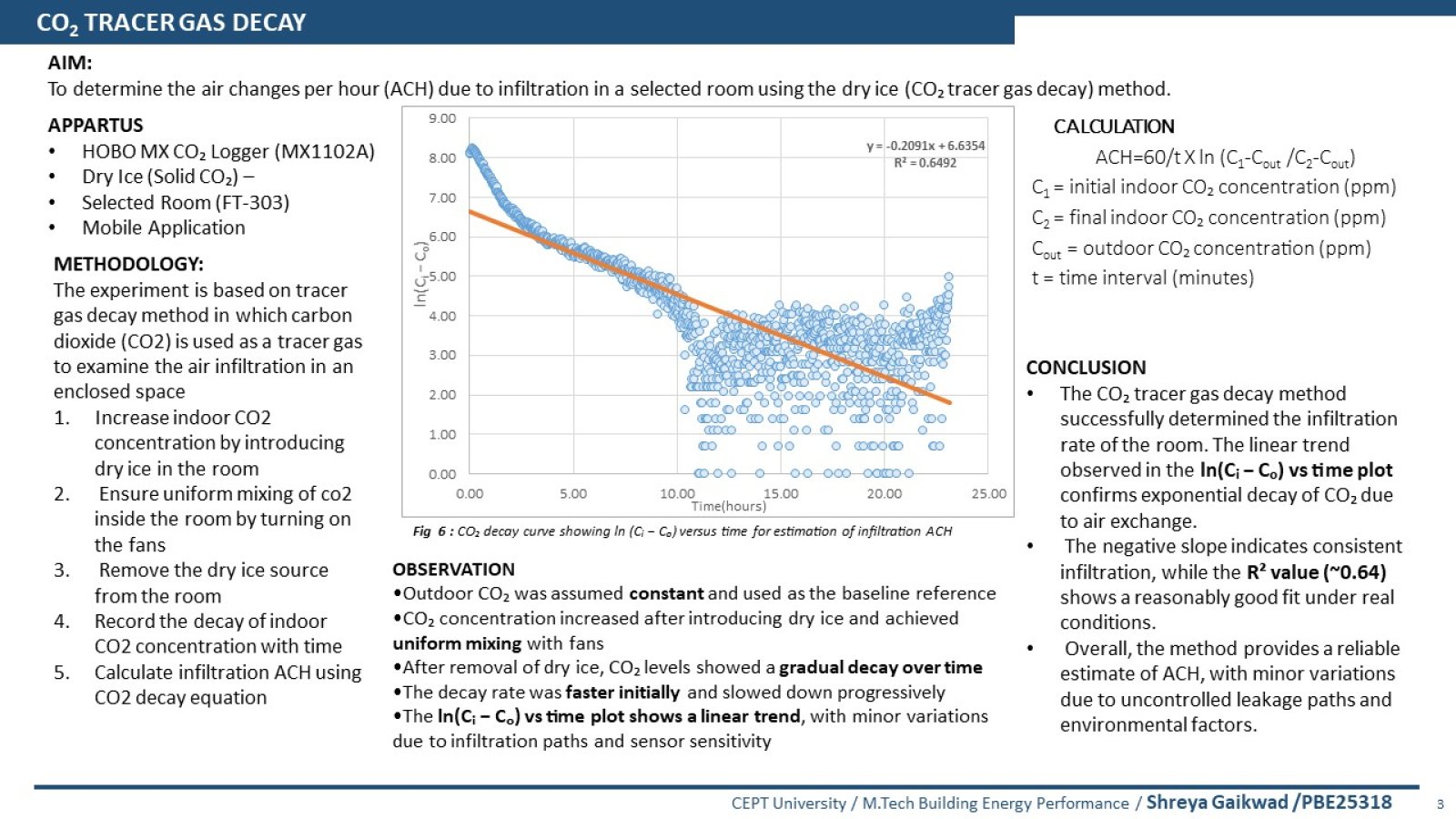
CO2 Tracer Gas Decay- Experimentation and Analysis

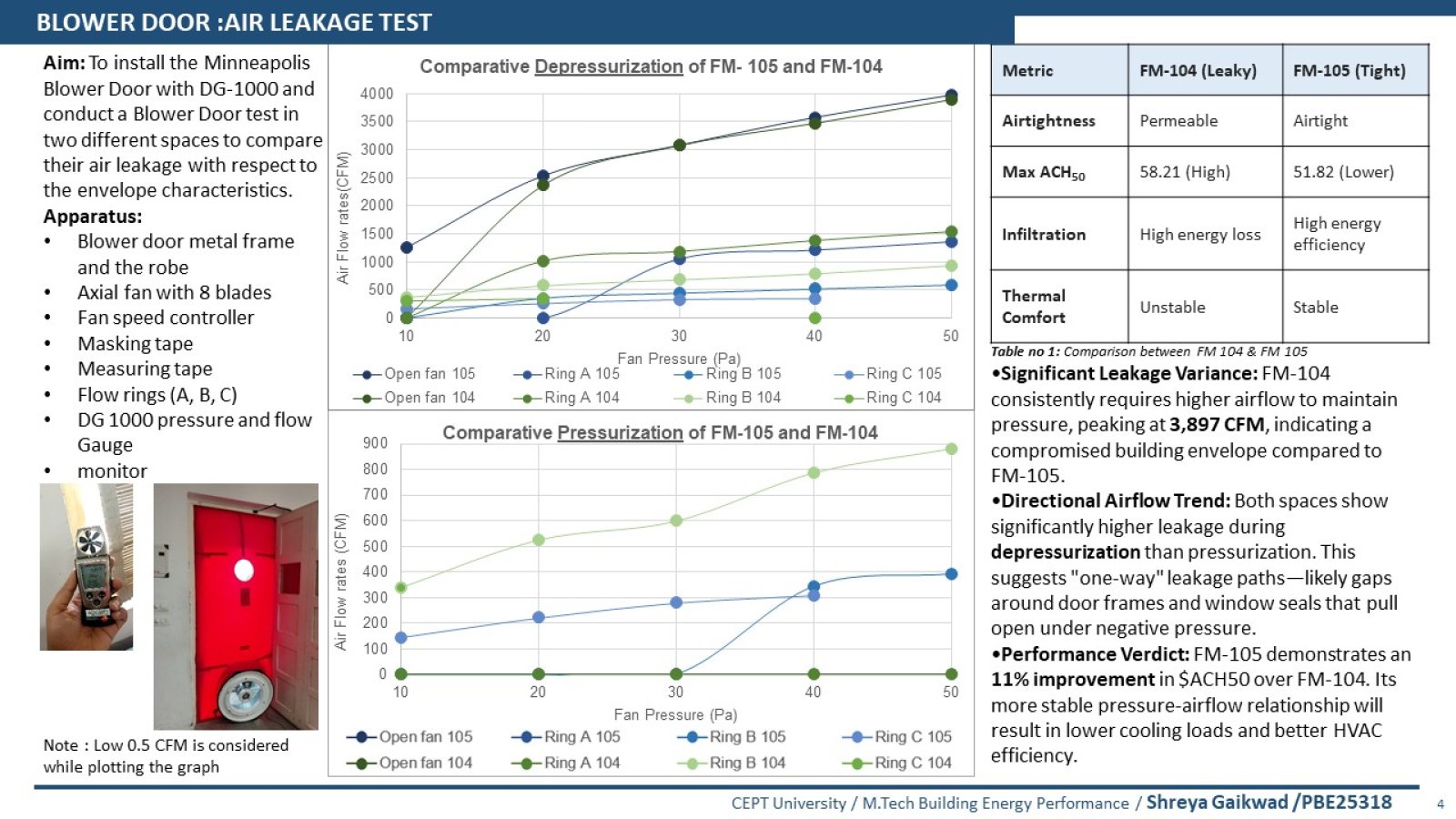
Blower door test- Experimentation and Analysis

Buildiing Energy Simulation

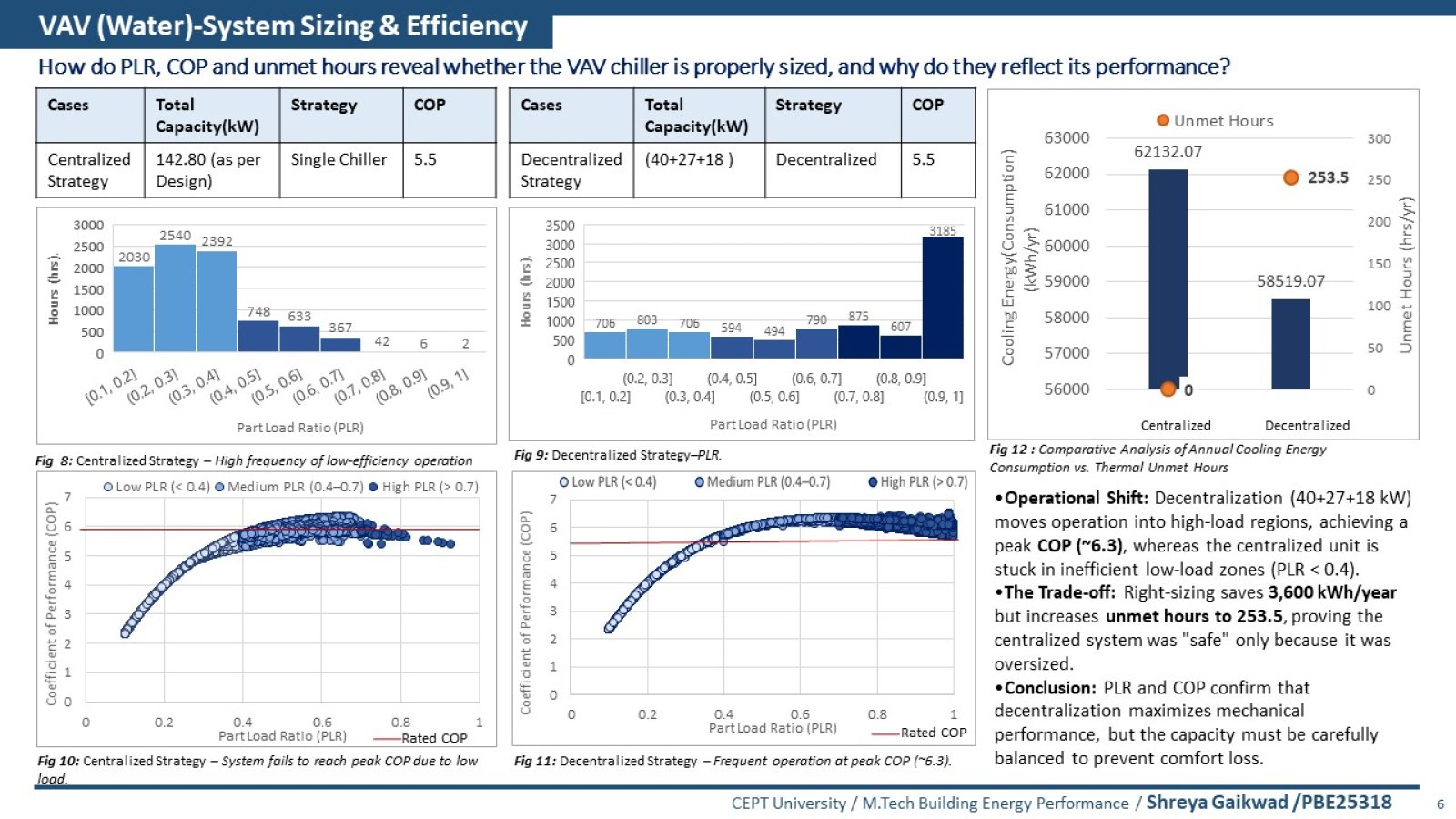
How do PLR, COP and unmet hours reveal whether the VAV chiller is properly sized, and why do they reflect its performance?

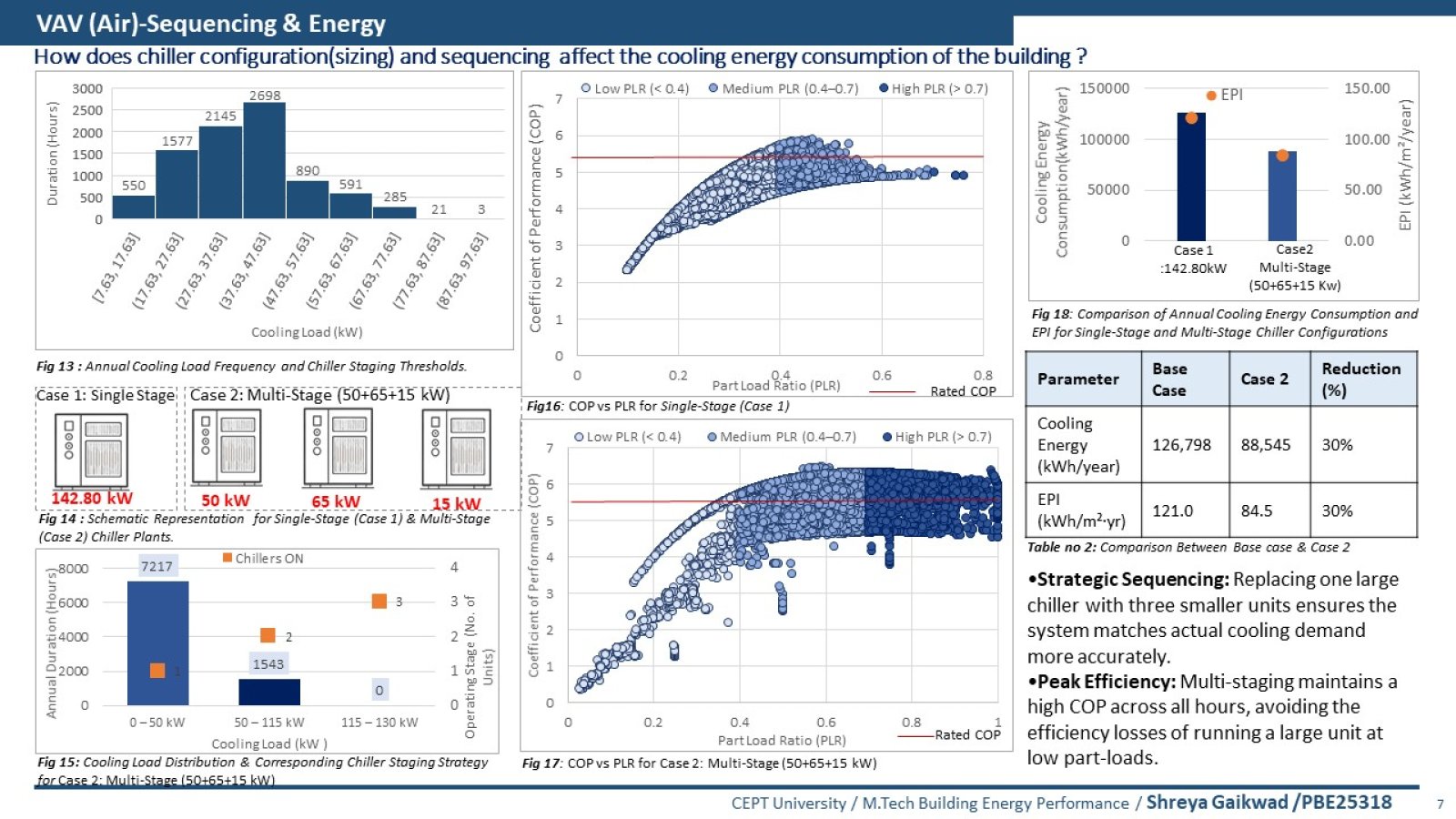
How does chiller configuration(sizing) and sequencing affect the cooling energy consumption of the building?

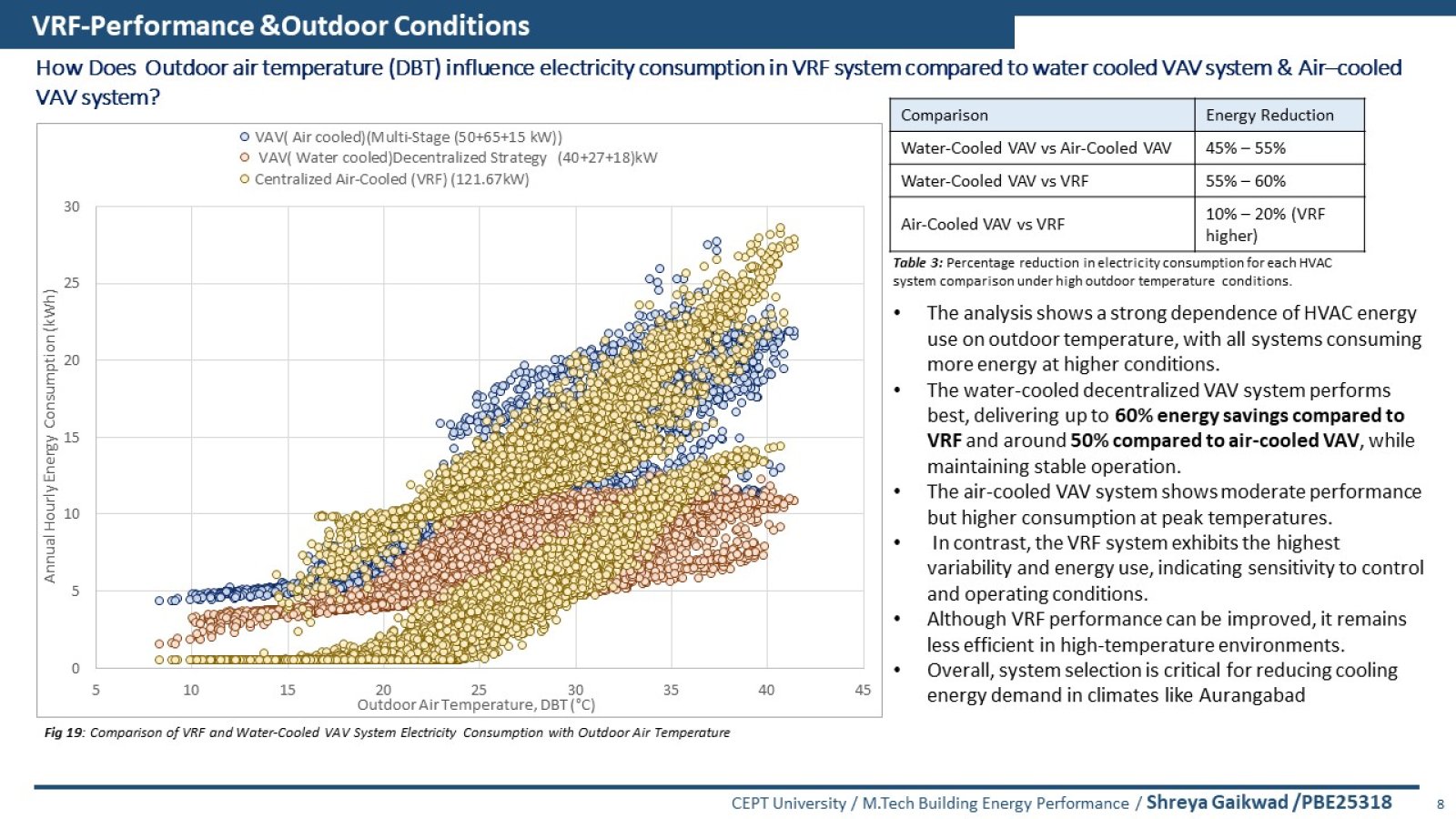
How Does Outdoor air temperature (DBT) influence electricity consumption in VRF system compared to water cooled VAV system & Air-cooled VAV system?

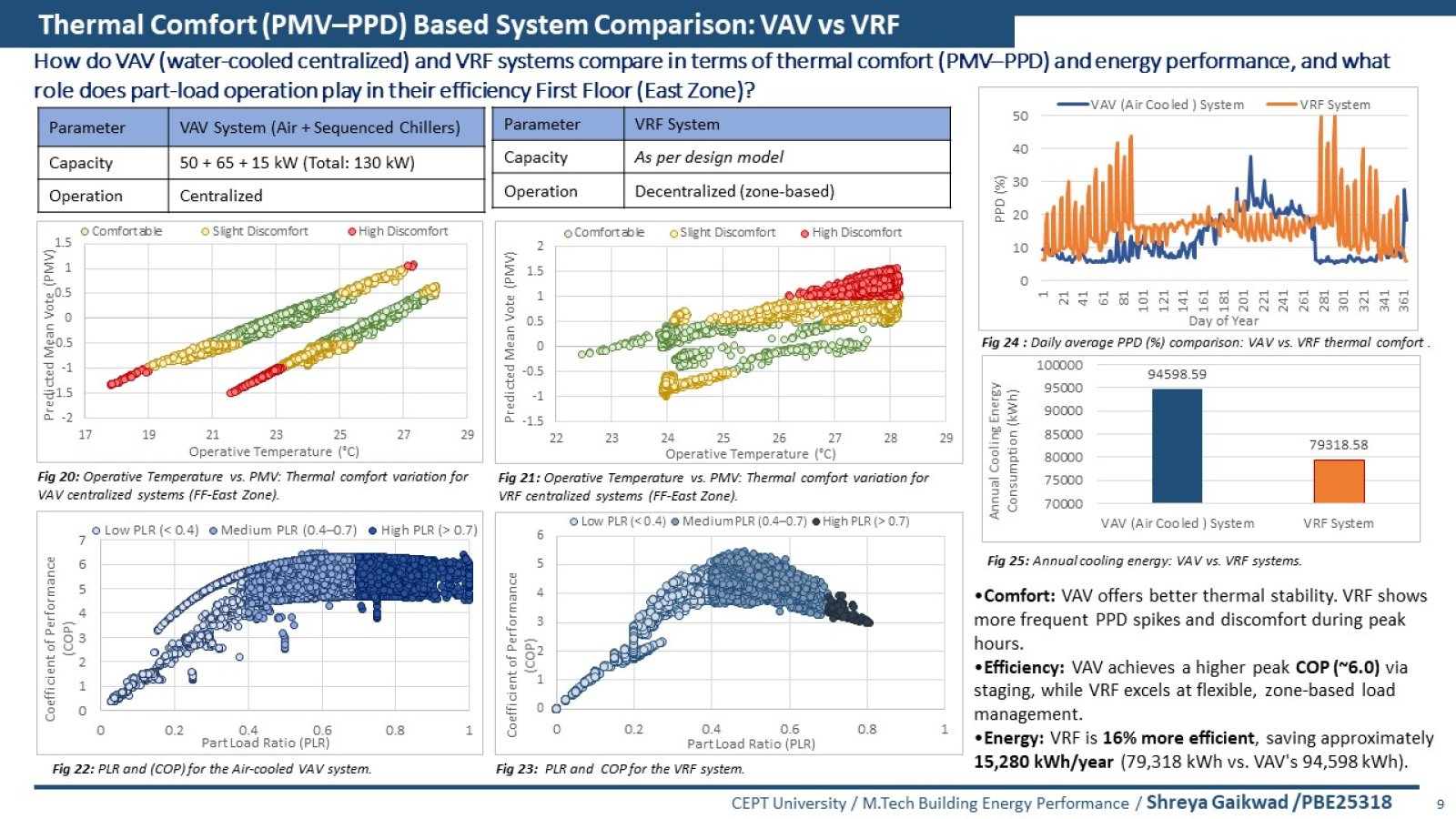
How do VAV (water-cooled centralized) and VRF systems compare in terms of thermal comfort (PMV–PPD) and energy performance, and what role does part-load operation play in their efficiency First Floor (East Zone)?

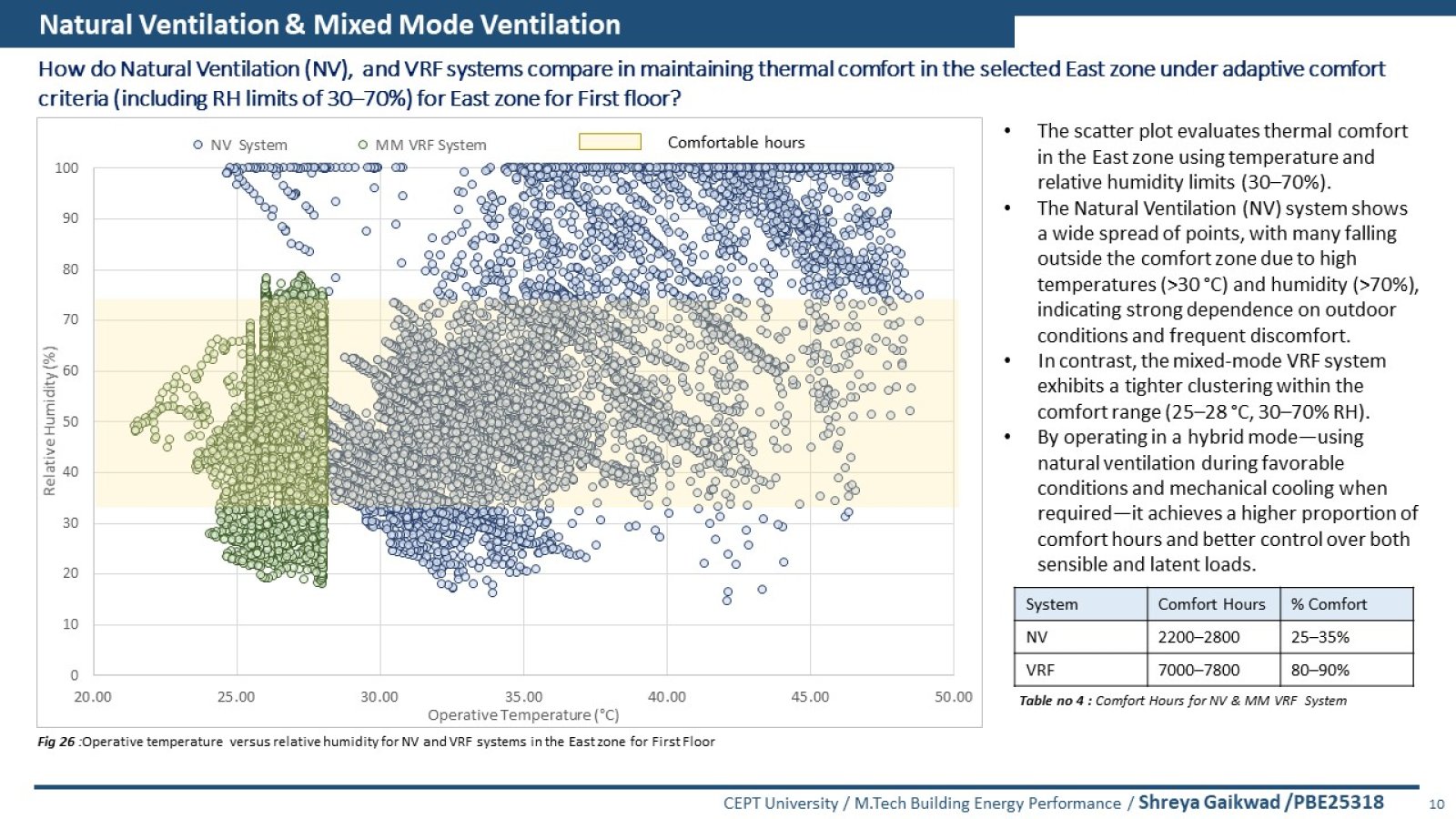
How do Natural Ventilation (NV), and VRF systems compare in maintaining thermal comfort in the selected East zone under adaptive comfort criteria (including RH limits of 30–70%) for East zone for First floor?

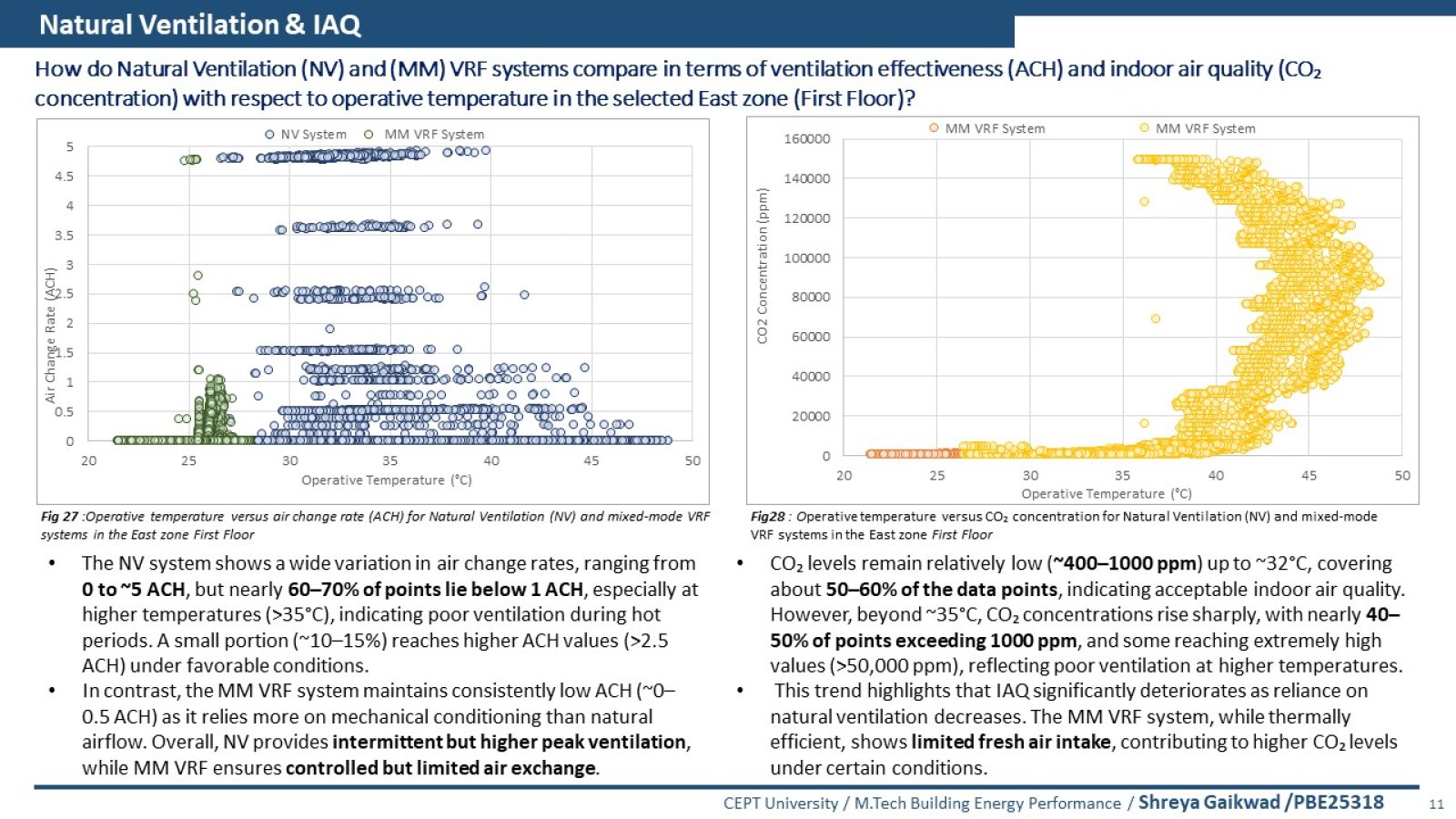
How do Natural Ventilation (NV) and (MM) VRF systems compare in terms of ventilation effectiveness (ACH) and indoor air quality ($CO_2$ concentration) with respect to operative temperature in the selected East zone (First Floor)?