Devanshi Manoj Mundhada

CFP001

UAR25284

The CEPT Foundation Programme studio is an introduction for students fresh out of school to the rigour and work habits required by an undergraduate degree at CEPT University. The studio is conceptualized as a series of sequentially planned modules and exercises, through which students develop skills and abilities, falling into four broad categories: visualize and draw, make and learn, analyze and interpret and conceptualize and represent, which are then deployed to address increasingly complex problems. The modules are structured to equip students across disciplines at CEPT with a well-rounded foundation of skills, ensuring a balanced learning experience in a multidisciplinary environment. The studio is taught through intensive weekly modules, focusing on a particular skill or ability, and a process that emphasizes ongoing discussion and feedback in addition to expert faculty lectures.
Report Content

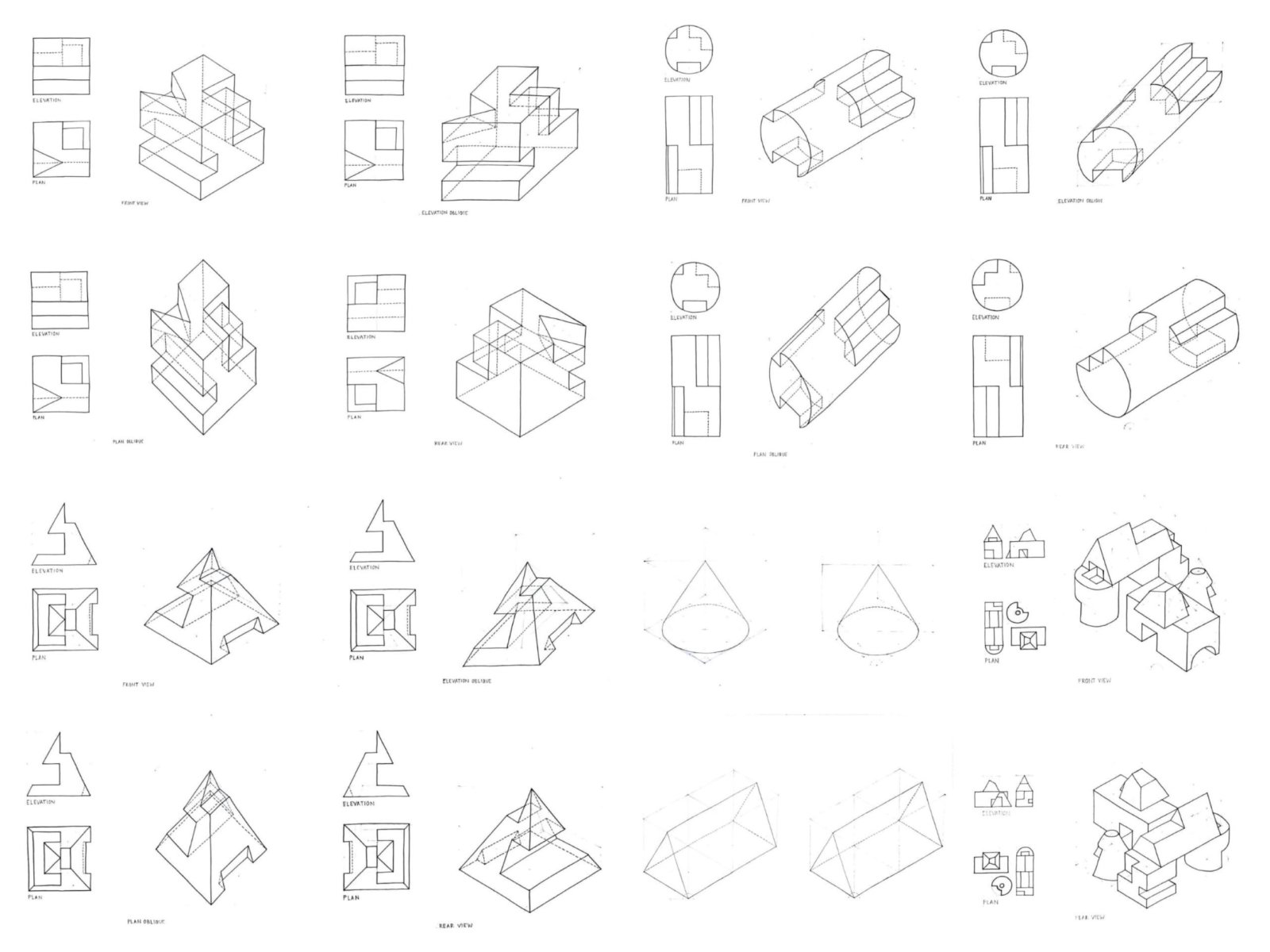
Freehand Drawing- Drawings of subtracted solids, basic geometric forms and a composition of subtracted forms

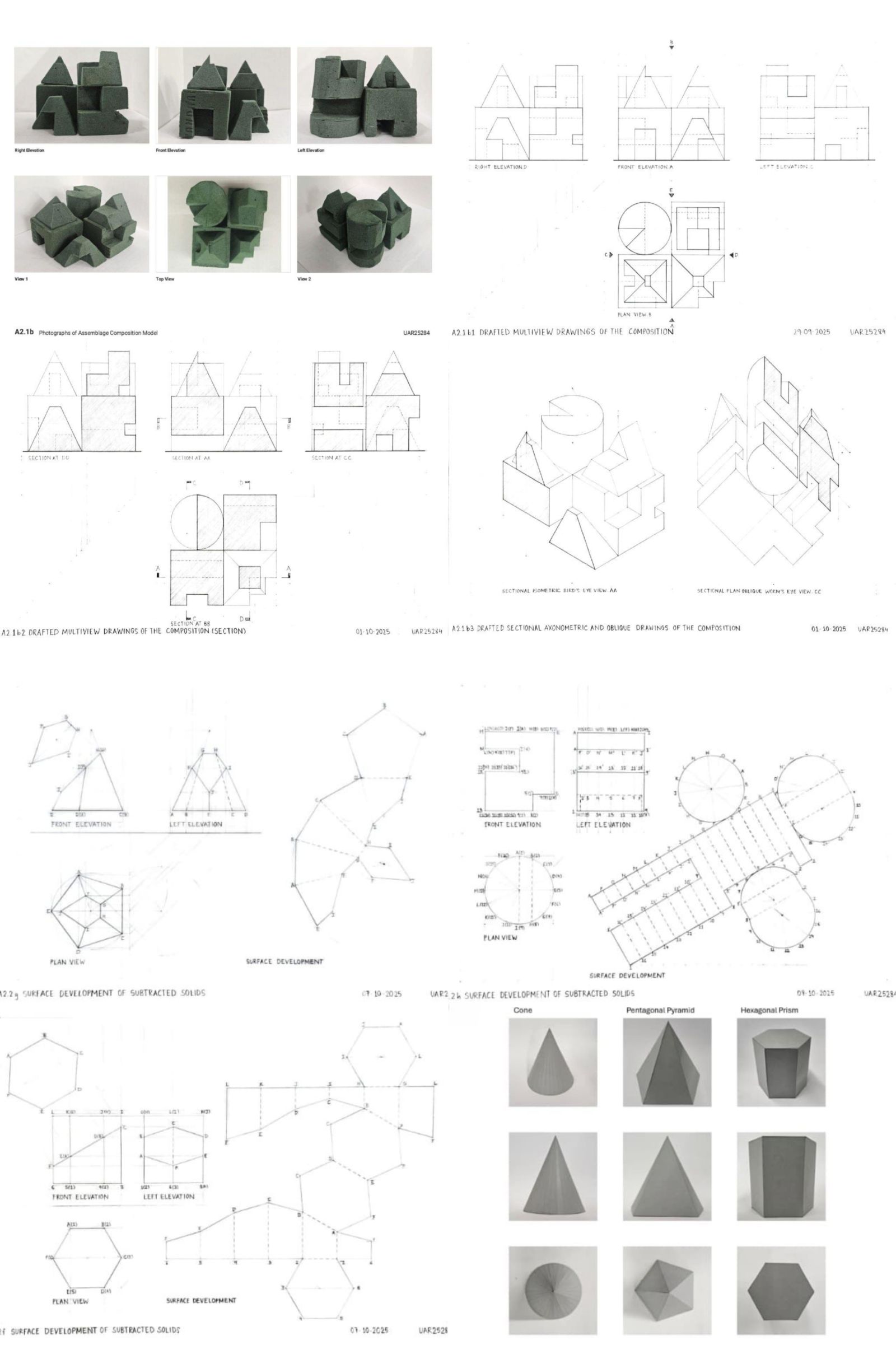
Technical Drawing- Drafted multiview drawings of a six form composition, surface development of subtracted solids and paper models of basic geometric forms

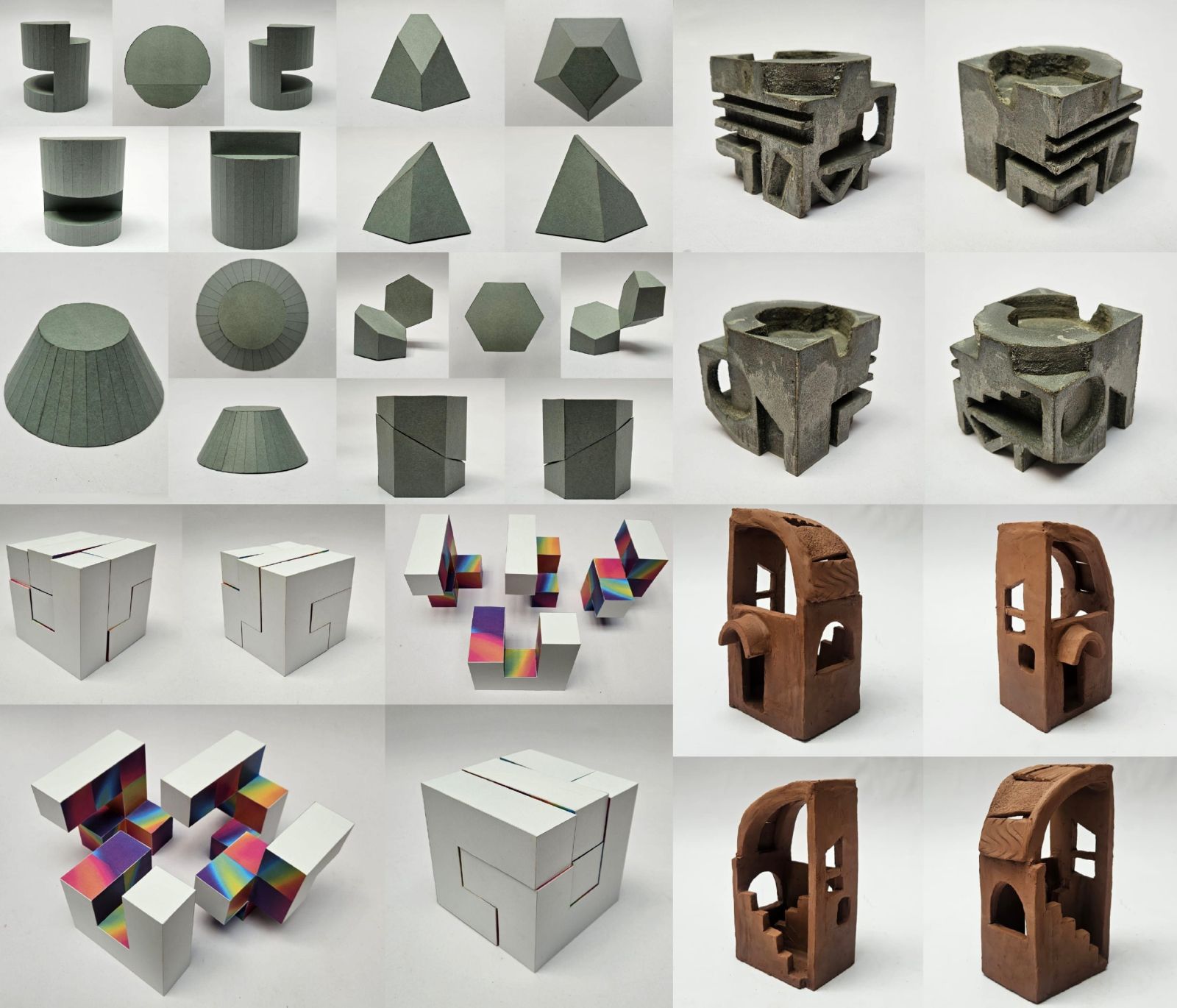
Model Making- Paper models of subtracted solids, cube casted with micro concrete, model of a cube cut into 4 interlocking components and clay form made using slab technique

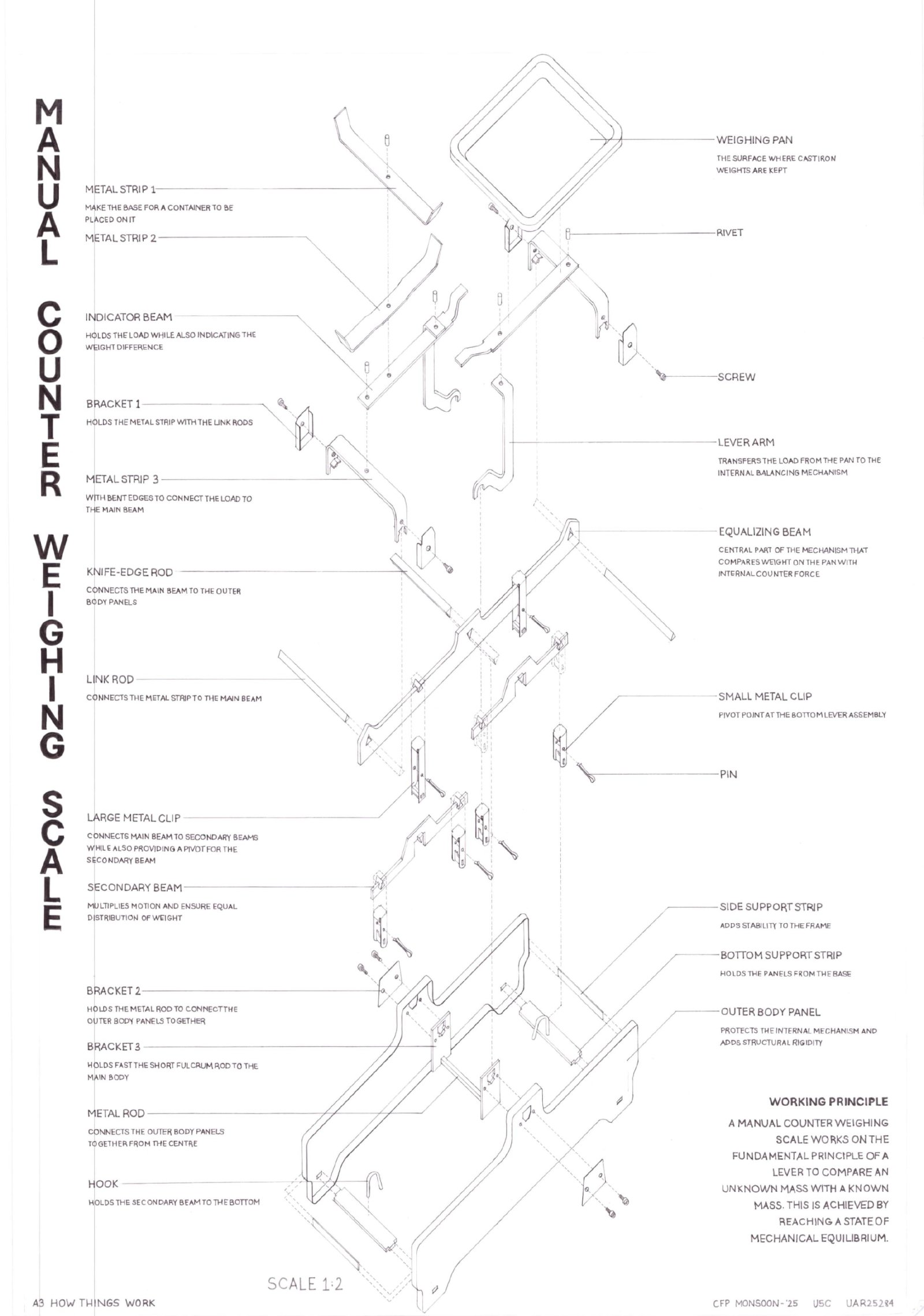
How Things Work- Exploded view of a manual counter weighing scale

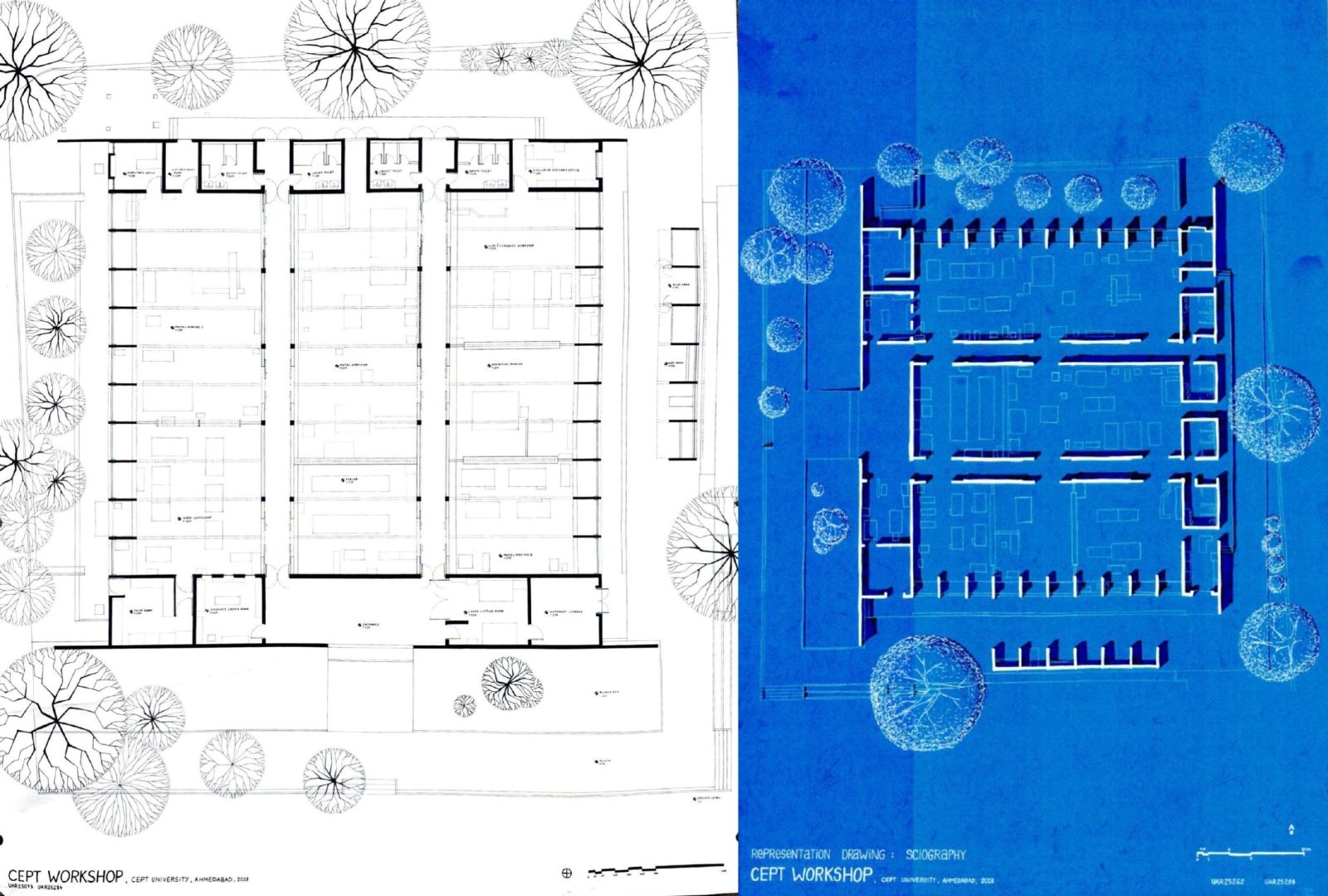
Documenting and Representing- 1:50 scale plan of CEPT Workshop Building and 1:100 scale representation showing sciography in the building plan

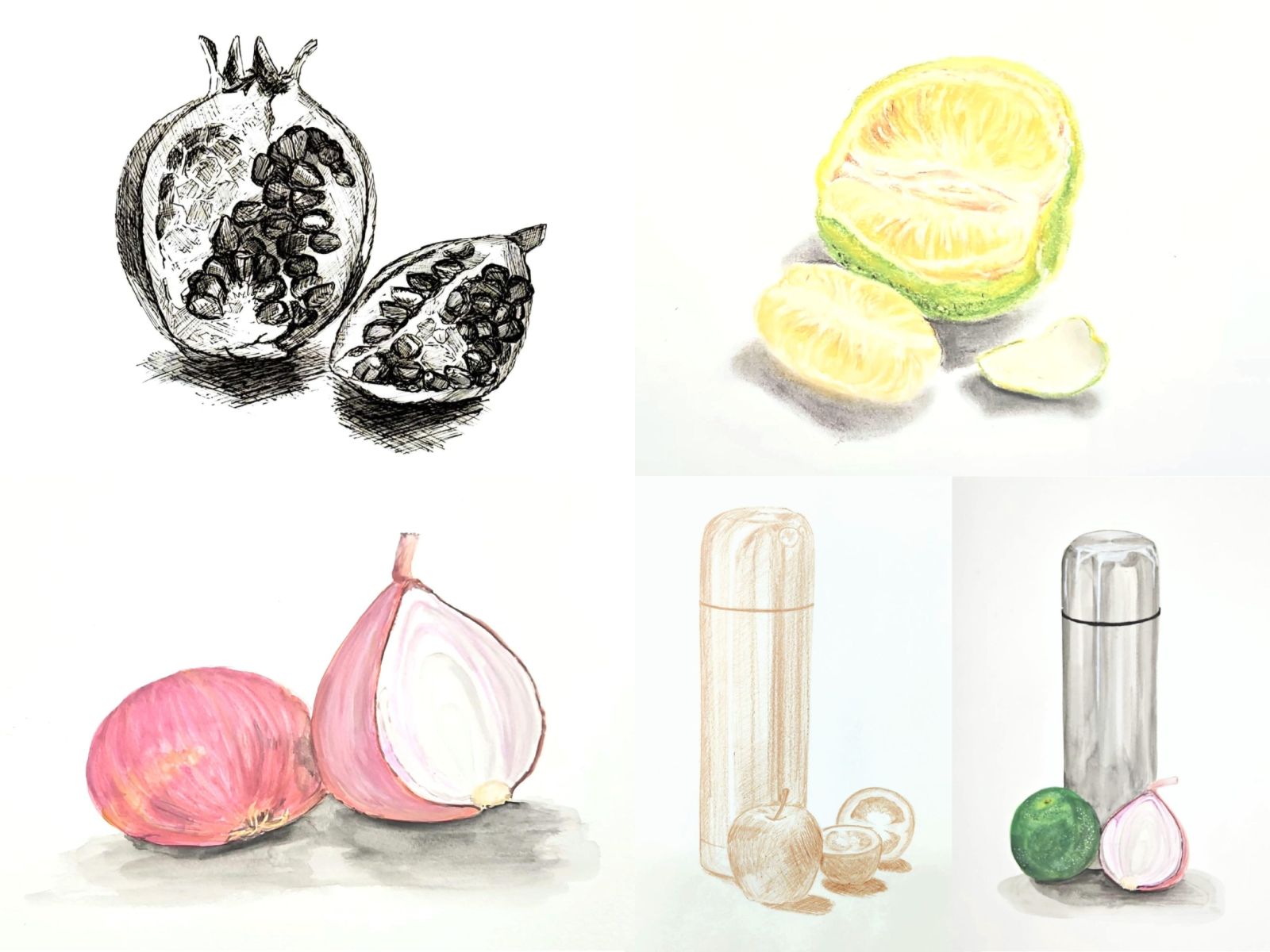
Observing Objects- Drawings of fruits, vegetables and compositions of objects to study their visual and tactile characteristics

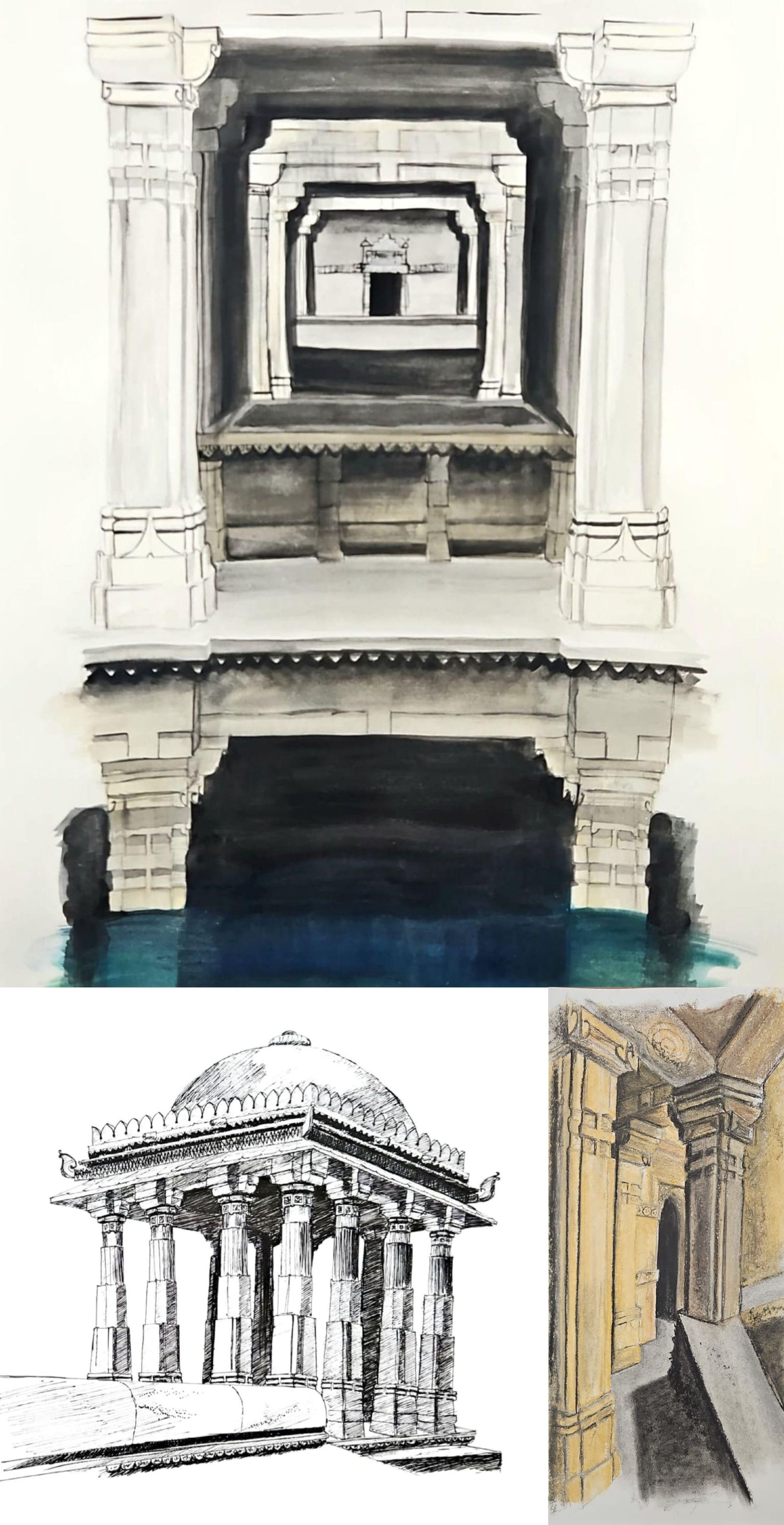
Observing Architecture- Drawings of Bai Harir Vav to study the experiential and tactile qualities

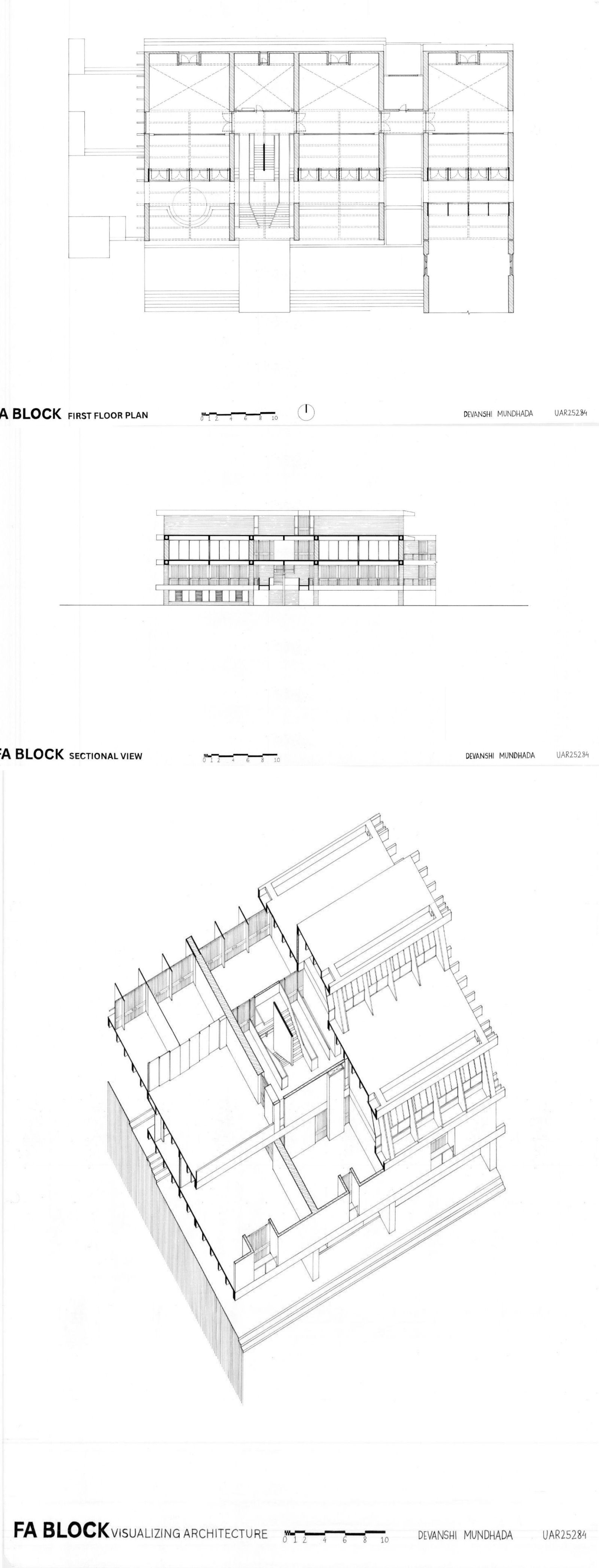
Visualizing Architecture- 1:100 scale first floor plan, sectional view and oblique view of FA Building

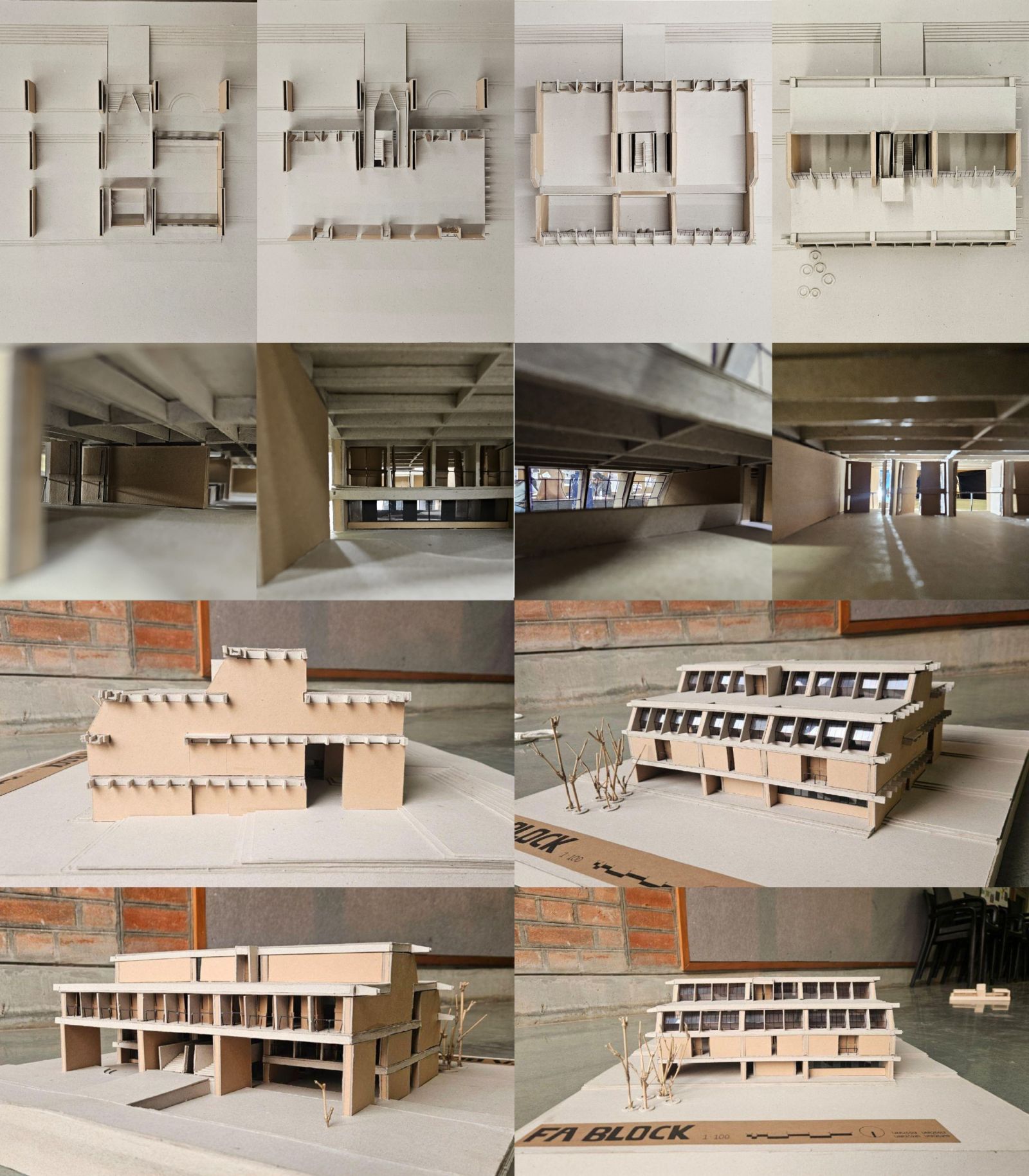
Visualizing Architecture- 1:100 scale model of FA Building

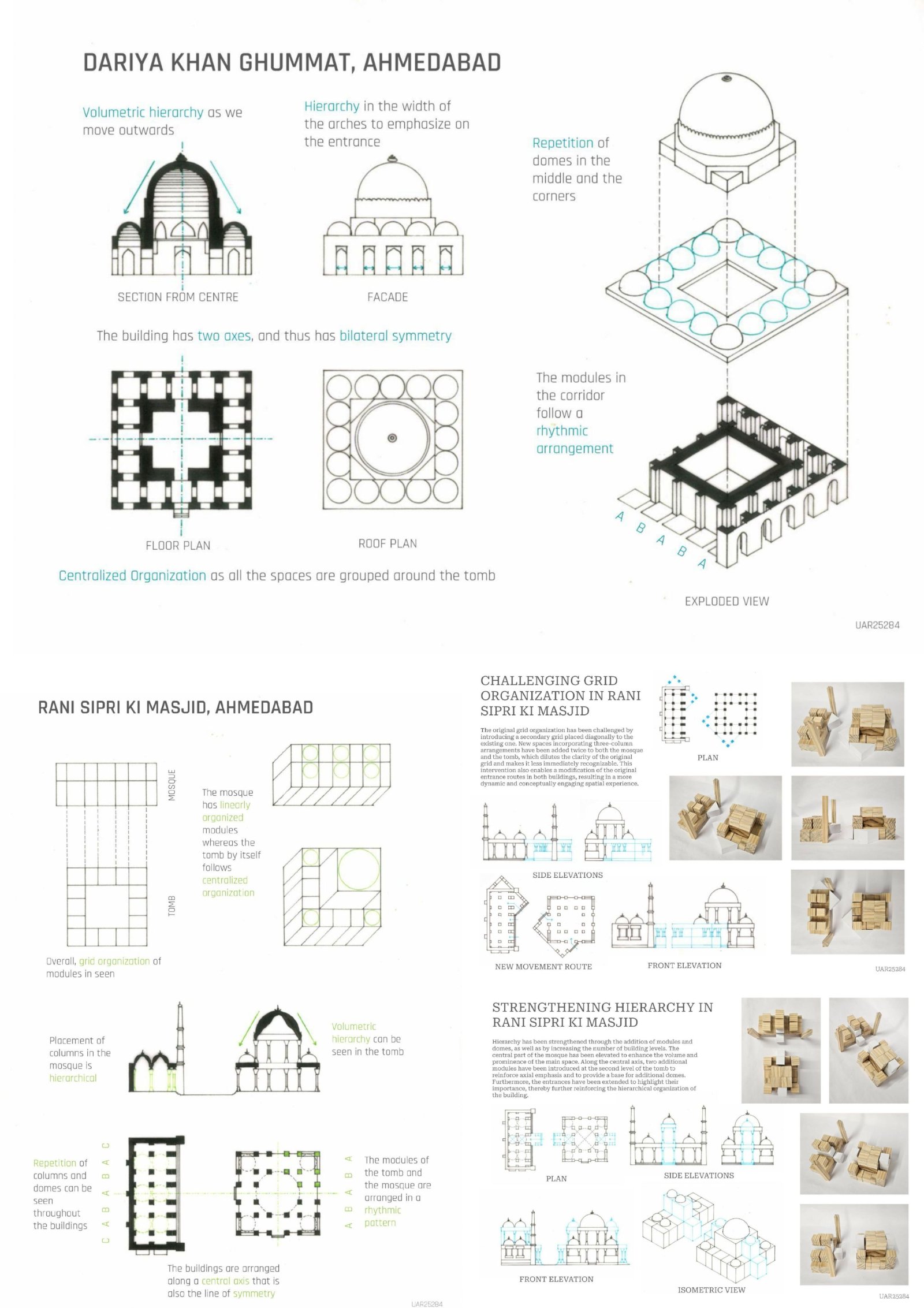
Ordering and Organizing Architecture- Ordering and organizing principles in Darya Khan Ghummat and Rani Sipri Ki Masjid, and diagrams to establish logic in the new arrangements for both strengthening as well as challenging the existing principles in Rani Sipri Ki Masjid